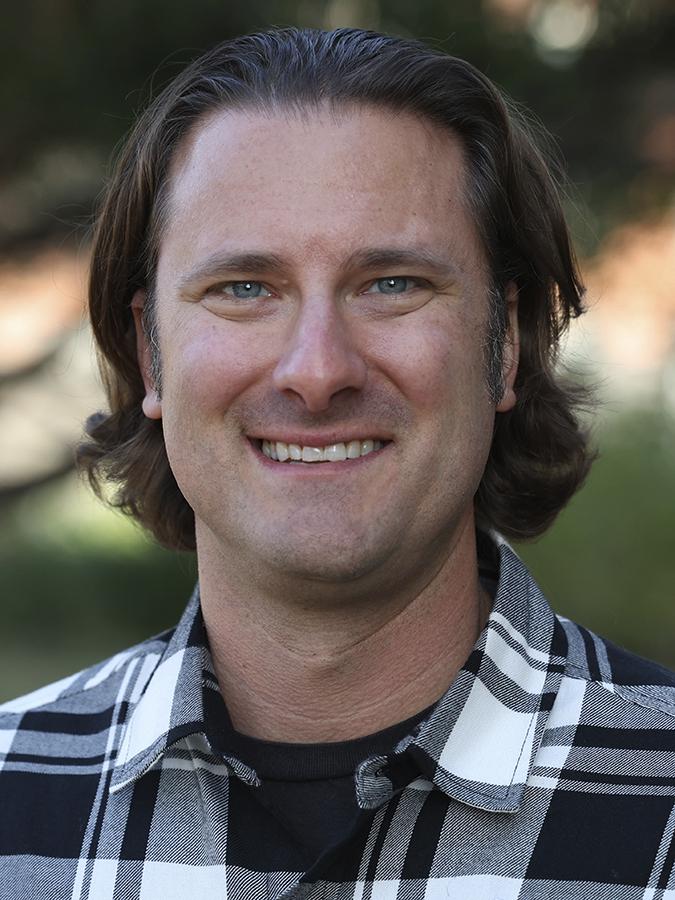
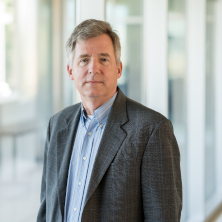
Geoffrey E. Hinton is a distinguished Professor in the Department of Computer Science at the University of Toronto. He is renowned for his foundational contributions to machine learning, particularly in the development of deep learning and neural networks. His research focuses on understanding learning processes in both artificial and biological systems, with key contributions including Boltzmann machines, backpropagation, and deep belief networks. He teaches advanced machine learning courses such as CSC2535, emphasizing topics like graphical models, variational inference, and deep learning architectures. His work has been published extensively in top journals and conferences, with recent papers exploring forward-forward algorithms, analog diffusion models, and scalable neural network training methods. Hinton has advised numerous PhD and master's students and collaborates with institutions like Vector Institute. He is a central figure in the global AI community, regularly presenting at conferences (e.g., 2023 talks on CBS 60 Minutes, BBC, and PBS). His lab focuses on advancing machine learning theory and applications, addressing challenges in vision, language, and generative models.
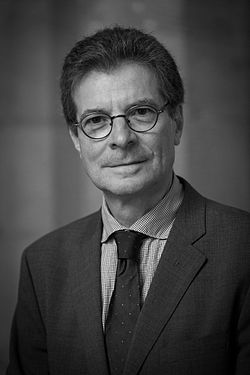
Homi K. Bhabha is the Anne F. Rothenberg Professor of the Humanities at Harvard University. His work spans colonial and postcolonial theory, cultural change, cosmopolitanism, and human rights within aesthetic contexts. He has been a pivotal figure in the Department of Comparative Literature since its inception as a graduate program in 1904. Education BA (1970) - University of Bombay MPhil/MA/DPhil (1990) - Christ Church, Oxford Bhabha's research focuses on cultural hybridity , ambivalence in colonial discourse , and postcolonial ethics . His theoretical frameworks analyze authors like Joseph Conrad, Walter Benjamin, and Toni Morrison through lenses of identity, power, and globalization. While his recent works On Art and A Global Measure await publication, his seminal texts like The Location of Culture (1994) and Framing Fanon (2005) remain foundational in postcolonial studies. These works explore sub-fields including: Transnational memory frameworks Psychoanalytic colonial critique Decolonizing discourse Visual culture in postcolonialism Temporal suspensions in cultural production Global trauma narratives
Andrew R. Meyer is an Associate Professor in the Department of Health, Human Performance, and Recreation at Baylor University, where he teaches courses in Sport Psychology and Religion and Sport. His academic work bridges the fields of sport sociology, cultural studies, and theology, with a particular focus on the enduring influence of muscular Christianity in American sports. His research interests include: Contemporary American Sport Culture and Religion Muscular Christianity and its modern manifestations Hero-celebrity athletes in popular culture Character development through sport and education Traditional and contemporary Indigenous sport cultures Sport's cultural impact on communities The themes across his publications reveal a consistent exploration of the moral, spiritual, and cultural dimensions of sport. His work analyzes how religious values, particularly those rooted in Christian traditions, shape athlete identity, media narratives, and public perception of sports figures. He has developed the Contemporary Muscular Christian Instrument (2017, 2020) to measure these values across global sport contexts. His articles appear in interdisciplinary journals spanning religion, sociology, public health, and cultural studies, reflecting the broad relevance of his research. Scientific awards and recognitions include: Baylor Teaching Fellow (2017) Dr. Meyer has been active in academic and public discourse, serving as a keynote speaker at international conferences on sport and Christianity and being featured on media outlets such as NPR and the Sport, Faith, Life podcast. His teaching emphasizes character formation in the classroom, aligning with his research on moral development through sport. While specific grant funding is not mentioned, his extensive publication record in peer-reviewed journals and edited volumes indicates sustained scholarly productivity. He has contributed to discussions on mega-sport events, cycling culture, and the redemption narratives of fallen athletes like Lance Armstrong. He is affiliated with the College of Health, Human Performance, and Recreation at Baylor University, contributing to both graduate and undergraduate education in sport studies.
Vicente Cervera Salinas is a Professor of Spanish Literature at the University of Murcia, affiliated with the Faculty of Arts and Humanities and the Department of Spanish Literature, Literary Theory and Comparative Literature. He has been a full professor since 2004 and specializes in Latin American literature, intertextuality, and literary theory. His research interests include: Spanish and Latin American Literature Comparative Literature and Intertextuality Poetry and the Essay as Literary Genres Classical Mythology and its Modern Reinterpretations Aesthetic Criticism and Cultural Memory Philosophical Dimensions in Literature His scholarly and creative work reflects deep engagement with figures like Jorge Luis Borges, Dante Alighieri, and George Santayana. His publications span poetry, critical essays, and editorial projects, often exploring the intersections between literature, philosophy, and cultural identity. The themes across his recent articles reveal a consistent focus on myth, authorship, and transatlantic literary traditions, particularly in Hispanic contexts. He has received recognition including the Second Prize in the America Poetry Prize (1993). He co-directs the journal Cartaphilus: Revista de investigación y crítica estética and has directed the Humanities Classroom at the University of Murcia. He served as president of the Association of Hispanic American Literary Studies (2014–2018). He has supervised at least one doctoral thesis and has been a visiting professor at institutions in Havana, San José (Costa Rica), Buenos Aires, and Vienna. His academic leadership includes editing multi-volume works on literary figures and movements, contributing significantly to the study of Hispanic intellectual and aesthetic traditions. He leads the research group Plural Scriptures: Intertextuality and Interdisciplinarity , continuing to influence both literary scholarship and creative writing in Spain and Latin America.
Wolfgang Forster is a Professor of Civil Law, Comparative Legal History and Legal Philosophy at the University of Tübingen, where he has been teaching since 2011. He served as Dean of the Faculty of Law from October 2020 to September 2022. Prior to his appointment at Tübingen, he was Professor of Civil Law and Legal Philosophy at the University of Giessen from 2007 to 2011. He completed his habilitation at LMU Munich in 2005 with a thesis on insolvency law history and earned his doctorate in 2000 with research on Karl Christian Friedrich Krause's legal philosophy. Forster studied law and philosophy at the Ludwig Maximilian University of Munich from 1987 to 1992, supported by the German Academic Scholarship Foundation and the Bavarian Scholarship for Gifted Students. He passed his first state examination in law in 1992 and his second in 1995. Between 1995 and 2000, he served as a research assistant at KU Eichstätt/Ingolstadt before becoming a research assistant at FAU Erlangen from 2000 to 2003 and at LMU Munich from 2003 to 2007. His research focuses on Civil Law, particularly the general part of the law of obligations, contract law, and family law; German and Spanish legal history, especially regarding insolvency law; History of Canon Law; and Legal philosophy and history of legal philosophy, with special emphasis on Karl Christian Friedrich Krause's legal philosophy. His work bridges historical legal scholarship with contemporary legal theory, examining how historical legal concepts inform modern jurisprudence. Forster's approach combines meticulous historical research with philosophical analysis, revealing continuities and transformations in legal thought across centuries. His publications demonstrate a consistent focus on the intersection of legal history, philosophy, and practical application. Forster has published extensively on Krausist legal philosophy, Spanish legal history, insolvency law development, and historical aspects of family law. His work shows particular strength in analyzing how legal concepts migrate across national boundaries and historical periods, with recurrent attention to German-Spanish legal connections. Hermann Conring Prize 2010 (for his habilitation thesis) Max Weber Prize of the Bavarian Academy of Sciences (for his dissertation) Faculty Prize of the Faculty of Law of the LMU Munich (for his dissertation) Forster has received significant research funding, including publishing support from the German Research Foundation for his habilitation thesis. He co-organized the 40th German Legal Historians' Day in 2014 and was a co-applicant for the interdisciplinary research training group 'Ambiguity: Production and Reception' approved by the DFG in 2013. He has also served as a visiting professor at the University of Wisconsin Law School in Madison, USA. His work demonstrates strong institutional support and recognition within the German and international legal academic community.
William H. Nienhauser, Jr. is the Halls-Bascom Professor of Classical Chinese Literature in the Department of Asian Languages and Cultures at the University of Wisconsin–Madison, College of Letters and Science. He is a leading authority on early Chinese literature, historiography, and poetry, with a particular focus on Sima Qian’s Shiji and the poetry of Du Fu. He has held visiting and research positions in China, Japan, Germany, and Taiwan, and remains academically active, including a 2018 appointment as Visiting Professor at Nankai University. His research interests include early traditional Chinese fiction, historiography, chuanqi and zhiguai tales, and the application of modern Western critical theories to Chinese literary texts. He is deeply engaged in the translation and annotation of classical works, especially the Shiji , often in collaboration with graduate students. His scholarship bridges philology, literary theory, and historical contextualization, contributing significantly to the global understanding of pre-modern Chinese literature. Nienhauser’s publications reveal a sustained focus on textual analysis, narrative structure, and the interplay between history and literature. His work spans from early Shijing poetry to Tang dynasty fiction, with a strong emphasis on Sima Qian’s historiographical methods and legacy. He has also contributed foundational reference works and critical editions, shaping the field of Chinese literary studies. His scientific awards reflect the international recognition of his scholarship: Woodrow Wilson Fellowship ACLS Fellowship NEH Fellowship Fulbright-Hayes Fellowship Japan Foundation Fellowship German Research Foundation Fellowship Alexander von Humboldt Foundation Fellowship Humboldt Foundation Lifetime Achievement Award (2003) Nienhauser has advised numerous graduate students in collaborative research projects, particularly on the Shiji and Du Fu. He has secured major fellowships and grants from prestigious organizations including the NEH, ACLS, Fulbright-Hayes, and the Humboldt Foundation, enabling extended research and translation work. His editorial roles, especially as a founding editor of Chinese Literature: Essays, Articles, Reviews (CLEAR), have been instrumental in advancing the field. While no formal lab or research center is mentioned, Nienhauser leads a major international collaborative translation project on the Shiji , involving scholars and students across institutions. His seminars and graduate courses foster a close-knit research community focused on classical Chinese texts.
Antoine Compagnon is a Professor of French Literature at Collège de France since 2006 and the Blanche W. Knopf Professor of French and Comparative Literature at Columbia University since 1985. He holds a Doctorate from Paris Diderot University and studied at École Polytechnique and École nationale des Ponts et Chaussées. Research Interests : Compagnon specializes in French literature , comparative literature , and literary theory , with a focus on modernity, postmodernism, and canonical figures like Proust, Montaigne, and Baudelaire. His work explores auto-biographical forms, rhetorical traditions, and the cultural impact of French literature. Publications Trends : His recent books analyze intersections between 17th-century philosophy and modern criticism , emphasizing autobiographical literature and digital humanities . He frequently examines French cultural identity , literary pedagogy , and the paradoxes of modernity . Scientific Awards : Fellow of the Thiers Foundation (1975-1978) Guggenheim Fellow (1988) Fellow of the American Academy of Arts and Sciences (1997) Fellow of Academia Europaea (2006) Corresponding Fellow of the British Academy (2009) Honorary Degrees from King's College London (2010), HEC Paris (2012), and University of Liège (2013) Claude Lévi-Strauss Prize (2011) Additional Contributions : He curated a Proust manuscript exhibition at the Morgan Library (2013) and produced popular radio series like Un été avec Montaigne (2012) and Un été avec Pascal (2020).
Finbarr Barry Flood is the William R. Kenan, Jr., Professor of the Humanities and Founder-Director of the Silsila: Center for Material Histories at NYU's Institute of Fine Arts. He holds a Ph.D. in Islamic Art History from the University of Edinburgh (1993) and a B.A. in Archaeology from Trinity College Dublin (1988). His research focuses on Islamic art and architecture, cross-cultural material culture, and art historical methodologies. Notably, he has held prestigious fellowships such as the Slade Professorship at Oxford and ACLS Collaborative Research Fellowship. His work bridges global art histories, examining topics like medieval Hindu-Muslim encounters, iconoclasm, and the materiality of religious artifacts. Flood’s scholarly contributions include seminal books like Objects of Translation and The Great Mosque of Damascus . His awards reflect both academic excellence and teaching prowess, including NYU's Golden Dozen Award. As director of Silsila, he leads interdisciplinary research into material histories, fostering collaborations across disciplines and regions. His publications span 40+ years, addressing themes from medieval art technologies to modern reinterpretations of Islamic aesthetics.
Filippo Carlo Wezel is a Full Professor of Organization and Management at the Faculty of Economics of Università della Svizzera italiana (USI), where he also serves as Director of the Institute of Management and Organisation. He holds additional research affiliations as a Visiting Research Professor at emlyon Business School (France) and a Research Fellow at Judge Business School, University of Cambridge. He plays a significant editorial role as Senior Editor at Organization Studies and serves on the editorial review boards of Organization Science , Strategic Entrepreneurship Journal , Strategic Organization , and the Advisory Board of Research in the Sociology of Organizations . His educational background includes a PhD in Management from the University of Bologna. Prior to joining USI in 2009, he held academic positions at the University of Groningen (post-doctoral researcher) and Tilburg University (Assistant and Associate Professor). He has also been a visiting scholar at leading institutions including Wharton, MIT, Columbia, Duke, London Business School, LSE, and Hong Kong University. His research centers on organizational identity, managerial and inter-firm mobility, entrepreneurship, and institutional theory. His recent publications explore identity hybridization in political parties, category dynamics in creative industries, historical organizational practices in colonial firms, and stigma in emerging markets. He frequently employs longitudinal, historical, and experimental methodologies, often bridging sociology and management. The most recent articles (2020–2025) reflect a strong trajectory in the sociology of organizations, with recurring themes of identity, categorization, legitimacy, and mobility. He investigates how social evaluations, historical constraints, and institutional environments shape organizational behavior and strategic positioning. His work spans diverse contexts—from 18th-century Lyon silk traders to modern ICT firms and medical marijuana markets—demonstrating a broad empirical and theoretical reach. Scientific Honors and Editorial Roles: Senior Editor, Organization Studies Editorial Review Board, Organization Science Editorial Review Board, Strategic Entrepreneurship Journal Editorial Review Board, Strategic Organization Advisory Board, Research in the Sociology of Organizations He has extensive experience in teaching organizational theory and behavior at undergraduate, master’s, PhD, and executive levels. His research has been published in top-tier journals such as Administrative Science Quarterly , American Sociological Review , Academy of Management Journal , and Strategic Management Journal . He leads a vibrant research agenda at USI, supported by a broad international network, though specific grants and funded projects are not detailed in the provided text. He is also involved in mentoring students and shaping the next generation of organizational scholars, though a list of advisees is not available. Filippo Carlo Wezel is a key figure in the European organizational studies community, leading the Institute of Management and Organisation at USI and fostering interdisciplinary dialogue between organization theory and strategy. His work combines deep historical insight with contemporary theoretical innovation, contributing significantly to our understanding of how organizations and careers evolve under institutional and social pressures.
Dr. Katarzyna Paszkiewicz is Associate Professor in English and Film Studies at the University of the Balearic Islands and a researcher with ADHUC – Research Center for Theory, Gender, and Sexuality at the University of Barcelona. Her work bridges film theory, cultural studies, and the environmental humanities, with a focus on ecologically oriented film analysis, videographic ecocriticism, and affect theory. She has held visiting positions at the University of Pennsylvania, University of Melbourne, University College Dublin, and Harvard University. Her research explores intersections of gender, genre, and ecology in cinema. Key projects include Cinema and Environment: Affective Ecologies in the Anthropocene and Female Filmmakers and Feminism in the Media (FEMME) , an international initiative funded by the French National Research Agency. She has contributed extensively to debates on the Final Girl trope, eco-road movies, and gender dynamics in crime fiction and horror cinema. Dr. Paszkiewicz’s recent publications interrogate petrocultural aesthetics, queer temporalities, and the ethics of care in films like Titane , The Florida Project , and American Honey . As a member of teaching innovation groups such as Lletra de Dona , she develops interdisciplinary tools for literary criticism in virtual environments. Her work emphasizes dialogue between academia and industry to advance gender equality in media.
Professor Simon Gilson FBA is the Agnelli-Serena Professor of Italian at the University of Oxford, affiliated with Magdalen College. He previously served as Professor of Italian at Warwick University (2010-2017), holding leadership roles including Chair of Italian and roles in the Arts Faculty. His academic journey began with degrees from Leeds and Cambridge Universities, followed by teaching at multiple institutions including Keio University in Tokyo. Gilson is a leading scholar in Dante studies, focusing on reception history, Renaissance commentary traditions, and the interplay between literature and medieval/scientific thought. His research explores Dante’s legacy in Renaissance Italy, particularly through commentaries by figures like Landino and Varchi. He has directed major projects like the AHRC-funded 'Envisioning Dante' and currently holds a Leverhulme Fellowship (2024-2027) for work on Petrarch. Gilson’s publications include monographs on Dante’s reception and edited volumes on Italian literature and philosophy. He has served as editor for Italian Studies and holds roles in scholarly societies including the Dante Society of America and the Society for Italian Studies. Key awards include Fellowship of the British Academy (2022) and honorary membership in Florence’s Dante Society. His teaching focuses on medieval and Renaissance Italian literature (c.1250-1600), blending textual analysis with cultural context. Collaborative work includes databases on vernacular Aristotelianism and Renaissance Petrarch commentary, reflecting his commitment to interdisciplinary scholarship.
Lisa Lowe is the Samuel Knight Professor of American Studies at Yale University, with affiliate appointments in the Programs in Ethnicity, Race, and Migration and Women's, Gender, and Sexuality Studies. She has previously taught at the University of California, San Diego, and Tufts University, establishing a distinguished interdisciplinary career in American Studies, Comparative Literature, and critical race theory. Education: Stanford University – European Intellectual History University of California, Santa Cruz – French Literature and Critical Theory Lowe's research focuses on the intersections of colonialism, race, immigration, and globalization. Her work critically examines how liberal modernity is built upon racial capitalism, settler colonialism, and transnational displacement. She is a leading voice in transnational feminism and Asian American studies, analyzing how immigrant subjects are constructed as 'perpetual foreigners' within national cultures. Her scholarship bridges literary analysis, historical critique, and political theory to interrogate the legacies of empire. Her recent publications show a sustained engagement with the entanglements of liberalism, empire, and intimacy across continents. Themes include racial capitalism, the transpacific, feminist resistance, and the cultural politics of globalization. Her work consistently challenges disciplinary boundaries and calls for a rethinking of American Studies through a global and decolonial lens. Scientific Awards and Honors: Guggenheim Fellow American Council of Learned Societies Fellow Rockefeller Foundation Fellow Mellon Foundation Fellow UC Humanities Research Institute Fellow University of California President's Faculty Research Fellow (2011–12) Visiting Fellow, School of Advanced Study, University of London F. Ross Johnson-Connaught Distinguished Visitor, Munk School of Global Affairs, University of Toronto (2012) Carl Bode - Norman Holmes Pearson Award (2018) Richard A. Yarborough Prize (2018) Finalist, John Hope Franklin Award (2016) Nicolás Guillén Outstanding Book Award (2018) 1997 Book Award in Cultural Studies, Association for Asian American Studies Lowe has been a mentor to numerous scholars, particularly from underrepresented backgrounds, recognized by the Richard A. Yarborough Prize. She has received multiple grants and fellowships supporting her research, including from the Mellon, Rockefeller, and Guggenheim Foundations. She co-convened the Mellon Sawyer Seminar 'Comparative Global Humanities' at Tufts and has been an Affiliate Scholar at the Boston Psychoanalytic Society and Institute (2022–2023). She has also served as a visiting fellow and speaker at numerous international institutions, indicating sustained collaborative and advisory engagement. Lowe co-edits the influential book series Perverse Modernities with Jack Halberstam at Duke University Press, shaping contemporary critical theory. She has also co-edited special issues and volumes that have advanced the field of Asian American Studies. Her scholarly network includes leading institutions across the U.S. and globally, and she continues to be a central figure in interdisciplinary humanities.
University of California, Los AngelesUnited States
Greg Bryant is a Professor and Chair in the Department of Communication at the University of California, Los Angeles (UCLA). His research focuses on cognitive science, vocal communication, and social behavior, integrating acoustic analyses, perception experiments, and cross-cultural field studies. Key research areas include evolutionary psychology, nonverbal communication, verbal irony, music perception, and infant-directed speech. His recent publications explore volitional laughter, vocal features in social judgments, and the cultural evolution of music. Media coverage of his work highlights topics such as animal laughter, affiliation detection in colaughter, real vs. fake laughter perception, and vocal changes during ovulation. He teaches courses like the Evolution of Interpersonal Communication and Communication Theory.
Gregory Burton, Ph.D., is a Professor of Psychology at Seton Hall University's Department of Psychology. His research focuses on haptic perception, ambiguous figures, the psychology of entertainment, and the history of sensory research. He holds degrees from LaSalle University (B.A., 1985) and the University of Connecticut (Ph.D., 1990). Burton teaches courses such as Research Methods, Perception, and Cognitive Psychology. His work bridges historical and experimental psychology, exploring how touch and sensory perception inform human interaction with objects and environments. Notable contributions include studies on nonvisual gap judgment, ambiguous figures, and critiques of historical scientific claims. He has published extensively in journals like History of Psychology and Psychonomic Bulletin and Review . Research trends in his articles emphasize haptic perception techniques, the role of sensory misinformation in scientific history, and cognitive mechanisms underpinning ambiguous visual phenomena. His articles often integrate empirical experimentation with archival analysis, reflecting a multidisciplinary approach. Burton has not been noted for specific scientific awards, but his academic contributions are recognized through consistent scholarly output. His teaching focuses on foundational psychology areas, including perception and cognitive processes.
Ryszard Lenczewski is a distinguished Professor of Film Art at The Leon Schiller National Higher School of Film, Television and Theatre in Łódź, where he has served as a lecturer at the Cinematography Department since his graduation in 1974. He held the position of Vice-Dean from 2008 to 2014 and has been instrumental in shaping generations of Polish cinematographers. As a member of prestigious film organizations including the Society of Cinematographers (PSC), the European Film Academy (EFA), the British Academy of Film and Television Arts (BAFTA), and the American Academy of Motion Picture Arts and Sciences (AMPAS), Lenczewski has established himself as a significant figure in international cinema. Lenczewski's research and creative interests span cinematography, film art, documentary filmmaking, visual storytelling, and camera techniques. His extensive filmography demonstrates mastery across feature films, documentaries, and television productions, with notable works including the Oscar-winning film "Ida" (2013) where he served as cinematographer. His approach combines technical precision with profound artistic expression, emphasizing visual narrative and emotional depth through innovative camera work and lighting techniques. Throughout his career, Lenczewski has supervised numerous student films, guiding emerging talent in cinematography techniques and visual storytelling. His pedagogical approach emphasizes hands-on experience and creative experimentation, reflected in the diverse range of student projects he has mentored from 2013 through 2025. 2013 Decoration Silver Medal for Merit to Culture - Gloria Artis 2015 Golden Camera 300 Lifetime Achievement Award at the Manaki Brothers Film Festival 2018 Gold Medal "Gloria Artis - For Merit to Culture" 2019 "Golden Glan" award from Charlie cinema in Łódź 2020 Society of Cinematographers (PSC) Lifetime Achievement Award 2022 Polish Filmmakers Association Award 2024 Silver Cross of Merit Lenczewski's creative output reveals a consistent exploration of visual narrative techniques, with recent student projects focusing on experimental cinematography, sensory film experiences, and innovative approaches to time, space, and emotion in visual storytelling. His work demonstrates mastery across documentary, feature film, and educational contexts, establishing him as a versatile and influential figure in contemporary cinematography.