Luis J. Manso is a Senior Lecturer in Computer Science at Aston University's School of Computer Science and Digital Technologies. His research focuses on social robotics, human-robot interaction, ambient intelligence, and deep geometric learning. He teaches courses on Image Processing, Software Engineering, Robotics, and Deep Learning. Current PhD supervision includes projects on evolutionary deep reinforcement learning, monocular depth estimation, and human activity analysis in smart environments. His research has contributed to socially-aware navigation algorithms and ambient assisted living technologies through publications in robotics and AI venues. Recent collaborative work established evaluation guidelines for social robot navigation algorithms through the IEEE Transactions on Human-Robot Interaction.
Elisa Marenzi is an Assistant Professor at the University of Pavia's Department of Industrial and Information Engineering. She holds a PhD in Bioengineering and Bioinformatics (2014) and master's/bachelor's degrees in Biomedical Engineering from the same institution. Her research focuses on High Performance Computing (HPC), embedded systems for biomedical monitoring, signal processing in rehabilitation/automotive fields, and cerebellar neural circuit modeling. Education: PhD in Bioengineering (2014): Thesis on pressure ulcer monitoring systems Master's in Biomedical Engineering (2010): Thesis on capacitive sensor systems Bachelor's in Biomedical Engineering (2007): Thesis on medical guideline formalization Research Highlights: Her work spans HPC optimization for hyperspectral imaging, wearable medical devices, and neurocomputational modeling of cerebellar circuits. Notable contributions include: STRATUM project: AI-driven 3D decision support tools for neurosurgery HBP (Human Brain Project) simulations of hippocampal dynamics Hyperspectral imaging applications in skin cancer diagnosis FPGA-based real-time medical signal processing systems Awards: ETIC Award (2014) for PhD thesis Lifebility Award (2012) for social tech innovation NVIDIA GPU Research Center accreditation (2016) Professional Activities: She has held roles including Systems Administrator (2020-2023) and post-doctoral research in neurocomputation (2017-2019). Active in editorial roles for Microprocessors and Microsystems and Frontiers in Computational Neuroscience. Co-chair for ASHWPA special session at Euromicro DSD 2024. Labs/Teams: Key affiliations include the Neurocomputation Laboratory (DBBS) and collaboration with NVIDIA GPU Research Center.
Dr. Ivan Deschenaux is a Research Fellow in the Department of Methodology at the London School of Economics and Political Science (LSE). He holds a PhD in Anthropology from LSE (2019) and has served as an LSE Fellow in Methodology and a class teacher for LSE100. He is affiliated with the rep²si research project. His work focuses on social norms, inequality, and caste dynamics in South Asia, particularly Nepal, combining ethnography, social network analysis, and experimental methods. His current fieldwork in 2024–2025 explores caste-based discrimination and social inequality in Eastern Nepal. His research interests include the micro-dynamics of social inequality, the reproduction of caste systems, and interdisciplinary approaches to studying social norms. He is fluent in English, French, German, and Nepali. Deschenaux advocates for mixed-methods research, integrating qualitative and quantitative techniques to address complex social phenomena. His work bridges anthropology, sociology, and cognitive science, with recent contributions examining theoretical models in anthropology and extended mind theory.
Dr. Dimitrios Grammenos is a Principal Researcher at the Institute of Computer Science (ICS) of the Foundation for Research and Technology Hellas (FORTH), leading the Human-Computer Interaction (HCI) Laboratory. He specializes in Universal Design, Universal Access, and Ambient Intelligence. With a B.Sc. in Computer Science from the University of Crete and an M.Sc./Ph.D. in Electronic Engineering from the University of Kent, UK, he also holds a Torrance Tests of Creative Thinking certification. Affiliations: HCI Lab, ICS-FORTH. Education: B.Sc. (University of Crete), M.Sc./Ph.D. (University of Kent). His research focuses on Creative Thinking, Game Accessibility, and Interactive Systems for museums/public spaces. Notable achievements include the roboTwin award (2016), Interactive Wall Platinum Award (2014), and the ICS-FORTH Outstanding Contribution Award (2009). He has led projects like Macedonia from Fragments to Pixels and COMnPLAY SCIENCE, promoting informal science education. Grammenos designs workshops on creativity and delivers global talks on innovation. He authored The Orchestra of Colors and co-created the GDPR-themed interactive comic. His work bridges technology, education, and accessibility, emphasizing playful learning and inclusive design.
Dr. Deligeorgis George is a Principal Researcher (Grade B) at the Institute of Electronic Structure and Computer Technology (IESL) of the Foundation for Research and Technology Hellas (FORTH) since 2015. He concurrently holds an Adjunct Professor position in the Physics Department of the University of Crete. His research expertise spans 2D materials, high-frequency electronics, and carbon nanotube-based devices. He earned his PhD in Physics from the University of Crete in 2008, followed by postdoctoral research at FORTH and LAAS-CNRS in France (2010–2014). His work focuses on semiconductor lasers, graphene applications, and polariton optoelectronics. He leads FORTH’s 2D materials activities and the High Frequency Measurement Facility, contributing to EU and national projects in photonics and RF device fabrication. Education: PhD in Physics (University of Crete, 2008); M.Sc. in Microelectronics/Optoelectronics (University of Crete, 2002); B.Sc. in Physics (University of Athens, 2000). Research interests include nano-electronics fabrication, microwave antennas, and nanophotonics. He has published over 60 peer-reviewed articles and co-founded Greece’s Graphene Center. His awards include IEEE membership and roles in international journals as a reviewer. His grants and projects involve EU-funded initiatives in metamaterials and RF phase shifters. He advises on nanotechnology commercialization via Micro & Nano, a tech company, and holds leadership roles in collaborative research groups.
Adda Athanasopoulos-Zekkos is an Associate Professor of Civil and Environmental Engineering at the University of California, Berkeley, where she also serves as Vice Chair for Diversity, Equity, Inclusion & Belonging. Her research focuses on assessing and mitigating the impact of multi-hazard stressors on geotechnical engineering infrastructure, addressing challenges including age-related deterioration, population growth and densification, natural and manmade hazards, and evolving demands from climate change. Her educational background includes: Ph.D. in Civil & Environmental Engineering from the University of California, Berkeley (2008) MSc. in Civil & Environmental Engineering from the University of California, Berkeley (2004) Ptychion in Civil Engineering from the University of Patras, Greece (2003) Professor Athanasopoulos-Zekkos' research spans two major interconnected thrusts. The first focuses on geotechnical earthquake engineering and soil dynamics, developing new methodologies for soil dynamics problems such as soil liquefaction hazard assessment and using innovative materials to solve challenging problems under dynamic loading. Her second research thrust aims to improve resiliency of flood protection systems and soil structures under extreme loading like hurricanes and earthquakes through the development of new analytical and design solutions. Current projects include investigating liquefaction triggering and residual strength in gravelly soils, transportation asset management for retaining wall structures, and improving networking among geotechnical engineering faculty. Her scientific achievements have been recognized with numerous prestigious awards: National Science Foundation CAREER Award (2013) Thomas Middlebrooks Award from the American Society of Civil Engineers (ASCE) (2015) Arthur Casagrande Professional Development Award from ASCE (2015) 30th Annual Mueser Rutledge Memorial Lecturer (2020) TC203 Young Researcher Award from the International Society for Soil Mechanics and Geotechnical Engineering (2020) Professor Athanasopoulos-Zekkos is actively involved in mentoring students and has taught numerous courses including CEE 175 (Geotechnical and Geoenvironmental Engineering), CEE 270 (Advanced Geomechanics), and CEE 275 (Geotechnical Earthquake Engineering) at UC Berkeley. She has received recognition for her teaching excellence, including the Excellence in Teaching Award from Chi Epsilon Great Lakes District (2016). Her professional service includes roles as Associate Editor for the ASCE Journal of Geotechnical and Geoenvironmental Engineering and leadership positions in various technical committees focusing on geotechnical engineering, earthquake engineering, and levee systems.
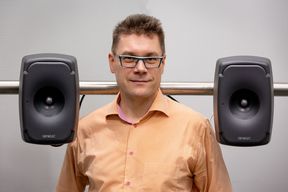
Professor Patrick Naylor is a faculty member in the Department of Electrical and Electronic Engineering at Imperial College London's Faculty of Engineering. His research focuses on acoustic signal processing, speech processing, and audio technology, with a particular emphasis on spatial audio, robot audition, and applications in human-robot interaction. His work spans theoretical advancements like polynomial eigenvalue decomposition (PEVD) and practical innovations in audio security, data augmentation, and assistive technologies for hearing aids. He leads the Speech and Audio Processing research group, affiliated with Imperial's Robotics Forum, Artificial Intelligence Network, and Natural and Machine Hearing initiatives. His research addresses challenges in multi-channel speech compression, secure audio transmission, and adaptive systems for dynamic acoustic environments. Notable projects include developing neural network-based methods for sound source localization and enhancing speech recognition for post-stroke aphasia patients. Prof. Naylor's work intersects electrical engineering, machine learning, and cognitive sciences. He has pioneered techniques for binaural speech enhancement using deep learning and contributed to standards in acoustic environment profiling. His lab's research is showcased at www.ee.ic.ac.uk/sap . His publications emphasize audio security (e.g., watermarking, privacy-preserving processing) and ambient cooperative intelligence systems. Current trends focus on explainable AI for acoustic neural embeddings and scalable microphone array processing for smart environments. His research frequently addresses real-world applications in healthcare, robotics, and telecommunications. Prof. Naylor collaborates across disciplines, integrating signal processing with robotics and clinical needs. His lab explores both foundational algorithms and deployable systems, reflecting Imperial's engineering ethos of bridging theory and practice.
Zack Spica is the Henry Pollack Early Career Professor and Assistant Professor of Earth and Environmental Sciences at the University of Michigan. He holds a Ph.D. (2015) from the Universidad Nacional Autónoma de México. His research focuses on seismology, geophysics, and volcanic systems, with emphasis on developing Distributed Acoustic Sensing (DAS) techniques using fiber-optic cables for earthquake monitoring, subsurface imaging, and tsunami detection. His work spans urban and marine environments, advancing applications in seismic hazard assessment and volcanic process understanding. Key research areas include fiber-optic cable utilization for dense seismic networks, magma dynamics at volcanoes like Tacaná and Kīlauea, and site-specific seismic hazard evaluation in cities like Mexico City. He leads the Noise and Fiber Seismology Group, collaborating with institutions globally to leverage existing telecom infrastructure for geophysical research. Recent studies highlight breakthroughs in ocean-bottom DAS for tsunami detection and volcano degassing monitoring. Spica’s innovations in DAS technology have been featured in Michigan News and academic journals. Professional contributions include postdoctoral mentoring, as evidenced by a 2021 postdoc recruitment announcement, and dataset repositories like PubDAS. His work bridges fundamental seismology with societal applications, such as improving early warning systems through novel sensor networks.
Professor Tapio Lokki is a renowned academic in acoustics and audio engineering at Aalto University's School of Electrical Engineering, Department of Signal Processing and Acoustics. He transitioned from the School of Science's Department of Computer Science to streamline teaching and research in acoustics. His work focuses on concert hall acoustics, spatial sound reproduction, binaural technology, and augmented reality audio. Key projects include developing measurement techniques for concert halls and sensory evaluation methods. He holds the title of Honorary Member of the Acoustical Society of Finland and is a Fellow of the Audio Engineering Society. Research interests include room acoustics modeling, perceptual differences in concert halls, and hearing protection devices. His contributions span psychoacoustic studies, material science for sound absorption, and virtual acoustic environments. He leads the Aalto Acoustics Lab, advancing interdisciplinary applications in audio engineering and environmental acoustics.
Dr. Larissa von Krbek is a researcher at the University of Bonn’s Kekulé Institute for Organic Chemistry and Biochemistry within the Faculty of Mathematics and Natural Sciences. She is affiliated with the Transdisciplinary Research Area (TRA) - Matter, focusing on supramolecular chemistry and molecular self-assembly. Her work emphasizes photoswitches, thermodynamic investigations of dynamic systems, and out-of-equilibrium processes in synthetic materials. Research Interests: Dr. von Krbek’s research explores the design of metallo-supramolecular systems driven by chemical, electrochemical, and photochemical fuels. Her studies aim to understand how these systems can mimic adaptive behaviors observed in natural systems, such as emergent phenomena and work performance. Key areas include supramolecular self-assembly, host-guest equilibria, and light-responsive materials. Recent Articles: Her publications (2021–2025) highlight advancements in photoswitch design, dynamic materials, and thermodynamic analysis of molecular systems. Notable works involve glucose-driven reconfiguration of metal-organic assemblies and light-powered guest release mechanisms. She also contributes to discussions on equity in STEM, pandemic research adaptation, and women’s experiences in chemistry. Grants & Collaborations: While specific grants are not detailed, her affiliation with TRA-Matter reflects participation in large-scale collaborative projects at the University of Bonn. She actively engages with interdisciplinary networks in supramolecular chemistry and materials science.
Dr. Yuan Ding is Associate Professor at Heriot-Watt University's School of Engineering & Physical Sciences, specializing in directional modulation, antenna design, and RF systems within the Institute of Sensors, Signals & Systems. Research advances wireless communication security through directional modulation techniques, with focus on RF fingerprinting, backscatter communication, and integrated sensing-communication systems. Recent work explores quantum-enhanced security and mmWave implementations. Publications demonstrate leadership in directional modulation research, with contributions to antenna array design, physical layer security, and nonlinear transmitter modeling. Work bridges theoretical concepts with practical RF hardware implementations.
James Wright is a Lecturer at the University of Surrey in the School of Chemistry and Chemical Engineering , focusing on Physical, Analytical, and Inorganic Chemistry . He holds a PhD from the University of Sheffield (2016) and has previously held teaching and research positions at the University of Sheffield, Guangdong Technion Israel Institute of Technology, and the University of Reading-Nanjing University of Information Science & Technology Joint Academy. Education: MChem, PhD (University of Sheffield) His research spans two primary domains: pedagogical studies in transnational education for Confucian heritage students and cognitive load reduction in undergraduate chemistry labs, and chemical research in main-group non-covalent intermolecular forces, non-ambient crystallography, and selective gas adsorption. His pedagogical work includes analyzing laboratory skill transitions in UK-China joint degree programs and implementing practical skills portfolios for assessment. Recent chemical research highlights include atmospheric solids analysis probe mass spectrometry integration in teaching labs, electrochemical oxidation of sulfides to sulfoxides, and metal-free Buchner-type reactions for cyclopropane synthesis. He also investigates coordination polymers and quantum defects in atomic systems. His publications reflect a blend of chemistry education and chemical synthesis , with notable collaborations including Prof Lee Brammer (his PhD supervisor) and researchers in transnational education. He supervises final-year BSc and MChem research projects but does not list individual students.
Dr Ryan Pound is an academic at the University of York, focusing on improving the representation of ocean-atmosphere interactions in global models such as GEOS-Chem. His research emphasizes iodine's role in tropospheric ozone destruction and the development of box models to study interface processes between the ocean surface and atmosphere. He contributes to the GEOS-Chem community through model updates and experiments. His work integrates experimental and observational data from the WACL research group, enhancing understanding of atmospheric chemistry in remote regions. Key research themes include air-sea gas exchange, ozone deposition mechanisms, and the impacts of reactive gases on climate and air quality. Selected publications highlight advancements in iodine-isoprene comparisons, ozone deposition influences, and coastal ozone dynamics. Collaborations involve institutions like the University of York and international datasets. Dr Pound evaluates novel low-cost sensors for environmental monitoring applications, bridging technological innovation with field data collection. No scientific awards are listed, but his contributions to open-source modeling frameworks demonstrate scholarly impact. Advising and grants details are not specified in the text. He is affiliated with the WACL lab, focusing on atmospheric chemistry and environmental systems.
Sami Alshurafa is an Associate Professor in the Civil Engineering Department at the University of Pittsburgh at Johnstown. He holds a Ph.D. in Structural Engineering from the University of Manitoba (2012), an M.S. in Civil Engineering from Dalhousie University (2005), and a B.S. in Civil Engineering from the University of Gaza (1999). He is a licensed Professional Engineer in Ontario and has additional certifications in Project Management, Residential Drafting, and Design. His research focuses on advanced composite materials, specifically developing composite guyed structures, glulam Tudor arches, and construction tools. Key interests include rehabilitating old concrete/wood structures, ambient housing technology, and the integration of FRP (Fiber-Reinforced Polymer) materials into civil infrastructure. Pedagogically, he explores education-based management and interpersonal communication strategies in engineering education. Alshurafa has authored numerous articles in journals like Journal of Composites for Construction ASCE and Mechanics of Advanced Materials and Structures , focusing on FRP tower design, structural dynamics, and material behavior under environmental stresses. His work emphasizes practical applications of composites in telecommunication infrastructure and historical structure restoration. While no specific grants or labs are detailed, his academic contributions span structural innovation and educational methodology. He maintains an active presence in both civil engineering research and the advancement of STEM pedagogy.
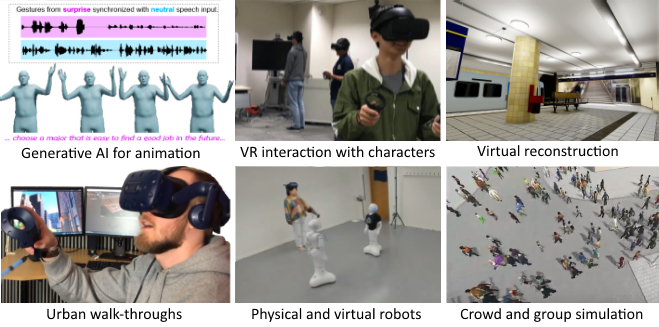
Christopher Peters is a Professor and Director of the Embodied Social Agents Lab (ESAL) at KTH Royal Institute of Technology. He holds a PhD from Trinity College Dublin (2004) and is affiliated with the Department of Computational Science and Technology (CST) within the School of Electrical Engineering and Computer Science (EECS). His work focuses on Socially Interactive Agents and Embodied AI, exploring computational models of visual attention, affect, memory, and theory of mind. Peters leads projects on human-agent interaction, urban spatial contexts, and multimodal systems involving humanoid agents and robots. Education: PhD in Computer Science, Trinity College Dublin, 2004. Research Interests: Peters investigates embodied AI through socially interactive agents, emphasizing real-time control systems for gaze, emotion, and group dynamics. His studies span virtual characters, physical robots, and VR applications. Key areas include politeness behaviors in human-robot interactions, crowd navigation algorithms, and urban spatial analysis. Recent work includes the CreativeBot project, leveraging LLMs to enhance child creativity through storytelling robots. Projects & Grants: Peters is Principal Investigator for EU Horizon 2020 projects CLIPE (€4M), ANIMATAS (€3.9M), and ProsocialLearn. He leads a Swedish Research Council grant (4 MSEK) on VR applications for human-robot collaboration. His projects address societal challenges in urban planning, digital transportation, and educational robotics. Labs & Teams: Directs ESAL, a lab developing embodied agents for social interaction. Collaborates with industry and academic partners in Europe and globally through projects like METROPOLIS and HUMAINE.