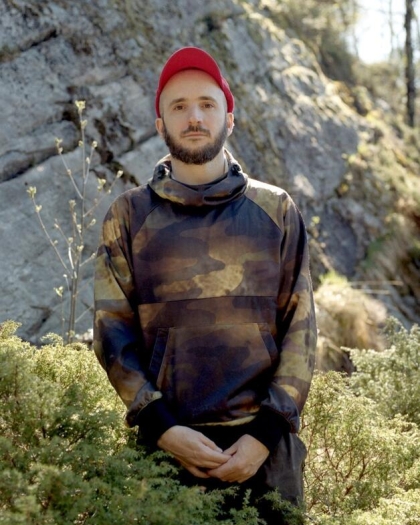
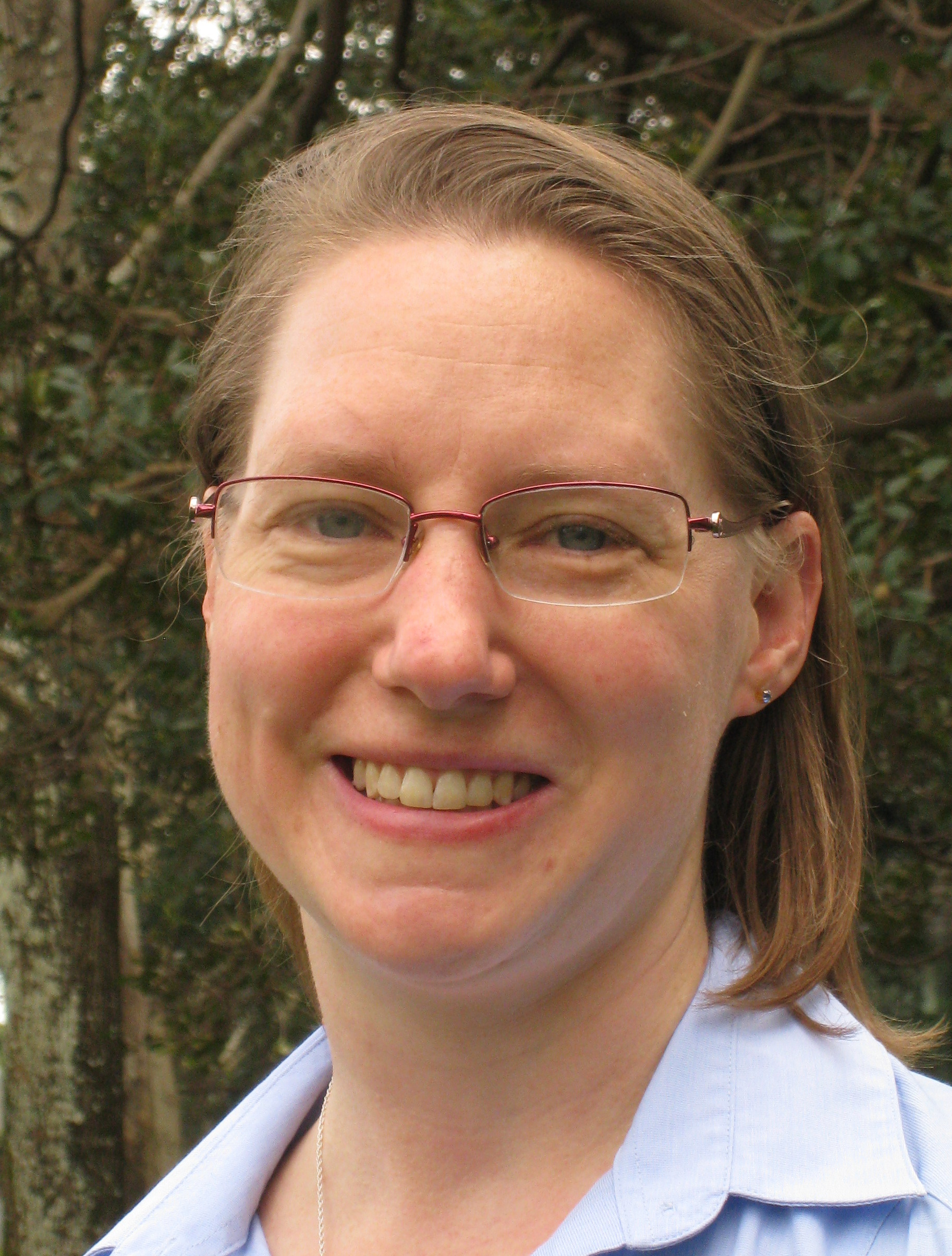
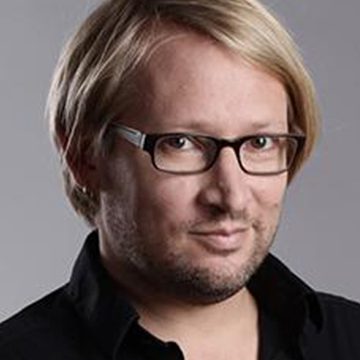
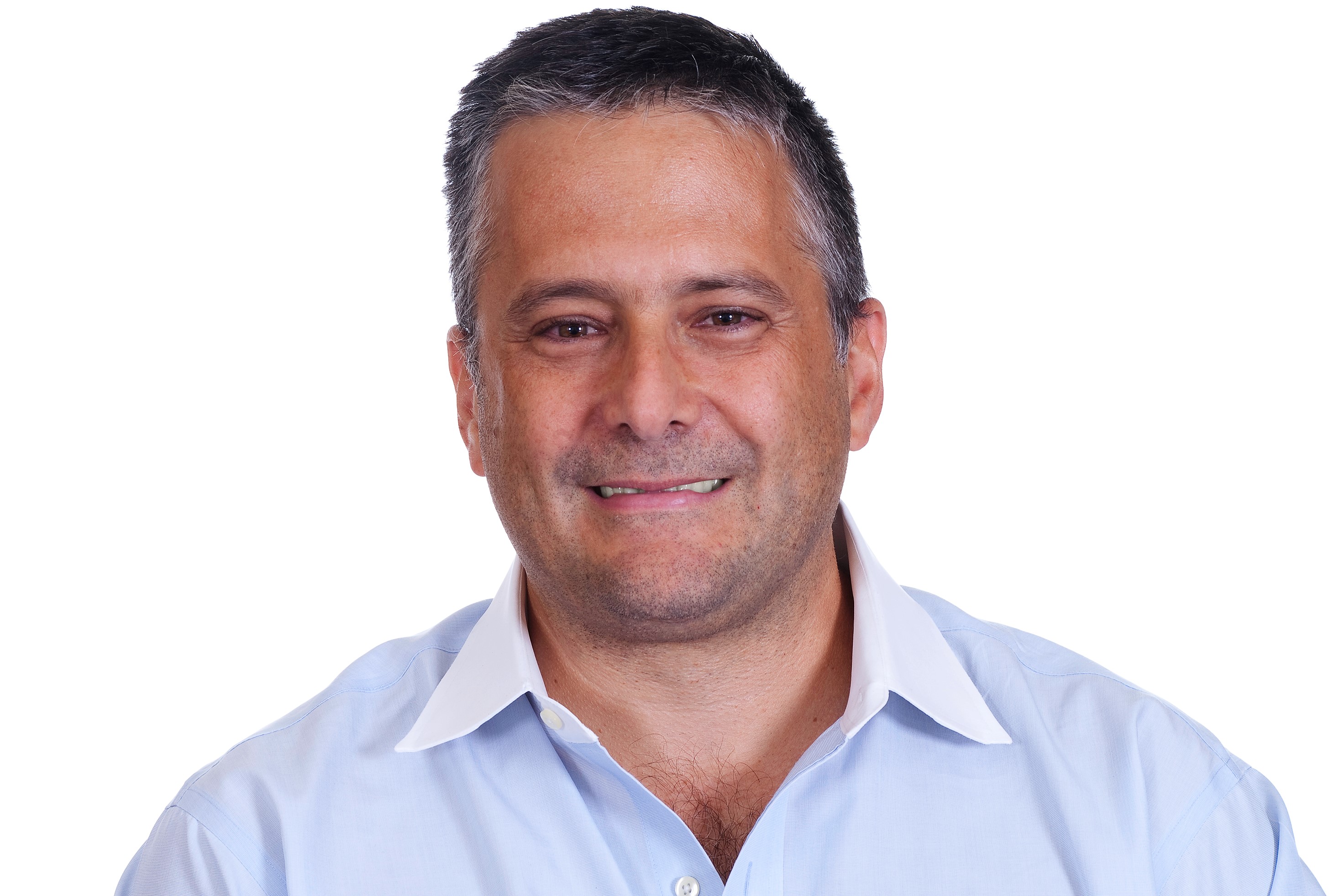
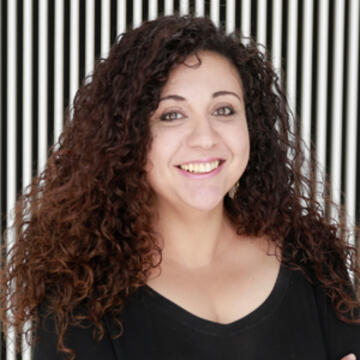
Ji Hwan Park is an Assistant Professor in the School of Interactive Games and Media at RIT's Golisano College of Computing and Information Sciences (GCCIS). He holds a PhD from Stony Brook University under Prof. Arie Kaufman. His research focuses on accessible data visualization, digital twins, human-AI collaboration, and VR/AR applications. Notable contributions include developing tools for ADHD-friendly visualizations and interactive protein motif identification. He has received funding from the Department of Defense for biomedical research and earned an Honorable Mention at CHI 2024. Current teaching includes courses on game design and advanced algorithms. Research activities span medical imaging analytics (e.g., CMed framework for crowd-sourced diagnostics), climate modeling through Bayesian deep learning, and creative visualization techniques like Graphoto. His work bridges technical innovation with human-centered design principles, particularly in healthcare and neurodivergent accessibility contexts.
Guangyu Cao is a Professor at the Department of Energy and Process Engineering, Norwegian University of Science and Technology (NTNU). He holds leadership roles in multiple international organizations, including the European standards working group CEN TC156 WG18, REHVA's technical committee, and the editorial board of the Journal of Building Engineering (Impact Factor 5.318). His research focuses on indoor airflow dynamics, ventilation systems in healthcare settings, and airborne disease transmission mitigation, with a strong emphasis on surgical environments and school buildings. Education: PhD in Energy Engineering (2009), Helsinki University of Technology Senior Researcher at VTT Technical Research Center (2009-2014) Research Interests: Hospital ventilation optimization, thermal comfort in clinical settings, airborne infection control, and sustainable building environmental quality. He combines experimental studies with mathematical modeling to evaluate ventilation strategies, particularly in operating rooms and isolation wards. Projects: EU Marie Curie DTN HumanIC (2024–2027) EU H2020 iclimabuilt (2021–2025) NFR POSIred (2020-2024) Labs/Teams: Collaborates with St. Olav's Hospital on indoor environment projects and leads teams in Cold Climate HVAC and Healthy Building Europe initiatives.
Gabriele de Seta is a researcher at the University of Bergen's Department of Linguistic, Literary and Aesthetic Studies, leading the ALGOFOLK project funded by the Trond Mohn Foundation (2024-2028). A sociologist by training with a PhD from Hong Kong Polytechnic University, he previously served as postdoctoral fellow at Academia Sinica (Taipei) and on the ERC-funded Machine Vision in Everyday Life project. Department of Ethnology, Academia Sinica (postdoctoral fellow) Department of Linguistic, Literary and Aesthetic Studies, University of Bergen (researcher) His research focuses on algorithmic folklore, synthetic ethnography, and Chinese digital culture. He examines how digital technologies and creative practices mutually shape each other, particularly in China's sociotechnical landscape. Key areas include platform governance, machine vision, algorithmic accountability, and digital vernaculars. Recent publications analyze TikTok/Douyin's infrastructural role, deepfakes, QR codes as globalized gateways, and Chinese internet vulgarity. His work combines theoretical frameworks from STS, media studies, and digital anthropology with fieldwork on Chinese digital practices. Trond Mohn Foundation Starting Grant ERC-funded research As educator, he designed the Machine Vision module for Bergen's Critical Approaches to Technology and Society course and taught Key Theories in Digital Culture. He supervises multiple MA/PhD students including co-supervision of Hanna Lauvli. Through his blog and podcast, he promotes public engagement with digital research.
Dr. Miaoqiang Lyu is a Research Fellow at the School of Chemical Engineering , The University of Queensland . His work focuses on lead-free perovskites , flexible energy storage , and optoelectronic devices . Research Interests : Designing low-toxicity and stable semiconducting lead-free perovskites for solar energy conversion Developing flexible energy storage devices for Internet-of-Things (IoT) sensors Advancing zinc batteries and aqueous electrolyte systems Photocatalytic hydrogen production and CO2 reduction Recent Article Trends : Focus on 2D/3D heterostructures, interstitial metal doping, and solvent-engineered interfaces Applications in indoor photovoltaics, artificial synaptic functions, and wearable electronics Lead-free perovskites for resistive memory and energy storage Scientific Awards : ARC DECRA Fellow Advance Queensland Industry Research Fellow CRC for Polymers grant Supervision & Funding : Principal advisor for two PhD projects on lead-free perovskites and flexible batteries Current grants: Enabling low-toxicity perovskites for indoor photovoltaics (2026-2030), Printable zinc ion batteries (2025-2026) Labs & Collaborations : Affiliated with the Nanomaterials Centre at UQ Collaborations with Professor Lianzhou Wang , Professor Ian Gentle , and Associate Professor Ruth Knibbe
Geke Dina Simone Ludden serves as Full Professor of Interaction Design at the University of Twente's TechMed Centre within the Faculty of Electrical Engineering, Mathematics and Computer Science. Her interdisciplinary work bridges human-computer interaction, health technology, and behavioral design. Her research focuses on behavior change through digital interventions , particularly in health contexts. Key areas include cognitive health for aging populations , wearable stress management technologies , and human-building-technology interactions in healthcare environments. She employs co-design methodologies and user-centered approaches to develop tools supporting wellbeing and aging-in-place solutions. Recent publications reveal strong trends in applied health informatics (62% of 2023-2025 output), with significant emphasis on Dutch aging populations and cross-cultural healthcare comparisons . Her work consistently integrates mediation theory and socio-technical frameworks to analyze technology adoption barriers. Ludden actively supervises academic work, having examined 6 doctoral theses since 2020 on topics ranging from hand rehabilitation devices to biodiversity UX implementations. She directs the TechMed Centre's research initiatives focused on translating interaction design principles into clinical applications, particularly through the MattPod sensory dining project and cognitive health toolkits.
Panos Markopoulos is a Professor of Design for Behavior Change at Eindhoven University of Technology (TU/e), affiliated with the Industrial Design department. He also serves as an Adjunct Professor at the University of Technology Sydney (UTS) and a Visiting Scientist at Kemphenhaeghe Expertise Center for Epileptology, Sleep Medicine, and Neurocognition. Academic Background: Electrical Engineering (NTUA), Computer Science (Queen Mary, University of London), and Human-Computer Interaction (PhD, Queen Mary) Research Focus: Ambient Intelligence, Behavior Change Support Systems, Wearable Technology, and Child-Computer Interaction Editorial Roles: Founding Editor of Elsevier’s Journal on Child Computer Interaction, Chief Editor of Taylor & Francis’ Behavior and Information Technology His research explores adaptive persuasive systems, family-aware technologies, and user-centered design methodologies. Key publications include work on persuasion profiling, collaborative design, and evaluation frameworks for children’s interactive products. He has contributed extensively to academic literature, with notable works spanning from 2004 to 2016, emphasizing personalized user experiences, ambient intelligence, and rehabilitation technologies. His expertise bridges interaction design, behavioral science, and technological innovation for societal impact. Professional Activities: European Commission evaluator, editorial leadership in HCI Teaching: Design for Behavioral Change, Final Master Project guidance
Lei Lei is an Associate Professor at the University of Guelph, specializing in Computer Engineering. Her research focuses on Machine Learning/Deep Reinforcement Learning, Internet of Things (IoT)/Internet of Vehicles (IoV), Mobile Edge Computing, and Smart Grid Optimization. She explores cutting-edge applications in energy-efficient systems, autonomous vehicles, and intelligent transportation networks. Her work integrates advanced AI techniques with real-world challenges in communication and control systems. Key research areas include optimizing electric vehicle charging schedules using hierarchical deep reinforcement learning and enhancing vehicular networks through 6G communication protocols. She has pioneered methods for joint communication-control systems, securing federated learning models, and developing robust resource allocation strategies in IoT and edge computing environments. Lei Lei’s publications emphasize interdisciplinary solutions, bridging computer science, electrical engineering, and transportation systems. Her recent work addresses challenges in smart grid security, multitimescale control systems, and the application of AI tools like ChatGPT in connected vehicles. She is affiliated with the AI Affiliated Faculty at the University of Guelph, reflecting her contributions to artificial intelligence research.
Dr. rer. nat. Thomas Hermann is a faculty member at Bielefeld University's Faculty of Engineering, leading the Ambient Intelligence Group and coordinating the Computer Science program. He specializes in sonification, auditory data science, and smart environments. Head of Ambient Intelligence Working Group Computer Science Program Coordinator Member of multiple academic advisory boards His research focuses on interactive sonification for biomedical applications, quantum systems, and smart environments. Key projects include ECG sonification for cardiac diagnosis, real-time auditory feedback in swimming, and sonic interfaces for AR cooperation. Recent publications span 2025 with Python-based sonification tools ( pya AGen ), quantum system sonification, and ST-elevation myocardial infarction monitoring. He contributes to open-access supplementary materials and interdisciplinary workshops. As a researcher , Hermann develops practical sonification frameworks like Panson for facial behavior analysis, CardioScope for portable ECG monitoring, and Base Cube One for smart environments. His work bridges academic research with industry applications.
Associate Professor Judy Hart is a materials scientist at the School of Materials Science & Engineering, UNSW Sydney , specializing in the development of semiconducting materials for renewable energy applications. Her work integrates computational (DFT) and experimental approaches to understand composition-property relationships in systems like solid solutions , heterostructures , and doped materials for photocatalysis and solar cells . She leads projects funded by ARC Discovery and Linkage grants , including work on photo-electro-catalysis systems and stabilizing ceramic materials . Education: PhD in Materials Engineering (Monash University, 2007), BEng (Materials) (Monash, 2002) Professional Experience: Senior Lecturer (UNSW, 2017–), Lecturer (UNSW, 2013–2017), University of Bristol (2007–2012) Research Interests Her research focuses on designing materials for renewable energy , particularly photoelectrochemical water splitting and organic oxidation reactions . Key areas include Density Functional Theory (DFT) , defect engineering , band gap tuning , and nanostructured materials . She investigates ferroelectric polarization effects , metal oxide heterostructures , and stability of battery components , with applications in hydrogen production , CO2 conversion , and advanced battery materials . Scientific Awards Ramsay Memorial Fellowship (University of Bristol, 2007–2009) Teaching Contributions She is co-author of the 1st Australian & New Zealand edition of "Materials Science and Engineering: An Introduction" , and teaches courses on computational materials science , corrosion-resistant surfaces , mechanical behavior of metals , and materials design .
Guy Hoffman is Associate Professor and Associate Director of Undergraduate Affairs at Cornell University's Sibley School of Mechanical and Aerospace Engineering. He holds faculty appointments in Aerospace Engineering, Computer Science, Information Science, and Mechanical Engineering. Hoffman earned his Ph.D. in Human-Robot Interaction from MIT and M.Sc. in Computer Science from Tel Aviv University. His research explores computational, design, and social aspects of Human-Robot Interaction (HRI), with focus areas including: Embodied cognition for social robots Anticipation and timing in HRI Nonverbal behavior in human-robot collaboration Robotics for performing arts Non-anthropomorphic robot design Publications demonstrate interdisciplinary work spanning social robotics, adaptive interfaces, inclusive design, and AI education. Recent articles explore shadow-based interaction privacy, emotional conveyance through shape-changing interfaces, and cultural aspects of robot morphology. Major recognitions include: Andrew P. Sage Best Transactions Paper Award (IEEE, 2020) Dennis G. Shepherd Teaching Award (Cornell, 2019) Best Paper Award, IEEE/ACM HRI Conference (2015) His research group develops robotic platforms like Blossom and investigates human-robot collaboration in workspaces, inclusive play for children with mixed abilities, and open-source educational tools for AI literacy.
Facundo M. Fernandez is a Regents' Professor and Vasser-Woolley Chair in Bioanalytical Chemistry at the Georgia Institute of Technology, where he leads the Fernandez Research Group within the School of Chemistry and Biochemistry in the College of Sciences. His research spans multiple cutting-edge areas of analytical chemistry with significant applications in medicine, forensics, and basic science. Dr. Fernandez earned his M.Sc. in Chemistry (1996) and Ph.D. in Analytical Spectrometry/Metallomics (1999) from the Facultad de Ciencias Exactas y Naturales at Buenos Aires University, Argentina. His research program focuses on Bioanalytical Mass Spectrometry with particular emphasis on Ambient Sampling/Ionization & Molecular Imaging, Ion Mobility Spectrometry, Metabolomics, and Pharmaceutical Forensics. His work has pioneered new approaches in ambient ionization techniques that enable direct analysis of complex samples without extensive preparation. His recent publications reveal a strong trend toward spatial metabolomics, particularly in traumatic brain injury and ovarian cancer research, with increasing integration of machine learning approaches for data analysis. His work also extends to pharmaceutical quality control, exercise physiology through the MoTrPAC consortium, and prebiotic chemistry investigations. The interdisciplinary nature of his research is evident in collaborations across Georgia Tech's campus and with external institutions. NSF CAREER Award (2007) 3M Non-tenured Faculty Award (2008) CETL/BP Junior Faculty Teaching Excellence Award (2009) Ron A. Hites Award for Outstanding Research Publication (2010) Sigma Xi (GT Chapter) Best Faculty Paper Award (2010) Vasser-Wooley Faculty Fellow (2012) Dr. Fernandez has secured significant funding for his research, including NSF CAREER support, and leads projects related to metabolomics for ovarian cancer detection, pharmaceutical forensics through the CODFIN network, and participation in the large-scale Molecular Transducers of Physical Activity Consortium (MoTrPAC). His laboratory develops advanced instrumentation for mass spectrometry applications and maintains strong collaborations with the Integrated Cancer Research Center, the College of Computing, and the Center for Chemical Evolution at Georgia Tech.
Henrique O'Neill is an Associate Professor (with Habilitation) in the Department of Marketing, Operations and General Management at ISCTE - University Institute of Lisbon, Portugal. He is an Integrated Researcher at ISTAR-Iscte - Research Center in Information Sciences, Technologies and Architecture. His research focuses on information systems adoption, organizational strategy, and process optimization in healthcare, finance, and public administration. Education: PhD in Business Organization and Management - University of Cranfield (1995) Master's in Electrical and Computer Engineering - Higher Technical Institute (1987) Bachelor's in Electrical Engineering - Higher Technical Institute (1983) Research Interests: His work spans business/IT strategy, systems modeling, process analysis, and technology implementation. Key domains include healthcare informatics, banking systems, and Industry 4.0 applications. He emphasizes practical solutions for organizational performance through technology integration. Publication Trends: Recent articles explore intelligent business systems, telemedicine, design science methodologies, and supply chain innovation. His work consistently bridges theoretical frameworks with sector-specific applications in healthcare, education, and logistics. Professional Engagement: Member: Portuguese Telemedicine Association, Order of Engineers Commissioner: INEM (National Institute of Medical Emergency) reform study Director: Center for IT Development (2010-2014) Advising & Projects: Supervises 7 graduate students (1 PhD, 6 Master's). Leads EU-funded projects including: Atlantic Crossing (2024-2025): US-Portugal academic collaboration in AI/cybersecurity AAL4ALL (2011-2015): Ambient Assisted Living ecosystem UNITE (2000-2002): Ubiquitous teamwork platforms
Dina El-Zanfaly serves as an Assistant Professor in the School of Design at Carnegie Mellon University (CMU), where she directs the hyperSENSE: Embodied Computations Lab. Her work bridges computational design and human-centered interaction, focusing on how physicality shapes sensory experiences and cognitive processes through intelligent systems. Education: PhD in Design and Computation, Massachusetts Institute of Technology (MIT) Master of Science in Design and Computation, MIT (Fulbright scholar) Her research critically examines computational methods for augmenting sensory perception, with emphasis on embodied sense-making in hybrid environments. She investigates co-creative interactions between humans and intelligent systems, exploring how computational tools empower designers and non-designers to shape products, social spaces, and interconnected technologies. Key questions address mutual learning between humans and machines through improvisation and creative production. Analysis of her 2022-2025 publications reveals dominant themes in mixed reality interfaces, AI-augmented skill acquisition (particularly in crafts and welding), and tangible co-creation with generative AI. Her work consistently integrates physical computing with mindfulness applications and privacy-aware smart environments, demonstrating interdisciplinary reach across education, manufacturing, and therapeutic contexts. Scientific Awards: Fulbright Scholarship As lab director, El-Zanfaly mentors students in computational making and embodied interaction projects. Her research is supported through initiatives like Fab Lab Egypt and collaborations with MIT, where she co-founded the Computational Making Group. She chairs major conferences including Fab15 in Egypt and serves on the DESFORUM program committee, indicating significant leadership in maker education and design research communities. She founded and leads the hyperSENSE Lab at CMU, which investigates computational embodiment through projects like Origami Sensei and Sand-in-the-loop. Previously, she co-established the Computational Making Group at MIT and co-founded Fab Lab Egypt (the first community maker space in North Africa/Arab world), demonstrating sustained commitment to global maker ecosystems and interdisciplinary team building.
Kaushik Nayak is an Associate Professor in the Department of Electrical Engineering at the Indian Institute of Technology Hyderabad . His research spans semiconductor device physics, mesoscopic electronics, and electro-thermal effects in nanoscale transistors, with recent work on diamond MOSFETs, 2D material contacts, and thermal resistance in nano-sheet FETs. Ph.D., Indian Institute of Technology Bombay M. Tech., Microelectronics, IIT Bombay B.E., Electronics & Telecommunication, Utkal University He teaches advanced courses on semiconductor device modeling, mesoscopic electronics, and electromagnetic wave propagation. His publications focus on nanoelectronics, device variability, and high-temperature operations. Contact: knayak@ee.iith.ac.in .
Keith D. Koper is a Professor in the Department of Geology & Geophysics at the University of Utah and serves as Director of the University of Utah Seismograph Stations (UUSS). He is also the editor-in-chief of The Seismic Record . His work integrates academic research with operational seismic monitoring and public safety initiatives across Utah and the Intermountain West. Education: PhD in Geophysics, Washington University, 1998 BA in Math, Geology, and ISP, Northwestern University, 1993 Dr. Koper's research focuses on array seismology, forensic seismology, deep Earth structure (especially the inner core), earthquake rupture imaging, ambient seismic noise, and seismic hazards in the Intermountain West, including mining-induced and urban earthquakes. His work combines observational seismology with advanced signal processing and machine learning techniques to improve detection, discrimination, and imaging capabilities. He has led or contributed to major projects involving the Wasatch Front, Yellowstone, and regional seismic networks. His recent research emphasizes machine learning for earthquake detection, high-resolution relocation of aftershock sequences (e.g., Magna 2020, Bluffdale 2019), microseism generation in lakes, and fine-scale imaging of the Earth's inner core using seismic reflections. His studies often involve interdisciplinary collaboration, particularly with mining engineering and geodesy. Dr. Koper's research has been consistently funded by federal and state agencies, including the National Science Foundation (NSF), U.S. Geological Survey (USGS), Department of Energy (DOE), Air Force Research Laboratory (AFRL), and the Utah Department of Public Safety. His publications reflect a strong trend toward integrating computational methods with traditional seismological analysis to tackle complex problems in both natural and induced seismicity. Scientific Service and Leadership: Editor-in-Chief, The Seismic Record Director, University of Utah Seismograph Stations Secretary, U.S. Air Force Seismic Review Panel Former Chair and Vice-Chair, Utah Seismic Safety Commission Dr. Koper mentors graduate students in seismology and geophysics, including recent advisees Sean Hutchings and Alysha Armstrong. His research group actively engages in both fundamental and applied seismological research, with strong ties to national labs such as Sandia. The group is involved in deploying portable seismic arrays, analyzing large datasets, and developing new algorithms for event detection and classification. The University of Utah Seismograph Stations, under his leadership, plays a critical role in monitoring seismicity in Utah and Yellowstone, producing real-time earthquake information, ShakeMaps, and public outreach materials. The station also contributes to national and international efforts in nuclear test monitoring and volcanic hazard assessment.