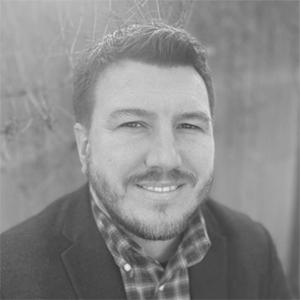
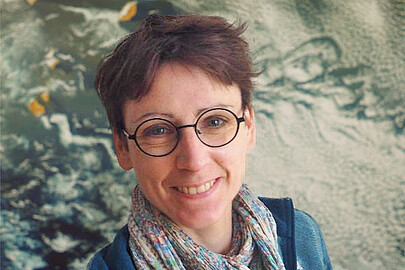
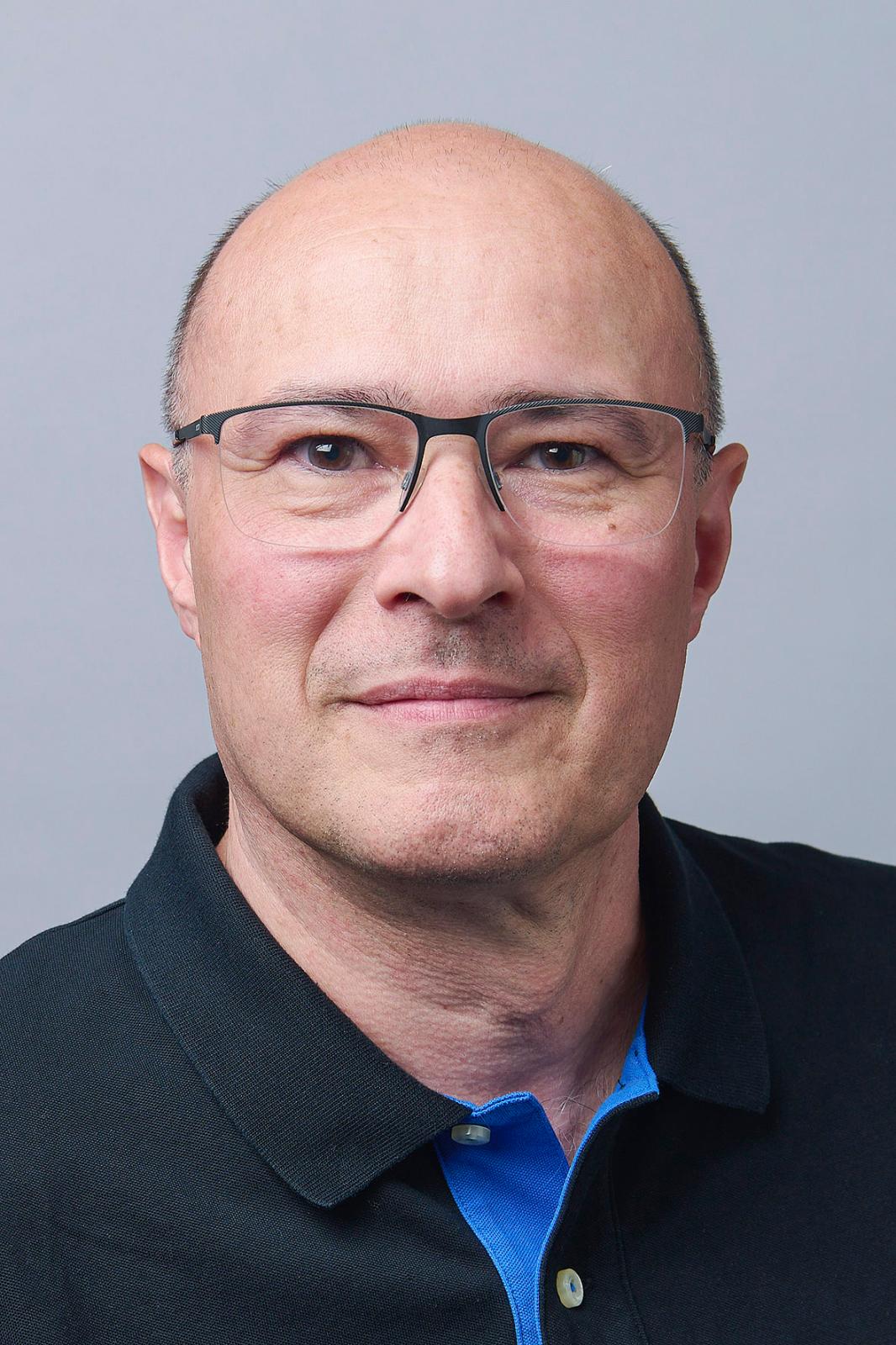
Claudia Palestrini is a Professor at the Department of Life Sciences and Systems Biology , University of Turin. Her work focuses on dung beetles , ground beetles , and Alpine biodiversity conservation , with a strong emphasis on geometric morphometrics , zoogeography , and entomology . Her research integrates ecology , systematics , and phylogeny to study insect communities in Alpine and Mediterranean environments. Key themes include habitat use , species differentiation , and sustainable land management . She has contributed to over 400 publications, with recent work analyzing equine feeding devices and insect acoustic signals . Her teaching includes courses on Entomology for Cultural Heritage , Biological Sciences , and Environmental Education . She serves on academic committees like the Department Council and Interdisciplinary Sport Sciences program. Her work bridges entomology and sustainable sports practices , highlighting the importance of biodiversity in human-impacted ecosystems.
Prof. Dr. Oliver Schilling is an Assistant Professor of Hydrogeology at the University of Basel and affiliated with Eawag , the Swiss Federal Institute of Aquatic Science and Technology. He leads research on surface water-groundwater interactions using integrated surface-subsurface hydrological models (ISSHM) and novel tracer techniques including dissolved atmospheric noble gases, environmental DNA, and radioactive tracers. Research Focus : Surface-subsurface hydrology, ecohydrology, groundwater-surface water interactions, tracer hydrogeology, climate change adaptation in water systems Key Projects : Integrated Hydrological Modeling for Operational Forecasting, Sustainable Nitrogen Fertilization, Slow Water Initiatives, Cryosphere-Groundwater Connectivity in Alpine Regions Scientific Contributions include developing HGS-PDAF (modular data assimilation framework), advancing microbial transport algorithms in HydroGeoSphere, and pioneering online flow cytometry for microbial analysis in high-turbidity environments. His work addresses drinking water production via bank filtration along alluvial rivers, critical for 30% of Swiss and 50% of European drinking water supply. Scientific Leadership : Editor, Hydrogeology Journal (since 2025) Associate Editor, Frontiers in Water (since 2021) Coordinator, Swiss Water-Earth Systems (WES) PhD School (2020–2022)
Dr. Daniel Allen is a Lecturer in Human Geography at Keele University's School of Life Sciences, specializing in human-animal relations. An IUCN/SSC otter specialist, his research on otter conservation and dog theft informs policy and advocacy. He led an Environment Agency project on otter predation perceptions and founded the 'Pet Theft Reform' campaign, influencing UK legislation (Pet Abduction Act 2024). His research examines human-animal bonds, including dog theft impacts and mental health benefits. Current projects include 'No pets! Young people’s transitions to campus living,' funded by the Society for Companion Animals Studies. Teaching includes modules on Nature Conservation, Space and Society, More-than-human Geographies, and Animals and Society. He supervises PhD student Emma Randall on eco-therapy. Awards include the Daily Mirror’s Peoples Pet Awards Special Recognition (2021) and the PM’s Points of Light Award (2022). Publications emphasize spatial justice, animal advocacy, and policy impacts, with recent work on pet theft trends and human-animal bonds in crises.
Professor Riikka Rinnan (University of Copenhagen) is a leading expert in ecosystem-atmosphere interactions, focusing on volatile organic compounds (VOCs) in Arctic environments. Her groundbreaking discovery of VOCs in permafrost has advanced climate prediction models, revealing complex interactions between climate warming, insect herbivory, microbial activity, and vegetation shifts. Current position: Professor, Department of Biology, University of Copenhagen Major research themes: Permafrost VOCs, Arctic climate feedbacks, plant-insect-microbial interactions International collaborations: China, Germany, Russia Her work combines field expeditions in extreme Arctic conditions with laboratory experiments and advanced VOC analysis. Climate warming experiments show VOC emissions could increase 40-fold with combined warming and insect attacks, while Arctic soils may act as unexpected VOC sinks. Key publications appear in Nature Communications , Nature Geoscience , and Global Change Biology . Riikka Rinnan has received prestigious awards including the EliteForsk Award, European Research Council Consolidator Grant, and Sapere Aude Research Leader. She leads international research teams, advises five PhD candidates, and supervises four postdocs (including two Marie Curie fellows). Her Siberian expedition plans demonstrate commitment to real-world scientific challenges.
Prof. Flavio Anselmetti is a Full Professor of Quaternary Geology and Paleoclimatology at the University of Bern , where he has been employed since 2012. He also serves as the Managing Director of the Institute of Geological Sciences . Prior to this, he held significant roles at ETH Zurich, including SNSF Assistant Professor, and at EAWAG Dübendorf as Head of the Sedimentology Group, while remaining a Titular Professor at ETH Zurich until 2012. His academic training includes a Diploma in Geology (1990) from the University of Basel , followed by a PhD (1994) from ETH Zurich and University of Miami (USA) . He spent three years as a Postdoctoral Fellow and Research Associate at the University of Miami between 1994 and 1997. Paleoseismology : Using lacustrine and marine sediments to reconstruct earthquake and tsunami records Climate Change Studies : Investigating Holocene and Pleistocene climate shifts through sediment cores Sediment Dynamics : Analyzing source-to-sink systems and glacial sediment properties His recent publications focus on sedimentary archives in Science Advances , Quaternary Research , and Environmental Modelling and Software , with an emphasis on deep learning applications in sediment analysis , multi-proxy paleoenvironmental reconstructions , and human impact assessments over millennia. He has contributed to major projects in the Alpine foreland and Caribbean regions . Prof. Anselmetti leads the Quaternary Geology and Paleoclimatology Research Group and collaborates with international teams on ICDP-DOVE drilling campaigns and multibeam bathymetry mapping in Swiss lakes. His work extends to geohazard assessment , carbonate-siliciclastic shelf dynamics , and subaqueous fault analysis in active tectonic zones.
Dr. Gaël Kermarrec is a researcher at the Boundary Layer Meteorology Group , part of the Institute of Meteorology and Climatology within the Faculty of Mathematics and Physics at Leibniz University Hannover . His work focuses on atmospheric turbulence, GNSS applications, and remote sensing for environmental monitoring. Boundary layer meteorology Turbulence theory GNSS signal processing Terrestrial laser scanning Climate change impacts Geodetic time series analysis His research integrates advanced mathematical models like LR B-splines and Matérn covariance with large eddy simulations to study: Atmospheric turbulence effects on optical/GNSS signals Hydrospheric mass loading Deformation analysis of terrain/port infrastructure Climatic sea-level changes Machine learning for remote sensing The 15 most recent articles (2025-2023) demonstrate his focus on: GNSS-based turbulence detection AI-enhanced climate mapping Advanced surface approximation techniques Multi-sensor data fusion Stochastic modeling of geodetic observations Environmental impacts on optical measurements He has developed tools like the Klimascanner QGIS plugin for urban climate resilience and contributes to: Understanding atmospheric scale lengths Improving TLS/GNSS deformation monitoring Analyzing hydrospheric changes Wavefront modeling Ionospheric corrections
Marcus Christl is a Lecturer at the ETH Zürich Department of Physics and Head of the Laboratory of Ion Beam Physics (LIP) . His academic profile focuses on Accelerator Mass Spectrometry (AMS) , cosmogenic nuclide dating, and environmental applications of isotope geochemistry. Office: HPK H 33, Otto-Stern-Weg 5, 8093 Zürich, Switzerland Phone: +41 44 633 38 84 / +41 44 633 65 07 Email: mchristl@phys.ethz.ch ORCID: 0000-0002-3131-6652 Dr. Christl teaches courses in Accelerator Mass Spectrometry and Quaternary Dating Methods , including: 402-0180-00L Ethics and Scientific Integrity for Doctoral Students in Physics 402-0620-00L Current Topics in Accelerator Mass Spectrometry and Its Applications 402-0621-00L Introduction to Accelerator Mass Spectrometry His research spans multiple disciplines through cosmogenic isotope analysis: Climate Science : Using 10 Be and 14 C records to reconstruct solar activity cycles and climate fluctuations over millennial timescales Geochronology : Developing novel dating techniques using 36 Cl/ 10 Be ratios for ice cores and landscape features Geomorphology : Quantifying erosion dynamics in diverse environments from the Alpine foreland to South African pediments Oceanography : Tracing Atlantic water transport patterns using 129 I– 236 U dual tracers Radiochemistry : Advancing methods for nuclear forensics and environmental pollutant analysis Recent publications reveal trends in: Refining AMS systems for analyzing transuranic elements Quantifying landscape evolution through multi-isotope approaches Understanding ocean circulation pathways using artificial radionuclides Investigating soil dynamics in glaciated and tropical environments Correlating cosmogenic production with sea level and climate changes
Dr Paul Garner is an Assistant Professor in Sport Coaching and Player Development at the School of Sport, Exercise and Rehabilitation Sciences, University of Birmingham. He holds a Doctorate of Sport and Exercise (2023), an MSc in Sports Coaching (2013), and a BA (Hons) in Sport Science & French (1996). He is internationally recognized for his research and applied work in coach development. Doctorate of Sport and Exercise – 2023 MSc Sports Coaching – 2013 BA (Hons) Sport Science & French – 1996 Paul Garner's research centers on the interpersonal and relational dimensions of coaching, focusing on intra- and inter-personal knowledge, leadership, culture development, and the intentions behind coaching behavior. His work supports coaches and coach educators through evidence-based frameworks and practical interventions. He has contributed significantly to modules in sport coaching and professional practice at the university level. His recent publications reveal a strong trend toward person-centered coaching, leadership in coach education, and the role of communities of practice in informal and collaborative learning environments. These works span disciplines including sport science, coaching psychology, and educational theory, with a consistent focus on improving coaching quality and effectiveness. While no formal scientific awards are listed, his editorial work and sustained engagement with national sports bodies reflect professional recognition. Paul has advised and collaborated with major organizations such as the British Association of Snowsport Instructors (BASI), British Equestrian Federation, GB Rowing, Table Tennis England, PGA, and England Lacrosse. These partnerships aim to drive excellence in coach education, development, and assessment across diverse sports. He also brings practical experience as a former member of the British Alpine Skiing Demonstration Team, having served as a performer, coach, coach developer, and assessor. He is actively involved in research and teaching, with a focus on enhancing coaching practice through both formal and informal learning pathways. His work bridges academic inquiry and real-world application in national coaching systems.
Daniel Farinotti is a Professor of Glaciology at the Department of Civil, Environmental and Geomatic Engineering at ETH Zurich and at the Swiss Federal Institute for Forest, Snow and Landscape Research (WSL). His work focuses on understanding glacier evolution and its impacts on water resources across mountainous regions globally. Dr. Farinotti's research interests center on glaciological modeling and its applications to water resource management. His expertise includes estimating glacier ice thickness from surface properties, long-term modeling of glacier mass changes, quantifying runoff contributions from glaciated catchments, and implications for water management in high mountain areas. His research integrates field observations, remote sensing data, and numerical modeling to address critical questions about glacier response to climate change. Dr. Farinotti's scientific achievements have been recognized with prestigious awards including the 2017 Nature Research Award for Outstanding Achievements in Review and the 2013 Award for Outstanding Contributions to Review from the Journal of Geophysical Research - Earth Surface. His publications demonstrate a consistent pattern of high-impact research across glaciology, hydrology, and climate science, with particular emphasis on the interactions between glacier dynamics and water resources. As a principal investigator, Dr. Farinotti has secured significant research funding from organizations including the Swiss National Foundation and German Federal Foreign Office. His work often involves international collaborations across multiple institutions, reflecting the global nature of glacier research and its implications for water security. He maintains active involvement in major scientific initiatives focused on glacier monitoring and climate change impacts. Dr. Farinotti leads the Glaciology research group at ETH Zurich's Laboratory of Hydraulics, Hydrology and Glaciology (VAW), which conducts fieldwork across multiple mountain ranges globally. The group employs advanced techniques including geophysical surveys, remote sensing, and numerical modeling to investigate glacier dynamics and their hydrological impacts.
Marco Barla is a Full Professor of Geotechnical Engineering at the Department of Structural, Building and Geotechnical Engineering (DISEG) at the Polytechnic of Turin, where he also leads a research group focused on energy geostructures, tunneling, slope stability, and numerical modeling. He serves as Editor-in-Chief of the ASCE International Journal of Geomechanics and holds leadership roles in international organizations such as the International Society for Energy Geostructures (President, 2025–2029) and ELGIP (Past President). He is actively involved in multiple EU and national research projects, including GEOREFIT, REGENERATE, and FOLIAGE. Research Interests: Thermoactive geostructures for shallow geothermal energy Tunnel design and construction under challenging conditions Real-time detection of debris flows and snow avalanches using fiber optics Numerical modeling of geotechnical systems Energy retrofitting of existing underground infrastructure His recent publications (2024–2025) demonstrate a strong focus on sustainable urban development through geothermal energy integration, particularly in tunnels and buildings. Key themes include energy geostructures, thermal storage, landslide monitoring, and climate resilience, reflecting his commitment to SDGs 7, 9, 11, and 13. He frequently publishes in top venues such as Tunnelling and Underground Space Technology , Geothermics , and Landslides . Scientific Awards: Telford Premium, Institution of Civil Engineers (2016) IACMAG Excellent Contributions Award (2011) Best Paper, 11th ISRM Congress (2007) Iacmag Award (2005) Top 5 Project Nominee, European Geothermal Innovation Award (2018) Advising and Grants: He supervises multiple PhD students in civil and environmental engineering and has led over 70 research projects, securing more than 2 M€ in funding from national and international sources. His projects span fundamental research (e.g., PRIN, H2020) and applied consulting (e.g., tunnel safety, landslide risk, structural monitoring). He is the scientific responsible for numerous contracts with public and private entities, including Autostrade per l’Italia and regional governments. Labs and Teams: He leads the Rock Mechanics and Rock Engineering research group at Politecnico di Torino ( www.rockmech.polito.it ), which conducts laboratory testing, field monitoring, and numerical simulations. The team is active in international collaborations and coordinates the COST Action FOLIAGE, dedicated to scaling up energy geostructure deployment.
Michele Cagol is a Professor at the Free University of Bozen-Bolzano , Faculty of Educational Sciences. Their work bridges pedagogy, emotional education, and ecological sustainability, with a focus on relational learning frameworks and multisensory educational practices. Research Themes : Emotional education, educational ecology, sustainability pedagogy, media and communication education, teacher training. Projects : Lead participant in the EU Interreg Alpine Space project FRACTAL , promoting green space awareness in the Alpine region. Recent publications emphasize radical relational pedagogy, ecological ethics, and the role of wonder in learning. Notable methodologies include intra-actionist music composition and microteaching for multilingual competencies. Teaching responsibilities span General Pedagogy , Social Education , and teacher training for primary/middle school contexts.
Dr. Sean K. Carey is a Professor in the School of Earth, Environment and Society at McMaster University, where he directs the Watershed Hydrology Group. His research focuses on hydrological and land surface processes in natural and human-impacted environments, with particular expertise in cold regions hydrology and northern environments. Dr. Carey holds a BSc (Hons) from the University of Guelph (1994), an MSc from McMaster University (1996), and a PhD from McMaster University (2000). His educational background established the foundation for his research in northern hydrology and climate change impacts. His research examines climate change processes and surface water hydrology, particularly in subarctic and alpine environments. Key interests include: Hydrological responses to climate change in cold regions Land surface processes in natural and disturbed landscapes Ecohydrological interactions in northern ecosystems Water resource management in mining-affected regions Long-term watershed monitoring and modeling Dr. Carey's extensive publication record focuses on hydrological processes in changing cold regions, with recent work examining permafrost interactions, watershed biogeochemistry, and ecosystem recovery in reclaimed landscapes. His research consistently addresses climate change impacts on northern water resources. He leads the Watershed Hydrology Group, which conducts field-based research across northern Canada including Yukon Territory and Alberta's oil sands region. Current work investigates the effects of climate warming on hydrological cycles and ecosystem functions in vulnerable northern environments.
Peng Gao is a Professor in the Department of Geography and the Environment at Syracuse University, affiliated with the Maxwell School of Citizenship and Public Affairs. His work bridges river geomorphology and urban geospatial analysis, leveraging GIS, remote sensing, and UAV technologies to address environmental and social challenges. Education: Ph.D., Physical Geography, State University of New York at Buffalo (2003) M.S., Physical Geography, Lanzhou University (1993) B.S., Solid Mechanics, Lanzhou University (1990) Professor Gao specializes in river morphodynamics—particularly in the Qinghai-Tibet Plateau—and geospatial applications for urban planning. His research examines braided/meandering river systems, peatland hydrology, and how urban built environments influence social inequities and public health outcomes through spatial analysis. His 2020-2024 publications reveal a dual focus: (1) fluvial processes in high-altitude regions (e.g., neck cutoff dynamics, braided river discharge estimation using Landsat), and (2) urban applications (e.g., green building design, lead poisoning exposure mapping). This reflects a strategic integration of field geomorphology with computational geospatial modeling. Professor Gao actively mentors through SOURCE undergraduate research grants and PhD committees. Current funded projects include peatland mapping in the Andean Altiplano, I-81 Viaduct impact analysis in Syracuse, and studies on urban built environments affecting childhood lead poisoning. His work utilizes UAVs for BVLOS operations and collaborates with Syracuse CoE on urban environmental simulations, emphasizing technical innovation in geospatial data acquisition and analysis.
Patrick Henkel is a Professor at the Technical University of Munich (TUM) affiliated with the TUM School of Engineering and Design and the Chair of Communication and Navigation. He holds a professorship in Satellite Geodesy under Prof. Hugentobler. His research focuses on advanced positioning technologies, including Global Navigation Satellite Systems (GNSS), autonomous systems, and sensor fusion. He develops algorithms for precise positioning in challenging environments such as urban areas, alpine regions, and indoor spaces. His work also extends to environmental applications, such as snow hydrology and climate monitoring using GNSS signals. Henkel’s contributions include innovations in real-time kinematic (RTK) positioning, UAV navigation, and multi-sensor integration for robotics and autonomous vehicles. His research is supported by collaborations with industry and academic partners, addressing both theoretical and applied challenges in geodesy and navigation. Henkel leads projects on GNSS signal processing, satellite-based environmental monitoring, and autonomous driving technologies. He has contributed to the Galileo HAS service and developed methodologies for snow water equivalent estimation using multi-frequency GNSS signals. His expertise spans hardware-software co-design for navigation systems and algorithm optimization for high-precision positioning in dynamic environments. He actively publishes in top-tier journals and conferences, with a focus on advancing the reliability and accuracy of navigation systems across various domains. His advising and grants include funding for projects on sensor fusion, UAV-based measurements, and satellite receiver development. He collaborates with teams at TUM’s Navigation Lab and the Professur für Satellitengeodäsie, contributing to both academic and industrial applications. His work on low-bandwidth RTK dissemination and laser-tracker verified UAV positioning highlights his commitment to bridging theoretical advancements with real-world implementation.
Elena Anatolyevna Babushkina is a Professor at the Department of Construction and Economics of Siberian Federal University. She serves as director and scientific consultant of the Scientific and Educational Laboratory 'Dendroecology and Environmental Monitoring' . Her work spans dendrochronology, climate change impacts on tree growth, wood anatomy, and environmental monitoring in Siberian ecosystems. Doctor of Biological Sciences (2020) Corresponding Member of the Russian Academy of Sciences Extensive collaborations with international institutions like University of Arizona, University of Cambridge, and Swiss Federal Institute for Forest, Snow and Landscape Research Her research focuses on climatic reconstruction through tree rings , moisture-limited forest ecosystems , and environmental drivers of xylogenesis . Recent studies analyze earlywood/latewood dynamics, drought sensitivity, and cross-species growth patterns in Siberian larch, spruce, and Scots pine populations. Elena’s publications (100+ scientific, 10+ methodological) include 15 recent articles on tree-ring-based climate proxies , crop yield modeling , and seasonal growth regulation . Key journals include Forests , Dendrochronologia , and Scientific Reports . Notable scientific awards include the 2021 Honorary Worker of Education of the Russian Federation title and multiple Presidential and Ministerial Certificates of Appreciation . She leads national grants (RFBR, RSF) on climate-crop interactions and genetic adaptation to environmental stress .