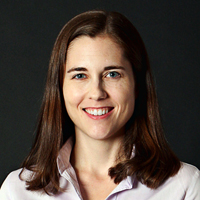
Catherine F. Eubanks is an Associate Professor of Psychology at Yeshiva University . She holds a PhD in Clinical Psychology from Stony Brook University and completed a postdoctoral fellowship at Beth Israel Medical Center, where she currently serves as Associate Director of the Psychotherapy Research Program. Education BA, Princeton University MDiv, Union Theological Seminary PhD, Stony Brook University Postdoctoral Fellowship, Beth Israel Medical Center Research Interests Dr. Eubanks specializes in: Therapeutic alliance ruptures and resolution Therapist characteristics linked to cross-theoretical effectiveness Psychotherapy skill enhancement through training and supervision Psychotherapy process research Contact Office: Resnick Campus - Rousso Building, Room 122 Phone: 646-592-4374
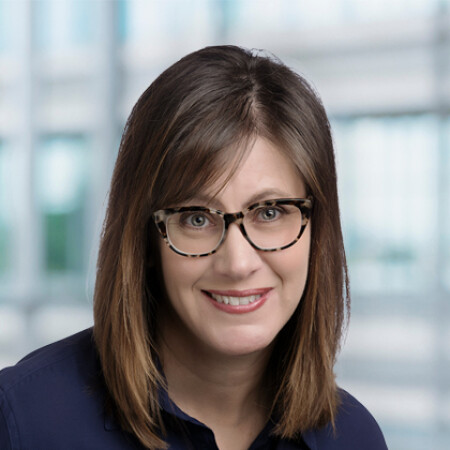
Lauren M. Lipner, Ph.D., is an Assistant Professor in the Clinical Psychology Doctoral Program at Long Island University (LIU) Post, within the College of Liberal Arts and Sciences. She holds a B.A. from Pennsylvania State University and earned her M.A. and Ph.D. in Clinical Psychology from Adelphi University in 2020. Her academic and clinical training includes an APA-accredited pre-doctoral internship at Pennsylvania Hospital/University of Pennsylvania Health System, a clinical postdoctoral fellowship at Mount Sinai Beth Israel, and a research and teaching postdoctoral fellowship at Adelphi University. Her research focuses on psychotherapy process and outcome, with an emphasis on the development and repair of the therapeutic alliance. Key areas include alliance rupture resolution, factors contributing to premature treatment termination, and methodological approaches to measuring therapeutic dynamics. She has contributed extensively to the literature through peer-reviewed journal articles, book chapters, and conference presentations. The most recent publications reflect a strong trend in advancing methodological rigor in studying alliance ruptures, utilizing control chart methods, single-case designs, and multi-method approaches. Her work bridges clinical practice with empirical research, particularly in cognitive-behavioral and integrative therapies for personality and anxiety disorders. Scientific awards and grants highlight her recognition in the field: Small Research Grant, Society for Psychotherapy Research (2021) Charles J. Gelso, Ph.D. Psychotherapy Research Grant, Society for the Advancement of Psychotherapy (APA Division 29, 2023) Dr. Lipner has served as Principal Investigator on funded projects including 'The relationship between therapist flexibility, alliance rupture resolution, and premature treatment termination' and 'Reasons for dropout measure: Development and validation.' She is actively involved in professional organizations such as the American Psychological Association (Divisions 12 and 29), the Society for Psychotherapy Research, and the Society for the Exploration of Psychotherapy Integration. She regularly presents her research at national and international conferences, contributing to training and supervision literature, particularly in CBT and alliance-focused models. While no specific lab or research team is explicitly named in the text, her collaborative work with prominent researchers like Jeremy D. Safran, J. Christopher Muran, and Jacqueline P. Barber suggests active participation in a research network focused on psychotherapy process and integration. Her contributions to handbooks and case studies further indicate a strong commitment to clinical education and training.
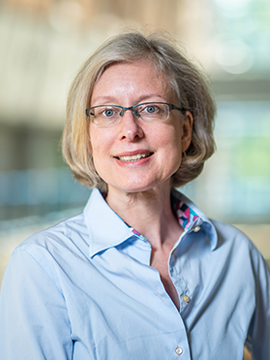
Lisa Wallner Samstag is a Professor of Psychology at Long Island University's Brooklyn Campus, affiliated with the College of Liberal Arts and Sciences and Department of Psychology. She is Director of Psychotherapy Research and Clinical Supervisor at LIU's Psychological Services Center, and Senior Consultant at Mount Sinai Beth Israel's Psychotherapy Research Program. B.A. in Psychology from Queen’s University M.A., M.Phil., and Ph.D. in Clinical Psychology from City University of New York Her research focuses on therapeutic alliance development, alliance ruptures, process-outcome dynamics, depression, anxiety, personality disorders, and developmental themes like parenting and infertility. She has extensively published on ruptures in psychotherapy and their resolution. Dr. Samstag's publications span from 2004 to 2022, emphasizing therapeutic alliance dynamics, rupture repair strategies, and clinical outcomes across diverse psychotherapy approaches. Her work bridges theoretical concepts with practical applications in alliance-focused training. Fellow of the American Psychological Association (APA) She supervises trainees in alliance-focused therapy, co-edited a book on rupture repair, and contributes to psychotherapy literature through book chapters and editorship roles in APA journals.
Dr. Joel Town is an Adjunct Professor in the Department of Psychiatry and cross-appointed in the Department of Psychology and Neuroscience at Dalhousie University . He holds a BSc (Hons) from the University of York and a Doctorate in Clinical Psychology (DClinPsy) from the University of Sheffield. Education: BSc (Hons) in Psychology, University of York, England Doctorate in Clinical Psychology (DClinPsy), University of Sheffield, England Dr. Town's research focuses on psychotherapy outcome research , mechanisms of change in psychotherapy , and psychological treatments for depression and medically unexplained symptoms . He specializes in Intensive Short-Term Dynamic Psychotherapy (ISTDP) , examining its efficacy for conditions like treatment-resistant depression, post-traumatic stress disorder, and somatic symptom disorders. His work includes clinical trials , systematic reviews , and meta-analyses to evaluate therapeutic processes and outcomes. His recent publications highlight ISTDP applications for personality disorders, anxiety, chronic pain, and eating disorders. Key trends include emotional processing , therapeutic alliance dynamics , and cost-effectiveness of brief interventions . Dr. Town also explores how unconscious emotional conflicts influence treatment outcomes. As a clinician, he serves as the lead clinical psychologist at the Medically Unexplained Symptoms Clinic, QE-II Health Science Centre, and as Director of Dynamic Health Psychological Services, Halifax . He supervises clinical psychology interns and practicum students and contributes as a Consulting Editor for journals like Psychotherapy and Psychotherapy Research .
Don Davis is a Professor in the Department of Counseling at Georgia State University's College of Education & Human Development. He serves as program coordinator for Counseling Psychology and teaches in Clinical Mental Health and Counselor Education programs. Research Focus: Dr. Davis directs the Humility and the Advancement of Positive Psychology Interventions (HAPPI) Lab, which conducts basic and applied research on virtues including humility, forgiveness, and gratitude. His work also examines spirituality as an aspect of diversity in counseling. He leads a $6 million John Templeton Foundation grant project investigating intellectual humility development and intervention contexts. Publications explore cultural humility in clinical supervision, religious/spiritual struggles, existential humility, and multicultural counseling processes. Recent work examines how virtues like humility and gratitude impact therapeutic relationships and psychological well-being across diverse populations. Key Research Areas: Positive Psychology Interventions Cultural Humility in Counseling Spirituality and Mental Health Virtue Development in Clinical Practice
Catherine F. Eubanks is a Professor in the Department of Psychology at Adelphi University, affiliated with the Gordon F. Derner School of Psychology. She is based in the Hy Weinberg Center and can be reached at 516.877.4810 or via email at ceubanks@adelphi.edu. Education: PhD, Stony Brook University (2008) Her research centers on identifying therapist skills and characteristics that lead to positive outcomes in psychotherapy, with a particular emphasis on the negotiation of alliance ruptures across different theoretical orientations. She investigates how such skills can be enhanced through training, aiming to bridge the gap between research and clinical practice. Her work integrates quantitative, qualitative, and case study methodologies to maintain both scientific rigor and clinical relevance. Dr. Eubanks has developed and refined the Rupture Resolution Rating System (3RS), an observer-based coding measure designed to evaluate alliance rupture and repair processes in therapy. The 3RS is transtheoretical and applicable across various therapeutic modalities, serving both as a research instrument and a training tool for therapists to improve their sensitivity to therapeutic process and identity-, goal-, or need-based differences between patient and therapist. She teaches advanced doctoral courses such as Advanced Topics in Mental Health, Supervision Theory & Practice, Doctoral Thesis Supervision series, and seminars on psychotherapy integration and psychological research. There are no scientific awards listed in the available information. Dr. Eubanks advises doctoral students through ongoing thesis supervision, contributing to the training of future clinical psychologists. Although specific grant funding is not mentioned, her research program suggests engagement with scholarly and potentially sponsored research activities. The Rupture Resolution Rating System (3RS) represents a key component of her research lab or conceptual research team, functioning as both an analytical framework and a pedagogical instrument in therapist development.
Professor Antje Gumz holds a Professorship for Psychosomatics and Psychotherapy with a focus on Depth Psychology-Based Psychotherapy at the Psychologische Hochschule Berlin (PHB). She leads a dedicated working group focused on psychotherapy research and training, with particular emphasis on therapeutic relationship skills, alliance ruptures, and psychodynamic concepts. Her academic work bridges clinical practice and scientific research, contributing significantly to the field of psychotherapy. Dr. Gumz's research interests span multiple dimensions of psychotherapy, with particular focus on measuring and training therapeutic relationship skills, including alliance ruptures, facilitative interpersonal skills, dealing with transference/countertransference, and enactments. She investigates mediators of therapy success and the role of language and voice in psychotherapy, bringing a unique perspective that integrates psychodynamic and systems theory concepts. Her work emphasizes the importance of understanding the therapist's role in therapeutic tensions and crises, and how these can be transformed into opportunities for therapeutic advancement. Professor Gumz has published extensively on psychotherapy techniques and training, with numerous publications in leading journals. Her recent work focuses on the development of assessment tools like the Psychodynamic Intervention List (PIL) and the Mediators of Change in Psychotherapy Inventory (MoCPI). Her research demonstrates how specific verbal techniques relate to session quality and therapeutic outcomes, providing empirical support for clinical practice. Heigl Foundation Research Grant (2019-2025) for therapist interpersonal skills research German Psychoanalytic Society Research Grant (2017-2019) for therapeutic techniques studies Professor Gumz actively supervises numerous doctoral students and research assistants, fostering the next generation of psychotherapy researchers. Her work extends beyond academia through collaborations with multiple psychotherapy training institutes across Germany. She has developed innovative training approaches like the Modified Alliance-Focused Training with Doubling (MAFT-D) to improve therapists' competencies in handling therapeutic tensions. Her research group maintains strong national and international collaborations, contributing to evidence-based psychotherapy training and improved treatment outcomes.
Jennifer Callahan is a Professor in the School of Behavioral and Brain Sciences at the University of Texas at Dallas. She serves as Director of the CARE Lab and Co-Director of Texas NABORS, focusing on advancing clinical science and improving mental health outcomes for underserved populations. Her research emphasizes culturally responsive interventions, cognitive decline in psychotic disorders, and psychotherapy supervision practices. Her work addresses disparities faced by low-income and marginalized communities through program evaluation, clinical training innovations, and cross-cultural studies. Key contributions include developing assessment tools for OCD in Spanish-speaking populations and exploring long-term cognitive trajectories in psychiatric patients. Jennifer Callahan’s scholarship integrates empirical research with practical applications, bridging gaps between academic findings and real-world clinical challenges. Her articles span topics like psychotherapy integration, supervision frameworks, and global mental health collaboration, reflecting a commitment to both scientific rigor and societal impact. In training and education, she advocates for competency-based assessments and inclusive practices, addressing systemic barriers in psychology education. Her leadership roles drive interdisciplinary collaboration, evidenced by co-authorship networks across international mental health research initiatives.
Ingrid Söchting is a Clinical Professor and Director of the UBC Psychology Clinic, affiliated with the University of British Columbia. She holds a PhD from Simon Fraser University (1996) and specializes in cognitive behavioral therapy (CBT) and interpersonal therapy (IPT) for depression and anxiety disorders. PhD, Simon Fraser University, 1996 Her clinical research focuses on evaluating outcomes of CBT and IPT group therapies, particularly for Asian immigrants. Key areas include patient expectations, predictors of therapeutic success, dropout rates, alexithymia's impact on outcomes, and competency standards for OCD CBT. She also explores bridging science and practice in psychotherapy. Recent publications investigate CBT standards for OCD, virtual group therapy, and psychometric tools for child psychology. Her work spans collaborations with international researchers and contributions to group therapy frameworks. Scientific awards include certification as a Canadian-CBT therapist and a Certified Group Therapist by the American Group Psychotherapy Association. She coordinates UBC's CBT program for psychiatry residents and teaches CBT/IPT to psychology and psychiatry trainees. The UBC Psychology Clinic, where she directs, serves as a hub for clinical practice and research.
Wojciech Jerzy Grabowski is a Professor at the University of Gdańsk, currently serving as Head of the Department of International Relations within the Institute of Political Science, Faculty of Social Sciences. He holds concurrent positions as Member of the Disciplinary Council of Political and Administrative Sciences and Member of the Council of the Faculty of Social Sciences, with formal recognition as a university professor by the Teachers' Panel. His research concentrates on Middle Eastern international relations, particularly Persian Gulf dynamics, examining integration/disintegration processes, foreign policy frameworks, security threats (terrorism, failed states), Islam's political role (including Muslim fundamentalism), and authoritarian leadership patterns. Recent work analyzes geopolitical shifts from the Ukraine war, pandemic impacts, and Saudi-Qatari rivalry through realist and securitization lenses. His 15 most recent publications (2017-2022) reveal consistent focus on Gulf Cooperation Council functionality, security complex theory applications, and transformation challenges in Arab states. Key trends include empirical testing of IR theories against regional crises, evolving sanction strategies among Gulf actors, and the interplay between religious identity and security architectures. Scientific awards include: Dean's Award of the Faculty of Social Sciences of the University of Gdańsk for scientific achievements (2009) Dean's Distinction of the Faculty of Social Sciences of the University of Gdańsk for scientific and teaching activities (2019) As a doctoral supervisor, he served as secondary supervisor for Kornel Bielawski's PhD dissertation (defended 2020). He has executed major grants including Polish Ministry of Foreign Affairs projects on contemporary Poland/Europe, NATO's Science for Peace and Security program in Serbia, EU-funded initiatives for the Naval Academy in Gdynia, and the European Law Foundation grant on human rights in counter-terrorism. He supervises the student scientific circle Convertum – Club of Political Thought Exchange and participates in the Institute's Quality of Education Team, while organizing international conferences like Arab and Muslim World in International Relations (Gdańsk 2015-2016).
Jan-Markus Kötter is an Assistant Professor of Ancient History at the University of Bonn's Faculty of Arts and Humanities. His research focuses on Late Antique Latin chronicles, Church history, and the Roman Republic, with particular emphasis on biographical historiography and aristocratic competition. PhD in Ancient History (Goethe University Frankfurt, 2011) Magister Artium in Ancient History, Modern History, and Church History (University of Bonn, 2008) Bachelor in History and Protestant Theology (University of Bielefeld, 2006) Kötter's research examines the transition from the Middle to Late Roman Republic, focusing on political strategies of aristocrats like Scipio Aemilianus. His work addresses continuity vs. rupture in political culture, aristocratic behavioral patterns, and late antique chronicle traditions. His publications include monographs on Hannibal and the Acacian Schism, edited volumes on late antique contingency, and critical editions of Latin chronicles (Prosper Tiro, Hydatius). His 2024 work explores Scipio Aemilianus' career as a case study in political innovation. Junges Kolleg der Nordrhein-Westfälischen Akademie der Wissenschaften und der Künste (2018–2022) Vertrauensdozent der Hans-Böckler-Stiftung (since 2021) DFG-funded researcher on aristocratic competition (2018–2021)
Michael Westerman is an Associate Professor of Psychology at New York University's Department of Psychology, within the College of Arts & Science. His research centers on interpersonal defense theory , which redefines defense mechanisms as problematic interpersonal behaviors disrupting coordinated interaction. This theory emphasizes how defensive behaviors, while functional in the short term, lead to unintended negative consequences in relationships and therapy. Education : - A.B. in Philosophy (1971), Harvard University - Ph.D. in Clinical Psychology (1980), University of Southern California Research Interests : Westerman integrates philosophical insights (e.g., Merleau-Ponty, Wittgenstein) with clinical psychology to challenge Cartesian frameworks. His work examines how defensive behaviors breach interactional coordination, particularly in patients with personality disorders. Key themes include therapeutic alliance dynamics, feedforward effects of defenses, and the participatory perspective in psychological theory. Publications & Contributions : His work explores case formulations, alliance ruptures, and methodological innovations in quantitative research. Recent studies focus on applying interpersonal defense theory to psychotherapy process and outcomes. Awards & Affiliations : - Phi Beta Kappa, Sigma Xi - Fellowships: Social Science Research Council, NIMH Postdoctoral - Editorial Roles: Psychotherapy Research , Journal of Counseling Psychology , Journal of Theoretical and Philosophical Psychology Labs & Collaborations : Affiliated with the Brief Psychotherapy Research Program at Beth Israel Medical Center, where he applies interpersonal defense theory to clinical practice.
Christine Hargrove serves as Clinical Assistant Professor and Associate Director of the Love and Money Center within the Department of Human Development and Family Science at the University of Georgia's College of Family and Consumer Sciences. A licensed Marriage and Family Therapist (LMFT) and Certified Financial Therapist (CFT), she bridges clinical practice and financial counseling to address the unique challenges faced by neurodivergent individuals and couples. Education: BA in Religious Studies, Vanderbilt University (2003) MDiv, Harvard University (2006) MSFT in Family Therapy, Friends University (2020) PhD in Human Development & Family Science (Couple and Family Therapy emphasis), University of Georgia (2024) Research Interests: Dr. Hargrove's pioneering work focuses on neurodiversity-informed financial therapy , specifically examining how executive functioning impacts financial decision-making in ADHD populations. Her research investigates financial stress allocation in couples , develops ADHD-friendly financial tools , and creates therapeutic frameworks for financial professionals. Through the Love and Money Center, she translates these findings into practical interventions that empower neurodivergent clients to achieve financial wellness while navigating relationship dynamics. Publication Trends: Her prolific output (20+ works in 2023-2025) reveals three dominant trends: 1) Clinical applications of ADHD research in financial contexts, 2) Development of neurodiversity-affirming therapeutic techniques, and 3) Interdisciplinary collaborations bridging psychology, finance, and family studies. Her work increasingly appears in high-impact journals while maintaining strong connections to practitioner communities through podcasts, webinars, and media contributions. Professional Recognition: Elected President-Elect of Financial Therapy Association (2025-Present) Featured expert in USA Today, Fidelity, NerdWallet, and The Globe and Mail Active leadership roles in Financial Therapy Association since 2021 Regular presenter at International Conference on ADHD and Financial Therapy Association Conference Academic Contributions: Dr. Hargrove supervises undergraduate and graduate students through clinical internships and research projects at the Love and Money Center. She teaches FACS 5910: Undergraduate Internship in Couple and Family Therapy and delivers guest lectures on ADHD and financial therapy across departments. Her research is institutionally supported through the University of Georgia, with growing external recognition that facilitates collaborative funding opportunities. She maintains active partnerships with financial professionals to ensure clinical relevance. Center Leadership: As Associate Director of the Love and Money Center, Dr. Hargrove leads initiatives that integrate financial therapy into clinical practice, with specialized programs for neurodivergent populations. The Center serves as both a research hub and clinical training ground, developing evidence-based approaches to financial counseling while providing direct community services. Its innovative focus on neurodiversity has positioned it as a national leader in this emerging specialty area.