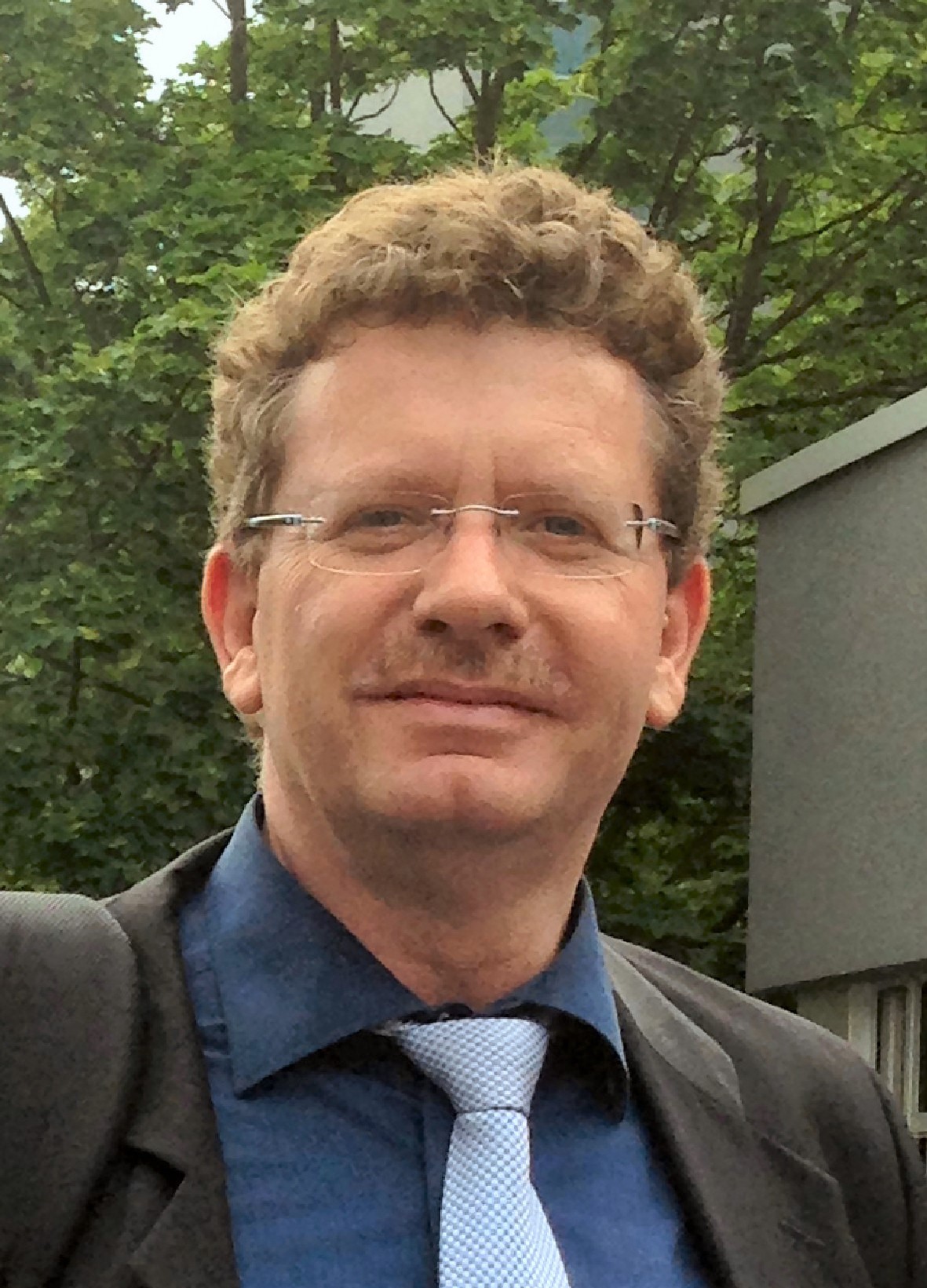
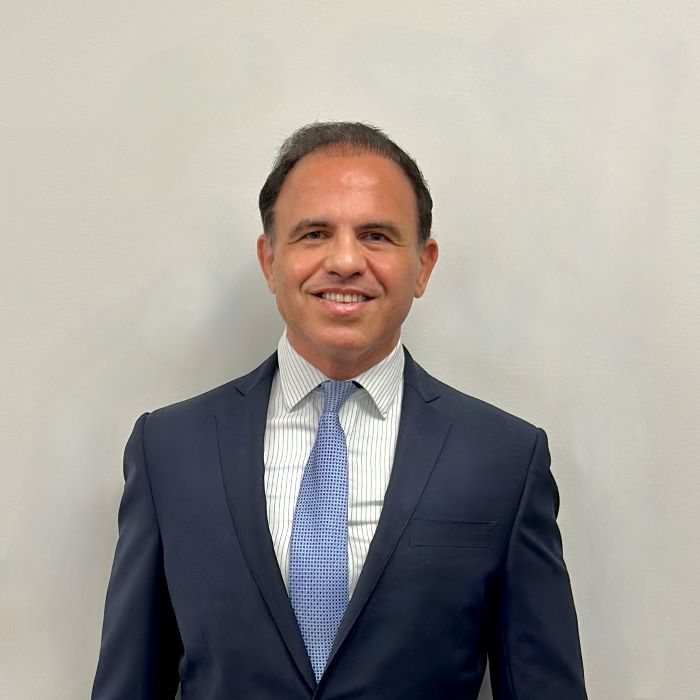
Prof. Corsin Battaglia is the Head of the Materials for Energy Conversion laboratory at Empa, Switzerland’s national materials science institute. He holds adjunct professorships in Electrical Engineering at ETH Zurich (Department of Information Technology and Electrical Engineering) and in Materials Science at EPFL (School of Engineering, Institute of Materials). His research focuses on sustainable battery technologies (lithium-ion, sodium-ion, all-solid-state, post-lithium-ion) and electrochemical CO₂ conversion to synthetic fuels. He has authored/co-authored ~200 peer-reviewed publications and 8 patent applications. Affiliations: Swiss Battery Association (iBAT President), Alistore-ERI, Battery2030+, Upcell Alliance, Battery European Partnership Association He completed his PhD in Physics at the Université de Neuchâtel, followed by postdoctoral research at EPFL, UC Berkeley, and Lawrence Berkeley National Lab before joining Empa in 2014. His work bridges energy storage materials innovation with industrial implementation. Professional leadership includes roles in major European energy initiatives, emphasizing interdisciplinary collaboration between academia and industry.
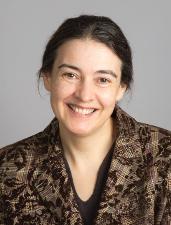
Clare Grey is the Geoffrey Moorhouse Gibson Professor of Chemistry at the University of Cambridge's Department of Chemistry and a Fellow of Pembroke College. She leads the EPSRC Centre for Advanced Materials for Integrated Energy Systems (CAM-IES) and is a member of the Energy @ Cambridge Strategic Research Initiative's Advisory Board. Her research focuses on the structural characterization of disordered materials using solid-state NMR and diffraction, with applications in rechargeable batteries, supercapacitors, and fuel cells. Key projects include optimizing battery materials for faster charging, higher power storage, and grid-level energy solutions. Grey's work aligns with Sustainable Development Goals, notably through her contributions to the All-Party Parliamentary Climate Change Group event on energy storage and a BBC World Services panel discussion on low-carbon economies. Her research has advanced understanding of electrode mechanisms, electrolyte behavior, and solid-state electrolytes, with particular attention to sodium-ion and lithium-ion batteries. Education: Not explicitly stated in provided texts. Awards: Fellow of the Royal Society (FRS). Her lab's investigations into in-situ NMR studies of battery function and structural elucidation of novel materials (e.g., NaNiO₂ phase diagrams) underscore her interdisciplinary approach. Collaborations include academic and industry partnerships aimed at translating research into practical energy solutions.
Daniel Steingart is the Stanley-Thompson Professor of Chemical Metallurgy and Professor of Chemical Engineering at Columbia University's School of Engineering and Applied Science, where he also serves as Chair of the Department of Earth and Environmental Engineering. He is co-director of the Columbia Electrochemical Energy Center and affiliated with the Earth Institute. Previously, he was an Associate Professor at Princeton University in the Department of Mechanical and Aerospace Engineering and the Andlinger Center for Energy and the Environment, and before that an Assistant Professor at City College of the City University of New York in the Department of Chemical Engineering. Professor Steingart's research focuses on electrochemical systems, particularly batteries and energy storage devices. His group studies material deposition, conversion, and dissolution in electrochemical reactors, with special emphasis on exploiting traditional failure mechanisms to create beneficial functions . Current research areas include acoustic monitoring of battery states, zinc-bromide systems, lithium metal behavior, and developing approaches to make batteries safer and more durable through understanding thermodynamics, kinetics, and mass transport. His work sits at the intersection of materials science and systems engineering, examining how chemistry, electronics, and mechanics interact at various scales in electrochemical reactors. Over the last decade, Professor Steingart's research efforts have been adopted by various industries and have directly or indirectly led to five electrochemical energy-related startup companies, including Feasible, which focuses on exploiting acoustic responses of closed electrochemical systems. His publications reveal consistent focus on fundamental battery principles, safety mechanisms, and innovative approaches to energy storage challenges, with notable work on the 'Unfortunate Tetrahedron' framework describing the energy-power-cost-lifetime trade-offs inherent in all battery systems. Professor Steingart's research is supported by diverse funding sources including: Current sponsors: DOE ARPA-E, DOT, NSF, Mercedes Benz Research and Development North America, General Motors, and ICL Previous sponsors: BP, ExxonMobil, AlphaEn, Princeton University and NASA His research group has graduated 10 PhD students and 10 MS students, with alumni founding two companies based on lab research and software. Professor Steingart emphasizes direct communication with prospective graduate students, noting that faculty directly review applications and are responsible for funding students through research assistantships. His lab operates with a mission to advance technology-enabled post-scarcity economies while promoting diversity, inclusion, and representation in energy research.
apl. Prof. Dr. Ralf Kautenburger is an Adjunct Professor in the Department of Inorganic Solid State Chemistry / Elemental Analysis at Saarland University, Faculty of Natural Sciences and Technology. He leads the WASTe research group, focusing on advanced analytical techniques for environmental, nuclear, and bioanalytical applications. His research interests include analytical chemistry, elemental analysis, speciation analysis, environmental analytics, bioanalytics, nuclear waste disposal research, hyphenated analytical techniques, metal complexation, trace element analysis, and antimicrobial surfaces. His work integrates sophisticated instrumentation such as CE-ICP-MS and LC-ICP-MS to study metal behavior in complex matrices, including deep geological formations and biological systems. He is actively involved in interdisciplinary projects, including ESA-supported research on antimicrobial surfaces in space environments. The recent publications highlight a strong trend in environmental remediation (e.g., PFAS capture), nuclear waste containment (e.g., radionuclide retention in cement phases), advanced materials for energy (battery recycling), and antimicrobial surface engineering. His research bridges fundamental analytical chemistry with practical applications in sustainability, health, and space exploration. While no specific scientific awards are listed in the provided text, his extensive publication record in high-impact journals and leadership in collaborative research projects indicate significant scholarly contributions. He advises research projects and collaborates with numerous scientists, though specific student names are not mentioned. He is involved in teaching analytical chemistry courses and leads the Core Facility Elemental Analysis & Mass Spectrometry (ELMAS-CF), supporting a broad research community. The WASTe research group operates within the university's infrastructure, utilizing advanced laboratories for elemental analysis. The group participates in major research initiatives such as the BMWi joint projects GRaZ I and GRaZ II on nuclear waste disposal and the ESA BIOFILMS project on the International Space Station, demonstrating a strong presence in both national and international scientific networks.
Matthieu Becuwe is a Professor at the University of Picardie Jules Verne, affiliated with the Laboratory of Reactivity and Chemistry of Solids (LRCS, UMR CNRS 7314) and serving as Director of the Picardy Institute of Chemistry (FR 3085). His research focuses on designing functional molecular and hybrid materials for energy storage applications, particularly in lithium-ion batteries and emerging all-organic ionic systems. Research Interests : Electrochemical performance optimization, molecular engineering of organic electrode materials, solid-state electrolytes, and environmentally sustainable battery technologies. Projects : Leads ANR PRC DEOSS and COMETS projects; contributes to Horizon Europe’s PSIONIC and France 2030-PEPR initiatives like SONIC and DISCOVERY. Expertise : Materials synthesis (silica matrices, hybrid nanomaterials), electrochemical characterization (GCPL, CV), and advanced analytical techniques (solid-state NMR, X-ray diffraction, electron microscopy).
Takehiko Hihara is Professor in the Department of Physical Engineering at Nagoya Institute of Technology, specializing in nanotechnology and materials science for energy applications. His research focuses on solid-state ionics, thin film engineering, and functional materials development. He received his academic training at Tohoku University: Master of Engineering, Tohoku University (1995) Doctor of Engineering, Tohoku University (1995) Hihara's research spans nanometer-scale chemistry, surface science, and metallic/inorganic materials. His current work emphasizes solid electrolytes for battery technologies, investigating ion conduction mechanisms and interfacial stability in novel materials systems. This includes fundamental studies of defect chemistry in antiperovskite compounds and applied development of composite electrolytes. His recent publications (2023-2024) reveal concentrated efforts in sodium-ion conduction, halide-based solid electrolytes, and flexible battery architectures. The work bridges fundamental materials characterization with practical energy storage applications, particularly in all-solid-state battery systems. He has received multiple professional recognitions: Outstanding Poster Award, Japan Institute of Metals (2023) Outstanding Poster Award, Japan Institute of Metals (2022) 53rd Paper Award, Japan Institute of Copper (2019) Best Poster Award, China-Japan Battery Seminar (2018) Outstanding Poster Award, Japan Institute of Metals (2016) Hihara has secured significant research funding including the MEXT Nanotechnology Platform project (2012-2023) as principal investigator and commissioned research from Meijo University (2016-2017). His patent portfolio demonstrates strong industry collaboration in battery materials development. He maintains active participation in professional societies including the Japan Physical Society, Japan Iron and Steel Institute, and Nano Society, regularly presenting at national and international conferences.
Håkan Pettersson is a Professor at the Academy of Information Technology , Halmstad University. His research focuses on advanced nanotechnology and optoelectronics, particularly in quantum heterostructures and infrared detection. Email: hakan.pettersson@hh.se Research Interests: His work spans semiconductor nanowires, quantum disc photodetectors, and hybrid nanocomposites. Key areas include photogating mechanisms, spectral tunability, and high-performance optoelectronic integration. Publications Trends: Recent articles highlight innovations in InP/InAsP nanowire arrays , quantum disc photodetectors , and applications in neuromorphic computing and energy storage .
Peter Kofinas serves as Professor and Chair of the Department of Chemical and Biomolecular Engineering at the University of Maryland, with affiliate appointments in Bioengineering, Materials Science and Engineering, and the Fischell Institute for Biomedical Devices. Previously, he held roles as Associate Dean of Faculty Affairs and Graduate Programs in the A. James Clark School of Engineering and Associate Chair of the Fischell Department of Bioengineering. His educational background includes B.S., M.S., and Ph.D. degrees in Chemical Engineering and Materials Science from the Massachusetts Institute of Technology. After completing postdoctoral research at MIT, he joined the University of Maryland faculty in 1996. Research Focus: Kofinas directs the Functional Macromolecular Laboratory , specializing in functional polymers for medical, energy, and electronics applications. His work spans polymer electrolytes for lithium-ion batteries , additive manufacturing of magnetodielectric nanocomposites , biodegradable surgical sealants for adhesion prevention and wound healing, and structural color biosensors for pathogen detection. Recent projects include sprayable surgical materials, hemorrhage control hydrogels, and point-of-care diagnostic devices. His publications reveal a strong emphasis on energy storage materials (30% of recent work), surgical biomaterials (25%), and printable electronics (20%), with growing interest in point-of-care diagnostics and antimicrobial wound dressings. Senior Outstanding Research Award (2012) Two Outstanding Invention of the Year Awards (2007, 2001) National Science Foundation CAREER Award (1999) Engaged Faculty Award (2011) University of Maryland Keystone Professorship (2005–2012) Kofinas has graduated 23 PhD students (3 now in faculty positions), 9 MS thesis students, and mentored over 100 undergraduates. His entrepreneurial activities include founding startup companies commercializing laboratory innovations. He directs the Functional Macromolecular Laboratory, which integrates polymer synthesis, nanomaterials engineering, and biomedical device development across multiple collaborative projects with clinical and industrial partners.
Assoc. Prof. Dr. Edvardas Kazakevičius is affiliated with the Institute of Applied Electrodynamics and Telecommunications at Vilnius University , where he serves as an Associate Professor in the Faculty of Physics . His research focuses on impedance spectroscopy and solid state ionics , particularly in the context of ionic conductivity and dielectric relaxation in crystalline materials. Research Area: Physics Primary Affiliation: Institute of Applied Electrodynamics and Telecommunications His recent publications investigate charge carrier dynamics in solid electrolytes like yttria-stabilized zirconia (YSZ) and calcium scandium zirconia (CaSZ), as well as temperature-dependent conductivity in lithium lanthanum titanate. These works emphasize analytical methods such as distribution of relaxation times (DRT) for understanding ionic transport mechanisms. He leads projects such as the M-ERA.NET project "Planar architecture all solid state batteries" (2017-2019) and has presented at the 14th International Symposium on Systems with Fast Ionic Transport (ISSFIT-14) in Slovenia. His teaching includes courses on Wireless Propagation Channel Modeling and Digital Signal Processing , and he contributes to the Faculty of Physics Council .
Chris Bartel is an Assistant Professor in the Department of Chemical Engineering and Materials Science at the University of Minnesota's College of Science and Engineering. He leads the Design of Materials on Computers (DMC) Lab, focusing on computational approaches to materials discovery for sustainable energy applications. His research spans computational materials science, quantum chemistry, and machine learning, with specific interest in solid-state materials for batteries, photovoltaics, catalysts, and ceramics. Bartel's group integrates electronic structure theory, thermodynamics, and data science to develop predictive models for material properties and degradation mechanisms. Analysis of his recent publications (2024-2025) reveals a strong focus on generative materials discovery, solid-state reaction mechanisms, battery materials design, and the application of machine learning to materials science problems. His work frequently appears in high-impact journals including Nature, Science Advances, and ACS Energy Letters, often in collaboration with leading researchers like Gerbrand Ceder. Prof. Bartel actively mentors a diverse research group including postdoctoral researchers and undergraduate students. His lab philosophy emphasizes teamwork and mentorship, with a specific commitment to enabling careers in science and engineering for those from historically excluded backgrounds. The DMC Lab's mission centers on two goals: making a difference in mitigating climate change effects and multiplying impact by helping all group members realize their potential. The Design of Materials on Computers Lab represents a vibrant research environment at the forefront of computational materials discovery, combining theoretical approaches with practical applications to address critical energy challenges.
Dr. Naoto Tanibata is an Assistant Professor at Nagoya Institute of Technology, affiliated with the Department of Life and Applied Chemistry in the Graduate School of Engineering. He also holds a concurrent position at Kyoto University's Catalyst & Battery Elemental Strategy Unit. His research focuses on developing advanced materials for next-generation energy storage systems, particularly solid-state batteries. Dr. Tanibata received his academic training at Osaka Prefecture University: PhD in Engineering (2014-2017) Master of Engineering in Material & Chemical Engineering (2012-2014) Bachelor of Engineering in Applied Chemistry (2008-2012) Dr. Tanibata's research centers on advanced battery materials , with particular expertise in all-solid-state batteries using chloride and other novel electrolytes. His work combines computational materials science with experimental electrochemistry to develop high-energy-density storage solutions. Recent projects have focused on: Design principles for high-voltage chloride-based electrodes using HSAB theory Amorphization strategies for enhancing anion redox reactions Machine learning approaches for battery material discovery and optimization Deformability properties of solid electrolytes to prevent lithium dendrite formation His publication record demonstrates a strong focus on overcoming key challenges in solid-state battery technology, particularly addressing issues of ionic conductivity, interfacial stability, and high-voltage operation. Recent work has increasingly incorporated advanced simulation techniques and machine learning to accelerate materials discovery. Dr. Tanibata has received numerous awards for his contributions to battery research: Battery Technology Committee Award (2024) for 'Redox-level tuning for high-potential chloride electrodes' Best Oral Presentation Award (2024) from the Ceramic Society of Japan ECS Japan Branch Young Researcher Special Award (2024) Multiple Young Research Innovator Encouragement Awards Dr. Tanibata leads multiple research projects funded by prestigious organizations including the Japan Society for the Promotion of Science (JSPS), Fujikura Foundation, and Naito Science and Technology Promotion Foundation. His current research focuses on: Redox-level design for high-energy-density chloride electrodes (JSPS Grant 24K17755, 2024-2029) Establishing design guidelines for high-deformability materials for all-solid-state batteries Verification of amorphization-based anion redox utilization for microgrid applications At Nagoya Institute of Technology, Dr. Tanibata leads research within the Department of Life and Applied Chemistry, focusing on the rational design of solid-state battery materials based on solid-state chemistry principles. His work bridges fundamental materials science with practical battery applications for electric vehicles and grid-scale storage.
Hirotaka Maeda is a Professor in the Department of Life and Applied Chemistry, Environmental Ceramics at Nagoya Institute of Technology's College of Engineering. His research focuses on environmental ceramics, inorganic materials, and nanotechnology with applications in water purification, energy storage, and biomaterials. Dr. Maeda received his Doctor of Engineering from Nagoya Institute of Technology in March 2006. His professional affiliations include the Society of Inorganic Materials (since 2006), Japanese Society of Inorganic Phosphorus Chemistry (since 2001), and The Ceramic Society of Japan (since 2000). His research interests span multiple domains including environmental ceramics for water purification, solid-state electrolytes for batteries, glass surface engineering, and conversion of biomass into functional materials. His work combines structural science with mimetic approaches to develop novel functional materials. His recent publications demonstrate strong activity in developing materials for environmental applications, particularly in water purification using garnet-based materials and conversion of agricultural waste into carbon materials. His research also extends to solid-state electrolytes for batteries and surface modification of glasses. 65th Society of Inorganic Materials Academic Award (2024) Poster prize winner, International Symposium on Inorganic and Environmental Materials 2018 57th Society of Inorganic Materials Nagai Memorial Encouragement Award (2016) 23rd Japanese Society of Inorganic Phosphorus Chemistry Encouragement Award (2014) 68th Ceramic Society of Japan Progress Award (2013) Dr. Maeda actively mentors graduate students across multiple projects, including research on rice husk conversion, humic acid removal, and solid-state battery materials. He serves on various academic committees including as General Affairs Director for the Japanese Society of Inorganic Phosphorus Chemistry and on the Editorial Committee of the Society of Inorganic Materials. His teaching includes Advanced Materials Creation Seminar, Ceramics Physical Chemistry, and Environmental Materials Special Lecture. His laboratory focuses on capturing phenomena at material surfaces and interfaces to create new functional materials, with particular emphasis on environmental applications and sustainable material solutions.