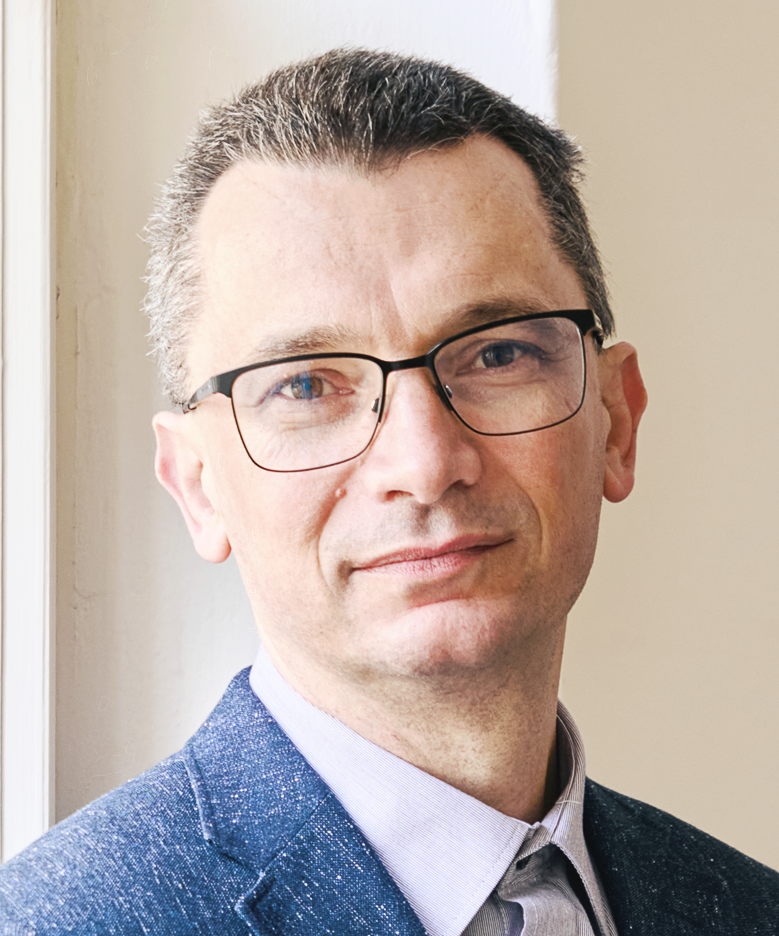
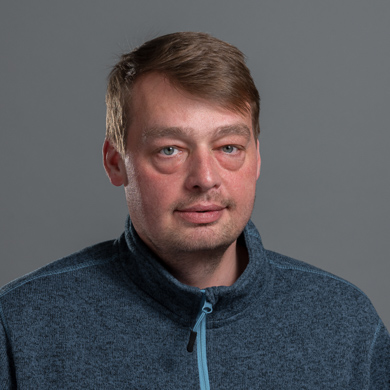
Jan Kybic is a Full Professor in the Department of Cybernetics at the Faculty of Electrical Engineering, Czech Technical University. He leads the Biomedical Imaging Algorithms (BIA) group and actively pursues collaborations in medical and biological image processing. He is involved in academic leadership as head of the master's program in Medical Electronics and Bioinformatics and the PhD program in Bioengineering . Member of Scientific Councils at Czech Technical University, Masaryk University, and Charles University His research focuses on algorithms for medical imaging, particularly in dental radiography and ultrasound systems. Recent work includes automated caries detection and ultrasound system development. He mentors for the CTU International Postdoc Programme and advocates for interdisciplinary projects in biomedical imaging. Notable research trends: Integration of machine learning in diagnostic imaging, optimization of medical device algorithms, and cross-domain applications of cybernetics in healthcare. He maintains active collaborations and welcomes opportunities for joint projects in image analysis or biomedical signal processing.
David Hoksza is an Associate Professor at the Department of Software Engineering, Faculty of Mathematics and Physics, Charles University in Prague. His work bridges bioinformatics and computational biology through innovative algorithm and tool development. University: Charles University School: Faculty of Mathematics and Physics Department: Department of Software Engineering His research focuses on structural bioinformatics and data visualization, particularly in protein and RNA structure analysis. He has also contributed to cheminformatics (ligand-based virtual screening), computational genomics (MinION data analysis), and systems biology (molecular network visualization). David has led major projects including the P2Rank framework for ligand-binding site prediction, R2DT for RNA secondary structure visualization, and the Genomics 2 Proteins portal for linking genetic data to protein structures. His publications span high-impact journals like Nucleic Acids Research , Bioinformatics , and Nature Methods . Recent articles highlight his expertise in RNA structure prediction, protein-ligand interactions, and neurodevelopmental disorder analysis. His work emphasizes template-based modeling, machine learning, and web-based tool development. Scientific Awards David actively teaches courses on data visualization and bioinformatics algorithms, with a focus on practical implementation using technologies like D3.js, Tableau, and Python. He contributes to open-source software and maintains a GitHub repository for his tools.
Martin Balko is an Associate Professor at the Department of Applied Mathematics, Faculty of Mathematics and Physics, Charles University in Prague. He previously held postdoctoral positions at Ben Gurion University of the Negev (2017–2018) and the Alfréd Rényi Institute of Mathematics (2016–2017). His research focuses on graph theory, classical combinatorics, Ramsey theory, and combinatorial geometry. His recent work explores topics such as Ramsey numbers of ordered graphs and hypergraphs, geometric graph representations, and extremal problems in discrete geometry. He has contributed to advancements in probabilistic methods for random point sets and combinatorial characterizations of graph drawings. Best paper award at the 23rd International Symposium on Graph Drawing & Network Visualization (GD 2015) He teaches courses including Algorithmic Game Theory and Geometric Seminar, emphasizing computational geometry and combinatorics. He is actively involved in supervising student presentations and mentoring in discrete mathematics.
Dr. Vladimír Plicka is a research geophysicist at the Department of Geophysics , Faculty of Mathematics and Physics, Charles University in Prague. Since 1999, he has been responsible for seismic station operations in Prague and Greece. His research focuses on earthquake source characterization , seismic wave propagation , and crustal deformation analysis using empirical Green's functions and waveform inversion techniques. PhD in Geophysics (2003, Charles University) Coordinated multinational projects: CzechGeo/EPOS (2016-2019), MOBILITY (2012-2013), Greece geodesy (2007-2009) Key research areas include: Earthquake location with P/S arrival time inversion Finite-source modeling using Empirical Green's Functions Strong motion simulation for seismic hazard assessment Crustal velocity structure from neighborhood algorithm inversions Hybrid seismic simulation combining deterministic and stochastic methods His recent publications show expertise in: Marmara and Hellenic slab intermediate-depth earthquakes Corinth Rift seismic sequence analysis 3D-to-1D crustal model conversion for seismic monitoring North Korea nuclear test source modeling He has developed: Fortran/Matlab tools for source parameter inversion GMT-compatible visualization scripts NonLinLoc uncertainty analysis software
Dr. Martin Cerny is a Researcher at the Department of Applied Mathematics, Faculty of Mathematics and Physics, Charles University in Prague, Czech Republic. He is affiliated with the university's research and teaching activities in mathematical disciplines. Research Interests: His fields of interest include Applied Mathematics, Theoretical Computer Science, Algorithms, Discrete Mathematics, Mathematical Modeling, and Optimization. Contact: Email: cerny@kam.mff.cuni.cz
Assoc. Prof. Marek Omelka is a faculty member at the Department of Probability and Mathematical Statistics , Faculty of Mathematics and Physics, Charles University in Prague. His research focuses on copula models, dependence modeling, and nonparametric statistical methods with applications in multivariate analysis, permutation tests, and conditional copula structures. Current teaching: NMST424 Mathematical Statistics 3 and JEM019 Statistical Methods for Data Analysis Research interests: Asymptotic statistics, copula estimation, permutation methods, multivariate association, and functional data depth His recent publications analyze copula parameter estimation, covariate effects in conditional models, and multivariate tail coefficients, with implementations in R. The PMSE program he guarantees connects theoretical statistics with real-world applications in data science, finance, and medical studies.
Martin Koutecký is an Associate Professor at the Institute of Informatics, Faculty of Mathematics and Physics, Charles University in Prague, Czech Republic. His research primarily focuses on parameterized complexity of integer programming, combinatorial optimization, and computational social choice. He completed his PhD under Petr Kolman at Charles University and conducted postdoctoral research at Technion (Haifa, Israel) under Asaf Levin and Shmuel Onn. Research Interests: Koutecký's work bridges theoretical computer science and optimization, with emphasis on: Designing efficient algorithms for integer programming under structural constraints Applying optimization techniques to computational social choice problems Developing parameterized approaches for combinatorial optimization Exploring geometric perspectives in election modeling and bribery problems Publication Focus: His recent articles (2020-2025) demonstrate consistent work in algorithm design for optimization problems, particularly in integer programming variants and computational social choice. Key themes include block-structured IP, parameterized complexity, election modeling, and convex optimization. Methodological innovations frequently involve polyhedral theory, approximation algorithms, and complexity analysis.
Institute of Process Management, Faculty of Applied Informatics at Tomas Bata University in Zlín. Petr Navrátil, Ph.D., is an Assistant Professor whose work bridges theoretical and applied control systems research. He holds a Ph.D. from Tomas Bata University in Zlín (2007) and an M.Sc. from Brno University of Technology (2001). A three-month internship at the University of Applied Science Cologne (2003) enriched his expertise in process engineering and control systems. Petr's research spans adaptive control , recursive identification , Delta model , and MIMO systems . His publications (2003-2016) focus on real-time control of laboratory models, optosensor applications, and environmental factors in measurement accuracy. Collaborations with colleagues like Vladimir Bobál and Ján Ivanka highlight his team-based approach to solving complex control problems, including TITO and three-tank systems. His work with MATLAB/Simulink libraries for recursive algorithms and applications in commercial security (light/laser protection systems) underscores his commitment to practical, industry-relevant solutions. The Institute of Process Control at Tomas Bata University serves as his primary research environment, where he develops tools and frameworks for both educational and industrial applications.
Libor Barto is a full professor at the Department of Algebra, Faculty of Mathematics and Physics, Charles University, Prague, Czech Republic. He is a leading researcher in universal algebra and computational complexity, with a strong focus on constraint satisfaction problems (CSPs) and their algebraic foundations. He leads the ERC Synergy Grant POCOCOP and previously led the ERC Consolidator Grant CoCoSym, and is deeply involved in advancing the algebraic theory of promise constraint satisfaction. Research Interests: His primary research areas include universal algebra, computational complexity, constraint satisfaction problems (CSP), promise constraint satisfaction problems (PCSP), clone theory, and the algebraic approach to logic and computation. He investigates the interplay between algebraic structures and computational tractability, particularly through polymorphisms, minions, and Taylor algebras. The recent articles reflect a strong trend in unifying algebraic approaches to CSP, exploring promise variants, approximation through plurimorphisms, symmetries in structures, and the role of Weisfeiler-Leman hierarchies. His work often appears in top-tier journals and conferences such as the Journal of the ACM, SIAM Journal on Computing, and LICS. Fellow of the Learned Society of the Czech Republic (since 2024) ERC Synergy Grant (POCOCOP, 2023–2029) ERC Consolidator Grant (CoCoSym, 2018–2023) Charles University Research Center (UNCE) Grant (PI, 2024–2029) Libor Barto advises PhD students and leads research teams under major grants like POCOCOP and CoCoSym. He has secured substantial funding from the European Research Council and the Czech Science Foundation (GACR). He is actively involved in the academic community as an editor of Algebra Universalis and Acta Scientiarum Mathematicarum , and has served on program committees for LICS, ICALP, and STACS. He has organized major workshops, including at the Fields Institute and multiple AAA and SSAOS conferences. He is involved in several research labs and collaborative teams, particularly through the Department of Algebra at Charles University, the POCOCOP project (with M. Bodirsky and M. Pinsker), and the CoCoSym ERC team. His work fosters international collaboration with researchers in France, Germany, Austria, Poland, Canada, and the USA.
Michal Outrata is an Assistant Professor in the Department of Numerical Mathematics at Charles University's Faculty of Mathematics and Physics in Prague, Czech Republic. He began his position in fall 2024 after completing a postdoctoral fellowship at Virginia Tech with Prof. Eric de Sturler and earning his PhD under Prof. Martin Gander at the University of Geneva, where his thesis was awarded the Henri Fehr Prize in 2023. His academic journey started with undergraduate studies in Prague under Prof. Zdeněk Strakoš (bachelor) and Prof. Miroslav Tůma (master). Dr. Outrata's research focuses on understanding why certain numerical methods work for specific problem classes, with emphasis on numerical linear algebra , Krylov subspace methods , and domain decomposition techniques . His work bridges theoretical analysis with practical algorithm development, particularly in preconditioning strategies for iterative solvers. Current projects include the Primus Research Programme (2025-2028) titled 'Divide, Conquer and Optimize: Domain Decomposition Methods in Scientific Computing' which explores hierarchical matrix formats and mixed precision computations for optimizing domain decomposition methods. His publication record demonstrates consistent contributions to top journals including SIAM Journal on Scientific Computing and Linear Algebra with Applications. His research shows progression from foundational work on GMRES convergence to sophisticated analyses of block Runge-Kutta preconditioners and optimized Schwarz methods with data-sparse transmission conditions. His recent work increasingly integrates hierarchical matrix formats and explores mixed precision computing approaches. Swiss Government Excellence Scholarship (3-year award) Henri Fehr Prize for best PhD thesis in mathematics (2023) Primus Research Programme grant (2025-2028) Dr. Outrata actively mentors students and postdocs, currently supervising Marouan Handa and Lenka Ptáčková (PostDocs) along with undergraduate researchers. He teaches courses including Numerical Analysis and Introduction to Numerical Mathematics at Charles University. His collaborative network spans international institutions including University of Geneva, Virginia Tech, and various European research centers. He is also involved in organizing major conferences including DD29 and GAMM95.
Vit Dolejsi is a Professor at the Department of Numerical Mathematics , Faculty of Mathematics and Physics , Charles University in Prague . He holds a PhD in Mathematical Modeling and Mechanics from Charles University and Universite Mediterranee. His research focuses on Numerical methods for partial differential equations with applications in Fluid dynamics , particularly using Discontinuous Galerkin methods and Anisotropic mesh adaptation . Phone: [+420] 95155 3373 Email: vit.dolejsi@matfyz.cuni.cz Office: Sokolovska 83, 186 75 Praha 8 - Karlin, Czech Republic Research Interests : Numerical methods for nonlinear PDEs High-order adaptive DG schemes Error estimation and adaptivity Compressible and incompressible flow simulations Applications in porous media and atmospheric modeling Algebraic and discretization error control Publications & Contributions : Authored monographs on Anisotropic hp-Mesh Adaptation (2022) and Discontinuous Galerkin Method (2015) Published 15+ journal papers (2015-2025) on DG methods, mesh adaptation, and error analysis Developed freely available CFD software implementations Contributed to hp-adaptive algorithms and space-time DG for nonlinear problems
Vítězslav Beran is an Associate Professor at the Department of Computer Graphics and Multimedia (DCGM) within Brno University of Technology . His research focuses on Augmented Reality , Robotics , and Computer Vision . Role: Vice-dean for Marketing and External Relations Contact: beranv@fit.vut.cz, vicedean-foreign@fit.vut.cz Research interests include: Augmented Reality Applications Human-robot Interaction Image and Video Processing 3D User Interfaces His recent publications (2019-2024) explore: End-User Robot Programming Reachability Solutions in Industrial AR Drone Control Systems 3D Interaction Techniques Projects span both academic research and practical applications in: Embedded Systems Computer Vision Algorithms Collaborative Workspace Design Patents include: 2015: Multifunctional Camera System 2012: Data Distribution Method Teaching activities: Image Processing Computer Graphics User Interface Programming Advanced Computer Vision
Erik Derner is an ELLIS Postdoctoral Researcher at the ELLIS Unit Alicante, focusing on human-centric AI and ethical LLMs. He collaborates with Prof. Robert Babuška's Machine Learning team at the Czech Institute of Informatics, Robotics, and Cybernetics (CIIRC) and contributes to the VIVES project under the PERTE of New Language Economy. His work addresses biases in LLMs, AI safety, and security, while also exploring symbolic regression for robotics and reinforcement learning. Education: Ph.D. in Robotics and Machine Learning (2022) from Czech Technical University in Prague, with B.Sc. and M.Sc. in Open Informatics. Erik's research spans human-centric AI , large language models , robotics , computer vision , and reinforcement learning . He emphasizes ethical and secure AI development, particularly for underrepresented languages. His work integrates symbolic regression with neural networks to create interpretable and efficient models for robotics. Recent publications highlight his focus on LLM security , gender bias analysis , and symbolic regression for dynamic systems. Notable trends include ethical AI, multimodal red-teaming, and physics-informed modeling. Scientific Awards: Werner von Siemens Award (2023) for his Ph.D. thesis. CTU FEE Dean's Award (2023) for a prestigious dissertation. Erik supervises student projects in robotics, AI ethics, and LLM security, including internships and theses on topics like mental health risks, toxicity evaluation, and real-time assistance for the visually impaired.
Erin Claire Carson is an Assistant Professor at the Department of Numerical Mathematics, Faculty of Mathematics and Physics, Charles University, Prague. A specialist in numerical linear algebra and high-performance computing, she leads the ERC Starting Grant project InEXASCALE focused on exascale algorithms. Her research explores mixed precision arithmetic, communication-avoiding Krylov subspace methods, and stability analysis in finite precision. Ph.D., University of California, Berkeley (2015) Courant Instructor, New York University (2015-2018) Postdoctoral Researcher and PRIMUS Fellow, Charles University (2018-2022) Dr. Carson's work bridges theoretical analysis with practical implementations for supercomputers. Her recent publications include advancements in low-synchronization orthogonalization, silent error detection, and multilevel sampling techniques. She received the 2025 Wilkinson Prize from SIAM for outstanding contributions to numerical analysis. Current trends in her research involve: Exploiting mixed precision arithmetic for algorithm acceleration Developing stable communication-avoiding Krylov methods Optimizing numerical stability in GPU-based solvers Understanding error propagation in multistage refinements Scientific honors: 2025 SIAM Wilkinson Prize in Numerical Analysis and Scientific Computing 2023 ERC Starting Grant recipient 2019-2022 PRIMUS Research Fellow She supervises PhD and Master’s students while teaching advanced courses in numerical linear algebra and high-performance computing. Her work has been featured in WIRED and Forbes Czech Republic for improving supercomputer algorithms.
Tomáš Bureš is a Professor at the Department of Distributed and Dependable Systems , Faculty of Mathematics and Physics , Charles University . His work focuses on adaptive software architectures for smart cyber-physical systems (CPS) and IoT, leveraging machine learning (neural networks) for self-adaptation, edge-cloud systems, and model-driven development. Research Groups: Leader of the SmartArch research group. Projects: Involved in ExtremeXP , ESTABLISH , AFarCloud , FitOptiVis , Trust 4.0 , ASCENS , RELATE ITN , Q-ImPrESS . Publications span topics like performance regression testing, ML workflow optimization, confidentiality analysis under uncertainty, and edge-cloud continuum modeling. Key subfields include self-adaptive architectures, adaptation rules, component ensembles, and statistical methods in software engineering. His work bridges theoretical models (e.g., DEECo, SOFA) with practical tools (e.g., ExpEngine, Robin) for CPS and cloud applications. Co-Authors include P. Hnětynka, M. Abdullah, R. Heinrich, and others. Publications appear in venues like IEEE Transactions on Autonomic Computing , ACM/SPEC ICPE , and ECSA Workshops .