
Tomohiro Iمشاهده پروفایل
دانشیار
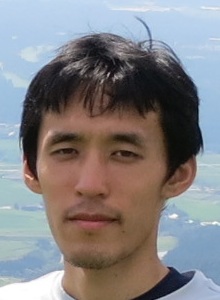
Tomohiro I is an Associate Professor in the Department of Artificial Intelligence at Kyushu Institute of Technology, Japan. He has been in this position since January 2019, following a research associate role at the same institution from 2015 to 2018. Prior to that, he held postdoctoral positions at Kyushu University and TU Dortmund, Germany. His academic foundation includes a Ph.D. in Science from Kyushu University, awarded in 2012. His research primarily centers on string algorithms , with a strong emphasis on compressed data structures , pattern matching , indexing , and algorithmic efficiency . Key interests include Lyndon factorization, Lempel-Ziv compression, palindrome matching, and reverse engineering of string data structures. He frequently collaborates with prominent researchers like Hideo Bannai and Shunsuke Inenaga, producing high-impact work in theoretical computer science. His recent publications demonstrate a consistent focus on improving algorithms for string processing in compressed formats. Work on Re-Pair , RLBWT , and SLP encoding highlights his expertise in space-efficient computation. The 2022 Best Paper Award at IWOCA for work on Lyndon subsequences underscores the quality and recognition of his contributions. His research bridges theoretical analysis with practical algorithm design. Best Paper Award, International Workshop on Combinatorial Algorithms (IWOCA) 2022 Tomohiro I advises graduate students in his laboratory, although he currently notes that the lab is not accepting new research students. His work involves significant algorithmic research, often supported by theoretical grants or institutional funding, leading to numerous publications in peer-reviewed journals and conferences. He has also presented his work in invited talks, such as at CompressedAI2025 and WCTA 2024, indicating active engagement with the research community. He leads a research laboratory at Kyushu Institute of Technology, focused on advanced string processing and compressed data structures. His team collaborates extensively on algorithm design and analysis, contributing to the broader field of combinatorial pattern matching.