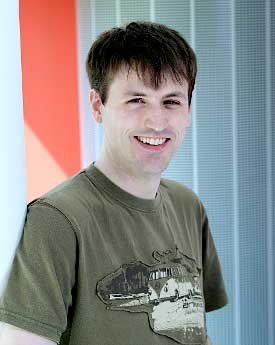
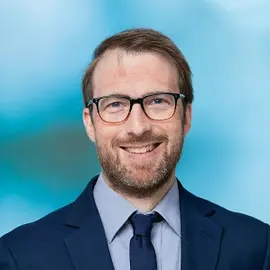
Dr. Philip Clemson is a Senior Research Associate in the Department of Physics at Lancaster University, specializing in the time series analysis of complex systems. His work focuses on chaotic and stochastic data, particularly from non-autonomous (time-dependent) systems, with significant applications in biomedical physics and living systems. He has extensive experience in industry, having developed algorithms for medical devices and wearable technology. His research also encompasses numerical Bayesian statistical techniques using Markov chain Monte Carlo and sequential Monte Carlo methods. Current projects include phase coherence analysis for autonomic neuropathy diagnosis and network dynamics-based standards for endothelial health, reflecting his interdisciplinary approach between physics and biomedical applications. 2024: Phase coherence in autonomic neuropathy diagnosis 2023-2024: Network dynamics for endothelial health standards His recent publications demonstrate expertise in time-localized analysis, cardiovascular dynamics, and chronotaxic systems. Dr. Clemson is part of the Nonlinear and Biomedical Physics research group within the Physics Department.
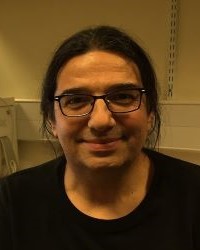
Dr. Alberto Capurro is a Non-Clinical Lecturer in Neuroscience at the Blizard Institute, Queen Mary University of London (QMUL), where he conducts teaching-led research in EEG analysis, temporal lobe epilepsy, tinnitus, and chronic pain. He holds dual PhD in Biology (1999) and MD (1992) from Universidad de la República (UdelaR), Uruguay, and has held research positions at institutions including University of Leicester, King’s College London, and Newcastle University. His work bridges neurophysiology, computational neuroscience, and translational medicine. PhD (1999): Biology/Neuroscience, PEDECIBA-UdelaR MSc (1994): Neuroscience, PEDECIBA-UdelaR MD (1992): Faculty of Medicine, UdelaR PGCAP (2023-2025): Queen Mary University of London Dr. Capurro’s multidisciplinary research focuses on: Physiological dynamics of sensory neurons and neural networks Translational approaches to epilepsy, tinnitus, and chronic pain Development of microelectrode array techniques for pain and neurodegenerative disease research Application of dynamical systems, information theory, and gene expression deconvolution His recent publications emphasize computational modeling of ion channels (Nav1.7), neural network dynamics, and biomimetic systems, with collaborations spanning institutions in the UK, Brazil, Germany, and Uruguay. Key trends include integration of experimental and computational methods for disease modeling and neuroprognostic tools. Scientific achievements include: JSPS Fellowship (Osaka University, Japan) Marie Curie Fellowship (University of Leicester) Barts Charity grant (2022) for microelectrode array setup FAPESP funding (São Paulo University) Dr. Capurro supervises multiple graduate theses and contributes to academic training through lectures and postgraduate certificate programs. His work involves partnerships with institutions like the Montevideo Tinnitus Centre, London Royal Hospital, and Barts Charity for translational research.
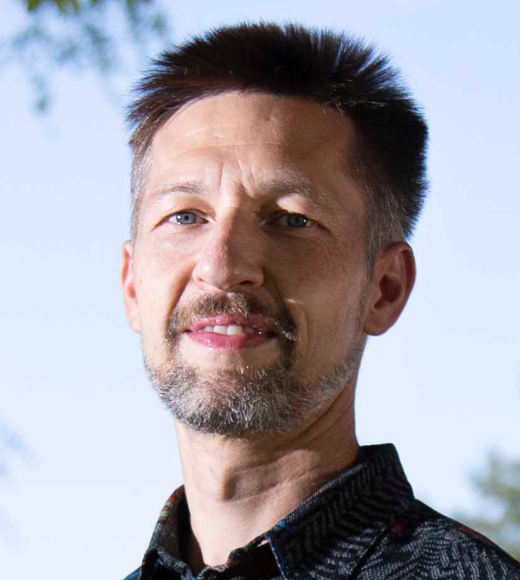
Professor Carlton Baugh is a distinguished academic at Durham University, serving as Professor in the Department of Physics and Director of the Institute for Computational Cosmology. His extensive research career focuses on galaxy formation and evolution, and the large-scale structure of the Universe, with leadership roles including Director of Research in the Department of Physics. Professor Baugh's research interests center on understanding how galaxies form and evolve within the cosmic web through semi-analytical modeling within hierarchical cosmologies. His work spans galaxy clustering, Lyman-alpha emitters, submillimeter galaxies, and the connection between dark matter halos and observable galaxy properties. He has made significant contributions to modeling the evolution of galaxy mass, the properties of spiral galaxies, and the interplay between galaxy formation and the intergalactic medium. His recent publications (2023-2025) demonstrate active research across multiple frontiers of cosmology, including computational simulations (P-Millennium), space missions (Euclid), and ground-based surveys (PAU). These studies explore galaxy clustering, photometric redshift estimation, star formation histories, and innovative tests of gravity through galaxy properties. His work bridges theoretical modeling with observational data from major surveys like DESI, BOSS, and eBOSS. As Director of the Institute for Computational Cosmology, Professor Baugh leads one of the world's premier centers for theoretical cosmology research, focusing on large-scale structure formation, galaxy evolution, and advanced simulation techniques. His leadership extends to major international collaborations including the Euclid mission, where he contributes to galaxy cluster detection algorithms. His academic activities include teaching as Demonstrator on Level 3 computing courses and organizing joint astrophysics seminars. His extensive publication record across top journals including Monthly Notices of the Royal Astronomical Society and Astronomy & Astrophysics reflects significant research impact and consistent funding support throughout his career.
Dr. Michael Martens is a Professor at Case Western Reserve University with a dual focus on Medical Imaging Physics and High Energy Particle Physics. He holds degrees from Case Western Reserve University (B.S. 1987, Ph.D. 1991) and has maintained a long-standing affiliation with Fermilab through experimental collaborations. Research Interests: MRI Technology: Design and optimization of MgB2 superconducting solenoid coils for cost-effective MRI systems, RF coil development for parallel imaging, and modeling of electromagnetic interactions in MRI components. Magnetic Particle Imaging (MPI): First-principles modeling of nanoparticle ferrofluid magnetization under oscillating fields using Fokker-Planck approaches. Accelerator Physics: Tevatron beam dynamics, neutrino oscillation studies in the NOvA experiment, and detector development for particle physics research. Notable Contributions: Over 15 recent publications spanning MRI magnet design, quench protection systems, RF heating safety, and neutrino physics experiments.
Jochen Ditterich is a Professor of Neurobiology, Physiology and Behavior at the University of California, Davis. He serves as Core Faculty at the Center for Neuroscience and Co-Director of the Center for Neuroengineering and Medicine. His research bridges psychological and neurophysiological approaches to understanding decision-making. Dept. of Neurobiology, Physiology & Behavior Neuroscience Graduate Group Applied Mathematics Graduate Group His lab investigates how the brain integrates sensory evidence with prior knowledge to guide action selection, focusing on neural mechanisms in parietal cortex and basal ganglia. Key areas include perceptual decision-making, Bayesian inference, and neuroengineering innovations. Recent work spans computational models of decision dynamics, closed-loop stimulation algorithms, and clinical studies on Parkinson's disease using neurophysiological methods. Trends in his publications highlight interdisciplinary approaches combining behavioral experiments, neurophysiological recordings, and mathematical frameworks. NSF funding for integrative brain research (2016)
William B. Levy is a Professor in the Department of Neurological Surgery at the University of Virginia School of Medicine. His research focuses on the neural bases of cognition and computational theories of brain function, utilizing theoretical neuroscience tools to model hippocampal and cortical interactions. Primary Appointment: Professor, Neurological Surgery Research Affiliation: Center for Excellence in Education & Research Research Interests: Biologically realistic hippocampal modeling for cognitive tasks (transitive inference, trace conditioning, maze learning) Information-theoretic analysis of neural communication under energy constraints Development of verified software for large-scale neural network simulations Recent Publication Trends: His work combines computational neuroscience (hippocampal modeling, synaptic dynamics) with biophysics (energy constraints, action potential efficiency) and cognitive science (memory, reasoning mechanisms).
Matteo Lodi is an Assistant Professor at the University of Genoa , Department of Electrical, Electronics and Telecommunication Engineering and Naval Architecture (DITEN). His research focuses on modeling devices for engineering applications, dynamical systems analysis, and digital embedded systems design. He teaches courses such as Circuits and Systems , Electrotechnics , and Signal Processing in Robotics . Education: Laurea (B.Sc.) in Electronic Engineering from the University of Genoa (2015). Research Interests: His work spans power electronics, control systems, and synchronization dynamics. Key areas include inductor modeling (focusing on ferrite and amorphous-core materials), nonlinear model predictive control (NMPC), and grid stability solutions for renewable energy integration. He also explores cluster synchronization in complex networks and biologically inspired control systems for locomotion. Publications: Recent work highlights include FPGA-based NMPC implementations, virtual inertia controllers for wind turbines, and advanced inductor models accounting for saturation and thermal effects. His research bridges theoretical dynamical systems analysis with practical applications in power electronics and embedded systems.
Lampros Svolos is an Assistant Professor in the Department of Civil and Environmental Engineering at the University of Vermont (UVM). He holds a Ph.D. in Civil Engineering and Engineering Mechanics from Columbia University, an M.S. in Applied Mathematics from the National and Kapodistrian University of Athens, and a Diploma/M.S. in Civil Engineering from the National Technical University of Athens. Prior to UVM, he was a Postdoctoral Research Associate at Los Alamos National Laboratory, focusing on fluid dynamics and solid mechanics. His research integrates computational mechanics, fracture mechanics, and numerical analysis to develop predictive models for material failure and structural design. Key areas include phase-field fracture modeling, thermomechanical systems, and anisotropic material behavior. He has taught courses such as CEE 1150 (Applied Mechanics) and CEE 4730 (Reinforced Concrete), reflecting his expertise in structural engineering and mechanics. Education: Ph.D., Columbia University, Civil Engineering and Engineering Mechanics M.S., National and Kapodistrian University of Athens, Applied Mathematics Diploma/M.S., National Technical University of Athens, Civil Engineering Dr. Svolos' research emphasizes multiphysics modeling and high-order numerical methods for dynamic fracture. His work addresses challenges in composite material design, rapid structural collapse prevention, and efficient computational techniques. Recent projects include virtual element methods for phase-field fracture and thermal-conductivity degradation analysis. Awards: Teaching Assistant Excellence Award, Columbia University His publications span topics like phase-field formulations, anisotropic material behavior, and parallel computational strategies. While no advising roles are explicitly listed, his teaching and postdoctoral experience highlight a commitment to both research and education. Current efforts focus on advancing predictive models for complex engineering systems.
Timoteo Carletti is a Full Professor in the Department of Applied Mathematics at the University of Namur, Belgium, and a leading researcher at the Namur Institute for Complex Systems (naXys). He has been with the University of Namur since 2005, progressing from lecturer to professor in 2008 and Full Professor in 2011. Carletti co-founded the Namur Center for Complex Systems in 2010 and directed it until 2014. His academic journey includes postdoctoral research at Paris XI, IMPA in Rio de Janeiro, Scuola Normale Superiore in Pisa, and the University of Padova. Carletti earned his Master's degree in Physics from the University of Florence in 1995 and completed his Doctorate in Mathematics there in 2000 with a thesis on "Stability of orbits and Arithmetics for some discrete dynamical systems." His research spans diverse fields including biology, celestial mechanics, chaos detection, complex networks, control of systems, dynamic systems, economics, particle accelerators, and social dynamics. With over 150 publications and an h-index of 26 (2,450 citations), his work demonstrates significant impact in the field of complex systems. His research focuses on complex networks , synchronization phenomena , higher-order interactions , and pattern formation . Recent work explores synchronization in matrix-weighted networks, chimera states on directed hypergraphs, topological Dirac synchronization, and control strategies for desynchronizing Kuramoto oscillators. His publication record shows a clear evolution from traditional network analysis toward increasingly complex higher-order structures and topological approaches to understanding dynamical systems. Carletti has led numerous significant research projects including EMOTIONS (Emergent MOTifs in IntercONnected Systems), Be-neXst (Belgian advanced studies on compleX systems), and UNDER-NET (underground fungal networks). He served as President of the Graduate School FNRS "Non-linear phenomena, Complex Systems and Statistical Mechanics" from 2011-2017 and has organized major international conferences including ECCS12 in Brussels. As an educator, Carletti has supervised numerous PhD and Master's theses across mathematics, economics, biology, and computer science. His upcoming activities for 2025 include hosting researchers, delivering invited talks on global synchronization, and organizing the Perspectives in Nonlinear Dynamics conference and the International School and Conference on Network Science.
Yuan Shi is an Assistant Professor in the Department of Physics at the University of Colorado. He is affiliated with the Center for Integrated Plasma Studies (CIPS) and serves as a Faculty Mentor for students with last names starting with E-G. His research focuses on the intersection of plasma physics and quantum physics, particularly exploring how magnetic fields influence laser-plasma interactions for fusion and photonics applications. He also develops quantum algorithms for plasma-related problems and investigates relativistic and quantum plasma regimes using field-theory models. Education: PhD in Astrophysical Sciences (2018), MA in Astrophysical Sciences (2014), both from Princeton University’s Program in Plasma Physics; BS in Mathematics and Physics from the University of Hong Kong (2012). Research interests include magnetized laser-plasma interactions, quantum computing for high-energy-density systems, and plasma dynamics in extreme regimes. His teaching includes courses such as PHYS 1115 (General Physics 1), PHYS 3320 (Electricity and Magnetism 2), and graduate-level electromagnetic theory (PHYS 7310/7320). Notable awards include the Marshall N. Rosenbluth Outstanding Doctoral Thesis Award (2020), Lawrence Postdoctoral Fellowship (2018), and Carl Oberman Fellowship (2012). His group, the Plasma and Quantum Group, emphasizes collaborative exploration of fundamental physics and technological applications. Key projects involve quantum walk simulations for angular momentum states, plasma-based laser amplification/compression, and lattice QED modeling. Experimental work includes characterizing magnetized plasma jets via interferometry and proton radiography. The group also explores pulsar magnetosphere polarimetry and non-perturbative field theory phase diagrams.
Jeremy Coulson is an Assistant Professor in the Department of Electrical & Computer Engineering at the University of Wisconsin–Madison. His research focuses on control systems theory, data-driven methodologies, optimization, and their applications in robotics and energy systems. He completed his PhD at ETH Zurich (2022), MASc and BASc degrees from Queen’s University (2017, 2015). Education PhD, Automatic Control Laboratory, ETH Zurich (2022) MASc in Mathematics & Engineering, Queen’s University (2017) BASc in Mechanical Engineering & Applied Mathematics, Queen’s University (2015) Research Interests Dr. Coulson explores intersections between control theory, optimization, and machine learning. Key areas include data-driven control strategies for complex systems, uncertainty quantification in predictive models, and adaptive control for robotics and energy infrastructure. His work emphasizes foundational questions in system modeling and decision-making under uncertainty. Notable Awards 2022 IEEE Best Young Author Award 2022 ETH Medal (Outstanding Doctoral Thesis) 2019 European Control Conference Best Student Paper Teaching & Advising He teaches courses in optimization, linear systems, and advanced control (e.g., E C E 717, E C E 821). He advises students in master’s and doctoral research, focusing on hands-on projects in robotics and energy systems. No grants explicitly mentioned in provided texts.
Manish Singh is an Assistant Professor in the Department of Electrical & Computer Engineering at the University of Wisconsin-Madison. His work focuses on advancing power systems and energy networks through the integration of optimization, control theory, and machine learning. He holds a PhD from Virginia Tech (2021), MS from Virginia Tech (2018), and BS from IIT Varanasi (2013), with prior industry experience in the power sector (2013–2016). Research Interests: Modeling, optimization, and control of power systems; data-driven methods for energy networks; and interdisciplinary approaches for natural gas and water systems. Notable contributions include physics-informed machine learning for voltage stability, grid-forming inverter dynamics, and topology-aware control strategies for distributed energy resources. Education: PhD in Electrical Engineering, Virginia Tech (2021) MS in Electrical Engineering, Virginia Tech (2018) BS in Electrical Engineering, Indian Institute of Technology, Varanasi (2013) Recent work emphasizes smart grid resilience, low-frequency oscillation mitigation, and self-supervised learning algorithms for system modeling. His research has been recognized with awards such as the ABB Research Award (Top 5 Finalist, 2022) and the Blackwell Graduate Research Award (Second Prize, 2022). Notable Awards: 2022 ABB Research Award Finalist 2022 Blackwell Graduate Research Award 2019 INFORMS ‘Frame that Problem’ Winner 2007 KVPY Fellowship (Government of India) Teaching Activities: Courses include Signals and Systems (E C E 330), Electric Power Systems (E C E 427), and Advanced Independent Study (E C E 699). His academic contributions extend to collaborative projects on grid-forming inverters and energy network interoperability through the UNIFI Consortium.
Prof. Thomas Ott is the Director of the Institute of Computational Life Sciences at the ZHAW School of Life Sciences and Facility Management. His research focuses on Bio-inspired Computing, Applied Neuroinformatics (including Pattern Recognition and Machine Learning), Modelling of Complex Systems, and Forecast Methodologies for Traffic/Logistics. He leads projects in AI-driven health systems, ecological sustainability, and industrial analytics. Ott has collaborated on over 50 peer-reviewed publications, with recent work emphasizing neuromorphic computing, predictive analytics in healthcare, and chaos-based network analysis. Education & Affiliations: His academic background includes prior roles at institutions like the University of Zurich and ETH Zurich. He serves on boards of Prognosix AG, Life Sciences Zurich Business Network, and Biotechnet Switzerland. Research Interests: Ott’s work bridges computational methods with real-world applications, such as AI for agriculture (fruit classification), predictive maintenance in healthcare systems, and traffic flow optimization. His team develops hybrid human-machine learning frameworks for complex decision-making processes. Projects & Grants: Key projects include 'Shapescience – AI for Morphologically-Based Fruit Recognition', 'Predictive Analytics for Hospital Supply Chains', and 'Smartstones - AI for Plant Breeding'. These reflect his focus on applied AI solutions for industry and public health. Labs & Teams: He oversees interdisciplinary teams at ZHAW’s Computational Life Sciences lab, integrating computer science, biology, and engineering for innovative problem-solving.
Professor Iain Couzin is a leader in the study of collective behavior at the University of Konstanz and director of the Max Planck Institute of Animal Behavior. He holds roles in the Cluster of Excellence Centre for the Advanced Study of Collective Behaviour (CASCB) and the Department of Biology. His research integrates biology, robotics, and computational science to understand how groups of animals (e.g., locusts, fish, birds) coordinate decisions and movements. Key tools include virtual reality for animals, automated tracking systems like TRex, and the Centre for Visual Computing of Collectives (VCC) facility. Research focuses on emergent collective phenomena, such as swarming in locusts, schooling in fish, and cooperative hunting. He emphasizes interdisciplinary approaches, collaborating with neuroscientists and engineers to bridge scales from neural circuits to global migration patterns. Notably, his work on locust swarms has societal implications for predicting agricultural threats. Awards: Highly Cited Researcher (Clarivate Analytics, 2018-2022). Facilities: Imaging Hangar, VCC research building, and novel VR setups for animal studies. Future Goals: Exploring collective memory, cross-species communication, and neuron-to-society-level decision-making. His grants and collaborations support cutting-edge experiments, including multi-scale locust studies and the development of algorithms for collective sensing in robotics. Leadership in bridging theory, experiment, and application positions him at the forefront of this interdisciplinary field.
Dr. Jialin Su is a Lecturer in Fluid Dynamics at Loughborough University, UK. He holds a PhD from Loughborough University (2012-2016) and has prior research experience at Rolls-Royce University Technology Centre, Imperial College London, and NUMECA International. His work focuses on computational fluid dynamics (CFD), gas turbine combustion systems, and acoustic-thermo interactions. Dr. Su's career began in R&D engineering roles at Hewlett-Packard and Seagate Technology in Singapore. Education: BEng and MEng, Nanyang Technological University, Singapore MSc in Aeronautics from Technical University of Munich MSc in Aeronautics from Cranfield University PhD in Gas Turbine Aerodynamics from Loughborough University Research interests include high-order CFD methods for combustion simulation, acoustic forcing effects on fuel injectors, and thermo-acoustic instability mitigation. His work bridges fundamental fluid dynamics principles with industrial applications in aerospace propulsion systems. Key Achievements: Recipient of Rolls-Royce Howes, Ruffles and Parker Award (2016) for doctoral research Co-developed methods to model helical modes in aero-engine fuel injectors Advances in acoustic impedance prediction for orifice systems Currently supervising PhD research on high-order CFD for combustion simulations. Previously advised projects at Rolls-Royce UTC and Imperial College's thermo-acoustic research group.