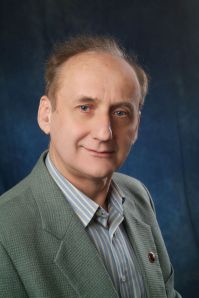
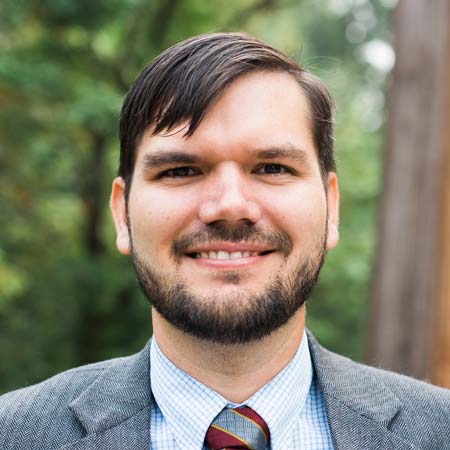
Krzysztof Wierzbanowski is a Professor at the Department of Condensed Matter Physics, Faculty of Physics and Applied Computer Science, AGH University of Science and Technology in Kraków, Poland. His research focuses on crystallographic textures, deformation mechanics, diffraction analysis, residual stresses, and computational modeling using genetic algorithms. He teaches physics and materials science courses, including lecture materials on elasticity, oscillations, thermodynamics, electromagnetism, and quantum physics. Research Interests: Crystallographic Textures and Their Industrial Applications Elastic/Plastic Deformation of Crystalline Materials Diffraction Techniques for Material Analysis Residual Stress Characterization Recrystallization Processes and Modeling Genetic Algorithms for Texture Optimization Contact: Room 306A (D-10 building), AGH UST Phone: +48 12 617 33 86 Email: wierzbanowski@fis.agh.edu.pl
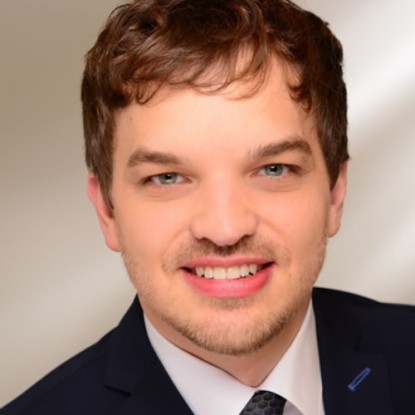
Prof. Dominik Schillinger (Technische Universität Darmstadt) is a leading expert in numerical mechanics, with 15+ years of academic leadership in computational methods, multiscale modeling, and biomedical applications. His career spans prestigious institutions including Leibniz Universität Hannover and University of Minnesota. W3-Professur für Numerische Mechanik (2021–present) W2-Professur für Numerische Mechanik (2019–2021) Assistant/Associate Professor (2013–2019) Postdoc & PhD (2008–2012) His research focuses on isogeometric analysis , discontinuous Galerkin methods , and multiscale biomedical modeling , with applications in vascular networks, bone mechanics, and additive manufacturing. He pioneered phase-field methods for fracture analysis and physics-informed neural networks for material modeling. Recent publications highlight matrix-free algorithms for compressible flows, physics-augmented lattice optimization , and thermodynamically consistent phase-field models . Awards include the PECASE , ERC Starting Grant , and NSF CAREER award. Presidential Early Career Award (2019) ERC Starting Grant (2017) NSF CAREER Award (2017) ICE Zienkiewicz Medal (2015) He teaches core courses in numerical methods , finite element analysis , and computational mechanics at TU Darmstadt and Leibniz Universität Hannover, with international collaborations in Bethlehem and Austin.
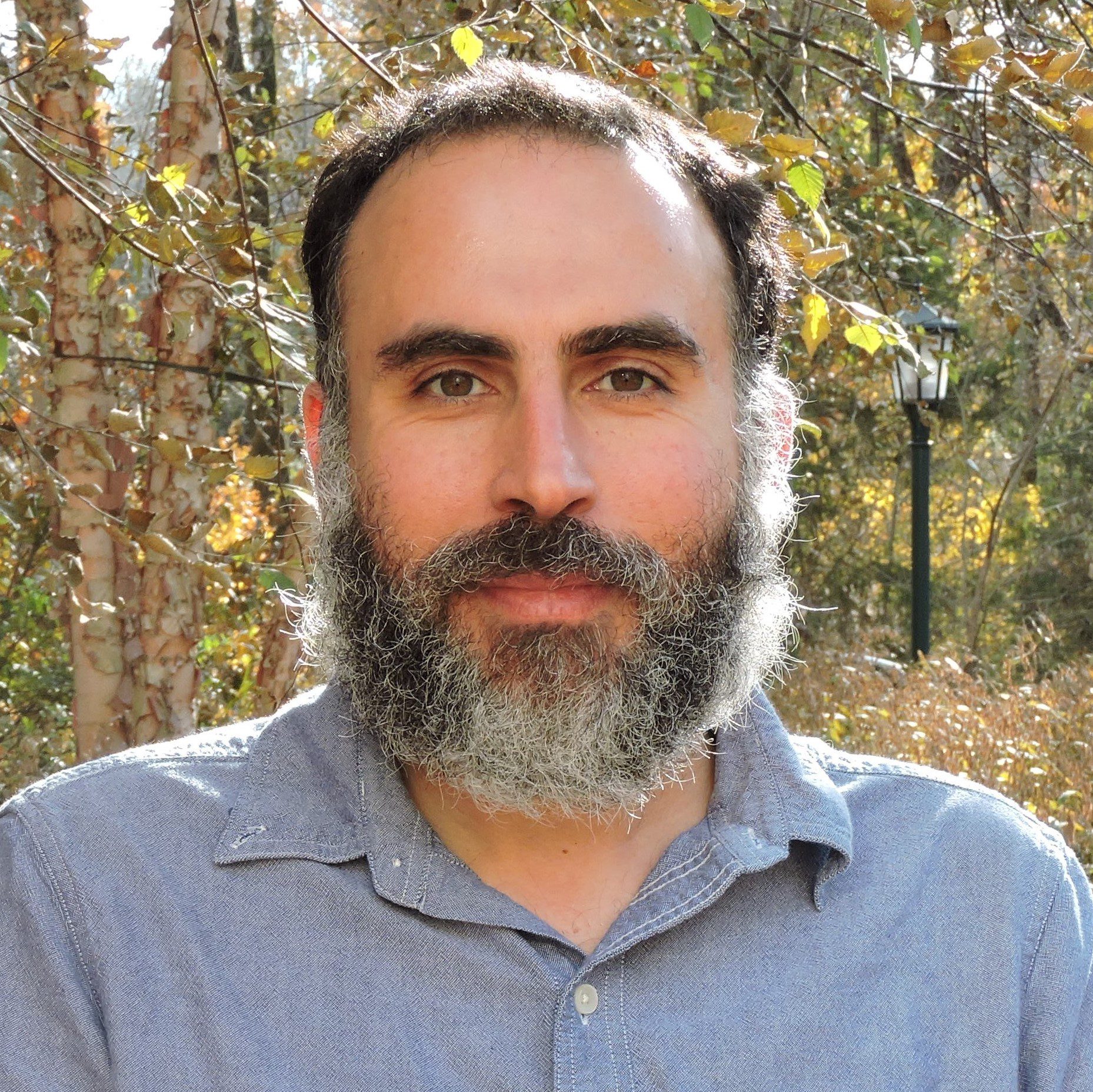
Dr Paul Expert is a Lecturer in Health Informatics at the Global Business School for Health at University College London since January 2022. His interdisciplinary research bridges complex systems theory, graph/simplicial network analysis, and health informatics. PhD in Physics (Centre for Complexity Sciences, Imperial College London) BSc & MSc in Physics and MSc in Statistics (University of Geneva) His research focuses on: Developing topological data analysis methods for complex systems Mapping patient movement patterns to nosocomial infection risks Creating graph-based biomarkers for schizophrenia Investigating psychedelic effects on brain function Advancing dynamic connectivity frameworks for fMRI data Paul's publications demonstrate cross-disciplinary impact across neuroscience , medical informatics , mathematical modeling , and network theory . His recent work includes: 2025: Force field decomposition on graphs 2025: Maternal sepsis risk factors 2024: Dynamic functional connectivity frameworks 2023: Anesthesia-induced consciousness changes 2022: Electronic health record quality standards
Jean-Paul Kneib is a Full Professor at the Laboratory of Astrophysics (LASTRO) within the School of Basic Sciences (SB) at École Polytechnique Fédérale de Lausanne (EPFL), Switzerland. He is also involved in the Space Sustainability initiative at EPFL and has held visiting positions at Caltech and CNRS institutions. His research focuses on cosmology, gravitational lensing, and next-generation spectroscopic surveys like DESI and Euclid. Education : PhD in Astrophysics (1993), Master in Astrophysics, Geophysics & Space Technics (1990), Engineer degree in Aerodynamics & Space Technics (1990), all from Toulouse University and École Nationale Supérieure de l'Aéronautique et de l'Espace. Research Interests : Kneib specializes in cosmology, using galaxy surveys and gravitational lensing to study dark matter and dark energy. His work includes strong lensing in galaxy clusters, redshift surveys for cosmic expansion analysis, and robotic fiber-positioner systems for spectroscopic instruments. He also contributes to space sustainability initiatives addressing orbital debris. Recent Publications emphasize deep learning for radio interferometry, Euclid mission early data, DESI BAO analysis, and novel methods for asteroid detection. Collaborative projects involve JWST observations of high-redshift galaxies and digital twins for CubeSats. Scientific Awards : ERC Advanced Laureate (for project "Light on the Dark") Marie Curie Fellowship Leadership Roles : Co-Lead of ESA Euclid "Strong Lensing" Working Group Co-Principal Investigator for CFHT-Stripe 82 project Developer of Fiber-Robot Positioner System for DESI collaboration
Professor Adelle Coster is an applied mathematician at the University of New South Wales , affiliated with the School of Mathematics & Statistics . Her interdisciplinary research employs dynamical systems analyses , stochastic modelling , and queueing theory to address biological and biomedical challenges, ranging from cellular glucose transport to archaeological starch analysis . PhD (1998), University of New South Wales BSc (1991) First Class Honours, University Medal, University of New South Wales Her research spans mathematical biology , focusing on: Quantitative analysis of insulin signalling networks in glucose transport Dynamical systems theory for excitable cell behaviour (e.g., cardiac pacemaker cells) Geometric morphometrics and machine learning for archaeological starch identification Stochastic models of actin-tropomyosin interactions in cytoskeletal dynamics Recent publications highlight her expertise in interdisciplinary mathematical models , particularly in: Insulin resistance mechanisms Paleoenvironmental reconstructions Biological network synchronization Hypergraph applications in quantitative biology She has secured major ARC Centre of Excellence funding (2023-2029) as Deputy Director for Research, alongside multiple Discovery Projects for cellular transport models. Collaborations include experimentalists at the Garvan Institute , University of Sydney, and Technical University of Eindhoven.
Hussain Syed Kazmi is an Assistant Professor at KU Leuven, affiliated with the Department of Electrical Engineering (ESAT) and the Faculty of Engineering Science. He serves as head of the Subdivisie EnergyVille Electa - Kazmi and is a member of EnergyVille and KIES (KU Leuven Institute for Energy and Society). His work focuses on energy systems innovation through data science and machine learning. Assistant Professor, Department of Electrical Engineering (ESAT) Head of Subdivisie EnergyVille Electa - Kazmi Member of EnergyVille and KIES Institute His research spans energy systems, machine learning, and building dynamics, with projects addressing electric vehicle smart charging, renewable energy forecasting, grid stability analysis, and climate-resilient building design. Publications emphasize interpretable AI, physics-informed modeling, and energy flexibility quantification. Recent projects include: Physics-infoRmEd: Data-driven control for building energy demand Esurrogates: Climate resilience and energy efficiency co-optimization FlexIQ: User flexibility in distribution networks Kazmi teaches courses such as Capita Selecta Data Science for Energy and Smart Distribution Systems, integrating his research into energy-focused academic training.
Dr Rhiannon Jones serves as a Lecturer in Experimental Particle Physics within the School of Mathematical and Physical Sciences at the University of Sheffield. She is an active member of the Particle Physics and Particle Astrophysics Research Cluster (PPPA), contributing to major international collaborations including the Deep Underground Neutrino Experiment (DUNE) and Short-Baseline Near Detector (SBND) project. Her work focuses on advancing liquid argon time projection chamber (LArTPC) technologies for neutrino detection, with responsibilities spanning detector development, data analysis, and physics interpretation across multiple experimental frameworks. Her research program centers on experimental neutrino physics, specifically targeting neutrino interaction measurements, detector response optimization, and background mitigation in LArTPC systems. Key investigation areas include scintillation light characterization for particle identification, reconstruction of low-energy electron events, simulation of detector performance using GPU-accelerated computing, and analysis of cross-section uncertainties affecting supernova neutrino studies. Her work bridges particle physics, nuclear physics, and computational science to address fundamental questions about neutrino properties, oscillation parameters, and potential sterile neutrino signatures. Analysis of her publication record from 2018-2024 reveals consistent contributions to neutrino experiment infrastructure and physics analysis. Early work established foundations in joint oscillation analyses (VALOR) and SBND detector construction, while recent efforts have driven DUNE Phase II development, vertical drift detector technology, and innovative data processing techniques using deep neural networks. Her publications demonstrate growing leadership in technical design reporting, white paper authorship, and cross-collaboration studies addressing sterile neutrino phenomenology and detector performance optimization. The Particle Physics and Particle Astrophysics Research Cluster (PPPA) provides Dr Jones's primary institutional framework at Sheffield, connecting her to a multidisciplinary team engaged in detector development, data acquisition systems, and physics analysis for both accelerator-based experiments and astroparticle physics. Within PPPA, she contributes specifically to the experimental neutrino program, working on near-detector calibration systems for SBND and far-detector technologies for DUNE, with strong operational ties to Fermilab and international partner institutions.
Warren M Grill , Ph.D., is the James B. Duke Distinguished Professor of Biomedical Engineering at Duke University, with secondary appointments in Neurobiology and Neurosurgery. He is a core faculty member in Innovation & Entrepreneurship, Duke Institute for Brain Sciences, and Duke Initiative for Science & Society. His research focuses on neural engineering and neural prostheses , particularly through design and testing of electrodes, stimulation techniques, and computational neuroscience applications in bladder function restoration , movement disorder treatment via deep brain stimulation (DBS), and chronic pain management with spinal cord stimulation. Education : B.S. (Boston University, 1989), M.S. (Case Western Reserve, 1992), Ph.D. (Case Western Reserve, 1995) Research Themes : Neural stimulation mechanisms, computational modeling of nerve responses, electrode design optimization, bioelectronic medicine, and closed-loop neuromodulation systems His scientific contributions include over 150 peer-reviewed publications, 18 patents, and leadership in neuroengineering societies. Current projects analyze deep brain stimulation mechanisms, peripheral nerve stimulation for bladder control, and transcranial magnetic stimulation biophysics. He teaches graduate and undergraduate courses in neural prosthetics, electrical stimulation fundamentals, and research methodology. Key awards include: Fellow of the National Academy of Inventors (2022), Capers & Marion McDonald Award (2018), Javits Neuroscience Investigator Award (2015), Duke University Scholar/Teacher of the Year (2014), and Fellowships from Biomedical Engineering Society (2011) and American Institute for Medical and Biological Engineering (2007). His recent publications (2023-2025) demonstrate: Energy-efficient neural stimulation waveforms Species-specific vagus nerve stimulation scaling Computational models for cortical neuron activation thresholds Advances in spinal cord stimulation for pain management Optogenetic mapping of DBS circuits Quasi-static field approximations in neuromodulation
Victoria Oberländer serves as a Visitor (Faculty) in the Department of Computer Science at the School of Science and a Doctoral Researcher in the Professorship of Jaakko Lehtinen. She concurrently holds Doctoral Student status, reflecting her active pursuit of a doctoral degree while contributing to faculty-level research initiatives. Her educational foundation includes a licensed medical doctor degree in Human Medicine from Kiel University and a Licentiate degree in Medical and Health Sciences from Christian-Albrechts-Universität zu Kiel, awarded December 15, 2016. This dual expertise in medicine and computational science shapes her interdisciplinary approach. Dr. Oberländer specializes in developing self-supervised deep neural network models to denoise electromagnetic brain recordings where ground truth data is unavailable. Her research addresses the critical challenge of decomposing multi-sensor time-series data into brain activity (signal of interest), sensor noise, and environmental noise—demonstrating how non-linear deep learning methods surpass traditional linear techniques like PCA and ICA. Core research areas include neural network architectures for time-series analysis, electromagnetic signal processing, and denoising algorithms specifically tailored for EEG/MEG data in clinical neuroscience contexts. Her sole publication to date (2022) investigates cortical cross-frequency coupling alterations due to in utero antidepressant exposure, revealing significant developmental neuroscience implications. This work exemplifies her interdisciplinary methodology, merging pharmacology, neurodevelopment, and computational modeling. Cited 8 times (Scopus) Covered by 16 news outlets Shared by 44 X users and 2 Facebook pages Read by 125 Mendeley users As a doctoral researcher under Professor Jaakko Lehtinen, she operates at the intersection of computer science and medical research, leveraging her clinical background to drive innovation in neurotechnology. Her work contributes to the Professorship's focus on computational neuroscience solutions within the Department of Computer Science infrastructure.
Dr. Ehab Shoubaki is a Researcher at the University of North Carolina at Charlotte , specifically associated with the Duke Energy Smart Grid Laboratory at EPIC. He holds a Ph.D. in Electrical Engineering from the University of Central Florida (2009) and has six years of industry experience as a Senior Controls Engineer at PetraSolar Inc. University: University of North Carolina at Charlotte Role: Lab Manager, Duke Energy Smart Grid Laboratory Email: eshoubak@charlotte.edu His research focuses on cooperative controls and protection mechanisms for distributed power electronics-based energy resources (DERs) , emphasizing their impact on power distribution networks. He has authored/co-authored over 20 publications, with recent work addressing real-time co-simulation, grid-forming inverters, and hardware-in-the-loop (HIL) testing for renewable energy integration. Key Research Areas: Smart Grids, Distributed Energy Resources, Power Systems, Control Systems, Power Electronics His technical contributions in co-simulation testbeds, virtual synchronous machines, and solid-state circuit breakers highlight his expertise in advancing grid stability and reliability through innovative power electronics design.
Steven C. Cramer, MD, is a Professor of Neurology at the David Geffen School of Medicine, University of California, Los Angeles (UCLA). He holds the Susan and David Wilstein Endowed Chair in Rehabilitation Medicine and serves as Medical Director of Research at the California Rehabilitation Institute. Dr. Cramer is Co-Principal Investigator for the NIH StrokeNet clinical trials network and holds editorial roles at Neurorehabilitation and Neural Repair and Stroke . His research specializes in neural repair following stroke, employing innovative approaches including robotics, cellular therapies, brain stimulation, and telehealth interventions. Key focus areas include: Developing biomarkers for personalized stroke rehabilitation Translational research on neuroplasticity and motor recovery Clinical trials for novel neurorehabilitation technologies His publications predominantly explore neuroimaging biomarkers, vagus nerve stimulation, and rehabilitation efficacy, with consistent emphasis on translating basic neuroscience into clinical applications. Recent works demonstrate increasing focus on AI-driven rehabilitation and precision medicine approaches. Awards & Honors: Barbro B. Johansson Award in Stroke Recovery (2018) American Heart Association Stroke Rehabilitation Award (2017) Susan and David Wilstein Endowed Chair (2020) He leads multiple NIH-funded grants including R01HD095457 (brain-computer interfaces) and U01NS120910 (stroke recovery biomarkers), focusing on large-scale clinical validation. Dr. Cramer directs the UCLA Neural Repair Laboratory, collaborating internationally on neurorecovery consortia like ENIGMA Stroke Recovery.
Dr. Jens Grieger is a scientific Assistant at the Institute of Meteorology within the Department of Geosciences at Free University of Berlin. He has been with the institution since 2009, serving as a Research Associate from 2009-2016 and currently as a scientific Assistant since 2016. He coordinates the MiKlip Module E project and serves as a member of the MiKlip Steering Group, demonstrating leadership in major climate research initiatives. Dr. Grieger completed his PhD in Earth Sciences at Freie Universität Berlin in May 2015 with his dissertation titled "Cyclonic Activity and its Influences on Antarctica," supervised by PD Dr. Gregor C. Leckebusch. Prior to this, he earned a Diploma in Physics from Humboldt-Universität zu Berlin in 2007, with thesis work on "Analysis of Open Source Software for Lattice Quantum Chromo Dynamics." His early career included research assistant positions at Humboldt-Universität zu Berlin (2005-2007) and a guest student program at the Jülich Supercomputing Centre (2005). Dr. Grieger's research program centers on extreme meteorological events , decadal prediction , extra-tropical cyclones , atmospheric energy transport , and Antarctic mass balance . His work bridges theoretical climate dynamics with practical applications for understanding and predicting extreme weather phenomena. A distinctive feature of his research is the focus on Southern Hemisphere meteorology, particularly cyclone activity and its relationship to Antarctic climate systems, which has contributed significantly to understanding climate change impacts in polar regions. Analysis of Dr. Grieger's publication record reveals a consistent trajectory of increasing complexity and collaboration in climate research. His early work focused on Southern Hemisphere cyclones and Antarctic precipitation systems, while more recent publications demonstrate growing expertise in decadal climate prediction systems and model evaluation frameworks. A notable trend is his increasing involvement in large-scale, multi-institutional projects that require sophisticated model intercomparisons and evaluation techniques. Dr. Grieger has made significant contributions to several major German climate research initiatives: ClimXtreme Module C (Impacts) Coordination MiKlip Module E Coordination and Evaluation IMILAST (Intercomparison of mid-latitude storm diagnostics) SACAI (Southern Hemisphere Storminess under Anthropogenic Climate Change) WEXICOM and other regional climate projects As project coordinator for MiKlip Module E and active participant in multiple collaborative research programs, Dr. Grieger has substantial experience managing research funding and coordinating multi-institutional teams across Germany. His role in the MiKlip Steering Group reflects recognition of his expertise in decadal climate prediction systems, while his involvement in IMILAST demonstrates leadership in developing standardized methodologies for cyclone tracking and analysis. Dr. Grieger is an integral member of the Working Group on Climate Diagnostics and Meteorological Extreme Events at the Institute of Meteorology. His research connects with broader scientific communities through projects like ClimXtreme, MiKlip, and IMILAST, which involve collaboration with multiple German research institutions including the German Weather Service, Max Planck Institute for Meteorology, and Helmholtz Association centers. His work contributes to the German Climate Computing Center's efforts in developing improved climate prediction systems.
Serbun Ufuk DEĞER is a Lecturer at the Computer Technologies Program under Kastamonu Vocational School at Kastamonu University , Turkey. He has held this position since 2009 and was appointed as Department Head in 2023. He teaches courses such as Differential Equations, Web Design, Cryptology, and Engineering Mathematics. Education : PhD in Mathematics (2010-2018), Institute of Science, Kastamonu University MSc in Mathematics (2004-2008), Institute of Science, Mersin University BSc in Mathematics (1998-2003), Faculty of Science, Ege University His research focuses on Applied Mathematics and Mathematical Analysis , particularly in Differential-Difference Equations and Stability Analysis . Recent work extends to biomedical applications using Machine Learning for heart data and HCV prediction. Collaborative efforts with researchers like Y. Bolat and H. Can highlight interdisciplinary approaches. Publications span SCI/ESCI-indexed journals and international conferences, addressing oscillation criteria, stability conditions, and predictive modeling. Metrics include 12 publications, 7 citations, and an h-index of 1. Professional Affiliations : Member of the Turkish Mathematical Society (since 2013)
Dr. Lior Michaeli is a Postdoctoral Scholar Research Associate in Applied Physics and Materials Science at the California Institute of Technology, affiliated with the Atwater group. His research focuses on optical dynamic control of macroscopic objects through radiation pressure, contributing to the Breakthrough Starshot Initiative's goal of laser-driven lightsails for space exploration. Education: BSc, MSc, and PhD in Physics from Tel Aviv University. Supervisors: Prof. Tal Ellenbogen and Prof. Haim Suchowski (PhD). Research Interests include metasurfaces, nonlinear optical effects, and light-matter interactions. His work extends collective dynamics formalism to nonlinear optical regimes and explores radiation pressure applications for spacecraft propulsion. Current projects involve silicon nitride metagratings and self-stabilizing lightsails. Scientific Trends from his publications highlight advancements in third harmonic generation , coherence-aware diffractive networks , and high-quality factor metasurfaces , bridging photonic manipulation with aerospace engineering. Key subfields include optical bistability, surface lattice resonances, and tunable topological singularities. Scientific Awards: Fulbright Scholar Labs & Teams: Works at Caltech's Atwater group, collaborating on the Breakthrough Starshot Initiative for space exploration through photonic propulsion.
Corban Harwood is a Professor of Mathematics and Chair of the Department of Mathematics at George Fox University. He teaches courses such as Calculus, Differential Equations, Numerical Methods, and Advanced Linear Algebra, integrating his research on numerical partial differential equations into pedagogy. His research focuses on developing and analyzing numerically stable algorithms for solving nonlinear and parabolic partial differential equations, with applications in chemical reaction-diffusion, wave propagation, and environmental modeling (e.g., algal blooms, disease spread). His work emphasizes minimizing computational errors and time while ensuring solution reliability. Key trends in his publications include interdisciplinary applications of mathematics, algorithm stability analysis, and pedagogical frameworks for project-based learning. He has also collaborated on models for battery design and ecological systems.