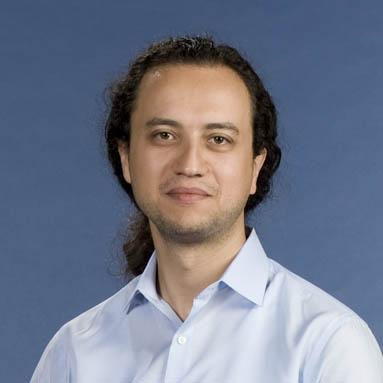
Prof. Emre Neftci holds the Chair of Neuromorphic Software Ecosystem at the Peter Grünberg Institute (PGI) within Forschungszentrum Jülich, Germany, where he leads research at the intersection of neuromorphic engineering and software development for brain-inspired computing systems. His primary research domains include: Neuromorphic Computing architectures Artificial intelligence algorithms for spiking neural networks Machine learning optimization for low-power hardware Software ecosystem development for specialized accelerators He focuses on creating robust software frameworks that enable efficient deployment of neuromorphic hardware in real-world applications, emphasizing energy efficiency and scalability. Prof. Neftci's institutional work centers on advancing the software stack for next-generation computing paradigms through the Neuromorphic Software Ecosystem chair, facilitating collaboration between hardware developers and application scientists. Contact: e.neftci@fz-juelich.de
Wafi Danesh is an Assistant Professor in the Department of Engineering Programs at SUNY New Paltz, part of the School of Science & Engineering. He holds a PhD in Electrical and Computer Engineering from the University of Missouri Kansas City (2022). Prior to academia, he served as a Senior Engineer I - Design at Microchip Technology Inc. (2022-2023). His research focuses on hardware security, leveraging machine learning for FPGA Trojan detection and secure 3D IC design. Teaching interests include System-on-Chip Design, Digital Logic Fundamentals, and Computer Architecture. Education: PhD in Electrical and Computer Engineering, University of Missouri Kansas City, 2022 Research Interests: Dr. Danesh explores cutting-edge methods to enhance hardware security, including AI-driven approaches for IoT device protection and thermal management in 3D integrated circuits. His work bridges machine learning and physical hardware vulnerabilities, emphasizing FPGA security and PUF-based solutions for wireless systems. Publications Trends: His articles span FPGA Trojan detection via NLP and unsupervised learning, thermal challenges in 3D ICs, and neuromorphic computing innovations. Recent work highlights automated security tools and multi-valued computing for energy efficiency. Awards: None explicitly listed in the provided materials. Advising & Grants: No formal advisees or grants are mentioned. His professional activities center on research and teaching.
Professor Ahmed Hemani is a faculty member at the Division of Electronics and Embedded Systems, KTH Royal Institute of Technology, affiliated with the Digital Futures Faculty. He holds the role of PI for the project 'New Chip Architectures for Industrial Vision' and leads research in reconfigurable computing, memristor-based systems, and hardware acceleration for AI and edge computing. His work bridges theoretical computer science with practical VLSI design and embedded systems development. He actively contributes to cross-disciplinary initiatives at Digital Futures, a joint center with Stockholm University and RISE Research Institutes of Sweden focused on digital innovation. His research emphasizes scalable FPGA/HPC architectures, low-power neuromorphic systems, and optimization techniques for custom silicon solutions. Current projects include a Lego-inspired edge AI framework and memristor-driven MIMO acceleration. Teaching responsibilities span advanced courses in SOC design, digital system verification, and embedded systems. He supervises advanced-level degree projects across computer engineering and ICT innovation specializations, emphasizing hands-on hardware-software co-design methodologies. Recent publications highlight innovations in memristor applications, FPGA-based acceleration, and reconfigurable architectures for neural networks and bioinformatics. His work addresses challenges in dark silicon utilization, energy-efficient computation, and high-performance embedded systems.
Cagdas Onal is an Associate Professor of Robotics Engineering at Worcester Polytechnic Institute (WPI). He holds a BS and MS from Sabanci University (2003, 2005) and a PhD in Robotics from Carnegie Mellon University (2009). His research focuses on soft robotics, bio-inspired systems, and control theory , emphasizing the development of flexible robotic components for healthcare, industry, and sustainable applications. He leads the Soft Robotics Lab and the Future of Robots in the Workplace (FORW-RD) initiative, advancing human-centric robotics solutions. Research interests include designing bio-inspired soft robots (e.g., origami-inspired snake robots), developing modular actuation systems with embedded sensors, and exploring applications in medical devices and assistive technology. His work aligns with UN Sustainable Development Goals, particularly in healthcare access (SDG 3), quality education (SDG 4), and innovation (SDG 9). Recent projects include origami-based robotic arms for wheelchair users , self-contained underwater robots, and haptic interfaces for teleoperation. His lab collaborates on国家级 grants like the NSF-funded NRT Program and has secured patents for actuator designs (e.g., Hydro Muscle). Labs/Teams: Soft Robotics Lab, FORW-RD, NRT Program. Notable media coverage includes Worcester Telegram & Gazette and Spectrum News for innovations in human-friendly robotics.
Professor Chen Xiaodong is a Distinguished University Professor at Nanyang Technological University (NTU), Singapore, holding primary appointment in the School of Materials Science & Engineering with courtesy appointments in the Lee Kong Chian School of Medicine and School of Chemistry, Chemical Engineering and Biotechnology. He serves as Deputy Director of the Institute for Digital Molecular Analytics and Science (IDMxS) and Director of both the Innovative Centre for Flexible Devices (iFlex) and Max Planck-NTU Joint Lab for Artificial Senses. His research spans mechanomaterials science and engineering, flexible electronics, sense digitalization, cyber-human interfaces and systems, and carbon-negative technology. Professor Chen's work focuses on developing methods for controlling materials architecture at 1-100 nm scale to solve fundamental and applied problems in energy, environment, and healthcare. His group integrates expertise from materials science, chemistry, biology, physics, and engineering to create innovative solutions. His scientific contributions have been recognized through numerous prestigious awards including the Singapore President's Science Award, National Research Foundation Investigatorship and Fellowship, Friedrich Wilhelm Bessel Research Award, Dan Maydan Prize in Nanoscience and Nanotechnology, and election to multiple national academies including Singapore National Academy of Science, Academy of Engineering Singapore, and German National Academy of Sciences Leopoldina. Professor Chen serves as Editor-in-Chief of ACS Nano and sits on editorial boards of numerous prestigious journals including Advanced Materials, Chemical Reviews, and Matter. He has mentored numerous PhD students and research fellows who have gone on to faculty positions at institutions worldwide. His laboratory develops cutting-edge technologies in flexible electronics, bio-inspired materials, and nano-bio interfaces, with strong industry collaborations and translational research focus.
Jakub Vohryzek is a postdoctoral researcher at the Computational Neuroscience (CNS) Group at University Pompeu Fabra in Barcelona, supervised by Prof. Gustavo Deco. His work focuses on spacetime connectomics and whole-brain modeling, particularly in neurodegenerative disorders and psychedelic neuroscience. He holds a DPhil from the University of Oxford, where he studied under Prof. Morten Kringelbach. Research Interests: Spacetime connectomics Psychedelic-induced brain state transitions Neurotwin models for personalized medicine Cognitive and clinical applications of whole-brain dynamics Current projects include developing neurotwin models under a European grant for neurodegenerative treatments, investigating brain state dynamics in mindfulness therapy, and modeling psychedelic effects on Alzheimer’s disease. His recent work emphasizes low-dimensional brain network interactions and functional hierarchy perturbations. His research has explored connectivity profiles, oscillatory restoration in dementia, and algorithmic agent approaches to neuropsychiatric disorders. He collaborates on open-science initiatives like Brainhack and advocates for inclusive conference design.
Konstantinos Nikitopoulos is a Professor at the University of Surrey , UK, specializing in Wireless Communications and Signal Processing . His research focuses on MIMO Systems , Open-RAN , and Non-Linear Processing for next-generation wireless networks. His recent work explores Analogue Processing for Tbps Wireless Systems and Neuromorphic Computing in MU-MIMO detection. He has developed frameworks like MIMO-SoftiPHY and SACCESS for software-based radio acceleration and power-efficient network design. Key Publications : Power-Efficient RIC, NL-COMM, NeuroMIMO Collaborators : Rahim Tafazolli, George Katsaros, Marcin Filo His research impacts 6G Network Development through innovations in Beamforming , Channel Estimation , and Software-Defined Radios .
Bhavin J. Shastri is an Assistant Professor in the Department of Physics, Engineering Physics and Astronomy at Queen's University in Canada. His research explores the physics of light for computing , pushing frontiers in information and signal processing through photonic computing and quantum/neuromorphic photonics . He is affiliated with the Centre for Nanophotonics and NUCLEUS , a pan-Canadian photonic computing program funded by NSERC CREATE, bridging artificial intelligence and quantum information . Canada Research Chair & Principal Investigator Faculty Affiliate at Vector Institute (2020-) Editorial Board Member of JPhys Photonics (2019-) Member of IEEE Photonics Society Technical Affairs Council (2019-) Visiting Researcher Scholar at Princeton University (2018-) Shastri Lab members have access to world-class shared facilities, including the Centre for Nanophotonics (CFI-Innovation Fund), Nanofabrication Kingston , the Centre for Advanced Computing , and the Digital Research Alliance of Canada . The lab takes an interdisciplinary approach combining nanophotonics with complex systems on emerging substrates. His research focuses on silicon photonics , nanophonic processors , and photonic integrated circuits with applications to deep learning , nonlinear programming , and quantum information science . His articles show consistent exploration of quantum photonic neural networks , photonic memory systems , and optical signal processing for machine learning and quantum technologies . 2020 IUPAP Young Scientist Prize in Optics 2014 Banting Postdoctoral Fellowship 2012 D. W. Ambridge Prize 2011 IEEE Photonics Society Graduate Student Fellowship 2011 NSERC Postdoctoral Fellowship Multiple Best Student Paper Awards Shastri's lab supervises Ph.D. candidates and postdoctoral fellows working on quantum photonics , neuromorphic computing , and photonic AI systems . His recent work includes photonic tensor cores for scientific computing , quantum photonic neural networks , and all-optical memory systems. Shastri Lab designs programmable nanophotonic processors with potential to outperform microelectronic processors in energy efficiency and computational speeds by seven and four orders of magnitude respectively. Their work spans from device design to system-level implementations in optical computing for machine learning and quantum information processing .
Woo Soo Kim is a Professor and Associate Director in the School of Mechatronic Systems Engineering at Simon Fraser University. As a Graduate Student Supervisor, he leads the SFU Additive Manufacturing Laboratory, focusing on advanced 3D printing, sensing robotics, and agritech applications. His research integrates additive manufacturing with smart systems for healthcare, agriculture, and IoT. Education: Ph.D. in Materials Engineering (KAIST, 2006), Postdoc at MIT (2009) Research Themes: 3D printed devices, bio-medical sensors, AI-driven robotics, and sustainable manufacturing His work emphasizes practical applications, such as wireless pressure sensors for helmets, AI-based crop monitoring, and portable health diagnostics. The lab collaborates on projects like the Agritech 4.0 Bootcamp and develops 3D printed neuromorphic systems. Kim’s publications span advanced materials, sensor integration, and robotics, with a focus on solving real-world challenges through additive manufacturing. He supervises graduate students in mechatronic design and teaches courses like MSE220 (Engineering Materials) and MSE812 (Advanced 3D Printing). The lab’s innovations include 3D printed disposable sensors, smart robotic grippers, and flexible electronics. His research bridges academia and industry, addressing sustainability and technological advancement in multiple sectors.
Yong-Bin Kim is a Professor in the Department of Electrical and Computer Engineering at Northeastern University, part of the College of Engineering. He has held prior positions at Intel Corp., Hewlett Packard Co., Sun Microsystems, and the University of Utah. His research focuses on integrated circuit design, nanoelectronics, bio-chip interfaces, and low-power VLSI systems. He has contributed to initiatives like the HPVLSI Lab and Microsystems and Electron Devices Lab. Education includes a B.S. in Electronic Engineering from Sogang University (Seoul, South Korea), an M.S. from the New Jersey Institute of Technology, and a Ph.D. in Computer Engineering from Colorado State University (1996). Research interests encompass high-speed low-power VLSI design, system-on-chip (SoC), physical VLSI CAD, and nanoelectronics. Specific areas include bio-sensor interface circuits, electronic neuron design, and adaptive robot controllers. Key projects involve compact power-efficient integrated circuits and high-speed transceiver design. Outstanding Paper Award, 2020 IEEE ISOCC South Korean Patent for Autonomous Impedance Calibration (2021) Best Paper Award, 2016 International SoC Design Conference Patent for Improved Receiver Circuit (2020) Patent for Method to Detect Trojan Circuits (2018) Advisees include graduate student Yixuan He. He has led research projects funded by Winchester Technology and Hynix Semiconductor, focusing on semi-self-calibration transceivers and tunable RF inductors. Labs include the HPVLSI Lab and Microsystems and Electron Devices Lab at Northeastern University, which focus on high-speed/low-power IC design and microfabrication technologies.
Emre Salman is a Professor in the Department of Electrical and Computer Engineering at Stony Brook University (SUNY), where he directs the Nanoscale Circuits and Systems (NanoCAS) Lab. His research focuses on nanoscale IC design, energy-efficient computing, and biomedical electronics, with notable contributions to 3D integrated circuits and wireless energy harvesting for IoT and healthcare applications. Education : PhD in Electrical Engineering, University of Rochester (2009) MSc in Electrical and Computer Engineering, University of Rochester (2006) BSc in Microelectronics Engineering, Sabanci University, Turkey (2004) Research Interests : Salman’s work spans energy-efficient integrated circuits, secure IoT systems, and implantable medical devices. He pioneers techniques like charge-recycling logic and thermal-aware design for post-Moore computing. His group develops monolithic 3D ICs to address power/thermal challenges in AI accelerators and biomedical implants. Articles Trends : Recent publications highlight advancements in triboelectric energy harvesters for knee implants, thermal covert channel mitigation in 3D processors, and energy-efficient DNN accelerators. He emphasizes sustainability and security in emerging technologies like ReRAM-based computing and AC circuits for wireless IoT. Awards : 2023-2024 IEEE Distinguished Lecturer 2018 IEEE Region 1 Technological Innovation Award 2013 NSF CAREER Award Advising & Grants : Salman has directed multiple NSF, NIH, and industry-funded projects. He advises students on topics like hardware security and biomedical electronics, with a focus on translating research into commercializable technologies. Labs & Teams : The NanoCAS Lab collaborates with Brookhaven National Lab and industry partners (e.g., AMD, Samsung) to bridge academic research with real-world applications in energy-efficient computing and secure 3D ICs.
Professor Ole-Christoffer Granmo is a distinguished academic at the University of Agder, Norway, where he serves as Professor in the Department of Information and Communication Technology. He is the Founding Director of the Centre for Artificial Intelligence Research (CAIR) at the University of Agder, leading cutting-edge research in artificial intelligence and machine learning. Dr. Granmo obtained his master's degree in 1999 and his PhD in 2004, both from the University of Oslo. His academic journey has been marked by significant contributions to the field of AI, most notably the creation of the Tsetlin machine in 2018, for which he received the AI research paper of the decade award from the Norwegian Artificial Intelligence Consortium (NORA) in 2022. Professor Granmo's research primarily focuses on logical and causal world modeling across multiple modalities including images, sound, and natural language. His work spans logical auto-encoding, convolution, regression, transformer architectures, and reinforcement learning, all with the overarching goal of creating ultra-low-power artificial general intelligence through transparent logical learning and reasoning. His publications reveal a strong emphasis on interpretable AI systems, hardware implementations, and applications across diverse domains including cybersecurity, healthcare, social media analysis, and bioinformatics. AI Research Paper of the Decade (2022) - Norwegian Artificial Intelligence Consortium (NORA) Eight paper awards in machine learning Professor Granmo has coordinated over seven research projects and mentored 55+ master's students and nine PhD students. His leadership extends to co-founding the Norwegian Artificial Intelligence Consortium (NORA) and establishing two companies: Anzyz Technologies AS and Tsense Intelligent Healthcare AS. As an advisor at Literal Labs, he actively bridges academic research with practical industry applications, demonstrating his commitment to translating theoretical innovations into real-world solutions that address complex challenges across multiple sectors.
Jesús del Alamo serves as the Donner Professor of Science within MIT’s Department of Electrical Engineering and Computer Science, leading cutting-edge research in semiconductor device physics with applications spanning logic, high-frequency, and power electronics. His work bridges fundamental materials science with practical device engineering to address next-generation computing challenges. Academic Credentials: PhD, Stanford University MS, Stanford University Research Focus: Professor del Alamo’s expertise centers on transistor physics and semiconductor device innovation, particularly III-V compound semiconductors (InGaAs, GaN) and diamond MOSFETs. Current investigations target reliability mechanisms in GaN transistors for RF/power applications, novel analog computing architectures, and electrochemical ionic synapses for neuromorphic hardware. His group pioneers atomic-scale fabrication techniques like thermal atomic layer etching for sub-5nm devices while exploring quantum confinement effects in vertical nanowires. Publication Evolution: Recent work (2023-2025) demonstrates a strategic shift toward neuromorphic computing, with 60% of publications focusing on electrochemical synapses and ferroelectric memories for AI acceleration. This builds upon decades of transistor scaling research, now converging with materials innovations in HfZrO 2 ferroelectrics and protonic conductors to enable energy-efficient analog deep learning hardware. Award Recognition: Louis D. Smullin Award for Excellence in Teaching Amar Bose Award for Excellence in Teaching Intel Outstanding Researcher Award Semiconductor Research Corporation Technical Excellence Award Semiconductor Industry Association-Semiconductor Research Corporation University Researcher Award Collaborative Leadership: He directs research within MIT’s Microsystems Technology Laboratories (MTL), collaborating with faculty including Bilge Yildiz (electrochemical systems) and Ju Li (computational materials). Current projects integrate device physics with neuromorphic algorithms, supported by semiconductor industry partnerships focused on translating fundamental discoveries into practical AI hardware solutions. Research Infrastructure: His group operates within MIT’s MTL cleanroom facilities, utilizing advanced characterization tools for in-situ device analysis and leveraging partnerships with industry leaders in semiconductor manufacturing to prototype novel transistor architectures.
Professor Ahmet Bindal is a faculty member in the Department of Computer Engineering at San José State University . He earned his B.S. in Electrical Engineering from Bogazici University, Turkey, followed by M.S. and Ph.D. degrees from the University of California, Los Angeles. Industry Experience : 20 years at IBM, Intel, Philips, and Cadence Design Systems. Current Research : Nano-scale electron devices, silicon nanowire transistors, robotics, and VLSI architecture. Research Trends : His work focuses on silicon nanowire transistors for VLSI, FPGA, and robotics. Key themes include low-power/high-speed integrated circuits , dynamic logic design , neuromorphic engineering , and advanced semiconductor processing . Patents and Publications : He holds four U.S. patents (three with IBM, one with Intel). His 30+ journal and conference publications span nanowire transistors, FPGA architecture, robotics, and semiconductor process modeling. Teaching Contributions : Developed an undergraduate System-on-Chip (SoC) course and a MOSFET design laboratory at SJSU. Books Authored : Fundamentals of Computer Architecture and Design (Springer, 2017). Electronics for Embedded Systems (Springer, 2017). Silicon Nanowire Transistors (Springer, 2017).
Bipin Rajendran is a Professor of Intelligent Computing Systems at King's College London, based in the Department of Engineering within the Faculty of Natural, Mathematical & Engineering Sciences. He directs the King's Laboratory for Intelligent Computing and co-leads the Centre for Intelligent Information Processing (CIIPS). Previously, he held positions at IBM Research and academic institutions in the U.S. and India. His research focuses on algorithms, devices, and systems for intelligent computing, emphasizing neuromorphic computing, memristive devices, and hardware-software co-design. Education: B.Tech, IIT Kharagpur (2000) M.S. and Ph.D., Electrical Engineering, Stanford University (2003, 2006) Research Interests: Rajendran's work spans hardware-software co-design, novel materials for neuromorphic systems, event-driven computing algorithms, and energy-efficient AI hardware. His contributions include foundational research on memristive devices for spiking neural networks and phase-change memory-based learning systems. Grants & Awards: He has received funding from EPSRC, NSF, European Commission, and industry partners like Intel and IBM. Notable awards include the IBM Faculty Award (2019) and election to the U.S. National Academy of Inventors (2019). Labs & Initiatives: Leads the King's Laboratory for Intelligent Computing and collaborates on projects like NeuroComm (6G neuromorphic comms) and SGAI (green AI systems). His work bridges nanoscale devices with AI algorithms for sustainable computing.