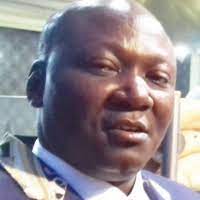
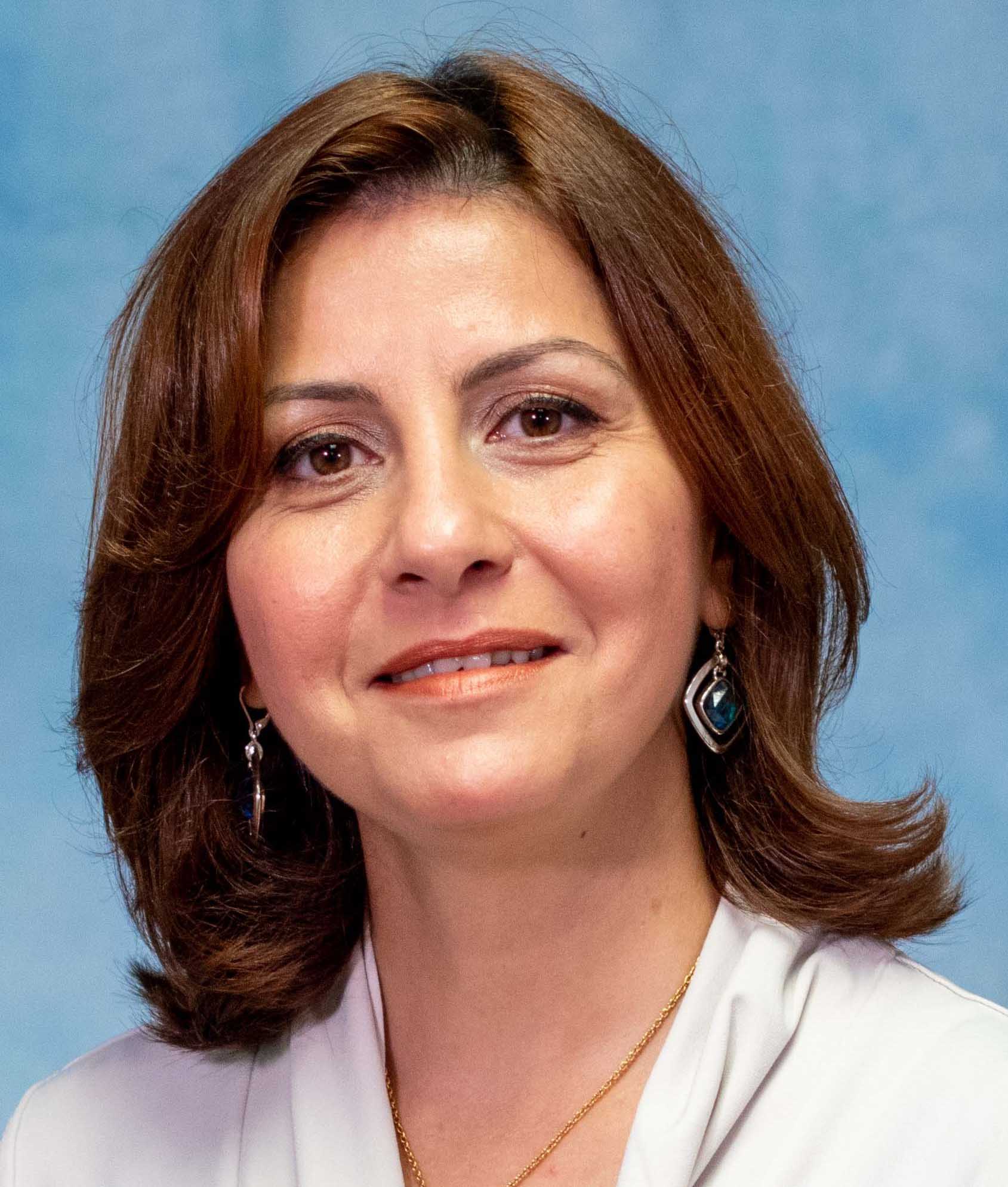
Dr Mark Poolman is a Senior Research Fellow in Systems Biology at the School of Biological and Medical Sciences, Oxford Brookes University . His research focuses on metabolic modeling , systems-wide analysis , and computational approaches to understanding biological processes in plants, microbes, and pathogens. His funded projects include: BBSRC Institute Strategic Programme : Microbes and Food Safety (2023–2028). European Commission -funded work on antimicrobial targets (2021–2025). CCnet project for carbon recycling (2019–2025). Dr Poolman’s work spans photosynthesis , photorespiration , nitrogen fixation , and metabolic engineering in organisms like Clostridium autoethanogenum , Phaeodactylum tricornutum , and Escherichia coli . His recent publications highlight trends in algorithm development for elementary mode analysis , applications of flux balance analysis in plant and microbial systems, and industrial biotechnology for sustainable chemical production.
Dr. Zackary Falls is an Assistant Professor in the Department of Biomedical Informatics at the Jacobs School of Medicine and Biomedical Sciences, University at Buffalo, where he leads a data-centric computational laboratory focused on drug discovery and pharmacoinformatics. Education & Training PhD, Computational Chemistry, University at Buffalo, 2017 BS, Chemistry, Canisius College, 2012 NLM T15 Postdoctoral Fellowship, Jacobs School of Medicine and Biomedical Sciences, 2020 Research Interests His group integrates structural bioinformatics, chemoinformatics, and clinical informatics to develop and apply the multiscale CANDO drug-discovery platform. Current thrusts include: AI-driven design of non-addictive analgesics and overdose-rescue drugs targeting the opioid crisis. Repurposing FDA-approved drugs against COVID-19. Rational design of combination therapies for KRAS-driven non-small-cell lung cancer. Large-scale analytics on EHR and Medicaid claims to understand health disparities in addiction treatment. Scientific Awards Sinsheimer Scholar Award 2024 T15 Informatics Training Fellowship Award 2017 Marjorie Winkler Fellowship Award 2012, Gordon Harris Fellowship Award 2012, Merck Index Award 2012 Funding & Grants Since 2020, Dr. Falls has served as PI or Co-I on grants totaling ≈ $35 million from NIH (NIDA, NCATS, NLM), NIST, Empire AI, and private foundations. Key projects include: Principal Investigator, “A translational bioinformatics approach to elucidate and mitigate polypharmacy-induced adverse drug reactions,” NIDA, $1.05 M, 2022-2027. Co-Principal Investigator, CTSA SUNY Buffalo Hub, NCATS, $29.2 M, 2025-2031. Co-Investigator, “BRIGHT Short-Term Training,” NLM, $0.67 M, 2022-2027. Group & Collaborations He leads the Falls Group , currently mentoring three trainees and collaborating closely with Prof. Ram Samudrala’s team and multiple academic/industry partners. The lab is housed within UB’s Center for Computational Research and the Witebsky Center for Microbial Pathogenesis and Immunology.
Maria Brbic is an Assistant Professor of Computer Science at EPFL, previously a postdoctoral researcher at Stanford University under Jure Leskovec. Her research focuses on developing machine learning methods for biological and biomedical applications, particularly representation learning of high-dimensional datasets, open-world semi-supervised learning, and single-cell genomics. Her work includes the STELLAR method for spatial cell type discovery (Nature Methods 2022), the ORCA framework for open-world learning (ICLR 2022), and contributions to the Fly Cell Atlas (Science 2022). She is involved in the Chan Zuckerberg Biohub and Neuro-omics projects. She received the University of Zagreb's best thesis award, was recognized as a MIT Rising Star in EECS, and won the Basel Computational Biology Conference best poster award. Her research bridges computer science with cutting-edge biomedical discovery.
Bri Jackson is a Lecturer in the Department of Foreign Language at Virginia Commonwealth University. While his formal academic role is in language education, his research focuses on advanced computational methods in pathology, including machine learning applications for cancer diagnosis, virtual immunohistochemistry, and digital pathology tools. His work spans histopathological analysis, immuno-oncology, and biomedical imaging. Jackson's research has led to the development of innovative algorithms for virtual diagnostic companion tools, foundation models for whole slide image analysis, and benchmarks for cervical cytology classification. His publications emphasize precision oncology, including biomarker multiplexing, molecular response prediction, and AI-driven histopathological interpretation. Key areas include non-small cell lung cancer, esophageal adenocarcinoma, and splenic involvement in pancreatic cancer prognosis. He has also explored educational challenges in pathology residency programs during the pandemic, viral epidemiology, and rare congenital disorders involving multiple organ systems. Jackson's work bridges computational biology with clinical diagnostics, though no scientific awards or student advisement details are mentioned in the available data.
Colin Ross is a Professor in the Faculty of Pharmaceutical Sciences at the University of British Columbia and a Scientist at BC Children’s Hospital and St. Paul’s Hospital. He leads the Ross Laboratory, focusing on pharmacogenomics, gene therapy, and precision medicine to improve drug safety and develop targeted therapeutics for pediatric cancer and genetic diseases. Co-founded the Canadian Pharmacogenomics Network for Drug Safety (CPNDS) Developed Glybera, the first EMA-approved AAV gene therapy for LPL Deficiency Current NIH-funded research on genome editor delivery optimization His research integrates genomics with clinical pharmacology to identify genetic determinants of adverse drug reactions, particularly in chemotherapy-induced toxicities. Key areas include pharmacogenomics , gene therapy , and genome editing . Recent work emphasizes lipid nanoparticle delivery systems for CRISPR-based therapeutics and predictive models for drug-induced ototoxicity. Ross has authored over 220 peer-reviewed publications in journals like Nature Genetics , NEJM , and Cell Stem Cell . His h-index of 58 reflects significant impact in pediatric pharmacogenetics and gene therapy. Awards include the Michael Smith Foundation Scholar Award, CIHR New Investigator Award, and multiple journal-specific recognitions. Pharmacogenomics of chemotherapy toxicity Genome editing for genetic diseases Transgenic mouse model development Multidisciplinary collaborations across North America Contact: colin.ross@ubb.ca | LinkedIn | Twitter
Prof. Dr. Daniela Beisser is a Professor at the Department of Engineering and Natural Sciences (FB 8) of the Westphalian University of Applied Sciences in Recklinghausen, Germany. Her research focuses on bioinformatics and biostatistical methods for high-throughput 'omics data, applied to biomedicine and freshwater ecology. She previously held academic roles at the University of Duisburg-Essen (2017–2023) and University Hospital Essen. 2004–2008: B.Sc. in Molecular Biology with Bioinformatics focus, FH Gelsenkirchen 2006–2008: M.Sc. in Molecular Biology with Bioinformatics focus, FH Gelsenkirchen 2008–2011: Ph.D. in Bioinformatics, University of Würzburg Her research integrates computational approaches with experimental data to study molecular responses to environmental stressors in freshwater organisms, genome analyses in human and protists, and proteomic studies in plants. She also investigates eco-evolutionary theories in microorganisms and links biodiversity to ecosystem functions. Recent publications highlight her work on amplicon sequencing (Natrix2 pipeline), metatranscriptomic analysis of microbial communities, and machine learning frameworks for environmental data. She contributes to software tools like TaxMapper and BioNet for reproducible workflows. Best Poster Award, German Conference on Bioinformatics (2013) Travel scholarships: DAAD, DAAD PROMOS, German Symposium on Systems Biology E-fellows.net scholarship (2006–2008) She has supervised numerous PhD, Master’s, and Bachelor’s students on topics such as protist community dynamics , fungal degradation processes , and stressor recovery mechanisms . Her lab collaborates on the CRC 1439 'RESIST' project and develops tools for environmental DNA analysis.
Dr. Somali Chaterji is an Associate Professor in the Department of Agricultural & Biological Engineering at Purdue University, with a courtesy appointment in the Elmore Family School of Electrical and Computer Engineering. Her research bridges data science, digital agriculture, and computational genomics, focusing on machine learning for IoT, edge computing, and scalable genomics analysis. She leads the Innovatory for Cells and Neural Machines (ICAN), developing algorithms for efficient data analytics in resource-constrained environments. Education: PhD in Biomedical Engineering (Purdue University), Postdoctoral Fellowship at University of Texas at Austin. Awards include the NSF CAREER Award (2022), ACM BCB Best Paper (2015), and Purdue Seed-for-Success Award (2016). She founded KeyByte LLC, a cloud computing startup optimizing ML workloads. Research spans IoT edge analytics (e.g., drone surveillance, embedded systems) and genomics (single-cell clustering, error correction in sequencing). She is Co-PI of the NSF CHORUS Center and A2I2 Army Institute. Over 20 students are advised, with active projects on serverless computing, federated learning, and genome engineering. Labs/Teams: ICAN Lab, WHIN project (Lilly Endowment), Purdue ABE Extension. Collaborations with Microsoft, Amazon, and Adobe Research. Active in teaching, including courses on applied ML and computational genomics with innovative pedagogy.
Dr. Lin Lin is an Associate Professor at the Faculty of Law, National University of Singapore (NUS Law). Her expertise spans corporate law, corporate finance, and Chinese corporate and securities law. She holds a PhD and LLM from NUS, and an LLB from Guangdong University of Foreign Studies. Dr. Lin has held visiting positions at Stanford Law School, University of Oxford, and University of Melbourne. Her research focuses on corporate governance structures, cross-border financial regulations, and legal frameworks governing Chinese enterprises. She has authored Venture Capital Law in China (Cambridge University Press, 2021), a seminal work in corporate law scholarship. Dr. Lin teaches courses on Chinese Law, Private Equity, and Venture Capital at NUS, and has delivered lectures at leading institutions worldwide. Professional Roles: Editorial Board Member of Asian Journal of Comparative Law , Arbitrator at Hainan Court of International Arbitration, and Mediator at Hainan International Commercial Mediation Centre. Grants & Awards: Recipient of President's Graduate Fellowship, and peer reviewer for American Journal of Comparative Law . Practice Experience: Former Legal Policy Officer at Singapore's Accounting and Corporate Regulatory Authority (ACRA), and Assistant Counsel at Singapore International Arbitration Centre (SIAC). Her research integrates legal analysis with comparative institutional frameworks, addressing contemporary challenges in corporate law across jurisdictions. Dr. Lin actively engages in executive training programs for legal practitioners in Asia and advises on corporate reforms in Taiwan.
Gianluca Pollastri is an Associate Professor in the School of Computer Science at University College Dublin (UCD). He leads a research group focused on machine learning applications in bioinformatics, particularly protein structure prediction and analysis. His academic roles include Associate Professor since 2016, Senior Lecturer from 2008, and Lecturer from 2003. He earned an MSc from the University of Florence and a PhD from the University of California, Irvine. His research integrates deep learning and neural networks to address challenges in protein subcellular localization, secondary structure prediction, and intrinsically disordered regions. Key tools developed include SCLpred, PaleAle, Porter, and PUNCH2. He has secured grants from Science Foundation Ireland, the Health Research Board, and UCD. Pollastri’s work emphasizes rigorous validation of machine learning methods in biology, as outlined in the DOME framework. His lab has produced over 100 peer-reviewed articles, with recent focus on leveraging pre-trained language models (PLMs) for protein analysis. Education: MSc, University of Florence PhD, University of California, Irvine Awards: Best M.Sc. Thesis in Artificial Intelligence (1999) Best Student Project in Artificial Intelligence (1997) His teaching includes modules on Bioinformatics, Connectionist Computing, and Programming. He coordinates research collaborations and maintains a lab with postdoctoral fellows and graduate students.
Li Wang is an Associate Professor in Mathematics at the University of Texas at Arlington. She holds a Ph.D. from UC San Diego (2014), M.S. from Xi'an Jiaotong University (2009), and B.S. from China University of Mining and Technology (2006). Her research focuses on optimization, data science, and machine learning. Current research includes polynomial optimization methods, low-rank tensor approximations for big data, and structure learning algorithms. She teaches courses in discrete mathematics, optimization, and data science.
Samantha Petti is an Assistant Professor in both the Department of Mathematics (School of Arts and Sciences) and the Department of Computer Science (School of Engineering) at Tufts University. She is based at 177 College Avenue, Medford, MA. Her research focuses on computational biology, bioinformatics, and machine learning, with particular emphasis on protein structure analysis, genotype-phenotype mapping, and algorithm design for biological sequence analysis. She teaches courses such as Master's Thesis supervision, PhD Thesis guidance, and specialized topics in mathematics and computer science. Her work integrates interdisciplinary approaches, combining statistical methods, deep learning, and probabilistic models to address challenges in genomics, structural biology, and network science. Recent projects include developing end-to-end protein alignment tools and exploring sparse graph models for biological systems. Teaching: Supervises graduate thesis work (Master’s/PhD) and advanced courses in mathematics and computer science at Tufts. Lab/Team: Engages in collaborative research at the intersection of computational methods and biological systems.
Murat Kantarcioglu is an Ashbel Smith Professor of Computer Science at the University of Texas at Dallas within the Erik Jonsson School of Engineering and Computer Science. He holds visiting appointments at UC Berkeley and Harvard University, focusing on data privacy and security. With a Ph.D. in Computer Science from Purdue University (2005), he has made significant contributions to privacy-preserving data mining, blockchain analytics, and secure machine learning. Education: Ph.D. in Computer Science (Purdue, 2005) Current Roles: Ashbel Smith Professor (2021-present), Visiting Scholar at UC Berkeley (2020-present), Affiliate at Harvard (2013-present) Past Roles: Assistant (2005-2011), Associate (2011-2015), and Full Professor (2015-2021) at UTD His research focuses on data privacy , computer security , and machine learning , particularly addressing challenges in privacy-preserving distributed data mining , blockchain analytics , and adversarial machine learning . He has pioneered techniques for secure federated learning , topological analysis of blockchain networks , and privacy-utility tradeoffs in health data systems. Recent publications reveal a strong emphasis on IoT security , graph neural network vulnerabilities , and blockchain data structures . His work combines theoretical rigor with practical implementations using technologies like Intel SGX and homomorphic encryption. Notable Awards NSF CAREER Award (2009) IEEE Technical Achievement Award (2017) AMIA Homer Warner Best Paper Award (2014) Fellow of IEEE (2022), AAAS (2020), and ACM (2016) Key Projects Privacy-Preserving Genomics Data Sharing Adversarial Learning Frameworks Smart Contract Security Medical Data Protection Systems Labs Director of Data Security and Privacy Lab Collaborations with Vanderbilt, UC Berkeley (RISE Lab), and Harvard (Data Privacy Lab)
Prof. Emile Rugamika Chimusa is a Professor at Northumbria University , College of Engineering and Science, specializing in Computational Population Genomics and Bioinformatics . Previously, he served as Associate Professor and Programme Director at the University of Cape Town for postgraduate programs in Computational Health Informatics and Human Genetics. His research focuses on genomic methodologies for analyzing large-scale genomic data, including Genome-wide association studies Admixture mapping in mixed-ancestry populations Pharmacogenetics of disease treatments Multi-omics integration for disease-drug associations Development of bioinformatics tools Population-specific disease risk prediction He has received over £17.7 million in research funding from organizations like the NIH , Wellcome Trust , and National Research Foundation . His work spans translational genomics in both non-communicable and infectious diseases .
Rasha Karakchi serves as a Lecturer in the Department of Computer Science and Engineering at the University of South Carolina's Molinaroli College of Engineering and Computing, where she teaches diverse courses while maintaining an active research program in hardware acceleration and embedded systems. Her academic foundation includes: Ph.D. in Computer Science and Engineering, University of South Carolina (2020) M.E. in Computer Engineering, University of South Carolina (2016) Dr. Karakchi's research centers on high-performance reconfigurable embedded systems, with particular focus on hardware acceleration for automata processing, spiking neural networks, and genomic sequence alignment. Her work bridges theoretical computer science with practical hardware implementation, emphasizing energy efficiency and real-time performance in security-critical applications. Analysis of her 2023-2025 publications reveals a dominant research trajectory applying machine learning to optimize hardware configurations for domain-specific tasks. Key thematic clusters include ML-enhanced automata processors for pattern matching, lightweight encryption engines for embedded security, and specialized architectures for spiking neural network acceleration—all demonstrating consistent innovation in hardware-software co-design for computationally intensive workloads. Her research excellence has been recognized through: SPARC Award (South Carolina's Program to Advance Research and Creativity)
Fahad Ahmad is a Lecturer in the School of Computing within the Faculty of Technology at the University of Portsmouth. He holds affiliations with the Portsmouth AI and Data Science Centre, Centre for Cybercrime and Economic Crime, and Portsmouth Centre for Advanced Materials and Manufacturing. His research focuses on machine learning applications in healthcare, cybersecurity, and quantum computing. He supervises PhD students in topics like quantum machine learning for securing IoT medical devices. Key research areas include: Medical imaging diagnostics using deep learning (e.g., echocardiograms, X-rays) Cybersecurity for financial systems and SDN-NFV networks Quantum key distribution for post-quantum security AI-driven health management systems Recent work emphasizes: Human activity recognition through machine learning Cancer subtype classification using RNA expression data Emotional empathy modeling in intelligent agents His articles span healthcare technology, cybersecurity frameworks, and hybrid AI architectures. He actively contributes to international conferences and journals, with over 60 peer-reviewed publications. Research collaborations include institutions in Pakistan and the UK.