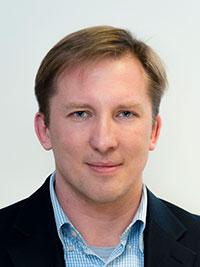
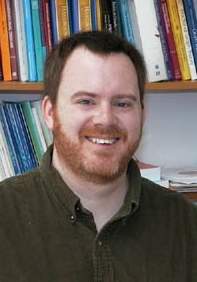
Ivan Viola is an Associate Professor at the Institute of Computer Graphics and Algorithms, part of the Faculty of Informatics at TU Wien, Austria. He holds a leave of absence until December 2024 while also being affiliated with King Abdullah University of Science and Technology (KAUST) as an Associate Professor funded by the Vienna Research Groups program. His research focuses on visualization techniques in medicine, biological sciences, and earth sciences, with a specialty in illustrative visualization and DNA-nanotechnology applications. Viola has contributed over 100 scientific works and serves as a reviewer and panelist for major conferences in computer graphics and visualization. Education: M.Sc. (2002) and Ph.D. (2005) in Computer Graphics from TU Wien. Postdoctoral research at the University of Bergen (2006-2011), where he became Full Professor before returning to TU Wien. Research Interests: Whole-cell visualization Molecular modeling Interactive 3D environments Biomedical visualization Data-driven colormap techniques Awards: IEEE VIS 2017 Best Paper Honorable Mention, 'Best Overall Concept' for CellView, and multiple visualization awards. Active in EuroVis and IEEE VIS organizing roles. Grants & Supervision: Leads the Visualization Group at TU Wien, supervising student projects and master’s theses. Involved in grants like the Vienna Research Groups program. Labs/Teams: Visualization Group at TU Wien, collaborating on projects like CellView and Molecumentary.
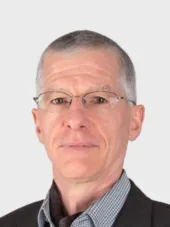
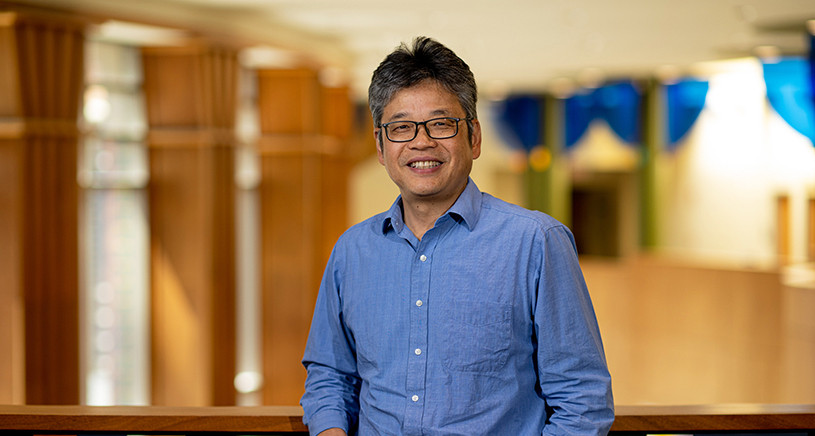
Zhan Ma is a Professor and PhD Advisor at the School of Electronic Science and Engineering, Nanjing University. He leads research in Neural Video Communication, Smart Cameras, and Computational Vision Models. His work focuses on end-to-end learning for compression, networking, and hardware-software co-design. Dr. Ma holds a PhD from New York University's Tandon School of Engineering (2010), and prior to his current role, he served as Senior Staff Researcher at Huawei (2013-2015) and Senior Researcher at Samsung (2011-2013). Research highlights include pioneering work in point cloud compression (adopted into IEEE standards) and dual-camera systems for high-resolution video acquisition. His algorithms are deployed in WeChat/WeChat Video for rate-quality optimization and in ISO standards for video complexity indicators. Recent work emphasizes machine learning-driven approaches for image/video compression and adaptive streaming frameworks. Honors include the 2023 IEEE CAS Society Outstanding Young Author Award and multiple best paper awards at IEEE WACV, BMSB, and other venues. He leads the Vision Lab at Nanjing University and collaborates with industry partners on practical implementations of his research.
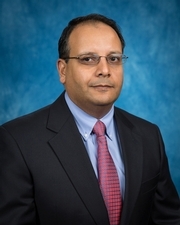
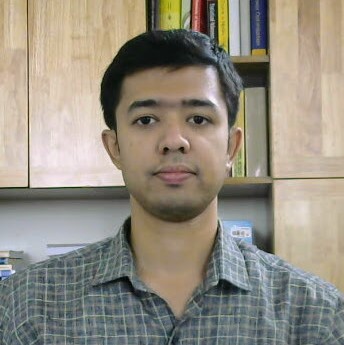
Assoc. Prof. Dr. Ayhan Gün is an Associate Professor in the Department of Electrical and Electronics Engineering at Kütahya Dumlupınar University's Faculty of Engineering. With a career spanning over two decades, he has held various academic positions including Research Assistant, Assistant Professor, and currently Associate Professor since 2024. His extensive administrative experience includes serving as Head of the Control and Command Systems Department (2007-2021) and various leadership roles in university-industry collaboration initiatives. Dr. Gün completed his Bachelor's degree at Near East University (1991-1996), Master's at Dumlupınar University (1998-2001), and PhD at Eskişehir Osmangazi University (2001-2007). His research focuses on control systems, mathematical modeling, artificial neural networks, robotics, SCADA, PLC programming, electromechanical systems, nonlinear control, fuzzy logic, optimization techniques, automation, biomechanics, and mechatronics. His recent publications demonstrate a consistent research trajectory in control engineering, with particular emphasis on optimization algorithms applied to quadrotor control, inverted pendulum systems, and electrical motor design. His work bridges theoretical control concepts with practical implementations in robotics and power systems. A significant portion of his research involves applying swarm intelligence and evolutionary algorithms to solve complex control problems. Bilim, Sanayi ve Teknoloji Bakanlığı Kurumsal Kapasitenin Arttırılması (2016) BİLİM SANAYİ VE TEKNOLOJİ BAKANLIĞI Çift Beslemeli İndüksiyon Generatörü Tasarımı ve İmalatı (2016) Dr. Gün has supervised multiple graduate students and managed numerous research projects, including the current 'Robotic Arm Design and Implementation for Patients with Hemiparetic Arms' project. His external roles include serving as an expert witness for judicial institutions, project referee for TÜBİTAK, and publication reviewer for IEEE Transactions. He has also contributed to regional development through his work with Kütahya Governorship's Planning and Development Board.
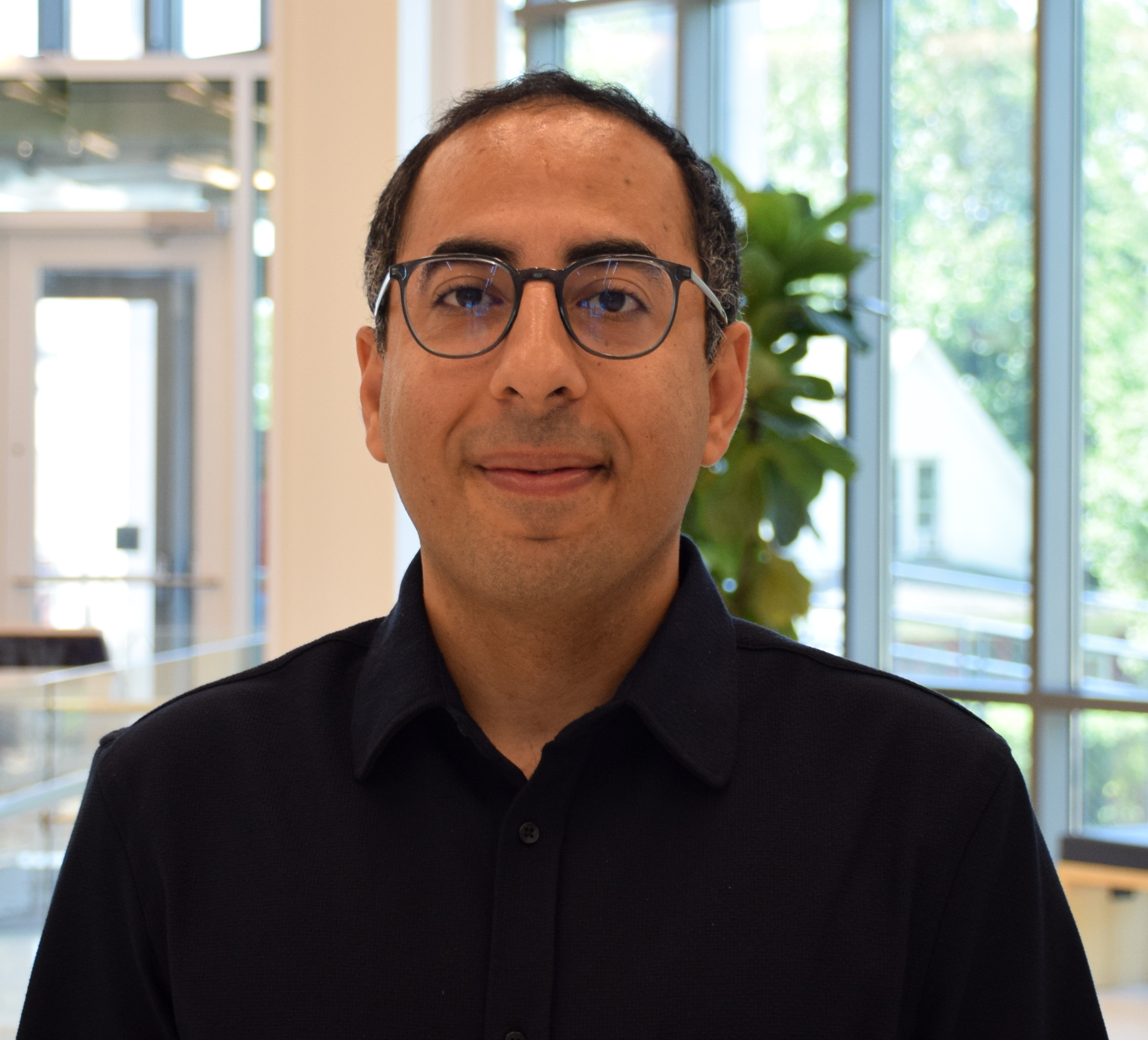
Samuel V. Scarpino is a Professor at Northeastern University , leading as Director of AI + Life Sciences in the Institute for Experiential AI . He holds appointments in the Khoury College of Computer Sciences , Bouvé College of Health Sciences , and the Network Science Institute . Scarpino’s career spans roles at The Rockefeller Foundation, Dharma Platform, and co-founding Global.health , a Google-backed pathogen tracking initiative. Education: PhD in Biology (2013) from The University of Texas at Austin; Omidyar Fellow at the Santa Fe Institute (2013–2016). His research focuses on integrating AI , network science , and epidemiology to address global health challenges. Key areas include disease modeling , wastewater surveillance , and health equity . Recent work explores AI applications for H5N1 pandemic preparedness , scRNA-seq analysis , and social determinants of health . Scarpino’s scientific contributions include over 100 publications in Nature , Science , and PNAS , alongside fellowships from the ISI Foundation (2017), Santa Fe Institute (2020), and Vermont Complex Systems Institute (2021). He mentors PhD students like Wan He and leads interdisciplinary teams at Northeastern’s Roux Institute and Network Science Institute . Grants from the McGovern Foundation and Microsoft Research support his work on AI for public health.
Rainald Loehner is a Distinguished Professor of Fluid Dynamics at George Mason University's Center for Computational Fluid Dynamics. Since 2003, he has led the Center for Computational Fluid Dynamics at George Mason University. He is currently a Hans Fischer Senior Fellow at the Technical University of Munich's Institute for Advanced Study (TUM-IAS) for 2023, hosted by Professors Kai-Uwe Bletzinger and Roland Wüchner in the 'Adjoint-Based System Identification of Large-Scale Structures' Focus Group. Loehner received his Diplom Ingenieur (Maschinenbau) degree from the Technical University of Braunschweig, and his PhD and a DSc in civil engineering from the University College of Swansea, Wales. After teaching at Swansea for a year, he worked at the Naval Research Laboratory in Washington, DC, followed by a research professorship at George Washington University. He joined George Mason University as an associate professor and was promoted to full professor in 1995 and distinguished professor in 2004. With over 35 years of experience, Professor Loehner's research spans the complete pipeline of numerical solvers and simulation tools. His expertise includes pre-processing, grid generation, numerical methods, field solvers, parallel computing, adaptive mesh refinement, fluid-structure interaction, shape optimization, system identification, and computational crowd dynamics. His current work focuses on developing advanced field solvers for compressible and incompressible flows, acoustics, electromagnetic wave propagation, heat and mass transfer, structural mechanics, and fluid-structure interaction. Key application areas include blast mitigation, ship hydrodynamics, blood flow, contaminant transport, and pedestrian safety. Loehner's recent research output (2020-2024) shows a strong trend toward digital twin technology and adjoint-based methods for structural analysis and optimization. His publications focus on high-fidelity digital twins for detecting structural weaknesses, risk assessment in engineering systems, and optimization of sensor placement. His work bridges computational mechanics with machine learning approaches, particularly in system identification and inverse problems, demonstrating how computational methods can solve complex real-world engineering challenges. 2020: Ranked #15119 in the Stanford List of Most Influential Scientists of the World; #8 in Aerospace and Aeronautics 2010: Distinguished International Career Award, Argentine Association of Computational Mechanics 2008: Fellow, International Association for Computational Mechanics 2006: Associate Fellow, AIAA 2005: Honorary Professor, University of Wales Swansea 2005: Advisory Professor, Shanghai Jiao Tong University 2004: Distinguished Professor of Fluid Dynamics, George Mason University 1999: Computational Mechanics Achievements Award, Japan Society of Mechanical Engineering 1993: Doctor of Science in Civil Engineering, University College of Swansea 1979-1983: Studienstiftung des Deutschen Volkes (Top 1% of German Students) Professor Loehner has mentored numerous students through his work at George Mason University and has supervised research in computational fluid dynamics, structural mechanics, and related fields. His research has been supported by various grants from government agencies and industry partners, enabling the development of advanced simulation tools applied in aerodynamics, hydrodynamics, shock-structure interaction, and medical applications. His codes and methods have been widely adopted in industry and academia for applications ranging from aircraft and ship design to medical simulations and urban pathogen transmission modeling. Loehner leads the Center for Computational Fluid Dynamics at George Mason University, which focuses on developing cutting-edge computational methods for fluid dynamics and related multiphysics problems. The center works on strategic application areas including blast mitigation, ship hydrodynamics, blood flow simulation, and pedestrian movement modeling. As a TUM-IAS Fellow, he collaborates with the Chair of Computational Modeling and Simulation at TUM on adjoint-based system identification of large-scale structures, bringing together expertise in computational mechanics and digital twin technology to address complex engineering challenges.
Koushik Maharatna is a Professor in the Digital Health and Biomedical Engineering department at the University of Southampton. His research spans biomedical signal processing, digital health, and embedded systems, with a focus on neurological and cardiovascular disorders. Active in EU Horizon Europe and FP7 projects Member of the Institute for Life Sciences and Centre for Internet of Things and Pervasive Systems Specializes in EEG analysis, arrhythmia detection, and autism spectrum disorder diagnostics His recent publications highlight applications of phase-space reconstruction, machine learning, and wavelet transforms in medical diagnostics. Collaborations include researchers across Europe and Malaysia, with emphasis on interdisciplinary digital health solutions. Current research projects funded by UKRI, EPSRC, and European Union grants include PUREMIND and ETHEREAL, focusing on mental health prevention and energy-harvesting electronics. He supervises PhD students in Human Development & Health and Electronics & Electrical Engineering.
Dr. Ahmed F. Abdelghany is the Associate Dean for Research and Professor of Operations Management at the David O'Maley College of Business, Embry-Riddle Aeronautical University, since January 2006. He specializes in commercial airlines, airports, big data cloud computing, business analytics, and operations research models. Prior to his academic career, Dr. Abdelghany worked in enterprise optimization at United Airlines, Chicago. Education: Ph.D. in Civil Engineering (Transportation Systems) from the University of Texas at Austin (2001) Dr. Abdelghany’s research focuses on airline network planning, flight scheduling, simulation of complex transportation systems, and NextGen air traffic management. He has authored two influential books: Modeling Applications in the Airline Industry (Routledge 2010) and Airline Network Planning and Scheduling (Wiley 2018). His publications analyze airline operations, competitive dynamics, and crowd management in transportation facilities. He teaches courses like Airline Management (BA 315) and Airline Operations & Mgmnt (BA 609), and participates in industry short courses. Dr. Abdelghany contributes to research projects such as NextGen air traffic implementation, integrated airport initiatives, and benefit-cost analysis of arrival management systems. His work bridges academic theory with real-world airline and transportation challenges.
Mohsen Heidari is an Assistant Professor in the Department of Computer Science at Indiana University, Bloomington. He is affiliated with the IU Quantum Science and Engineering Center (QSEc) and the NSF Center for Science of Information (CSoI). He previously held positions as a Visiting Assistant Professor at Purdue University and as a Postdoctoral Research Associate at CSoI. Ph.D. in Electrical Engineering (2019) and M.Sc. in Applied Mathematics (2017) from the University of Michigan His research focuses span quantum computing, theoretical machine learning, and information theory. Key themes include: Quantum algorithm design and sample complexity Fourier-based learning frameworks Quantum-classical duality in learning problems Information-theoretic approaches to biological systems Article trends show a strong emphasis on quantum-classical learning intersections (6/15 papers), Fourier analysis applications (5/15), and information-theoretic foundations (12/15). Notable venues include NeurIPS, IEEE Transactions, and ISIT. He directs research involving: Quantum Neural Network development Quantum measurement simulation Quantum data compression techniques Quantum algorithm implementation constraints
Michael Molloy is a Professor in the Department of Computer Science at the University of Toronto, with a cross-appointment to the Department of Computer and Mathematical Sciences at the University of Toronto Scarborough (UTSC). He teaches courses in Discrete Mathematics and the Probabilistic Method, including CSC/MAT A67 and CSC2427/MAT1500 . Research Focus: Graph Theory, Probabilistic Methods, Random Graphs, Constraint Satisfaction Problems, and Markov Chain analysis. His work includes foundational contributions to graph coloring, such as adaptable/conflict coloring and correspondence coloring, and exploring phase transitions in random graphs. He has supervised numerous graduate students, including Lora Hrisch, Jurgen Aliaj, and Hamed Hatami, advancing combinatorial and algorithmic research. Recent publications analyze random graph processes, the freezing threshold for k-colorings, and the resolution complexity of constraint satisfaction problems. These studies intersect theoretical computer science, combinatorics, and probabilistic modeling, often revealing deep structural insights through rigorous mathematical proofs.
Kristin Y. Pettersen is a Professor at the Norwegian University of Science and Technology (NTNU) in the Department of Engineering Cybernetics, Faculty of Information Technology and Electrical Engineering. She holds a PhD and MSc in Engineering Cybernetics from NTNU and serves as an Adjunct Professor at the Norwegian Defence Research Establishment (FFI). She co-founded and led Eelume AS as its first CEO. PhD in Engineering Cybernetics, NTNU MSc in Engineering Cybernetics, NTNU Her research focuses on nonlinear control theory, motion control of mechanical systems, and marine robotics. Key areas include autonomous vehicles, underactuated systems, and cooperative control. Her recent work involves snake robotics, vehicle-manipulator systems, and safety-critical control algorithms. Her publications demonstrate trends in marine robotics , nonlinear control systems , autonomous navigation , formation control , and adaptive algorithms . Emerging topics include energy-shaping control , extremum-seeking optimization , and task-priority frameworks for complex robotic systems. 2025: Norwegian Academy of Science and Letters (DNVA) 2020: ERC Advanced Grant 2017: IEEE Fellow 2016-2021: Board member, Eelume AS 2013-2023: Key scientist, NTNU AMOS She has supervised 30 PhD graduates and currently mentors 16 PhD candidates. Her grants include ERC PoC UR4energy (€150k), ERC AdG CRÈME (€2.5M), and CAROS (NOK 45M) for subsea autonomy. She leads teams at NTNU's Applied Underwater Robotics Laboratory and contributes to the Cluster of Excellence IntCDC.
Elena Niculina Dragoi is a Lecturer at the Faculty of Chemical Engineering and Environmental Protection 'Cristofor Simionescu' at Gheorghe Asachi Technical University in Iasi, Romania. Her academic work integrates Artificial Intelligence and Machine Learning tools for solving complex problems in Chemical Engineering and Environmental Protection . With over 30 published papers and six active research projects, her contributions span process optimization, nanomaterials, and sustainable technologies. Teaches Applied Informatics (Years 1 & 4) and Artificial Intelligence at the Faculty of Chemical Engineering Contributes to Programming Engineering at the Faculty of Computer Science, University 'Alexandru Ioan Cuza' Engaged in interdisciplinary courses at the Faculty of Automatic Control and Computer Engineering Research Interests : Elena's work focuses on modelling and optimization (90% emphasis) of chemical processes using AI methodologies, with cross-disciplinary applications in environmental engineering (70%) and chemical engineering (95%). Her recent publications highlight innovations in: 3D-printed nanocomposite adsorbents for pollutant removal Metaheuristic optimization algorithms for industrial processes Hydrogen generation via nanocatalysts Electrochemical biosensors for environmental and health monitoring AI-driven wastewater treatment systems Green chemistry applications in pharmaceutical and dye removal
Peter X. K. Song is a Professor in the Department of Biostatistics at the University of Michigan School of Public Health. With expertise spanning statistical methodology development and interdisciplinary applications, Dr. Song maintains active collaborations across Nutritional Sciences, Environmental Health Sciences, Chronic Disease research, and Nephrology. His work bridges theoretical statistics with practical healthcare solutions, focusing on innovative approaches to complex data challenges in public health and medicine. Based at the M4140 SPH II building in Ann Arbor, he leads the Song Lab and contributes significantly to the academic community through teaching, research mentorship, and scholarly publications. PhD, University of British Columbia, Vancouver, 1996 BS, Jilin University, Changchun, 1985 Dr. Song's research focuses on the statistical foundation of big data analytics, with particular emphasis on data integration, distributed inference, high-dimensional data analysis, longitudinal data analysis, mediation analysis, and spatiotemporal modeling. His methodological innovations address critical challenges in smart health applications, including organ exchange programs, children's health, chronic disease management, environmental health assessment, and nutritional sciences. His approach combines statistical theory, integer optimization, and algorithm development to create practical tools that help researchers understand complex relationships between environmental exposures and health outcomes. Dr. Song's publication record demonstrates a consistent trajectory of methodological innovation applied to pressing health challenges. His recent work shows increasing focus on sleep classification using AI techniques, personalized treatment effect analysis, distributed statistical methods for high-dimensional data, and epigenetic applications in adolescent health. The interdisciplinary nature of his research is evident in publications spanning biostatistics journals, computer science venues, and domain-specific medical publications. His work increasingly addresses the challenges of integrating diverse data sources while maintaining statistical rigor in the era of big data. IMS Fellow ASA Fellow Elected Member of the International Statistical Institute 2017 ENAR John Van Ryzin Award Dr. Song has mentored an impressive 22 PhD students and 6 postdoctoral trainees throughout his career, with many now holding faculty positions at prestigious institutions or working as data scientists in leading technology companies. His lab, the Song Lab, currently supports two postdoctoral research fellows and eight doctoral students working on cutting-edge statistical methodology development. His collaborative research extends across numerous grants that support interdisciplinary projects in kidney paired donation programs, environmental health studies, nutritional sciences, and chronic disease research, demonstrating his commitment to translating statistical innovation into practical health solutions. The Song Lab serves as a hub for interdisciplinary statistical research at the University of Michigan, bringing together experts from statistics, operations research, and machine learning to address complex challenges in medical and public health sciences. Current lab members include eight doctoral students and three postdoctoral fellows working on projects related to optimal organ matching strategies, causal mediation pathways of omics biomarkers, and statistical methods for big data integration. The lab maintains strong connections with clinical researchers across nephrology, pediatrics, environmental health sciences, and nutritional sciences, ensuring that methodological developments remain grounded in real-world applications.
Bernhard Aichernig is an Associate Professor at the Institute of Software Engineering and Artificial Intelligence. His work bridges formal methods, model-based testing, and artificial intelligence, with a focus on automata learning, digital twins, and AI-assisted programming. Institution: Institute of Software Engineering and Artificial Intelligence Key Research Areas: Model-Based Testing, Automata Learning, AI-Driven Verification His research explores the integration of machine learning into formal verification, enabling scalable testing of complex systems like IoT devices and reinforcement learning agents. Recent projects include AI-Augmented DevOps frameworks (AIDOaRT) and digital twin validation (LearnTwins). Notable scientific awards include multiple best paper recognitions at SEFM (2020, 2021) and the TAYSIR Competition first place (2023). His publications emphasize hybrid approaches combining genetic programming, SMT solving, and neural networks for system modeling. 2025 : AI-assisted programming, timed automata via domain knowledge 2024 : Stochastic environment modeling, Git system learning 2023 : Reinforcement learning under partial observability, digital twins for VPN servers He actively contributes to testing frameworks like AALpy and investigates explainable AI for fault diagnosis in cyber-physical systems.
Shashank Vatedka is an Assistant Professor in the Department of Electrical Engineering at the Indian Institute of Technology Hyderabad . His research focuses on information theory , coding theory , and their applications to data compression , statistical inference , and security . He holds a PhD from IISc, Bengaluru and has postdoctoral experience at Institut Polytechnique de Paris and The Chinese University of Hong Kong . Education : PhD and MSc (Engg) in Electrical Communication Engineering, IISc, Bengaluru (2011-17) Academic Positions : Assistant Professor, IIT Hyderabad (2019-present) Postdoctoral Fellow, Telecom Paris (2018-19) Research Assistant/Postdoctoral Fellow, Institute of Network Coding, CUHK (2016-18) His research spans three main areas: distributed inference (federated learning, wireless sensor networks), compression with locality constraints (local decoding, low-complexity algorithms), and communication in adversarial environments (jamming, list decoding). Recent work includes distributed mean estimation with limited communication and adversarial channel coding with partial information. He has received several honors including the Seshagiri Kaikini Medal for best PhD thesis at IISc in 2017, Best Paper Awards at NCC 2023 and Stanford Compression Workshop 2021, and the TCS Research Fellowship (2014-17). He serves as a Faculty Placement Coordinator at IIT Hyderabad and organizes international conference tracks. His research group advises students across PhD, MTech, BTech , and internships , with alumni pursuing advanced degrees at institutions like UCSD , Columbia University , and TU Delft . Collaborations include theoretical work with colleagues like Yihan Zhang and Sidharth Jaggi .
Aris T. Pagourtzis is a Professor of Computer Science at the School of Electrical and Computer Engineering of the National Technical University of Athens (NTUA), where he also serves as the Head of the Computer Science Division. He is additionally a Lead Researcher at the Archimedes Research Center, Athena RC. His academic career includes positions at the University of Ioannina, the University of Liverpool, the ETH Zuerich, the University of Athens, and the Athens University of Economics and Business. Education: Diploma in Electrical Engineering (1989) and Ph.D. in Electrical and Computer Engineering (1999), both from the National Technical University of Athens Professor Pagourtzis's research spans multiple areas of theoretical computer science, with particular emphasis on computational complexity, graph algorithms, distributed algorithms, approximation algorithms, network algorithms, cryptography, and counting complexity. His work often bridges theoretical foundations with practical applications in network design, security protocols, and optimization problems. He has developed novel algorithms for problems ranging from community detection in networks to Byzantine fault-tolerant protocols and privacy-preserving voting systems. His recent publications show a continued focus on fundamental algorithmic problems while expanding into newer areas like temporal graph analysis, blockchain applications, and privacy-preserving technologies. There's a clear trend toward addressing real-world challenges through rigorous theoretical frameworks, particularly in distributed systems, secure computation, and optimization under constraints. Professor Pagourtzis has served on program and organizing committees for numerous theoretical computer science and cryptography conferences, co-chairing CIAC 2017 and FCT 2021. His research has received funding from diverse sources including US, UK, French, EU, and Greek national resources. He is actively involved in teaching both undergraduate and graduate courses at NTUA, including Algorithms and Complexity, Foundations of Computer Science, Computational Cryptography, and Network Algorithms and Complexity. He leads the Computation and Reasoning Laboratory (corelab) at NTUA, which focuses on theoretical computer science research.