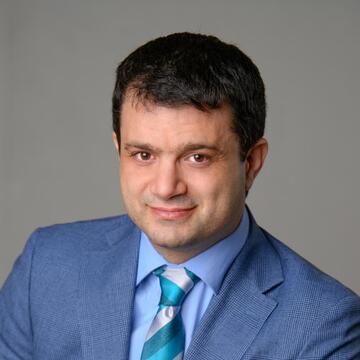
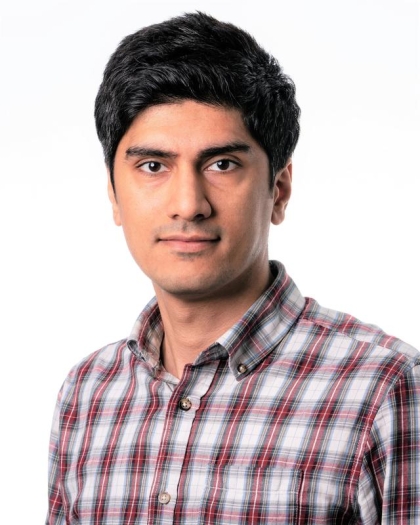
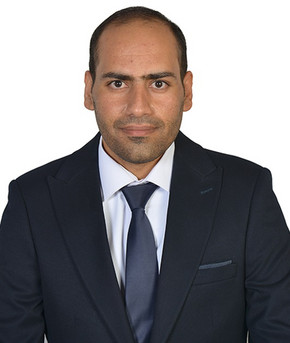
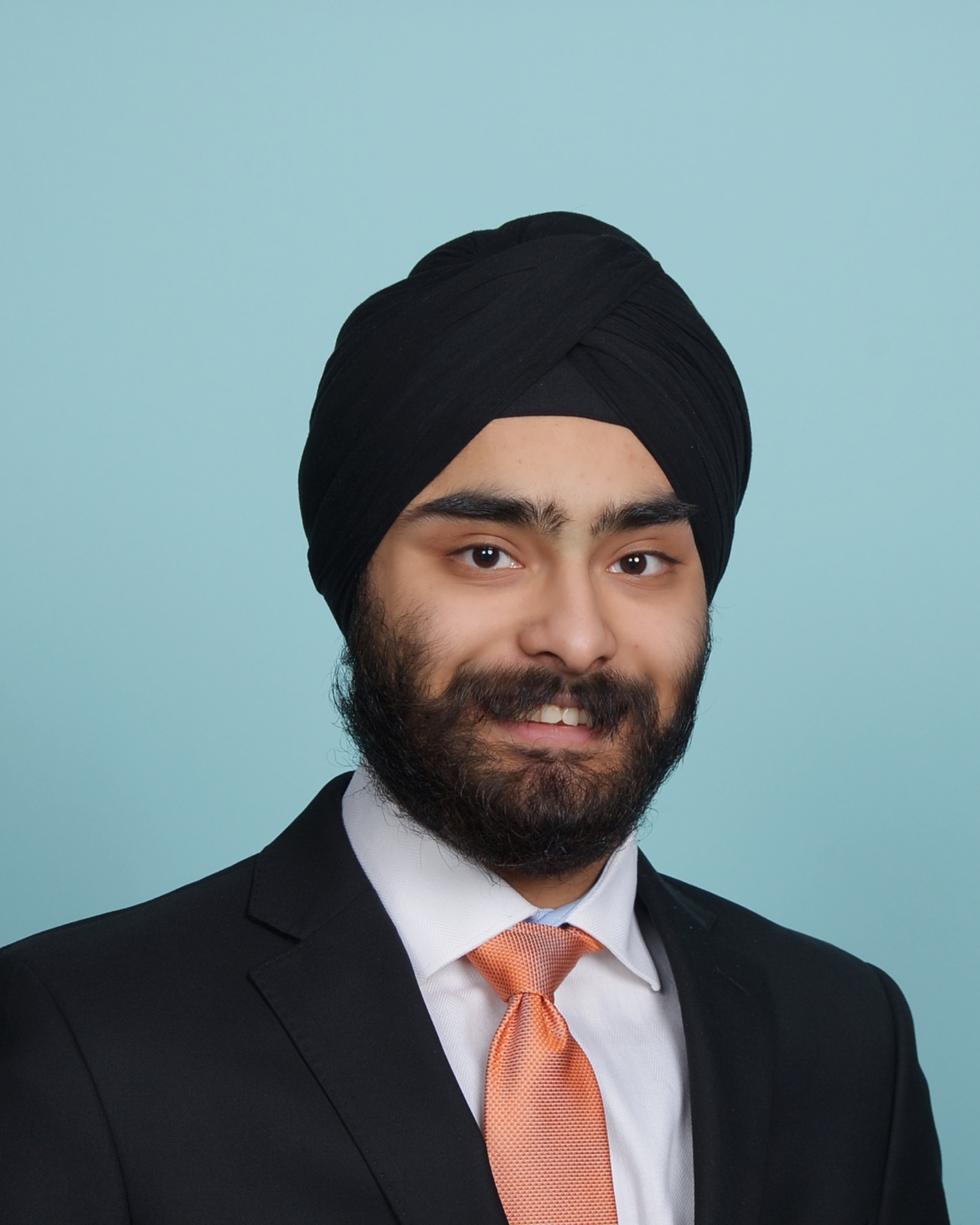
Mustafa Hajij is an Assistant Professor in the Data Science program at the University of San Francisco. He holds a PhD in Mathematics from Louisiana State University, an MS in Computer Science, and completed postdoctoral training at University of South Florida and Ohio State University. Previously, he served as Assistant Professor at Santa Clara University and as an AI Research Scientist at KLA Corporation. His research develops foundational frameworks for topological deep learning, including cell complex neural networks and geometric learning architectures that operate beyond graph domains. He leads the NSF-funded project 'A Unifying Deep Learning Framework Using Cell Complex Neural Networks' (DMS-2134231, $547,626). Recent publications establish new paradigms for topological representation learning, including combinatorial complexes and simplicial networks, with applications in computational biology, 3D vision, and drug discovery. He organized the ICML Topological Deep Learning Challenges and develops open-source tools like TopoX for topological learning.
Liji Shen is Professor of Operations Management and Chairholder at WHU – Otto Beisheim School of Management, Campus Vallendar, Germany. She is affiliated with the Supply Chain Management Group and leads research in scheduling, optimization, and sustainable manufacturing. Her academic journey includes a Ph.D. and Habilitation from Technische Universität Dresden, and she has held visiting scholar positions at institutions including École des Mines de Saint-Étienne and Huazhong University of Science and Technology. Ph.D. (Dr.rer.pol.), summa cum laude, Technische Universität Dresden (2009) Habilitation, Technische Universität Dresden (2015) Master of Business Administration (Dipl.-Kffr.), Technische Universität Dresden (2006) Liji Shen's research focuses on Operations Management , particularly scheduling optimization in manufacturing systems. Her work spans flexible job shops , parallel machine scheduling , energy-efficient production , and sequence-dependent setup times . She applies advanced techniques such as evolutionary algorithms , hybrid metaheuristics , and mathematical programming to solve complex industrial problems. Her recent publications emphasize sustainability through energy-aware scheduling and time-of-use pricing models. The 15 most recent publications highlight a consistent research trajectory in production scheduling , with increasing emphasis on energy efficiency , distributed manufacturing , and real-world constraints like eligibility and delivery times. Her work frequently appears in top journals such as European Journal of Operational Research , IEEE Transactions on Evolutionary Computation , and Computers & Operations Research , often in collaboration with leading researchers like Dauzère-Pérès, Mönch, and Buscher. Scientific Awards: European Journal of Operational Research, Best Paper Award (2021) DFG and TU Dresden, 'Support the Best' Prize for Outstanding Researchers (2013) Dr. Feldbausch-Prize for Best Dissertation, TU Dresden (2010) Scholarship for Young Researchers in Saxony (2006–2009) DAAD Prize for Best Foreign Students (2007) Best Master’s Thesis, German Operations Research Society (2007) Liji Shen has been an active advisor and researcher, leading projects in operations research and industrial optimization. Her editorial role on Operations Research Perspectives underscores her standing in the academic community. She has directed research labs and collaborated internationally, contributing to both theoretical advancements and practical applications in manufacturing and logistics. No specific grants are mentioned, but her sustained publication record and leadership roles indicate strong research support. She leads the Operations Management research group at WHU, focusing on algorithmic solutions for complex scheduling problems. Her team investigates energy-aware production, hybrid flow shops, and distributed systems, aiming to bridge the gap between theoretical models and industrial implementation. The lab collaborates with researchers across Europe and China, fostering a global research network in operations research and supply chain management.
Siamak Ravanbakhsh is an Associate Professor at McGill University's School of Computer Science and a Canada CIFAR AI Chair at Mila. His research focuses on machine learning, particularly representation learning with an emphasis on geometry, symmetry, and probabilistic inference. He has held academic positions at the University of British Columbia and was a postdoctoral fellow at Carnegie Mellon University. Education: B.Sc. in Computer Science, Sharif University of Technology M.Sc. and Ph.D. in Computer Science, University of Alberta (supervised by Russ Greiner) Postdoctoral Fellowship at Carnegie Mellon University (with Barnabás Póczos and Jeff Schneider) His research interests span geometric deep learning, equivariant networks, reinforcement learning, and AI for scientific applications. Notable contributions include work on symmetry-aware models, diffusion processes, and equivariant representation learning. Publications highlight advancements in causal abstraction, diffusion-based anomaly detection, and equivariant architectures for crystals and hierarchical structures. His work often bridges theory and application, emphasizing symmetry principles. Advising & Grants: Supervised over 20 graduate students and postdocs, including recent PhD graduates Daniel Levy and Mehran Shakerinava Active in mentoring M.Sc. and internship students He contributes to academic leadership roles at Mila and McGill, fostering interdisciplinary collaborations in AI research.
Dr. Ahmad Hemmati is an Associate Professor at the Department of Informatics, University of Bergen. His research focuses on optimization models and algorithms for logistics, transportation, and maritime systems. He holds a PhD from the Norwegian University of Science and Technology (NTNU) in 2015. His work addresses challenges in inventory routing, drone delivery systems, and combinatorial optimization using methods like reinforcement learning and metaheuristics. Key contributions include models for maritime cargo optimization, synchronized truck-drone delivery, and feeder network design. He has collaborated internationally with institutions like MIT and the University of Antwerp. His findings are published in journals such as European Journal of Operational Research and Computers & Operations Research , with a focus on practical solutions for industrial logistics problems. Education: PhD in Operations Research (NTNU, 2015). Research Interests: Maritime Logistics, Inventory Routing Problems, Combinatorial Optimization, Drone Delivery Systems, and Algorithm Design. His work bridges theoretical models with real-world applications in transportation networks and sustainability. Publications Trends: Recent articles emphasize deep reinforcement learning applications and maritime environmental monitoring. Earlier work includes foundational contributions to tramp shipping and VMI service routing. His methodologies often blend heuristic algorithms with mathematical programming. Grants/Awards: No specific awards mentioned, but his work has been funded by the Research Council of Norway and industry collaborations.
Nicolas Zufferey is a Full Professor of Operations Management at the University of Geneva, Switzerland, where he has served since 2008. He leads research in optimization methods for complex systems, focusing on applications in supply chain management, production planning, inventory control, and transportation logistics. His affiliations include the Research Institute of Management and collaborations with CIRRELT (Transportation & Logistics) and GERAD (Decision Analysis). Education: PhD in Operations Research (EPFL, 2002), MSc/BSc in Mathematics (EPFL) Prior Experience: Postdoc at University of Calgary (2003–2004), Assistant Professor at Université Laval (2004–2007) Research Interests: His work emphasizes developing advanced metaheuristics (e.g., VNS, Tabu Search, PSO) for challenging optimization problems. Key domains include: Multi-objective scheduling with resource constraints Inventory deployment under uncertainty Network design for supply chains and transportation systems Publications: Over 150 peer-reviewed articles across journals like European Journal of Operational Research , Transportation Research , and INFORMS Journal on Computing . Recent work addresses electric vehicle routing, drone integration in delivery systems, and robust decision-making under uncertainty. Collaborations: Engaged with 35+ universities and 27 private companies globally. Active in applying operations research to industrial problems (e.g., Swiss railways, luxury watch production, pharmaceutical networks).
Sophie N. Parragh is Professor and Head of the Institute of Production and Logistics Management at Johannes Kepler University Linz, where she also serves as program director of the master's degree program in Economic and Business Analytics. She received her PhD from the University of Vienna in 2009 and completed her habilitation in 2016, following postdoctoral research at the IBM Center for Advanced Studies in Porto and a visiting professorship at the Vienna University of Economics and Business. Her research focuses on developing exact and heuristic optimization algorithms for complex logistics and transportation problems. Key areas include vehicle routing, green logistics, disaster relief distribution planning, scheduling, and multi-objective optimization. She has particular expertise in branch-and-bound, branch-and-price, column generation, and metaheuristics approaches to solve challenging combinatorial optimization problems. Dr. Parragh's publication record shows a consistent trend toward increasingly complex multi-objective problems, with recent work focusing on electric vehicle routing, multi-echelon production planning under uncertainty, and bi-objective facility location problems with applications in disaster relief. Her research bridges theoretical optimization methods with practical applications in logistics and transportation. Scientific Awards: ÖGOR (Austrian Society for Operations Research) dissertation prize doc.award from the University of Vienna Hertha Firnberg Postdoc fellowship from the Austrian Science Fund (FWF) Dr. Parragh has served as department editor for OR Spectrum and as associate editor for Transportation Science, Transportation Research Part B: Methodological, INFORMS Journal on Computing, and Networks. She has led and participated in numerous third-party funded research projects in operations research, including work in healthcare logistics, field staff routing, production planning, and electric vehicle routing. In 2021-2022, she co-organized the monthly VeRoLog webinar series, demonstrating her active engagement with the international operations research community. She maintains strong research collaborations across Europe, evidenced by her co-authored publications with researchers from institutions in Austria, France, Portugal, Denmark, and beyond. Her work consistently addresses both theoretical challenges in optimization and practical applications in industry and public service contexts.
Dr. Adel Aazami is an Assistant Professor at the Institute of Transport Economics and Logistics at Vienna University of Economics and Business (WU Vienna) since 2023. His academic journey began with a B.Sc. in Industrial Engineering from University of Tehran (2010-2014), followed by an M.Sc. (2014-2016) and Ph.D. (2016-2021) from Iran University of Science and Technology (IUST), Tehran. Prior to his current position, he worked as a Postdoctoral Researcher at Sharif University of Technology (2021-2022) and was a Visiting Researcher at the University of Toronto (2020). His educational background includes: Ph.D. in Industrial Engineering (2016-2021) - Iran University of Science and Technology (IUST), Tehran, Iran M.Sc. in Industrial Engineering (2014-2016) - Iran University of Science and Technology (IUST), Tehran, Iran B.Sc. in Industrial Engineering (2010-2014) - University of Tehran, Tehran, Iran Dr. Aazami's research spans multiple interconnected domains within operations research and supply chain management. His primary focus areas include Operations Research and Optimization, Supply Chain and Logistics, Production and Distribution/Transportation Planning, Competition and Game Theory, Stochastic Programming, and Decomposition Algorithms. His work demonstrates a strong emphasis on developing mathematical models and optimization algorithms for complex supply chain problems, particularly those involving perishable goods, competitive environments, and sustainability considerations. He has made significant contributions to integrating environmental factors into traditional logistics problems and developing robust optimization approaches for supply chain networks. Analysis of Dr. Aazami's publication record reveals a consistent trajectory of increasingly sophisticated research in supply chain optimization. His work shows a clear progression from foundational mathematical optimization techniques to increasingly complex integrated problems involving multiple stakeholders, uncertainty, and environmental considerations. A notable trend is his focus on perishable products within supply chains, developing models that account for limited product lifetimes while optimizing across multiple echelons of the supply chain. More recently, his research has expanded to incorporate green logistics considerations, developing algorithms that balance economic and environmental objectives in transportation and distribution problems. His notable scientific achievements include: Winner of the 'Best Student' award among nationwide students evaluated by the Iranian Ministry of Science (2020) Winner of the Iranian Nobel Prize (known as the Alborz National Foundation Prize) (2019) Winner of the Best Student Award at IUST (2018) Winner of the Top Researcher Award at IUST (2018) Annual Awards of the National Elites Foundation Iran (2015-2020) Dr. Aazami has extensive teaching experience across multiple Iranian universities including Tehran University, Amirkabir Technical University, Isfahan University, Yazd University, Zanjan University, Damghan University, Abrar University and Iran Technical University. His peer review activities include reviewing for prestigious journals such as Soft Computing, Expert Systems with Applications, and Annals of Operations Research. While specific grant information isn't detailed in the provided text, his research output suggests active engagement with complex optimization problems relevant to transportation and logistics industries. At WU Vienna, Dr. Aazami is part of the research team at the Institute of Transport Economics and Logistics, working alongside other faculty members including Prof. Kummer and Prof. Wakolbinger. His research integrates theoretical optimization methods with practical applications in transportation and logistics, contributing to the institute's focus on sustainable and efficient supply chain solutions.
Betül Boz is an Assistant Professor at the Department of Computer Hardware, Faculty of Engineering, Marmara University. She holds a B.Sc. and M.Sc. in Computer Engineering from Marmara University, and a Ph.D. in Computer Engineering from Boğaziçi University. Her research focuses on computer architecture, optimization, and evolutionary computing. B.Sc., M.Sc., and Ph.D. in Computer Engineering Her research interests include computer architecture, parallel algorithms, optimization techniques, and evolutionary algorithms applied to graph coloring and scheduling. Recent work explores cloud computing scheduling, register allocation, and bioinformatics applications like circRNA-disease prediction. She has published extensively in these areas, utilizing evolutionary computing and machine learning. Key trends in her publications include evolutionary algorithms for graph coloring (2015–2025), register allocation (2004–2024), and cloud computing optimization (2023). She also investigates biomedical applications such as circRNA-disease association prediction. She has advised one thesis, managed one project, and her work aligns with UN Sustainable Development Goals. Her research outputs include 14 WoS-indexed publications, 11 WoS citations, and an h-index of 25 on WoS.
John Harrison Kurunathan is an Integrated PhD Researcher affiliated with the CISTER Research Centre at the University of Porto, Portugal. He holds a PhD in Electrical and Computer Engineering (2021), a Master's in Very Large-Scale Integration (2014), and a Bachelor's in Electronics and Communication (2012). Education: PhD (2021) - University of Porto, Portugal MSc (2014) - SSN College of Engineering, Anna University BSc (2012) - SRM University His research focuses on Wireless Sensor Networks (WSNs) , Cyber-Physical Systems (CPS) , and Automotive Networks , with an emphasis on Quality-of-Service (QoS) optimization, secure communication, and vehicular platooning. Notable projects include SafeCOP for safety-related CO-CPS and work on IEEE 802.15.4e DSME networks. Recent publications (2023-2025) span areas like Visible Light Communication , Vehicular Security , and Machine Learning in UAV Operations , reflecting his interdisciplinary work bridging embedded systems and transportation technologies. Scientific Awards: Best oral communication Award (in ex aequo) at DCE 2019 Reviewing Roles: Conference: ICCPS, EWSN, MSN, RTN Journal: IEEE ACCESS, IEEE Transactions on Vehicular Technology, ACM Sigbed Harrison is actively involved in workshops and conferences, including chairing roles at WIN-WIN-4S 2024 and technical demonstrations at WoWMoM 2023. His work appears in venues like IEEE Transactions on ITS, IEEE COMST, and PDP 2025.
Arijit Bishnu is an Associate Professor at the Indian Statistical Institute in the Advanced Computing and Microelectronics Unit (ACMU). He has taught courses such as Design and Analysis of Algorithms , Randomized Algorithms , Computational Geometry , and Algorithms for Big Data over multiple years (2008–2025), focusing on theoretical and applied aspects of computer science. Research Interests: His work spans Theoretical Computer Science , Randomized and Approximation Algorithms , Computational Geometry , and Combinatorics . He explores problems in sublinear algorithms, streaming computation, geometric data analysis, and complexity theory. Publications: Recent papers include contributions to STOC 2025 , RANDOM 2025 , and APPROX 2024 , covering topics like property testing, triangle counting complexity, and streaming algorithms. Collaborations with researchers like Sourav Chakraborty, Gopinath Mishra, and Sayantan Sen highlight his interdisciplinary approach. Academic Leadership: He has co-organized research courses such as Approximation Algorithms and Topics in Algorithms and Complexity , emphasizing mentorship and knowledge dissemination in theoretical computer science. His comprehensive work integrates algorithmic innovation with rigorous mathematical analysis, advancing computational techniques for large-scale and geometric data.
Mehtaab Sawhney is a Clay Research Fellow and a tenure-track assistant professor at Columbia University specializing in combinatorics, probability, analytic number theory, and theoretical computer science. His academic journey began at the University of Pennsylvania where he enrolled in a Bachelor of Engineering in Computer Science (2016-2017), then continued at MIT where he earned a Bachelor of Science in Mathematics with Minor in Computer Science (2017-2020), followed by a Doctor of Philosophy in Mathematics (2020-2024) under the advisorship of Yufei Zhao. His research spans probabilistic combinatorics, random matrix theory, additive number theory, and theoretical computer science. Sawhney's work bridges theoretical mathematics with computational applications, focusing on random structures, additive combinatorics, and spectral properties of discrete objects. His publications demonstrate a strong interdisciplinary approach that connects number theory with probabilistic methods to solve complex combinatorial problems. The analysis of his publication record reveals a consistent focus on foundational mathematical structures with applications across multiple domains. His work on random graphs, additive bases, and arithmetic progressions has established him as a leading researcher in modern combinatorics, often collaborating with prominent mathematicians including Ashwin Sah, Yufei Zhao, and Vishesh Jain. His research output shows remarkable depth and breadth, with contributions to both pure mathematics and theoretical computer science. 2024 Clay Research Fellow 2021 Frank and Brennie Morgan Prize for Outstanding Research in Mathematics by an Undergraduate Student (joint with Ashwin Sah) Churchill Scholar 2020 Best Student Paper STOC 2021 (Joint with Ryan Alweiss, Yang Liu) Best Student Paper ITCS 2022 (Joint with Yang Liu, Ashwin Sah) 2023 Hartley Rogers Jr. Prize 2022 Charles W. and Jennifer C. Johnson Prize (joint with Ashwin Sah) NSF Graduate Fellowship Sawhney has established a robust research program with significant contributions across multiple mathematical disciplines. His frequent collaborations with top researchers worldwide indicate an active and influential research network. While specific advisees aren't listed in available information, his extensive publication record with numerous co-authors suggests active mentorship of junior researchers through collaborative projects.
Cristina Bazgan is a University Professor at Université Paris-Dauphine, affiliated with LAMSADE (Laboratoire d'Analyse et Modélisation de Systèmes pour l'Aide à la Décision) within PSL University. Her office is located at P 409 with contact number 01 44 05 40 90. She maintains an active research profile with numerous publications spanning graph theory, combinatorial optimization, and multi-objective optimization. Professor Bazgan's research primarily focuses on graph theory and combinatorial optimization , with significant contributions to domination theory, network analysis, approximation algorithms, and multi-objective optimization. Her work bridges theoretical computer science and operations research, addressing fundamental problems in computational complexity while developing practical algorithmic solutions. She has made notable contributions to understanding graph partitions, community detection in networks, and the complexity of various optimization problems. Analysis of her recent publications reveals a strong trend in multi-objective optimization and parameterized complexity . Her work often explores the interface between theoretical computer science and operations research, with applications to network analysis and decision support systems. A significant portion of her research addresses the complexity and approximability of graph-theoretic problems, particularly those related to domination, community structure, and anonymization in networks. Professor Bazgan has co-authored the book Combinatorial Algorithms (2022) with H. Fernau and contributed chapters to authoritative works on combinatorial optimization. While specific scientific awards aren't mentioned in the available information, her extensive publication record in top-tier journals demonstrates significant recognition in her field. She maintains an active collaboration network, frequently working with researchers such as Vanderpooten D., Tuza Z., Chlebíková J., and Herzel A. Her research has practical applications in network security, social network analysis, and decision support systems. The LAMSADE laboratory, where she is based, focuses on decision support systems and operations research, providing an interdisciplinary environment for her theoretical and applied work.
Torbjörn Larsson is a Professor in the Department of Mathematics at Linköping University, affiliated with the Division of Applied Mathematics (TIMA). His work bridges theoretical and applied optimization with significant impact in healthcare, logistics, and finance. His research interests include Mathematical Optimization , Operations Research , Brachytherapy Treatment Planning , Vehicle Routing , and Portfolio Optimization . He develops advanced algorithms such as Lagrangian heuristics, metaheuristics, and feasible direction methods to solve complex decision problems. The recent publications indicate a strong focus on developing bounding techniques and heuristic frameworks for discrete and multi-objective optimization, with applications ranging from radiation therapy to transportation logistics. His work emphasizes both theoretical rigor and practical implementation. Scientific Contributions: Development of novel optimization methods for brachytherapy treatment planning Advancement of Lagrangian and metaheuristic frameworks Application of optimization in finance (portfolio selection) and scheduling He collaborates extensively on research projects involving mathematical modeling and algorithm design. While specific advising roles are not listed, his co-authorship with junior researchers suggests mentorship activity. He has contributed to projects on decision support systems for scheduling and large-scale optimization in finance. Laboratories and Research Groups: Applied Mathematics (TIMA), Department of Mathematics, Linköping University Research environment focused on optimization and its applications in medicine and logistics
Thorsten Koch is a Professor for Software and Algorithms for Discrete Optimization at Technische Universität Berlin , with multiple leadership roles including Head of the Applied Algorithmic Intelligence Methods (A²IM) , Digital Data and Information for Society, Science, and Culture (D²IS²C) , Kooperativer Bibliotheksverbund Berlin-Brandenburg (KOBV) , and Forschungs- und Kompetenzzentrum Digitalisierung Berlin (digiS) . Based at Zuse Institute Berlin and affiliated with TU Berlin's Institute for Mathematics, he focuses on integrating mathematical optimization with high-performance computing and artificial intelligence to solve complex real-world problems. Research Pillars : Mathematical optimization algorithms Quantum computing applications AI/ML integration in decision systems Energy systems optimization Scientific software development Leadership Roles : Head of Applied Algorithmic Intelligence Methods (A²IM) Head of Digital Data & Information for Society, Science, and Culture (D²IS²C) Head of Kooperativer Bibliotheksverbund Berlin-Brandenburg (KOBV) Head of Forschungs- und Kompetenzzentrum Digitalisierung Berlin (digiS) Key Collaborations : Working with IBM Quantum on quantum optimization Collaborating across institutions for energy system modeling Developing open-source optimization tools like SCIP Contributing to digital library infrastructure Recent Research Trends : Quantum optimization benchmarking Machine learning-aided optimization Multi-objective decision frameworks Energy infrastructure optimization Adaptive algorithm design CO2 network modeling Impact : Advancing hybrid optimization methods Developing open-source tools for scientific computing Building digital infrastructures for libraries and research Exploring quantum-classical algorithm synergies
Romain Raveaux is an Associate Professor at the LIFAT Computer Science Laboratory, University of Tours, affiliated with Polytech Tours. His research focuses on Image Analysis, Machine Learning, Structural Pattern Recognition, Graph Matching, Graph Neural Networks, Discrete Optimization, Reinforcement Learning, and Transfer Learning . Email: romain.raveaux@gmail.com , romain.raveaux@laposte.net Address: 64 av. Jean Portalis, Tours, France, 37200 Phone: +33 (0)2 47 36 14 27 Research Interests Graph Matching and Neural Networks Discrete Optimization for Pattern Recognition Transfer Learning in Graph-Based Models Historical Document Analysis Scientific Trends His recent work bridges Graph Neural Networks with Mixed-Integer Programming , focusing on Image Semantic Segmentation and Graph Cycle Detection . Earlier studies emphasize Genetic Algorithms for graph classification and Graph Edit Distance optimization in pattern recognition.