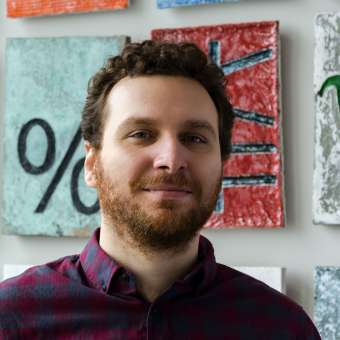
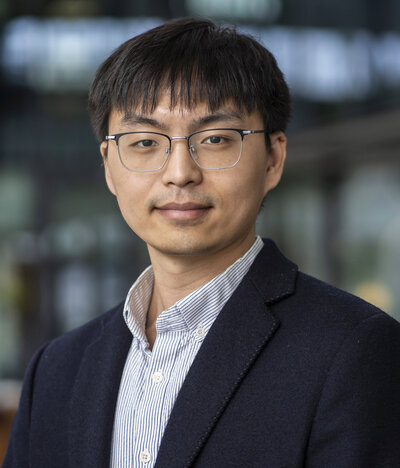
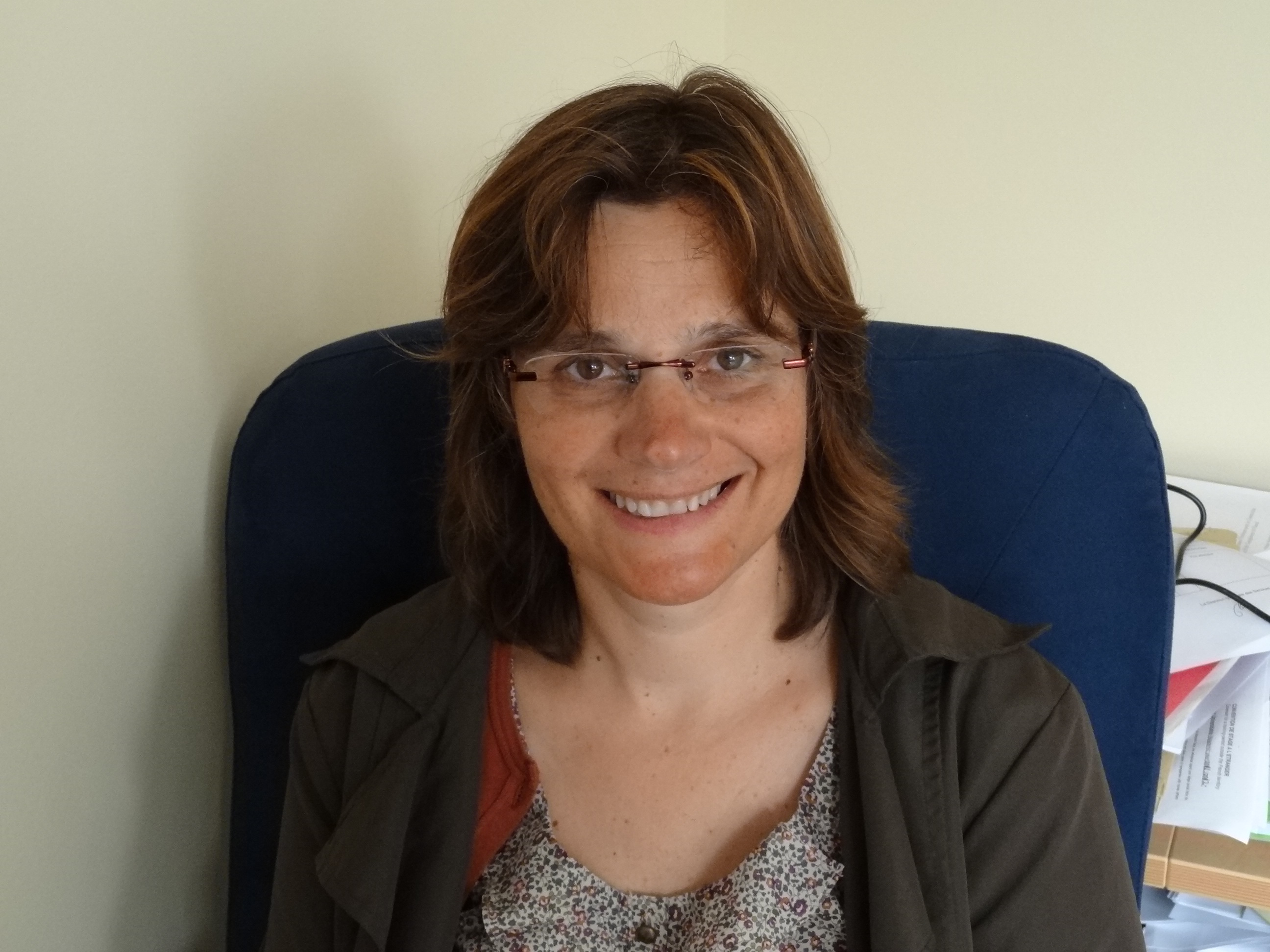
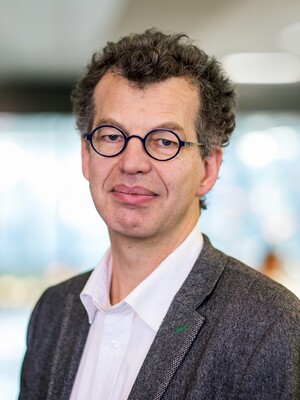
Pedro Felzenszwalb is a Professor of Engineering and Computer Science at Brown University , with a research focus spanning computer vision, artificial intelligence, machine learning, and algorithms. Born in Rio de Janeiro, Brazil, he earned his BS in Computer Science from Cornell University (1999) and MS/PhD in EECS from MIT (2001/2003). He previously held a faculty position at the University of Chicago (2004-2011) before joining Brown in 2011. Education : PhD in EECS, MIT (2003) MS in EECS, MIT (2001) BS in Computer Science, Cornell University (1999) His research integrates computer vision and AI, emphasizing scalable algorithms for object recognition, image segmentation, and probabilistic modeling. Key methodologies include deformable part models, belief propagation, and dynamic programming. His work has significant applications in early vision tasks, scene understanding, and geometric constraints in 3D object recognition. Pedro’s publications demonstrate a trajectory from foundational graph/image algorithms (2004-2006) to advanced machine learning approaches (2010-2023), with recurring themes in optimization, clustering, and multiscale modeling. Notable journals include Journal of the ACM , IEEE Transactions , and Communications of the ACM . Scientific Awards : ACM Grace Murray Hopper Award IEEE Technical Achievement Award PASCAL Visual Object Challenge Lifetime Achievement Prize Longuet-Higgins Prize NSF CAREER Award He has received NSF funding for projects including Graph Cut Algorithms (2012-2015) and Object Recognition with Hierarchical Models (2008-2013). At Brown, he teaches graduate courses in machine learning, linear systems, and pattern recognition.
Erhun Kundakcıoğlu is a Professor in the Department of Industrial Engineering at Ozyegin University's Faculty of Engineering. He received his Ph.D. in Industrial and Systems Engineering from the University of Florida (2009) with a minor in Computer and Information Science and Engineering, following an M.S. in Industrial Engineering at Sabancı University (2004) and B.S. at Bilkent University (2002). He served as Assistant Professor at University of Houston (2009-2013) and Director/Distinguished Scientist at Optym (2019-2021). Ph.D.: Industrial and Systems Engineering, University of Florida (2009) M.S.: Industrial Engineering, Sabancı University (2004) B.S.: Industrial Engineering, Bilkent University (2002) His research focuses on combinatorial optimization and decision making under uncertainty , with applications in healthcare analytics , sustainable energy systems , supply chain management , and data science . He has developed optimization models for inventory control, lot sizing, and routing problems under uncertain demand/supply conditions, particularly in healthcare and humanitarian contexts. His work with the Datart Lab integrates mathematical programming into practical solutions for industry partners. Recent publications highlight his expertise in disaster relief inventory simulation, healthcare inventory management, and time series decomposition optimization. He supervises active graduate students including Deniz N. Yoltay (Ph.D.) and Buket İpek Akbal (M.S.). Early Career Award, TUBITAK Teaching Excellence Award, University of Houston Florida Chapter Scholarship, HIMSS Foundation As Associate Editor for the Journal of Global Optimization , Optimization Letters , and SN Operations Research Forum , he contributes to academic discourse in optimization and analytics. His consulting firm Datart R&D Management Consulting bridges academic research with industry applications in Turkey and abroad.
Dr. Edgar Galván is an Associate Professor in the Department of Computer Science at Maynooth University's Faculty of Science & Engineering. He is a leading expert in Genetic Programming (GP) and Evolutionary Algorithms, with a focus on semantic-based approaches, neutrality, and multi-objective optimization. His work spans applications in combinatorial optimization, gaming (e.g., Carcassonne), and software engineering, including neuroevolution for deep learning architectures. Current Affiliation: Maynooth University Previous Roles: Senior Researcher at University College Dublin, Trinity College Dublin, and INRIA Paris-Saclay Research interests include: Semantic-based Genetic Programming Multi-objective Evolutionary Algorithms Monte Carlo Tree Search Circular Economy Applications Privacy-Preserving Optimization Neuroevolution in Autonomous Systems His recent publications analyze semantic diversity in GP, neural architecture search, and privacy-aware swarm optimization. Key awards include being ranked among the top 1% of GP researchers by University College London (2020), a Marie Curie Fellowship (2014), and a Best Paper Award at ECTA 2015. Current Projects: REBUILD (Circular Economy Buildings, 2024-2027), VISION (Circular Business Models, 2023-2026) Previous Grants: Stochastic Bio-inspired Algorithms (2014-2017, €267k), circAI (2022-2023, €142k) Dr. Galván serves on program committees for IEEE, ACM, and Springer conferences, and as Scientific Adviser for institutions in Ireland, France, and Mexico. His work bridges theoretical GP analysis with real-world applications in energy optimization and AI.
Cédric Elloumi is a Professor at the CEDRIC Laboratory within Conservatoire National des Arts et Métiers (CNAM), specializing in combinatorial optimization and mathematical programming. With a continuous publication record since 1992, he has established himself as a leading researcher in quadratic programming, binary optimization, and facility location problems. His research interests focus on developing exact and approximate methods for discrete optimization problems, particularly through convex reformulation techniques. Elloumi has made significant contributions to the p-center and p-median problems, quadratic assignment problems, and more recently, quantum-inspired optimization methods. His work bridges theoretical advancements with practical applications in network design, energy systems, and telecommunications. Analysis of his recent publications (2022-2025) reveals a continued focus on facility location problems, with increasing attention to robust optimization under uncertainty and emerging applications in quantum computing. His research demonstrates consistent methodological innovation, particularly in reformulation techniques that transform difficult non-convex problems into tractable forms. Throughout his career, Elloumi has maintained extensive collaborations with researchers including Billionnet, Lambert, Alès, and Plateau, resulting in numerous publications in top-tier optimization journals such as Journal of Global Optimization, Computers and Operations Research, and Mathematical Programming.
Yingqian Zhang is an Associate Professor in the Information Systems group at the Industrial Engineering and Innovation Sciences department of Eindhoven University of Technology (TU/e). She is affiliated with the Eindhoven Artificial Intelligence Systems Institute (EAISI), specifically with the EAISI High Tech Systems and EAISI Foundational groups. Her research focuses on applying Artificial Intelligence to solve complex decision-making problems across various domains including logistics, transportation, manufacturing, and e-commerce. Dr. Zhang received her PhD in Computer Science from the University of Manchester, UK. Prior to joining TU/e, she served as an Assistant Professor in the Econometrics Institute at Erasmus University Rotterdam and as a postdoc researcher in the Algorithmics group at TU Delft. She was also a visiting professor at the Institute for Advanced Computer Studies at University of Maryland, College Park, USA. Her research expertise lies at the intersection of Artificial Intelligence and optimization, with particular focus on machine learning, deep reinforcement learning, and trustworthy data-driven optimization. Dr. Zhang develops socially aware algorithms that can optimize decisions in data-rich environments. Her work bridges the gap between theoretical AI advancements and practical applications in industrial settings, addressing real-world challenges through innovative algorithmic solutions. She is particularly interested in how AI can support human decision-making while maintaining transparency and trustworthiness. Dr. Zhang's recent publications reveal a strong trend toward applying graph neural networks and reinforcement learning to complex scheduling and optimization problems. Her work demonstrates increasing sophistication in handling stochastic elements in decision-making processes, with applications spanning healthcare diagnostics, logistics, transportation, and manufacturing. She has made significant contributions to the field of neural combinatorial optimization, particularly for job shop scheduling problems and vehicle routing. Dr. Zhang has received several prestigious awards recognizing her contributions to the field: Winner of the MLVRP2023 GECCO competition (2023) Best Paper Award from Omega-International Journal of Management Science (2017) Best Industrial Paper Award (2020) Best Student Paper Award (2019) Best Student Paper Award of ICAART 2022 (2022) As a dedicated mentor, Dr. Zhang supervises numerous PhD students including Mohsen Abbaspour Onari, Abdo Abouelrous, Luca Begnardi, Xia Jiang, Chengpeng Hu, Minshuo Li, Robbert Reijnen, Jesse van Remmerden, Bart von Meijenfeldt, Ya Song, and Igor Smit. Her research is supported by various grants, including the LEO (Learning and Explaining Optimization) project co-funded by Holland High Tech | TKI HSTM via the PPP allowance scheme for public-private partnerships. Dr. Zhang actively contributes to the academic community as the Chair of the Benelux Association for Artificial Intelligence (BNVKI) and as a member of the Technical Board for the European Big Data Value Association (BDVA). She serves as an associate editor for the "Annals of Mathematics and Artificial Intelligence" journal and participates in the technical Program Committee for major AI conferences such as IJCAI, AAAI, AAMAS, and ECAI. She is also on the executive committee of the Data Science meets Optimisation (DSO) working group of EURO to promote collaboration between AI and Operations Research communities.
Yaoxin Wu is an Assistant Professor at the Eindhoven University of Technology, affiliated with the Department of Industrial Engineering and Innovation Sciences. His research bridges deep learning and combinatorial optimization to solve complex problems in transportation, scheduling, and network design. Education : PhD in Computer Science from Nanyang Technological University (2023). Wu specializes in artificial intelligence and operations research , focusing on graph neural networks, stochastic programming, and multi-objective optimization. His work has significant applications in UAV routing and on-demand delivery systems. His 2025 publications highlight trends in neural combinatorial optimization for stochastic job shop scheduling, ride-hailing, and drone logistics. Key subfields include deep reinforcement learning, preference modeling, and topological graph learning. He has supervised 9 students, including PhD candidates Xia Jiang and Igor Smite, and Master’s students like Venkata Roshan Mannepu and Floor Halkes. Wu's research is funded by projects like LEO (Holland High Tech | TKI HSTM) and SURF Cooperative grants. His educational activities include teaching Fundamentals of Algorithmic Programming and AI-Driven Business Operations , emphasizing data-driven methods for manufacturing processes.
Elina Valentynivna Tereshchenko serves as Associate Professor and Head of the Department of Systems Analysis and Computational Mathematics at Zaporizhzhia Polytechnic National University's Faculty of Computer Science and Technologies. Holding a Candidate of Physical and Mathematical Sciences degree (equivalent to PhD), she graduated from Dnipropetrovsk State University in 1992 with specialization in 'automatics and control in technical systems'. Her research spans discrete optimization , graph theory , and fuzzy logic systems , with recent publications focusing on ontology engineering, team formation algorithms, and agricultural data analysis. Current projects include ontology control systems in Neo4j (2025), competition-based team optimization models (2024), and sunflower cultivation ontologies for Ukrainian agricultural contexts. Her 15 most recent publications (2022-2025) reveal strong interdisciplinary work connecting computer science with agricultural informatics, cybersecurity, and economic modeling. Key trends include graph-theoretic formulations for team formation, fuzzy logic applications in access control, and optimization under resource uncertainty. Professional affiliations include: ORCID: 0000-0001-6207-8071 Scopus: 57202151469 Google Scholar: https://scholar.google.com/citations?user=DwEYAVcAAAAJ&hl=uk She teaches core subjects including discrete mathematics , optimization methods , algorithm theory , and decision-making theory . Her departmental leadership involves developing educational programs such as the bachelor's curriculum 'Intelligent Technologies and Decision Making in Complex Systems' (2021). Research infrastructure includes work on the HELIANTHUS ontology for sunflower cultivation and analytics modules for war damage assessment systems. Current projects integrate graph theory with competitive dynamics for high-performance team design.
Sylvie Coste-Marquis is a Lecturer at the Institute of Technology of Lens, part of the University of Artois. Her research focuses on knowledge representation, argumentation frameworks, and computational logic, particularly in artificial intelligence applications. PhD in Computer Science (1994) from Henri Poincaré University of Nancy Co-supervised three PhD theses on argumentation systems, QBF, and speech recognition Administrative roles: Vice-President for Digital Affairs (2016-), Project Manager (2012-2016), and Head of IT Department (2010-2013) Her work explores abstract argumentation, belief revision, and quantified Boolean formulae, with recent contributions to enforcing extensions via optimization and translating argumentation frameworks. She actively participates in program committees for top-tier conferences like IJCAI and COMMA. She has contributed to ANR projects on multi-agent argumentation, configurable product recommendation, and preference handling in combinatorial domains. Her teaching includes modules on computer systems, object-oriented design, and AI, with recognized innovations in educational methods.
Prof. Pieter Vansteenwegen is a full professor at KU Leuven's Faculty of Engineering Science, leading the Centre for Industrial Management/Traffic and Infrastructure (CIB) and chairing the KU Leuven Institute for Mobility (LIM). With a PhD in Operations Research (2008), he works on robust public transport systems, metaheuristics for logistics, and demand-responsive mobility solutions. Chair, KU Leuven Institute for Mobility Program Director, Master of Mobility and Supply Chain Engineering Board member, International Association of Railway Operations Research His research integrates transportation engineering , logistics optimization , and smart mobility systems , focusing on: Demand-responsive public transportation Metaheuristic algorithm development Inventory routing problems Smart waste collection strategies Multi-robot scheduling Recent publications demonstrate expertise in variable neighborhood search , Benders decomposition , and genetic algorithms applied to public transport, satellite scheduling, and circular economy logistics. His work has been cited over 9,400 times (Google Scholar H-index 51). Scientific recognition includes: Multiple IAROR best paper awards Best Reviewer European Journal of Operational Research BIVEC-GIBET PhD awards (2009, 2021, 2023) RASIG-INFORMS Student Paper Prizes He directs KU Leuven's Planning and Operational Research subdivision , serves on faculty councils, and founded spin-off dyNAVic for electronic tourist guides. His teaching portfolio includes courses in Public Transportation Design , Distribution Logistics , and Operational Management .
Dr Daniel Herring is a Research Fellow in Industrial Mathematics at the School of Mathematics, University of Birmingham, working within Professor Fabian Spill's research group. His position focuses on applied mathematical research bridging theoretical computation and real-world industrial applications. His academic qualifications include: MSci in Natural Sciences from the University of Exeter (2017), with thesis work on optimisation methods for Alzheimer's EEG data modeling PhD in Computer Science from the University of Birmingham (2023), completed under the Priestley Scholarship Award with extended research at the University of Melbourne Dr Herring specializes in dynamic multi-objective optimisation for both continuous and combinatorial problems, advancing evolutionary computation frameworks. His work integrates evolutionary machine learning with novel classification algorithms, targeting applications in healthcare diagnostics, energy infrastructure optimization, and social network dynamics. Current projects address building occupancy optimization and dissociation analysis in adolescent populations, while upcoming research explores clean-air turbulence prediction and information diffusion in graph-based social networks. Scientific recognition includes: Priestley Scholarship Award for doctoral research excellence He actively contributes to the international computer science community through presentations at premier conferences including GECCO and CEC. Dr Herring's research group collaborates on cross-disciplinary industrial mathematics challenges with strong emphasis on translational impact in public health and infrastructure systems.
Prof. Frits C.R. Spieksma is a full professor in the Department of Mathematics and Computer Science at Eindhoven University of Technology (TU/e) , where he leads research within the Combinatorial Optimization Group. He has held academic positions at Maastricht University, KU Leuven, and the University of British Columbia, and has been at TU/e since 2018. Education: M.Sc. in Econometrics, University of Groningen (1987) Ph.D. in Operations Research, Maastricht University (1992) Research Focus: His work lies at the intersection of combinatorial optimization and real-world applications . Key themes include: Scheduling and clustering problems, especially in sports tournaments Organ allocation optimization for Eurotransplant Assignment and transportation problems Approximation algorithms and graph-theoretic optimization Scientific Service & Leadership: Founder and ex-Chair, EURO Working Group OR in Sports Member, Steering Committees of MAPSP and MathSports International President, EURO (Association of European Operational Research Societies) Former Vice-President, IFORS Former President, Belgian Society of Operations Research (ORBEL) Editorial Boards: Associate Editor, 4OR (2015–present) Associate Editor, Journal of Quantitative Analysis in Sports (2014–present) Associate Editor, Operations Research Letters (2008–2024) Former Associate Editor, INFORMS Transactions on Education , OMEGA , Computers & Operations Research , IIE Transactions , Naval Research Logistics PhD Supervision & Mentoring: He has supervised more than 25 PhD theses at KU Leuven and TU/e, many of whom now hold academic positions worldwide. Conference & Workshop Organisation: Recent leadership roles include General Chair of IPCO 2022 (Eindhoven), organiser of Benders Day 2024 , and co-organiser of the Dagstuhl Seminar on Fairness in Scheduling and Resource Allocation (March 2025).
Shunichi Ohmori , a Professor at the Faculty of Science and Engineering , Waseda University , holds a Doctorate in Engineering from the same institution. His academic journey includes continuous affiliation with Waseda University since 2011, currently serving as a faculty member and concurrently as Director of Research Institute at the Institute of Global Production & Logistics (2022-2026). Education: Doctorate (2009-2012), Master's (2007-2009), and Bachelor's (2004-2007) from Waseda University His research focuses on industrial engineering and operations research , with specific interests in optimization , facility planning , logistics , and supply chain management . He has developed innovative frameworks for: Robust supply chain design under disruption risks Multi-echelon inventory optimization 3D facility layout planning with pipeline arrangements Collaborative vehicle routing cost allocation Green product portfolio strategies under uncertainty His publication record demonstrates expertise in stochastic optimization (15+ peer-reviewed papers) and heuristic algorithms (14+ conference proceedings). He has received multiple Best Paper Awards (2012-2016) and contributed to curriculum development through courses like Advanced Facilities Planning , Supply Chain Transformation , and Logistics at both undergraduate and graduate levels.
Dr. Maryam Eghbalizarch serves as Assistant Professor in the Department of Industrial and Systems Engineering at Kennesaw State University's Southern Polytechnic College of Engineering and Engineering Technology. Her institutional affiliations include: Current: Assistant Professor, Kennesaw State University Previous: Data Scientist, The University of Texas MD Anderson Cancer Center Previous: Postdoctoral Fellow, Wayne State University (2022-2024) Previous: Assistant Professor, Alzahra University (2021-2022) Visiting Researcher, University of Pittsburgh (2016-2017) Member, Cancer Intervention and Surveillance Modeling Network (CISNET) Member, Society for Medical Decision Making (SMDM) Member, INFORMS and IISE Her educational background features a Ph.D. in Industrial Engineering from the University of Tehran (2018), with M.Sc. and B.Sc. degrees from K.N. Toosi University of Technology. As director of the Health Systems Optimization Lab, she leads research at the intersection of advanced modeling techniques and healthcare applications. Dr. Eghbalizarch's work integrates Markov decision processes , multi-objective optimization , and machine learning to solve critical problems in cancer care (ovarian/lung cancer modeling) and diabetes management . Her methodology-driven approach focuses on sequential decision-making under uncertainty to improve healthcare delivery and patient outcomes through cost-effective interventions. Her recent publications (2024-2025) demonstrate strong momentum in oncology modeling and healthcare optimization, with multiple papers in high-impact journals including American Journal of Obstetrics and Gynecology and Lung Cancer. These works reveal consistent themes in histology-specific cancer modeling, natural history validation, and diabetes treatment optimization using advanced analytics. Key recognitions include: Institute for Data Science in Oncology Fellowship at MDACC Consecutive Postdoctoral Trainee Research Awards (Wayne State, 2023-2024) National Elites Foundation Award (Iran) International Affairs Department Research Grant Dr. Eghbalizarch maintains active grant funding through CISNET and currently recruits fully funded graduate students for Fall 2026. Her mentorship approach emphasizes hands-on research experience in healthcare analytics, with students contributing to high-impact projects in cancer screening optimization and diabetes management systems. The HSOpt Lab provides a collaborative environment focused on translating engineering methodologies into practical healthcare solutions, with strong connections to cancer research networks and clinical partners. Current projects emphasize data-driven decision support systems for medical practitioners and health policy makers.
Gabriel Luque is an Assistant Professor in the Department of Languages and Computer Science at the E.T.S.I. Informática (School of Computer Engineering) of the University of Málaga, Spain. His academic career focuses on parallel metaheuristics and evolutionary algorithms, with applications spanning bioinformatics, natural language processing, traffic optimization, and workforce planning. Dr. Luque's research interests center on the design and analysis of parallel and distributed metaheuristics for solving complex combinatorial optimization problems. His work has significantly contributed to understanding the performance characteristics of distributed evolutionary algorithms, including studies on takeover time dynamics, energy consumption analysis, and communication overhead in parallel implementations. He has made notable contributions to DNA fragment assembly problems using parallel genetic algorithms and has extended his research to emerging areas like quantum computing applications. Research grant from Spanish Government: 'Ayuda a la Movilidad José Castillejo' (2008) Research grant from Andalusian Government: 'Beca de Formación de Personal Docente e Investigador' (2002-2006) Award: 'Proyecto Fin de Carrera - Diario el País' (2001) Dr. Luque actively supervises student research projects and has directed several final degree projects on topics including particle swarm algorithms for complex problem solving and extending optimization libraries. His research is supported by multiple national and international projects focused on smart mobility, intelligent cities, and fundamental metaheuristic research. Dr. Luque has established a productive research trajectory with numerous high-impact publications in journals and conferences, demonstrating consistent contributions to the field of parallel metaheuristics and their real-world applications.
Jeremy Gibbons is Professor of Computer Science at the University of Oxford, where he leads the Algebra of Programming research group and serves as Director of the Software Engineering Programme offering part-time professional Masters' degrees. He is a Governing Body Fellow at Kellogg College and has held significant leadership roles including Deputy Head of Department and Chair of the Faculty of Computer Science (2012-2016). His research focuses on programming methodology, particularly functional languages and object-oriented languages, with emphasis on expressing and reasoning about recurring patterns in software structure. He has made substantial contributions to functional programming, program construction, and the mathematics of program design, often drawing connections between category theory and practical programming techniques. His recent publications demonstrate continued innovation in functional programming techniques, memory technologies, and algorithm design, showing consistent focus on mathematical foundations of programming. The work spans theoretical explorations and practical applications of programming language concepts. CEng (Chartered Engineer) MBCS (Member of the British Computer Society) CITP (Chartered IT Professional) FIAP (Fellow of the International Association for Pattern Recognition) Gibbons has supervised numerous doctoral students and actively mentors both current and past students including Juuso Haavisto, Johannes Hartmann, and Jack Liell-Cock. His leadership extends to major conference committees and editorial boards, having served as Editor-in-Chief of the Journal of Functional Programming and current Editor-in-Chief of The Programming Journal. He leads the Algebra of Programming research group at Oxford, which explores the mathematical foundations of programming and develops techniques for program construction based on algebraic principles. The group maintains strong connections with international research communities through IFIP Working Groups 2.1 and 2.11.