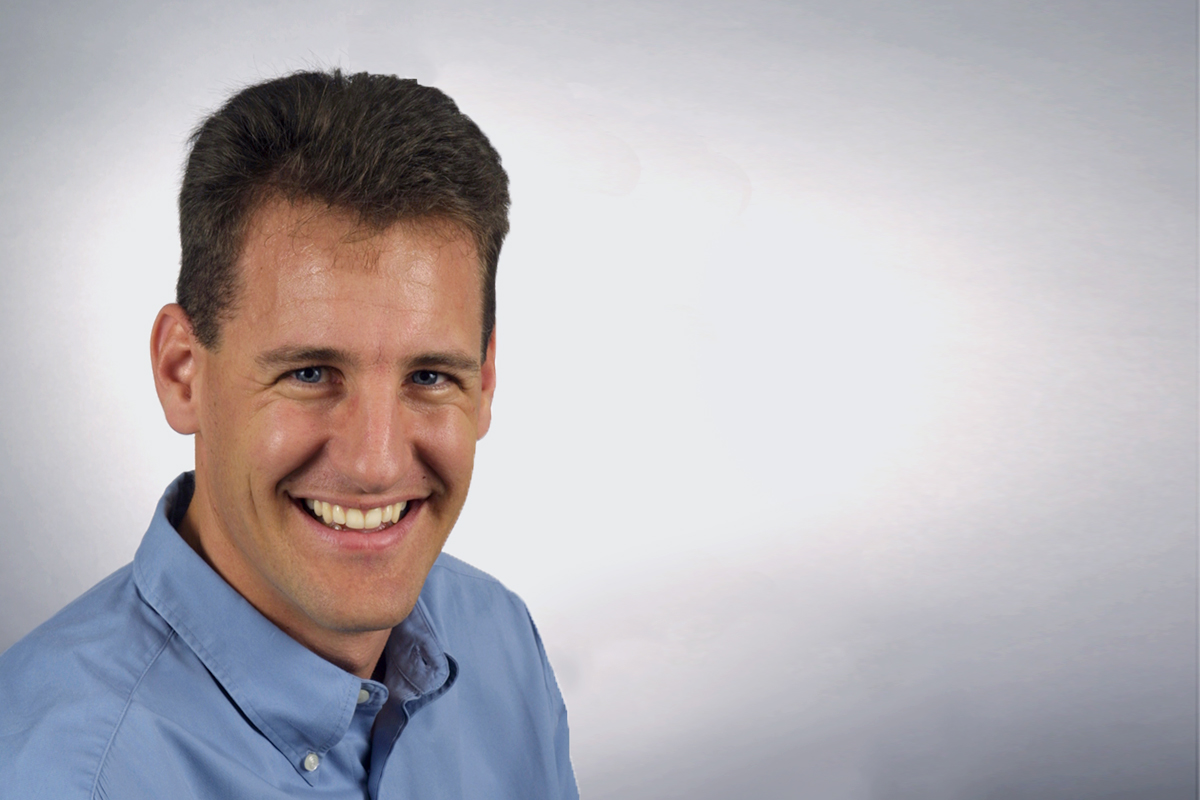
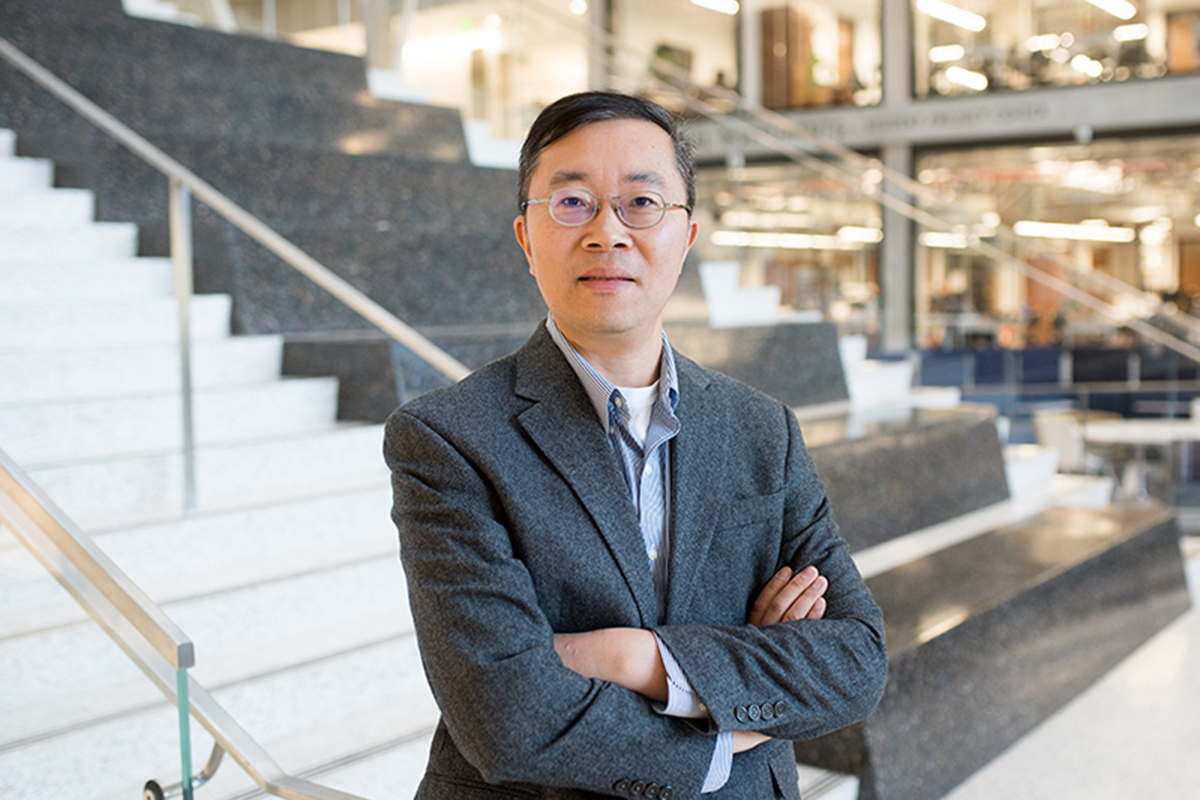
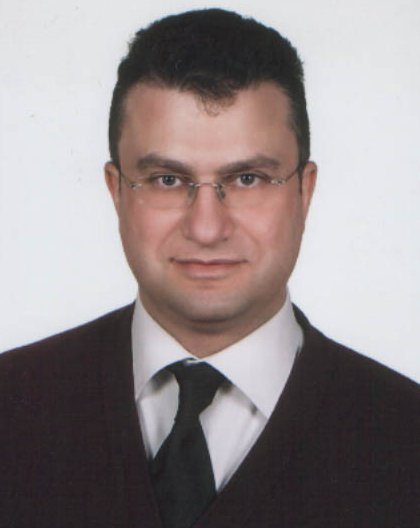
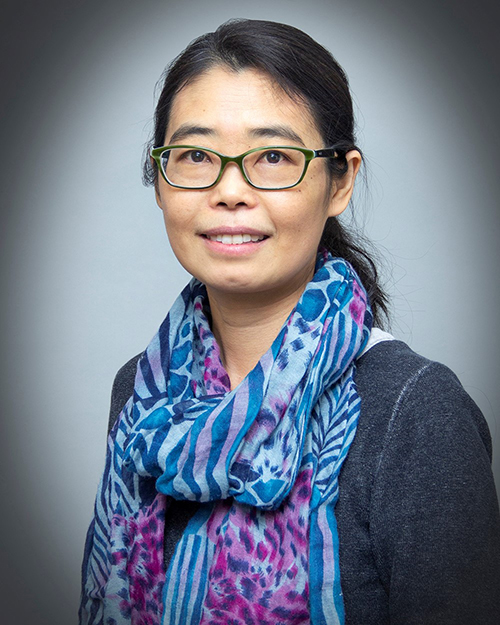
Stephen W. Keckler is an Adjunct Professor at the Department of Computer Science , The University of Texas at Austin , and serves as Vice President of Architecture Research at NVIDIA . He is an ACM Fellow , IEEE Fellow , and Sloan Foundation Research Fellow . Education: BS in Electrical Engineering, Stanford University (1990) SM in Computer Science, Massachusetts Institute of Technology (1992) PhD in Computer Science, MIT (1998) Research Interests focus on computer architecture for deep learning , GPU computing , and energy-efficient systems . His work explores memory compression , network-on-chip designs , and heterogeneous computing . Publication Trends highlight advancements in deep learning accelerators , GPU memory systems , and energy-efficient architectures . Notable themes include sparsity exploitation , multi-chip modules , and fault-tolerant GPU pipelines . Scientific Recognition : ACM Fellow IEEE Fellow Sloan Foundation Research Fellow Best Paper Awards at ASPLOS 2009 and ISPASS 2011 Laboratory Affiliations : Computer Architecture and Technology Laboratory (CART) TRIPS Project (Tera-Op Reliable Intelligently adaptive Processing System) NVIDIA Research
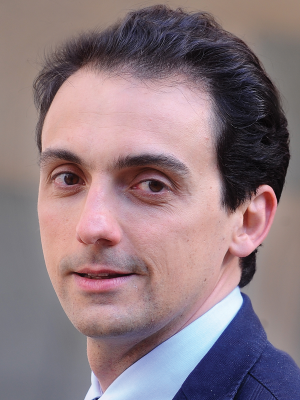
Luca Carloni is a Professor of Computer Science and Department Chair at Columbia University's Columbia Engineering. He leads the System-Level Design Group, focusing on heterogeneous system-on-chip (SoC) architectures, networks-on-chip (NoC), and embedded systems. Carloni holds a Laurea Summa Cum Laude in Electronics Engineering from the University of Bologna and a PhD in Electrical Engineering and Computer Sciences from UC Berkeley. His work emphasizes specialized hardware design, energy-efficient computing, and FPGA-based prototyping. Research interests include system-level design methodologies for SoCs, embedded accelerators, and quantum computing hardware. He has pioneered frameworks like Embedded Scalable Platforms (ESP) and tools like MosaicSim for rapid SoC prototyping. Carloni has received numerous awards, including the NSF CAREER Award (2006), IEEE Fellow (2017), and multiple best paper awards at DATE and CloudCom conferences. He has served on editorial boards of IEEE Transactions on CAD and ACM Transactions on Embedded Computing , and chaired key conferences like EMSOFT and ESWeek. His research addresses challenges in heterogeneous architectures, power management, and the intersection of machine learning with embedded systems. Current projects explore quantum control systems, brain-computer interfaces, and energy-efficient datacenter computing.
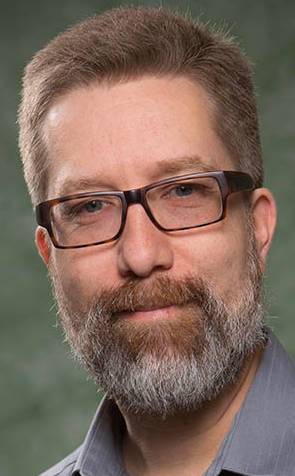
Russell Tessier is a Professor and Department Head of Electrical and Computer Engineering at the University of Massachusetts Amherst, affiliated with the Manning College of Information and Computer Sciences. His research focuses on reconfigurable computing, FPGA architectures, and hardware security, with notable contributions in CAD algorithms for FPGAs, embedded systems, and multi-tenant FPGA vulnerability analysis. Education: B.S.C.S.E., Rensselaer Polytechnic Institute (1989) M.S. and Ph.D., Massachusetts Institute of Technology (1992 and 1999) Research Interests: Dr. Tessier's work spans FPGA security (e.g., side-channel attacks, power distribution vulnerabilities), reconfigurable cloud computing, and hardware acceleration for applications like SAR imaging and machine learning. His lab, the Reconfigurable Computing Group, develops open-source FPGA cores (e.g., FlexGrip GPGPU, DE4 NetFPGA) and explores cutting-edge security countermeasures. Awards and Honors: Chancellor's Leadership Fellow (2015-2016) NSF Information Technology Research Grant Lilly Teaching Fellow (2002-2003) Multiple College of Engineering Excellence Awards Grants and Projects: Active funding includes NSF SaTC grants on reconfigurable cloud security and NASA support for snowpack measurement systems. His research also addresses FPGA-based solutions for cybersecurity, such as intrusion detection and power-side channel mitigation. Labs and Teams: Leads the UMass Reconfigurable Computing Group, which collaborates on open-source FPGA tools, security frameworks, and embedded system designs. The group maintains platforms like the DE4 NetFPGA and FlexGrip architecture.
Patrick H. Madden is an Associate Professor and Director of the MS Information Systems program at the School of Computing, Binghamton University. His research focuses on combinatorial optimization, VLSI physical design automation, and algorithmic solutions for NP-Hard problems. He is also involved in interdisciplinary work in cryptography and biology-related optimization. Education: BS and MS from New Mexico Institute of Mining and Technology PhD from University of California, Los Angeles (UCLA) Professional Roles: Chair of ACM/SIGDA (Design Automation Special Interest Group) Chair of Design Automation Conference (DAC) Sponsors Committee Advisor to Binghamton ACM Student Chapter Coach for ICPC Programming Contest Teams Member of Watson School Graduation Committee Research Contributions: Leads the Optimality Research Group, developing optimization algorithms for VLSI CAD and medical software applications. Notable contributions include the Feng Shui placement tool and medical reference apps for iOS/Android platforms. Awards: SUNY Chancellor's Award for Excellence in Professional Service (2015) Grants & Collaborations: Collaborates with Prof. Monte McCollum (Cinema Department) on hybrid cinema projects and Dr. Joshua Steinberg (Physician) on medical software. Active in ACM committees and EDA conferences (DAC, ICCAD, ISPD). Labs/Teams: Directs the Optimality Research Group and oversees medical software collaborations through CS441/580 projects.
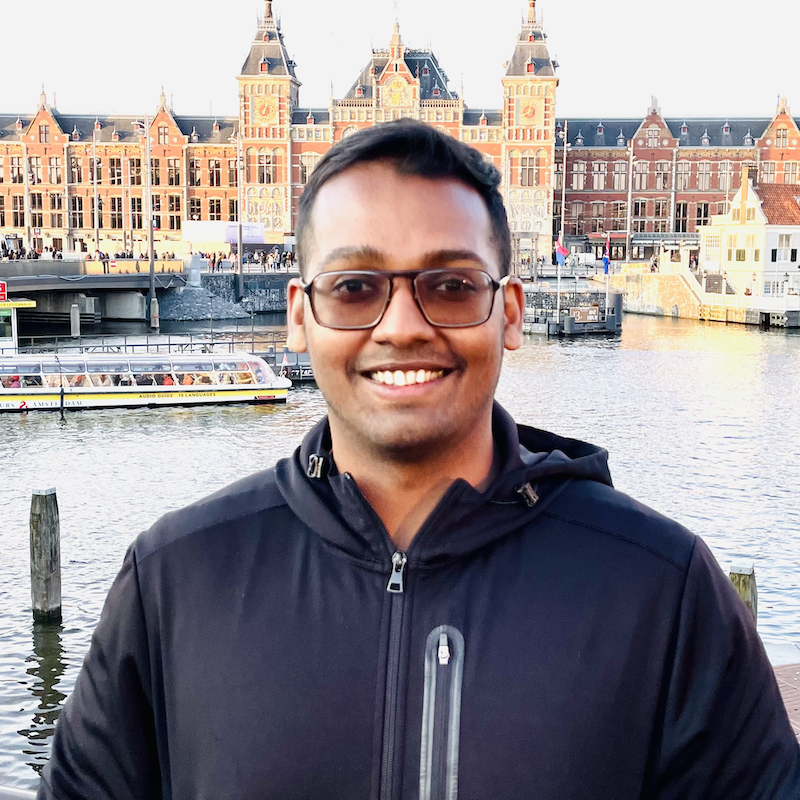
Tathagata Srimani is an Assistant Professor in the Department of Electrical and Computer Engineering at Carnegie Mellon University (CMU), affiliated with the College of Engineering. He previously served as a Postdoctoral Scholar in Electrical Engineering at Stanford University. His academic journey includes a Ph.D. and S.M. in EECS from MIT (2022 and 2018 respectively) and a B.Tech. in E&ECE from IIT Kharagpur (2016). Research Focus: Srimani’s work centers on nanoelectronics and transformative NanoSystems. Key areas include: Carbon nanotube field-effect transistors (CNFETs) and their monolithic 3D integration with silicon Ultra-dense 3D integration of logic and memory to address the 'memory wall' in AI/ML Technology-architecture co-design frameworks for energy-efficient computing Key Achievements: Developed first silicon fab-compatible CNFET processes (TNANO ’18, Nature ’19) Enabled CNFET RISC-V microprocessor and monolithic 3D integration with Analog Devices/SkyWater Recipient of MIT Presidential Fellowship (2016) and Morris Joseph Levin Award (2018) Teaching & Outreach: Teaches semiconductor devices and hardware design, including hands-on 'Hacker Fab' courses. Leads the NEXUS Research Group exploring heterogeneous nanomaterials (e.g., magnetic and oxide semiconductors) and thermal/power management in 3D systems. Future Directions: Expanding into probabilistic computing hardware, co-design frameworks for application-specific systems, and scaling 3D NanoSystem technologies for industrial adoption.
David Zhigang Pan is a Professor in the Department of Electrical & Computer Engineering at The University of Texas at Austin. He also holds the Silicon Laboratories Endowed Chair. Prior to joining UT Austin, he was a Research Staff Member at IBM T. J. Watson Research Center from 2000 to 2003. His academic journey began with a B.S. from Peking University, followed by M.S. and Ph.D. degrees from UCLA. Research Areas: Electronic Design Automation (EDA), Machine Learning Hardware, FPGA Prototyping, Optical Computing, Hardware Security, and CAD for Emerging Technologies Academic Timeline: Assistant Professor (2003-2008), Associate Professor (2008-2013), Full Professor (2013-present) His research focuses on design automation for mixed-signal circuits , GPU-accelerated EDA tools , and hardware-software co-design for AI . Recent work explores FFT-based optical neural networks and deobfuscation techniques for integrated circuits , reflecting his interdisciplinary approach at the intersection of machine learning , computer architecture , and semiconductor manufacturing . Key publication trends reveal expertise in: VLSI design , lithography optimization , and deep learning applications for EDA tools. His work has been recognized with multiple Best Paper Awards at top conferences including DAC , ASP-DAC , and HOST . Awards: IEEE Fellow (2014), SPIE Fellow (2017), ACM SRC Graduate Category Honors for students Patents: 8 U.S. Patents in electronic design and hardware optimization Prof. Pan has mentored 40 PhDs and postdocs who now hold key positions in academia and industry. He leads research initiatives involving GPU acceleration frameworks and optical computing architectures . His lab focuses on vertical integration of architecture, CAD tools, and fabrication technologies for next-generation hardware solutions.
Pierre Alliez is a Senior Researcher and Team Leader at Inria Sophia Antipolis – Méditerranée, leading the TITANE project-team. He holds roles such as President of the Inria Evaluation Commission and Scientific Coordinator of the Inria-DFKI partnership. His research focuses on Geometry Processing, including mesh compression, surface reconstruction, and optimal transportation. Alliez has authored numerous scientific publications and book chapters, receiving accolades like the Eurographics Young Researcher Award (2005) and ERC grants (IRON, TITANIUM). His academic activities include supervising over 50 PhD students and postdoctoral researchers, and leading projects like GRAPES (Learning and Processing Shapes) and BIM2TWIN (digital twin construction). He has served on editorial boards for Computer Graphics Forum and ACM Transactions on Graphics , and organized major conferences like Pacific Graphics and Eurographics. His work bridges computational geometry, computer graphics, and applied mathematics, with practical applications in 3D printing, cultural heritage, and urban modeling. Education: No specific educational details provided, but has authored a textbook on Polygon Mesh Processing (AK Peters, 2010). Research Interests: Geometry Processing, Mesh Generation, Surface Reconstruction, Optimal Transport, and 3D Data Analysis. Grants & Projects: ANR Pisco, ERC IRON, BIM2TWIN, GRAPES, and collaborations with industries like Dassault Systèmes and Dorea Technology. Labs/Teams: Leads the TITANE team at Inria, contributing to software like CGAL and advancing open-source tools for geometric processing.
Dr. Yiran Chen is the John Cocke Distinguished Professor at Duke University's Department of Electrical and Computer Engineering, leading the NSF AI Institute for Edge Computing (Athena) and the Duke Center for Computational Evolutionary Intelligence (DCEI). A global leader in neuromorphic computing, emerging memory systems, and edge AI, he holds prestigious roles including IEEE Fellow and Editor-in-Chief of IEEE Transactions on Circuits and Systems for AI. His research spans machine learning accelerators, security-hardened hardware, and co-design of EDA tools with LLMs. With over 700 publications and 96 patents, he has been awarded 15 paper awards and 17 nominations, including rare Technical Achievement Awards from IEEE societies. He advises over 60 PhD students and 4 postdocs, many of whom hold academic positions worldwide. His work bridges academia and industry, contributing to startups and venture capital through his board roles. Education: B.S. (Tsinghua, 1998) → M.S. (Tsinghua, 2001) → Ph.D. (Purdue, 2005). Career path: Assistant/Associate Professor at University of Pittsburgh (2010–2014) → Duke since 2014. Awards include the ACM SIGDA Outstanding New Faculty Award (2014), NSF CAREER Award (2013), and the Stansell Family Distinguished Research Award (2022). Research focuses on innovations in: (1) Non-volatile memory architectures for AI acceleration, (2) Hardware-software co-design for edge computing, (3) Security in neuromorphic systems, and (4) Large-scale ML for EDA. His group pioneered ReRAM-based accelerators like ReBNN and MARC, and introduced novel edge AI frameworks like Ecco and Prosperity. These works address scalability, energy efficiency, and real-time performance challenges. Key initiatives include the NSF IUCRC for Alternative Sustainable & Intelligent Computing (ASIC), advancing sustainable computing through novel materials and architectures. His leadership in standard-setting bodies like the IEEE Circuits and Systems Society ensures cutting-edge research translates into industry practices. Grants: Lead PIs for multiple NSF AI Institutes and industry partnerships. Labs: Directs the Athena Institute and DCEI, fostering collaboration between academia and industry. Current projects include quantum computing placement algorithms (QPlacer), federated learning frameworks (FedGPT), and neuro-symbolic architectures.
Lars Hanson is a Professor of Product Design Engineering at the University of Skövde's School of Engineering Science. His research focuses on ergonomics, digital human modeling, and optimizing manufacturing systems with a strong emphasis on human well-being and sustainable production. He leads projects like LITMUS (Industry 4.0 to 5.0 transition) and has contributed to developing tools such as IPS IMMA for ergonomic simulations. Active in virtual verification of human-robot collaboration and smart textile systems for workplace safety Published extensively in journals like International Journal of Human Factors Modelling and Simulation and IEEE Access Editor of conference proceedings and contributor to industry standards in automotive and healthcare sectors Research interests include multi-objective optimization of factory layouts, musculoskeletal risk assessment, and integrating ergonomic evaluations into product design processes. Current projects address Industry 5.0 sustainability challenges through digital twin technologies and smart manufacturing solutions.
Stephen Brown is a Professor at the University of Toronto within the Department of Electrical and Computer Engineering under the Faculty of Applied Science and Engineering. He earned his B.A.Sc and M.A.Sc in Electrical Engineering from the University of Toronto and New Brunswick, respectively, and a Ph.D. in Electrical Engineering from the University of Toronto (1992). His career spans over two decades in academia and industry collaboration. Education : B.A.Sc, University of New Brunswick M.A.Sc, University of Toronto Ph.D, University of Toronto Professor Brown’s research focuses on field-programmable gate arrays (FPGAs) , CAD algorithms , and computer architecture , with applications in machine learning and high-level synthesis . He is a principal investigator in the LegUp project , an open-source high-level synthesis framework that bridges software and hardware design. His work also extends to optimizing FPGA interconnect delays, physical synthesis, and logic block architectures. Key trends in his publications include advancements in high-level synthesis tools, FPGA architecture evaluation, and timing-driven design methodologies. His contributions often intersect with design automation , resource sharing , and embedded systems . Scientific Awards : NSERC 1992 Doctoral Prize Hart Professorship for Innovation in Teaching (2017) Multiple teaching excellence awards Best Paper Award at ICCAD 1990 Best Paper Award nomination at Canadian Conference on VLSI (1989) As Director of the FPGA University Program at Intel Corporation, he leads industry-academia initiatives. His teaching portfolio includes courses like ECE253 (Digital Logic) and ECE1733F (Switching Theory).
Prof. Juan Alonso is the Vance D. and Arlene C. Coffman Professor and James & Anna Marie Spilker Chair in the Department of Aeronautics & Astronautics at Stanford University. He directs the Aerospace Design Laboratory (ADL), focusing on high-fidelity computational methods for aerospace system design. His expertise spans transonic/supersonic/hypersonic aircraft, rotorcraft, and launch vehicles. Alumni include record-holding teams for human-powered watercraft and lightweight unmanned aerial vehicles. Education: PhD (1997) from Princeton University in Mechanical & Aerospace Engineering; M.A. (1993) Princeton; B.S. (1991) MIT Aeronautics/Astronautics. Research emphasizes multi-disciplinary optimization, numerical methods, and parallel computing applied to advanced aircraft design, sustainable aviation, and UAS systems. Notable contributions include computational design frameworks like SU2 and SUAVE, and initiatives in curriculum development for engineering education. Recent work focuses on: GPU-accelerated CFD solvers, multi-fidelity surrogate models (e.g., VortexNet), contrail simulation frameworks, and battery degradation modeling for electric aircraft. Active in urban air mobility and high-fidelity trajectory optimization for hypersonic systems. Labs/Teams: Aerospace Design Laboratory (ADL) leading open-source computational tools development. Involved in NASA-funded projects and industry partnerships for advanced propulsion systems.
Maurizio MUZZUPAPPA is a Full Professor at the Department of Mechanical, Energy and Management Engineering (University of Calabria) since 2018. His roles include Rector's Delegate for Technology Transfer, Academic Delegate for Education at DIMEG, and Head of the Physical Prototyping Laboratory at the MaTeRiA Center (UNICAL-CNISM collaboration). He supervises the Unical Racing Team in Formula SAE competitions and co-founded three university spin-offs: 3DResearch, Tech4Sea, and Q-BOT. As Scientific Director of projects like TECH4YOU (climate change adaptation technologies) and GROWN IN THE BLUE (Mediterranean reef conservation), he integrates research in industrial design, augmented reality, and underwater cultural heritage. He has authored over 200 publications (h-index 27) and holds 10 patents. His teaching includes Tools and Methods for Industrial Design and Formula SAE LAB . His research focuses on: Industrial design methodologies with parametric and sustainable approaches 3D prototyping and additive manufacturing User-Centered Design for product ergonomics Virtual/Augmented Reality applications in engineering and cultural heritage Underwater robotics and artifact restoration Recent publications highlight trends in AR for industrial maintenance, generative design tools, and mechatronic solutions for underwater heritage. He has supervised over 300 theses and 10 Ph.D. students while leading technology transfer initiatives.
Suren Jayasuriya is an Associate Professor at Arizona State University's The GAME School, with joint appointments in the School of Electrical, Computer and Energy Engineering (ECEE) and the Department of Arts, Media and Engineering (AME). He is also an Affiliate Faculty Member at the Mary Lou Fulton College for Teaching and Learning Innovation. His lab, the Imaging Lyceum, focuses on transdisciplinary research bridging computational imaging, computer vision, sensors, and STEAM education. Education Ph.D. Electrical and Computer Engineering, Cornell University (2017) M.S. Electrical and Computer Engineering, Cornell University (2015) B.S. Mathematics, University of Pittsburgh (2012) B.A. Philosophy, University of Pittsburgh (2012) Research Focus Dr. Jayasuriya's work integrates optics, computational photography, and machine learning to develop novel imaging systems. His research spans: Computational cameras and light transport analysis Atmospheric turbulence modeling and video restoration Neural volumetric reconstruction for sonar/radar STEAM education frameworks for K-12 teachers Philosophical aspects of imaging and representation His lab emphasizes interdisciplinary collaboration across engineering, arts, and humanities. Publication Trends Recent publications demonstrate strong focus on computational imaging (45%), AI/ML applications (30%), and educational technology (25%). Dominant themes include turbulence mitigation in videos, neural rendering for sonar/radar, sensor fusion, and AI curriculum development for middle schools. Work frequently appears in top venues like CVPR, SIGGRAPH, and IEEE Transactions. Awards Image Electronics Technology Excellence Award (IIEEJ, 2021) Best Demo Awards: IEEE ICCP 2019, MIRU 2018 Best Paper Award: IEEE ICCP 2014 ASEE Diversity Paper Finalist (2020) Teaching Honors: Fulton Top 5% Award (2019, 2021), ASU Game Changing Faculty (2021) Teaching & Advising Teaches graduate/undergraduate courses including Machine Vision (EEE 515), Minds and Machines (AME 400), and thesis supervision. Leads NSF-funded projects on computational imaging education and AI teacher training. Mentors students through the Imaging Lyceum lab with projects spanning optics, philosophy, and educational technology. Lab & Collaborations Directs the Imaging Lyceum, emphasizing Aristotle-inspired collaborative research. The lab works on: computational cameras, STEAM education, sensor development, and philosophical inquiries into imaging. Collaborates with Carnegie Mellon Robotics Institute and international partners. Funded by NSF, NEH, and industrial partners for projects in sonar imaging, heat resiliency sensing, and educational AI.
Professor Serdar Özoğuz is a full faculty member at the Department of Electronics and Communication Engineering , Istanbul Technical University . Holding a Ph.D. from ITU (2000) and a M.Sc. from ITU (1993) , he has taught courses like Active Network Synthesis , Basics of Electrical Circuits , and Scientific Research Ethics since 2014. His research focuses on Active RC filters Nonlinear electronic circuits Analog integrated circuit design Network synthesis . His recent publications emphasize machine learning applications in RF/microwave design , quantum computing for CAD tools , and emerging memory devices . The department's Devreler ve Sistemler Laboratuvarı Çok Geniş Ölçekli Tümdevre (VLSI) Tasarımı Laboratuvarı likely support his work. Despite no explicit awards listed, his 15+ recent articles in high-impact journals underscore his technical contributions.
Dr. Yongjie Jessica Zhang is a Professor at Carnegie Mellon University, holding appointments in both the Department of Mechanical Engineering and the Department of Biomedical Engineering . She received her B.S. and M.S. in Engineering Mechanics from Tsinghua University, followed by an M.S. in Aerospace Engineering and a Ph.D. in Computational Engineering and Sciences from the University of Texas at Austin. After a postdoctoral fellowship at ICES, she joined CMU in 2007, advancing from assistant to full professor by 2016. Research Interests : Image-based geometric modeling, mesh generation, finite element analysis (FEA), isogeometric analysis, and applications in computational biomedicine, materials science, and computer-assisted surgery. Leadership Roles : Chair of Solid Modeling Association (2019-2020), USACM Executive Committee Member-at-Large (2017-2021), and ELATE Fellow (2017-2018). Her work addresses the critical challenge of automating high-fidelity geometric modeling and mesh generation for complex domains (e.g., human anatomy), which traditionally consumes ~80% of FEA time. Her group develops AI-driven methods for multiscale modeling (molecular to organ), with applications in neuroscience , biomechanics , and 4D printing . Notable awards include the Presidential Early Career Award (PECASE) , NSF CAREER Award , and ASME Van C. Mow Medal (2025) . Dr. Zhang’s publications span over 170 peer-reviewed articles, focusing on truncated hierarchical B-splines , polycube meshing , and neurite transport modeling . She has advised more than 40 students, including PhD candidates and postdoctoral fellows. Her editorial roles include Associate Editor of Computer Aided Geometric Design and editorial board memberships in Computer-Aided Design and Engineering with Computers .