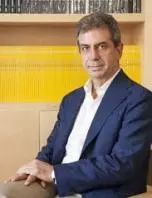
Gianni Bosi is a Full Professor at the Department of Economic, Business, Mathematical and Statistical Sciences (DEAMS Bruno de Finetti) of the University of Trieste. His research focuses on mathematical methods in economics and finance, particularly utility theory, order theory, and multi-utility representations. He has contributed to foundational work on continuous and semicontinuous representations of preorders, topological structures in utility theory, and optimization techniques. Key projects include the FRA 2018 project 'UMMMM' on uncertainly modeling and the 'CLASS4.0' cluster for data-driven solutions in the sea economy sector. His recent publications address advanced topics like ad hoc continuity of interval orders, net-compact topologies, and cinema-based mathematics education. No awards or student advisees are explicitly mentioned.
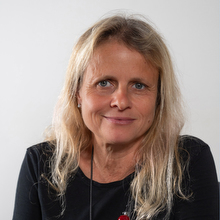
Emanuela Merelli is a Full Professor of Computer Science at the University of Camerino. She leads the BioShape & Data Science Lab, established during her coordination of the EU-FET Project TOPDRIM, which focuses on topology-driven methods for complex systems. Her research integrates formal methods, algebraic topology, and data science to study biological systems like RNA folding and immune responses. She has held a Fulbright Fellowship at the University of Oregon (2005) and remains active in European academic initiatives. Research Interests: Interactive computation, topological field theory of data (TFTD), foundations of learning processes, cell cycle analysis in somatic/cancer cells, and complex systems modeling. Her work bridges theoretical computer science with systems biology, emphasizing topological approaches to data analysis. Awards: Fulbright Fellow (2005), Fellow Member of COST Action CA19122 EUGAIn (promoting gender balance in informatics). She contributes to the European Association for Theoretical Computer Science (EATCS) through leadership roles and educational initiatives. Professional Activities: Promotes open-access publications, organizes international conferences (e.g., ICALP 2022), and develops educational programs like the EATCS Young Researchers School on Complexity and Concurrency. Her work also extends to smart housing technologies for elderly care (Progetto SIAMADA) and seismic engineering applications. Labs & Projects: Leads BioShape Lab exploring topological methods in biology and data science. Coordinates EU-funded projects on RNA structure analysis and complex systems.
Antonio Lucadamo is an Associate Professor at the Department of Law, Economics, Management and Quantitative Methods (DEMM) of the University of Sannio. His research focuses on statistical modeling, decision analysis, and multivariate methods with applications in diverse fields such as financial markets, cultural festivals, environmental science, and healthcare evaluation. Key Research Areas : Decision theory, ordinal data handling, AHP methodology, environmental quality assessment Recent Collaborations : Pietro Amenta, Ida Camminatiello, Gabriella Marcarelli, and Matteo Rossi Publication Trends : His work spans from foundational statistical techniques (e.g., co-inertia analysis, Taguchi index generalization) to applied studies in financial decision-making, festival loyalty models, and environmental quality assessment. Notable subfields include pairwise comparison matrices, OWA operators, and spectral soil analysis. Contact : antonio.lucadamo@unisannio.it
Pierpaolo Forte is a Full Professor in the Department of Law, Economics, Management and Quantitative Methods (DEMM) at the University of Sannio, specializing in Administrative Law (IUS/10). His academic position places him at the forefront of legal scholarship in public administration and governance matters within the Italian university system. Professor Forte's research spans multiple dimensions of administrative and public law, with particular expertise in local government structures, cultural heritage regulation, and the evolving relationship between public authorities and private entities. His work demonstrates a consistent focus on how administrative systems function in contemporary governance contexts, especially regarding emergency powers, public-private partnerships, and the management of cultural resources. Recent scholarship shows increasing engagement with digital transformation in public administration, as evidenced by his 2024 publication on Artificial Administrative Intelligence. Analysis of Forte's publication record reveals a consistent scholarly trajectory focused on the intersection of law, governance, and public administration. His work demonstrates particular strength in addressing both theoretical frameworks and practical applications of administrative law, with growing attention to emerging challenges like data governance and emergency decision-making in complex societal contexts. The chronological progression of his work shows an evolution from foundational studies in constitutional citizenship toward more specialized examinations of administrative procedures and contemporary governance challenges. Professor Forte maintains an active scholarly profile with consistent publication output across multiple decades, demonstrating sustained engagement with evolving administrative law challenges. His collaborative work, particularly in cultural heritage regulation, indicates participation in interdisciplinary research networks focused on museum governance and cultural policy implementation.
Roberto De Marchis is a Researcher at Sapienza University of Rome, affiliated with the Department of Methods and Models for Economics, Territory, and Finance. His academic career focuses on quantitative approaches to financial and mathematical problems, with teaching responsibilities in Financial Mathematics for Economics and Finance programs. Role: Ricercatore (Researcher) Department: Methods and Models for Economics, Territory, and Finance Email: roberto.demarchis@uniroma1.it Research Interests: His work spans optimization models, data quality, and knowledge management. Specific areas include numerical methods for integral equations, financial option pricing, ruin probability analysis, and fractional calculus applications. Publication Trends: He specializes in mathematical finance and applied mathematics, particularly in computational approaches for financial derivatives and risk modeling. His publications demonstrate interdisciplinary applications of mathematical theory to economic and financial systems. Teaching: Coordinates Financial Mathematics courses (channels N-Z and A-L) and co-authored a key textbook in the field.
Elmo Benedetto is a Lecturer in the Department of Computer Science at the University of Salerno, Italy. He contributes to teaching and academic activities within the department, with a focus on computer science disciplines. His research interests, inferred from his departmental affiliation, span key areas in computer science including software engineering, algorithms, artificial intelligence, and information technology. These domains reflect the core strengths of the Department of Computer Science at the University of Salerno. No publications or research trends can be analyzed due to lack of available data in the provided text. There are no listed scientific awards or honors. There is no information available regarding student advisement or research grants. No laboratories or research teams are specified in the current profile.
Alfredo De Santis is a Professor and Director of the Dipartimento di Informatica at the Università degli Studi di Salerno. His research focuses on Data Security, Cryptography, Digital Forensics, and Communication Networks. He has authored numerous publications in top-tier journals and conferences, contributing to advancements in secret sharing schemes, cryptographic protocols, and privacy-preserving systems. His work bridges theoretical foundations with practical applications, including secure mobile communications, data compression, and IoT security. Key research interests include secure protocols, algorithm design, and the application of information theory to cybersecurity challenges. He has developed innovative solutions for entity authentication, distributed systems security, and privacy threats in mobile devices. His contributions span academic leadership, curriculum development in Data Security courses, and collaboration on projects like "Blockchain in Healthcare" and "Anti-Forensics Techniques". Publications highlight his expertise in hierarchical key management, secure data streaming, and cryptographic schemes. Recent works address fake news propagation modeling, privacy attacks exploiting smartphone sensors, and secure cloud storage solutions. His research emphasizes both theoretical rigor and real-world applicability across domains like healthcare, IoT, and digital forensics.
Flaminia Luccio is an Associate Professor at Ca' Foscari University of Venice, affiliated with the Department of Environmental Sciences, Computer Science and Statistics. Her research focuses on computer security, cryptography, distributed systems, and usability engineering. She has contributed to projects like the SAFE PLACE IoT security initiative and the FWS firewall analysis tool. Luccio teaches courses such as Cryptography and Advanced Algorithms at both undergraduate and graduate levels. Research: Her work spans formal verification of cryptographic protocols, secure IoT implementations, and usable security solutions for QR codes and biometric authentication. She has led projects involving secure hardware configuration for cloud environments and resilient firewall management systems. Recent contributions address side-channel vulnerabilities and malware detection through machine learning. Teaching: Courses include Cryptography (Master's), Algorithms and Data Structures (Bachelor's), and Web Technologies for Tourism (Master's). Teaching materials are accessible via her departmental website and personal profile. Collaborations: Collaborates with researchers like Riccardo Focardi on cybersecurity frameworks. Engages in interdisciplinary projects combining accessibility with technology, such as improving tourism websites for users with disabilities.
Fabiana Zollo is an Associate Professor of Computer Science at Ca' Foscari University of Venice, affiliated with the Department of Environmental Sciences, Computer Science and Statistics. She co-leads the Data Science for Society Laboratory and serves on the Scientific Committee of the NICHE Centre for Environmental Humanities. Her work focuses on disinformation dynamics, social media polarization, and science communication. She coordinates major EU projects like EUMEPLAT and IRIS, addressing online hate speech and infodemics. Professional roles include Director's Delegate for Communication and Equal Opportunities in her department, and Scientific Director of the ECHO Science Communication Hub. Research Interests: Disinformation and infodemic management Online polarization and hate speech Science communication strategies Public health messaging Digital humanities methodologies Key Projects: EU H2020 EUMEPLAT (2021–2024) IRIS Coalition (2021–2024) EFSA Social Research Expert (2019–present) COVID-19 Disinformation Task Force (2020–2021) Grants & Labs: Coordinates the Data Science for Society Lab with researchers like Teresa Scantamburlo and Alessandro Galeazzi. Advises students such as PhD candidate Arnaldo Santoro.
Alvise SPANO' is a Researcher at Ca' Foscari University of Venice, affiliated with the Department of Environmental Sciences, Computer Science and Statistics. He is also part of the Research Institute for Complexity. His academic focus includes Blockchain Programming Languages, Programming Languages, and Information Systems. Research projects include ALGOMOVE for Algorand and the RINmaker bioinformatics tool. He has taught courses like Object-Oriented Programming and Introduction to Programming at both undergraduate and doctoral levels. Research interests span smart contract analysis, type systems, and cybersecurity in distributed systems. He contributed to projects like secure RPL for mobile networks and Android-LEGO interoperability. Funding includes the CEVID 2016 project (Role: LD), collaboratively managed with researchers like Agostino Cortesi and Salvatore Orlando. His work bridges theoretical foundations (e.g., COBOL code typing) with practical applications in wearable systems and bioinformatics. Collaborations include the Blockchain Programming Languages research group with Lorenzo Benetollo and Sabina Rossi.
Gianmarco Cherchi is a Tenure-Track Assistant Professor and Computer Science Researcher in the Department of Mathematics and Computer Science at the University of Cagliari, Italy, where he also completed his PhD. He teaches courses in Data Visualization and Web Programming at the undergraduate level. His research lies at the intersection of Computer Graphics and Geometry Processing, with a strong focus on surface and volumetric mesh generation, optimization, digital fabrication, and polycube-based modeling. His work combines algorithmic innovation with practical applications in fabrication, visualization, and interactive systems. The recent publications highlight a consistent trend in advanced hexahedral meshing techniques (e.g., HexBox, VOLMAP), robust geometric computation (e.g., mesh booleans), and interactive tools (e.g., ProtoSketchAR, Py3DViewer). His research spans theoretical algorithm development, benchmark creation, and applied systems for VR/AR and simulation. His scientific accolades include the Young Investigator Award 2024 from the Shape Modeling International Organization, and prior Best Thesis Awards from the Eurographics Italy Association for both his M.Sc. and Ph.D. work. Cherchi actively collaborates with researchers such as Marco Livesu, Riccardo Scateni, and others, contributing to major surveys and state-of-the-art methods in hexahedral meshing. His work is supported by publications in top venues like ACM Transactions on Graphics (SIGGRAPH), Computer Graphics Forum (Eurographics), and IEEE VR. He has also developed practical software tools like Py3DViewer for geometry processing prototyping. He leads research in digital fabrication pipelines, as evidenced by publications on polycube decomposition for manufacturing and automated flat pattern generation. His lab work involves developing interactive and robust systems for 3D modeling and analysis.
Vania BRINO is a Full Professor in the Department of Economics at Ca' Foscari University of Venice, where she serves as Director of the Master's Degree in Labor and Social Security Law. Her academic home is within the Department of Economics, with additional affiliation at the Interdepartmental Center for Economics, Languages and Entrepreneurship for International Exchanges based in Treviso. Scientific Disciplinary Sector: Labor Law [GIUR-04/A] Related Sector: Labor Law [IUS/07] Location: San Giobbe Campus, Venice Professor Brino's research focuses on the intersection of labor law with globalization, sustainability, and digital transformation. Her work examines how international labor standards interact with corporate governance structures, global value chains, and emerging digital workplace technologies. She investigates the evolving relationship between workers' rights and corporate accountability frameworks, particularly in transnational contexts where traditional national labor regulation faces significant challenges. Her research output shows a clear progression toward examining sustainability frameworks, corporate due diligence obligations, and the digital transformation of work. The recent publications indicate a strong focus on how European and international regulatory frameworks are evolving to address corporate responsibility for labor rights across global supply chains. Editorial Board Member of 'Lavoro e Diritto' (2008-present) Member of Scientific Committee of 'Ricerche giuridiche' (2014-2019) Editorial Board Member of 'Economia e Società regionale' (2014-present) Review Committee Member of 'Rivista italiana di diritto del lavoro' (2017-present) Professor Brino has led and participated in numerous research projects funded by MIUR, the Veneto Region, and the European Commission, with a particular emphasis on global value chains, transnational labor governance, and sustainable corporate models. Her current research examines the implications of emerging corporate due diligence frameworks for workers' rights protection across international supply chains.
Stefano Federico Tonellato is an Associate Professor at the Department of Economics, Ca' Foscari University of Venice. His academic responsibilities include serving as Departmental Delegate for Information Technology Infrastructure. 1992: Degree in Economics, Ca' Foscari University of Venice 1993-1994: Visiting student, Department of Statistics, Warwick University (UK) 1996: PhD in Statistics, University of Padua His research focuses on statistical modeling for economic, financial, and environmental applications, with expertise in Bayesian nonparametric clustering, space-time models, semiparametric methods, and computational statistics. He has participated in EU research networks and regionally-funded health monitoring projects. Recent publications explore Bayesian clustering as community detection in financial data, health workforce forecasting, and spatio-temporal modeling. His work emphasizes predictive analytics and complex data structures. As a referee, he evaluates research projects for institutions like the University of Padua and contributes to journals including the Journal of the Royal Statistical Society and Computational Statistics and Data Analysis. He supervises theses in applied statistics for economics, finance, and environmental studies, requiring pre-discussion agreement on topics.
Maria Cristina Molinari is a Researcher at the Department of Economics , Ca' Foscari University of Venice. Her work bridges Political Economy , Game Theory , and Social Network Analysis , with a focus on historical institutional design and corruption dynamics. Research interests include: Electoral systems in pre-modern republics Corruption and privatization Marital network structures Lot-based selection mechanisms Her recent publications emphasize computational social science approaches to historical data, particularly Venetian governance and Genoese voting systems. Teaching responsibilities involve Political Economics courses for undergraduate programs. She is affiliated with the Economics Degree Commission and Economics Department Board , with research funded by MIUR (PRIN 2008-2010: Information markets and institutional efficiency ). Publications span peer-reviewed journals, book chapters, and educational textbooks.
Walter Didimo is a Full Professor of Computer Engineering at the University of Perugia, with a career spanning over two decades. His expertise lies in Graph Drawing, Network Visualization, and Algorithm Engineering, contributing to advancements in Computational Geometry and Big Data. Researcher in Graph Algorithms (1996-2000) Assistant Professor (2001-2004), Associate Professor (2005-2024), Full Professor (2024-) Director of Research Unit CINI (2019-2022) His research focuses on hybrid graph visualization models (e.g., ChordLink), distributed graph processing (e.g., GiViP), and practical applications in cultural heritage (e.g., CHIP) and web analytics (e.g., COWA). Recent work includes scalable algorithms for heterogeneous networked data and visual analytics for genomics (GGB Consortium). Scientific Awards: Best Paper Award - Track 2, Graph Drawing 2021 He has been instrumental in technology transfer, co-founding Vis4 Srl (2009) and contributing to the GGB Consortium. His editorial roles include Associate Editor of IEEE Access and guest editorships for CGTA and JGAA.