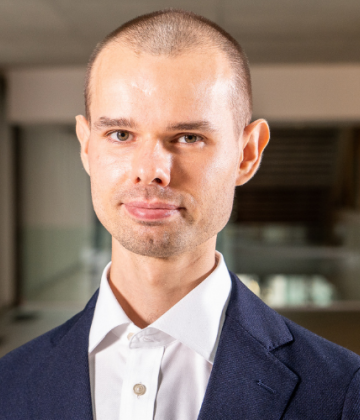
Marino Miculan is a Professor of Computer Science at the University of Udine, leading the MADS Lab and Cybersecurity Lab. His research focuses on formal methods, cybersecurity, and distributed systems, with an emphasis on verifying security in concurrent systems. He has authored over 100 publications and contributed to 16 research projects. His research interests include formal verification of security protocols, distributed computing architectures, and the application of category theory to system modeling. He has developed frameworks like Netstaldi for network discovery and tools such as DBCChecker for analyzing container compositions. Miculan’s work bridges theoretical foundations (e.g., adhesive categories, behavioral equivalences) with practical applications in IoT security, multi-factor authentication, and cloud containerization. His labs explore cutting-edge topics like continuous learning for anomaly detection and stateful access control mechanisms.
Roberto Montemanni is a Full Professor in the Department of Engineering Sciences and Methods at the University of Modena and Reggio Emilia . He is affiliated with the Operations Research Group and specializes in the MATH-06/A Operational Research disciplinary sector. His role involves teaching and research, with office hours available by appointment via email. He focuses on advancing optimization methodologies for complex logistical, transportation, and healthcare challenges. His research interests include combinatorial optimization , algorithm design , and constraint programming . Key areas of exploration involve conflict-constrained problems (e.g., assignment, knapsack, and spanning tree), probabilistic routing scenarios, and drone-assisted delivery systems. He also investigates real-world applications in home healthcare logistics, warehouse management, and supply chain optimization, often blending heuristic methods with exact algorithms. Recent publications emphasize trends in exact algorithm development for hazardous routing, drone scheduling in heterogeneous vehicle routing, and model-based approaches for time-bomb knapsack and orienteering problems. These works highlight interdisciplinary solutions for industries and healthcare systems. While no scientific awards are listed, his contributions to optimization theory and practice are substantial. His advising and grant activities likely align with his research group’s focus on operational challenges, though specific student names or grant details are not provided. He collaborates actively through the Operations Research Group , addressing issues like network-based data interpretation and intelligent manufacturing systems.
Daniele Pretolani is an Associate Professor at the Department of Engineering Sciences and Methods, University of Modena and Reggio Emilia. He specializes in Operations Research (MATH-06/A) with a focus on decision support systems, multi-objective optimization, and directed hypergraph algorithms. Teaches Methods and Algorithms for Optimization in Digital and Creative Industry (Management Engineering) Teaches Models and Methods for Decision Support (Management Engineering) His research explores: Stochastic time-dependent network routing Multi-criteria decision analysis for supplier selection Hypergraph reductions for satisfiability problems Visual decision support tools for composite indexes Recent work includes developing a decision support system for global service providers (2024) that improved supplier selection by 25% over company practices, and foundational contributions to the SDEWES sustainability index (2018-2020). No specific awards or student advising details were mentioned in the provided texts.
Tommaso Gili is an Assistant Professor at the IMT School for Advanced Studies Lucca, specializing in interdisciplinary research at the intersection of network science, neuroscience, and biomedical engineering. His work focuses on analyzing complex systems through network theory and advanced imaging techniques, with emphasis on brain connectivity, functional networks, and their disruptions in neurological disorders. Key research areas include: Functional and structural brain network integration Multi-scale Laplacian analysis in heterogeneous systems Applications of network theory to medicine (e.g., schizophrenia, epilepsy, inflammatory bowel disease) Development of novel methods for network coarse-graining and renormalization His research leverages fMRI, MRI, and computational modeling to study: Cerebral blood flow dynamics Neurological connectivity alterations Biomedical signal processing Complex disease biomarker discovery Notable contributions include innovations in: Functional connectivity analysis of C. elegans Topological symmetry-breaking in brain networks Machine learning approaches for brain digital twins
Prof. Stefano Lorenzi is a Professor in the Department of Nuclear Engineering at the University of Pavia, specializing in advanced nuclear systems. His core research focuses on thermal-fluid dynamics, molten salt reactors (MSRs), small modular reactors (SMRs), and computational methods for reactor safety and economics. He leads projects like TANDEM and ELSMOR, addressing SMR integration into hybrid energy systems and European licensing frameworks. His work includes multiphysics modeling of MSR fission products, stability analysis of natural circulation loops, and neutronics simulations using OpenFOAM and Monte Carlo methods. Key contributions span reactor dynamics, control systems, and validation of open-source nuclear codes. Prof. Lorenzi's recent studies emphasize SMR economics, safety features of in-core bubbling systems, and hybrid data assimilation for reactor analysis. He collaborates with institutions like LENA (Laboratory of Energy Engineering) and contributes to international projects such as SAMOSAFER and the MYRRHA test facility.
Jacopo Fiorenza is a PhD student and Lecturer at the Department of Automatic Control and Computer Science (DAUIN) at Politecnico di Torino. His research focuses on Extended Reality (XR) technologies applied to cultural heritage preservation, combining digital transformation tools like 3D reconstruction, BIM, and large language models. He collaborates with institutions such as Palazzo Carignano and Palazzo Madama, and has been involved in projects at the LINKS Foundation’s VR/AR Lab. His teaching roles include assisting courses on Algorithms and Data Structures, and Info-communication for Sustainable Food Systems. Fiorenza’s work aims to enhance education, accessibility, and cultural engagement through XR integration. Education: Graduated in Cinema and Media Engineering (2022). Research affiliations include GRAINS (Graphics and Intelligent Systems) and VR@POLITO groups. Key collaborations: LINKS Foundation, Turin’s historic buildings, and archaeological sites. His publications emphasize VR workflows for cultural heritage and user experience optimization in virtual environments.
Leonardo Giannantoni is a PhD Student in Control and Computer Engineering at the Polytechnic University of Turin (2021-2024) and a current Research Engineer at the same institution. His work focuses on bio-inspired and AI-driven algorithms for modeling, simulating, and optimizing complex systems, with applications in synthetic biology , structural biology , and healthcare technology . Education PhD in Control and Computer Engineering (2024, Polytechnic University of Turin) MSc in Computer Engineering (2016, Polytechnic University of Turin) BSc in Computer Engineering (2014, Polytechnic University of Turin) Giannantoni's research spans multiple domains, including reinforcement learning for genetic networks , co-simulation in biofabrication , and virtual reality rehabilitation systems for Parkinson's disease. His work integrates machine learning with biological modeling , leveraging parallel computing and software engineering principles. Recent publications highlight his expertise in AI-driven structural biology , synthetic oscillatory networks , and privacy tools like tracker blockers. His Biology System Description Language (BiSDL) provides a framework for multicellular synthetic biological systems design. Scientific Contributions Member of the Focus Group of Researchers (2023-) Giannantoni has served as a Teaching Assistant for courses on Systems Programming and Algorithms , and contributed to open-source projects like nwn-petrisim (Petri Nets simulator) and microgp4 (evolutionary computing toolkit). His work bridges academic research and practical software development for complex systems.
Fabrizio Rossi is a Full Professor of Operations Research at the University of L'Aquila, Department of Information Engineering, Computer Science and Mathematics. He has been a member of the Board of Administration at the university since 2019 and previously from 2010 to 2012. His academic career spans over two decades, including roles as Associate Professor (2005–2019) and Assistant Professor (1997–2002). Education: Ph.D. in Operations Research, University of Rome 'La Sapienza' (1996) Laurea Degree in Electrical Engineering, University of Rome 'La Sapienza' (1992) Visiting Student in IEOR at Columbia University, New York (1996) Operations Research School, Scuola di Matematica Interuniversitaria (1996) Research Interests: Fabrizio Rossi specializes in large-scale optimization methodologies, including Integer Programming and Combinatorial Optimization. His work addresses complex applications in telecommunications network design, manufacturing process optimization, logistics systems, and healthcare. Recent innovations include algorithms for DNA sequence optimization and tumor classification using machine learning. He focuses on practical solutions through advanced techniques like lift-and-project operators and robust optimization frameworks, with significant contributions to scheduling and resource allocation in call centers and satellite missions. Scientific Awards: Informs Computing Society Prize (2014) (collaborative with Jim Ostrowski, Jeff Linderoth, Stefano Smriglio) Finalist, Euro Excellence in Practice Award (2006) for research on terrestrial broadcasting migration Advising and Grants: As a project leader, he coordinated major initiatives such as: PRIN 2010–2012 : Integer Programming methods for radio transmission networks 2008–2009 : Analog-to-digital broadcasting migration optimization IST SAILOR Project (2002–2005) : Satellite UMTS emulation systems He also contributed to European Space Agency's MAS Project (2004–2006) and collaborated with Italian regulatory bodies on telecommunication projects. His research portfolio includes over 50 projects since 1993, emphasizing real-world applications in manufacturing, logistics, and healthcare systems. Labs/Teams: His research is conducted within the Department's optimization groups and industry partnerships. Collaborations include ESA satellite scheduling, RAIWay frequency assignment, and healthcare institutions for treatment planning systems.
Rossana Mastrandrea is an Assistant Professor at the IMT School for Advanced Studies Lucca, affiliated with the AXES Research Unit. Her work integrates complex network analysis with interdisciplinary research in Economics, Environmental Science, and Behavioral Studies. She holds a PhD in Economics from the Sant’Anna School of Advanced Studies (Pisa) and has conducted research at the Lorenz Institute of Theoretical Physics (Leiden, Netherlands) and the INET project on Macroeconomics Networks. Her research focuses on theoretical and empirical analysis of complex networks in economic, social, and biological systems. Current projects include studying pharmaceutical innovation through patent citation networks (PRIN project on mRNA vaccines), pro-environmental behavior using evolutionary game theory, and carbon emissions via network approaches. She also explores brain connectivity dynamics and global trade networks using statistical physics and agent-based modeling. Key themes in her work include network reconstruction, motif analysis, and the application of optimal transport methods. Her recent studies address topics like cooperation dynamics in structured populations, coalition formation in litigation, and the role of information load in functional brain connectivity. Rossana coordinates the PRIN project analyzing public and private roles in pharmaceutical innovations and has contributed to high-impact studies on environmental performance metrics, global value chains, and schizophrenia-related brain network alterations.
Enrico Ravera is an Associate Professor in the Department of Chemistry at the University of Florence, affiliated with the Magnetic Resonance Center. He holds a B.Sc., M.Sc., and Ph.D. in Chemistry from the University of Florence (2008–2013), followed by postdoctoral fellowships at CERM and a FIRC Fellowship at CIRMMP. His research focuses on NMR spectroscopy (solution/solid-state), paramagnetic systems, EPR, and biomaterial characterization. Key achievements include developing novel NMR methodologies for protein-material interactions and co-authoring influential textbooks like NMR of Paramagnetic Molecules . Education: B.Sc. Chemistry, University of Florence (2008) M.Sc. Chemistry of Biological Molecules, cum laude (2009) Ph.D. in Chemistry (2013) Research interests span solid-state NMR, paramagnetic systems, EPR, and bioinspired materials. Notable contributions include engineering enzymes for bioinspired silica formation and studying protein dynamics via paramagnetic tagging. Awards include the 2020 Premio Raffaello Nasini, GIDRM Under 35 Award, and UNESCO/IUPAC Green Chemistry Prize. His work bridges chemistry, biology, and materials science, with applications in drug design and medical imaging. Grants and collaborations include projects on protein-drug conjugates, NMR-based drug development, and biotherapeutic characterization. He leads efforts in developing interdisciplinary approaches for structural biology. Labs/Teams: Active in the Magnetic Resonance Center (CERM) and collaborates with CIRMMP. Research integrates NMR with computational methods and biophysical techniques.
Leonardo Tenori is an Associate Professor at the Department of Chemistry, University of Florence, affiliated with the Magnetic Resonance Center (CERM). He holds a master’s degree in Chemistry (2002) and a PhD in Structural Biology (2008), both from the University of Florence. His research focuses on metabolomics, particularly applying Nuclear Magnetic Resonance (NMR) spectroscopy to biomedical, pharmacological, and agricultural challenges. Education: Master’s in Chemistry, University of Florence, 2002 PhD in Structural Biology, University of Florence, 2008 Research Interests include metabolomics applications in disease diagnosis (e.g., celiac disease, breast cancer, cardiovascular disorders), development of statistical algorithms for data analysis (e.g., KODAMA), and collaborations in clinical and agricultural research. His work emphasizes metabolic biomarker discovery and integrative omics approaches. Recent research highlights include studies on stroke outcome prediction via blood biomarkers, metabolomic profiling of plant-based beverages, and lipidomic analysis of human sperm. These projects underscore his expertise in NMR-based metabolomics and its translational applications. Awards: 2015 Fellowship from the Italian Foundation Veronesi for melanoma metabolomics research He has contributed to over 100 publications and collaborates internationally. His work includes developing predictive models for disease recurrence in cancer patients and exploring metabolomic signatures in chronic diseases. He also investigates applications in agriculture, such as olive oil quality assessment and dairy cow health monitoring. Labs/Teams: Part of the Magnetic Resonance Center (CERM) at the University of Florence, contributing to interdisciplinary research in structural biology and metabolomics.
Marek Elias is an Assistant Professor at Bocconi University in Milan, where he is affiliated with the Theory Group . Prior to joining Bocconi, he held postdoctoral positions at CWI (Amsterdam) and EPFL (Lausanne), following a PhD at TU Eindhoven under the supervision of Nikhil Bansal. Earlier, he studied at Charles University in Prague with advisor Jiří Matoušek. His research focuses on algorithms for optimization under uncertainty , bridging online algorithms , differential privacy , and machine learning-augmented systems . Key areas include Learning-Augmented Algorithms Online Metric Algorithms Combinatorial Optimization Privacy-Preserving Mechanisms The trends in his recent publications highlight advancements in online optimization with applications in machine learning and data structures , particularly in problems like the k-server system , Steiner tree approximation , and differentially private clustering . Papers often explore the interplay between algorithmic robustness and predictive modeling to enhance efficiency in uncertain environments. He has contributed to major conferences including ICML, NeurIPS, SODA, and FOCS, with a consistent emphasis on theoretical guarantees and practical applications . While specific awards or grants are not detailed in the provided texts, his work is supported through institutional affiliations and collaborative research networks. Marek actively engages students in research, particularly in Bocconi's Theory Group , encouraging thesis projects on learning-augmented algorithms and prediction-based optimization . His laboratory environment fosters interdisciplinary collaboration between theoretical computer science and machine learning communities.
Francesco Asnicar is a researcher at the Department of Cellular, Computational and Integrative Biology (CIBIO) at the University of Trento. He specializes in computational biology, genomics, and microbiome research with a focus on metagenomics and microbial genomics. His work bridges bioinformatics, data science, and biological applications, particularly in understanding host-microbiome interactions in health and disease. Teaching activities include courses such as Algorithms and Data Structures , Computational Biology , Cancer Genomics , and Scientific Programming , emphasizing Python programming and algorithmic problem-solving in biological contexts. His research spans microbial community analysis, dietary impacts on the gut microbiome, and translational applications of metagenomics in oncology and immunology. Key areas of study include microbiome-driven biomarker discovery for colorectal cancer, antibiotic resistance mechanisms in foodborne pathogens, and the role of microbial metabolites in autoimmune and metabolic disorders. He contributes to open-source tools for metagenomic analysis and collaborates on large-scale epidemiological studies linking microbiome composition to diet and cardiometabolic health. Recent work focuses on precision nutrition, fecal microbiota transplantation in cancer therapy, and computational methods for metagenomic data interpretation. Asnicar’s interdisciplinary approach integrates computational tools with experimental biology to address fundamental questions in systems microbiology and translational medicine.
Matteo Del Giudice is a Fixed-term Assistant Professor (RTD-A) at the Department of Structural, Geotechnical and Building Engineering (DISEG), Politecnico di Torino. He holds a Ph.D. in Innovation Technology for the Built Environment and has been actively engaged in research and teaching since 2009. He is a core member of the drawingTOthefuture research laboratory led by Prof. Anna Osello, focusing on BIM, digital twins, and virtual/augmented reality applications in architecture and urban development. His research interests include Building Information Modeling (BIM), digital twin technologies, interoperability, smart cities, sustainable healthcare, facility management, and energy efficiency in buildings. He explores the integration of BIM with GIS and VR/AR to optimize data management for existing architectural heritage and supports climate neutrality goals through digital innovation. His work spans civil engineering, architectural design, and human-computer interaction, with applications in both public infrastructure and healthcare environments. His recent publications highlight advancements in semantic HBIM for digital inclusion, BIM-digital twin integration for electrical systems, and cognitive digital twins for big data management. These works reflect a strong trend toward intelligent, data-driven building systems and decision support tools in urban and industrial contexts. Effective member - U.I.D. UNIONE ITALIANA PER IL DISEGNO, Italia (2017-) Matteo Del Giudice supervises PhD students Daniel Rodriguez Polania and Michele Zucco. He leads several research projects, including DTF4EA (Digital Twin Factory for energy assessment) and an algorithm combining BIM, VR, and IoT for automating environments for patients with neurodegenerative diseases. He has also secured multiple commercial contracts and teaching initiatives focused on BIM education. He teaches courses such as BIM and Construction Management, Energy in Smart Buildings, and BIM for Smart Cities at both graduate and doctoral levels. He is affiliated with the drawingTOthefuture laboratory, where interdisciplinary research and training in digital design and representation are conducted. The lab serves as a hub for innovation in BIM, digital twins, and immersive technologies, fostering collaboration between academia and industry.
Cedrix Jurgal DONGMO FOUMTHUIM is a Researcher at the Department of Molecular Sciences and Nanosystems, Ca' Foscari University of Venice. His work focuses on computational chemistry, biophysics, and molecular dynamics, with particular emphasis on polypeptide behavior, solvent effects, and protein interaction networks. Recent research includes studies on solvent quality in nonbiological oligomer folding, water transport in hydrolases, and computational tools for residue interaction network analysis. His methodological contributions extend to entropy estimation and ligand transport analysis. Key publication trends intersect chemical physics, structural biology, and bioinformatics, with collaborative work spanning protein-ligand interactions, self-assembled monolayer modifications, and hydrophobic surface dynamics.