Luna Agerlin serves as an Instructor in the Department of Computer Science at the University of Copenhagen, located at Universitetsparken 1, 2100 København Ø. Her academic role focuses on teaching within the institution's computing discipline. Her research spans foundational Computer Science domains including Algorithms, Artificial Intelligence, Data Structures, Programming Languages, and Software Engineering, reflecting the department's core technical scope. Contact is available via email at luag@di.ku.dk or through the department's official website https://diku.dk/ .
Michael Allan Ribers serves as Assistant Professor and External Researcher in the Department of Economics at the University of Copenhagen, with concurrent postdoctoral employment at the German Institute for Economic Research since February 2019. His research is currently funded by the ERC grant ABRSEIST, focusing on antibiotic resistance dynamics and information-learning mechanisms in clinical treatment decisions. Ribers specializes in empirical microeconomics with concentrated expertise in health economics, leveraging computational economics frameworks, structural modeling techniques, and machine learning methodologies. His work critically examines how algorithmic systems interact with human decision-making processes in healthcare contexts, particularly investigating prescription behaviors and resistance patterns in antibiotic usage. Analysis of his publication history reveals a cohesive research trajectory centered on human-AI collaboration in medical decision-making, with progressive methodological sophistication from foundational working papers (2019-2020) to peer-reviewed journal articles (2022-2024). His studies consistently address data valuation, payoff structures, and skill variation in prediction systems, demonstrating increasing interdisciplinary impact through collaborations with co-authors Huang and Ullrich. No scientific awards were documented in the source materials. Ribers' current research activities are sustained through the ERC ABRSEIST grant. No formal student advisees were listed in the available documentation. His institutional base operates from Øster Farimagsgade 5, Building 26, Copenhagen K, Denmark, with research output concentrated in healthcare economics and computational decision science.
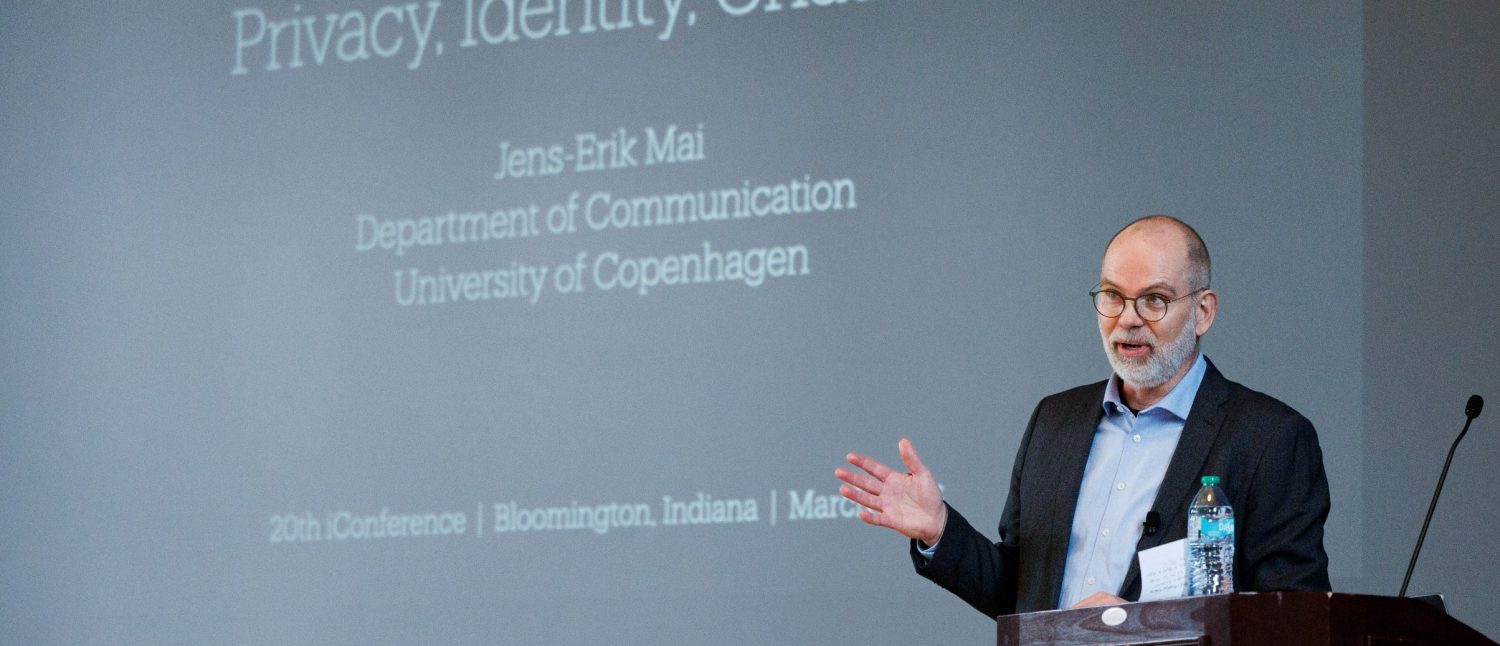
Jens-Erik Mai is Professor of Information at the Department of Communication, University of Copenhagen. He has previously served as Head of Department for both the Department of Communication (2019-2025) and the Department of Information Studies (2017-2019) at the University of Copenhagen. Prior to his current position, he was Associate Professor at the Faculty of Information, University of Toronto (2006-2012), where he also served as Vice Dean (2006-2009) and Acting Dean (Fall 2008). Earlier in his career, he was Assistant Professor at the Information School of the University of Washington (2000-2006), where he co-directed the Center for Human-Information Interaction (2003-2006). He earned his Ph.D. in Information Science from the School of Information at the University of Texas at Austin in 2000 as a Fulbright Scholar, with additional degrees from the Royal School of Library and Information Science in Denmark. Mai's research addresses fundamental questions about data and information in the digital society, exploring philosophical, ethical, cultural, and contextual dimensions of information systems, digital media, and cultural institutions. His work has significantly impacted philosophy of information, information ethics and privacy, and knowledge organization/classification. He has made notable contributions to understanding information quality from a Gricean perspective and analyzing the concept of personal information in the context of datafication. His recent publications (2020-2025) demonstrate a strong focus on privacy, identity, and ethics in digital society, with recurring themes examining how digital technologies reshape human identity, privacy concepts, and social structures. His work bridges information science, philosophy, ethics, and social theory, creating an interdisciplinary approach to contemporary information challenges. Philosophical highlights in 2021 Mai actively participates in the international information science community as conference chair, workshop organizer, reviewer, editor, speaker, and editorial board member for the Journal of Documentation, Aslib Journal of Information Management, and Journal of Education for Library and Information Science. As Principal Investigator for the interdisciplinary research project 'Don't Take it Personal' – Privacy and information in an algorithmic age, supported by Independent Research Fund Denmark, he has supervised numerous students and research collaborators. His work has been referenced in policy sources and has gained attention across academic platforms. He maintains an active public presence through media interviews and contributions to public discourse on information science topics, demonstrating his commitment to knowledge dissemination beyond academic circles.
Emil Thomasen serves as a Guest Researcher in the Department of Biology within the Biomolecular Sciences unit at the University of Copenhagen's Faculty of Science. His research integrates computational methods with experimental structural biology approaches to investigate complex biomolecular systems. Position: Guest Researcher Institution: University of Copenhagen Department: Department of Biology Research Unit: Biomolecular Sciences Contact: fe.thomasen@bio.ku.dk | +4535323586 Thomasen's research focuses on developing and applying computational methodologies to understand protein structure, dynamics, and interactions. His work bridges quantum mechanics, molecular dynamics simulations, and experimental techniques including small-angle X-ray scattering (SAXS) and cryo-electron microscopy. He has made significant contributions to coarse-grained modeling, particularly with the Martini force field, and has pioneered approaches combining machine learning with quantum mechanical calculations for large molecular assemblies. His publication record demonstrates a clear trajectory in computational structural biology, with recent work emphasizing the integration of multiple experimental and computational techniques to characterize complex protein systems. The research shows increasing sophistication in handling large-scale biomolecular assemblies and applying advanced statistical methods like Bayesian inference for model refinement. Thomasen has established strong collaborative networks, frequently working with Professor K. Lindorff-Larsen and other researchers across computational chemistry and structural biology disciplines. His work has appeared in high-impact journals including Nature Communications, eLife, and Journal of Chemical Theory and Computation. As a recently completed Ph.D. graduate (2024), Thomasen continues to advance his research program as a Guest Researcher, building on his doctoral work focused on integrating coarse-grained molecular dynamics with SAXS data for characterizing multidomain protein assemblies.
Natália da Silva Perez serves as Assistant Professor at the University of Copenhagen's Faculty of Humanities, specifically within the SAXO-Institute focusing on History, while maintaining an external appointment as Assistant Professor at Erasmus University Rotterdam since December 2022. Her institutional affiliations span both Danish and Dutch academic contexts through the Racialized Motherhood project (2023-2028), a collaboration funded by Denmark's Independent Research Fund Sapere Aude grant. Her research centers on transnational and comparative cultural history from 1600-1900, with dual methodological strands: Historical analysis of women's experiences across social strata, examining interactions with families, communities, and authorities Digital humanities innovation through natural language processing tools adapted for multilingual historical documents, specifically addressing algorithmic bias mitigation Current projects analyze early newspaper representations of motherhood across colonial contexts using data-driven comparative methods. Her publication portfolio reveals consistent thematic development across three interconnected domains: Privacy Studies : Exploring knowledge production boundaries in early modern contexts Colonial Intersectionality : Analyzing race, gender, and legal autonomy across Atlantic networks Digital Methodologies : Developing NLP frameworks for historical text analysis with low-resource language adaptation Recent outputs demonstrate increasing methodological sophistication in blending traditional historical analysis with computational approaches. Her scientific recognition includes: Sapere Aude grant for Racialized Motherhood project (2023-2028) Leadership of international research networks including Privacy & Colonialism and Free Womb Laws Roundtable initiatives Perez actively supervises PhD, master's, and bachelor's students in women's history, intersectionality, and digital humanities methodologies, while organizing significant academic events like the Practices of Privacy conference series. Her collaborative work spans institutions across Europe, with particular strength in Dutch-Brazilian historical connections through her analysis of figures like Juliana from Recife. She directs research teams exploring algorithmic bias in historical text analysis and transnational motherhood representations, working within Copenhagen's digital humanities infrastructure while maintaining Rotterdam connections through the Racialized Motherhood project.
Giampiero Iaffaldano serves as Associate Professor in Solid Earth Geophysics at the Department of Geosciences and Natural Resource Management within the Faculty of Science at the University of Copenhagen, Denmark. He has held this position since June 2015, following a tenured Assistant Professor role at the Australian National University's Research School of Earth Sciences (2010-2015) and a Reginald A. Daly Postdoctoral Fellowship at Harvard University (2008-2010). His academic journey reflects an international career spanning European, North American, and Australian institutions. His educational credentials include: PhD in Natural Sciences - Geophysics (summa cum laude), Ludwig–Maximilians University Munich, Germany (2007) MSc in Physics (summa cum laude), University of Rome "La Sapienza", Italy (2003) Iaffaldano specializes in observational geodynamics, developing computational models constrained by geological and geophysical observations to understand forces controlling the coupled lithosphere-mantle system. His research integrates forward and inverse modeling approaches with empirical data to address fundamental questions about Earth's dynamic processes across spatial and temporal scales. His work bridges theoretical geophysics with practical applications in hazard assessment and resource management. His recent publication record (2023-2025) reveals a strong thematic focus on plate boundary dynamics, mantle plume influences on plate motions, and earthquake cycle processes. His research spans global to regional scales with particular emphasis on the North Atlantic region (Icelandic plume effects), South American plate boundaries, and microplate systems in Asia and Europe. The consistent presence of high-impact journals like Earth and Planetary Science Letters and Geophysical Journal International demonstrates his standing in the geophysics community. Among his significant scientific recognitions: Elected member of the Young Academy of Europe (2017) Ringwood Fellowship at Australian National University (2010) Reginald A. Daly Postdoctoral Fellowship at Harvard University (2007) Elite Netzwerk PhD scholarship of the Bavarian Government (2005) Professor Iaffaldano has secured approximately DKK 14,000,000 in research funding from major international sources including the Independent Research Fund Denmark, Villum Foundation, National Science Foundation (USA), and Australian Research Council. He chairs the steering committee for DanSeis – Danish National Center for Seismic Instrumentation. His teaching portfolio includes Geodynamics (MSc), Quantitative Problem-Solving in Geosciences (BSc), and specialized PhD courses on plate kinematics. He serves as Associate Editor for Geosphere and has reviewed for premier journals including Nature, Science, and Journal of Geophysical Research. His extensive international collaborations with institutions in Denmark, Australia, USA, Chile, and Europe reflect the global nature of contemporary geophysical research and his leadership in the field.
Min Zhang serves as Assistant Professor in the Department of Chemistry and Guest Researcher in the Department of Drug Design and Pharmacology within the Molecular and Cellular Pharmacology division at the University of Copenhagen's Faculty of Science. Based at Universitetsparken 5 and 2 in Copenhagen Ø, Zhang maintains an active research profile with 14 publications between 2023-2025. Research focuses on protein aggregation dynamics and advanced drug delivery systems , utilizing super-resolution microscopy and machine learning approaches. Key areas include insulin aggregation modulation, metal-organic framework (MOF) nanocarriers, and real-time observation of protein assembly pathways. Recent work develops computational tools like SEMORE for morphological fingerprinting of protein assemblies. Publication trends show strong interdisciplinary collaboration, particularly with N.S. Hatzakis' group, spanning biophysics, nanomedicine, and pharmaceutical sciences. Work has attracted significant attention with coverage by 12+ news outlets and 26+ X (Twitter) mentions. Zhang's scientific contributions include: Development of single-particle tracking methodologies for intracellular drug delivery Novel insights into insulin aggregation modulation by osmolytes Machine learning frameworks for super-resolution data analysis Defect-engineered MOF platforms for cancer therapeutics Active collaborations span molecular pharmacology, biophysics, and nanotechnology research groups. Current work focuses on real-time monitoring of protein aggregation pathways and advanced nanocarrier systems for pharmacotherapy.
Oskar Lang Moesmand serves as a Lecturer in the Department of Computer Science at the University of Copenhagen, based at Universitetsparken 1, 2100 Copenhagen Ø, Denmark. His research spans core computer science domains with emphasis on practical and theoretical foundations: Software Engineering methodologies and development lifecycle Algorithm design and computational complexity Data Structures optimization for real-world applications Programming Languages theory and implementation Human-Computer Interaction principles His work integrates academic instruction with applied technical research within the department's framework.
Martine Stagelund Hvidt serves as Assistant Professor at the University of Copenhagen's Faculty of Law, affiliated with the WELMA Centre for Legal Studies in Welfare and Market. Her research bridges social rights and digital administrative law, focusing on citizen protections within automated public systems. Education PhD in Law, University of Copenhagen (2014) Master of Laws (Cand.jur.), University of Copenhagen (2011) Bachelor of Laws (BA.jur.), University of Copenhagen (2009) Research Focus Hvidt's work centers on Social Security Law in digital contexts, examining algorithmic errors in welfare administration and children's rights in automated systems. She investigates AI's impact on public administration, particularly regarding child benefits and social security access, while addressing algorithmic discrimination and platform worker protections. Her scholarship integrates gender perspectives and EU legal frameworks. Publication Trends Her 2022-2024 publications reveal concentrated research on digital welfare governance, with 2024 representing peak output. Key themes include algorithmic discrimination in child benefit systems, underrepresentation of youth rights in digital administration, and legal frameworks for platform workers. This corpus demonstrates growing urgency around balancing administrative efficiency with fundamental rights in Scandinavia's digital welfare state. Scientific Recognition No formal awards documented in source materials Academic Engagement While specific student supervision isn't detailed, Hvidt actively contributes to Nordic research networks including the Social Rights Group and Nordiskt socialrättsligt nätverk. Her committee memberships indicate institutional leadership within Copenhagen's legal research ecosystem, though grant funding specifics remain unreported. Research Infrastructure As a core WELMA Centre member, Hvidt operates within a specialized hub examining welfare-market legal intersections. Her participation in the Nordic Social Law Network facilitates cross-border collaboration on digital governance challenges, particularly regarding algorithmic accountability in Scandinavian welfare systems.
Ernst Stefan Seemann serves as an Associate Professor in the Department of Veterinary and Animal Sciences within the Faculty of Health and Medical Sciences at the University of Copenhagen. His research focuses on non-protein coding RNAs (ncRNAs) and RNA structure functionality, utilizing advanced methodologies including RNA structure modeling, prediction of RNA-RNA and protein-RNA binding, and analysis of next-generation sequencing data. His primary research interests encompass: Non-protein coding RNAs (ncRNAs) and RNA structure biology Next-generation sequencing and single-cell RNA-seq analysis Comparative genomics and prediction/annotation of ncRNAs Host-pathogen RNA interactions Stem cell models for neurodegenerative diseases Seemann is actively involved in multiple high-impact research initiatives including investigations of novel ncRNAs in bacteria (NextProd project), animal ncRNAs (FAANG consortium), host-virus RNA-RNA interactions with Assoc Prof Troels KH Scheel, single-cell RNA sequencing in neurogenesis studies with Assoc Prof Vanessa J Hall, and transcriptomics in stem cell models for neurodegenerative diseases (NeuroStem project). His publication record demonstrates strong interdisciplinary collaboration across computational biology, veterinary science, and medical research. His scientific contributions span environmental microbiology, gene therapy, neuroscience, and computational biology, with recent work focusing on CRISPR applications, CAR T-cell engineering, microglial metabolism in dementia, and metabolic engineering of bacterial systems. His research has been cited across multiple platforms including academic journals, Mendeley readership, Wikipedia, and news outlets.
Klaus Fuglsang Kofoed serves as a Clinical Professor in the Department of Clinical Medicine within the Faculty of Health and Medical Sciences at the University of Copenhagen. His academic appointment focuses specifically on Internal Medicine with specialization in Cardiology. Based at Blegdamsvej 3, 2200 København N, he maintains active clinical and research responsibilities in cardiovascular medicine. Dr. Kofoed's research spans multiple domains of cardiology with particular emphasis on cardiovascular imaging techniques, HIV-related cardiac complications, and coronary artery disease assessment. His work integrates advanced imaging modalities including cardiac CT angiography with clinical outcomes research. Notable research themes include the intersection of infectious diseases and cardiovascular health, quantitative imaging analysis for pulmonary congestion assessment, and procedural planning for structural heart interventions. His publication record demonstrates significant scholarly contribution with 287 research outputs including 260 journal articles, 7 commentaries, 6 letters, and 6 review articles. Recent 2025 publications reveal ongoing productivity in cardiovascular imaging, HIV/cardiology intersections, and cardiac CT applications. His research frequently appears in high-impact cardiology journals including European Heart Journal , JAMA Cardiology , and Echocardiography . Dr. Kofoed maintains extensive collaborative networks across Danish medical institutions, frequently partnering with researchers from Rigshospitalet and other Copenhagen-based medical centers. His work shows particular strength in multi-center clinical studies and cohort analyses. His methodological approaches combine clinical cardiology expertise with advanced imaging techniques and increasingly incorporate computational methods as evidenced by his involvement in deep learning applications for cardiac data analysis.
Frederik van Wylich-Muxoll serves as a Lecturer in the Department of Computer Science at the University of Copenhagen, located at Universitetsparken 1, 2100 Copenhagen Ø. His academic responsibilities center on foundational computer science education within the institution's technical curriculum. His research profile aligns with core computer science disciplines including Software Engineering, Algorithms, and Programming Languages, reflecting the department's focus on both theoretical and applied computational systems. This orientation supports the department's mission in advancing digital innovation and computational theory. Contact is facilitated through his institutional email fwmu@di.ku.dk , with office operations based at the North Campus facility.
Younes Farhangibarooji is an Academic Staff member at the Biocomplexity section of the Niels Bohr Institute, University of Copenhagen. His research focuses on the intersection of biophysics, cell mechanics, and optical manipulation techniques, with significant contributions to understanding cellular structures and developing biomedical applications. His research interests span multiple cutting-edge areas in biophysics. Primary focus areas include: Actin cytoskeleton dynamics and cellular mechanics Optical tweezers technology and applications Viscoelastic properties of biological materials Nanoparticle delivery systems for cancer therapy Organoid development and morphogenesis mechanics His work combines experimental biophysics with computational analysis to unravel fundamental cellular processes. His publication record shows significant collaborative work, particularly with the research group of Professor Lene B. Oddershede. Notable contributions include the comprehensive Roadmap for optical tweezers published in Journal of Physics-Photonics (2023) and groundbreaking research on filopodia mechanics published in Nature Communications (2022). His work has garnered substantial attention, with multiple publications covered by news outlets and academic social media platforms. Dr. Farhangibarooji's research demonstrates strong interdisciplinary connections between physics, biology, and medical applications, particularly in cancer research and regenerative medicine approaches using organoid models.
Hongyang Cui serves as a Lecturer in the Department of Computer Science at the University of Copenhagen, with office location at Universitetsparken 1, 2100 København Ø. His position falls under the university's academic faculty structure though the specific school (e.g., Faculty of Science) remains unconfirmed in source materials. Research activities span foundational computer science disciplines with emphasis on: Artificial Intelligence Data Science methodologies Software Engineering practices Algorithm design and analysis Theoretical computing frameworks Computer Science education Professional correspondence may be directed to gbq569@di.ku.dk .
Jan Halborg Jensen is a Professor in the Department of Chemistry at the University of Copenhagen, with a distinguished research career in computational chemistry and molecular modeling. His work spans quantum chemistry, cheminformatics, and machine learning applications in chemical research, with significant contributions to drug design, catalyst discovery, and chemical reaction prediction. His primary research interests focus on Computational Chemistry , Molecular Modeling , and Quantum Chemistry , with particular expertise in applying machine learning techniques to chemical problems. Jensen's research integrates computational methods with practical chemical applications, including retrosynthesis planning, catalyst design, and drug discovery. His work bridges theoretical chemistry with practical applications in organic synthesis and pharmaceutical development. Analysis of Jensen's recent publications (2023-2025) reveals a strong focus on machine learning applications in chemistry, particularly for predicting chemical reactivity, designing catalysts, and advancing drug discovery. His work demonstrates increasing integration of artificial intelligence with traditional computational chemistry methods, with significant contributions to cheminformatics, transition metal chemistry, and biomolecular simulation standards. The research spans theoretical developments and practical applications across organic chemistry, biochemistry, and materials science. Jensen maintains an active research program with extensive publication output, including 88 research contributions comprising journal articles, book chapters, and books. His work shows strong collaborative networks across computational chemistry and related fields. He has presented on educational technology topics, including a lecture titled "Make a difference - teach and learn with technology" in April 2018, demonstrating engagement with pedagogical developments alongside research activities. His online presence includes a professional blog (molecularmodelingbasics.blogspot.com) and comprehensive CV documentation.