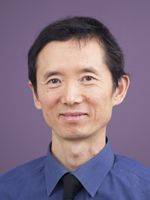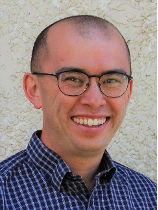
Jay Werberمشاهده پروفایل
استادیار
Jay Werber serves as Assistant Professor in the Department of Chemical Engineering & Applied Chemistry at the University of Toronto's Faculty of Applied Science and Engineering. His research group develops advanced membrane materials and separation processes targeting sustainability challenges in water scarcity, CO2 management, and metal recycling, with active projects including Enhanced Reverse Osmosis for High-Salinity Brines and Ion-Selective Electrodialysis for Battery Recycling. Education: B.Sc. from Washington University in St. Louis M.Sc. and Ph.D. from Yale University Postdoctoral training at the University of Minnesota Research Focus: Dr. Werber's work integrates polymer synthesis , transport phenomena , and process design to create breakthrough membranes. His group specializes in fundamental studies of polymeric desalination membranes, next-generation synthesis techniques, and lab-scale demonstrations for applications ranging from water treatment to critical mineral recovery. Key innovations include self-driving labs for membrane fabrication and biomimetic approaches inspired by natural water channels. Publication Trends: Recent work (2018-2023) shows increasing emphasis on data-driven membrane characterization , block polymer engineering , and ion-selective separations . Publications reveal a strategic shift toward computational methods (e.g., Monte Carlo simulations) and industrial scalability, with growing applications in battery recycling and high-salinity wastewater treatment. Scientific Recognition: Young Membrane Scientist Award (North American Membrane Society, 2021) Abel Wolman Fellowship (AWWA, 2017) Ellen Gonter Award (ACS Environmental Chemistry, 2017) NSF Graduate Research Fellowship (2013) Academic Leadership: Dr. Werber mentors PhD and MASc students in the Advanced Membranes Lab, emphasizing collaborative culture and real-world impact. His group maintains active industry partnerships through the Institute for Water Innovation and participates in the Acceleration Consortium for self-driving lab development. Current recruitment focuses on candidates with leadership experience and passion for sustainability challenges. Research Infrastructure: The Advanced Membranes (AM) Lab operates as a core unit within U of T's Institute for Water Innovation, housing specialized equipment for membrane synthesis, transport characterization, and process optimization. Current initiatives include two self-driving labs for automated membrane fabrication (porous membranes and interfacial polymerization) developed in collaboration with Prof. Jason Hattrick-Simpers' materials science group.