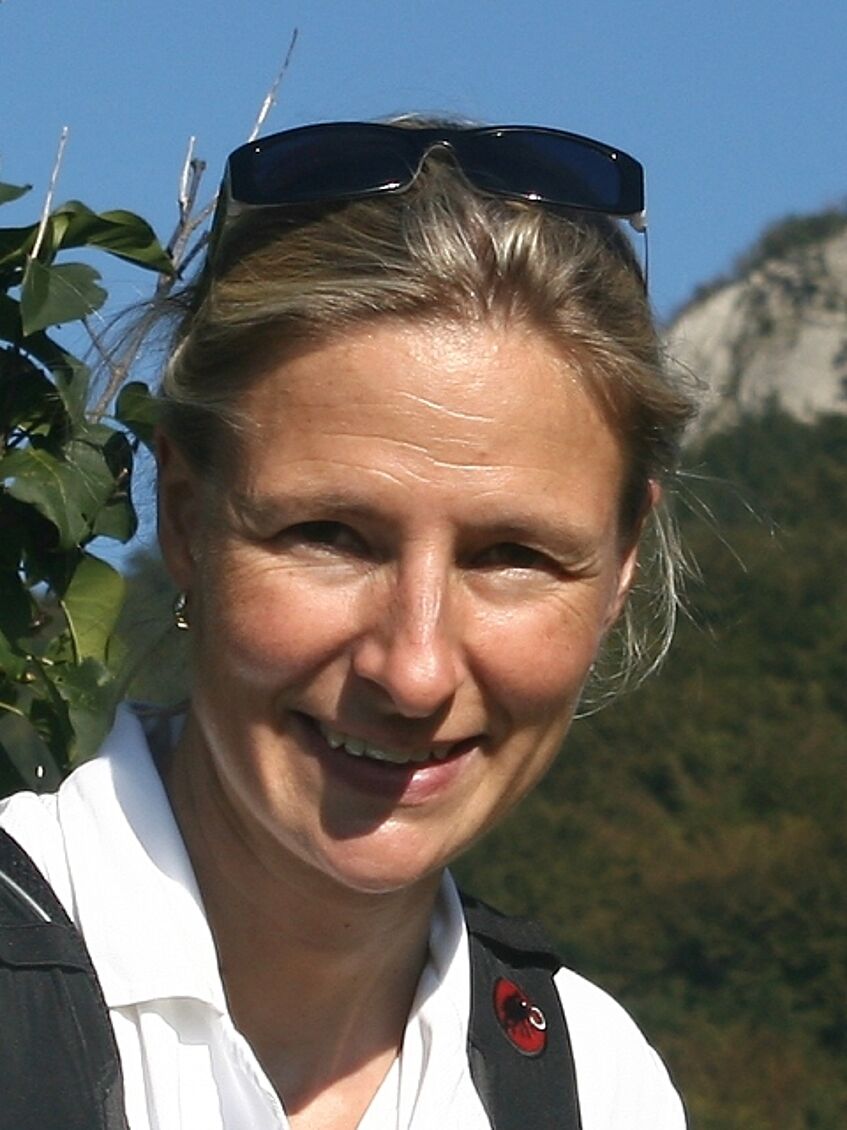
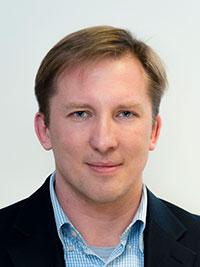
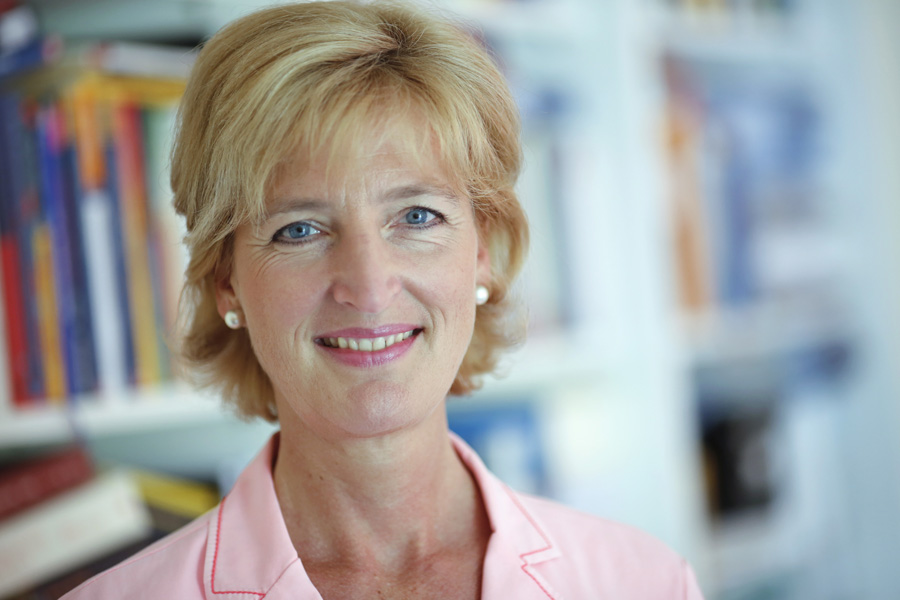
Sabine Glasl-Tazreiter is a Lecturer at the University of Vienna's Faculty of Life Sciences , specifically within the Department of Pharmaceutical Sciences and its Division of Pharmacognosy . Her office is located in room 2E 412 on the 4th floor at Josef-Holaubek-Platz 2, Vienna, Austria (1090). Contact details include telephone number +43-1-4277-55207 and email sabine.glasl@univie.ac.at . Principal research focus: Phytochemistry & Biodiscovery Specialization: Secondary metabolites from ethnomedicinally used plants across Europe, Mongolia, and Latin America Key techniques: Isolation of bioactive compounds, structural elucidation, pharmacological evaluation Quality control expertise: Macroscopic/microscopic identification, chemical analytics Recent publications highlight her work in: 2024 - Development of the VOLKSMED Database for Austrian folk medicine wound healing plants 2025 - Advanced mucociliary clearance research in respiratory systems 2023 - Innovations in optoacoustic imaging technology 2019 - Structure-function analysis of phycobiliproteins for medical imaging 2017 - Phytochemical characterization of Latin American antidiabetic plants
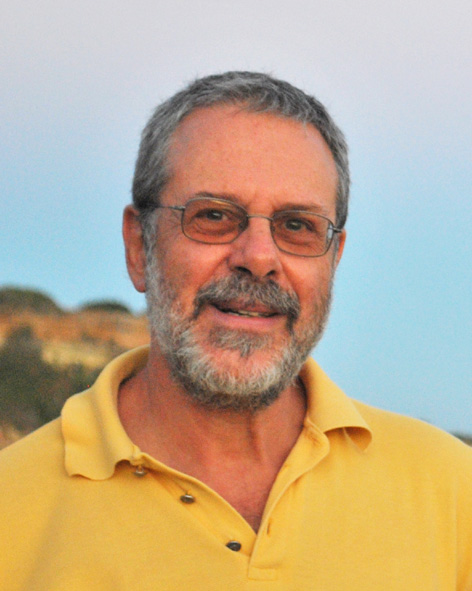
Professor Robert Eason is a leading academic at the University of Southampton, specializing in photonics and laser technology. His research spans interdisciplinary areas combining Machine Learning , Medical Diagnostics , and Microfluidics . Research Interests : Eason focuses on AI-driven laser applications, including deep learning for phototherapy , autonomous laser machining , and low-cost paper-based diagnostic devices . His work bridges photonics with biomedicine and advanced manufacturing. Recent Publications : His 2025 article in Scientific Reports explores AI simulations for psoriasis treatment, while 2024-2022 works address laser-controlled microfluidics, deep learning in microscopy, and reinforcement learning for laser machining. Supervision : He supervises PhD student Georgia Mourkioti in laser-based research projects. External Roles : Eason has served as a speaker at international conferences including the International Symposium on Laser Precision Microfabrication (2018), LAISER (2019), and Deep Learning for Control of Light-Matter Interactions (2022).
Manolis G.H. Katevenis is a Professor at the Department of Computer Science, University of Crete, and Deputy Director and Head of the Computer Architecture and VLSI Systems (CARV) Laboratory at the Institute of Computer Science (ICS), Foundation for Research & Technology - Hellas (FORTH). He co-founded the European Research Center on Computer Architecture (EuReCCA) and is a founding partner of the European Network of Excellence on High-Performance and Embedded Architecture and Compilation (HiPEAC). PhD in Computer Science from University of California, Berkeley (1983) Co-founder of EuReCCA (2011) Contributed to RISC architecture (1980-1983), interconnection networks (1985-2011), and parallel computing (1993-2010) His research spans Scalable Multicore Systems , Interconnection Network Architecture , Packet Switch Design , Computer Architecture , and VLSI Systems . He has made foundational contributions to per-flow queueing, backpressure mechanisms, and wormhole IP over ATM, with applications in internet routers, data centers, and supercomputers. His publications focus on high-radix crossbar switches, flow control algorithms, and explicit interprocessor communication. Notable scientific awards include: ACM Doctoral Dissertation Award (1984) David J. Sakrison Memorial Prize (1983) IBM PhD Fellowship (1981-1983) Greek State Fellowship (1973-1978) He has supervised 40 graduate theses and participated in 22 R&D projects totaling €9M, including HiPEAC (coordinator of interconnection networks), SARC (FPGA prototype design), and ENCORE (cache-optimized remote DMA). His work has received over 2000 citations, with an h-index of 23.
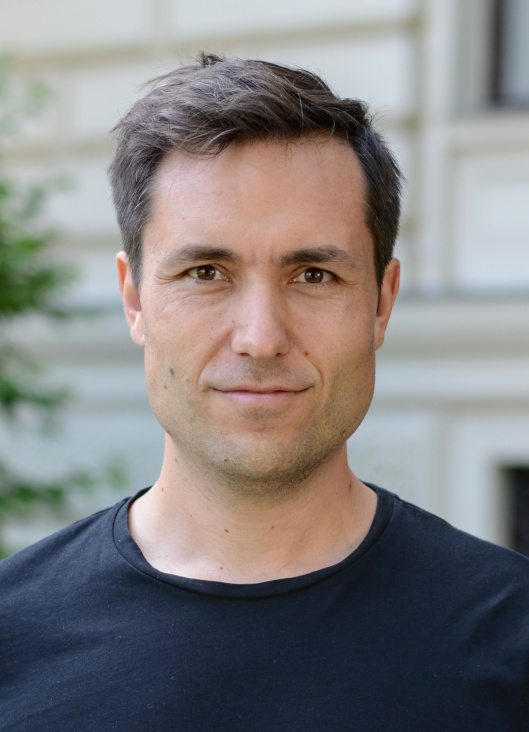
Martin Holler is a Professor at the Institute of Mathematics and Scientific Computing at the University of Graz, Austria, where he leads the research group Applied Mathematics and Machine Learning . His work bridges theoretical mathematics with practical applications in imaging and machine learning. Research Focus: His primary research areas include the mathematics of data science, variational methods in imaging, dynamic and multi-modality inverse problems, and biomedical imaging. He has made significant contributions to model-based regularization techniques, particularly with Total Generalized Variation (TGV) approaches for image and video reconstruction. Publication Trends: Over the past decade, Holler's research has evolved from traditional variational methods for image reconstruction toward increasingly sophisticated machine learning approaches. His recent work (2021-2023) focuses on integrating deep learning with variational methods, particularly for motion separation in medical imaging and learning-informed parameter identification in partial differential equations. His publications demonstrate a consistent thread of applying rigorous mathematical frameworks to solve practical problems in medical imaging and computer vision. Mathematics of data science and machine learning Generative models in machine learning Variational methods in imaging Dynamic and multi-modality inverse problems Model-based regularization Biomedical imaging Image and video decompression Technical Leadership: Holler has developed several open-source software packages implementing advanced reconstruction algorithms, particularly for multi-modal imaging problems. His GitHub repositories show active maintenance and development of these tools, which have been cited in the medical imaging community.
Sylvain Lefebvre is a permanent researcher at INRIA (Institut National de Recherche en Informatique et en Automatique) in France, where he leads the MFX research team since 2018. Previously, he was part of the ALICE group at INRIA Nancy (2009-2018) and the REVES team in Sophia Antipolis (2006-2009). His career includes a postdoctoral position at Microsoft Research Seattle (2005) following his PhD at INRIA Rhones-Alpes under Fabrice Neyret. His educational background includes a PhD in Computer Graphics from Université Joseph Fourier (Grenoble) in 2005, preceded by a Master in Computer Graphics from INP Grenoble in 2001. His habilitation thesis focused on Runtime Texture Synthesis. Lefebvre's research centers on simplifying content creation for highly detailed patterns, structures, and shapes with applications spanning Computer Graphics to additive manufacturing. He develops fast, controllable by-example synthesis approaches that generate content while enforcing user-specified constraints. His work addresses computational challenges through novel data structures and algorithms optimized for GPUs and FPGAs, including his Silice programming language. The ERC-funded ShapeForge project (2012-2017) advanced shape generation for 3D printing, leading to the IceSL software for digital modeling and fabrication. Analysis of his 15 most recent publications reveals a strong focus on additive manufacturing optimization, with recurring themes in structural integrity, material efficiency, and geometric algorithms. His work bridges computer graphics theory with practical fabrication constraints, particularly in microstructure design, slicing techniques, and mechanical metamaterials. The interdisciplinary nature spans computer science, materials engineering, and robotics. EUROGRAPHICS Young Researcher Award (2010) ERC Starting Grant for ShapeForge project (2012) Lefebvre has advised over 25 PhD students and interns including Marco Freire, Thibault Tricard, and Jimmy Etienne. His ShapeForge project received significant ERC funding, supporting research in computational fabrication. He serves on numerous program committees including SIGGRAPH, Eurographics, and SIGGRAPH Asia, reflecting his leadership in the computer graphics community. As leader of the MFX team since 2018, Lefebvre directs research in computational fabrication, focusing on IceSL software development for 3D printing workflows. The team integrates computer graphics techniques with manufacturing constraints, developing tools that simplify complex object design and fabrication while addressing real-world challenges in material usage and structural integrity.
Associate Professor at the University of Klagenfurt , affiliated with the Department of Management Control and Strategic Management under the Faculty of Economics and Law . Research focuses on agent-based modeling applied to organizational dynamics , complex systems , and managerial economics . Holds a doctoral degree in Social Sciences and Economics (2012) and venia docendi in Business Economics (2018) . Core faculty member in the Self-Organizing Systems research cluster Academic editor for PLoS ONE and editorial board member for multiple journals Recipient of the 2021 Advancement Award (Humanities/Social Sciences) from Carinthian government Research integrates computational simulation with organizational theory , examining phenomena like decentralized task allocation , incentive mechanisms , and reproducibility in social sciences . Teaching portfolio includes business analytics , management control , and scientific modeling at undergraduate and graduate levels. Recent publications explore organizational resilience , team coordination dynamics , and financial modeling using agent-based simulation techniques. Active participant in international conferences like Social Simulation Conference and European Conference on Operational Research .
Ivan Viola is an Associate Professor at the Institute of Computer Graphics and Algorithms, part of the Faculty of Informatics at TU Wien, Austria. He holds a leave of absence until December 2024 while also being affiliated with King Abdullah University of Science and Technology (KAUST) as an Associate Professor funded by the Vienna Research Groups program. His research focuses on visualization techniques in medicine, biological sciences, and earth sciences, with a specialty in illustrative visualization and DNA-nanotechnology applications. Viola has contributed over 100 scientific works and serves as a reviewer and panelist for major conferences in computer graphics and visualization. Education: M.Sc. (2002) and Ph.D. (2005) in Computer Graphics from TU Wien. Postdoctoral research at the University of Bergen (2006-2011), where he became Full Professor before returning to TU Wien. Research Interests: Whole-cell visualization Molecular modeling Interactive 3D environments Biomedical visualization Data-driven colormap techniques Awards: IEEE VIS 2017 Best Paper Honorable Mention, 'Best Overall Concept' for CellView, and multiple visualization awards. Active in EuroVis and IEEE VIS organizing roles. Grants & Supervision: Leads the Visualization Group at TU Wien, supervising student projects and master’s theses. Involved in grants like the Vienna Research Groups program. Labs/Teams: Visualization Group at TU Wien, collaborating on projects like CellView and Molecumentary.
Christiane Woopen is a Professor for Ethics and Theory of Medicine at the University of Cologne , where she serves as Executive Director of the Cologne Center for Ethics, Rights, Economics, and Social Sciences of Health (ceres) . Her leadership extends to roles such as Head of the Research Unit Ethics and former Vice-Dean for Academic Development and Gender at the Medical Faculty, University Hospital Cologne. Educational Background: Medical degree from the University of Bonn, followed by specialization in gynecology and obstetrics before transitioning to bioethics. Her research focuses on ethical dimensions of reproductive medicine, neuroethics, personalized medicine, genome editing, and health in the digital age . She leads international projects addressing aging, health literacy, and AI governance. Recent publications emphasize genome editing policy, AI in healthcare, and ethical challenges of deep brain stimulation , reflecting her interdisciplinary approach to bioethics. Scientific Awards: Federal Cross of Merit 1st Class (2018) Member, European Academy of Sciences and Arts (2014) She has held advisory roles in national and international ethics bodies, including the European Group on Ethics in Science and New Technologies and UNESCO's International Bioethics Committee. Her leadership in ceres involves fostering research on aging, health literacy, and digital transformation, with a commitment to public engagement and interdisciplinary collaboration.
Maximilian Schreieck is an Associate Professor for Information Systems at the Department of Information Systems, Production and Logistics Management, University of Innsbruck. He earned his PhD at Technical University of Munich (2020) and completed habilitation at University of Innsbruck (2025). Previously a DFG Walter Benjamin Fellow at Wharton School (2021-2022). Education: PhD in Information Systems, Technical University of Munich (2020) Habilitation in Information Systems, University of Innsbruck (2025) His research focuses on digital platform ecosystems, platform governance, digital platforms for social causes, and digital transformation of established companies. He has published extensively in top journals like MIS Quarterly, Information Systems Journal, and Electronic Markets. Recent publications address generative AI ecosystems, EU digital regulation impacts, cloud platform adoption, and multi-platform strategies. His work combines technical platform analysis with organizational and regulatory implications. Scientific awards include: Best Paper Award, AIS SIG Grounded Theory Methodology (2021) Paper of the Year Award, AIS SIG Electronic Markets (2020) His research has practical applications in automotive, banking, and refugee integration platforms, with collaborations at SAP, BMW, and EU policy contexts. Teaching activities include master's theses supervision and courses on digital platform management.
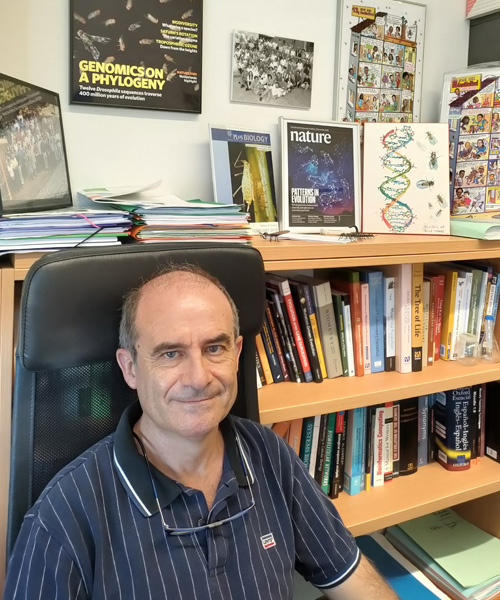
Julio Rozas is a Full Professor of Genetics at the Universitat de Barcelona (since 2009) and a member of the Bioinformatics Barcelona (BiB) board. He holds a PhD in Biology (1990) and a postdoctoral fellowship at Harvard University (1991-1992). His research focuses on molecular evolution mechanisms, genomic basis of adaptation, and chemosensory systems in invertebrates. He has developed bioinformatics tools like DnaSP and contributed to genome sequencing consortia. He has published over 113 articles in the last decade, including high-impact journals like Nature and Science, with an h-index of 40. He has supervised 10 doctoral theses and serves as an associate editor for BMC Genomics. Research interests include population genomics, comparative genomics, and bioinformatics. Notable achievements include the ICREA Academia Prize (2011) and the Excellence Award in PhD studies (1991).
Markus Haltmeier is a Professor in the Department of Mathematics at the University of Innsbruck. His research focuses on inverse problems, image reconstruction, and deep learning with applications in medical imaging, photoacoustics, and computational mathematics. He leads a group dedicated to advancing theoretical and practical solutions for challenges in non-destructive testing and medical diagnostics. His work integrates mathematical analysis with machine learning, addressing issues such as high-resolution imaging in scattering media and automated segmentation of cardiac structures. Key research areas include regularization techniques for inverse problems, self-supervised learning approaches for limited data scenarios, and computational methods for photoacoustic tomography. His contributions span both theoretical developments (e.g., inversion formulas for Radon transforms) and applied solutions (e.g., algorithms for cylinder liner wear assessment and myocardial infarct segmentation). Publications highlight advancements in neural network-based regularization, 3D medical image synthesis, and unsupervised learning frameworks for segmentation and registration. His research emphasizes bridging the gap between mathematical theory and real-world applications in healthcare and engineering.
Prof. Maurizio Musso is a Professor of Experimental Physics at the University of Salzburg , leading the Musso Group within the Faculty of Natural and Life Sciences . His research focuses on condensed matter physics, materials science, and Raman spectroscopy applications. The group specializes in the characterization of novel materials, including biofoams, nanomaterials, and sustainable biomaterials, leveraging advanced spectroscopic techniques such as Raman scattering and FTIR. Prof. Musso is also actively involved in teaching, contributing to courses in the Joint-Degree Bachelor’s Program in Engineering (PLUS-TUM), the Master’s program in Chemistry and Physics of Materials, and the Bachelor’s degree in Physics. Research activities emphasize multi-technique analysis of materials like tannin-furanic foams and nanostructured silicon, with applications in energy storage, environmental sensing, and industrial manufacturing. The Musso Group collaborates on projects related to sustainable materials development, plasmonic device fabrication, and electrochemical systems. Their work bridges fundamental research with practical applications, such as wastewater filtration and renewable energy solutions. Prof. Musso’s team includes researchers like Dr. Sonja Gamsjäger (visiting scientist), Gebhard Sabathi (MSc/Ing.), and Dr. Paolo Sereni (Senior Lecturer). They utilize state-of-the-art facilities for material synthesis, characterization, and nanofabrication. Current studies explore machine learning-driven data validation in Raman spectroscopy and the structural dynamics of polymers under varying conditions. Notable projects include the IN-CIMa initiative for smart material characterization and the PLUS Research programs on eco-sustainable materials. Prof. Musso’s contributions to Raman spectroscopy and material science have positioned him as a leader in experimental physics and sustainable technology innovation.
Anna Beer is a researcher in the Faculty of Computer Science, specializing in data mining and machine learning with a focus on density-based clustering, spectral clustering, and interactive clustering frameworks. She holds a BSc and MSc in computer science and maintains an ORCID profile (https://orcid.org/0000-0002-6890-997X) for her research contributions. Research Themes: Development of clustering algorithms (e.g., DISCO, Scar, LUCKe), fairness in density-based clustering (FairDen), and applications to molecular dynamics and climate research (DROPP). Collaborations: Works with colleagues like Ira Assent, Christian Plant, and Lars Krieger, with recent contributions to conferences like ICLR 2025. Activities: Presented research on density-connectivity distance at a 2023 oral contribution. Publications: 9 publications since 2019, including 3 in 2025 and 6 in 2024, covering topics from cluster evaluation to deep active learning strategies.
Radu Ioan Bot is a Professor and Dean of the Faculty of Mathematics at the University of Vienna, where he also serves as Head of the Department of Mathematics. His primary affiliations include the Department of Mathematics (Oskar-Morgenstern-Platz 1, 1090 Wien) and the Research Network Data Science (Währinger Straße 29, 1090 Wien). Bot's research centers on optimization theory with emphasis on convex/nonconvex optimization, monotone operators, and dynamical systems. He develops fast algorithms for variational inequalities and monotone inclusions by bridging continuous-time dynamics with discrete optimization methods. His work frequently addresses bilevel optimization, Tikhonov regularization, and second-order dynamics, yielding accelerated convergence rates for complex problems. Analysis of his 15 most recent publications (2023-2025) reveals dominant trends in time-scaling techniques, vanishing damping dynamics, and structured splitting methods. Key contributions include unifying Nesterov acceleration with Heavy Ball dynamics, developing reflected forward-backward algorithms for constrained optimization, and establishing strong convergence guarantees for monotone operator flows. These advances demonstrate consistent innovation in accelerating optimization while maintaining theoretical rigor. No scientific awards were mentioned in the provided source material. Details regarding student advising and research grants were not specified in the available information, though his leadership roles as Dean and Department Head indicate significant administrative responsibilities alongside active research. Bot participates in the University of Vienna's Research Network Data Science, suggesting interdisciplinary engagement in data-driven methodologies with potential applications in machine learning and computational mathematics.
Alexander Selzer is a PreDoc Researcher in Databases and Artificial Intelligence at Vienna University of Technology. His research focuses on query optimization, database systems, and AI-driven data processing. His work bridges theoretical computer science and practical database engineering, emphasizing efficient algorithms for modern data challenges. Recent projects explore machine learning applications in query performance and distributed computing frameworks. He mentors students in database optimization research, including projects on structure-guided query techniques and SQL-based system enhancements.