Cezara Drăgoiمشاهده پروفایل
پژوهشگر
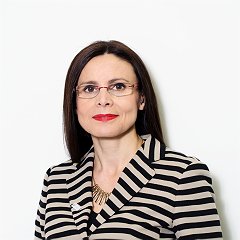
Cezara Drăgoi serves as a Researcher (Chargé de Recherche) at INRIA with dual affiliation at École Normale Supérieure's Department of Computer Science and CNRS. She maintains active roles in major programming language conferences including PLDI, POPL, and SPLASH where she contributes to program committees and steering groups, demonstrating her standing in the formal methods community. Her research program focuses on automated formal verification through abstraction techniques, specifically targeting data structures across the spectrum from sequential implementations to distributed systems. Drăgoi develops logic-based frameworks that enable Hoare-style reasoning about content and consistency properties, with particular expertise in identifying suitable fragments of first-order and separation logic for static analysis. Her work bridges theoretical foundations with practical verification challenges in both single-threaded and concurrent environments. Publication trends reveal a clear evolution from foundational work on shape analysis for sequential data structures toward increasingly complex distributed systems verification. This progression culminated in her development of PSync - a domain-specific language for fault-tolerant distributed algorithms with integrated verification capabilities - demonstrating her ability to create practical abstractions that make verification tractable for real-world systems. Steering Committee Member, Static Analysis Symposium (SAS 2025) Program Committee Co-Chair, VMCAI 2023 Multiple program committee roles at PLDI (2017, 2020), POPL (2016-2023), ECOOP (2019), and SPLASH (2020-2024) Session chair for SAS 2021 and VMCAI 2019 Drăgoi actively mentors emerging researchers through internship and PhD opportunities in specialized areas including Byzantine consensus verification (SABC project) and refinement techniques for fault-tolerant asynchronous code (RFTA project). She has developed two influential verification tools: CELIA (a Frama-C plugin for C program verification handling both data and structural properties) and PSync (a language with verification engine for distributed algorithms). Her teaching includes graduate-level courses on abstract interpretation at Université Paris Diderot. She leads verification research within the INRIA/ENS collaboration, focusing on making static analysis tractable for complex distributed systems through innovative synchronous programming abstractions. Current work targets verification challenges in consensus algorithms and communication-closed protocols, with emphasis on bridging theoretical soundness with practical applicability.