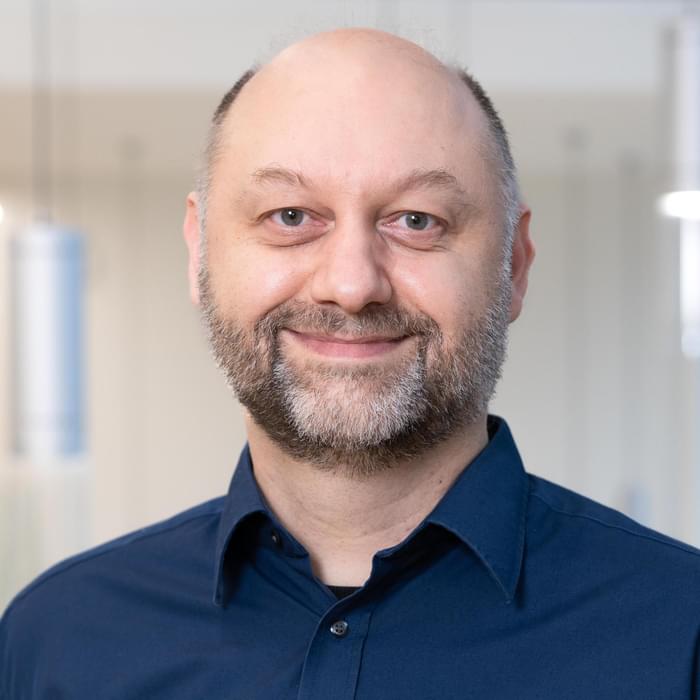
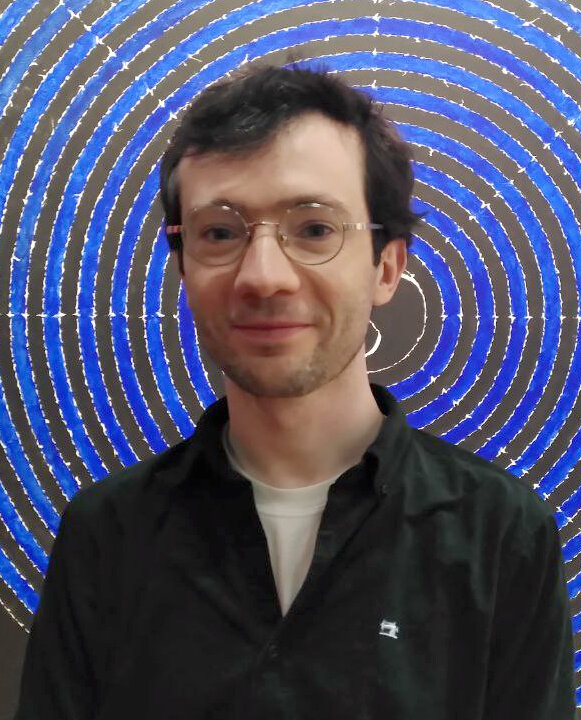
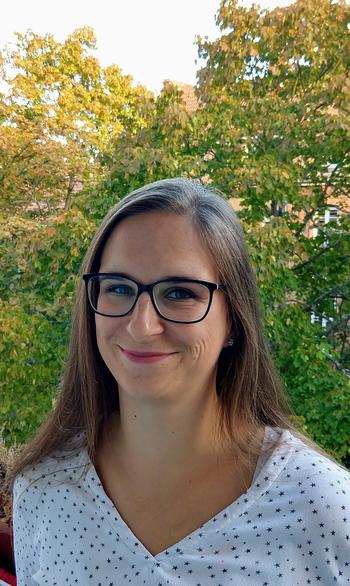
Prof. Dr. Peter Müller is a Professor of Mathematics at the University of Würzburg, leading the Chair of Mathematics I (Algebra). He is affiliated with the Institute of Mathematics and is based at Campus Hubland Nord, Emil-Fischer-Straße 30. His research focuses on algebraic structures, finite groups, Galois theory, coding theory, and geometric configurations. He actively contributes to the Algebra Seminar and supervises research within his team. Research interests include permutation polynomials, group actions, finite field applications, and combinatorial geometry. His recent work explores topics like Segre’s theorem on ovals, Kakeya sets in finite vector spaces, and Galois groups of multivariate polynomials. Contact: peter.mueller@uni-wuerzburg.de | Office: Building 30 (Mathematics West), Room 03.03 | Phone: +49 931 31-85012
Alexey Bufetov is a Professor at Leipzig University , supported by an ERC Starting Grant 'Integrable Probability' (2022–2027). Previously, he held roles as W2-Professor (Bonn Junior Fellow) at the Hausdorff Center for Mathematics (2018–2021) and CLE Moore Instructor at MIT (2015–2018). He completed his Ph.D. in 2015 under advisor G. Olshanski. His research focuses on Probability Theory , Mathematical Physics , and Combinatorics , with emphasis on stochastic particle systems, integrable probability, random matrix theory, and asymptotic analysis. His work bridges algebraic structures (e.g., representation theory) with probabilistic methods, addressing topics like exclusion processes, vertex models, and limit shape phenomena. Recent articles highlight contributions to ASEP dynamics, Mallows measures, and Yang-Baxter integrability. His work often intersects with statistical mechanics and combinatorial identities. No scientific awards are explicitly listed, though his ERC grant underscores research impact. Advising and grants include ERC support and collaborations with institutions like Bonn University. His research outputs span 20+ years, with a focus on advancing probabilistic frameworks for complex systems.
Prof. Bernd Finkbeiner is a faculty member at CISPA Helmholtz Center for Information Security and holds a Professorship in Computer Science at Saarland University. He earned his Ph.D. in 2003 from Stanford University. Leading the Reactive Systems Group since 2003, now part of CISPA, his research focuses on ensuring safety and security in computer systems through formal methods like specification, program synthesis, and verification. Key projects include output-sensitive reactive synthesis (OSARES), hyperproperty logics (HYPER), and real-time monitoring (RTLOLA). Education : Ph.D. in Computer Science, Stanford University, 2003 His research interests span hyperproperties, formal verification, runtime monitoring of cyber-physical systems, and distributed synthesis. He has pioneered tools like StreamLAB and AutoHyper for hyperproperty analysis. His work on temporal causality and information-flow guided synthesis addresses challenges in distributed and secure systems. Key Achievements : Recipient of ERC Advanced Grant 2022–2027 for Project HYPER Best Paper Awards at ICALP 2009, FSEN 2007, and VMCAI 2012 Leader of the Reactive Systems Group at CISPA Grants & Funding : ERC Advanced Grant supporting research on hyperproperties His lab develops cutting-edge tools for formal methods, including BoSy for bounded synthesis and RTLola for runtime verification. Current research explores compositional synthesis, explainable reactive systems, and robust monitoring for medical and autonomous systems.
Dan Suciu is a Professor at the University of Washington, specializing in database systems and theoretical computer science. His research focuses on query optimization, cardinality estimation, information theory, and the intersection of databases with programming languages and fairness concerns. He has collaborated extensively with researchers like Magdalena Balazinska, Mahmoud Abo Khamis, and Christopher Ré. His work spans foundational database theory, algorithm design, and practical systems. Key areas include worst-case optimal joins, equality saturation for query optimization, and applying information theory to cardinality estimation. Recent projects explore causal reasoning in databases and algorithmic fairness through database repair techniques. Publications highlight advancements in join algorithms, estimation frameworks (e.g., SafeBound, LpBound), and theoretical results in semiring-based query evaluation. His work bridges theory and practice, influencing both academic research and industrial systems. Notable contributions include the Seattle and Cambridge reports on database research, outlining field priorities. His systems like Mosaic and Themis address open-world data and approximate query processing.
Xiang Fu is a researcher in the Department of Computer Science at Hofstra University, with affiliations to institutions including Georgia Southwestern State University, University of California, Santa Barbara, and Massachusetts Institute of Technology. His work spans formal verification of web services, software security, zero-knowledge proofs, and automated testing frameworks. His research interests include: Web Services Formal Verification Software Security Zero-Knowledge Proofs Automated Testing Software Engineering Recent publications focus on zero-knowledge auditing for financial systems, formal verification of web services, and secure software analysis. Notable tools developed include APOGEE for automated grading and WISEngineering for scalable online learning. No explicit scientific awards are documented in the provided data.
Oleg Sobchuk is a postdoctoral researcher at the Department of Human Behavior, Ecology and Culture, Max Planck Institute for Evolutionary Anthropology in Leipzig, Germany. He previously worked at the Max Planck Institute for the Science of Human History (now Max Planck Institute for Geoanthropology) in Jena, Germany from 2018 to 2023. Sobchuk studies the cultural evolution of arts, focusing on long-term patterns in the history of literature, film, and music. His research employs large digital libraries and artistic datasets (such as IMDb or Spotify), statistical models, and text mining techniques to analyze how artistic forms evolve over time. His work addresses fundamental questions including whether films have become more complex during the 20th century, if phylogenetic trees adequately model literary evolution, and what makes certain artworks 'canonical' and persistent throughout history. His research interests span across cultural evolution, digital humanities, and quantitative analysis of artistic traditions. He has published extensively on topics including literary and film evolution, cultural attraction mechanisms, and computational approaches to thematic analysis in fiction. His methodological approach combines large-scale data analysis with theoretical frameworks from evolutionary theory to uncover patterns in artistic production and transmission across generations. Sobchuk's scientific contributions reveal significant trends in cultural evolution, particularly regarding how artistic forms innovate, transmit, and persist over time. His work on first-mover advantage in music genres and the evolution of literature demonstrates how quantitative methods can illuminate previously obscured historical patterns in artistic development. As a collaborator, Sobchuk works with researchers like Olivier Morin and Bret Beheim, contributing to interdisciplinary projects that bridge humanities scholarship with computational science. His research represents an important contribution to building what he describes as 'a theory-driven quantitative history of culture.'
Max Planck is a Lecturer at the Max Planck Institute for Informatics (MPI-INF), specifically within the Department of Algorithms and Complexity. He co-organized the Winter 2020/21 course How To Clock Your Computer , focusing on theoretical aspects of synchronizing digital circuits. The course adopts a flipped classroom model emphasizing student-led discussions and problem-solving. His research interests center on addressing synchronization challenges in modern chip design through distributed solutions, blending CS theory with hardware realities. Course Role: Co-lecturer alongside Christoph Lenzen and others, overseeing a team of assistant lecturers and PhD student scribes. Research Focus: Clock domain synchronization, metastability mitigation, and gradient synchronization algorithms in distributed systems. Teaching Methodology: Weekly discussion sessions with guided exploration of topics like phase-locked loops and network synchronization. While no personal awards or publications are explicitly mentioned in the text, his academic contributions are reflected through course materials addressing cutting-edge challenges in chip design theory.
Anthony Widjaja Lin is a Full Professor (W3) in Theoretical Computer Science (Automated Reasoning) and Max-Planck Fellow at University of Kaiserslautern-Landau, Germany. Previously, he was an Associate Professor in Programming Languages at Oxford University Department of Computer Science and Governing Body Fellow at Kellogg College (2016-2019), and an Assistant Professor at Yale-NUS, Singapore (2014-2016). He completed his PhD in Informatics at University of Edinburgh in 2010 under Leonid Libkin (supervisor) and Richard Mayr (co-advisor). Dr. Lin's educational background includes: PhD in Informatics, University of Edinburgh (2010) MSc, University of Toronto BSc (Honours), Melbourne University Dr. Lin's research focuses on automated reasoning, particularly over strings, formal language theory, learning/synthesis, and foundations of machine learning. His work has significant applications in software verification, program synthesis, querying graph databases, and computer security. He leads the development of the OSTRICH string solver, which won the QF_S (Single Query Track) in SMT-COMP 2023. His research has evolved from foundational work on string constraint solving to applications in verification of string-manipulating programs and more recently to connections with machine learning models like transformers. Dr. Lin has received numerous prestigious awards including an ERC Consolidator Grant (2023), Amazon Research Award (2021), ERC Starting Grant (2017), Google Faculty Award (2017), and the LICS Kleene Award (2010). Dr. Lin has advised several PhD students to completion, including Pascal Bergsträßer, Chih-Duo Hong, and Xuan-Bach Le, who have gone on to become Assistant Professors at institutions like National Chingchi University and Nanyang Technical University. He currently supervises multiple PhD students and postdocs working on string solving, automated reasoning, and verification. Dr. Lin leads the AV-SMP project (Algorithmic Verification of String-Manipulating Programs), which was supported by an ERC Starting Grant (2017-2022) and an Amazon Research Award (2021). His research group develops tools like OSTRICH, SLOTH, and CertiStr for string constraint solving and verification.
Kristin Knorr is a Scientific Associate at the Institute of Computer Science within the Department of Mathematics and Computer Science at Freie Universität Berlin. Her affiliation includes roles in managing ongoing academic projects and supervising theses. She is involved in theoretical computer science research, with contributions to areas like algorithms and discrete mathematics. Her work is integrated with the university's broader research groups in theoretical computer science. Kristin contributes to academic infrastructure through her role in organizing events such as the 'Lunchtime seminar on theoretical computer science' and managing the institute's project archives. Contact details include her office at Takustraße 9, Room 122, Berlin, and professional phone/fax numbers.
Ruben Mayer is a prominent researcher in distributed systems, graph processing, and blockchain technology, affiliated with the University of Stuttgart. He holds a PhD from the same institution (2018) and has authored over 100 publications in top-tier conferences and journals such as SIGMOD, VLDB, and ACM Computing Surveys. His work focuses on scalable deep learning, federated learning, and edge computing, with applications in distributed systems and privacy-preserving AI. Key research interests include optimizing distributed infrastructure for graph neural networks, exploring cross-cloud training challenges, and advancing federated learning methodologies. He has contributed to foundational studies on blockchain optimization, edge computing reliability, and ethical AI compliance with regulations like the European AI Act. Recent work highlights include WaveGAS: Waveform Relaxation for Scaling Graph Neural Networks (2025) and A Survey on Efficient Federated Learning Methods for Foundation Model Training (2024), demonstrating his leadership in advancing scalable machine learning systems. His research bridges theoretical insights with practical system design, addressing critical challenges in modern distributed infrastructures.
Athirai Aravazhi Irissappane is an Assistant Professor at Nanyang Technological University's College of Computing and Data Science, School of Computer Science and Engineering. With a PhD in Trust oriented decision making via POMDPs completed in 2016, they have established themselves as a prominent researcher in multi-agent systems and reinforcement learning. Their academic journey shows a clear progression from foundational work in trust management to cutting-edge research in deep reinforcement learning frameworks. Dr. Irissappane's research interests focus on multi-agent systems , reinforcement learning , trust management , and recommender systems . They have made significant contributions to the field of multi-objective reinforcement learning, developing frameworks that address complex policy distributions and cooperative behavior in multi-agent environments. Their work bridges theoretical advances with practical applications, particularly evident in their contributions to the RecSys Challenge 2023. Analysis of their recent publications (2020-2024) reveals a strong emphasis on Advanced reinforcement learning architectures for multi-agent cooperation Privacy-preserving recommendation systems Automated data quality improvement for recommendation tasks Scalable frameworks for reinforcement learning research These works demonstrate increasing sophistication in handling complex decision-making scenarios while addressing practical constraints like computational efficiency and privacy concerns. Dr. Irissappane has been actively involved in major academic initiatives including the RecSys Challenge 2023 and has contributed to comprehensive guides on multi-objective reinforcement learning that have become valuable resources for the research community. Their collaborative work spans multiple institutions and has resulted in publications in top-tier venues including IEEE Transactions, Autonomous Agents and Multi-Agent Systems journal, and conference proceedings of AAAI, IJCAI, and AAMAS.
Katarzyna Rycerz is an academic researcher specializing in quantum computing, high-performance computing (HPC), and optimization algorithms. Her work spans hybrid quantum-classical systems, complex network analysis, and multiscale simulations. Collaborating with institutions such as AGH University of Science and Technology (inferred via co-authors like Marian Bubak), her research focuses on advancing quantum algorithms for optimization problems, quantum annealing applications, and software frameworks for distributed computing environments. Her notable contributions include developing libraries like QHyper for hybrid quantum-classical optimization, analyzing quantum walk-based image segmentation, and exploring the application of quantum computing to classical problems like the Traveling Salesman Problem. She has also contributed to foundational studies in quantum game theory and functional programming paradigms in HPC. Rycerz's publications reflect a sustained focus on interdisciplinary research, bridging quantum mechanics, computer science, and applied mathematics. Her work often addresses practical challenges in computational efficiency, algorithm design, and scalable simulation frameworks for complex systems.
Dr. Benjamin Winter is a Researcher at the Department of Computer Science at Beuth University of Applied Sciences Berlin. He holds a PhD in Computer Science (2025) and a Master's in Media Informatics (2018) from the same institution. His research focuses on Reinforcement Learning, Imitation Learning, and Natural Language Processing, particularly in healthcare applications and transformer models. He contributed to the FashionBrain project analyzing European fashion through Big Data techniques and co-developed KIMERA and VisBERT tools for transformer analysis. Key research interests include autonomous driving, healthcare NLP, and domain adaptation of language models. His work spans from foundational research in transformer networks to applied projects in clinical decision-making and media bias analysis. Dr. Winter has published extensively on transformer architectures, including layer-wise analyses and visualization techniques. His work on reinforcement learning in competitive scenarios, such as StarCraft strategies, demonstrated early success in AI surpassing human experts.
Sebastian Peitz is Professor (previously Assistant Professor) at Paderborn University's Department of Computer Science, leading the Data Science for Engineering group. He obtained his PhD in Multiobjective Optimization from Paderborn University and MSc in Mechanical Engineering from RWTH Aachen. His research develops computational methods for multiobjective optimization, optimal control, and machine learning with applications in fluid dynamics, autonomous systems, and industrial processes. He leads the BMBF-funded Multicriteria Machine Learning group. Research trends show consistent focus on Koopman operator theory, reinforcement learning applications in control systems, and physics-informed machine learning across publications. Achievements include the 2019 PRECEDE Best Paper Award and leadership in international optimization conferences.
Carlo Camilloni is an Assistant Professor at the University of Milano, leading the Integrative Structural Biology research group. Previously, he held a Rudolf Mößbauer Tenure Track position at TUM (2015–2017) and conducted postdoctoral research at the University of Cambridge. His research focuses on molecular biophysics, computational methods for structural biology, and the application of free-energy techniques to study protein dynamics. Education: PhD in Physics (2008, University of Milano); postdoctoral training at Rottapharm and the University of Cambridge under Prof. Michele Vendruscolo. Key awards include the Marie Curie Intra-European Fellowship (2011) and FEBS Fellowship (2009). Research emphasizes protein folding, aggregation, and misfolding mechanisms, leveraging computational tools like the PLUMED package. Applications span disease-related processes such as amyloid formation and signaling regulation. Focus: Integrative Structural Biology Techniques: Metadynamics, NMR-guided simulations, Bayesian inference Collaborations: University of Cambridge, TUM-IAS