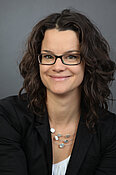
Katrin Dennerlein is a Senior Lecturer at the Chair of Computational Philology and Modern German Literary History, Faculty of Philosophy, University of Würzburg. She specializes in digital humanities, computational philology, and emotion analysis in German literary drama. Her work bridges historical text digitization with modern algorithmic analysis, particularly through projects like Drama Corpora and Emotions in Drama. Projects: Leads the Drama Corpora initiative for digitizing cultural heritage, focusing on Hamburg Gänsemarktoper libretti (1678–1730) using OCR4all. Research Focus: Emotion analysis in German drama (1650–1815), sentiment classification with transformer models, and narratology in the context of spatial turn. Collaborations: Works with Dr. Christian Reul and the Center for Philology and Digitality, supported by DFG funding. Her recent publications emphasize emotion dynamics in historical plays, leveraging machine learning to analyze genre-specific patterns. She also contributes to methodological advancements in sentiment annotation and digital preservation of cultural memory through dramatic texts.
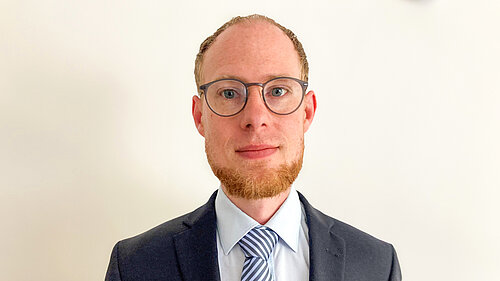
Dr. Jens Palkowitsch-Kühl serves as a Lecturer at the Chair of Protestant Theology II with a focus on Religious Education and Didactics of Religious Education within the Institute for Protestant Theology and Religious Education at Julius-Maximilians-University Würzburg. He maintains concurrent academic appointments including Acting Professor of Ethics and Education at the Evangelical University of Applied Sciences Darmstadt (2023-2024), and teaching positions at Ludwigsburg University of Education and Protestant University of Darmstadt. His professional roles extend to digital leadership positions within the Evangelical Lutheran Church in Bavaria as E-Learning Coordinator and former Digital Education Officer. Bachelor of Arts in Social Work with community education/diaconal work qualification (Evangelical University of Applied Sciences Darmstadt, 2008-2012) Master of Arts in Religious Education - Protestant Religious Education (Evangelical University of Applied Sciences Darmstadt, 2012-2013) PhD in Religious Education with dissertation on 'Religious education teachers in digitalization processes' (2015-2020) Dr. Palkowitsch-Kühl's research focuses on the intersection of digital media and religious education, with particular emphasis on religious socialization in mediatized spaces, digital media education, and ICT applications in religious contexts. His work bridges theological inquiry with practical educational applications, examining how emerging technologies reshape religious learning environments and experiences. He investigates how youth navigate religious identity formation within digital landscapes and develops pedagogical approaches for integrating new media into religious instruction. His recent publications reveal a clear trajectory toward increasingly sophisticated digital applications in religious education, with growing attention to artificial intelligence, virtual reality, and game-based learning. The research demonstrates a methodological shift from analyzing existing digital media integration toward developing and testing innovative pedagogical frameworks like the reliGlobal approach and VR-based learning environments. His work consistently addresses both theoretical foundations and practical implementation challenges in religious education contexts. Dr. Palkowitsch-Kühl actively contributes to the RELab digital research initiative and the Center for Anti-Semitism Education, collaborating with colleagues like Prof. Dr. Ilona Nord on projects examining religious education in mediatized worlds. His interdisciplinary approach connects religious studies with media theory, educational psychology, and digital humanities to address contemporary challenges in religious education. His teaching portfolio spans multiple institutions and covers topics including 'Media & Methods in Religious Education,' 'Digital Games in Religious Education,' and 'Religious Education Excursions' focused on VR, gamification, and digital socialization. He has developed specialized courses on serious moral games, AI applications, and digital media competencies for religious educators, reflecting his commitment to preparing future religious educators for digital contexts.
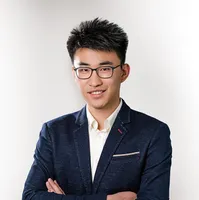
Xiao Bi, M.Sc. , is a Tutor and researcher at the Professorship for Environmental Sensors and Modeling at the Technical University of Munich (TUM) . He is based in room N1506B and contributes to atmospheric pollution research through instrument development, data analysis, and teaching in environmental sensing. Research Focus : Development of NO 2 and air pollutant sensors using CAPS technology, analysis of ground-based and satellite data during the COVID-19 pandemic, and implementation of in-situ and mobile measurement systems in Munich. Teaching Role : Tutor for Lab Courses on Innovative Atmospheric Sensing Devices, Advanced Seminars in Environmental Sensing, and Joint Practical Courses on Electromagnetic Sensors and Measurement Systems. His publications (2018–2022) highlight trends in atmospheric pollution monitoring , sensor technology for greenhouse gases, and machine learning applications in artificial olfaction. Notable collaborations include work with Prof. Jia Chen and Frank Keutsch . Xiao Bi has been recognized with the Hans Fischer Fellowship , underscoring his contributions to urban environmental research and sensor innovation.
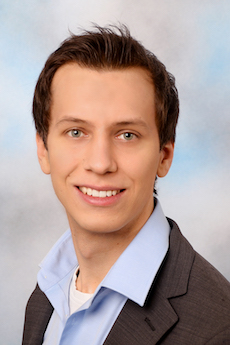
Dominic Henze is a Professor at the Technical University of Munich (TUM), affiliated with the Faculty of Informatics and the Chair of Software Engineering . He leads research initiatives in Cyber-Physical Systems , Smart Environments , and Machine Learning Applications , with a particular focus on Fog Computing architectures. His research spans theoretical frameworks and real-world implementations, including collaborations with institutions like Carnegie Mellon University and industry partners such as Siemens AG and Zeiss IMT . His work addresses challenges in resource allocation , predictive maintenance , and blockchain integration within industrial contexts. Dr. Henze's publications reveal a consistent focus on Fog Computing architectures, IoT resource management, and educational software engineering. Key trends include self-organizing network systems , decentralized supply chain traceability , and smart environment coordination . He has advised numerous students on topics ranging from QoS negotiation to autonomous drone coordination . As an educator, he has taught multiple iPraktikum courses and seminars on iOS development and Agile Project Management since 2014, with publications exploring team composition strategies and distributed programming pedagogy.
Bennet Gebken is a researcher at the Department of Mathematics , Technical University of Munich , affiliated with the Chair of Mathematical Optimization led by Prof. Ulbrich. His work focuses on nonsmooth and multiobjective optimization, particularly in PDE-constrained problems and numerical continuation methods. Research Interests: Bennet specializes in nonsmooth optimization, multiobjective optimization, and regularization techniques. His recent work explores convergence analysis in nonsmooth settings, second-order gradient sampling, and inverse optimization methods for data-driven decision criteria. Publications: His research spans topics like PDE-constrained multiobjective optimization, L1 penalty terms, and the hierarchical structure of Pareto critical sets. Key trends include reduced-order modeling, computational efficiency, and the interplay between optimization and machine learning. Contact: bennet.gebken@tum.de . Based at Boltzmannstr. 3, Garching b. München, Germany.
Martin Slepicka is a researcher at the Chair of Computing in Civil and Building Engineering at the Technical University of Munich. His work focuses on bridging Building Information Modeling (BIM) with additive manufacturing and digital twinning technologies. Department: Civil and Building Engineering Research Group: Digital Twinning, Construction Robotics Research Highlights: Slepicka specializes in: Integrating BIM with digital fabrication workflows Developing closed-loop systems for additive manufacturing Real-time data exchange in construction robotics Automated parameter calibration using machine learning Semantic enrichment of BIM through multi-sensor platforms Academic Contributions: Recent publications demonstrate expertise in: Extrusion-based additive manufacturing control Non-planar path planning for 3D-printed components Autonomous robot grasping solutions From fabrication models to simulation frameworks Laboratories: Active in: BIM-Lab Robotic Fabrication Lab Mobile Machinery development
Sebastian Brüggemann is a German legal scholar specialising in Internet, data-protection and IT law. Since 2013 he has been a part-time lecturer (Lehrbeauftragter) at the Faculty of Law of Eberhard Karls University of Tübingen, and he holds parallel teaching appointments in data-protection and IT law at the Universities of Applied Sciences in Kehl and Ludwigsburg as well as at ZHAW School of Management and Law in Winterthur, Switzerland. In private practice he works as in-house counsel (Syndikusrechtsanwalt) for a large international IT company, focusing on data-protection and technology law. Education: 2003-2011: Studies of Law and General Rhetoric, Eberhard Karls University of Tübingen 2009: First State Law Examination, Tübingen 2011: Magister Artium in General Rhetoric, Tübingen 2010-2012: Legal clerkship (Referendariat), including stages at the German University of Administrative Sciences Speyer and eco – Verband der Internetwirtschaft 2012: Doctorate in Law (Dr. iur.), Tübingen – dissertation on third-party disclosure claims against Internet providers in copyright enforcement 2013: Admission as attorney (Rechtsanwalt) 2013-2015: Part-time LL.M. in Information Technology Law, Carl von Ossietzky University of Oldenburg Research interests span the intersection of law and digital technology: data-protection compliance under the GDPR, cybersecurity regulation, copyright in digital media, network neutrality, M2M/IoT legal issues, and the legal framework of behavioural advertising. His work frequently analyses German, European and comparative US developments. He has authored a monograph, numerous commentaries to GDPR/BDSG provisions, model IT contracts, and more than two dozen peer-reviewed articles and case notes since 2013, identifying recurring themes such as data portability, ISP liability, streaming and copyright, and the challenges of Industrie 4.0. Professional memberships & science communication: editorial board of Privacy in Germany , core team member of the Telemedicus IT-law portal, member of IAPP, DGRI and GRUR, and co-author of sector guidelines issued by Bitkom and eco association. There is no indication of supervised doctoral or master’s students in the supplied material; his teaching activities concentrate on specialised continuing-education courses and part-time lectures.
Dr. Slava Ziegler is a Project Group Leader at the Department of Chemical Biology , Max Planck Institute of Molecular Physiology in Dortmund, Germany. His research focuses on identifying bioactive small molecules and elucidating their molecular targets and mechanisms of action through chemical proteomics, biochemical, biophysical and genetic approaches. Academic Appointments : Project Group Leader, Chemical Biology (2016-present) Education : Diploma in Biochemistry (Ruhr University Bochum), PhD in Biochemistry (MPI & Ruhr University), Postdoc at University Hospital Düsseldorf Research Interests center on: Phenotypic screening using Cell Painting assays Target identification for bioactive compounds Proteome and lipidome profiling Developmental signaling pathway inhibition Glucose transporter and glutaminase targeting Chemical genetics in cancer metabolism Notable Contributions include developing high-throughput screening workflows, discovering novel Hedgehog and TRPC inhibitors, and creating chemical probes for: Dihydroorotate Dehydrogenase RHOGDI PI4KIIIß IDO1 TAF1 Bromodomain 5-Lipoxygenase Collaborations with researchers across Europe and Japan have yielded significant insights into: Autophagy regulation Lysosomal membrane repair Microtubule destabilization Proteasome inhibition Neutrophil extracellular traps Embryonic stem cell reprogramming Contact : slava.ziegler@mpi-dortmund.mpg.de | +49 231 133-2424
Peiman Shah Nazar is a Researcher at the Institute for Medical Device Technology, University of Stuttgart, Germany. He holds an M.Sc. in Mechatronics and Robotic System Design from Azad University, Ahar Branch, Iran, and is currently pursuing his Dr. Ing. at the University of Stuttgart. Research focus: Rehabilitation robotics for ankle, hip, and knee joints Expertise in intelligent control systems and biomedical signal processing His work emphasizes sustainable medical device design and optimization of robotic rehabilitation systems using neural networks and genetic algorithms. Recent publications highlight advancements in home-care physiotherapy robotics and chaotic control methodologies. At the Institute for Medical Device Technology, he contributes to reprocessing procedures and sustainable device development in laboratory settings.
Prof. Dr. Uwe Schlink is a leading Professor at the Institute of Meteorology, University of Leipzig, and Senior Researcher at the Department of Urban & Environmental Sociology, Helmholtz Centre for Environmental Research - UFZ. His work focuses on urban climate research , thermal comfort , urban air quality , and statistical modelling with Bayesian inference. He leads the working group on urban climate and personal exposure, bridging environmental science with societal resilience. Affiliation: University of Leipzig (since 2009) and UFZ (since 2013) Research Themes: Urban heat islands, personal exposure to environmental stressors, statistical climate models, and health impacts of air pollution His research spans environmental health , urban climatology , and resilient city planning , with significant contributions to understanding thermodynamic interactions between urban structures and climate. He has pioneered methods for high-resolution land surface temperature analysis and green infrastructure performance in mitigating heat stress. Recent publications (2023-2025) highlight his work on PM2.5-bound PAH exposure , anthropogenic heat impacts in Beijing, and Asian plateau climate dynamics . Collaborative projects address urban heat stress , green roofs , and health-focused urban planning .
Georgina Hall serves as Assistant Professor of Decision Sciences at INSEAD, holding the prestigious Patrick and Valentine Firmenich Fellowship for Business and Society. She officially joined the institution in September 2019 after completing a postdoctoral position at INRIA's DYOGENE team from January to September 2019. Her educational background includes a PhD from Princeton University's Department of Operations Research and Financial Engineering (2018), where she was a Gordon Y.S. Wu fellow under Professor Amir Ali Ahmadi's supervision. She earned both her Bachelor of Science (2011) and Master of Science (2013) from Ecole Centrale Paris, where she was valedictorian. Dr. Hall's research focuses on optimization theory, particularly polynomial optimization , semidefinite programming , and convex relaxations of NP-hard problems . Her work bridges theoretical mathematics with practical applications in business decision-making. She has made significant contributions to shape-constrained regression using sum of squares polynomials, demonstrating how semidefinite programming hierarchies can effectively fit shape-constrained polynomials to noisy data. Her recent publications reveal a research trajectory that increasingly connects optimization theory with machine learning applications and supply chain decision-making. The 2025 Operations Research paper on shape-constrained regression represents her theoretical contributions, while the Management Science paper demonstrates practical business applications of her optimization framework. Her scientific recognition includes: Médaille de l'Ecole Centrale from the French Académie des Sciences Princeton School of Engineering and Applied Sciences Award for Excellence 2016 Informs Computing Society Prize for Best Student Paper Multiple teaching awards from Princeton University Patrick and Valentine Firmenich Fellowship for Business and Society Dr. Hall teaches Probability and Statistics at the PhD level and has received significant recognition for her teaching excellence, including the Princeton University's Engineering Council Teaching Award and the Excellence in Teaching Award from the Princeton Graduate School. Her research has practical applications in areas including optimal transport maps for color transfer tasks and estimating optimal value functions for conic programs, with real-time applications in inventory management contract negotiation.
Thorsten Vitt is a Researcher at the Chair of Computational Philology and Modern German Literary History within the Faculty of Philosophy at the University of Würzburg . His role includes academic advising for Digital Humanities degree programs, IT support for the Chair, and technical leadership in digital edition projects such as the Faust Edition and TextGrid . He is affiliated with the ZPD (Zentrum für Philologie) and works on computational methods for literary analysis. Current Projects : Faust Edition, ESF-ZDEX, TextGrid, DARIAH-DE Technical Expertise : Markup Languages, Linguistic Query Languages, Database Systems Research Interests : Digital Humanities, Computational Philology, Authorship Attribution, Topic Modeling, Digital Editions, Data Visualization, Software Development for Humanities. His work bridges computer science with literary studies, focusing on algorithmic analysis of historical texts and digital scholarly editions. Publications highlight his contributions to computational analysis of Goethe's Faust, topic modeling tools, and distance measures like Burrows' Delta. He has developed software libraries for stylometric analysis and collaborates on infrastructures like TextGrid and DARIAH-DE. Education : Completed a diploma thesis on "Queries to Complex Corpora" (2005) and a student research paper on "Storing Linguistic Corpora in Databases" (2004) at Humboldt University Berlin. Technical Leadership : Deputy IT support for the Chair, contributor to GitHub repositories including pydelta and faust-web , and developer of tools for topic modeling and digital editions.
Alfonso Gambardella is a Professor of Corporate Management at Bocconi University in Milan, holding a PhD in Economics from Stanford University (1991). He serves as Department Editor of Business Strategy at Management Science and leads high-impact research in technology strategy and innovation management. His educational foundation at Stanford underpins decades of influential scholarship, including the widely cited MIT Press book Markets for Technology (co-authored with Arora and Fosfuri). Gambardella's research integrates theoretical models with empirical analysis to explore causal reasoning in organizational performance, theory-driven strategic decisions, and microfoundations of high-impact choices. He pioneers evidence-based approaches through randomized trials and large-scale replications in entrepreneurial contexts. Recent publications reveal a cohesive trajectory toward scientific innovation management, emphasizing experimental validation of strategic frameworks and decision-making processes. His work bridges organizational economics with practical business applications, particularly in technology-intensive sectors. ERC Advanced Grant (2020) for "A Scientific Approach to Innovation Management" Extensive participation in European Commission research projects Gambardella secures competitive funding through major grants including the ERC award and EU research initiatives. While student mentorship details are unreported, his leadership in multi-author projects (e.g., with Camuffo, Pignataro) indicates active research team coordination and junior scholar development.
Philip Taranto is a Lecturer (Assistant Professor) at The University of Manchester's Physics & Astronomy department, where he leads the Quantum Information & Spatiotemporal Phenomena (QuISP) research group. He also serves as an editor for the Quantum journal. Originally from Melbourne, Australia, Taranto completed his undergraduate studies and Masters at Monash University under Dr. Kavan Modi and Dr. Felix A. Pollock, focusing on memory effects in open quantum systems. He then earned his PhD at the University of Vienna under Dr. Marcus Huber, studying quantum thermodynamics and complex temporal correlations. Following this, he held a JSPS Postdoctoral Fellowship at the University of Tokyo in Dr. Mio Murao's group before joining the University of Manchester. Taranto's research centers on quantum complexity, exploring how quantum systems' intricate behaviors can be harnessed for computational advantages. His primary focus areas include quantum information theory, open quantum dynamics, quantum thermodynamics, quantum foundations, correlations & entanglement, stochastic & complex processes, and quantum computation & simulation. His methodological approach heavily relies on the framework of higher-order quantum operations—transformations that act upon transformations themselves—which has proven valuable for developing optimal quantum interactive strategies, clarifying memory effects in open quantum processes, and analyzing foundational notions like causality. He also employs tensor networks, graphical calculus, and semidefinite programming in his research. His recent publications reveal a strong focus on quantum thermodynamics, higher-order quantum operations, and quantum memory effects. Taranto has made significant contributions to understanding the relationship between Landauer's principle and Nernst's unattainability principle in quantum cooling, developing protocols for efficient quantum system cooling with finite resources, and characterizing multi-time quantum processes with classical memory. His work on the quantum switch and higher-order quantum operations has advanced our understanding of quantum causality and indefinite causal order. JSPS Postdoctoral Fellowship (2022-2025) Editor of Quantum Journal (since June 2024) Taranto actively collaborates with multiple research groups globally, including the Murao group at the University of Tokyo, the Huber group at TU Wien, and the Modi group at SUTD Singapore and Monash University. He has worked with prominent researchers such as Simon Milz, Jessica Bavaresco, Marco Túlio Quintino, Felix Binder, Martí Perarnau-Llobet, Patryk Lipka-Bartosik, and Andrea Smirne. He is currently accepting PhD students and encourages collaboration with researchers sharing similar interests. Taranto is also committed to social responsibility, advocating for open science, climate justice, and empowering historically excluded and marginalized groups.
Gregory Gay is an Associate Professor in the Interaction Design and Software Engineering division within the Department of Computer Science and Engineering at Chalmers University of Technology and the University of Gothenburg, Sweden. His academic profile spans numerous software engineering conferences where he has served as committee member, program chair, and active researcher since at least 2018. Dr. Gay's research focuses on the intersection of software engineering and artificial intelligence, with particular emphasis on: Software Testing and Analysis Search-Based Software Engineering AI for Software Engineering (AI4SE) AI Engineering Automation of development tasks Software Carbon Footprint and sustainability His recent publications demonstrate a strong trend toward applying AI and optimization techniques to software testing challenges, with increasing focus on sustainability aspects of software development. Many studies take an industrial perspective, examining real-world applications in automotive software systems. His work blends theoretical foundations with practical applications, making significant contributions to both academic research and industrial practice in software engineering. Dr. Gay has been actively involved in numerous top software engineering conferences including ASE, ICSE, ESEC/FSE, ISSTA, and ICST, serving on program committees and organizing tracks. His research methodology typically combines optimization, artificial intelligence, and machine learning to help developers deliver complex systems in a safe, secure, and efficient manner.