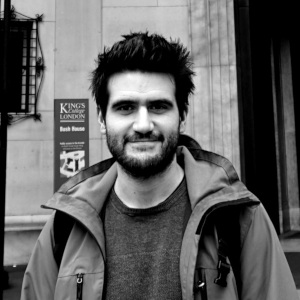
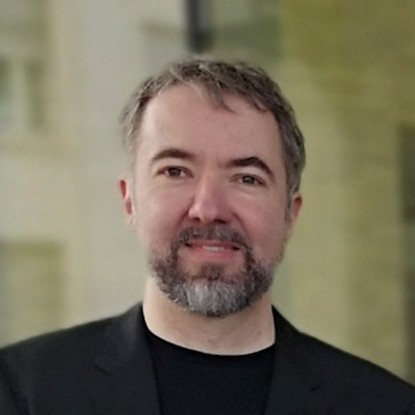
Óscar Oballe-Peinado is a professor at the Department of Electronics, School of Engineering, University of Málaga. His work focuses on tactile sensors, FPGA-based embedded systems, and robotics, particularly addressing crosstalk elimination, sensor calibration, and smart preprocessing techniques. He contributes to both academic research and educational innovations, including remote digital electronics laboratories. PhD in Electronics (University of Málaga, 2016) Active researcher in tactile sensor technology and FPGA implementations Supervisor of Raúl Lora Rivera's research on texture detection and compliance recognition His research explores advanced methods for tactile sensor optimization, including hysteresis correction, quantization error reduction, and compliance recognition algorithms. Recent publications (2023-2024) focus on smart tactile preprocessing and embedded FPGA implementations for robotics. The 2023-2024 articles emphasize his contributions to tactile sensor applications in robotic manipulation, texture detection, and compliance recognition using FPGA-based embedded systems. These works align with trends in smart sensor interfaces and real-time processing for robotics. Collaborated on improving remote digital electronics laboratories using Raspberry Pi 4 (2022) Developed FPGA-based tactile sensor suite electronics (2017)
Emanuel Vahid Towfigh is a Professor of Public Law, Empirical Legal Research and Law & Economics at EBS University of Business and Law in Germany. He holds the Chair in Public Law at EBS Law School and is Professor of Law & Economics at EBS Business School. Since October 2024, he serves as a Max Planck Fellow at the Max Planck Institute for Comparative Public Law and International Law in Heidelberg, where he heads the Center for Diversity in Law funded by Stiftung Mercator. He is also Director of the BRYTER Center for Digitalization & Law and supports the EBS Diversity & Refugee Law Clinic. Additionally, he is a Distinguished Scholar in Residence at Peking University's School of Transnational Law and a Research Affiliate at the Max Planck Institute for Research on Collective Goods. Having earned his doctorate from the University of Münster in 2005 with a thesis on religious communities (focusing on the Bahá'í faith), Towfigh completed his habilitation at the same university in 2014 with his work 'The Party Paradox.' His academic journey includes research positions at the Max Planck Institute for Research on Collective Goods (2007-2016), a Global Fellowship at NYU School of Law (2011/12), and a Visiting Professorship at the University of Virginia School of Law (2012/13). He served as Dean of EBS Law School from 2018 to 2020 and has been Vice Dean for Research since 2023. Towfigh's research spans interdisciplinary governance, combining interests in public and constitutional law, democracy theory, religious constitutional law, party law, municipal law, European law, and corporate law. His work employs doctrinal, comparative, economic, and empirical methodologies. His recent publications reflect a strong focus on diversity in law, algorithmic decision-making systems, digitalization's impact on legal frameworks, and the intersection of constitutional principles with contemporary social challenges. The trend in his scholarship shows increasing attention to how legal systems can accommodate diversity while maintaining constitutional principles, with growing emphasis on digital governance and algorithmic fairness. 2005 Dissertation Prize by the University of Münster 2015 Prize for the Promotion of Young Academics by the University Society of Münster Member of Young Academy at Brandenburg Academy of Sciences and Leopoldina (2011-2016) As Co-Editor in Chief of the German Law Journal since 2016 (previously Editor since 2011), Towfigh has significantly shaped scholarly discourse in comparative constitutional law. His leadership extends to directing the BRYTER Center for Digitalization & Law, which focuses on legal education in the digital age and the intersection of law and technology. He also heads the Center for Diversity in Law, examining how legal systems can better address diversity perspectives. Towfigh serves on the supervisory board of Freudenberg SE and as a member of the National Spiritual Assembly of the Bahá'í Community in Germany. His professional memberships include the Vereinigung der Deutschen Staatsrechtslehrer, International Society of Public Law (ICON•S), and Society for Empirical Legal Studies. Through the BRYTER Center, Towfigh has pioneered innovative teaching approaches including 'Legal Engineering' courses and workshops on legal tech automation. His 'Smartbook Fundamental Rights' integrates 67 learning videos with traditional legal education. The Center for Diversity in Law under his direction examines diversity perspectives in legal research, law as an instrument for managing human diversity, and legal pluralism.
Dr. Rebekka Burkholz is a tenured faculty member at the CISPA Helmholtz Center for Information Security in Saarbrücken, Germany, leading the Relational Machine Learning Group . Her research bridges machine learning and complex network science to develop robust, data-efficient models with applications in molecular biology. Previously, she held positions at Harvard T.H. Chan School of Public Health and ETH Zurich. PhD in Systems Design (2016) from ETH Risk Center Mathematics and Physics BSc/MSc from TU Darmstadt Her work focuses on sparse training methods and theoretical deep learning , addressing challenges like computational efficiency and adversarial robustness. Recent publications explore: Sparse training via implicit sparsification GNN optimization through rescaling and rewiring Integration of domain knowledge in biomedical modeling Theoretical guarantees for batch normalization and lottery tickets Scientific awards include: Zurich Dissertation Prize (2016) CSF Best Contribution Award (2016) She actively advises PhD students and collaborates with interdisciplinary teams in biostatistics and systems biology.
Prof. Dr. Matthias Althoff is an Associate Professor of Cyber-Physical Systems at the Technical University of Munich (TUM), leading the Chair of Cyber-Physical Systems within the TUM School of Computation, Information and Technology. His research focuses on formal safety verification, model-based design, and reachability analysis for systems such as autonomous vehicles, robotics, and power grids. Education: He earned his diploma in Mechatronics and Information Technology (2005) and PhD (2010, summa cum laude) from TUM. He held postdoctoral positions at Carnegie Mellon University (2010–2012) and served as a junior professor at TU Ilmenau (2012–2013) before joining TUM as a full professor in 2013, becoming an associate professor in 2019. Research Interests: His work spans cyber-physical systems, formal methods for safety assurance, autonomous vehicles, modular robotics, and smart grid control. He develops tools like CommonRoad and CORA for scenario-based testing and reachability analysis. Awards: He has received the IEEE/ACM William J. McCalla ICCAD Best Paper Award (2012) and the Best Poster Award at the IEEE Intelligent Vehicles Symposium (2009). Labs/Projects: Leads the Cyber-Physical Systems group, collaborating on projects such as the Scenario Factory for automated vehicle testing and CommonPower for safe smart grid control. He also co-founded startups RobCo and aiina .
Prof. Dr. Rüdiger von Eisenhart-Rothe is a full Professor and Chair of Orthopedics at the Technische Universität München (TUM), leading the Department of Orthopedics and Sports Orthopedics at the Klinikum rechts der Isar. His research focuses on regenerative medicine, osteo-oncology, endoprosthetics, and the application of machine learning in surgical planning. He completed his medical studies at LMU Munich and business administration at the University of Hagen, followed by a habilitation in orthopedics at Frankfurt’s Friedrichsheim Hospital. Notably, he received the Perthes Prize twice (2003, 2010) for contributions to shoulder and elbow surgery. His work integrates advanced imaging techniques, virtual planning, and biomaterial research to address challenges in joint replacement, infection control, and sarcoma management. Recent projects emphasize AI-driven diagnostic tools and personalized surgical approaches. Prof. von Eisenhart-Rothe collaborates with interdisciplinary teams to advance clinical outcomes in orthopedic surgery, particularly in knee and hip arthroplasty. Awarded the Perthes Prize twice, his contributions span academic leadership, clinical innovation, and translational research at TUM’s School of Medicine and Health. Current initiatives include optimizing prosthetic alignment via 3D modeling and evaluating synovial biomarkers for infection diagnosis.
Nicolai Kröger is a researcher at the Chair of Communication Networks (Prof. Kellerer) at the Technical University of Munich (TUM). He holds an M.Sc. in Electrical and Computer Engineering from TUM, where his thesis focused on P4 switch performance modeling using queuing theory. His current research centers on 6G networks for critical telemedicine applications, particularly within the 6G-Life project, emphasizing end-to-end communication for medical robotics and surgical systems. He contributes to projects like the 6G Future Lab Bavaria and collaborates with the MITI group at Rechts der Isar Hospital to develop medical testbeds requiring high availability and low latency. Kröger also supervises student theses on 5G/6G security, network optimization, and in-network computing. His technical expertise spans programmable networks (P4), SDN, and performance analysis of network devices. He serves as a supervisor for student projects and internships, including implementations of medical testbeds and security analyses of cellular broadcast messages. His work bridges academic research with practical applications, aiming to advance communication networks for healthcare and future 6G systems.
Piotr Pacyna is a researcher at the Faculty of Electronics, Telecommunications and Informatics, Gdansk University of Technology. He is actively engaged in academic research, with a focus on cybersecurity, identity management, and network protocols. His research interests include: Cybersecurity Identity Management Systems Network Protocols Virtualization in Future Internet Wireless Networks Group Key Distribution Piotr's recent publications highlight his work in blockchain-based identity discovery, self-healing cryptographic protocols, and network security frameworks. His contributions span both theoretical and practical implementations in cybersecurity and network systems.
Jürgen Schönwälder is a Professor at Jacobs University Bremen, Germany, with affiliations at the University of Osnabrück and TU Braunschweig's Department of Computer Science. His research focuses on network management, protocol design, and internet infrastructure. Key research areas include network management protocols (NETCONF, RESTCONF, YANG), IPv6 performance analysis, cybersecurity, and network configuration. He has contributed extensively to standardization efforts through RFCs and collaborations with institutions like the IETF and Dagstuhl Seminars. Recent publications highlight trends in RESTCONF implementation for constrained devices, active malware analysis using Bayesian models, and metamorphic testing for cryptographic protocols. His work intersects network management, internet infrastructure, and security evaluation. Co-authors like Vaibhav Bajpai, Anuj Sehgal, and Abhilash Hota appear frequently in his research, indicating long-term collaborations. He has participated in editorial roles for journals like IEEE Communications Magazine.
Dr. Sven Burger is a leading Researcher at the Zuse Institute Berlin (ZIB) within the Modeling and Simulation of Complex Processes department. His work focuses on Nanophotonics , Quantum Technologies , and Optical Resonance Computation , particularly in photonic crystals, plasmonic systems, and quantum light sources. Key projects: NanoLab GRIPS 2024 , MATH+ TES QT , MATH+ PaA-1 (perovskite solar cells), Colour Impression of Solar Cells Collaborations: MATH+ , BIFOLD , Research Campus MODAL His research spans Bayesian optimization for quantum systems, quasinormal mode expansions , chiral plasmonics , and terawatt-scale photovoltaics . Recent work emphasizes RPExpand software for resonance analysis and AAA algorithm applications in photonic design. He contributes to quantum key distribution via plug&play single-photon sources, hot carrier dynamics in plasmonic nanocrystals, and high-efficiency light extraction for deep-UV LEDs. His computational methods address non-Hermitian systems , exceptional points , and self-interference nanoparticle tracking .
Christof Löding is an Adjunct Professor at the Department of Logic and Theory of Discrete Systems (Computer Science 7) at RWTH Aachen University. His research focuses on automata theory, formal verification, and logical foundations of computer science, with significant contributions to Büchi automata, tree automata, and stochastic games. Academic affiliation: RWTH Aachen University, Germany Research areas: Automata theory, Formal methods, Game theory, Logic in computer science Contact: loeding@informatik.rwth-aachen.de His recent work spans deterministic parity automata construction, finite-valued transducers, and algorithmic solutions for infinite games. Publications emphasize theoretical foundations and practical applications in program verification and XML processing. Articles analyze automata learning, uniformization problems, and lookahead degrees in infinite games, showing interconnections between automata theory and formal verification.
Martim Brandão is a Lecturer (Assistant Professor) in Robotics and Autonomous Systems at King’s College London, where he leads the Responsible Robotics and AI (RRAI) Lab and serves as Co-Director of the UKRI Centre for Doctoral Training in Safe and Trusted AI. His research focuses on ethical, explainable, and safe AI and robotics, with applications in human-robot interaction, motion planning, fairness, and societal impact. His research interests include: Explainable AI and Motion Planning Fairness and Bias in AI Systems Human-Robot Interaction and Social Robotics Adversarial Robustness in Robotics Value Alignment and Ethical AI Inclusive and Participatory Robotics Design His recent publications (2023–2025) reflect a strong trend toward socially responsible robotics, focusing on fairness in navigation, explainability of planning failures, worker-centered agricultural robotics, environmental justice in drone delivery, and the dangers of bias in drowsiness detection and LLM-driven robots. His work emphasizes user understanding, societal impact, and ethical safeguards in autonomous systems. He has advised and collaborated with numerous students and researchers across diverse topics in robotics and AI. He is actively involved in shaping responsible robotics through: Leadership in the RRAI Lab Co-directing a national CDT in Safe and Trusted AI Developing fairness-aware algorithms Advocating for inclusive and ethical design practices His lab and research group focus on: Responsible Robotics and AI Explainability in Multi-Agent Planning Fairness in Coverage and Navigation Human-Centered Evaluation of AI Systems
Prof. Mario Kupnik is a Full Professor at the Technische Universität Darmstadt , leading the Measurement and Sensor Technology Group within the Department of Electrical Engineering and Information Technology. His academic career includes roles at Stanford University (2005–2011) and Brandenburgische Technische Universität Cottbus (2011–2014). He holds a doctorate from Montanuniversität Leoben (2000–2004) and a master's in Telematics from Graz University of Technology. His research focuses on micromachined sensors and actuators , ultrasonic and electroacoustic systems , and non-destructive testing . He pioneers innovations in wearable sensors, biomedical applications, and additive manufacturing for sensor integration. Notable contributions include air-coupled ultrasonic transducers, 3D-printed ferroelectret sensors, and robotics for STEM education. Recent work emphasizes biodegradable sensors , acousto-optic modulation , and multi-parameter medical measurement systems . His projects span from fundamental material science to applied engineering solutions, often leveraging open-source hardware. Kupnik’s labs integrate interdisciplinary approaches, combining electrical engineering, materials science, and biomedical engineering.
Lieven De Marez is a Professor at Ghent University, affiliated with the Faculty of Engineering and Architecture and the Department of Information Technology. His research spans human-computer interaction, quality of experience (QoE), smart homes, digital education, and social media behavior, reflecting a strong interdisciplinary approach combining technical and social sciences. His research focuses on understanding user interactions with emerging technologies, particularly in educational, healthcare, and domestic environments. Key interests include learning analytics, privacy in social media, VR/AR experiences, and the impact of digital technologies on youth and vulnerable populations. He frequently investigates how users perceive and adapt to new systems, emphasizing user-centered design and ethical implications. The most recent publications highlight a trend toward digital well-being, algorithmic transparency in education, and the integration of AI in health and urban contexts. His work often involves mixed-method studies, longitudinal data analysis, and experimental designs to assess user acceptance, behavior, and experience. Recipient of multiple collaborative research grants (inferred from sustained publication output). Active advisor and collaborator with PhD and postdoctoral researchers (inferred from co-authorship patterns). He has contributed to major projects on mobile TV, smart cities, and digital inclusion, often in collaboration with Flemish and European institutions. His work appears in top journals such as Telematics Informatics , New Media & Society , and IEEE Transactions . Lieven De Marez leads or contributes to interdisciplinary research teams focused on interactive technologies, including work on VR prototyping, personal data stores (Solid), and ambient intelligence in public spaces. His recent involvement in projects like ExperienceDNA and Art and Science Interaction Lab underscores his leadership in experimental and user-centric research infrastructures.
Felix Weißenrieder is a Research Assistant at the Leibniz Institute for Science and Mathematics Education (IPN) within the Computer Science Education department at Christian-Albrechts-Universität zu Kiel. He joined IPN in 2023 and also serves as a Member of the Scientific Committee representing PhD students since 2024. His academic background includes a Master of Education (2022) and a Bachelor of Science (2020) in Mathematics and Computer Science from CAU Kiel. Education: Master of Education (2022), Bachelor of Science (2020) at CAU Kiel His research focuses on the usability of programming languages and tools , human-computer interaction (HCI) , and CS-PCK (Computing Pedagogical Content Knowledge) instruments . He develops educational programming tools and evaluates their effectiveness in teaching contexts. Earlier, he contributed to the RuneS project on Runic writing in Germanic languages (2022–2024) and taught courses like Introduction to Algorithmics and Analysis III at CAU Kiel. Recent publications include comprehensive and interim reports on integrating computer science as a mandatory subject in schools, emphasizing teacher competence and curriculum design. These works align with his interests in educational technology and domain-specific learning strategies. Felix’s extracurricular collaborations include student assistant roles during 2018–2019, where he supported foundational courses in computer science and mathematics. His work spans both theoretical research and practical application in educational settings, including contributions to the RuneS project and development of instructional frameworks for modern curricula.
Dr. Yana Boeva is a Junior Research Group Leader at the University of Stuttgart , affiliated with both the Institute for Social Sciences and the Cluster of Excellence IntCDC . Her work bridges Science and Technology Studies (STS) with Computational Design , focusing on critical examinations of digital infrastructure, human-computer interaction, and sustainability in architectural contexts. Research Interests: Algorithmic entanglements in design and construction Participatory technology production Digital fabrication and material practice Epistemic cultures of computational design Socio-political implications of Building Information Modeling (BIM) Her recent publications analyze timber construction innovation trajectories , platformization in urban environments , and ghost labor in automation . She co-edited the volume Algorithmic Regimes (2024), which investigates algorithmic knowledge production across societal domains. Scientific Awards: Recipient of the DigitalFUTURES Young Award for critical computational design research Dr. Boeva teaches courses on Algorithmic Sociology and Digital Sustainability at the MA and BA levels. Her work has been supported by projects under the Excellence Cluster IntCDC and BBSR Innovationsprogramm Zukunft Bau .