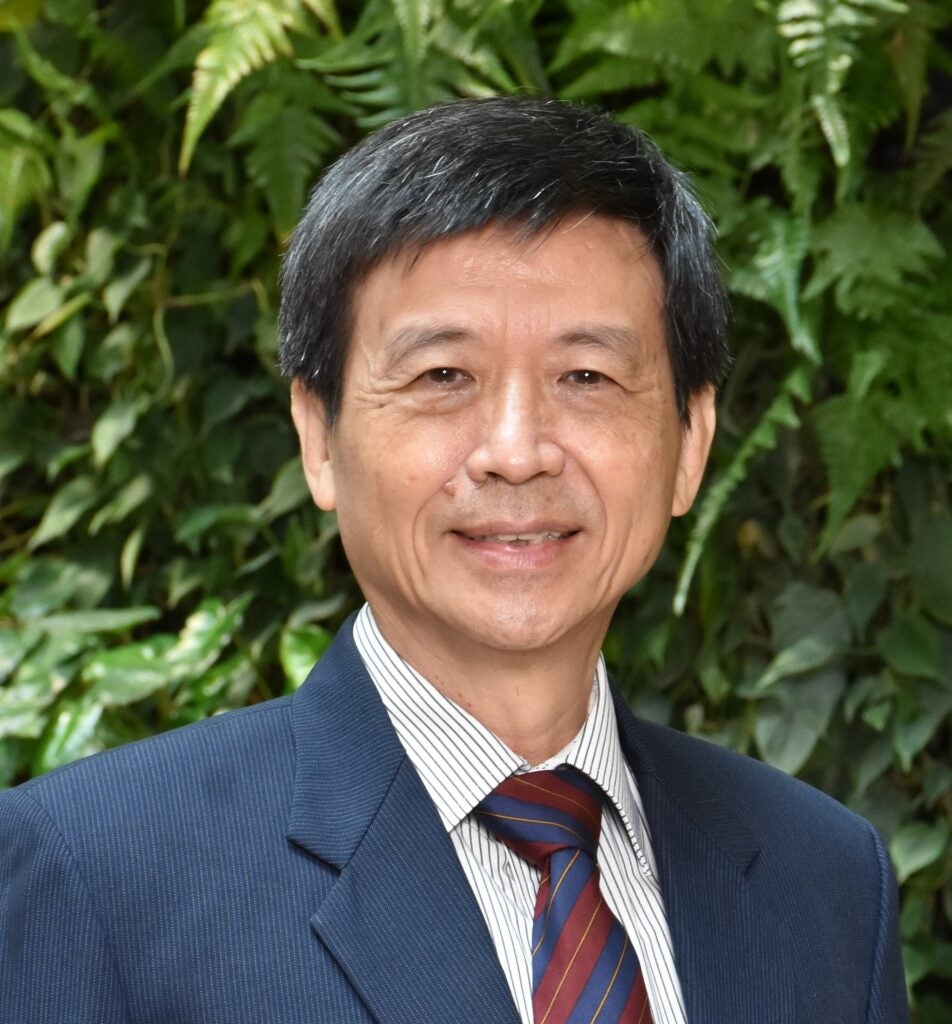
Teo Chung Piaw is the Stephen Riady Professor and Executive Director of the Institute of Operations Research and Analytics (IORA) at the National University of Singapore (NUS). He holds a PhD in Operations Research from MIT (1996) and has held academic positions including Head of Department and Acting Deputy Dean at NUS Business School. His research focuses on optimization under uncertainty, supply chain management, and combinatorial optimization. He serves as a department editor for Management Science and has led strategic initiatives in Singapore's Smart Nation Program. Teo's educational journey includes a Bachelor of Science (Honors) in Mathematics from NUS (1990). His corporate experience spans roles at Unilever, Hewlett Packard, and PSA International. He has received prestigious awards including the NUS Faculty Outstanding Researcher Award (2003, 2006) and has been a Fellow of the Singapore-MIT Alliance Program. His research addresses operational challenges in smart cities, healthcare scheduling, and supply chain resilience. Notable contributions include work on appointment scheduling under patient no-show behavior, disruption risk mitigation in supply chains, and flexible production network design. He has authored over 100 publications and serves on editorial boards of leading journals like Operations Research and Management Science .
Associate Professor Kiat Boon, Daniel SENG is a leading academic at the National University of Singapore (NUS), specializing in technology law and infocommunications law. He currently serves as Director of the LLM (Intellectual Property & Technology Law) program and IT Coordinator. Previously, he held roles as Director of Research at the Singapore Academy of Law (2001–2003), partner and head of technology practice at Rajah & Tann, and non-residential fellow at Stanford Law School’s Center for Legal Informatics (CodeX). His education includes a JSD and JSM from Stanford University, BCL (Oxford, Rupert Cross Prize recipient, 1994), and LLB (NUS with first-class honors). His research employs machine learning, NLP, and big data to analyze digital law challenges, particularly in copyright takedown notices and AI governance. Research interests span information technology law, empirical legal studies, quantitative research, and AI’s intersection with legal reasoning. He contributes to global legal reform via advisory roles at the World Intellectual Property Organization (WIPO), focusing on copyright exceptions, music licensing, and intermediary liability. Key awards include the 1994 Rupert Cross Prize. His work bridges law and technology through publications on digital evidence, metaverse legal frameworks, and AI’s impact on private law. He is actively involved in shaping Singapore’s legal infrastructure through government committees and academic initiatives.
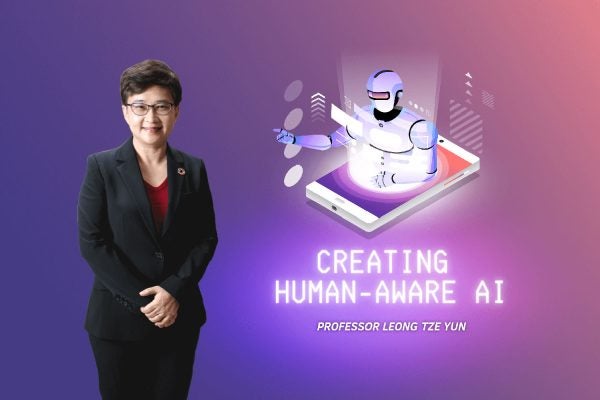
LEONG Tze Yun is a Professor in the Department of Computer Science at the School of Computing, National University of Singapore (NUS). She holds S.B., S.M., and Ph.D. degrees in Computer Science from the Massachusetts Institute of Technology (MIT). Her academic career spans both research and industry experience, with significant contributions to the fields of artificial intelligence and health informatics. Dr. Leong's educational background includes: Ph.D. in Electrical Engineering & Computer Science, Massachusetts Institute of Technology S.M. in Electrical Engineering & Computer Science, Massachusetts Institute of Technology S.B. in Computer Science & Engineering, Massachusetts Institute of Technology Her primary research interests focus on responsible AI, dynamic decision-making, neurocognitive modeling, reinforcement learning, artificial general intelligence, and biomedical and health informatics. Her work bridges the gap between theoretical AI development and practical healthcare applications, with an emphasis on ethical considerations and human-centered design. She directs the Medical Computing Laboratory at NUS, a multidisciplinary research program exploring human-aware decision modeling in complex environments. Analysis of her recent publications reveals a strong trend toward responsible AI development, with significant contributions to reinforcement learning techniques, causal inference methods, and applications of AI in healthcare. Her work increasingly integrates ethical considerations with technical AI development, particularly evident in her 2024 publications on medical AI and human values. Her scientific recognition includes: Fellow of the American College of Medical Informatics (ACMI) Founding Fellow of the International Academy of Health Sciences Informatics (IAHSI) Member of Eta Kappa Nu (Honor Society for Electrical Engineers) Dr. Leong has supervised numerous doctoral and master's students throughout her career, many of whom have gone on to prominent positions at institutions like Google, Netflix, Mayo Clinic, and academic institutions worldwide. Her advisory work extends to significant policy development, including contributions to WHO guidance on ethics and governance of AI for health. She currently serves on the World Health Organization (WHO) Expert Group on Ethics and Governance of AI for Health, the World Economic Forum (WEF) AI Governance Alliance, and the Advisory Council on AI in Uzbekistan. Her laboratory work focuses on developing adaptive systems that evolve with changing technical functionalities, system infrastructures, usage patterns, and operational contexts, with applications spanning prediction and decision analytics, human-aware robotics, game artificial intelligence, personalized education, and assistive care for elderly with neurocognitive disorders.
Reza Shokri is a Dean's Chair Associate Professor in the Department of Computer Science at the National University of Singapore (NUS), School of Computing. His research lies at the intersection of data privacy, security, and trustworthy machine learning, with a focus on quantifying privacy risks and developing robust, fair, and interpretable models. PhD in Computer Science, EPFL His research interests center on data privacy and trustworthy machine learning , particularly in the context of deep learning and federated systems. He investigates how machine learning models memorize training data, leading to privacy leakage, and designs frameworks to audit and mitigate such risks. His work bridges theoretical guarantees with practical applications, emphasizing the trade-offs among privacy, fairness, robustness, and utility. His recent publications (2023–2025) reveal a strong trend in analyzing privacy in large language models (LLMs), membership inference attacks, federated learning, and fairness. These works are published in top venues such as NeurIPS, ICML, ICLR, CCS, and FAccT, highlighting his leadership in both AI and security communities. Notable scientific awards include: Asian Young Scientist Fellowship (2023) Intel Outstanding Researcher Award (2023) Best Paper Award, ACM FAccT (2023) IEEE S&P Test-of-Time Award (2021) Caspar Bowden Award for Privacy Enhancing Technologies (2018) NUS Presidential Young Professorship (2019–2023) VMware Early Career Faculty Award (2021) He has advised numerous PhD and Master’s students, many of whom have contributed to high-impact publications. He has also received research grants from major industry partners including Meta, Google, Intel, and VMware. He leads the Data Privacy and Trustworthy Machine Learning Lab at NUS and has served on program committees for top conferences such as IEEE S&P, ACM CCS, and FAccT, including co-chairing roles at HotPETs and Shadow PC of IEEE S&P. He has delivered tutorials at ICML and CCS on privacy auditing in machine learning. His lab focuses on developing tools and frameworks—such as the ML Privacy Meter—for assessing and improving the privacy properties of machine learning models, with applications in regulatory compliance and secure AI deployment.
Seth Lewis Gilbert is a Professor and Head of the Department of Computer Science at the National University of Singapore (NUS), within the School of Computing . He holds the Dean's Chair Associate Professor title and focuses on algorithms for large-scale distributed systems , emphasizing scalability and fault-tolerance . His work spans wireless networks , contention resolution , dynamic networks , and blockchain protocols . Ph.D. in Computer Science, MIT (2007) M.S. in Computer Science, MIT (2003) B.S. in Electrical Engineering & Mathematics, Yale University (1999) His research explores trusted coordination in systems with untrusted and unreliable participants, addressing challenges like Byzantine agreement , load balancing , and contention resolution . He has pioneered formal frameworks for accountability in distributed protocols and developed novel algorithms for asynchronous task allocation . Recent publications include work on consensus protocols , leader election , and contention resolution , reflecting his focus on dynamic network environments . His research has earned recognition at venues like DISC, ICDCS, and CCS. Scientific Awards & Honors : Young Researcher Award (NUS, 2014) Faculty Teaching Excellence Award (2013/14, 2014/15, 2015/16) School of Computing Teaching Excellence Honour Roll (2016-2021) Best Paper Awards at DISC (2023, 2022), ICDCS (2022), IPDPS (2022) Best Student Paper Award at DISC (2022) He serves on the Steering Committee for DISC as Treasurer and has chaired program committees for DISC, OPODIS, and SPAA. His work bridges foundational algorithmic theory with practical applications in blockchains and dynamic networked systems .
Dr. Ian Yi Han is an Assistant Professor at the Saw Swee Hock School of Public Health, National University of Singapore (NUS), and Co-Director of the Center for Health Intervention and Policy Evaluation Research (HIPER). His research focuses on evaluating community-based health interventions, telehealth programs, and the impact of built environments on health behaviors. He holds a Ph.D. in Behavioral Nutrition from Columbia University, an M.A. in Psychology in Education, and a B.Sc. in Neural Science & Psychology from New York University. Key research areas include programme evaluation, population health, health services research, and dietary behaviors. He explores how interventions can improve patient experiences and population health outcomes, particularly through telemedicine and lifestyle modifications. His work has been published in journals like npj Digital Medicine, Metabolism, and the Journal of Nutrition Education and Behavior. Notable projects include studies on blood pressure telemonitoring, diabetes management during the pandemic, and supermarket intervention strategies for obesity prevention. Dr. Han has contributed to policy initiatives through roles such as Senior Research Fellow at the National University Health System and Lecturer at Columbia University. He advises on primary care research and collaborates on global health projects, emphasizing interdisciplinary solutions to public health challenges.
Assoc Prof Ying Chen is an Associate Professor at the National University of Singapore , affiliated with the Department of Mathematics, Asian Institute of Digital Finance (as Academic Director of PhD Program in Digital FinTech 2022–2024), Risk Management Institute (2019–2023), Department of Statistics and Data Science (2019–2023), and Department of Economics (2018–2023). She also contributes to NUS Graduate School for Integrative Sciences and Engineering since 2016. Research Interests include: AI forecasting and quantum computing for finance Nonstationary time series and functional data analysis Energy data analytics and precision medicine Network autoregression and spatial-temporal modeling Explainable AI and citation metrics Portfolio liquidation and market-making algorithms Article Trends demonstrate expertise in: Adaptive forecasting for gas flows and electricity prices Blockchain network influence detection Quantum computing applications in finance Functional autoregression with mixed predictors Credit rating fairness and explainability High-resolution implied volatility modeling Scientific Awards include: ISI Elected Member (2016–) International Statistical Institute Council (2023–2027) IASC Scientific Secretary (2017–2019, 2023–2025) Advisory roles for EU FIN-TECH and xAIM projects
Professor Tulika Mitra is the Dean of the School of Computing and Vice Provost (Special Projects) at the National University of Singapore (NUS). She holds the Provost’s Chair Professor in the Department of Computer Science and has been instrumental in shaping academic policies and strategic initiatives at NUS since joining in 2001. PhD in Computer Science, Stony Brook University (2000) M.E. in Computer Science, Indian Institute of Science (1997) B.E. in Computer Science, Jadavpur University (1995) Her research focuses on hardware-software co-design for energy-efficient computing systems, particularly in real-time embedded systems, heterogeneous architectures, and AI accelerators. She leads major research programs such as the NRF Competitive Research Programme on Low-Power Edge Accelerators and the MOE Tier-3 Programme on Green AI , collaborating with industry leaders like ARM, AMD, and Meta. Her recent publications highlight innovations in CGRA optimization , sparse attention mechanisms , photonic-digital hybrid architectures , and low-power ML inference . These works often integrate compiler techniques, architectural design, and real-time constraints for edge computing applications. Scientific Awards : ESWEEK Test-of-Time Award (2022), ACM SIGDA Distinguished Service Award, IEEE CEDA Outstanding Service Recognition Award, Teaching Excellence Award (2006), and multiple best paper recognitions. Education Leadership : Spearheaded the Computer Engineering (CEG) Programme at NUS, a joint initiative between Engineering and Computing. As a mentor , she has supervised over 25 PhD students , many now in prominent academic or industrial roles. Her research group eCO Lab focuses on embedded computing challenges, while her grant collaborations include projects on 5G base stations, reconfigurable architectures, and IoT-optimized SoCs.
Sanjay Jain is a Provost's Chair Professor in the Department of Computer Science at the School of Computing, National University of Singapore (NUS). His research focuses on theoretical computer science with particular emphasis on inductive inference, recursion theory, complexity theory, and computational learning theory. Education: B.Tech. in Computer Science from Indian Institute of Technology Kharagpur, India (1986) M.S. in Computer Science from University of Rochester, USA (1988) Ph.D. in Computer Science from University of Rochester, USA (1990) Professor Jain's research spans multiple areas of theoretical computer science. His primary contributions are in computational learning theory, where he has made significant advances in understanding the intrinsic complexity of language identification and the limits of inductive inference. His work on recursion theory explores fundamental questions about computability and complexity, while his research in complexity theory addresses structural aspects of computational problems. A notable achievement was his work on "Deciding Parity Games in Quasipolynomial Time," which won the prestigious STOC 2017 best paper award and later the EATCS-IPEC Nerode Prize. Professor Jain's publication record shows a consistent focus on theoretical foundations of computer science, particularly in learning theory and computational complexity. His recent work has expanded into automatic structures, semiautomatic models, and connections between computational learning and algebraic structures. There is a clear progression from foundational work on language identification to more complex models involving automatic functions, transducers, and connections to mathematical logic. Scientific Awards: STOC 2017 Best Paper Award for "Deciding Parity Games in Quasipolynomial Time" EATCS-IPEC Nerode Prize (2021) Professor Jain has served on the editorial board of Information and Computation and has been actively involved in the academic community through program committee memberships for major conferences including COLT, ALT, LATA, TAMC, and PRICAI. He has held leadership roles as program co-chair for ALT 2000 and ALT 2013, and conference chair for ALT 2005. His work has been supported by various research grants, though specific details are not provided in the available materials. Professor Jain leads research in theoretical computer science at NUS, where he has built a strong research group focused on computational learning theory and related areas. His work often involves collaborations with researchers from around the world, particularly with Frank Stephan, with whom he has co-authored numerous papers. His research group has made significant contributions to understanding the fundamental limits and possibilities of computational learning models.
Dr. Bimlesh Wadhwa is an Associate Professor in the Department of Computer Science at the National University of Singapore (NUS) and serves as Assistant Dean for Student Life at Tembusu College. She holds dual affiliations as a Residential Fellow at Tembusu College and an active member of the School of Computing's academic community. Her work bridges software engineering, human-computer interaction (HCI), and computing education. Dr. Wadhwa's research focuses on gender issues in HCI, software design quality, and digital well-being. She has pioneered initiatives like the Code for Community program to bring computing education to underserved groups. Her pedagogical contributions include developing courses on object-oriented design, software engineering principles, and interaction design. She actively engages with professional communities through roles such as Faculty Representative at the Singapore Computer Society Student Chapter and advisor to the Computing Club at NUS. Her recent work addresses pressing societal challenges like technology-facilitated sexual violence and integrates AI into educational contexts. She has organized major competitions including CodeXtreme and the Singapore Science and Engineering Fair, fostering innovation among students. Her interdisciplinary collaborations span healthcare applications, smart city technologies, and educational equity initiatives. Dr. Wadhwa’s scholarly contributions include over 80 publications in top venues such as FSE, CHI, and IEEE conferences. She has co-edited book chapters for Springer and Wiley on HCI and informatics, reflecting her commitment to advancing both technical and societal dimensions of computing. In addition to her academic roles, she leads MakerLab initiatives and contributes to national educational policies on computational thinking. Her work emphasizes bridging academia-industry gaps through projects like the GEAR mobile game-assisted rehabilitation system and cloud service brokerage frameworks.
LEE Wee Sun is a Professor in the Department of Computer Science at the National University of Singapore (NUS), where he previously served as Head of Department, Vice Dean of Undergraduate Studies, and Vice Dean of Research. His academic journey began with a B.Eng. in Computer Systems Engineering from the University of Queensland (1992) and a Ph.D. from the Australian National University (1996), followed by research roles at the Australian Defence Force Academy and MIT. Education: Ph.D., Australian National University, Canberra, Australia (1996) B.Eng. in Computer Systems Engineering, University of Queensland, Brisbane, Australia (1992) Research Focus: Professor Lee pioneers work in Machine Learning , Planning Under Uncertainty , and Approximate Inference , with emphasis on integrating AI subfields for holistic reasoning. His current projects include "Learning to Decompose for Reasoning and Planning" (enhancing LLMs via self-supervised problem decomposition) and "Learning to Reason with Visual-Linguistic Inputs" (unifying vision, language, and reasoning in single architectures). Publication Trends: Recent work (2023-2025) centers on bridging LLMs with classical AI techniques, featuring breakthroughs in uncertainty quantification, multi-task optimization, and graph-based reasoning. Key themes include sparsity-aware vehicle routing, epistemic uncertainty for reliable LLMs, and differentiable neural solvers for combinatorial problems. Awards: IJCAI-JAIR Best Paper Prize (2022) RSS Test of Time Award (2021) RoboCup Best Paper Award (IROS 2015) HRATC 1st Place (2015) IPPC POMDP Track 1st Place (2011, 2014) UAI Google Best Student Paper (2014) Semeval-1 1st/2nd Place (2007) J.G. Crawford Prize (ANU 1996) Leadership & Service: As steering committee chair for ACML and area chair for NeurIPS/ICML/AAAI/IJCAI, Professor Lee shapes global AI discourse. His administrative roles at NUS and collaborations with MIT/Singapore-MIT Alliance demonstrate commitment to advancing AI education and research infrastructure. While student advisees aren't listed, his leadership positions imply extensive mentoring. Research Ecosystem: His work drives NUS's AI initiatives including Knowledge@Computing projects on reasoning frontiers. Current efforts focus on making AI systems robust through uncertainty-aware planning and multi-modal integration, with applications in robotics, verification systems, and combinatorial optimization.
Professor Guan Cuntai serves as Deputy Dean of the College of Computing & Data Science and holds the President's Chair in Computer Science and Engineering at Nanyang Technological University (NTU), Singapore. He also maintains a courtesy appointment as Professor at the Lee Kong Chian School of Medicine. His leadership extends to multiple research institutes including serving as Director of the Artificial Intelligence Research Institute (AI.R) and Co-Director of both S-Lab for Advanced Intelligence (2020-2025) and the Rehabilitation Research Institute of Singapore (2015-2018 & 2024-2025). Professor Guan's research focuses on Brain-Computer Interfaces (BCI), Machine Learning, Neural Signal & Image Processing, and Artificial Intelligence. His work at the Centre for Brain-Computing Research (CBCR) investigates deep learning algorithms for motor activity decoding, cognitive mechanism understanding, and explainable AI for brain decoding modeling. His research spans applications in motor decoding, attention and emotion detection, silent speech decoding, and olfactory response analysis from brain signals. His significant contributions to the field have been recognized through numerous awards: Annual BCI Research Award (First Prize) King Salman Award for Disability Research Nanyang Research Award IES Prestigious Engineering Achievement Award Achiever of the Year (Research) Award Finalist of the President Technology Award Professor Guan has delivered over 100 keynote speeches and invited talks globally, including at the opening ceremony of the 7th International BCI Meeting and IEEE International Conference on Rehabilitation Robotics. His extensive publication record includes 420 refereed journal and conference papers, and he has secured significant research funding resulting in 26 granted patents and patent applications, with 17 technologies licensed to six companies across Singapore and USA. He leads the Centre for Brain-Computing Research (CBCR) which focuses on fundamental and applied BCI research, and previously established the Brain-Computer Interface research program and founded the Department of Neural & Biomedical Technology at the Institute for Infocomm Research, A*STAR before joining NTU in 2016.
LU Wen Feng is an Adjunct Associate Professor in the Department of Mechanical Engineering at the National University of Singapore (NUS), affiliated with the College of Design and Engineering. His research focuses on advanced manufacturing technologies, including additive manufacturing, robotics, and AI-driven systems. He explores sustainable design methodologies, smart manufacturing innovations, and bioprinting applications. Key areas include optimizing material processes, enhancing mechanical properties of printed materials, and developing autonomous robotic solutions for industrial tasks. Contact: mpelwf@nus.edu.sg , located at E3-02-07. Research Interests : His work bridges AI and manufacturing, emphasizing Knowledge graph integration for additive manufacturing, Autonomous robotic systems in industrial settings, Bioprinting for tissue repair with smart bioinks, Topology optimization for lightweight and sustainable structures, Material characterization and process engineering for 3D-printed composites. Recent Article Trends : LU Wen Feng's 2025 articles highlight advancements in AI-augmented manufacturing systems (e.g., MaViLa, AutoMEX) and sustainable design workflows. His 2024 studies address material anisotropy, corrosion behavior, and topology optimization strategies for lattice structures. These trends reflect his interdisciplinary approach to solving challenges in additive manufacturing, robotics, and biomedical applications. Awards : No scientific awards explicitly mentioned. Advising & Grants : No current graduate students or grants listed. His research likely integrates industry-academia collaborations given the focus on applied manufacturing technologies. Labs/Teams : Not explicitly detailed, but his work suggests involvement in advanced manufacturing labs and AI-robotics teams at NUS.
Danny Poo Chiang Choon is a tenured Associate Professor at the School of Computing (SOC), National University of Singapore (NUS). As Curriculum Chair of the Department of Information Systems and Analytics, he plays a key role in designing and implementing Information Systems and Computer Science curriculum at NUS. Dr. Poo earned his BSc (Honours), MSc and PhD in Computation from the University of Manchester Institute of Science and Technology (UMIST), United Kingdom. His academic journey has established him as a leader in health informatics and information systems at NUS. His research spans multiple domains with strong focus on Healthcare Informatics , where he investigates mobile health interventions, health analytics, and systems for improving patient care. His work in Data Science & Business Analytics explores knowledge management, information sharing, and effective search strategies. In Intelligent Systems , he examines software engineering approaches, object-oriented systems, and knowledge classification frameworks. His recent publications demonstrate a clear trajectory toward mobile health applications, particularly in coronary heart disease prevention and diabetes management. Dr. Poo's work consistently bridges technical computing with practical healthcare applications, focusing on user-centered design and evidence-based interventions. His research shows strong interdisciplinary integration between computer science, healthcare systems, and behavioral science, with emphasis on practical implementation in Singapore's healthcare context. Dr. Poo has served in numerous leadership roles including as the founding Director of the Centre for Health Informatics at NUS (2012-2015) and as a member of the Steering Committee of the Asia Pacific Software Engineering Conference (APSEC) since 1994, serving as Vice-Chairman from 2003-2005. He has been invited to speak at international forums including the Japanese Government's "USA, Kyushu and Asia International Exchange Project" and as a keynote speaker at the 2009 Arabic Scripts Second Symposium in Abu Dhabi. His expertise is recognized through invitations to speak on knowledge management topics at conferences in Singapore. Dr. Poo has authored five books in the Information Technology area: "Enterprise JavaBeans for Students" (2014), "Object-Oriented Programming and Java" (1998, 2007), "Learn to Program Enterprise JavaBeans 3.0" (2009), "Learn to Program Java" (2009), and "Learn to Program Java User Interface".
Aniello Murano is a Professor of Computer Science at the Department of Electrical Engineering and Information Technologies , University of Naples Federico II. He serves as Scientific Director of the ASTREA (Automated Strategic Reasoning) Laboratory and leads cutting-edge research in Artificial Intelligence, Strategic Reasoning, Multi-Agent Systems , and Formal Verification . Research Interests : Strategic reasoning under perfect/imperfect information, specification/verification/synthesis of reactive systems, temporal/modal logics, automata theory, parity games, game theory, mechanism design, and formal languages. Notable Projects : PNRR Research Unit Coordinator (2023-2025) on Resilient AI, PRIN 2020 Unit Coordinator (RIPER: Resilient AI-Based Self-Programming and Strategic Reasoning), H2020-MSCA SEAL (Principal Coordinator). Awards & Honors : JPMorgan Faculty Research Award (2022), Royal Society Award (2016), Best Paper PRIMA (2015), INDAM Project Leader (2023), Italian Scientific Habilitation (2017-2018). Students & Postdocs : Supervised 6 PhD students (e.g., Silvia Stranieri, Vadim Malvone) and mentored postdocs such as Munyque Mittelmann and Bastien Maubert. Laboratory : Leads ASTREA Lab, focusing on automated strategic reasoning and resilient AI systems.