Sunita Sarawagi is a Professor at Computer Science and Engineering , IIT Bombay, and a member of AI Labs@CSE . She is also associated with the Center for Machine Intelligence and Data Science (CMInDS), which she founded in 2020. Education: PhD in Computer Science from UC Berkeley (Thesis: Query Processing in Tertiary Memory Databases), BTech in Computer Science from IIT Kharagpur Research Interests span machine learning , data analytics , graphical models , and structured learning , with applications in text segmentation, sequence modeling, domain adaptation, and human-in-the-loop systems. Her publications reveal a strong focus on integrating data mining with database systems , temporal data analysis , and information extraction using probabilistic methods. Professional Activities include serving on the IEEE John Von Neumann Medal committee (2017-), VLDB 2011 Research Track Co-chair , and multiple program committee roles at top conferences like ICML, KDD, and SIGMOD. Labs & Teams : Leads the SS Lab , a research group focused on probabilistic graphical models, sequence modeling, and data integration techniques.
Ajit Rajwade is a Professor at the Department of Computer Science and Engineering , Indian Institute of Technology Bombay. His research spans Artificial Intelligence , Compressed Sensing , and Medical Imaging , with affiliations to the Centre for Machine Intelligence and Data Science and the Koita Centre for Digital Health . Education : PhD in Computer and Information Science and Engineering, University of Florida (2010) MSc in Computer Science, McGill University (2004) BTech in Computer Engineering, University of Pune (2002) His research interests focus on intelligent data acquisition, particularly in neural network analysis , graph signal processing , and medical imaging . He develops compressed sensing algorithms for inverse problems like tomography and MRI reconstruction , alongside applying group testing to pandemic response. Scientific awards include the Prof. S. P. Sukhatme Award (2024) and Departmental Teaching Excellence (2019). His publications demonstrate expertise in image restoration , noise modeling , and epidemiological algorithms . He has advised PhD students like Sabyasachi Ghosh and Jerin Geo James , with a focus on computationally efficient methods in medical imaging and machine learning .
Sharat Chandran is a Professor in the Department of Computer Science and Engineering at the Indian Institute of Technology Bombay (IIT Bombay), where he has been actively engaged in teaching and research for several decades. His office is located in Room KR102 (also known as A202) in the Rekhi Building on the IIT Campus in Mumbai, India. His primary research interests span two major areas in computing: Computer Graphics and Computer Vision . He has extensively worked in these fields with his students and research staff, producing various publications, talks, and research projects over the years. His current teaching focus includes Math for Visual Computing (CS 740), a course designed for postgraduate students new to the IIT system who may have some apprehension about mathematics. Professor Chandran has supervised numerous PhD students whose work covers diverse topics including 3D modeling, efficient computing with tomographic measurements, vision for drones, cancer prognosis, hierarchical visibility, projector-camera systems, arterial pulse analysis, and optimization algorithms for motion factorization. His teaching portfolio is extensive, having offered courses such as Basic Freshman Programming, Software Systems, Parallel Programming Paradigms, Graphics I & II, Multimedia Systems, Computer Vision, Digital Image Processing, Algorithms, and Spatial Data Structures. He has held multiple administrative and service roles at departmental, institutional, and external levels. Departmental roles include PhD Faculty Advisor, Awards Committee Chair, Faculty Search Chair, and Web Team Chair. At the institutional level, he served as Founding PMRF Coordinator, Head of the Application Software Centre, and IIT Research Fellowship Initiative Coordinator. Externally, he has coordinated the DST India Digital Heritage Project and served as Program Co-Chair for conferences like Mysore Park Vision Conference and ICVGIP. Professor Chandran is actively involved in campus community activities including Sanskriti @ IITB, Taekwando @ IITB, and serves as Secretary for Kendriya Vidyalaya PTA. His office hours are from 12:30 PM to 1:00 PM on Monday, Tuesday, and Thursday, and he emphasizes using Piazza rather than email for student communications.
Arpit Agarwal is an Assistant Professor in the Department of Computer Science & Engineering at the Indian Institute of Technology, Bombay. He previously held postdoctoral positions at FAIR Labs (Meta) working with Max Nickel and at the Data Science Institute at Columbia University hosted by Prof. Yash Kanoria and Prof. Tim Roughgarden. He completed his PhD from the Department of Computer & Information Science at the University of Pennsylvania under the guidance of Prof. Shivani Agarwal. His research focuses on the intersection of human behavior and machine learning systems, with particular interest in learning from implicit, strategic, and heterogeneous human feedback. His work spans multiple dimensions of human-AI interaction including understanding long-term dynamics between humans and AI systems, designing responsible AI, and studying misalignment between user preferences and system objectives. His research methodology often combines theoretical machine learning with practical applications in recommendation systems and social AI. His recent publications reveal a strong focus on bandit algorithms, preference learning, and recommendation systems, with increasing attention to responsible AI design and human-centered considerations. His work demonstrates expertise in theoretical machine learning with applications to real-world problems, particularly in understanding how humans interact with and are influenced by AI systems over time. Dr. Agarwal teaches advanced courses including CS767 Theoretical Machine Learning (Autumn 2025) and CS6103 Human-Centered AI: From Learning Models to Responsible Systems (Spring 2025), which covers topics such as AI alignment, learning from pairwise comparisons, crowdsourcing, human-in-the-loop decision making, recommendation systems, interpretability, privacy, fairness, causality, and AI governance.
Dr. Arnab Bhattacharya is a Professor in the Department of Computer Science and Engineering at the Indian Institute of Technology (IIT) Kanpur since December 2020. He previously served as Associate Professor (2014–2020) and Assistant Professor (2007–2014) at IIT Kanpur. Education: PhD in Computer Science (2007), University of California, Santa Barbara MS in Computer Science (2007), University of California, Santa Barbara Bachelor of Computer Science and Engineering (2001), Jadavpur University Research Focus spans Databases , Data Mining , Information Retrieval , and Artificial Intelligence . His work emphasizes graph analytics , skyline queries , probabilistic data , and knowledge graph management . Article Trends reveal expertise in graph neural networks , trajectory-aware systems , statistical significance in databases , and legal/medical data mining . His methodologies often integrate chi-square statistics , approximate indexing , and provenance tracking . Scientific Awards: IBM Faculty Research Award Yahoo! Faculty Research and Engagement Program Award Best Paper at COMAD 2011 Best Student Paper at COMAD 2010 Top-Five Student Paper at ICDM 2005 ICDM Student Travel Award sponsored by IBM Contact: Office RM 409, Department of Computer Science and Engineering, IIT Kanpur Email: arnabb@iitk.ac.in | Phone: +91-512-259-7650
Aditya T Siripuram is an Associate Professor at the Indian Institute of Technology Hyderabad (IITH), holding joint appointments in the Department of Electrical Engineering and the Department of Artificial Intelligence. He completed his PhD at Stanford University and holds B.Tech and M.Tech degrees from IIT Bombay. Education: PhD in Electrical Engineering, Stanford University (2017) - GPA: 4.17/4 M.Tech in Electrical Engineering, IIT Bombay (2009) - GPA: 9.79/10 B.Tech in Electrical Engineering, IIT Bombay (2009) - GPA: 9.79/10 Research Interests: His research spans Fourier analysis, signal processing, machine learning, convex and combinatorial optimization, with applications in AI/ML and applied mathematics. His work particularly focuses on computational aspects of Fourier analysis, including fast DFT computation for structured signals, convolution idempotents, and graph-based signal processing techniques. His recent research directions involve developing efficient algorithms for computing Discrete Fourier Transforms for signals with structured frequency support, investigating relationships between additive structures in frequency domains and computational complexity, and exploring graph learning techniques under spectral constraints. Awards and Recognition: Excellence in Teaching Award, IIT Hyderabad (2019, 2022) Stanford Graduate Fellowship Qualcomm Innovation Fellowship (awarded to his PhD student Charantej Reddy P in 2021) Teaching and Service: He has taught courses including AI1110 Probability and Stochastic Processes, EE5609 Matrix Theory, EE5606 Convex Optimization, and EE5328 Introduction to Submodular Functions. He serves as Departmental Undergraduate Committee Chair for the Department of AI at IITH (2020-present) and was MTech Admissions Coordinator for the same department (2019-2022). Research Group: He currently advises three PhD students working on signal processing based graph learning techniques, DFT computation for structured signals, and coded computing problems.
Dr. Dibakar Ghosal is an Associate Professor in the Department of Earth Sciences at the Indian Institute of Technology Kanpur (IIT Kanpur). He leads the Crustal Imaging Laboratory (CIL) which is equipped with state-of-the-art seismic data acquisition setup and processing software for both land and marine seismic datasets. His research spans exploration seismology, tectonic studies, and algorithm development for subsurface imaging across diverse geological settings. Dr. Ghosal's educational background includes: PhD in Geophysics (2008-2013) from Institut de Physique du Globe de Paris (IPGP), France M.Sc. in Geophysics (2004-2006) from Indian Institute of Technology Kharagpur, India B.Sc. in Geology, Mathematics and Physics (2001-2004) from Jadavpur University, India His research focuses on three major themes: (1) Tectonic studies across Himalaya, Sumatra-Andaman, and Bay of Bengal using high-resolution seismic datasets; (2) Development of algorithms for petrophysical parameter estimation of hydrocarbon and ore reserves; and (3) Ambient Noise and earthquake data analysis. His work integrates field data acquisition, computational modeling, and advanced algorithm development to address fundamental questions in Earth sciences, with particular emphasis on crustal architecture and resource exploration. His recent publications demonstrate expertise in crustal imaging techniques, tectonic analysis of subduction zones, and algorithm development for seismic data processing. The research spans diverse geographical regions including the Himalayas, Sumatra-Andaman region, Bay of Bengal, and Southern Indian Ocean, with applications to hydrocarbon exploration, tectonic studies, and crustal architecture analysis. Dr. Ghosal has received several prestigious fellowships and awards: 2023: Scientific High Level Visiting Fellowship (SSHN) from French Institute in India (IFI) 2022: INSA visiting scientist fellowship 2019: Visiting Faculty at IPG Paris, France 2019: Visiting Faculty at NTU Singapore 2014-2015: Postdoctoral fellowship, Geocentrum, Uppsala University, Sweden 2008-2012: PhD fellowship, IPG Paris, France Dr. Ghosal actively mentors students and has supervised numerous PhD, MTech, and BS-MS students. His research is supported by multiple sponsored projects from DST-SERB, MoES, ONGC, and other funding agencies. He has successfully completed projects on topics including seismic imaging of the Himalayan foothills, gas hydrate reservoir modeling, and petrophysical property estimation. He leads the Crustal Imaging Laboratory (CIL) at IIT Kanpur, which conducts field work across various regions of India including the Himalayas and offshore areas. The laboratory is equipped with RAUs, 3C Tromino sensors, seismic thumpers, and advanced processing servers. He collaborates with national institutions including NIO Goa, IISER Pune, and NGRI, as well as international institutions such as IPG Paris, Uppsala University, and Texas A&M University.
Subhajit Dutta is an Associate Professor in the Department of Mathematics and Statistics at the Indian Institute of Technology Kanpur. He has established himself as a notable researcher in specialized statistical methodologies with publications in top-tier statistical journals. Dr. Dutta completed his PhD in Statistics from the Indian Statistical Institute (ISI), Kolkata in 2013 under the supervision of Prof. Probal Chaudhuri. His academic journey includes an M.Sc. in Statistics from IIT Kanpur (2007) and a B.Sc. in Statistics from Presidency College, University of Calcutta (2005). He also pursued post-doctoral research at KAUST with Prof. Marc G. Genton. His research focuses on advanced statistical methodologies, particularly in Discriminant Analysis, Inference based on Data Depth, Characterization of Multivariate Distributions, and Classification of Sequence Data. His work bridges theoretical statistics with practical applications, developing robust methods for complex data analysis problems across various scientific domains. Dr. Dutta's publication record shows consistent progression from foundational properties of statistical depth functions to practical applications in classification and sequence analysis, demonstrating both theoretical depth and practical relevance in his scholarly contributions. As a faculty member at IIT Kanpur, one of India's premier technical institutions, Dr. Dutta contributes to both teaching and research in the Department of Mathematics and Statistics, helping to advance statistical science education and methodology development.
Rameshwar Pratap is an Associate Professor in the Department of Computer Science and Engineering at the Indian Institute of Technology Hyderabad (IIT Hyderabad). Previously, he served as an Assistant Professor at the School of Computing and Electrical Engineering, IIT Mandi for three years. Education: Ph.D. in Theoretical Computer Science, Chennai Mathematical Institute Research Interests: His research lies at the intersection of theory and practice, focusing on extremely simple yet practical approximation algorithms with provable guarantees . Key themes include: Sketching and dimensionality reduction algorithms for tensors and similarity measures Improving speed, scalability, and accuracy of existing sketching methods Applications in machine learning: node embedding in large-scale networks, itemset mining, model compression He extensively employs techniques from matrix and tensor algebra, sampling, random projection, and randomized hashing . Publications Overview: Across 2021–2025 his work has appeared in top venues such as IEEE Globecom, Theoretical Computer Science, Acta Informatica, Information Processing Letters, Algorithmica, UAI, ICALP, Machine Learning, TKDE, and ACML. Recurring themes are randomized sketching, locality-sensitive hashing, compressed matrix multiplication, variance reduction, and subspace approximation , demonstrating both theoretical depth and practical impact. Awards & Honors: Early Career Research Grant (PM-ECRG) 2025, Anusandhan National Research Foundation (ANRF) Best Paper Award, COCOON 2020 Students & Funding: First Ph.D. student: Bhisham Dev Verma (co-advised with Prof. Manoj Thakur) graduated June 2025 MS by Research student: Punit Pankaj Dubey graduated October 2022 Currently hiring 1 Junior Research Fellow for the PM-ECRG project “Improving Similarity Search in Practice” Labs & Teams: Works within the Algorithms & Theory group at IIT Hyderabad, collaborating with national and international researchers. Erdös number is 3.
Dootika Vats is an Associate Professor in the Department of Mathematics & Statistics at Indian Institute of Technology Kanpur (IIT Kanpur). She earned her PhD in Statistics from the University of Minnesota, Twin-Cities, and her research focuses on advancing Monte Carlo and Bayesian computational methods, especially Markov chain Monte Carlo diagnostics. Education: PhD, Statistics, University of Minnesota, Twin-Cities, Feb 2017 MS, Statistics, University of Minnesota, Twin-Cities, Nov 2016 MS, Statistics, Rutgers University, New Brunswick, May 2012 BA (honors), Mathematics, University of Delhi, Lady Shri Ram College, May 2010 Research Interests: Her work lies at the intersection of computational statistics and Bayesian inference, with core emphases on: Markov chain Monte Carlo (MCMC) methodology Monte Carlo variance estimation and output analysis Bayesian computation and diagnostics Geometric ergodicity and convergence rates of MCMC algorithms Recent Publications Trend: Across her recent articles and preprints, Dr. Vats has consistently tackled open problems in MCMC output analysis, introducing new diagnostics, optimal batch-size selection, and visualization tools that directly impact practical Bayesian computation. Her contributions bridge theoretical rigor—such as proving strong consistency of spectral variance estimators—with immediately applicable software and graphical methods. Awards & Honors: Director’s Award, University of Minnesota School of Statistics, 2016 Graduate Research Partnership Program Fellowship, Summer 2016 Louise T. Dosdall Fellowship for Women in STEM, 2016–2017 School of Statistics Alumni Fellowship, 2015–2016 Martin–Buehler Fellowship in Statistics, Fall 2015 Bernard W. Lindgren Graduate Student Teaching Award, Spring 2014 Lynn Lin Fellowship in Statistics, Summer 2014 Teaching & Mentoring: At IIT Kanpur she continues to teach and mentor within the statistics curriculum. Earlier, at the University of Minnesota, she served as Instructor for STAT 3011 and as a teaching assistant across multiple undergraduate and graduate courses; at Rutgers University she was a part-time lecturer in calculus and pre-calculus. Labs & Collaboration: While no specific lab is named, her research is computational and collaborative; she has worked with James M. Flegal, Galin L. Jones, and other leading MCMC methodologists, and her Google Summer of Code participation demonstrates engagement with the open-source statistics community.
Abhinava Tripathi is an Assistant Professor in the Department of Management Sciences at Indian Institute of Technology Kanpur (IIT Kanpur), where he joined in August 2022. He previously served as an Assistant Professor at IIT Roorkee from July 2020 to July 2022. His academic journey includes a PhD in Finance and Accounting from IIM Lucknow (2017-2020), an MBA from IIM Kozhikode (2011), and a B-Tech in Chemical Engineering from IIT Roorkee (2008). Before transitioning to academia, he gained substantial industry experience as Manager at ICICI Bank, Credit Analyst at ICRA, and Deputy Manager at SBI Capital Markets. PhD, Finance and Accounting, IIM Lucknow (2017-2020) MBA, Finance and Accounting, IIM Kozhikode (2011) B-Tech, Chemical Engineering, IIT Roorkee (2008) Dr. Tripathi's research focuses on financial markets, market microstructure, liquidity, and market efficiency, with particular emphasis on banking, corporate finance, investment management, and quantitative finance applications. His work bridges theoretical finance with practical market applications, exploring how market structures affect price formation and information dissemination. He has made significant contributions to understanding liquidity patterns in both traditional and cryptocurrency markets, as well as examining market efficiency during extreme events like the COVID-19 pandemic. His recent publications demonstrate a strong focus on market microstructure, with particular attention to liquidity commonality across different market conditions and asset classes. His research employs advanced econometric techniques to analyze market behavior during normal and stressed periods, with applications to both developed and emerging markets. Dr. Tripathi has published in prestigious journals including Energy Economics (A*), Australian Journal of Management (A), Applied Economics (A), and Finance Research Letters (A). Advisory to National Stock Exchange of India (NSE) on course development and training programs (2021-present) Advisory to Uttarakhand Government on project/consultancy matters (2020-present) Reviewer for Finance Research Letters, Journal of Behavioral Experimental Finance, and International Review of Economics & Finance Dr. Tripathi supervises multiple PhD students working on diverse topics including market efficiency in carbon markets, ESG funds, cryptocurrency markets, and banking sector dynamics. He has led several sponsored research projects including financial viability assessment for the Kalpasar Project (Gujarat Government), transaction advisory for Uttarakhand Sugars, and Ease of Doing Business study for Ministry of Corporate Affairs. His teaching portfolio includes Security Analysis, Portfolio Management, Algorithmic Trading, and Modern Financial Markets across various institutions including IIT Kanpur, IIT Roorkee, and IIM Shillong.
Dinesh Acharya U serves as a Professor in the Department of Computer Science and Engineering at Manipal Institute of Technology, Manipal University. His academic leadership spans both foundational computer engineering and interdisciplinary medical applications, with research output consistently growing since 2006. Current affiliations include active roles at the School of Computer Engineering with verified ORCID profile (0000-0002-0304-4725) and institutional webpage. Research interests prominently feature Machine Learning (68% fingerprint weight), Data Mining (40%), and Medical Informatics applications. His work bridges computer science with healthcare challenges, particularly in neonatal sepsis detection, diabetic complications, and low-resource language processing. The research fingerprint shows strong emphasis on prediction (52%), algorithms (53%), and India -specific healthcare contexts (40%). Publication trends reveal accelerating output since 2018, with 12 papers in 2022 and continued productivity through 2025. Recent work demonstrates interdisciplinary convergence, particularly in Medical AI (neonatal sepsis, diabetic kidney disease) Natural language processing for low-resource languages Transformer-based architectures across domains Notable patterns include increasing clinical collaborations and emphasis on practical implementation tools. Professional recognition includes an h-index of 13 with 596 citations across 71 research outputs. Key distinctions: Scopus profile verification ORCID registration Multi-institutional collaborations evident in co-authorship Academic supervision and grant activity cannot be confirmed from available data, though 15+ recent publications suggest active research teams. Current projects appear focused on Medical diagnostic tool development Low-resource language technology Clinical decision support systems with evident laboratory infrastructure supporting computational healthcare research.
Supratim Biswas is a Professor in the Department of Computer Science and Engineering at the Indian Institute of Technology Bombay, where he has served since 1995. His academic career spans over four decades, beginning as a Lecturer in the Computer Center in 1980, progressing to Assistant Professor in 1985, Associate Professor in 1990, and achieving full Professorship in 1995. He has held significant administrative roles including Dean of Academic Programs (2007-2010), Head of CSE Department (2000-2003), and Director of IITB-Monash Academy (2009-2010). His research interests focus on Programming Languages, Compiler Optimization, Parallelizing Compilers, Parallel and Distributed computing, and Combinatorial Optimization . Professor Biswas has made substantial contributions to compiler technology, particularly in parallelization techniques for modern architectures. His work bridges theoretical compiler design with practical applications in high-performance computing and CAD systems, demonstrating how compiler optimizations can significantly enhance computational efficiency in real-world applications. The publication record shows a consistent research trajectory spanning nearly four decades, with recent work (2012-2015) focusing on GPU-based parallel algorithms, loop parallelization techniques for non-uniform data dependencies, and mesh processing for CAD applications. His research demonstrates evolution from foundational compiler theory to contemporary parallel architectures, maintaining relevance through practical applications in computational geometry, CAD systems, and high-performance computing. Excellence in Teaching Award (2000) Professor Biswas has supervised over 60 doctoral and master's students, establishing himself as a dedicated mentor in systems software education. His sponsored research portfolio includes significant projects with CDAC (350 lacs), MIT (133 lacs), TCS (81.3 lacs), and Intel Corporation (10 lacs), demonstrating strong industry-academic collaboration. His teaching portfolio spans both undergraduate and postgraduate levels, including foundational courses like Discrete Structures and advanced topics like Parallelizing Compilers, reflecting his commitment to curriculum development across multiple generations of computer science education. His laboratory work has supported students across B.Tech, M.Tech, and Ph.D. programs, with particular emphasis on compiler construction and operating systems. Through the Continuing Education Program, he has extended his expertise to industry professionals, conducting numerous specialized courses for organizations including VSNL, TCS, DRDO, and Reliance.
Palash Dey is an Assistant Professor in the Department of Computer Science and Engineering at the Indian Institute of Technology, Kharagpur. His research lies at the intersection of theoretical computer science and algorithmic game theory, with a primary focus on computational social choice, voting theory, and parameterized algorithms. His research interests include: Theoretical Computer Science Parameterized Algorithms Approximation Algorithms Algorithmic Game Theory Computational Social Choice Voting Theory Algorithmic Fairness Network Games His recent publications, spanning from 2023 to 2025, demonstrate a strong and consistent research trajectory in the analysis of voting systems, manipulation, and fairness. The articles focus on complex problems such as bribery, gerrymandering, rank aggregation, and networked public goods, primarily using tools from parameterized complexity and algorithmic game theory. Key venues for his work include AAMAS, IJCAI, AAAI, and Theoretical Computer Science, indicating a high impact in the fields of AI and theoretical computer science. His professional service includes being the Newsletter and Social Media Chair of the IEEE Kharagpur Section and serving on the Senior Program Committee for AAAI (2021-2024) and the Program Committee for AAAI, IJCAI, AAMAS, and COMSOC. He has also organized significant workshops such as CALDAM 2019 and GAME-ARTS. Palash Dey actively advises Ph.D. students, including Sipra Singh, Koustav De, Ashlesha Hota, and Narayan Sharma. He teaches courses such as Algorithms II, Randomized Algorithm Design, and Algorithmic Game Theory. His email is palash.dey@cse.iitkgp.ac.in.
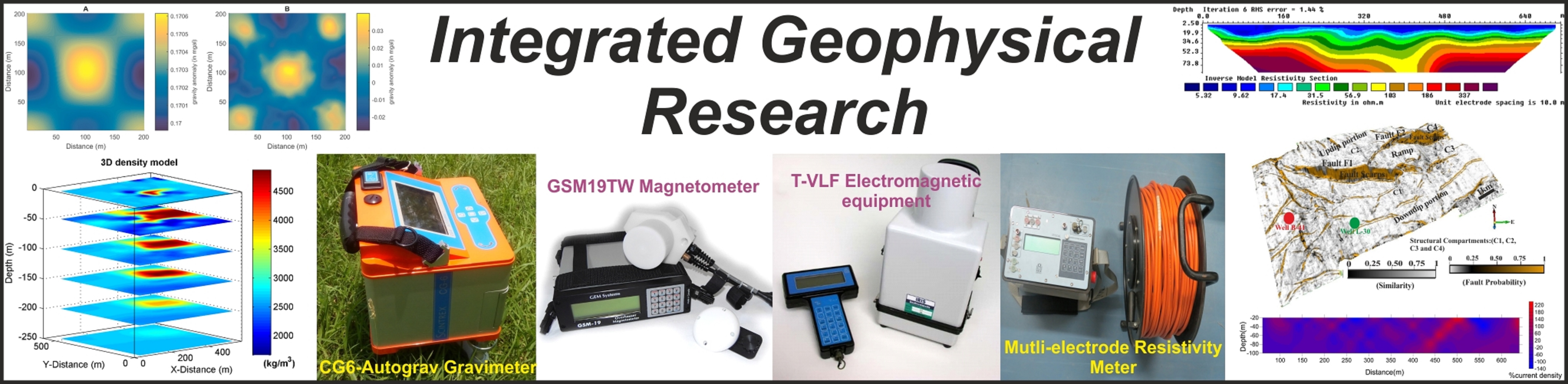
Animesh Mandal serves as an Associate Professor in the Department of Earth Sciences at Indian Institute of Technology Kanpur (IITK) , where he has been a faculty member since April 2015. His academic journey includes a B.Sc. in Physics from University of Calcutta (2005), M.Sc. in Physics from IIT Delhi (2007), and Ph.D. in Geophysics from IIT Kharagpur (2013). Prior to joining IITK, he worked as a Project Scientist at the National Geophysical Research Institute (NGRI). Research Interests : Dr. Mandal specializes in near-surface geophysical studies , geophysical data enhancement , and subsurface modeling . His work focuses on integrated geophysical approaches to understand shallow crustal configuration and delineate natural resources, utilizing gravimeter, magnetometer, electrical, and EM equipment. He has pioneered research in machine learning-assisted interpretation of geophysical data, particularly in seismic impedance inversion, reservoir characterization, and geothermal system analysis. His recent publications demonstrate expertise in applying deep learning techniques to solve complex geophysical problems. Research Trends : Analysis of his recent publications reveals a strong focus on geothermal energy systems , particularly non-volcanic hot springs in the Eastern Ghats Mobile Belt. His work combines gravity-magnetic studies with advanced computational methods to understand crustal configuration and thermal structure. Another major trend involves machine learning applications in seismic data processing, where he develops novel deep learning architectures for impedance inversion and reservoir characterization. His research bridges traditional geophysical methods with cutting-edge AI techniques, creating innovative approaches to subsurface imaging. Scientific Awards : Supervised students who received Prime Minister's Research Fellowship (PMRF) Advisees awarded FARE Fellowship, ONGC-IGU Best Poster Presentation Award, and EAGE PACE grants Students received FULL sponsorship to attend major international conferences like IMAGE 2024 Mentored students who secured postdoctoral positions at prestigious institutions including KAUST and University College Dublin Academic Leadership : Dr. Mandal has successfully supervised multiple Ph.D. and M.Tech. students to completion, with recent graduates securing positions at institutions like University College Dublin, Queen's University, and industry roles at companies including Verisk Analytics and ONGC. His research group maintains active collaborations with international institutions and regularly presents at major geoscience conferences including EAGE, SEG, and AOGS. The group has secured competitive research funding that supports field studies, laboratory work, and student training in advanced geophysical techniques.