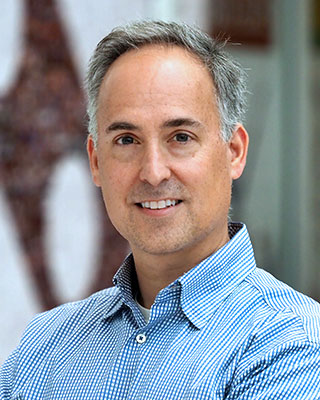
Prof. Theo Araujo is a Full Professor of Media, Organisations and Society at the University of Amsterdam's Department of Communication Science, and Scientific Director of the Amsterdam School of Communication Research (ASCoR). He leads the Digital Data Donation Infrastructure (D3I) consortium, co-directs the Trust in the Digital Society research priority area, and is a senior researcher in the Public Values in the Algorithmic Society (AlgoSoc) program. His research focuses on AI's societal impacts, computational social science methodologies, and data donation frameworks. Key roles include coordinating multi-university initiatives and advising on digital ethics. Research interests emphasize automated decision-making, conversational agents, and digital inequality. He has pioneered tools like the Conversational Agent Research Toolkit and OSD2F framework. His work bridges communication science with computational methods, addressing challenges in data collection, algorithmic transparency, and human-AI interaction. Recent studies explore chatbot persuasion mechanisms, public trust in AI systems, and cross-cultural consumer behavior. He has published extensively on brand engagement, media analytics, and the ethical implications of automated systems. Current projects include smart speaker data donation studies and hybrid methods for health communication research. Grants and collaborations involve EU-funded initiatives and partnerships with Dutch universities. His lab work focuses on developing ethical AI applications and improving digital trace data methodologies. Future directions include advancing participatory data donation practices and mitigating algorithmic biases in automated decision-making systems.
Paul Wu is an Associate Professor in the School of Mathematical Sciences at Queensland University of Technology (QUT), Faculty of Science, where he also serves as an industry research fellow in the strategic partnership between the Centre for Data Science (CDS) and AIS/QAS. He leads the sports systems domain within CDS and applies statistical and machine learning models to complex systems across sports, marine science, and defence sectors. PhD, Queensland University of Technology Master of Engineering Science (Computer and Comm Engineering), Queensland University of Technology Bachelor of Engineering (Electrical and Computer Engineering), Queensland University of Technology His research focuses on Bayesian statistics, dynamic Bayesian networks, state space modelling, and simulation techniques. He works closely with domain experts to solve real-world problems in sports performance, ecological resilience, and human systems. His interdisciplinary work spans sports science , marine ecology , and defence applications . Paul’s recent publications demonstrate a strong trajectory in predictive analytics for elite sports and ecosystem modelling, particularly using Bayesian frameworks. His work on swimming performance prediction has informed national training strategies and contributed to competitive success. He has also advanced methods in clustering, model adaptation, and psychosocial risk assessment. His scientific contributions have been recognized through impactful collaborations with elite sports organizations including the Australian Institute of Sport, Swimming Australia, and the West Coast Eagles. Testimonials highlight his role in transforming data analytics in sports injury recovery and performance optimization. Applied Bayesian models in elite sports decision-making Developed predictive tools for marine ecosystem resilience Collaborated on over 30 industry and government projects Supervises research in complex sports data analytics Paul leads a dynamic research environment focused on translating statistical innovation into practical impact across diverse domains.
Dr. Shashikant Ilager is an Assistant Professor at the Informatics Institute (IVI) , University of Amsterdam. His research focuses on distributed systems , energy efficiency , and machine learning , with a specific emphasis on sustainable large-scale AI platforms. Current affiliation: University of Amsterdam (Oct 2024–present) Previous roles: Postdoctoral Researcher at TU Wien; Visiting Research Scientist at IBM PhD: CLOUDS Lab, University of Melbourne Research Focus Dr. Ilager develops data-driven approaches to optimize cloud/edge platforms for environmental and economic sustainability , particularly in AI workloads. His work bridges system characterization with learn-centric optimization techniques. Recent Publications 2025: ACM e-Energy (LLM carbon amortization), TAAS (self-adaptive edge monitoring), CCGRID (code generation efficiency). 2024: ICSOC (edge time series classification), EdgeSys (federated learning with GANs). Awards Best Paper Award @ ACM/IEEE UCC 2023 Community Engagement Organizer of the GreenSys workshop (2025) at EuroSys. Member of HPDC 2025 Technical Program Committee.
Professor Sandra Leaton Gray is a distinguished academic at University College London (UCL), where she serves as Professor of Education Futures at the UCL Institute of Education (IOE) within the Curriculum, Pedagogy & Assessment department. She also holds significant governance roles as a member of the UCL Council, the main governing body of the university, and as a Senior Member of Wolfson College, University of Cambridge. Her academic career spans multiple institutions including the University of East Anglia and the University of Cambridge, with a consistent focus on the intersection of education, technology, and social policy. Professor Leaton Gray's educational background includes: Doctor of Philosophy from University of Cambridge (2004) Master of Philosophy from University of Cambridge (1999) ATQ07 - Holder of a PGCE in higher education, secondary education, further education, lifelong learning from Roehampton University (1993) Her research interests center on the sociology of technology and its impact on children and young people, with particular emphasis on AI ethics in educational contexts. She explores education futures, the future of assessment, educational testing, and curriculum reform through a critical lens that considers digital ethics, children's biometrics, and the knowledge economy. Her work addresses pressing contemporary issues including the recovery from the COVID-19 pandemic's impact on education systems, with a strong commitment to addressing educational inequality and promoting democratic values in technologically mediated learning environments. Professor Leaton Gray approaches these topics through the frameworks of sociology, policy analysis, and educational futures thinking, always with attention to the lived experiences of learners in digital contexts. Professor Leaton Gray's extensive publication record reveals a clear trajectory of increasing focus on digital technologies in education, particularly AI and biometrics, while maintaining her foundational interest in educational sociology and policy. Her recent work demonstrates a sophisticated understanding of how technological systems intersect with power structures in educational assessment and how these dynamics impact equity and access. The growing emphasis on AI in her recent publications reflects both the rapid development of educational technologies and her strategic positioning at the forefront of critical analysis of these innovations. Professor Leaton Gray has received numerous professional recognitions: Fellow of the College of Teachers (since 2007) Fellow of the Incorporated Society of Musicians (since 1993) Fellow of the London College of Music (since 1990) Principal Fellow of the Higher Education Academy (since 2005) Senior Member of Wolfson College, University of Cambridge (since 2006) As an advisor and consultant, Professor Leaton Gray has significantly influenced education policy at national and international levels, working with organizations including the UN, UK Government, EU Commission, OECD, Royal Colleges of Medicine, British Dental Association, International Baccalaureate Organisation, BBC, Channel 4, Pearson, and the Biometrics Institute. Her current role as Researcher in Residence at the University of Passau, Germany (2024-2025) leading the project 'Education Futures: Visions of Artificial Intelligence, Biometrics and Digital Surveillance within Bavarian Schools' demonstrates her ongoing commitment to shaping educational practices through research. She has also directed significant projects including the 'My Life Online' research project, the 'Future of the Artificially Intelligent Examination,' and the 'Optimising 2020 secondary school transition processes during the Covid-19 pandemic.' Professor Leaton Gray is actively involved in several important governance and advisory roles that extend her influence beyond traditional academic boundaries. She serves as a member of the UK Government's College of Experts in the Ministry of Culture, Media and Sport (DCMS), the UK Ministry of Science, Innovation and Technology, the Privacy Expert Group of the Biometrics Institute, the UK Cabinet Office's International Best Practice Advisory Group, and as an expert advisor to the UK Government's Centre for Data Ethics and Innovation. Her participation in the OECD's ONE AI working group further demonstrates her international standing in the field of educational technology policy.
Deborah Brewis is a Senior Lecturer (Associate Professor) in the Management Strategy & Organisation department at the University of Bath's School of Management. She holds additional roles as Senior Tutor and Provocations Essays Editor for Management Learning . Her research focuses on critical diversity studies, creative methodologies in management, and digital labor. Brewis co-founded the Building the Antiracist Classroom collective and is part of the Decolonising Alliance and VIDA. She has collaborated with institutions like University of Kent and Queen Mary University London on antiracist initiatives. Education: PhD in Business and Management from the University of Warwick (2011-2016). Current supervision includes three PhD students across internal and external programs. Research Interests: Critical analysis of inclusion/diversity practices, gender/race dynamics, intersectionality, digital identity, emotional labor, and solidarity communities. Recent work explores anti-racism strategies, postfeminist labor discourses, and embodied writing methodologies. Publications highlight themes like anti-racist pedagogy, neoliberal subjectivity, and digital exclusion. Awards include Fellowship of the Higher Education Academy. Active in editorial roles and methodological innovation, she curates dialogues on organizational learning through the Management Learning Meets... video series. Labs/Initiatives: Core member of the Centre for Future of Work, Centre for Qualitative Research, and collaborator in global anti-racism networks. Current projects involve decolonizing academic practices and developing creative research tools.
Professor Jon Platts is the Dean of Cardiff School of Technologies and a Professor of Autonomous Systems at Cardiff Metropolitan University. He holds a BEng in Electrical and Electronic Engineering from the University of Bradford, an MSc in Aerosystems Engineering, and a PhD in Self-Organising Fuzzy Logic from Loughborough University. With a career spanning the UK Royal Air Force and industry roles at QinetiQ, he specializes in autonomous systems, UAVs, and cybersecurity. He is a Chartered Engineer and Fellow of the Institution of Engineering and Technology, with affiliations to the Institution of Measurement and Control and the International Council on Systems Engineering. His research focuses on advancing autonomous systems, IoT applications, cybersecurity in multinational operations, and ethical AI. Recent work includes smart water management, metaverse security, and sustainable hospitality technologies. He collaborates with organizations like Dstl, BAE Systems, and Thales UK, emphasizing cross-disciplinary and industry-academia partnerships. Key achievements include leading QinetiQ’s autonomy division, shaping defense research programs, and publishing widely on UAV control, AI ethics, and IoT. Awards include his IET Fellowship and Chartered Engineer status. His leadership drives innovation in Cardiff School of Technologies’ research centers like the Centre for Industry 4.0 and Blockchain Research.
Dr. Susanne Wenzel is a Research Fellow at the Structural and Functional Organisation of the Brain (INM-1) within the Forschungszentrum Jülich GmbH. She serves as the Scientific Coordinator for the Helmholtz AI Local Unit at INM-1 and the Jülich Supercomputing Centre (JSC), fostering collaboration with the Helmholtz-wide AI platform. Additionally, she leads the Helmholtz International BigBrain Analytics and Learning Laboratory (HIBALL), a partnership with McGill University’s Montreal Neurological Institute and the Mila Quebec AI Institute. Her work focuses on advancing AI and high-performance computing for neuroimaging, particularly in developing 3D brain models through interdisciplinary research with CIFAR and MILA. Her research expertise spans artificial intelligence, remote sensing, and image analysis, with a strong emphasis on machine learning applications in environmental science, neuroscience, and urban scene understanding. She coordinates projects that integrate cutting-edge technologies to address complex challenges in climate modeling, neuroimaging, and spatial data analysis. Dr. Wenzel’s contributions include pioneering work in neural networks for ocean eddy tracking, sea level anomaly prediction, and facade image interpretation. Her projects emphasize interdisciplinary collaboration, combining computational methods with domain-specific knowledge across multiple institutions globally. Her current initiatives reinforce the utilization of AI and supercomputing resources to enhance scientific discovery, particularly in neuroscience through HIBALL. This collaboration aims to leverage advanced analytics for detailed brain model development, reflecting her commitment to bridging computational innovation with real-world applications.
Professor Steve Williams is the Head of the Department of Neuroimaging and Professor of Imaging Sciences at King’s College London. He leads the Centre for Neuroimaging Sciences at the Institute of Psychiatry and Maudsley Hospital. His research focuses on translating neuroimaging techniques from bench to clinic, with specialties in MRI development and clinical application. He has pioneered advancements in silent MRI for pediatric populations and has developed automated imaging tools for autism diagnosis. Key achievements include winning the NHS Innovation of the Year Award (2010) and the GE Healthcare Thought Leader Award (2010). Education: PhD in Magnetic Resonance Imaging (University of Cambridge, 1988), BSc in Medicinal & Pharmaceutical Chemistry (Loughborough University, 1985). Research Interests: Neuroimaging techniques, clinical neurology/psychiatry applications, MRI innovation, and imaging biomarkers for neurological disorders. His lab develops cutting-edge methods like portable ultra-low field MRI and silent fMRI for vulnerable patient groups. Recent Publications Highlight: Focus on neuroimaging applications in autism, pain management, and post-COVID-19 neurological effects. Collaborations emphasize multi-center studies and translational medicine. Awards: Pfizer Young British Scientist of the Year (1994), King’s Business Development Award (2008), and numerous grants from Wellcome Trust and NIHR. Grants/Projects: Active funding includes EPSRC DRIVE-Health (precision cognitive assessment), TBI-REPORTER (traumatic brain injury data portal), and CHIME Study (global health imaging). Labs/Teams: Director of the Centre for Neuroimaging Sciences and Principal Investigator of the Wellcome Trust-funded Centre for Neuroimaging Sciences.
Melanie Austen is Professor of Ocean and Society and Director of the Centre for Systems Thinking: Ocean, Land and Society at the University of Plymouth. With over 20 years of experience in interdisciplinary marine research, she focuses on integrating natural, economic, and social sciences to advance sustainable ocean management. Key affiliations include the UK Government's Natural England and Joint Nature Conservation Committee (JNCC), where she contributes to national and international policy development. PhD in Marine Biology and Ecology Her research spans blue economy sectors (renewable energy, fisheries, aquaculture) and marine natural capital frameworks, emphasizing ecosystem service valuation and policy implications. Current projects include UKRI GCRF Blue Communities and NERC-funded SWEEP, both addressing sustainable coastal development. She leads the UKRI Centre for Doctoral Training in Sustainable Management of Marine Resources. Recent publications highlight interdisciplinary approaches to marine plastic pollution, mangrove conservation, and energy-fisheries trade-offs. Her work connects ecological data with socio-economic analysis, supporting UN Sustainable Development Goals. Melanie advocates for systems thinking in marine management and promotes 'blue social prescriptions' linking ocean health to human wellbeing. Key policy roles with Natural England and JNCC Director of Centre for Systems Thinking Former Chief Scientific Advisor to Marine Management Organisation Melanie's research bridges marine science with public policy, focusing on UK and Southeast Asian coastal environments. She emphasizes stakeholder collaboration and evidence-based decision-making for sustainable marine resource use.
Dr. Toby Newstead is a Senior Lecturer in Management at the Tasmanian School of Business and Economics, University of Tasmania. She is an internationally respected scholar in leadership, with expertise in leadership development, ethics, character, and volunteer leadership. Her work bridges academic research and practical application through deep industry engagement and community partnerships in Tasmania. PhD, University of Tasmania, 2019 Bachelor Degree, Royal Roads University, Canada, 2009 Graduate Certificate in Research, University of Tasmania, 2017 Her research focuses on leadership development, leader character, place-based leadership, and the role of virtues in effective leadership. She explores leadership in diverse contexts such as emergency volunteering, AI and gender bias, and crisis leadership in higher education. Her approach integrates theoretical rigor with practical relevance, aiming to develop leaders who drive positive change in organizations and communities. Dr. Newstead’s publications span top journals including Academy of Management Learning & Education , Voluntas , and Organizational Dynamics , and include book chapters and influential white papers. Her recent work emphasizes the integration of research and practice, the purpose of leadership development, and innovative measurement tools such as the Volunteer Leader Behavior Scale. Community Engagement Award (2023) She actively supervises doctoral students on topics like leadership in extreme places and volunteer leadership. She has led multiple funded research projects with partners including the Menzies Foundation, Kravis Leadership Institute, and the Tasmanian Department of Health. She coordinates the Graduate Certificate in Leadership and Organisational Capability and the credit-bearing short course Effective Leadership , delivering research-informed, industry-relevant programs. She is also the host of the Menzies Leadership Forum podcast, fostering dialogue between scholars and practitioners. Her work includes co-convening international conferences and delivering high-impact keynotes on leadership ethics, volunteer motivation, and AI in leadership.
Professor Jeremy Pitt is a Professor of Intelligent and Self-Organising Systems at Imperial College London, affiliated with the Department of Electrical and Electronic Engineering and the Faculty of Engineering. He leads the Intelligent Systems and Networks Group and the Computer-Supported Social Arrangements Laboratory (SALab). His research focuses on computational models of social processes, self-governance in socio-technical systems, and the ethical implications of technology. Pitt has published nearly 300 articles and secured over 30 grants, emphasizing interdisciplinary collaboration across computer science, political science, and philosophy. His work spans six key areas: computational sustainability, justice, self-governance, social construction, influence, and platform design. Notable contributions include formalizing Ostrom’s institutional design principles and Ober’s theories of classical democracy. As Editor-in-Chief of IEEE Technology and Society Magazine (2018–2023), he addressed societal impacts of technology, including editorials on 'Toxic Technology' and 'Futural Appropriation'. Pitt’s current research tackles re-empowerment architectures to address democratic backsliding and power asymmetries in the Digital Society. He collaborates with institutions like the Council of Europe and focuses on designing ethical AI, public interest technology, and sustainable socio-technical systems. Grants: Over 30 national/EU grants secured Labs: Intelligent Systems and Networks Group, SALab Affiliations: Artificial Intelligence Network, Centre for Cryptocurrency Research and Engineering Key Themes: Self-organisation, algorithmic governance, digital ethics, interdisciplinary policy
Dr. Veselin Rakocevic is a Senior Lecturer in Electronic Engineering at City, University of London (post-merger with St George's). He holds a PhD in Telecommunications from Queen Mary, University of London (2002) and a Dipl-Ing in Electrical & Electronic Engineering from the University of Belgrade (1998). At City, he has served as Head of Department (2015-2018) and Associate Dean for Portfolio Development (since 2023). PhD: Telecommunications, Queen Mary, University of London (2002) Dipl-Ing: Electrical & Electronic Engineering, University of Belgrade (1998) His research focuses on multihop wireless networks , including optimal scheduling , dynamic clustering , cooperation mechanisms , and network self-organisation . Applications span vehicular networks , heterogeneous cellular networks , and energy network optimisation . Over 15 years, his publications demonstrate expertise in 5G/LTE-A protocols , VANET security , and transport-layer multipath tunneling . Recent article trends highlight 5G congestion control , machine learning for traffic identification , and game theory applications in rural wireless networks . He has supervised 12 PhD students with topics covering network optimization , QoS management , and mobile security . Major projects include REACH (EU-India rural broadband) and Wireless Networks for Moving Objects (EU COST Action).
Roy Rosin, MBA, is Board Partner at First Round Capital and served from 2012-2024 as Chief Innovation Officer at Penn Medicine and Senior Fellow at the Leonard Davis Institute of Health Economics, University of Pennsylvania. An innovation executive rather than a tenure-line academic, he nonetheless leads large NIH- and PCORI-funded research programs, has published >70 peer-reviewed articles since 2015, and teaches Wharton Executive Education courses on business-model innovation and health-care leadership. Education: MBA, Stanford Graduate School of Business AB, cum laude, Harvard College Research & Innovation Focus: Rosen’s work sits at the intersection of behavioral economics, digital health, and rapid-cycle implementation science. His team has designed, piloted, and scaled more than 150 technology-enabled care-delivery interventions that measurably reduce readmissions, emergency-department use, medication non-adherence, and clinician burden while increasing screening rates, patient engagement, and use of high-value care sites. Key methodological themes include text-message–based coaching, conversational AI agents, financial & social-incentive design, and workflow automation inside large health systems. Publication Trends: Across 50+ recent papers he consistently pursues patient-facing digital interventions—chatbots for oncology adherence, SMS programs for maternal health, automated triage tools, and incentive trials for distracted driving—demonstrating a cross-disciplinary portfolio spanning oncology, obstetrics, ophthalmology, dermatology, emergency medicine, and population-level behavioral prevention. Honours & Recognition: Becker’s “30 Great Chief Innovation Officers to Know” (2022) Three separate CHIBE papers named among the Top-20 Clinical Research Achievement Awards by the Clinical Research Forum (2025) Advising & Grant Leadership: Although individual PhD students are not listed, Rosin directs multi-million-dollar implementation trials (e.g., NIH “iSMART”, PCORI opioid-use disorder studies) collaborating with dozens of faculty, fellows, and data scientists across Penn’s medical school, engineering, and Wharton. He mentors start-up founders nationally and serves as executive-in-residence for Wharton’s Health Care Management program. Labs & Teams: As Penn Medicine’s inaugural CIO he built the “Innovation Accelerator,” an internal consultancy that applies design-thinking, Lean Start-up, and behavioral economics to clinical operations. The group includes data scientists, UX researchers, software engineers, and quality-improvement specialists who co-design interventions with frontline clinicians and patients; many projects transition into routine operations or spin out as commercial ventures.
Graeme Best is a Lecturer in robotics at the University of Technology Sydney's School of Mechanical and Mechatronic Engineering within the Faculty of Engineering and Information Technology. He joined UTS in April 2022 after working as a Postdoctoral Scholar at Oregon State University from 2018 to 2022, where he collaborated with Carnegie Mellon University and University of Washington on projects funded by DARPA, ONR, NSF, and NAVFAC. Dr. Best completed his PhD titled "Planning Algorithms for Multi-Robot Active Perception" at the University of Sydney's Australian Centre for Field Robotics. His educational background includes a BE (Electrical and Computer Systems) and BSc (Computer Science) from Monash University, both completed in 2014. His research focuses on developing fundamental algorithms for multi-robot systems, with particular emphasis on active perception, where robots plan their motion to obtain high-value observations. His work spans from theoretical algorithm development to full-scale system demonstrations across diverse environments including subterranean spaces, marine settings, precision agriculture, and planetary exploration. He has pioneered approaches such as decentralized Monte Carlo tree search, self-organizing maps for active perception, and spatiotemporal optimal stopping to address challenges like online planning, decentralized coordination, long planning horizons, and unreliable communication. Dr. Best's publication record shows a consistent trajectory of high-impact research in top robotics venues, with recent work focusing on behavior trees for intent communication, multi-room exploration, and resilient multi-sensor systems. His publications demonstrate strong interdisciplinary connections between theoretical computer science, control theory, and practical field robotics applications. Google Research Scholar Program Award (2023) DARPA Subterranean Challenge: Winner for the Tunnel Circuit (2019) DARPA Subterranean Challenge: Second Place for the Urban Circuit (2022) IEEE ICRA Best Paper Award on Multi-Robot Systems (2021) RSS Best Systems Paper Award, Finalist (2022) Dr. Best actively contributes to the robotics community through editorial roles at major conferences including IEEE ICRA, IROS, and MRS. He currently serves as Program Director for UTS's undergraduate Mechatronics major and teaches courses related to robotics software and algorithms. His funded research includes projects like the Multi-Robot Mission Control System for Maritime Autonomous Systems and the Online Behaviour Tree Synthesis for Adaptive Multi-Agent Coordination project funded by Google. He leads the UTS Motorsports Autonomous Vehicle team and supervises capstone projects, demonstrating his commitment to translating research into practical student experiences. His work on the DARPA Subterranean Challenge, where his team won the "Most Sectors Explored" award, exemplifies his ability to bridge theoretical research with real-world field applications.
Professor Simon Weidenholzer is a faculty member in the Department of Economics at the University of Essex. His research focuses on Behavioral Economics, Industrial Organisation, and Evolutionary Game Theory. He holds a professorship and is actively engaged in academic supervision, marked by his openness to supervise students in his areas of expertise. His academic support hours are held weekly on Thursdays from 10:30 AM to 12:00 PM. Professor Weidenholzer’s work bridges theoretical economic models with real-world applications, particularly in understanding strategic interactions, cooperation mechanisms, and decision-making processes. His research often integrates game theory with behavioral insights, exploring topics such as network formation, decentralized financial systems, and institutional evolution. While specific grants or awards are not listed here, his extensive publication record reflects contributions to journals and conferences across economics, finance, and social network analysis. He is based in office 5B.212 on the Colchester Campus and can be reached at sweide@essex.ac.uk for academic inquiries.