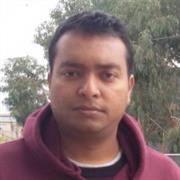
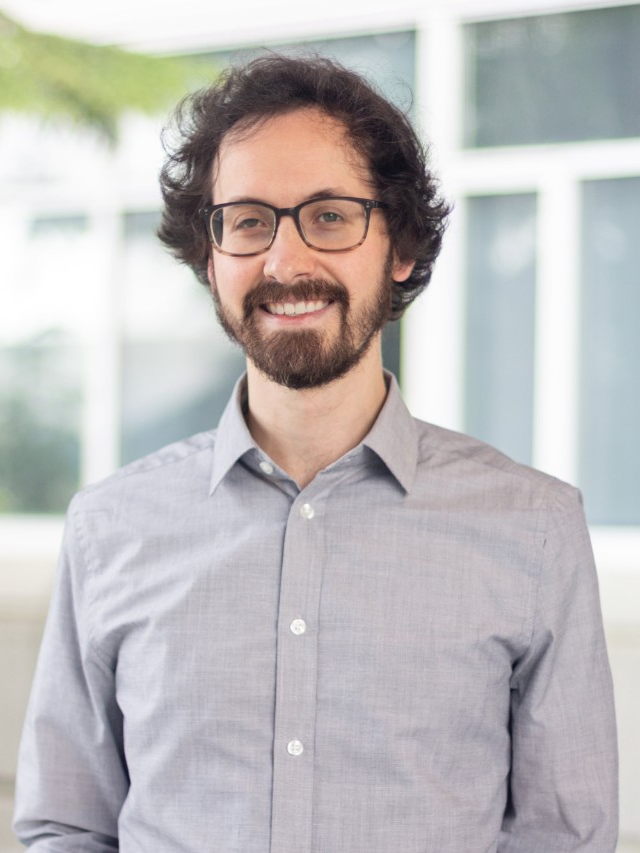
Dr. Mohammad Saidur Rahman is a Lecturer in Computing Technologies at RMIT University's School of Computing Technologies. His research focuses on Data Security and Privacy, Blockchain, IoT, and Machine Learning. He joined RMIT as a Lecturer in July 2023 and previously held a Postdoctoral Research Fellow position from January 2020 to August 2022. His academic work includes supervising projects such as Advanced Automotive Intrusion Detection and Prevention Systems and Privacy-Preserving Models in Edge-Cloud Interplay for Smart Systems . He teaches courses like Introduction to Cyber Security (INTE2625) and Computer and Internet Forensics (COSC 2301). His research emphasizes secure IoT integration, blockchain applications in supply chain and healthcare, and privacy-preserving machine learning frameworks. Rahman has published extensively on blockchain-based systems for smart cities, edge computing, and industrial IoT security. His contributions span technical innovations in consensus protocols, federated learning frameworks, and data integrity models. He is open to supervising Masters and PhD students in Cyber Security, IoT, and Blockchain domains.
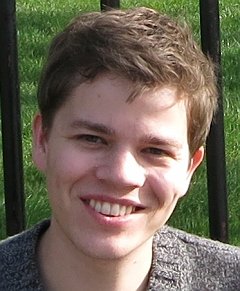
Benjamin Lucien Kaminski is a Professor at Saarland University and a Lecturer at University College London . He specializes in quantitative aspects of formal program verification , with a focus on probabilistic and quantum programs , incorrectness logic , and non-classical computation models . His research includes semantics , probabilistic program verification , expected runtimes , and explainable verification . He leads the Examination Board for B.Sc. Computer Science (English) and actively mentors PhD, Master’s, and Bachelor’s students in logic and verification. 2025 : A Taxonomy of Hoare-Like Logics (POPL), Partial Incorrectness Logic (TPSA) 2024 : Quantitative Weakest Hyper Pre (OOPSLA), Caesar: A Verifier for Probabilistic Programs (Dafny), Hoare-Like Triples (Incorrectness-track) 2023 : A Deductive Verification Infrastructure (OOPSLA), Lower Bounds (OOPSLA), A Calculus for Amortized Expected Runtimes (POPL) He has received notable awards including the Ackermann Award (2020), Best Paper at LOPSTR 2020 , and EATCS Best Paper Award at ETAPS 2016 . He has also served on program committees for leading conferences like CAV , POPL , and LICS , and reviewed for prestigious journals such as Journal of the ACM and TOCL .
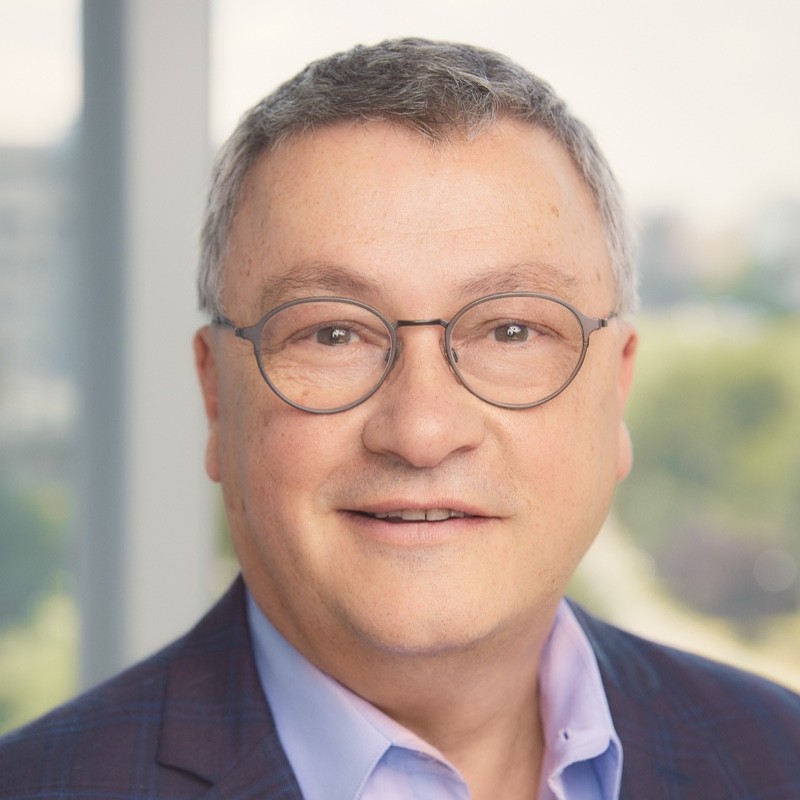
Ali Dorri is an Associate Professor in the School of Computer Science at Queensland University of Technology's Faculty of Engineering. His research focuses on the intersection of blockchain technology, Internet of Things (IoT), and cybersecurity, with significant contributions to privacy-preserving systems and energy trading applications. He maintains an active research profile with consistent publications in top-tier venues including IEEE Transactions, ACM Computing Surveys, and various IEEE conferences. Dr. Dorri's research interests center on blockchain technology and its applications to real-world problems. His work addresses critical challenges in IoT security, privacy-preserving systems, energy trading mechanisms, and supply chain management. He has developed innovative solutions including Tree-Chain (a lightweight consensus algorithm for IoT-based blockchains), LSB (a lightweight scalable blockchain for IoT security), and various blockchain storage optimization techniques. His research bridges theoretical concepts with practical implementations, often targeting specific industry challenges in manufacturing, energy, and supply chain sectors. Analysis of his recent publications reveals a strong focus on optimizing blockchain for resource-constrained environments like IoT networks, developing privacy-preserving mechanisms for sensitive applications, and creating practical implementations for energy trading systems. His work shows increasing sophistication in addressing scalability challenges while maintaining security and privacy guarantees. The interdisciplinary nature of his research connects computer science fundamentals with applications in energy systems, manufacturing, and supply chain management. Dr. Dorri has established productive research collaborations with colleagues at QUT including Raja Jurdak, Salil Kanhere, and Gowri Ramachandran, as well as international collaborators. His publications demonstrate consistent productivity with multiple high-impact papers each year, including several that have received significant citations within the blockchain and IoT research communities.
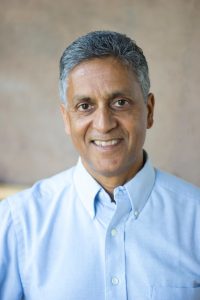
Dr. Thangavel Thevar is a Senior Lecturer in the School of Engineering at the University of Aberdeen, where he has been teaching since 2005. He completed both his undergraduate degree (First Class Honours in Electrical Engineering) and PhD (in Laser Engineering) at the University of Aberdeen in 1989 and 1993 respectively. Prior to his academic career, he accumulated approximately 10 years of industrial R&D experience in the USA, working on solid-state laser development and holographic applications. Dr. Thevar's research focuses on several key areas: Digital holography for imaging of marine plankton and micro-particles Laser Induced Breakdown Spectroscopy (LIBS) for subsea applications Laser-based instrumentation development Development of solid-state lasers for scientific, industrial, and medical applications Engineering applications of holography His most notable recent achievement is leading a team that developed the weeHoloCam, a state-of-the-art ultracompact underwater holographic camera for imaging microorganisms. Weighing just 3.5 kg, this system is the lightest and most compact of its kind, capable of imaging 240 ml/s and continuously recording up to 200,000 holograms. The system incorporates a rapid hologram processor and an AI-based image classifier. This technology has significant applications in marine studies including spatial and temporal monitoring of plankton species, monitoring harmful plankton & micro-jellyfish, study of vertical transport of floc, and monitoring microplastic pollution in the ocean. Dr. Thevar has secured numerous research grants as Principal Investigator, including projects funded by Sustainable Aquaculture Innovation Centre (SAIC), BBSRC, DEFRA, and Defence & Security Accelerator (DSTL). His current research portfolio demonstrates strong interdisciplinary connections between optical engineering, marine science, and environmental monitoring. His scientific contributions include: Royal Academy of Engineering Visiting Teaching Fellow Award (2010-2013) US patent 8,494,012 B2 for Raman converters Development of alexandrite lasers and ruby holographic lasers during his industrial R&D period Work on US government contracts for non-destructive inspection methods for military aircraft and the space shuttle Sabbatical work at NASA Langley Research Centre developing diode pumped Thulium YALO lasers As an educator, Dr. Thevar has served as Coordinator of MSc Oil & Gas Engineering (2007-2020), Undergraduate Level 1 Coordinator, and has contributed to various committees including Quality Assurance and Students' Progression. He currently teaches courses including Principles of Electronics, Electrical & Mechanical Systems, Control Systems, and supervises individual projects at both undergraduate and postgraduate levels. He is accepting PhD students interested in Engineering research. Dr. Thevar is actively involved in professional organizations, serving as Technical Programme Chair for IEEE/OES Oceans Conference 2007, on organizing committees for various conferences, as a committee member of the Instrument Science and Technology Group (Institute of Physics), and as a member of both IET and IEEE. He also serves as a reviewer for optics-based journals.
Kanad Basu is an Associate Professor in the Department of Electrical, Computer, and Systems Engineering at The University of Texas at Dallas, Jonsson School of Engineering and Computer Science. He leads the Trustworthy and Intelligent Embedded Systems (TIES) lab, focusing on hardware security, reliability, and emerging computing paradigms. His research spans AI hardware, quantum computing, functional safety, and hardware-based security validation. Research Interests: His work emphasizes improving the trustworthiness of modern hardware systems. Key areas include hardware security (e.g., side-channel analysis, hardware trojans), functional safety in AI accelerators, quantum computing security and verification, and post-silicon validation techniques. He combines formal methods, machine learning, and hardware design to address vulnerabilities in SoCs, DNN accelerators, and quantum systems. Publication Trends: Recent publications (2023–2025) show a strong focus on interdisciplinary research, integrating AI/ML with hardware security, quantum computing, and functional safety. There is a growing emphasis on using large language models for assertion generation, symbolic execution for hardware fuzzing, and graph neural networks for quantum circuit analysis. His work frequently appears in top venues like DAC, DATE, HOST, ISVLSI, and IEEE journals. Scientific Awards: NSF CAREER Award, 2025 IEEE Top Picks in Test and Reliability, 2024 and 2023 Multiple Hack@DAC Prizes (2nd and 3rd) Best Paper Award at VLSI Design 2011 Assistant Professor Award at UTD Jonsson School, 2024 Nominated for Blavatnik Awards for Young Scientists, 2019 Advising and Grants: Dr. Basu has mentored numerous PhD, MS, and undergraduate students, many of whom have published in top-tier venues. He leads the TIES lab, which has received significant recognition, including the NSF CAREER Award. He actively collaborates across disciplines, advising students on topics ranging from quantum computing to AI hardware and functional safety. His lab produces high-impact research with real-world applications in automotive, cloud, and embedded systems. Labs and Teams: He leads the Trustworthy and Intelligent Embedded Systems (TIES) lab at UT Dallas, which fosters innovation in hardware security and reliability. The lab has produced award-winning work, including second prize at HACK@DAC 2025. He also serves on technical committees for IEEE DATE and HOST, and acts as Hardware Hacking Chair for IEEE HOST, indicating strong leadership in the hardware security community.
Garth Gibson is a Professor in the Computer Science Department and Department of Electrical and Computer Engineering at Carnegie Mellon University's School of Computer Science. He serves as Co-Director of the Master of Computational Data Science program and as Associate Dean for Master's Programs. Gibson has been a faculty member at CMU since 1991, after receiving his Ph.D. and M.Sc. in Computer Science from the University of California at Berkeley and a Bachelor of Mathematics in Computer Science and Applied Mathematics from the University of Waterloo. Gibson's research focuses on large-scale parallelism in computer systems, secondary memory system technologies and optimization, scalable file and key-value storage systems, scalable machine learning, and systematic testing for large scale systems. His work bridges theoretical concepts with practical implementations, with a strong emphasis on shepherding technological advances from academic research to commercial reality. He has made significant contributions to RAID technology, network-attached secure disks (NASD), and parallel file systems that have shaped industry standards and products. Gibson's recent publications reveal a strong trend toward data-intensive scalable computing, with increasing focus on machine learning systems, distributed storage solutions, and high-performance computing infrastructure. His research has evolved from foundational storage technologies to address the challenges of petascale and exascale computing environments, with particular attention to the intersection of storage systems and machine learning workloads. The papers demonstrate a consistent theme of addressing system scalability challenges through innovative architectural approaches. Scientific Awards: 2014 Fellow of the IEEE for contributions to the performance and reliability of transformative storage systems 2012 Fellow of the ACM for contributions to the performance and reliability of storage systems 2012 Jean-Claude Laprie Award in Dependable Computing Industrial/Commercial Product Impact Category 2011 SIGOPS Hall of Fame for the SIGMOD88 RAID paper 1999 Reynold B. Johnson Information Storage Award 1999 Allan Newell Award for Research Excellence 1998 Test of Time Award 1991 A.C.M. Doctoral Dissertation Award (tied for second) Gibson has advised numerous graduate students who have gone on to influential positions in both academia and industry, including Swapnil Patil who won first place in the 2010 ACM Graduate Student Research Competition. He has secured significant research funding through initiatives like the DOE Petascale Data Storage Institute and the Intel Science and Technology Center for Cloud Computing. His research has been supported by collaborations with national laboratories including Los Alamos, Sandia, Oak Ridge, Pacific Northwest, and Lawrence Berkeley. Gibson founded CMU's Parallel Data Laboratory (PDL) in 1993, which has grown into a vibrant research community comprising 6-9 faculty members, 2-3 dozen students, and 4-10 staff. The PDL operates with guidance from the Parallel Data Consortium, which includes 15-25 companies interested in parallel data systems. He also founded Panasas Inc. in 1999, a scalable storage cluster company that has deployed technology in national laboratories, energy sectors, and other high-performance computing environments. More recently, Gibson established the Big Learning research group and created the Systems Major curriculum within CMU's Master of Computational Data Science program.
Alex X. Liu is a Professor in the Department of Computer Science & Engineering at Michigan State University (2016-2022), currently serving as Chief Information Security Officer and President of Midea Software Engineering Institute. His academic career includes roles as Associate Professor (2012-2016) and Assistant Professor (2006-2012) at the same institution. He holds a Ph.D. and M.S. in Computer Science from The University of Texas at Austin, and a B.S. in Computer Science from Jilin University, China. Education Ph.D. in Computer Science (UT Austin, 2006) M.S. in Computer Science (UT Austin, 2002) B.S. in Computer Science (Jilin University, 1996) Liu's research focuses on Dependable computing , Networking algorithms , Cloud computing , Mobile computing , Privacy computing , and Computer/network security . His work spans secure systems, network protocols, and resource optimization in distributed environments. Recent publications address quantum neural networks , microservices autoscaling , RFID tag recognition , network traffic classification , and hybrid physical-layer authentication , demonstrating expertise at the intersection of AI and network security. Key trends include deep learning applications for cloud systems and robust security protocols. Scientific Awards IET Fellow (2021) IEEE Fellow (2019) ACM Distinguished Scientist (2019) Withrow Distinguished Scholar Awards (Senior 2019, Junior 2011) NSF CAREER Award (2009) IEEE & IFIP William C. Carter Award (2004)
Val Tannen is a Professor at the University of Pennsylvania, specializing in database systems, provenance analysis, and programming languages. His research focuses on data management, query languages, and systems like DBSP and ORCHESTRA. Collaborations include work with co-authors such as Zachary Ives, Susan Davidson, and Todd Green. Key research interests include provenance for databases, incremental view maintenance, and data integration. His work bridges theoretical foundations and practical applications in systems like DBSP for stream processing and ORCHESTRA for collaborative data sharing. Publications span provenance frameworks, query optimization, and distributed systems. While no awards are explicitly listed, his contributions to database theory and systems are widely recognized.
Riadul Islam serves as an Assistant Professor in the Department of Computer Science and Electrical Engineering at the University of Maryland, Baltimore County (UMBC), maintaining his primary office in room 316 of the Information Technology and Engineering (ITE) Building. His academic appointment focuses on hardware design and verification within the institution's engineering framework. His educational qualifications include: Ph.D. in Computer Engineering from UCSC (2017) M.A.Sc. in Electrical and Computer Engineering from Concordia University, Montreal (2011) B.Sc. in Electrical and Electronic Engineering from Bangladesh University of Engineering and Technology (2007) Professor Islam's research centers on VLSI CAD tools and low-power digital/mixed-signal IC design , with significant contributions to current-mode clock networks, vehicular security systems, and error-robust circuit architectures. His work increasingly integrates machine learning for design automation while exploring neuromorphic computing applications and secure hardware implementations. This multidisciplinary approach bridges traditional IC design with modern AI-driven optimization techniques. Analysis of his 2023-2025 publications reveals three dominant research thrusts: (1) Machine learning applications in early-stage Design Rule Checking (DRC) prediction and clock network optimization, (2) Graph-based intrusion detection systems for automotive networks (particularly CAN bus security), and (3) Event-based vision systems and neuromorphic computing architectures. These areas demonstrate consistent innovation in merging hardware design with AI/ML methodologies for enhanced system reliability and efficiency. He directs the UMBC VLSI and SoC Research Group , which develops energy-efficient clocking networks, secure vehicular communication protocols, and compute-in-memory architectures. The lab maintains active collaboration with industry partners on hardware security and neuromorphic computing initiatives while supporting graduate student research in cutting-edge IC design methodologies.
Andrew Morton, PhD, PEng, is a Continuing Lecturer in the Department of Electrical and Computer Engineering at the University of Waterloo. He holds a BSc in Computer Science (Guelph, 1993), MSc in Computer Science (Guelph, 1996), and a PhD in Computer Engineering (Waterloo, 2005). Education: BSc (Guelph, 1993) Major: Computer Science, Minor: Chemistry MSc (Guelph, 1996) Computer Science PhD (Waterloo, 2005) Computer Engineering His research focuses on the software/hardware boundary, including embedded systems, hardware acceleration, and real-time operating systems. Key areas include FPGA placement, real-time scheduling, and system-on-chip design. Teaching responsibilities span courses such as CS 137 (Programming Principles), CS 450 (Computer Architecture), and ECE 252 (Systems Programming and Concurrency). He has advised multiple students on topics including MPSoC scheduling and dynamically reconfigurable systems.
Nikil Dutt is a Chancellor’s Professor at the University of California, Irvine (UCI), with academic appointments in Computer Science, Electrical Engineering and Computer Science (EECS), and Cognitive Sciences. He is affiliated with UCI's Center for Embedded Computer Systems (CECS), Center for Cognitive Neuroscience and Engineering (CENCE), Calit2, CPCC, and LUCI. His research focuses on embedded systems, electronic design automation, computer architecture, and healthcare IoT. Dutt has authored/co-authored seven books and holds IEEE Fellow and ACM Distinguished Scientist titles. Education: B.E. (Mechanical Engineering) from Birla Institute of Technology and Science (Pilani, India), 1980; M.S. (Computer Science) from Pennsylvania State University, 1983; Ph.D. (Computer Science) from University of Illinois at Urbana-Champaign, 1989. Research Interests: Embedded systems, brain-inspired architectures, neuromorphic computing, and healthcare IoT. Current projects include the Information Processing Factory (IPF) for autonomous systems and CareDex for disaster resilience in aging communities. Awards: Multiple Best Paper Awards, NSF grants, and fellowships. Serves as editor for ACM TECS, IEEE TVLSI, and former Editor-in-Chief of ACM TODAES. Active in academic service, including ESWEEK Steering Committee roles. Grants: NSF IPF, UNITE, CareDex, and industry partnerships (e.g., Facebook). Research addresses energy-efficient data centers, autonomous driving systems, and wearable health technologies. Labs/Teams: Leads the Dutt Research Group (DRG), focusing on self-aware systems, edge computing, and neuromorphic architectures.
Dr. Matt Amy is an Assistant Professor in the School of Computing Science at Simon Fraser University (SFU), holding the Canada Research Chair in Quantum Computing. His research focuses on quantum compilers, programming languages, and formal verification of quantum programs. He also explores quantum circuit optimization and models of quantum computation. Education: PhD in Computer Science (University of Waterloo, 2019), M.Math in Quantum Information (2013), and B.Math in Computer Science (2011), all from the University of Waterloo. Research Interests: Quantum compilers and languages, circuit optimization, formal verification, and quantum computation models. His work bridges theoretical foundations with practical implementations, emphasizing efficient quantum software development. Recent research trends include advancing quantum compilation techniques, exploring NP-hard optimization problems in quantum circuits, and developing formal methods for quantum program analysis. His work on symbolic synthesis and equational theories for quantum circuits demonstrates a focus on foundational algorithmic challenges. Scientific Awards: Canada Research Chair (2025–present) Advising and Grants: While no current advisees are listed, his research is supported by grants focused on quantum computing and formal methods. He collaborates with industry through SFU’s School of Computing Science. Labs and Teams: Involved with the Tangent Lab, a research group exploring quantum algorithms and software systems at SFU.
Stef Aupers serves as Professor of Media Culture at KU Leuven's Institute for Media Studies within the Faculty of Social Sciences. His research centers on cultural sociology of media, examining meaning production, representation, and consumption in contemporary digital cultures with particular focus on conspiracy theories, game studies, and religious mediatization. His primary research domains include: Conspiracy Theory Discourse in Digital Spaces Digital Game Culture and Social Dynamics Religion-Media Intersections Popular Culture Analysis Mediatization of Modern Myth Analysis of his 2021-2025 publications reveals consistent exploration of how conspiracy theorists construct worldviews through digital platforms, the commodification of religion in gaming ecosystems, and socio-technical exclusion mechanisms. His work demonstrates methodological sophistication in analyzing YouTube/Reddit communities, audiovisual rhetoric, and epistemological boundary work between mainstream and alternative knowledge systems. Aupers actively contributes as keynote speaker, conference organizer, and academic journal reviewer, with expertise spanning media analysis, conspiracy culture interpretation, and science-religion discourse. His research provides critical frameworks for understanding contemporary digital culture's most contentious phenomena through cultural sociological lenses.
Professor Bogdan Warinschi leads research in cryptography and security at the University of Bristol's School of Computer Science. His work establishes rigorous connections between symbolic and computational security models for cryptographic protocols. Current projects focus on secure searchable encryption, authentication protocols, and privacy-preserving systems. Developed novel security frameworks for encrypted databases that reveal fundamental limitations in existing designs. Serves on program committees for top security conferences including IEEE Security & Privacy and ACM CCS. Organizes international workshops on secure key exchange and encrypted search algorithms.
Pascal Sasdrich is a Researcher at Ruhr University Bochum, Germany, affiliated with the Faculty of Computer Science and the Security Engineering department. He holds a PhD in IT-Security/Information Technology from the same university (2018), following M.Sc. (2015) and B.Sc. (2012) degrees in the same field. His research focuses on Hardware Security, Secure Processor Design, Computer-Aided Security, and Security by Design. He has extensive experience in cryptographic hardware implementations, including countermeasures against side-channel and fault attacks. Teaching includes courses on Processor Security and Implementation of Cryptographic Schemes. His work bridges theoretical security models with practical hardware implementations, emphasizing automated tools and formal verification for secure embedded systems. Key projects include contributions to Project HEP (open-source hardware security chip design) and development of methodologies like EASIMASK for automated masking in hardware. Publications span cryptographic hardware implementations, fault and side-channel countermeasures, and formal security verification. Notable works include combined threshold implementations, secure processor extensions, and automated generation of masked hardware circuits. Current research emphasizes securing embedded systems through holistic design approaches, including ISA extensions and automated EDA tools.