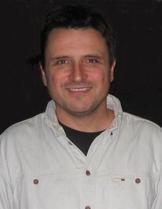
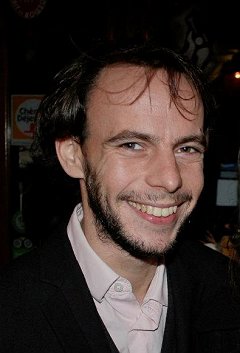
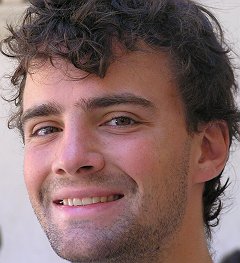
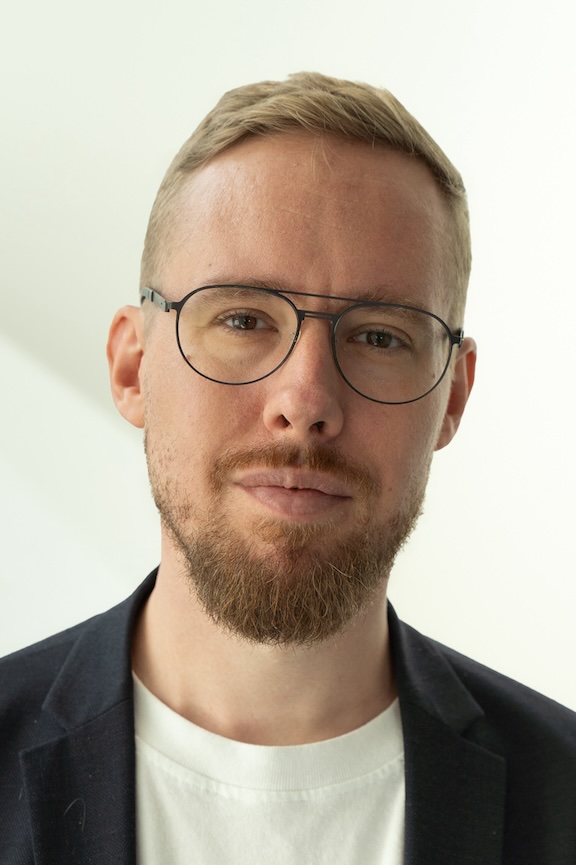
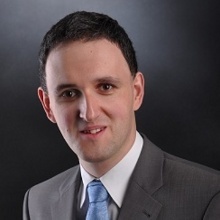
Tibor Szabó is a Professor in the Combinatorics and Graph Theory group at the Department of Mathematics, Freie Universität Berlin. He holds a PhD from The Ohio State University, advised by Ákos Seress. Prior to his current position, he held roles at McGill University, ETH Zürich, the Institute for Advanced Study (Princeton), and the University of Illinois (UIUC) as a J.L. Doob Research Assistant Professor. Research Interests: His work focuses on combinatorics and combinatorial optimization, including extremal problems, random structures and algorithms, pseudorandom graphs, positional games, and the combinatorics of linear programming. He explores tools from algebra, probability theory, and topology applied to combinatorics. Teaching: He teaches courses such as Algorithmic Combinatorics, Extremal Combinatorics, and runs the Combinatorics Seminar. His lecture notes include works on positional games and explicit constructions in extremal combinatorics. Students & Postdocs: Notable PhD advisees include Yamaan Attwa, Silas Rathke, Simona Boyadzhiyska, and Patrick Morris. Postdoctoral fellows include Olaf Parczyk and Anurag Bishnoi. His research has involved collaborations with over 50 co-authors. Funding & Grants: Supported by grants from the Swiss National Science Foundation (SNF) and German Research Foundation (DFG), focusing on topics like positional games and extremal graph theory.
Matthieu Sozeau is a prominent researcher at Inria in the Gallinette team in Nantes, France, and a key contributor and coordinator of the Coq/Rocq proof assistant project. His work bridges theoretical computer science and practical software development, focusing on creating reliable formal verification tools. His research interests span Type Theory, Proof Assistants, Functional Programming, and Unification. He has made significant contributions to the development of Coq (recently renamed to Rocq Prover), particularly through the MetaCoq project which aims to verify Coq's kernel within Coq itself, the Equations plugin for dependent pattern matching, and CertiCoq, a verified compiler from Coq to assembly. His work enables stronger guarantees about formalized mathematics and verified software. Sozeau's publications reveal a consistent focus on foundational aspects of proof assistants. His recent work includes verified type checking ('Coq Coq Correct!'), verified extraction from Coq to OCaml, and sort polymorphism for proof assistants. These contributions advance both theoretical understanding and practical implementation of dependently-typed programming languages. Distinguished paper award for Verified Compilation from Coq to OCaml at PLDI'24 As an academic mentor, Sozeau has supervised PhD students including Théo Winterhalter and Antoine Allioux. He regularly teaches courses on proof assistants, notably at MPRI (Master Parisien de Recherche en Informatique), and actively participates in the academic community through program committees, invited talks, and workshops. His work has significantly influenced both the theoretical foundations and practical applications of interactive theorem proving.
Dominique Devriese is a professor at the Department of Computer Science, KU Leuven, and a member of the DistriNet research group. His work bridges computer security, programming languages, and formal verification. Research interests: Functional Programming, Object Capabilities, Secure Compilation, Dependently-typed Programming, Modal Type Theory Teaching: Formal Systems, Object-Oriented Programming, CyberSecurity, Secure Software His research focuses on rigorous software systems security through capability machines and secure compilation techniques. He actively contributes to formal verification using Agda and Haskell, with recent work on multimode type theory and effect parametricity. Key publication trends include: multimode/presheaf type theory, capability-based security models, formal verification of hardware/software abstractions, and parametricity applications in programming languages. Contact: Email: dominique.devriese@kuleuven.be ORCID: 0000-0002-3862-6856
Zhidan Zheng is a researcher at the Technical University of Munich (TUM), working within the Chair of Electronic Design Automation led by Prof. Ulf Schlichtmann. His office is located in room 0509.05.911 at Arcisstr. 21, 80333 Munich, with direct contact available via email zhidan.zheng@tum.de and phone +49 (89) 289 - 23692. Zheng holds a Master of Science degree as indicated by his academic title M.Sc. and has been actively contributing to the field of optical interconnects and network-on-chip design. Zheng's research focuses on wavelength-routed optical networks-on-chip, with particular expertise in network topology optimization, fault tolerance mechanisms, waveguide routing algorithms, and bandwidth allocation strategies. His work addresses critical challenges in photonic integrated circuit design, including thermal variation effects, crosstalk mitigation, and lifetime extension for communication-intensive systems. Zheng has developed several innovative methodologies including ToPro+ for topology projection, LightR for fault-tolerant architectures, and WROXIM for network-level simulation. Analysis of Zheng's publication trends from 2021-2025 reveals a consistent focus on practical implementation challenges of optical networks-on-chip. His research has evolved from foundational topology design (Light, 2021) to increasingly sophisticated solutions addressing reliability (LightR, 2023) and comprehensive system integration (ToPro+, 2025). The work demonstrates strong collaboration with researchers including Mengchu Li, Tsun-Ming Tseng, and Ulf Schlichtmann across multiple high-impact venues including DAC, DATE, ICCAD, and ASP-DAC. Zheng actively contributes to the Electronic Design Automation research group at TUM, participating in projects related to analog EDA, emerging technologies, and optical networks. His research is situated within TUM's broader initiatives in photonic integration and high-performance computing architectures, working closely with Prof. Schlichtmann's team on funded projects in the optical NoC domain.
Prof. Dr. Matthias Weidlich is a faculty member at Humboldt University of Berlin within the Institute of Computer Science under the Faculty of Mathematics and Natural Sciences . His research focuses on Process Mining , Complex Event Processing , and Data Privacy with applications in Business Process Management and Scientific Workflows . Research Interests: Business Process Management and Process Mining Complex Event Processing and Stream Data Analysis Data Privacy and Security in Process Systems Scientific Workflow Systems and User Behavior Heterogeneous Network Embeddings Algorithm Design and Optimization Recent Publications (2023-2025) demonstrate expertise in: Efficient stream processing techniques Privacy-preserving process mining frameworks Scientific workflow analysis tools Graph neural network applications Multi-modal data integration Adaptive querying systems Contact: Office: Unter den Linden 6, 10099 Berlin Phone: 030 2093-41277 Email: matthias.weidlich@hu-berlin.de Web: hu.berlin/data
Kevin Baum is a computer scientist currently serving as the deputy head of the Neuro-Mechanistic Modelling (NMM) department at the German Research Center for Artificial Intelligence (DFKI) since January 2023, and head of the Centre for European Research in Trusted AI (CERTAIN) at DFKI since December 2023. Based at the Saarland Informatics Campus in Saarbrücken, Germany, he completed his doctorate in philosophy in March 2024, combining technical expertise with philosophical depth. His work bridges computer science with ethics, focusing on making AI systems transparent and accountable to human users. Dr. Baum's research program centers on interdisciplinary questions concerning the explainability and transparency of AI systems. His work spans multiple significant projects including the Explainable Intelligent System (EIS) initiative and project E7 of the Transregional Collaborative Research Centre 248 "Foundations of Perspicuous Software Systems" (CPEC). He has developed frameworks for understanding stakeholder perspectives on explainable AI and investigated how different information types about automated systems affect user perceptions of fairness and justice. His approach consistently combines theoretical foundations with practical implementations across diverse contexts. Analysis of his publication trends reveals a clear trajectory from theoretical foundations in machine ethics toward practical implementations of explainability requirements in real-world contexts. His work demonstrates increasing focus on human oversight effectiveness, fairness monitoring, and ethical considerations across various AI applications. He has made significant contributions to both academic discourse and practical AI development guidelines, with publications spanning computer science, philosophy, psychology, and human-computer interaction venues. Award for Ethics for Nerds lecture series As a research leader, Dr. Baum contributes to shaping AI development practices through his departmental leadership and interdisciplinary collaborations. His current work with CERTAIN focuses on establishing European research standards for trusted AI development and deployment, emphasizing the practical implementation of ethical requirements in AI systems. He maintains active collaborations across multiple institutions and disciplines, reflecting his commitment to bridging technical and philosophical considerations in AI development. At DFKI, he leads research that combines neuroscientific insights with AI development to create more interpretable systems. The NMM department focuses on both theoretical research on explainable AI foundations and practical applications in various domains, with particular attention to how different stakeholders understand and require explanations from AI systems.
Dr. Elisabeth Hoffberger-Pippan is a Senior Researcher at the Peace Research Institute Frankfurt (PRIF), specializing in international security with a focus on verification mechanisms for biological/chemical weapons norms and the ethical implications of AI in military contexts. She holds affiliations with CBWNet and iPRAW initiatives, addressing arms control and autonomous weapons regulation. Her academic background includes postdoctoral research and lecturing at Johannes Kepler University Linz (2015–2022). She has contributed to policy dialogues, including a keynote speech in the Austrian Parliament, and serves on editorial boards for journals like Jahrbuch Digitalisierung und Recht . Key awards include the Ernst-Otto Czempiel Award and Hessian Peace Prize. Her work spans publications on UN compliance procedures, AI ethics, and legal frameworks for emerging technologies. Recent policy engagement includes analyses of Gaza conflict arms exports and Dutch court rulings on Israel’s military actions. Education: PhD in International Law (university details implicit in professional trajectory). Key Projects: Lead roles in iPRAW (autonomous weapons regulation) and CBWNet (biological/chemical weapons compliance). Publications emphasize interdisciplinary approaches to arms control, human rights in technology, and legal responses to modern warfare. She actively contributes to policy blogs (e.g., PRIF Blog) and edited volumes on digitalization and international law.
Dmitriy Traytel is an Associate Professor at the University of Copenhagen's Department of Computer Science since August 2020, where he currently heads the Software, Data, People & Society (SDPS) section. Prior to this position, he worked as a senior researcher (Oberassistent) in the Information Security Group led by David Basin at ETH Zürich. He completed his PhD at TU München under Tobias Nipkow's supervision in 2015. His research focuses on formal methods, particularly logic, automata theory, runtime verification and monitoring, decision procedures, (co)induction and (co)recursion, and interactive theorem proving. Traytel develops formally verified tools for runtime monitoring including VeriMon, TimelyMon, and WhyMon, emphasizing correctness and efficiency in monitoring complex temporal properties. His recent publications (2021-2025) demonstrate a strong focus on first-order temporal logic monitoring, with particular attention to explainable verdicts, scalable parallel implementations, and formal verification of monitoring algorithms. The work spans theoretical foundations in logic and category theory while maintaining practical applications in runtime verification systems. Distinguished Paper Award at POPL 2025 for 'Barendregt Convenes with Knaster and Tarski' Best Student Paper Award at FSCD 2016 Distinguished Paper Award at ATVA 2018 Traytel has supervised numerous PhD, Master's, and Bachelor's students in areas spanning formal verification, runtime monitoring, and theorem proving. His research has been supported through collaborations with major institutions including ETH Zürich and TU München. He actively contributes to the academic community by serving on program committees for major conferences including ITP 2025 and RV 2025. He leads the Software, Data, People & Society section at the University of Copenhagen, focusing on developing formally verified tools for runtime verification that bridge theoretical computer science with practical applications in security and system monitoring.
Kede Ma is an Associate Professor in the Department of Computer Science at City University of Hong Kong (CityUHK). He received his B.E. from the University of Science and Technology of China (USTC) in 2012, and MASc and Ph.D. degrees from the University of Waterloo in 2014 and 2017, respectively. From 2018 to 2019, he was a Research Associate with the Howard Hughes Medical Institute and New York University. Prof. Ma has been named to the Highly Cited Researchers list by Clarivate Analytics in 2024 and currently serves on the editorial boards of IEEE Transactions on Image Processing, IEEE Transactions on Information Forensics and Security, and IEEE Signal Processing Letters. Prof. Ma leads the Multimedia Analytics (MA) Laboratory, an interdisciplinary research group focused on computational vision, computational modeling of human visual perception, perceptual multimedia signal processing, quality assessment, and multimedia forensics. His research spans computational photography, high dynamic range imaging and rendering, omnidirectional video analysis, camera processing pipeline design, and artificial intelligence safety in multimedia systems. His work integrates machine learning techniques including reinforcement learning, generative modeling, self-supervised learning, and continual learning for multimedia signal processing applications. His recent publications demonstrate a strong focus on image quality assessment, deep learning for multimedia processing, and multimedia forensics. His work bridges theoretical computer vision principles with practical applications in multimedia systems. The research trends show increasing integration of foundation models with specialized multimedia processing tasks, particularly in quality assessment and security applications. Highly Cited Researchers list by Clarivate Analytics (2024) Best Paper Award at IEEE International Conference on Virtual Reality and Visualization (2021) Best Paper Runner-Up at International Joint Conference on Artificial Intelligence Workshop (2021) Top 10% Award at IEEE International Conference on Image Processing (2015) Finalist for the Governor General's Gold Medal, University of Waterloo (2017) Spotlight presentation at NeurIPS (2022) Highlight paper at ICCV (2025) Oral presentation at ICLR (2025) Prof. Ma advises numerous PhD students and postdoctoral fellows in the MA Laboratory. His research is supported by various grants enabling work in multimedia analytics, image processing, and computer vision. The laboratory maintains active collaborations with researchers at institutions including SUSTech, ZJU, and HIT. Current projects focus on advancing image quality assessment methodologies, developing more robust deep learning techniques for multimedia forensics, and exploring new approaches to HDR imaging and omnidirectional video processing. The Multimedia Analytics Laboratory maintains a strong focus on both theoretical foundations and practical applications of multimedia processing. Current research directions include integrating large language models with image quality assessment, developing more robust deepfake detection methods, and advancing techniques for continual learning in multimedia applications. The lab emphasizes rigorous evaluation methodologies and maintains multiple datasets for multimedia quality assessment research.
Prof. Dr. Katja Rösler is a Professor of Automotive Engineering at the Institute of Mechanical Engineering, Ruhr West University of Applied Sciences since March 2012. Her career spans academic research and industrial development with key positions at TU Braunschweig, Volkswagen AG, and Fraunhofer Institute. Education: Industrial Mathematics degree completed under standard period Doctorate: Engineering (Driver Modeling) from TU Braunschweig, 2008 Her research focuses on automotive engineering with special emphasis on modeling/simulation, vehicle dynamics, driver assistance systems, accident research, alternative drives, and mobility concepts. She actively combines simulation with experimental verification and has significant involvement in Formula Student projects. Recent publications highlight her work in intelligent mobility systems (2018-2020), with particular attention to electromobility, accessibility solutions for elderly/disabled populations, and micromobility analysis. Earlier works established her expertise in driver modeling, vehicle measurement technology, and simulation-experiment correlation. Labs: Automotive Engineering Lab Teaching: Mechanics (Statics, Strength of Materials, Dynamics), Vehicle Dynamics, Driver Assistance Systems
Yingfei Xiong is an active Associate Professor at Peking University, China, specializing in software engineering and programming languages. With a consistent research trajectory from 2013 through 2026, Xiong has established themselves as a prominent figure in the software engineering research community, regularly contributing to top-tier conferences including SPLASH, ICSE, ASE, and PLDI. Dr. Xiong's research primarily focuses on program synthesis, automated program repair, and software analysis techniques. Their work bridges theoretical programming language concepts with practical software engineering applications, particularly in developing novel approaches for code generation, bug fixing, and program optimization. The research demonstrates strong interdisciplinary connections between traditional software engineering, programming languages theory, and emerging AI techniques. Analysis of Xiong's publication trends reveals a clear evolution in research focus, beginning with foundational work in API transformations and program adaptation around 2013-2016, shifting toward program repair techniques from 2017-2020, and most recently incorporating machine learning and neural approaches into program synthesis and repair (2021-2026). The work consistently addresses practical challenges in software development while maintaining theoretical rigor, with increasing integration of AI techniques in recent years. Dr. Xiong has served in various leadership roles across the software engineering conference ecosystem, including program committee membership and session chair positions at major conferences. Their extensive service demonstrates recognition by peers as a subject matter expert in software engineering and programming languages research. While specific grant information isn't detailed in the provided text, the sustained publication record suggests successful research funding.
Heiko Falk is a Professor and Head of the Institute of Embedded Systems at Technische Universität Hamburg (TUHH). His roles include serving as Workshop Chair for the 2024 Embedded Systems Week (ESWEEK), Scientific Coordinator for the B.Sc. and M.Sc. Computer Science programs, and Deputy Head of the Board of Examiners for Computer Science and Engineering. His research focuses on real-time systems, compiler optimizations, and worst-case execution time (WCET) analysis. Key areas include multi-core architectures, cache management, energy efficiency, and hardware/software co-design. Falk's work emphasizes practical compiler techniques for improving real-time performance, such as WCET-aware memory allocation, dynamic SPM optimization, and event-driven scheduling. His publications analyze shared cache interference, preemptive/non-preemptive scheduling, and DMA-aware optimizations. Recent work explores multi-objective trade-offs between WCET, energy consumption, and code size in embedded systems. No scientific awards are explicitly listed, but his contributions to WCET benchmarking (e.g., haRTStone project) and compiler frameworks demonstrate significant impact in the field. Advising and grants: No formal advisees are listed in the provided texts. Falk's work is supported through projects like teamplay, focusing on cyber-physical systems optimization. Labs/Teams: His group operates within TUHH's Institute of Embedded Systems, collaborating on projects addressing real-time system challenges in multi-core environments.
Christina Elmer is Professor for Digital Journalism and Data Journalism at the Institute of Journalism, Technical University of Dortmund. Prior to her academic career, she held significant positions at DER SPIEGEL as Deputy Head of Development, Member of the Editorial Board of SPIEGEL ONLINE, Head of the Data Journalism Department, and Science Editor (2013-2021). She is recognized as a leading expert in data journalism, AI in media, and digital transformation of journalism. Elmer's research focuses on data journalism, algorithmic accountability, and the integration of artificial intelligence in journalistic workflows. Her work explores how digital transformation affects media production, distribution, and reception, with particular attention to user-centered journalism, ethical dimensions of digital media, and the development of editorial products. She has pioneered approaches to structured journalism and modular content creation that adapt to changing audience needs. Her recent publications examine AI's impact on journalism, methods for combating disinformation, and strategies for maintaining journalistic integrity in algorithmically mediated information ecosystems. Her work shows a clear trend toward investigating how journalism can maintain societal relevance while adapting to technological changes, with increasing focus on AI systems as both tools and challenges for quality journalism. scoop award of the nextMedia.Hamburg initiative, 2023 Helmut Schmidt Journalist Prize (second prize) for 'Blackbox Schufa', 2019 Philip Meyer Award (third place) for 'Hanna and Ismail', 2018 dpa-infografik Award for 'Die Pendlerrepublik', 2018 Journalistin des Jahres, Fachkategorie Wissenschaft, 2016 Deutscher Journalistenpreis Forst & Holz (Print), 2007 Elmer actively contributes to the journalism community as a board member of Netzwerk Recherche (serving as second chair 2021-2023), shareholder of AlgorithmWatch, and member of various advisory boards including Science Media Center Germany and MIP.labor. She frequently collaborates with students through the KURT student editorial team, guiding them in applying design thinking to develop new journalistic formats. Her approach emphasizes the importance of user-centered thinking while maintaining journalistic integrity in the digital age.
Ori Lahav is a faculty member in the School of Computer Science at Tel Aviv University. His research is generously supported by an ERC Starting Grant and an ISF Grant. He actively supervises PhD and MSc students, and seeks highly motivated candidates for postdoc, PhD, and MSc positions in programming language theory, concurrency, and formal methods. Dr. Lahav completed his PhD at Tel Aviv University under the supervision of Arnon Avron. In 2014, he was a postdoctoral researcher at Tel Aviv University hosted by Mooly Sagiv. From 2014 to September 2017, he was a postdoctoral researcher at MPI-SWS in Germany hosted by Viktor Vafeiadis and Derek Dreyer. His primary research areas focus on programming languages and verification, with specialization in concurrency and relaxed memory models. He also has significant interests in proof-theory, semantics of non-classical logics, and automated reasoning. His work bridges theoretical foundations with practical applications in programming language design and implementation. Dr. Lahav's publication record shows a consistent trajectory of high-impact research in top-tier conferences including PLDI, POPL, OOPSLA, and ESOP. His recent work (2023-2025) demonstrates continued leadership in memory models, concurrency semantics, and verification techniques. His research spans both theoretical contributions in denotational semantics and practical tools for verification. Best Paper Award DISC 2024 Best Student Paper Award DISC 2024 Distinguished Artifact Award ESOP 2022 Distinguished Paper Award OOPSLA 2021 Kleene Award for Best Student Paper LICS 2013 Dr. Lahav actively advises students including Yoav Ben Shimon, Yotam Dvir, Amir Karniel, and Roy Margalit (PhD students), Yuval Katsman Ezra (MSc student), and has alumni including Ori Saporta (MSc) and Abhishek Kr Singh (postdoc, now Assistant Professor at IIIT Hyderabad). He has organized significant events including VMCAI 2024 and Dagstuhl Seminars on persistent programming. His teaching portfolio includes courses on Shared Memory Concurrency Semantics, Programming Language Foundations, and Software Foundations in Coq.
Prof. Ilia Polian serves as Head of the Institute of Computer Engineering and Chair of the Hardware-Oriented Computer Science (HOCOS) department at the University of Stuttgart. His leadership spans research, teaching, and institutional coordination across multiple high-impact projects. Prof. Polian's research focuses on developing circuit and system architectures based on both traditional and novel principles, including neuromorphic, stochastic, and approximate architectures. His second major research focus is systematic design methodology and design automation, with particular emphasis on safety and reliability properties of developed systems. Current research directions include quantum computing engineering, secure mixed-signal neural networks, and resource-efficient stochastic circuits for near-sensor computing applications. His recent publications demonstrate strong trends in quantum computing (particularly circuit partitioning and compilation for multi-QPU architectures), hardware security (including memristive cryptographic implementations), and AI-driven approaches to hardware testing and reliability. These works bridge fundamental computer architecture research with practical industrial applications. University of Stuttgart's Publication Prize for Paper on Partitioning of Quantum Circuits Prof. Polian actively supervises doctoral students including Devanshi Upadhyaya, and leads significant research grants such as the DFG Priority Program Nano Security which he coordinates. His department offers numerous thesis and research opportunities for students interested in cutting-edge hardware research. The Hardware-Oriented Computer Science department maintains strong collaborations with industry partners including IBM, Infineon Technologies, and Advantest, as well as academic institutions through the IQST Graduate School and QuantumBW initiatives.