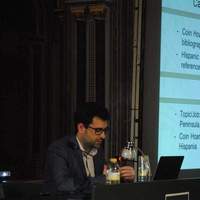
Jose A. Rodriguez Serrano is a Senior Lecturer at the Department of Operations, Innovation and Data Sciences within the Esade Business School. He is affiliated with the Institute for Data-Driven Decisions (ESADE D3), a research group focusing on leveraging data science for strategic decision-making. His work contributes to the UN Sustainable Development Goals, particularly in areas involving technology and equitable access to services. Dr. Rodriguez Serrano's research expertise spans Machine Learning, Deep Learning, and their applications in finance, healthcare, and real estate. He explores topics like generative AI for financial modeling, explainable AI in real estate valuation, and deep learning techniques for healthcare fraud detection. His contributions include developing non-crossing quantile models and attention-based learning systems. He is a core member of the ESADE D3 research group (2022–2025), funded by the Agència de Gestió d'Ajuts Universitaris i de Recerca (AGAUR). This project integrates interdisciplinary approaches to advance data-driven methodologies in business and public policy. His work has been published in prestigious venues like the ACM SIGKDD Conference and the Annals of Operations Research, with over 700 citations and an h-index of 13. His research collaborations span global institutions, focusing on applying machine learning to solve complex problems in healthcare, finance, and real estate valuation. Notable outputs include prototypes for real estate price prediction and deep learning models to detect malpractices in healthcare sectors.
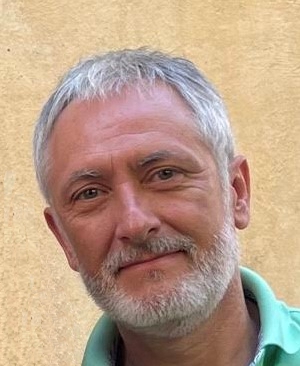
David Martinez-Chico is a Research Fellow at the University of Valencia's Department of Prehistory, Archaeology and Ancient History within the Faculty of Geography and History. He currently holds an Atracció de Talent Fellowship at the University of Barcelona (2025-2026) and previously received the Margarita Salas Fellowship at the Universities of Valencia and Girona (2022-2024). His research focuses on ancient numismatics, Mediterranean archaeology, and Roman military-economic systems. Dr. Martinez-Chico earned his PhD in Numismatics from the University of Valencia in 2020 with the thesis "Los tesoros imperiales de Hispania," supervised by Dr. Pere Pau Ripollès Alegre. He completed his Master's degree in Archaeology at the University of Valencia in 2017 and his Bachelor's degree in History at the University of Murcia in 2016. His academic journey reflects a deep specialization in Mediterranean historical archaeology with increasing methodological sophistication. Martinez-Chico's research interests span Classical Archaeology, Ancient Numismatics (particularly Greek and Roman), and Historical Materialism. His work examines the intersection of coinage, military organization, and economic systems in the ancient Mediterranean world, with particular focus on how coins, riches, and lands were distributed among soldiers and warriors from Late Pharaonic through Early Medieval times. His publications reveal intricate connections between monetary systems and military logistics across the Mediterranean basin and its peripheries, from Central Europe to the Sahara margins. His recent publications demonstrate methodological innovation, including the development of the AMALIA algorithm for lead isotope analysis, which has enhanced understanding of Roman metallurgical practices. Analysis of coin hoards from Spain, Yemen, Iraq, and Turkey provides evidence for trade networks, military campaigns, and economic practices that challenge traditional narratives about cultural isolation in antiquity. Atracció de Talent Fellow at the University of Barcelona (2025-2026) Margarita Salas Fellow at the Universities of Valencia and Girona (2022-2024) Editor of "Coins, Riches and Lands. Paying for Military Manpower in Antiquity and Early Medieval Times" (2025) Co-author of over 50 scholarly publications in international journals Martinez-Chico actively collaborates with international researchers on numismatic and archaeological projects. His work on clipped siliquae in Southern Spain has transformed understanding of late Roman monetary practices, while his research on Byzantine solidi hoards provides crucial evidence for Mediterranean economic connections during political transitions. His interdisciplinary approach combines traditional archaeological methods with advanced scientific techniques to reconstruct ancient economic systems. As a member of the GRAM Archaeological Research Group on the Mediterranean, Martinez-Chico contributes to regional archaeological projects while maintaining international connections. His current research examines the relationship between military organization and economic systems in Late Antiquity, with particular focus on the transformation of Roman military pay structures during the 4th-5th centuries CE.
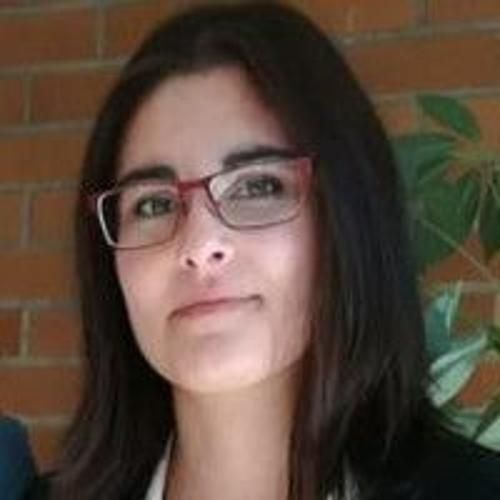
Antonio Calomarde Palomino is an Associate Professor at the Department of Electronic Engineering, Polytechnic University of Catalonia (UPC), located at the Higher Technical School of Industrial Engineering of Barcelona. He holds a B.S. in Telecommunications Engineering (UPC, 1986), an M.S. in Electronic Engineering (Universitat Autònoma de Barcelona, 1993), and a Ph.D. in Electronic Engineering (UPC, 2007) with honors. His research focuses on low-power/high-performance digital circuits and soft-error resilient designs, addressing challenges in semiconductor technology and radiation-hardened electronics. Key research areas include FinFET-based memory cells, RRAM modeling, and radiation mitigation strategies for advanced nanoelectronics. He contributes to the High Performance Integrated Circuits and Systems Design (HIPICS) Group, advancing circuit design methodologies and educational initiatives such as integrating autonomous vehicle systems into undergraduate curricula. His work bridges theoretical advancements with practical applications in automotive electronics and embedded systems. Publications span topics from memristor-based associative memory to approximation techniques in object detection systems, reflecting a balance between fundamental research and applied engineering. His recent work emphasizes variability-aware design and energy-efficient architectures, as seen in 2023-2024 studies on RRAM models and automotive case studies. Calomarde actively organizes academic events like the 2022 ETS conference and develops educational materials for digital electronics and audiovisual systems courses. His contributions to both technical research and pedagogical innovation solidify his role as a key figure in electronic engineering education and innovation.
José Ignacio Olmeda Martos is a Professor at the Computer Science Department of the University of Alcalá, Spain. His research focuses on artificial intelligence, neural networks, financial modeling, and applications in tourism and e-learning. He leads the CSRG-UAH Cognitive Science Research Group and the AUDITAI Group for AI Software Development. He earned his Ph.D. in 1996 with a thesis on nonlinear financial models under Dr. Sergio Barba-Romero. His work bridges computational methods with real-world challenges in finance, tourism, and education. Research interests include predictive analytics, algorithmic optimization (genetic algorithms, SOMs), and accessibility in digital systems. His contributions span hybrid models in credit scoring, volatility forecasting using neural networks, and e-commerce adoption analysis. Over 25 years, he has published extensively on topics like tourism demand prediction (PLAZA project), web accessibility metrics, and financial market predictability. Key projects include developing internet-based tourism reservation systems for Castilla-La Mancha and applying wavelet filtering in financial time series. His research emphasizes interdisciplinary applications, integrating AI with tourism management and financial engineering. Education: Ph.D., Universidad de Alcalá, 1996 Publications reflect his expertise in computational finance, tourism technology, and machine learning. Despite no listed awards, his work demonstrates sustained impact in both academic and applied domains. Advising and grant activities are not detailed in the provided texts.
Cristian González Martel is a full Professor at the Department of Quantitative Methods in Economics and Management, University of Las Palmas de Gran Canaria. He leads multiple research projects analyzing tourism markets, financial systems, and complex network applications through big data and Bayesian statistical techniques. Current research focuses on maritime connectivity, international trade, and environmental emissions (2024) Developing tourism intelligence platforms for Gran Canaria (2023) Maintaining tourism data dashboards for Lanzarote (2022) His work integrates machine learning with economic modeling, particularly in foreign exchange markets and health economics. Projects demonstrate consistent application of spatial interaction models, complex network analysis, and optimization techniques across regional and international contexts. Key collaborations include agreements with the Inter-American Development Bank and Canary Island regional governments. Current email contact: christian.gonzalez@ulpgc.es
Jose Juan Castelló Pastor is an Associate Professor in the Department of International Law at the Faculty of Law, University of Valencia, Spain. He is actively involved in legal research related to digital law, intellectual property, and European private law. His academic work focuses on the intersection of technology, commerce, and legal regulation in the EU context. Education: PhD in Law, University of Valencia LLM, Queen Mary College, University of London His primary research interests include Private International Law, Copyright Law, Internet Law, E-Commerce Regulation, Digital Platforms, Geo-blocking, and Intermediary Liability . His work explores how EU regulations such as the Geo-blocking Regulation (RBGI), the Portability Regulation, and the Platform Economy Regulation impact consumer rights, market fairness, and jurisdictional challenges in digital environments. His recent publications analyze trends in digital content portability, search engine ranking transparency, and notice-and-takedown mechanisms. These works highlight a consistent focus on balancing intellectual property rights with user access and platform accountability in the digital single market. Scientific Awards: No awards mentioned in the provided text. Castelló Pastor supervises academic research, as evidenced by his PhD thesis on search engines and copyright, advised by Dr. Felipe Palau Ramírez. He is affiliated with two research groups: GIPI (R+D Intellectual Property Group) and GEDPED (Study Group on European Private and Digital Law) . His research contributes to shaping policy discussions on digital regulation in Europe. Labs and Research Teams: GIPI Group R+D Intellectual Property GEDPED Study Group on European Private and Digital Law
Dr. Seyedamir Mansouri is a postdoctoral researcher at the Institute for Research in Technology (IIT) of Comillas Pontifical University, Madrid, Spain. He holds a PhD (2020) and MSc (2015) in Electrical Engineering from Tehran, Iran. Amir's research focuses on smart grids , multi-energy systems , and hydrogen-based technologies for carbon-neutral energy transitions. Education : MSc (2015) and PhD (2020) in Electrical Engineering, Tehran, Iran Collaborations : INESC TEC (Porto, 2019), Northumbria University (2022) His work explores IoT-enabled energy management , resilience enhancement , and stochastic optimization for microgrids and industrial parks. Recent articles address decentralized coordination frameworks, hydrogen station integration, and flexibility markets using ADMM algorithms and Stackelberg game theory. Amir's publications (over 30 since 2020) appear in IEEE Transactions on Industrial Informatics , Applied Energy , and Energy . He contributes to projects like OptiREC (MCIN-funded, 2022-2025) and serves as an editor for Towards Future Smart Power Systems (2025). His technical skills include GAMS , MATLAB , and Python .
Argimiro Alejandro Arratia Quesada is a Professor at the Universitat Politècnica de Catalunya-BarcelonaTech (UPC), affiliated with the IDEAI-UPC - Intelligent Data Science and Artificial Intelligence Research Group and the SOCO - Soft Computing sub-group . He works in the Department of Computer Science under the College of Industrial, Aerospace and Audiovisual Engineering (ESEIAAT) . Research Interests: Time series analysis, machine learning, descriptive computational complexity, and financial engineering. Projects: Developed the clustAnalytics R package for network clustering assessment, contributed to Bayesian modeling of pandemic data, and designed entropy-based portfolio optimization techniques. Conference Participation: Actively involved in the International Conference on Time Series and Forecasting (2021-2023) and the Catalan Association for Artificial Intelligence conferences. Scientific Output Trends: Recent publications span finance (portfolio optimization, cryptocurrency forecasting), epidemiology (Covid-19 burden estimation), network science (clustering evaluation), and mathematical finance. Methodologies emphasize statistical inference, entropy optimization, and machine learning.
Aurelio F. Bariviera is an Associate Professor of Economics and Financial Mathematics at Universitat Rovira i Virgili, Spain, and a Visiting Professor at Universidad Nacional de La Plata, Argentina. He holds a PhD from Universitat Rovira i Virgili, following postgraduate studies at Università degli Studi di Padova and an undergraduate degree from Universidad Nacional de La Plata. His research focuses on quantitative finance, information theory, econophysics, and financial econometrics. Notably, two of his papers (2017) in Economics Letters and Physica A were recognized as Highly Cited Papers in Web of Science. Education: Bachelor’s Degree: Universidad Nacional de La Plata (Argentina) Postgraduate Diploma: Università degli Studi di Padova (Italy) PhD: Universitat Rovira i Virgili (Spain) Research Interests: Quantitative Finance Information Theory and Entropy Applications Econophysics and Financial Networks Cryptocurrency Market Dynamics Machine Learning in Finance Policy Uncertainty Analysis Recent Article Trends: Focus on cryptocurrency interconnections, market shocks, and regulatory frameworks Analysis of commodity and policy uncertainty impacts using wavelet and copula techniques Applications of clustering and machine learning in financial forecasting Awards: Highly Cited Paper in Web of Science (2017): Economics Letters Highly Cited Paper in Web of Science (2017): Physica A Advising & Grants: Consortium on Cloud Computing, Big Data & Emerging Topics Research projects on cryptocurrency regulation, trajectory clustering, and renewable energy forecasting Labs/Teams: Active in interdisciplinary teams applying data science to finance, transportation systems, and astronomy digitization.
Marco Galici is a postdoctoral Researcher at the Technological Research Institute (IIT) of the School of Engineering (ICAI) at Comillas Pontifical University. He joined the institute on 26 April 2025, specializing in Distributed Resources, Networks, and Flexibility. He earned his Ph.D. in Industrial Engineering (Doctor Europaeus) from the University of Cagliari (Italy) in February 2024 with honors, following his 2020 degree from the same institution. His research focuses on electricity markets for integrating renewable energy, decentralized technologies like Distributed Ledger, and decarbonizing electrical systems . His work examines uncertainty management, transactive energy systems, and blockchain applications in smart cities. The 15 most recent publications highlight his expertise in peer-to-peer energy trading, robust optimization, and decentralized control mechanisms. Marco's technical skills include reinforcement learning , blockchain development (Hyperledger, Solidity), and tools like MATLAB/Python. While he hasn't received specific scientific awards yet, his contributions span conferences in Greece, UK, USA, Italy, Portugal, and China, demonstrating international collaboration.
Ada Maria Perez Pico is a Lecturer at the Department of Financial Economy and Accounting within the Faculty of Administration and Business Management at the University of Santiago de Compostela. She holds a Doctorate from the same university with a thesis focusing on investor sentiment and financial markets through social networks (2019). Her research interests center on behavioral finance, social media's impact on market dynamics, sustainability in finance, and cryptocurrency markets. She is affiliated with the CVSO research group (Creation of Sustainable Value in Organizations). Key contributions include analyzing investor sentiment's role in stock returns, cryptocurrency volatility, and sustainability practices in post-COVID industries. Her publications span 15 articles between 2016-2025, emphasizing interdisciplinary approaches linking social media analytics with traditional finance theories. Notable themes include digital platforms' influence on stock markets, pandemic-driven economic shifts, and innovative financing models for startups. She has collaborated with advisors like Dra. Angeles López Cabarcos and Dr. Juan Piñeiro Chousa. While no specific awards are listed, her work reflects sustained engagement with cutting-edge topics in financial economics and sustainable value creation.
Carlos Molina Clemente is an Associate Professor of Computer Architecture at Rovira i Virgili University in Tarragona, Spain. He holds a M.Sc. in Computer Engineering (Universitat Politècnica de Catalunya, 1996) and a Ph.D. in Computer Science (UPC, 2005). His research focuses on Computer Architecture, Mobile/Sensor Networks, and Cloud Computing. He leads the Cloudlab research group and coordinates initiatives like GTDAWIN and BIOGEI. Key research areas include multicore scheduling, LoRaWAN protocols, LIDAR data analysis, and serverless computing. He has published over 50 articles in top-tier conferences/journals and supervised three doctoral theses. His work spans projects on cache architectures, real-time systems, and educational multicomputing solutions. Affiliations include the Department of Computer Engineering and Mathematics (DEIM) at URV, with offices at Campus Sescelades (Avinguda Països Catalans 26, Tarragona). Research highlights include contributions to non-uniform cache policies, predictive mobile network algorithms, and energy-efficient sensor networks.
Pablo Luis López Espí is a Professor at the University of Alcalá, affiliated with the Signal Theory and Communications Department. He leads the Radiation and Sensing Group (RSG) and specializes in electromagnetic field analysis, antenna design, optimization algorithms, and biomedical engineering applications. His research integrates theoretical models with practical systems engineering approaches. He earned his Ph.D. in 2008 with a thesis on optimizing algorithms for water quality indicators, developing associated measurement and communication systems. His academic career includes contributions to wireless power transfer, environmental monitoring, and medical sensing technologies. Key research areas include electromagnetic exposure mapping, miniaturized antennas, and systems engineering for biomedical devices. Notable projects involve smartphone-based EMF assessment and wireless energy harvesting for medical implants. His work bridges telecommunications, environmental science, and healthcare through interdisciplinary approaches. Publications span over 15 years, focusing on antenna optimization, EMF safety, and biomimetic techniques. Awards and grants are not explicitly mentioned in the provided data.
Juan José Martín González is an Assistant Professor at the University of Málaga's Department of English, French and German Philology. His academic roles include research and teaching in Neo-Victorian literature, postcolonialism, and maritime studies. He holds a PhD in English Literature from the University of Málaga (2019), with a thesis titled *The Sea is History: Transoceanic Perspectives on the Neo-Victorian Maritime Novel*. He completed a pre-doctoral research stay at Liverpool John Moores University (2018). He teaches in the DEGREE IN ENGLISH STUDIES and Master's Degree in English Studies and Multilingual and Intercultural Communication . His research focuses on Victorian and Neo-Victorian literature, postcolonial literatures, and maritime and travel literature. He is a member of the 'Contemporary Literatures in Europe' research group (HUM-858) , funded by the Andalusian Government. Key projects include: R&D Project *Gender and Spiritism in Andalusia (1840-1920)* (2019-2021) R&D Project *Orientation: A Dynamic Perspective on Contemporary Fiction* (2018-2021) His publications analyze colonialism in Victorian Gothic, transoceanic narratives in Neo-Victorian and postcolonial fiction, and digital humanities methodologies. He received the Extraordinary Bachelor's Degree Award from the University of Malaga (2013). He has served on the Board of Directors of ASYRAS (Association of Young Researchers in Anglophone Studies) from 2019-2021.
David Garrido Romero is a Professor of Historiographic Sciences and Techniques at the University of Cádiz , actively engaged in maritime history and archival research. As a PhD candidate at CEIMAR (Campus of International Excellence for the Sea) and holder of two master's degrees – one in Maritime Heritage, Archaeology, and History (University of Cádiz, Extraordinary Master's Award ) and another in Documents, Books, Archives, and Libraries (University of Seville) – his academic foundation is robust. His work bridges maritime history, notarial documentation, and digital humanities. Research interests span 18th-19th century maritime history from notarial/documentary perspectives, with specific focus on: Maritime notarial institutions Underwater cultural heritage Historical manuscript digitization Global communication nodes in colonial contexts Archival metadata systems His recent publications highlight maritime legal frameworks, AI applications in archival work, and transatlantic cultural connections. He has participated in critical conferences at international venues (2016-2024) and received recognition for his work on Cádiz' maritime heritage. The Caravel Project (2018-2019) demonstrates his innovative approach to combining maritime archaeology with artificial intelligence. Key scientific contributions include: Developing probabilistic indexing methods for historical documents Digitizing 3200+ notarial maritime records Establishing archival metadata standards for maritime heritage Analyzing Bourbon dynasty reforms through notarial sources His work creates bridges between archival science, maritime archaeology, and digital humanities, ensuring historical sources remain accessible for modern research.