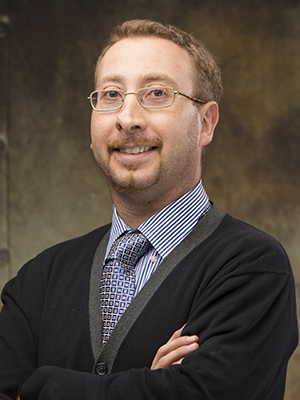
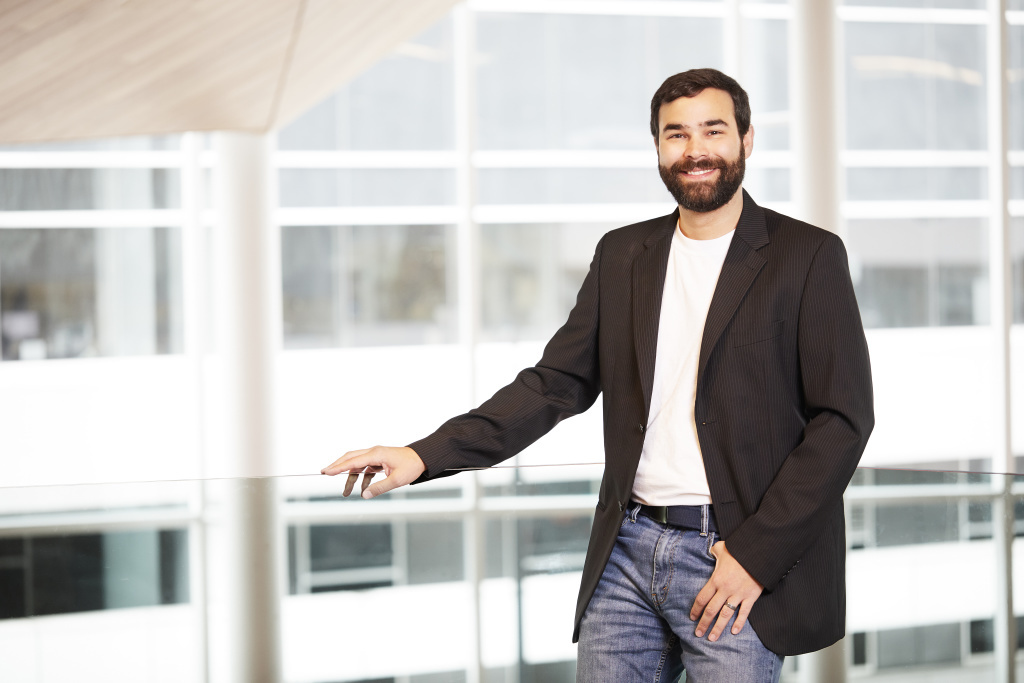
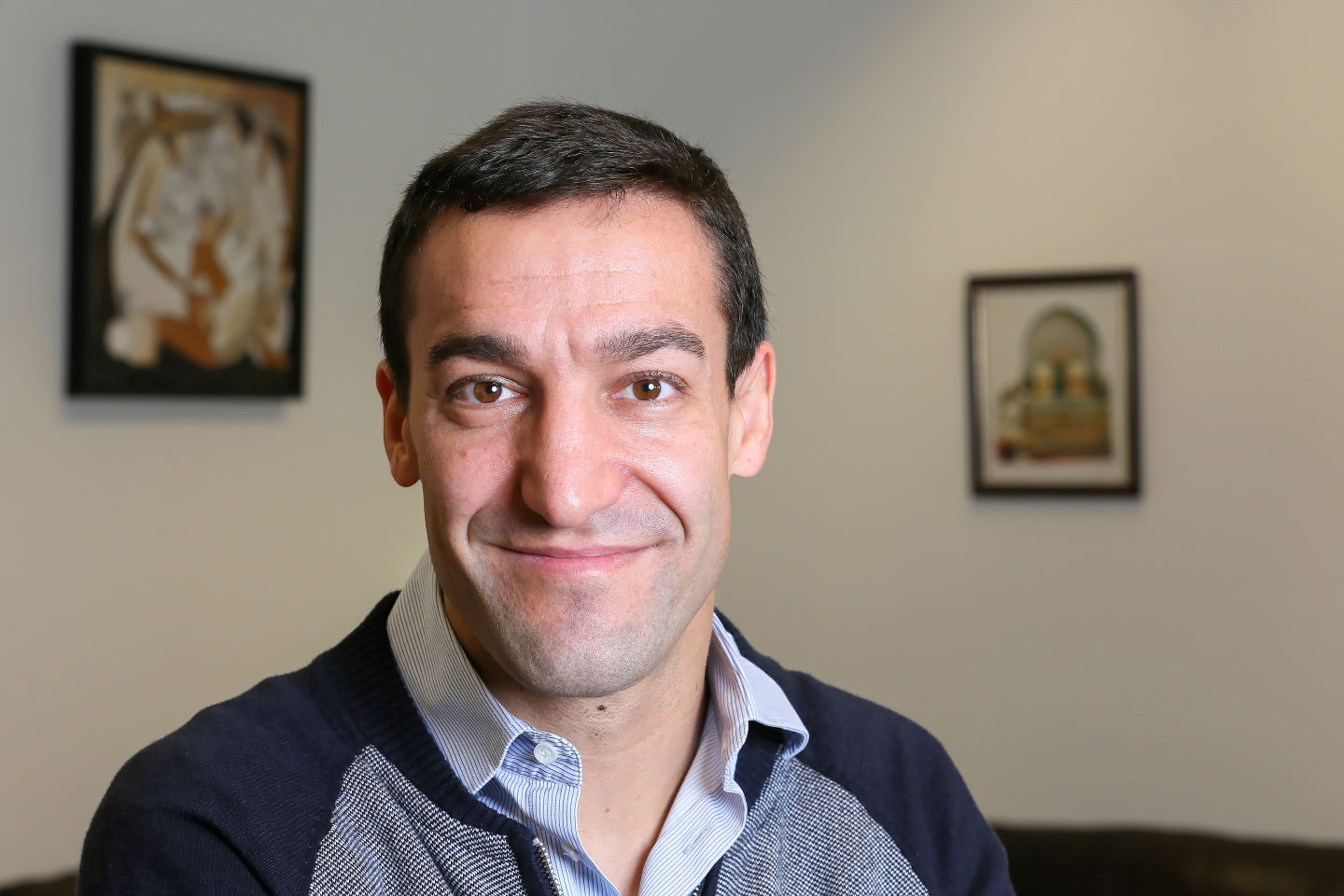
David Mould is a Professor in the School of Computer Science at Carleton University. His research focuses on computer graphics, procedural modeling of natural phenomena, non-photorealistic rendering, and computer games. He holds a PhD from the University of Toronto (2002), MSc from the University of Saskatchewan (1996), and BSc from the University of British Columbia (1994). PhD: University of Toronto (2002) MSc: University of Saskatchewan (1996) BSc: University of British Columbia (1994) Research interests include procedural modeling of trees, lightning, and terrain; image stylization techniques such as stained glass transformation and wax crayon simulation; and nonlinear storytelling in games. His work emphasizes algorithmic innovation and perceptual quality in graphics. Recent publications span topics like texture synthesis, real-time video stylization, and fluid animation techniques. He leads the Graphics, Imaging, and Games (GIGL) research group at Carleton. Teaching responsibilities include courses in game development (COMP 1501–4501), technical writing (COMP 3301), and graduate courses on game design and image processing.
Emily Whiting is an Associate Professor of Computer Science at Boston University and Director of the Shape Design & Computation Lab. She also serves as Director of PhD Admissions and Co-Director of the BU Computer Graphics Lab. Her research focuses on computational fabrication, architectural geometry, and computer-aided design, bridging digital geometry processing, engineering mechanics, and rapid prototyping. She holds a PhD from MIT (2012), an SM in Design & Computation from MIT (2006), and a BASc in Engineering Science from the University of Toronto (2004). Previously, she was faculty at Dartmouth and a Marie Curie Postdoctoral Fellow at ETH Zurich. Her research interests include 3D printing optimization, structural design for fabrication, and tools for functionally-valid object creation. Notable projects include work on elastic garments, climbing experience replication, and print-wind instrument design. Her work has been featured on TEDx and PBS NOVA, and she has received awards such as the NSF CAREER Award and Sloan Research Fellowship. Education: PhD (MIT), SM (MIT), BASc (University of Toronto) Labs: Shape Design & Computation Lab, BU Computer Graphics Lab Key Projects: Knitting 4D garments, Environment-Scale Fabrication, Thermal-comfort casts Recent professional activities include program committee roles at SIGGRAPH 2025 and UIST 2024, and serving as Program Co-Chair for Pacific Graphics 2024. She advises a team of PhD and MS students, with alumni now in academia and tech industries.
Dr. Mohammad Naraghi is a Professor and Associate Department Head for Academics in the Department of Aerospace Engineering at Texas A&M University. He leads the Nanostuctured Materials Lab , focusing on advanced nanomaterials for aerospace applications. His work integrates material science principles to develop lightweight, high-performance materials for structural, energy storage, and smart textile systems. Education: Ph.D., Aerospace Engineering (2009), University of Illinois at Urbana-Champaign M.S., Civil Engineering (2004), Sharif University of Technology B.S., Civil Engineering (2004), Sharif University of Technology Research Interests: Graphitic carbon nanomaterials, bio-inspired composites, experimental nanomechanics, and polymer nanofiber processing. His lab explores multifunctional materials for aerospace applications, including self-healing polymers, structural batteries, and sustainable carbon fiber recycling. Publications: Dr. Naraghi has authored over 150 peer-reviewed articles, with recent work focusing on carbon nanomaterial synthesis, self-healing vitrimers, and all-electric aircraft sustainability . His studies bridge nanoscale mechanics and macroscale applications, emphasizing scalability and industrial relevance. Awards: Best Paper Award (2009) for nano viscoelastic composites research Roger A. Strehlow Memorial Award (2009) for outstanding research First Place in Sandia MEMS Design Competition (2007) Advising & Grants: Leads NSF-funded projects on sustainable materials and structural energy storage. Advises graduate students in aerospace and materials engineering. Collaborates with Sandia National Labs and industry partners on advanced composite development. Labs & Facilities: Directs the Nanostuctured Materials Lab, equipped with advanced nanomechanical testing systems, electrospinning setups, and characterization tools for nanoscale materials analysis.
Professor Chen Xiaodong is a Distinguished University Professor at Nanyang Technological University (NTU), Singapore, holding primary appointment in the School of Materials Science & Engineering with courtesy appointments in the Lee Kong Chian School of Medicine and School of Chemistry, Chemical Engineering and Biotechnology. He serves as Deputy Director of the Institute for Digital Molecular Analytics and Science (IDMxS) and Director of both the Innovative Centre for Flexible Devices (iFlex) and Max Planck-NTU Joint Lab for Artificial Senses. His research spans mechanomaterials science and engineering, flexible electronics, sense digitalization, cyber-human interfaces and systems, and carbon-negative technology. Professor Chen's work focuses on developing methods for controlling materials architecture at 1-100 nm scale to solve fundamental and applied problems in energy, environment, and healthcare. His group integrates expertise from materials science, chemistry, biology, physics, and engineering to create innovative solutions. His scientific contributions have been recognized through numerous prestigious awards including the Singapore President's Science Award, National Research Foundation Investigatorship and Fellowship, Friedrich Wilhelm Bessel Research Award, Dan Maydan Prize in Nanoscience and Nanotechnology, and election to multiple national academies including Singapore National Academy of Science, Academy of Engineering Singapore, and German National Academy of Sciences Leopoldina. Professor Chen serves as Editor-in-Chief of ACS Nano and sits on editorial boards of numerous prestigious journals including Advanced Materials, Chemical Reviews, and Matter. He has mentored numerous PhD students and research fellows who have gone on to faculty positions at institutions worldwide. His laboratory develops cutting-edge technologies in flexible electronics, bio-inspired materials, and nano-bio interfaces, with strong industry collaborations and translational research focus.
Ricardo Zednik is a Professor at the Department of Mechanical Engineering, École de Technologie Supérieure (ÉTS) in Montreal. Holding degrees from Rice University (BA, BS) and Stanford University (MS, PhD), he specializes in piezoelectric materials, fracture mechanics, and microelectronic systems. His research focuses on sensors, innovative materials, and health technologies. Fields of Interest: Piezoelectricity, Fracture Mechanics, MEMS, Smart Materials, Crystallography With over 36 peer-reviewed publications and extensive supervision of graduate research (including 15+ co-directed theses and projects since 2016), Zednik contributes to applied research in materials science and biomedical engineering. He collaborates with LaCIME and PULÉTS laboratories on cutting-edge projects involving ultrasonic transducers, flexible sensors, and high-temperature material characterization. Current courses include Materials Technology (MEC200) and advanced research topics in Functional and Smart Materials (SYS877). His students explore applications like terahertz quality control, piezoelectric earcanal sensors, and Kirigami techniques for wearable electronics.
David E. Breen is a Professor in the Department of Computer Science within the College of Computing & Informatics (CCI) at Drexel University. He leads the Geometric Biomedical Computing Group and is affiliated with the Metadata Research Center and the Center for Biological Discovery from Big Data. His research spans interdisciplinary domains including biomedical image informatics, geometric modeling, textile modeling, and bio-inspired self-organization algorithms. Education: PhD, Computer and Systems Engineering, Rensselaer Polytechnic Institute MS, Computer and Systems Engineering, Rensselaer Polytechnic Institute BA, Physics, Colgate University His research interests focus on computational methods for biomedical applications, including shape and image analysis for cancer diagnosis, 3D reconstruction of biological tissues, and video analysis of animal behavior. He also investigates geometric modeling techniques for textiles and self-organizing systems. His work integrates computer science with biology, medicine, and engineering to solve complex problems in biomedical computing. The recent publications highlight a strong trend in computational modeling of textiles, biomedical image informatics, and AI-driven data analysis. Key themes include geometric modeling of knitted fabrics, deep learning for medical image classification, agent-based modeling of cancer metastasis, and metadata generation for biological image collections. His work bridges fundamental geometric algorithms with practical applications in healthcare and digital archives. Scientific Awards: No specific awards mentioned in the provided text. Breen has advised numerous students and collaborators across multiple domains, particularly in biomedical computing and textile modeling. His research has been supported through affiliations with major centers and collaborations with institutions such as Johns Hopkins University and the Max Planck Institute. He has been involved in projects related to NSF Center for Visual & Decision Informatics and has contributed to over 100 technical publications. He leads the Geometric Biomedical Computing Group , which conducts research at the intersection of biology, medicine, engineering, and computer science. The group develops algorithms and software for geometry-related computing problems in biomedical applications. Collaborations include the Drexel Integrated Laboratory for Cellular Tissue Engineering, Dr. Dan Marenda's Lab, and Dr. Aleister Saunder's Lab in Drexel's Biology Department.
Gayithri Jayathirtha is an Assistant Professor in the College of Education at the University of Illinois at Urbana-Champaign, specializing in Curriculum & Instruction. Her research focuses on integrating social justice into K-12 computing education through electronic textiles and pedagogical frameworks. She holds a Ph.D. and Master's in Learning Sciences from the University of Pennsylvania, along with a B.S. in Computer Science Engineering from Bangalore University, India. Research Interests: Jayathirtha explores how electronic textiles can bridge technical and societal dimensions in computing education. Her work emphasizes critical engagement, equity, and teacher roles in reshaping curricula to include sociopolitical implications of technology. Key areas include computational thinking assessment, collaborative debugging, and justice-centered learning. Publications: Since 2017, she has published extensively in ACM and IEEE conferences, focusing on topics like teacher identity in social justice, student problem-solving with e-textiles, and portfolio assessments for computational thinking. Notable works include redesigning introductory computing programs to address colonialism and bias, as well as frameworks for politicized trust in classrooms. Scientific Contributions: Jayathirtha has co-authored studies on bugs as catalysts for peer collaboration, the invisibility of everyday computing systems, and strategies for equitable K-12 computing education. Her research often involves partnerships with educators to develop and test innovative teaching methods. Professional Impact: Through her publications and presentations at RESPECT, SIGCSE, and ICLS conferences, Jayathirtha advocates for expanding computing education beyond technical skills to include societal implications. Her work provides practical tools for teachers to integrate critical perspectives into curricula.
Andrea Appolloni is an Associate Professor at the Department of Management and Law, University of Rome Tor Vergata. His academic career focuses on Management with emphasis on Sustainable Supply Chain Management , Digital Transformation , and Circular Economy . His research explores the intersection of technological innovation and sustainability, particularly through topics like AI in Logistics , Green Procurement , and Policy Optimization . Publications span both theoretical frameworks and empirical studies in China, Italy, and Malaysia, with a strong focus on environmental impact and organizational performance. Recent work includes digital twin applications for human-AI collaboration, blockchain integration in sustainable supply chains, and analyzing barriers to circular economy adoption. His 15 most recent articles (2025-2022) demonstrate a trend toward combining Artificial Intelligence , Operations Management , and Environmental Governance .
David Atienza is a Professor in the Department of Electrical Engineering at the School of Engineering, Swiss Federal Institute of Technology in Lausanne (EPFL), renowned for pioneering embedded systems education and research in ultra-low power computing. His innovative teaching methods, including using Nintendo DS consoles and smartphones to teach embedded systems, earned him the 2015 EPFL Teaching Award in Electrical Engineering. His research focuses on Embedded Systems , Edge AI , and Wearable Healthcare , with breakthroughs in energy-efficient hardware-software co-design for biomedical applications. Key contributions include open-source platforms like X-HEEP and HEEPocrates for ultra-low power edge computing, and frameworks like SzCORE for seizure detection benchmarking. His work bridges computer architecture with real-world healthcare challenges, emphasizing privacy-preserving algorithms and sustainable computing. Recent publications (2023-2025) reveal a dominant trend toward biomedical edge AI and sustainable computing , with 70% of articles targeting healthcare wearables (seizure detection, cough monitoring) and 30% addressing energy efficiency in data centers and edge devices. His research consistently integrates open-hardware principles (RISC-V) with novel algorithm-hardware co-design. Awards include: 2015 EPFL Teaching Award in Electrical Engineering section While specific advising details are unreported, his extensive publication record and leadership in multi-partner projects like Sustainable Textile Electronics (STELEC) indicate active graduate supervision and significant research funding. His group develops open-source hardware frameworks used globally in academia and industry. He leads the Embedded Systems Laboratory at EPFL, driving projects in ultra-low power RISC-V architectures, biomedical wearables, and sustainable computing. Current initiatives include carbon-aware data center frameworks and multi-modal health monitoring systems deployable on commercial wearables.
Maha Ben Ali is an Associate Professor at the Department of Mathematical and Industrial Engineering at Polytechnique Montréal. She is also an Adjunct Professor at Université Laval and a member of the Interuniversity Research Centre on Enterprise Networks, Logistics and Transportation (CIRRELT) and the Laboratoire Poly-Industries 4.0 . Education: Bachelor’s in Industrial Engineering, École Nationale des Ingénieurs de Tunis M.Sc. in Industrial Systems Engineering, École Nationale des Ingénieurs de Tunis M.Sc./Ph.D. in Mechanical Engineering (Industrial concentration), Université Laval Research Interests focus on Industrial Engineering , with emphasis on Demand Management , Supply Chain Optimization , Simulation Modeling , Industry 4.0 , and Data Valorization . Her work combines Operations Research with Machine Learning to solve complex production and logistics challenges, particularly in softwood lumber and bioethanol supply chains . Publications (34 total) include studies on reinforcement learning for demand-driven systems, hybrid recommendation systems in B2B contexts, and symbiotic bioethanol network design . She has presented at conferences like the Winter Simulation Conference and IISE Annual Conference . Scientific Awards: Best paper – CIGI-QUALITA-MOSIM 2023 David Martell Student Paper Prize in Forestry – CORS 2018 NSERC Alexander Graham Bell Canada Graduate Scholarship FRQNT Doctoral scholarship Fast-tracking scholarship Teaching includes courses like Production and Inventory Planning , Simulation of Production Systems , and Logistic Networks . She has supervised 9 completed Master’s theses on topics ranging from multi-project scheduling to CO₂ emission reduction in freight transportation .
Dr. Sundaresan Jayaraman is a Professor at the School of Materials Science and Engineering, Georgia Institute of Technology, and Founding Director of the Kolon Center for Lifestyle Innovation. His research focuses on converging textiles with computing, notably pioneering the concept of 'Fabric is the Computer.' Key contributions include the Smart Shirt (Wearable Motherboard™), featured in LIFE Magazine and archived at the Smithsonian. He has secured $16M+ in research funding from NSF, DARPA, and industry. His work spans smart textiles, respiratory protection systems, and computer-aided manufacturing. Awards include the 1989 Presidential Young Investigator Award and the 2018 Textile Institute Research Publication Award. He holds ten U.S. patents and serves on editorial and advisory boards for journals like the Journal of the Textile Institute. Professional roles include leadership in National Academies committees on manufacturing and personal protective equipment. Education & Early Career: Dr. Jayaraman’s career began at Software Arts, Inc. (developers of VisiCalc) and Lotus Development Corporation, where he contributed to early spreadsheet and equation-solving software. His PhD research led to TK!Solver, a pioneering equation-solving program. Research Interests: His work bridges engineering and healthcare through smart textiles, wearable biomedical systems, and advanced manufacturing. Current projects address respiratory protection systems, wearable sensor networks, and personalized healthcare technologies. He emphasizes interdisciplinary collaboration to address societal challenges in health, security, and quality of life. Publications & Impact: Over 100 refereed papers and book chapters highlight his contributions to textile informatics, healthcare wearables, and manufacturing automation. Recent articles focus on next-generation respiratory protection devices and continuous fit monitoring systems. Past innovations include the Wearable Motherboard™ and sensor-integrated garments for vital signs monitoring. Awards & Recognition: In addition to his NSF and Textile Institute honors, he received the Georgia Technology Research Leader Award (2000) and Distinguished Alumni Award from A.C. College of Technology (2019). He is a Fellow of the Textile Institute and founding member of IEEE Technical Committees on Biomedical Wearables. Labs & Teams: Leads the Kolon Center for Lifestyle Innovation and collaborates with industry partners on textile-based computing solutions. His lab’s work on 3D-printed respiratory devices and smart garments exemplifies cutting-edge translational research.
Johan Sidén is a Lecturer and Associate Professor at Mid Sweden University , employed in the Department of Computer and Electrical Engineering (DET) . His work focuses on RFID technology , antenna design , and printed/flexible electronics , with a particular emphasis on industrial IoT and welfare technology applications. Research Keywords : Radio Frequency Identification, Antenna Design, Flexible Electronics, Wireless Sensor Networks, Microwave Engineering, Electronic Design Key Projects : DRIVEN (data-driven industrial transformation), SmartArea (functional surfaces), Pressure (ulcer monitoring), MakeSense! (welfare technology) Publications : 15+ recent works on wearable antennas, smart packaging, UWB antenna design, and RFID sensor integration Collaborations include partnerships with industrial and academic institutions, focusing on sustainable electronics, sensor systems, and smart infrastructure. His technical expertise spans antenna optimization , printed circuits , and edge computing for harsh environments.
Niamh Nic Daeid is Professor of Forensic Science and Director of the Leverhulme Research Centre for Forensic Science (LRCFS) at the University of Dundee, leading the £15m Just Tech Institute for Innovation. She holds fellowships with the Royal Society of Edinburgh, Royal Society of Chemistry, and multiple forensic science bodies while serving on committees for INTERPOL, the International Criminal Court, and the United Nations. Her research focuses on forensic chemistry applications in prison drug analysis, explosives detection, and fire investigation. Recent work emphasizes science communication, particularly using comics to improve juror comprehension of forensic testimony. She leads major projects including Clarus (bias prevention in digital forensics) and the Smart Digital Forensic Advisor initiative. Nic Daeid's publications span forensic methodology development, from quantum dots for fingerprint detection to machine learning for footwear impression analysis. Her team's 2025 research includes prison drug studies using seized Scottish evidence and advanced cartridge case imaging techniques. European Network of Forensic Science Institutes Distinguished Forensic Scientist award (2018) Royal Society of Edinburgh Senior Medal for Public Engagement Peter Ganci Award for fire investigation services Gold Engage Watermark for Public Engagement (2019) Best Short Paper Award, International Conference on eXtended Reality (2022) She supervises 13 research students and early-career academics across forensic chemistry, digital forensics, and science communication projects. Current grants include the Leverhulme Trust's £10m LRCFS (2016-2026), UK government's Tay Cities Regional Deal funding, and Dundee City Council's VR/5G initiative. Her team maintains active collaborations with Scottish prisons, international forensic networks, and law enforcement agencies.
Colby C. Swan is a Professor in the Department of Civil and Environmental Engineering at the University of Iowa's College of Engineering, where he has been a faculty member since 1993. He leads the Swan Research Lab and maintains active memberships in ASCE, ASME, ISSMO, and USACM, contributing to computational mechanics and digital human modeling research. His educational background includes a PhD in Civil Engineering from Princeton University (1993), an MS in Ocean Engineering from the University of Miami (1985), and a BS in Civil Engineering from the University of Maine (1983). Professor Swan's research spans Computational Mechanics , Topology Optimization , and Biomechanics , with pioneering work on multi-scale computational clothing models for digital humans and structural topology optimization of compliant mechanisms. His lab develops physics-based simulation frameworks for applications in civil infrastructure, protective clothing design, and bone adaptation phenomena, integrating advanced computational methods with real-world engineering challenges. His publication trends reveal a sustained focus on digital human modeling (notably the Santos virtual human environment) and topology optimization, with significant contributions to continuum structural optimization, woven fabric mechanics, and human locomotion analysis. Recent work emphasizes virtual prototyping for protective systems and computational morphogenesis for structural design. American Society of Civil Engineers (ASCE) American Society of Mechanical Engineers (ASME) The Fiber Society International Society for Structural & Multidisciplinary Optimization (ISSMO) United States Association for Computational Mechanics (USACM) Professor Swan directs the Swan Research Lab, which collaborates on interdisciplinary projects involving computational modeling for engineering design and human performance analysis. His work bridges civil engineering with biomechanics through digital human simulation, particularly in protective gear development and structural optimization applications.
Justin Harvey is a Lecturer at the University of Technology Sydney (UTS) within the Faculty of Design, Architecture and Building, specializing in Media Arts and Production. He is an active member of the Creative Practice Research Group and serves on the Faculty Board and Faculty Research Committee. Harvey holds a PhD in Media Art & Design from the University of New South Wales and a Bachelor of Arts in Communication (Media Arts & Production) with First Class Honors from UTS. Harvey's research interests focus on creative uses of generative Artificial Intelligence, experimental approaches to media art making, and creative practice led research. His artistic practice spans moving image, installation, and virtual reality experiences, with a particular fascination for human-machine interaction and the creative potentials of digital technologies. He explores glitch aesthetics, digital video feedback, and imagery generated using diffusion models, often collaborating with AI systems in unexpected ways. Harvey has exhibited his work internationally at venues including VIVID Sydney, ISEA (International Symposium on Electronic Art) in Vancouver, Hong Kong, and South Korea. His 2023 collaboration with generative AI, Unprompted Studies 1-3 , was a finalist in the Fisher's Ghost Art Award. In 2024, he was selected as a Scholar in the Sydney Powerhouse Museum's Research Scholars Program for the "Knit Forward" project, which reimagines historical garments using generative AI and seamless knitwear technology. His research on creative applications of GenAI directly informs his teaching in Experimental Media and Creative Project Development. Harvey has extensive studio-based teaching experience since 2010, covering subjects such as Situated Media Installation Studio, Drama Production, and Experimental Media. Fisher's Ghost Art Award (2023 finalist) Powerhouse Museum Scholars Program funding (2024) UTS ECR Capability Development Initiative funding (2024) FASS ECR Funding (2024) Harvey supervises PhD and Masters of Research students in creative practice research and has mentored hundreds of students through capstone projects in drama, documentary, animation, and media arts installation. His current research projects include collaborations with Dr. Doris Li on reimagining historical garments using AI, and exploring the intersection of Surrealist techniques with generative AI in works like Oneironaut , exhibited at VIVID Sydney 2025.