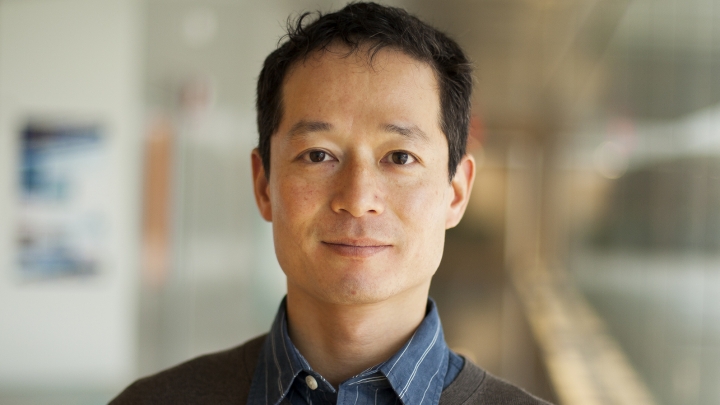
Kazuhiro Saitou is a Professor of Mechanical Engineering at the University of Michigan, affiliated with the College of Engineering. His research focuses on computational design synthesis, topology optimization, and manufacturing process integration. He leads the Algorithmic Synthesis Laboratory (ASL), advancing algorithms for automated design and optimization of mechanical systems. Education: Ph.D. (1996), MIT; M.S. (1992), MIT; B.Eng. (1990), University of Tokyo. He has held tenured positions since 1997, including roles as Founding CEO of Comnext, Inc. (2007–2012) and visiting professorships at École Centrale Paris and Donghua University. Research interests include multi-material topology optimization (M^3 TO), AI-driven design, and sustainable manufacturing. Key projects address additive manufacturing, composite structures, and energy-efficient production systems. He has pioneered methods for manufacturability-driven design and assembly optimization. Notable awards include IEEE Fellow (2018), ASME Kos-Ishii Award (2015), and NSF CAREER Award (1999). He serves as Editor-in-Chief for IEEE Transactions on Automation Science and Engineering and holds leadership roles in ASME and IEEE societies. Teaching includes courses on design optimization, CAD, and global product development. His lab has advised over 30 students, with alumni in academia and industry. Current research explores biomechanical modeling, traffic flow optimization, and medical image registration algorithms.
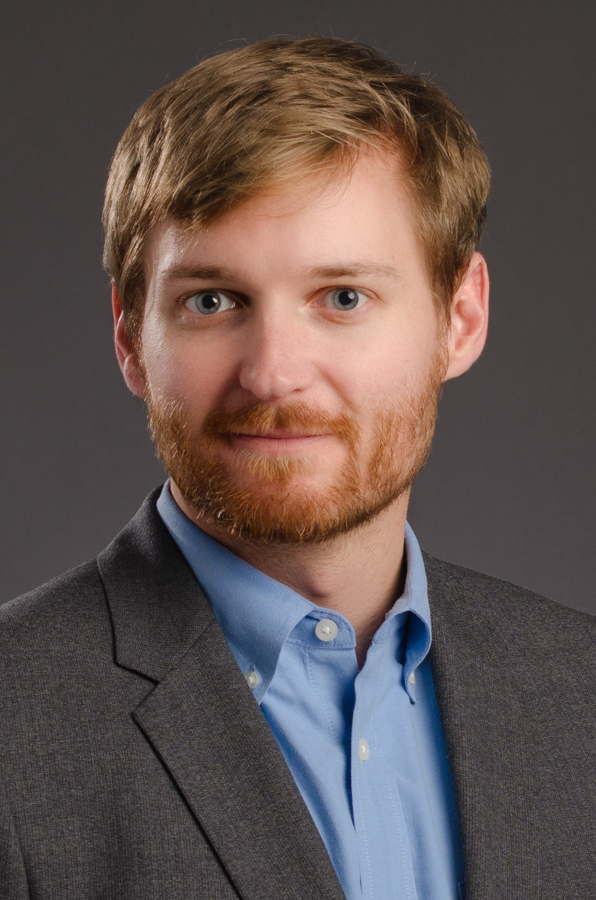
Dean Eckles is an Associate Professor of Marketing at MIT Sloan School of Management and serves as an Associate Director of the MIT Institute for Data, Systems, and Society (IDSS). He is also affiliated with the MIT Schwarzman College of Computing through the Institute for Data, Systems & Society and its Statistics and Data Science Center. Additionally, he leads the analytics research area at the Initiative on the Digital Economy and organizes the annual Conference on Digital Experimentation (CODE@MIT). His educational background includes a BA in philosophy, BS and MS in cognitive science, MS in statistics, and PhD in communication, all from Stanford University. Prior to joining MIT, Eckles worked as a scientist at Facebook, where he contributed to areas including News Feed, messaging, advertising, tools for randomized experiments, and survey methods. He previously held research positions at Nokia and Yahoo. Eckles's research primarily focuses on social influence mediated by interactive technologies, examining how communication technologies mediate, amplify, and direct social influence. His work spans multiple specific areas including social interactions, contagion, and interventions in networks; experimental design and inference in networks; and methods for causal inference. His research often combines social science with advanced statistical methods. His notable publications include research on long ties in social networks and their relationship to economic prosperity, how network structure affects social contagions, and algorithmic transparency in social media platforms. His work has appeared in prestigious journals including PNAS and Nature Human Behaviour, and he has provided expert testimony before the US Senate on algorithmic ranking. Long ties, disruptive life events and economic prosperity (PNAS) Long ties accelerate noisy threshold-based contagions (Nature Human Behaviour) Algorithmic transparency and assessing effects of algorithmic ranking (Senate testimony) Eckles actively shares his research through social media platforms including Bluesky, Twitter, and Mastodon, as well as through his blog and contributions to the Gelman et al. blog. His work bridges academic research with practical applications in technology and policy.
Dr. Fei Teng is an Associate Professor in the Department of Electrical and Electronic Engineering at Imperial College London and Director of Education at the Energy Futures Lab, a pan-university hub for interdisciplinary energy research. He holds visiting positions at MINES ParisTech, PolyU Hong Kong, and KTH Sweden. His research focuses on software-defined power networks, stability-constrained optimization, cyber-resilient decision-making, and privacy-preserving data exchange in low-inertia grids. Dr. Teng has authored over 100 publications in top-tier journals and conferences, with funding from EPSRC, Innovate UK, the Royal Society, and industry partners like Hitachi and National Grid ESO. His work addresses critical challenges in grid stability, cybersecurity, and renewable energy integration. He has received prestigious awards, including the IEEE Early Career Award and Royal Society Kan Tong Po Fellowship. Research interests include high-penetration power electronics, uncertainty modeling in power systems, and data privacy in smart grids. His interdisciplinary approach integrates machine learning, quantum computing, and cyber-physical systems to enhance grid resilience and efficiency. Key contributions include frameworks for stability-constrained optimization, cyber-resilient control, and synthetic inertia from electric vehicles. He advocates for software-defined grids to revolutionize decision-making frameworks for NetZero systems.
Mohammad Saifur Rahman is the Daniels School Chair in Management and a Professor of Management Information Systems at the Mitch Daniels School of Business, Purdue University. Previously, he was an Associate Professor at the Haskayne School of Business, University of Calgary. His academic journey includes significant leadership roles such as co-chairing the Conference on Information Systems and Technology (CIST) in 2013 and serving as president of the INFORMS eBusiness Society in 2014. Currently, he serves as an associate editor for both Management Science and Information Systems Research (ISR). Ph.D. in Management Information Systems, Krannert School of Management, Purdue University (2008) MBA in Management Information Systems, Southern Illinois University (2004) BS in Computer Science, Southern Illinois University (2002) Rahman's research primarily focuses on the economic implications of digital transformations. His work examines how digitization affects consumer behavior, market structures, and business strategies across various industries. He investigates the value of digital traces in driving consumer behavior and improving decision-making, particularly in omnichannel retail environments. His research on the sharing economy has revealed important insights about economic disparities, showing how platforms like Airbnb provide economic benefits to predominantly white neighborhoods while failing to generate similar spillover effects in predominantly Black or Hispanic neighborhoods. His recent publications reveal a consistent focus on the intersection of technology, economics, and social impact. Rahman's work frequently examines how local market structures interact with digital platforms to create or exacerbate economic inequalities. His research spans multiple disciplines including information systems, economics, marketing, and operations management, with a particular emphasis on empirical studies using real-world data from major companies like Walmart and Cisco. CICP Faculty Commercialization Award (2020) INFORMS Sandy Slaughter Early Career Award (2018) World's Top 40 Business School Professors Under 40 by Poets and Quants (2017) Jay N. Ross Young Faculty Scholar Award (2015) Dean's Award for Outstanding Research Achievement (University of Calgary, 2014) Rahman has secured substantial research funding from organizations including Social Sciences and Humanities Research Council (SSHRC), Adobe Systems ($50,000 grants in 2017 and 2020), Trask Innovation Fund ($21,218), and NSF I-Corps ($50,000). He has advised numerous PhD students and collaborated with industry partners to translate research into practical applications. Rahman co-founded RightFit Analytics, a precision health analytics solution that utilizes AI to learn success patterns in healthcare. He has organized significant academic events including the Krannert-Walmart Data Dive (believed to be the first data dive on a college campus) and the Dawn or Doom Data Dive in cooperation with Cisco. Rahman actively engages with industry through consulting and collaborative research projects. His work with Walmart, Cisco, and other major corporations demonstrates his ability to bridge academic research with practical business applications. He has been particularly active in studying how AI and big data analytics can be leveraged to improve business decision-making while addressing potential negative consequences like algorithmic bias and economic inequality.
Professor Elaine Fahey is a leading scholar in EU law and global governance at the City Law School, City St George's, University of London, where she serves as Professor of EU Law and Deputy Head of Department (academic programmes). She is co-convener of the Institute for the Study of European Law (ISEL) and the UACES James Madison Trust EUFUtures initiative (2022–2025). Her academic career includes visiting professorships at Washington College of Law (American University), Keio University, and NYU, as well as fellowships at the European University Institute and the University of Graz. LLB, Trinity College Dublin LLM, Sidney Sussex College, University of Cambridge PhD, Trinity College Dublin Barrister-at-Law, Honorable Society of King’s Inns, Ireland Attorney-at-Law, State of New York Senior Fellowship, Higher Education Authority UK Her research focuses on the intersection of EU law with global governance, digital regulation, transatlantic relations, and the Area of Freedom, Security and Justice. She explores how the EU navigates legal frameworks beyond the nation-state, particularly in digital trade, cybersecurity, and data protection. Her work critically examines the EU’s role as a global regulatory actor and its interactions with international institutions. Her extensive publication record includes the monograph The EU as a Global Digital Actor (Hart, 2022) and numerous articles on digital sovereignty, data transfers, and transatlantic cooperation. Recent research analyzes the EU–US Trade and Technology Council (TTC), the evolution of the Privacy Shield, and strategic litigation in digital rights. Her work reveals a strong trend toward understanding how soft law, institutional design, and judicial decisions shape EU external relations and digital governance. Erasmus+ Jean Monnet Chair in Law & Transatlantic Relations (2019–2022) Emile Noël Fellow, NYU Law School Max Weber Fellow, European University Institute Senior Land Steiermark Fellow, University of Graz Senior Fellowship, Higher Education Authority UK Professor Fahey has supervised multiple PhD students, including Isabella Mancini, Giulio Kowalski, and Christos Karetsos, on topics such as algorithmic collusion, digital markets, and investment law. She has led significant research projects, including the ESRC-funded TRILATTRADE grant and the Marie Curie ITN on EU and Transatlantic Investment and Trade (EUTIP). She previously held leadership roles as Associate Dean (International) and interim Associate Dean (Research) at the City Law School. She is an elected member of the EU Studies Association (EUSA) Executive (2021–2025). She has also contributed to public policy through briefings for the Welsh Parliament and reports on CJEU litigation in Ireland. She is associated with research initiatives such as the Institute for the Study of European Law (ISEL) and has collaborated on interdisciplinary projects on Facebook regulation, transatlantic relations, and EU technological sovereignty. Her work bridges legal scholarship, policy, and international academic collaboration.
Jeffrey F. Brock is the Dean of the School of Engineering & Applied Science and the William S. Massey Professor of Mathematics at Yale University. He holds the Zhao and Ji Chair in Mathematics. His research focuses on low-dimensional geometry and topology, particularly hyperbolic geometry and its applications to data analysis. He completed his undergraduate studies at Yale and earned his Ph.D. from UC Berkeley. He held positions at Stanford, the University of Chicago, and Brown University, where he chaired the Mathematics Department from 2013 to 2017 and founded Brown’s Data Science Initiative in 2016. He joined Yale in 2018, serving as inaugural Dean of Science in the Faculty of Arts and Sciences until assuming his current role in 2022. He is a Guggenheim Fellow and Fellow of the American Mathematical Society. His research spans hyperbolic 3-manifolds, Teichmüller dynamics, and geometric methods in data science. Notable contributions include work on Thurston’s geometrization program, classification of hyperbolic manifolds, and applications of geometric topology to complex datasets. He co-authored foundational papers on ending laminations, Weil-Petersson geometry, and renormalized volume. His recent work bridges pure mathematics with applied challenges, such as algorithmic detection of medical imaging patterns. Awarded the Guggenheim Fellowship (2008) and AMS Fellow (2017), Brock has also led interdisciplinary initiatives at Brown and Yale. His administrative roles include overseeing engineering, natural sciences, and data science programs. Beyond academia, he co-founded the Vijay Iyer Trio, showcasing his passion for music performance and creativity.
Professor Andrew Murray is a leading academic in Law with expertise in New Media and Technology Law. He holds the position of Professor of Law at the LSE Law School and directs the LSE Law, Society and Technology Group. His research focuses on digital rights, AI ethics, and regulatory frameworks for emerging technologies. Murray has held roles including Fellow of the Royal Society for the Arts and advisor to the Saudi Arabian government on e-commerce law. He has advised parliamentary committees, including the House of Lords Communications Committee on digital regulation, and delivered the prestigious TMC Asser Lecture on AI and human agency. Education: LL.B. Hons from Edinburgh University (1994), followed by academic roles at Stirling University and LSE since 2000. Professional memberships include the Society of Computers and Law (SCL) and the Higher Education Academy (HEA). He has been a visiting professor at Amsterdam Law and Technology Institute and Sciences Po Paris. Research interests span cyberspace regulation, AI governance, and the intersection of technology with human rights. Key publications include Human Rights in the Digital Age (2004) and The Regulation of Cyberspace (2007). Awards include recognition as an Independent Expert in Nominet UK dispute resolution (2001–2008) and a 2024 Leibniz Prize reviewer. Advocacy includes contributions to EU e-commerce directives and UK surveillance law debates. His work emphasizes balancing innovation with legal accountability in digital spaces.
Huaxiu Yao is an Assistant Professor at the University of North Carolina at Chapel Hill, holding a joint appointment in the School of Data Science and Society and the Department of Computer Science (College of Arts & Sciences). His research focuses on building reliable large-scale AI models (foundation models) with applications in healthcare, robotics, genomics, and transportation. He leads the AIMING Lab, which explores adaptive intelligence through alignment, interaction, and learning. Education: Ph.D. from Pennsylvania State University (2021), Postdoctoral Scholar at Stanford University (hosted by Chelsea Finn). Research Interests: Generalizable AI agents, preference alignment, out-of-distribution generalization, embodied AI, and multimodal reasoning. Key applications include biomedicine, robotics, and vision-language systems. Notable Awards: KDD Best Paper Award (2024), Amazon Research Awards (2025), TMLR Outstanding Paper Award (2024). Advising & Labs: Recruits Ph.D. and intern students. Leads the AIMING Lab, affiliated with UNC NLP Group. Organizes workshops on foundation models (ICML 2024) and trustworthy AI systems. Publications: Over 40 peer-reviewed papers, including top venues like ICLR, NeurIPS, and ICML. Focuses on AI alignment, multimodal systems, and domain generalization.
Dr. K. Max Zhang is a Professor in the Sibley School of Mechanical and Aerospace Engineering at Cornell University. He is the director of the Energy and the Environment Research Laboratory (EERL) and a fellow at the Atkinson Center for a Sustainable Future. His research is deeply interdisciplinary, focusing on sustainable energy systems, air quality, and environmental justice, with significant impacts on policy and community development in New York and beyond. Ph.D., Mechanical Engineering, University of California-Davis, 2004 B.S., Thermal Engineering, Tianjin University, 1998 B.A., English Language, Tianjin University, 1998 Dr. Zhang’s research centers on the integration of energy and environmental systems. He investigates air pollution dynamics using advanced numerical models like CTAG, with applications in near-source pollution, indoor air quality, and environmental justice. His work on renewable energy systems includes designing sustainable solar farms and managing distributed energy resources such as heat pumps to enhance grid flexibility. He also leads a pioneering initiative to create the first statewide public IoT network in the U.S., enabling hyperlocal weather forecasting and microclimate monitoring. His recent publications reflect a strong trend toward agrivoltaics, peer-to-peer energy markets, and IoT-based environmental monitoring. These works demonstrate a consistent focus on data-driven modeling, community-scale energy solutions, and the integration of social considerations into technical systems. The keywords across his articles highlight expertise in sustainability, machine learning, air quality, and energy transition. Cornell Town-Gown Achievement Award (2022) Engaged Scholar Prize, Cornell University (2017) People's Choice Sign of Sustainability Award, Sustainable Tompkins (2016) Scientific and Technological Achievement Award, Environmental Protection Agency (2015) Fellow of the American Society of Mechanical Engineers Dr. Zhang is actively involved in mentoring students and securing research grants from agencies such as the National Science Foundation (NSF) and the New York State Energy Research and Development Authority (NYSERDA). His projects often involve interdisciplinary collaboration across eight Cornell colleges and 16 academic departments. He has led initiatives such as the Cornell Atkinson Academic Venture Fund projects and the development of a county-level energy roadmap for Tompkins County. He also teaches courses in engineering thermodynamics, future energy systems, and air quality, emphasizing experiential and community-based learning. Dr. Zhang leads the Energy and the Environment Research Laboratory (EERL) and collaborates with the Atkinson Center for a Sustainable Future. His lab functions as a hub for innovation in sustainable communities, combining advanced modeling with real-world applications. Through partnerships with community organizations, government agencies, and industry, his team develops science-driven solutions to urban and rural sustainability challenges.
Martin T. Wells is the Charles A. Alexander Professor of Statistical Sciences at Cornell University, with joint appointments in the Department of Statistical Science, Department of Biological Statistics and Computational Biology, Department of Social Statistics, and as Professor of Clinical Epidemiology and Health Services Research at Weill Medical School. He serves as Editor-in-Chief of the ASA-SIAM Book Series and Co-Editor of the Journal of Empirical Legal Studies. Cornell University, Ithaca, NY Weill Cornell Medical College Research Interests span applied and theoretical statistics, Bayesian methods, biostatistics, clinical epidemiology, and computational biology. His work bridges disciplines like finance, legal studies, and health services research. Article Trends highlight advancements in Bayesian modeling, quantum cognition machine learning, tensor analysis, and misclassification correction, with applications in genomics, finance, and public health. Fellow of the American Statistical Association Fellow of the Royal Statistical Society Contributions include developing statistical software (e.g., rTensor), methodological innovations in clinical trials, and empirical legal studies on civil rights and the death penalty.
Peter Henderson is an Assistant Professor at Princeton University with joint appointments in the Department of Computer Science and the School of Public and International Affairs. He is affiliated with the Center for Information Technology Policy (CITP), Princeton Language and Intelligence Initiative (PLI), Center for Statistics and Machine Learning (CSML), and Program in Law & Public Policy (PLAW). J.D./Ph.D., Stanford University, 2023 M.Sc., McGill University and Montréal Institute for Learning Algorithms Henderson's research focuses on the critical intersection of artificial intelligence and law, with particular emphasis on AI safety, methods to improve reasoning in foundation models, interdisciplinary approaches to law and AI, and AI governance. His work spans language-grounded reinforcement learning, alignment techniques, strategic decision-making in legal contexts, and public interest artificial intelligence. He investigates how legal frameworks can guide the development of AI systems that benefit society while addressing potential harms. Henderson's recent publications reveal a strong trajectory toward addressing the safety, governance, and legal implications of foundation models. His work combines rigorous technical AI research with deep legal analysis, particularly examining how intellectual property law interacts with AI development, regulatory pathways that balance innovation with harm prevention, and the role of law in shaping responsible AI deployment. A significant thread throughout his research is the development of better evaluation methodologies for AI systems, especially in critical domains like law. SEAS Excellence in Teaching Award (2025) Henderson leads the Princeton Law+Language, AI, & Society (POLARIS) Lab, where he advises students and researchers working at the intersection of AI and legal studies. His research has been supported through collaborations with government agencies, including work with the IRS on audit selection algorithms. His findings have informed practical applications in government efficiency and equity, as well as legal system improvements. Henderson runs the POLARIS Lab at Princeton, which focuses on developing AI systems that work for the public interest, particularly in legal contexts. His team develops sequential decision-making systems for government efficiency, foundation models capable of reasoning about law, and improved safety evaluation frameworks for AI systems. The lab maintains strong connections with legal practitioners and policymakers to ensure research has real-world impact.
Shane G. Henderson is the Charles W. Lake, Jr. Professor in Productivity at Cornell University's School of Operations Research and Information Engineering (ORIE). His research focuses on the intersection of optimization and simulation, with applications to complex systems such as bike-sharing networks, medical scheduling, and ambulance deployment. He emphasizes practical societal relevance, addressing challenges in healthcare, transportation, and parallel computing environments. Education: B.Sc. (Mathematics), University of Auckland (1992) M.S. (Statistics), Stanford University (1995) Ph.D. (Operations Research), Stanford University (1997) Research Interests: Structured simulation optimization, parallel computing applications, applied probability, and case-driven problem-solving. Recent work includes MRI scheduling, radiation treatment planning, and land/air ambulance systems. He advocates for methodologies that leverage convexity or quasi-convexity to enhance algorithmic efficiency and robustness. Awards and Recognition: 2016 Tau Beta Pi Professor of the Year 2014 Sonny Yau '72 Excellence in Teaching Award 2011 Hess Research & Education Award NSF CAREER Award (1999) Teaching & Service: Courses in probability, simulation, and mathematical modeling using case-based learning. Served on award committees for INFORMS Nicholson Prize, Pierskalla Prize, and Impact Prize. Organized major conferences including the 2009 INFORMS Applied Probability Society conference and multiple Winter Simulation Conferences. Currently co-edits simulation-optimization testbeds for experimental comparisons. Labs & Collaborations: Active in Cornell's collaborative research environment, focusing on interdisciplinary projects with industry partners like Motivate (bike-sharing systems). Engaged in advancing methodologies for complex systems through data-driven approaches.
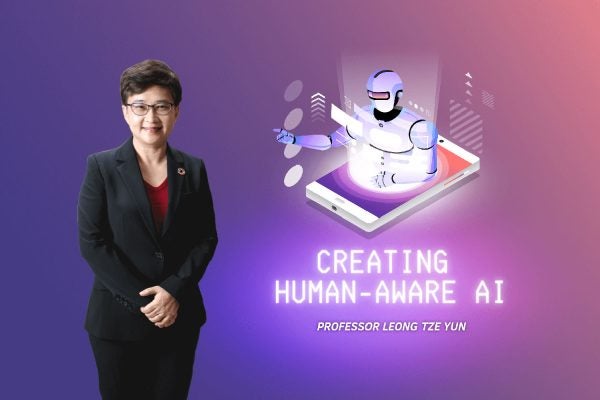
LEONG Tze Yun is a Professor in the Department of Computer Science at the School of Computing, National University of Singapore (NUS). She holds S.B., S.M., and Ph.D. degrees in Computer Science from the Massachusetts Institute of Technology (MIT). Her academic career spans both research and industry experience, with significant contributions to the fields of artificial intelligence and health informatics. Dr. Leong's educational background includes: Ph.D. in Electrical Engineering & Computer Science, Massachusetts Institute of Technology S.M. in Electrical Engineering & Computer Science, Massachusetts Institute of Technology S.B. in Computer Science & Engineering, Massachusetts Institute of Technology Her primary research interests focus on responsible AI, dynamic decision-making, neurocognitive modeling, reinforcement learning, artificial general intelligence, and biomedical and health informatics. Her work bridges the gap between theoretical AI development and practical healthcare applications, with an emphasis on ethical considerations and human-centered design. She directs the Medical Computing Laboratory at NUS, a multidisciplinary research program exploring human-aware decision modeling in complex environments. Analysis of her recent publications reveals a strong trend toward responsible AI development, with significant contributions to reinforcement learning techniques, causal inference methods, and applications of AI in healthcare. Her work increasingly integrates ethical considerations with technical AI development, particularly evident in her 2024 publications on medical AI and human values. Her scientific recognition includes: Fellow of the American College of Medical Informatics (ACMI) Founding Fellow of the International Academy of Health Sciences Informatics (IAHSI) Member of Eta Kappa Nu (Honor Society for Electrical Engineers) Dr. Leong has supervised numerous doctoral and master's students throughout her career, many of whom have gone on to prominent positions at institutions like Google, Netflix, Mayo Clinic, and academic institutions worldwide. Her advisory work extends to significant policy development, including contributions to WHO guidance on ethics and governance of AI for health. She currently serves on the World Health Organization (WHO) Expert Group on Ethics and Governance of AI for Health, the World Economic Forum (WEF) AI Governance Alliance, and the Advisory Council on AI in Uzbekistan. Her laboratory work focuses on developing adaptive systems that evolve with changing technical functionalities, system infrastructures, usage patterns, and operational contexts, with applications spanning prediction and decision analytics, human-aware robotics, game artificial intelligence, personalized education, and assistive care for elderly with neurocognitive disorders.
Yannis Paschalidis is a Distinguished Professor at Boston University with appointments in Electrical and Computer Engineering, Systems Engineering, Biomedical Engineering, and Computing & Data Sciences. He serves as Director of the Rafik B. Hariri Institute for Computing and Computational Science & Engineering. He holds a PhD (1996) and MS (1993) in Electrical Engineering and Computer Science from MIT, and a Diploma (1991) from the National Technical University of Athens. His interdisciplinary research spans optimization, control systems, machine learning, and data science with applications in healthcare, autonomous systems, and networks. Key focus areas include developing algorithms for autonomous navigation, healthcare analytics for clinical decision support, energy demand optimization, and computational biology for protein interaction modeling. Recent publications demonstrate strong focus on AI robustness (adversarial defenses, distributional robustness), healthcare applications (cognitive impairment detection, epidemic control), and sustainable systems (power networks, ecological forecasting). Methodological innovations center on reinforcement learning, distributionally robust optimization, and geometric analysis of classical algorithms. CAREER Award (NSF) IEEE Fellow (2014) IFAC Fellow (2022) IBM/IEEE Smarter Planet Award IEEE Computer Society Crowd Sourcing Prize IMIA Best Paper Award Charles DeLisi Award (2020) Distinguished Professor of Engineering As primary advisor to 35 PhD graduates, he leads the Network Optimization & Control (NOC) Lab. His research is funded by NSF, NIH, DoD, ARPA-E, and industry partners, including major grants on Neuro-Autonomy (ONR MURI), pandemic preparedness (ARPA-E NewRAMP), and healthcare AI (NIH QuBBD). He directs the Network Optimization & Control Lab focusing on optimization, learning, and control for autonomous systems, healthcare, and networks. The lab develops fundamental methodologies with applications in robotics, computational medicine, and infrastructure systems.
Flavio Vasconcellos Comim is a Full Professor at IQS School of Management in Barcelona, Spain, holding the Chair of Ethics and Christian Thought (intercenter). His research focuses on the intersections of Sustainability, Economics, and Ethics. Fields of Interest : Human Development, Capability Approach, Social Exclusion, Regional Development, AI Ethics, Poverty Stigma (Aporophobia), Sustainable Development, Social Welfare, Justice, and Happiness. Recent research includes publications on youth HDI in Spain (2025), AI bias against the poor (2024), and critiques of Sen's social choice theory (2024). He leads projects like Big data applied to the study of aporophobia and Population Medicine and Sustainable Development collaborations with China. His academic output spans journals like Regional Studies , AI and Society , and Cambridge Journal of Regions, Economy and Society , with keywords spanning Economics, Machine Learning, Human Development, and Social Justice. No formal students or awards are listed in available records.