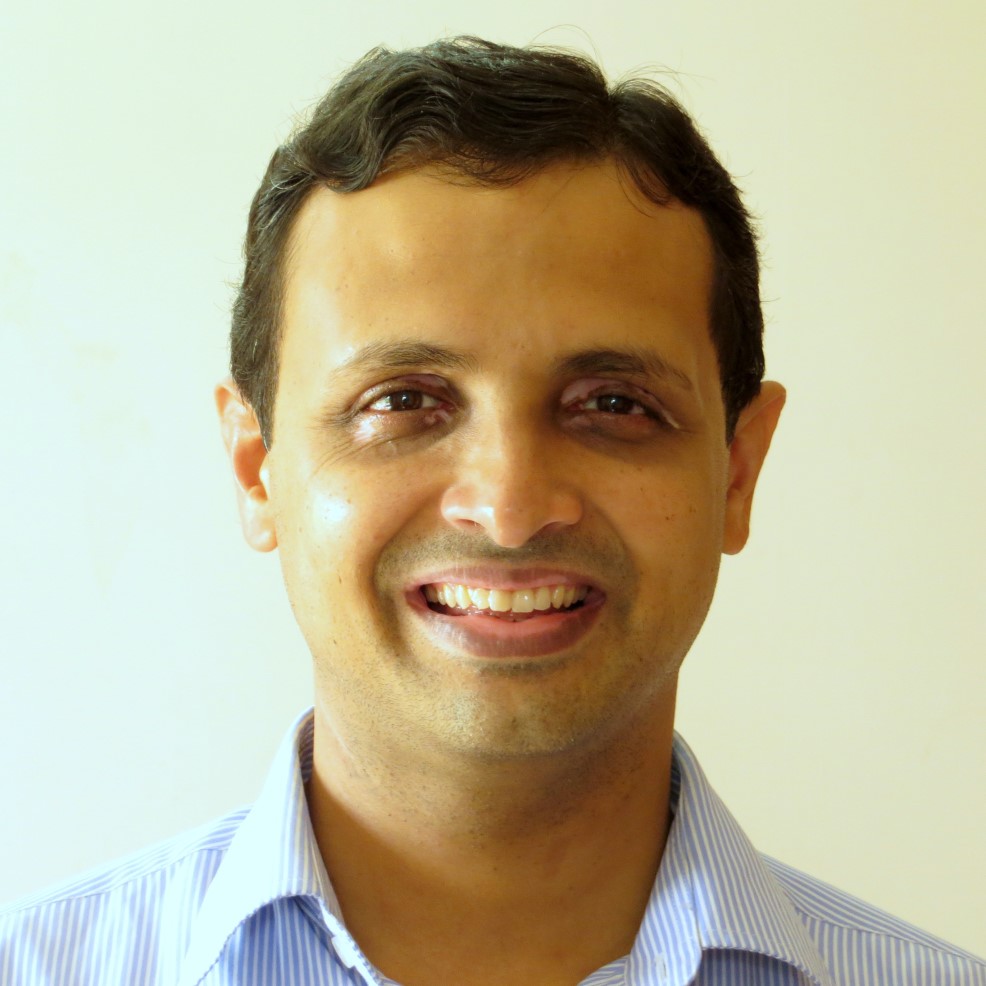
Vineeth N Balasubramanian is a Professor in the Department of Computer Science & Engineering at the Indian Institute of Technology Hyderabad, with affiliate faculty status in the Department of Artificial Intelligence. His research focuses on the intersection of deep learning, machine learning, and computer vision, emphasizing explainability, robustness, and real-world applications. He leads Lab 1055, which investigates problems such as Explainable and robust AI/ML systems Lifelong learning in evolving environments Multimodal vision-language models Applications in agriculture, autonomous navigation, and human behavior analysis His recent work includes causal reasoning in transformers, vision-language model capabilities, and drone-based object detection. Funded by organizations like Google, Microsoft, Intel, and DST, he has received multiple awards including the World's Top 2% Scientists (2022-23), INSA/INAE Fellowships, and Best Paper recognitions. Lab 1055 collaborates with institutions like CMU, UBC, and Monash University, contributing to cutting-edge advancements in AI.
Celestine Mendler-Dünner is a Principal Investigator at the ELLIS Institute in Tübingen, co-affiliated with the Max Planck Institute for Intelligent Systems and the Tübingen AI Center. She leads the Algorithms and Society research group, focusing on machine learning in social contexts and the role of prediction in digital economies. Her work bridges theoretical machine learning with practical societal impact, developing tools for safe, reliable, and equitable AI ecosystems. Her educational background includes a PhD from ETH Zurich in collaboration with IBM Research, followed by an SNSF postdoctoral fellowship at UC Berkeley hosted by Moritz Hardt. She was previously a group leader at the Max Planck Institute for Intelligent Systems before joining the ELLIS Institute. Mendler-Dünner's research spans several interconnected themes including performative prediction (where predictions change the behavior they aim to predict), algorithmic collective action (how participants can steer AI systems toward common goals), and the role of LLMs in social science research. Her work combines theoretical foundations with practical implementations, addressing challenges in interactive machine learning, optimization in dynamic environments, and context-specific evaluation of AI systems. She particularly examines how algorithmic predictions mediate services and platforms at societal scale, exploring concepts of economic power in digital markets. Her publication record shows a clear evolution from system-aware machine learning algorithms (including foundational work on IBM Snap ML) toward increasingly sociotechnical questions at the intersection of machine learning, economics, and policy. Recent work focuses on measuring performative power in digital economies, evaluating LLMs as risk scores, and developing frameworks for algorithmic collective action in recommender systems and labor markets. Among her notable recognitions are the ETH Medal for her dissertation, the IBM Research Division Award, the Fritz Kutter Award, and the IBM Eminence and Excellence Award. She is an ELLIS Scholar, a fellow of the Elisabeth-Schiemann-Kolleg, and affiliated with several prestigious research programs including the International Max Planck Research School for Intelligent Systems and the Max Planck ETH Center for Learning Systems. ETH Medal (dissertation award) IBM Research Division Award Fritz Kutter Award IBM Eminence and Excellence Award SNSF Early Postdoc Mobility Fellowship Mendler-Dünner actively mentors the next generation of researchers, advising PhD student Patrik Wolf and supervising research interns including Joachim Baumann, Haiqing Zhu, and Anna Badalyan, as well as Master's student Dorothee Sigg. She serves as core faculty for the International Max Planck Research School and associated faculty for the Max Planck ETH Center for Learning Systems. Her group has secured significant research funding through fellowships and institutional support, enabling work on projects like Powermeter (measuring search engine influence) and Snap ML (resource-efficient machine learning library with over 1 million PyPI downloads). She leads the Algorithms and Society research group, which examines machine learning as part of broader sociotechnical ecosystems. The group explores human-population interactions with algorithmic systems and incorporates these insights into learning system fundamentals. Current projects include investigating economic incentives in digital platforms, developing tools for systematic LLM evaluation in social science contexts, and creating frameworks for collective action in algorithmic systems. Mendler-Dünner also co-organizes the Algorithmic Collective Action workshop at NeurIPS 2025, demonstrating her leadership in emerging research directions at the AI-society interface.
Krzysztof Z Gajos is a Gordon McKay Professor of Computer Science at Harvard University’s Paulson School of Engineering and Applied Sciences. He leads the Intelligent Interactive Systems Group, focusing on human-AI interaction, accessible computing, and behavioral research at scale. His work integrates technical innovation with ethical and societal considerations, emphasizing equity-centered design. Education: Ph.D., University of Washington M.Eng. and B.Sc., Massachusetts Institute of Technology (MIT) Research Interests: His research spans AI for public services , health informatics , design for equity , and behavioral research platforms like LabintheWild.org. He investigates how AI can augment human decision-making while addressing biases and ethical challenges. Recent Trends in Articles: Recent work emphasizes human-AI collaboration in healthcare , explainable AI , and equity-centered design . Key themes include reducing overreliance on AI, improving transparency in algorithmic decisions, and centering marginalized communities in technology development. Scientific Awards: Sloan Fellowship Best Paper Awards at ACM CHI, COMPASS, and IUI Advising & Grants: His federal grants support AI ethics and healthcare projects, though recent terminations have prompted efforts to secure alternative funding. He advises students on projects like AI for humanitarian negotiations and digital phenotyping. Labs & Teams: Leads the Intelligent Interactive Systems Group , collaborating with organizations on AI for social good and accessible technology.
Dr. Hima Lakkaraju is an Assistant Professor at Harvard University with joint appointments in the School of Engineering and Applied Sciences and Business School , focusing on the algorithmic foundations and societal implications of trustworthy AI. She also serves as a Senior Staff Research Scientist (part-time) at Google. Her research spans machine learning, optimization, human-subject studies, and AI policy , with applications in healthcare, law, and business. Education : PhD in Computer Science, Stanford University Prior Roles : Microsoft Research, IBM Research, Adobe, Fiddler AI Dr. Lakkaraju's work emphasizes safe, fair, and interpretable AI , addressing critical questions about human-AI collaboration, model robustness, and regulatory compliance. She leads the AI4LIFE research group and co-founded the Trustworthy ML Initiative to democratize access to responsible AI research. Her research is supported by NSF, Sloan Foundation, Schmidt Sciences, Google, OpenAI, Amazon, JP Morgan, Adobe, Bayer, Harvard Data Science Initiative, and D^3 Institute . Recent publications (2025) explore reward hacking in LLMs, unified attribution frameworks, memory systems in AI agents, and science-based AI policy . Earlier works (2024) focus on medical safety benchmarks, CLIP interpretation, and generalization complexity . Her work has been featured in major media outlets including New York Times, TIME, MIT Tech Review, and Fortune . Scientific Awards : Alfred P. Sloan Fellow (2025), NSF CAREER Award (2023), MIT Tech Review 35 Innovators (2019), Google Anita Borg Fellowship (2015) Grants & Funding : NSF, Google, Amazon, JP Morgan, Adobe, Schmidt Sciences Dr. Lakkaraju advises a diverse team of postdocs, PhD, and master's students working on foundational and applied aspects of trustworthy machine learning. She teaches courses like Introduction to Data Science and Explainable AI at Harvard and Stanford.
Jim Luedtke is a Professor in the Department of Industrial and Systems Engineering at the University of Wisconsin-Madison. His research focuses on operations research, integer programming, and stochastic optimization methods for solving discrete and uncertain decision problems. Educational Background: BS in Industrial Engineering from University of Wisconsin-Madison MS in Operations Research from Georgia Institute of Technology PhD in Industrial and Systems Engineering from Georgia Institute of Technology Postdoctoral Research at IBM T.J. Watson Research Center His work spans applications in power systems optimization, healthcare analytics, and network design, with particular emphasis on developing cutting-edge algorithms for chance-constrained and multistage stochastic programming problems. Recent publications demonstrate strong focus on Benders decomposition techniques, Lagrangian dual methods, and distributionally robust optimization frameworks. Scientific Awards: NSF CAREER Award (2010) for "Risk Management via Stochastic Programming: Models, Computation, and Applications"
Professor Eduardo Velloso is an academic staff member at the School of Computer Science , University of Sydney . He is a member of the Centre for AI Trust and Governance and holds a PhD in Computer Science from Lancaster University and a Bachelor of Computer Engineering from Pontifical Catholic University of Rio de Janeiro. Teaches COMP4447/5047 - Pervasive Computing and INFO1111 - Computing Professionalism Research Interests focus on distributed collaboration in mixed reality , human-AI interaction , and HCI theory and methodology . His work integrates Engineering, Design, and Psychology to explore gaze interaction, adaptive agents, and multimodal interfaces. Key projects include Blended Whiteboard for remote MR collaboration and GazeGrip for mobile accessibility. Publication Trends show expertise in Virtual Reality , Mixed Reality , and Human-AI Interaction , with recent work on Algorithmic Recourse and Immersive Educational Tools . Awards include ACM Best Paper Awards at CHI, UIST, TOCHI, and DIS venues. Scientific Awards 2024 ACM CHI & DIS Honorable Mentions 2022 UoM-FEIT Teaching & Learning Award 2019 UoM-CIS Excellence in Research Award 2015 ACM UIST Best Paper Award Advising includes supervision of research students Marvin, Tinghui LI, and Wendi YU in projects on asynchronous MR collaboration , situationally-induced impairments , and physical environment integration . His lab explores AI-assisted interaction and context-aware computing through projects like SpinalLog and LiftSmart .
Nicole Megow is a Professor holding the chair for Combinatorial Optimization in the Faculty of Mathematics and Computer Science at the University of Bremen since 2016. She is affiliated with several research clusters including Humans on Mars Initiative, Minds, Media, Machines, and Dynamics in Logistics. Her academic journey includes positions at TU Berlin, Max Planck Institute for Informatics, TU Darmstadt, and TU Munich. Professor Megow's research focuses on mathematical optimization, algorithm design and analysis, and operations research. Her specific interests span combinatorial and discrete optimization, efficient algorithms, scheduling theory, resource allocation, packing problems, network design, routing, and uncertainty models including online, stochastic, robust, and explorable approaches. Her work bridges theoretical foundations with practical applications in logistics and decision-making systems. Her recent publications demonstrate a strong trend toward integrating prediction models with traditional optimization frameworks, particularly in scheduling and matching problems. She has made significant contributions to understanding the role of uncertainty in optimization problems, developing algorithms that work effectively with incomplete or uncertain information. Her work spans multiple prestigious venues including Mathematical Programming, Algorithmica, SODA, STACS, and NeurIPS. Dissertation Award by the German Operations Research Society (2007) Berlin Science Award for Young Researchers (2013) Heinz Maier-Leibnitz Prize (2013) Listed among Germany's top 40 researchers below 40 (Capital, 2014, 2015) Professor Megow actively supervises PhD students and postdocs, including Max Stahlberg, Joes Biburger, Sarah Morell, Bart Zondervan, Zhenwei Liu, and Alexander Lindermayr. She serves on numerous program committees for major conferences including SODA, IPCO, and STOC, and holds editorial positions for several prestigious journals. Her current research projects include Optimization under Explorable Uncertainty (DFG funded), How robots learn how to use structure (seed grant from MMM research cluster), and Scheduling Invasive Multicore Programs Under Uncertainty (within TCRC 89).
Yang Liu is an Assistant Professor in the Department of Electrical and Computer Engineering at the Baskin School of Engineering, University of California, Santa Cruz. Previously, they were affiliated with Harvard University and earned their PhD in 2015 from the Department of EECS at the University of Michigan, Ann Arbor. Their research lies at the intersection of machine learning, fairness, and trustworthy AI, with a strong focus on large language models, federated learning, and causal reasoning. Their research interests include: Machine Learning and Fairness Federated and Privacy-Preserving Learning Large Language Model Safety and Unlearning Causal Inference and Counterfactual Reasoning Anomaly Detection and Robust Forecasting Human-AI Interaction and Ethical AI Recent publications (2024–2025) demonstrate a strong trend in developing methods for machine unlearning, fairness in LLMs, and robustness under label noise and distribution shifts. Their work frequently appears in top-tier venues such as NeurIPS, ICLR, ICML, AAAI, and KDD, often in collaboration with researchers like Zhaowei Zhu, Mingyan Liu, Jiaheng Wei, and Kun Zhang. Themes include algorithmic fairness, model accountability, and human-aligned AI systems. Scientific contributions include: Frameworks for LLM unlearning and model editing Methods for fair classification and recourse Robust time series forecasting under anomalies Test-time adaptation in multimodal models Causal approaches to debiasing and policy learning While no formal advising list is provided, the depth and volume of collaborative work suggest active mentorship of graduate students and postdocs. Their research program is highly active, with numerous ongoing projects in trustworthy and socially responsible AI.
Michel Gendreau is a Full Professor in the Department of Mathematics and Industrial Engineering at Polytechnique Montréal . His research focuses on the application of Operations Research to Transportation , Telecommunications , and Energy Systems , with an emphasis on Stochastic Optimization and Real-time Planning . He co-directs the Intelligent Transportation Systems Laboratory and is affiliated with the CIRRELT , IVADO , and Trottier Energy Institute . Education : Ph.D. in Computer Science (1984), Université de Montréal His work includes developing metaheuristics for complex optimization problems and dynamic transportation systems . Recent projects address smart supply chains and real-time logistics . He has supervised over 40 doctoral and master's students, including notable graduates like Sanchez-Martinez, Guillen Reyes, and Parada Pradenas. Dr. Gendreau has been recognized with prestigious fellowships from IFORS (2022) and INFORMS (2010). His academic contributions span 420 publications, with recent studies appearing in Reliability Engineering and System Safety and Networks , focusing on stochastic programming , multiperiod routing , and UAV network design . He collaborates extensively with industry partners and has secured grants from organizations like FRQNT and CIRRELT . His research integrates machine learning with operations research to solve real-world challenges in transportation , energy , and logistics .
Joshua Loftus is a Professor of Statistics and Data Science at the London School of Economics (LSE), Department of Statistics. His research focuses on improving data science practices to reduce bias and enhance fairness in algorithms, particularly addressing social harms and scientific reproducibility. He develops methods for statistical inference post-model selection and uses causality to analyze algorithm fairness and interpretability. His work bridges high-dimensional statistics, causal inference, and ethical AI, with a strong emphasis on practical applications using R in data science education. Before joining LSE, Loftus earned his PhD in Statistics at Stanford University, served as a Research Fellow at the Alan Turing Institute (affiliated with the University of Cambridge), and was an Assistant Professor at New York University (2017–2020). His research interests extend to the societal implications of technology, advocating for systems that prioritize human values over technical efficiency. Key research themes include counterfactual fairness, causal reasoning in algorithmic systems, and disaggregated interventions to reduce inequality. His recent work explores temporal aspects of fairness, model-agnostic auditing, and the integration of ethical frameworks into machine learning pipelines. While no scientific awards are explicitly listed, his contributions to foundational AI ethics and statistical methodology are widely recognized in academic circles. Advising and grant details are not provided in the source text, but his leadership in interdisciplinary research collaborations, such as the Turing Institute affiliation, highlights active engagement in research networks. Loftus is part of the LSE’s vibrant data science community, contributing to both theoretical advancements and applied solutions for equitable technology deployment.
Dr. Yongkai Wu is an Assistant Professor in the Department of Electrical and Computer Engineering at Clemson University, where he focuses on advancing Responsible AI , Causal Inference , and Machine Learning . His research addresses fairness, trustworthiness, and transparency in AI systems through causal modeling and has been published in top-tier venues like AAAI, NeurIPS, and KDD. Education: Ph.D. in Computer Science (2020) and M.S. in Computer Science (2018) from the University of Arkansas; B.Eng. in Electronic Engineering (2014) from Tsinghua University. Dr. Wu’s research spans Responsible AI and Causal Inference , with applications in healthcare, computer vision, and cybersecurity. He explores Causal Fairness in non-IID settings, Responsible LLMs , and Robust Learning via hyperspectral data. His work integrates ethics into AI/ML systems, ensuring equitable outcomes in dynamic environments. His recent articles highlight trends in Fairness through causal inference, Explainable AI in healthcare, and Efficient LLMs . Collaborations with institutions like the University of Maryland and Prisma Health underscore real-world impact. Scientific Awards: Best Paper Award (SIGKDD'25), travel awards from SBP-BRiMS, IJCAI, KDD, and NeurIPS. Dr. Wu’s grants include NSF , SC EPSCoR , Prisma Health , and United States Army CCDC funding for projects on Responsible AI in Healthcare , Hyperspectral AI , and Robust Learning . He mentors students through summer programs and directed research, emphasizing hands-on experience with Python, PyTorch, and ethical AI frameworks.
Michel Gendreau is a Full Professor in the Department of Mathematics and Industrial Engineering at Polytechnique Montréal. He holds a B.Com. from McGill University, and both an M.Sc. and Ph.D. from the University of Montreal. His research focuses on operational research with applications in logistics, transportation, energy systems, and telecommunications. He is affiliated with several prestigious research centers including the Institute for Data Valorization (IVADO), the Trottier Energy Institute (IET), and the Interuniversity Research Center on Enterprise Networks, Logistics and Transport (CIRRELT). Professor Gendreau's research interests span operational research, with particular emphasis on stochastic optimization methods applied to transportation and logistics problems, energy systems management, and telecommunications. His work often addresses real-world challenges through mathematical modeling and algorithm development, with applications ranging from bike-sharing systems to emergency response planning and electricity grid management. The analysis of his recent publications reveals a strong focus on vehicle routing problems under uncertainty, maintenance optimization, and the integration of stochastic programming with machine learning techniques for improved decision making. Professor Gendreau has received numerous prestigious awards recognizing his contributions to the field of operations research. In 2022, he was named a Fellow of the International Federation of Operational Research Societies (IFORS). In 2010, he was awarded Fellow status by INFORMS (Institute for Operations Research and the Management Sciences). Most notably, in November 2015, he received the Robert M. Herman Lifetime Achievement Award from the Transportation Science and Logistics Society of INFORMS, which is considered the most prestigious distinction for operational researchers working in logistics and transportation. Throughout his career, Professor Gendreau has supervised 25 doctoral students and 18 master's students, contributing significantly to the development of the next generation of operations research experts. His research has been supported by numerous grants from organizations including NSERC (Natural Sciences and Engineering Research Council of Canada), with expertise recognized in Operational Research and Management Science (NSERC subject 1601) and Logistics (NSERC subject 1603). Professor Gendreau is actively involved in several research teams and laboratories, particularly those focused on data valorization, energy systems, and transportation logistics. His current work continues to push the boundaries of stochastic optimization and its applications to complex real-world problems, with recent publications addressing challenges in urban transportation, energy management, and emergency response systems.
Shahin Jabbari is an Assistant Professor in the Computer Science Department at the College of Computing & Informatics, Drexel University, where he is a member of the EconCS research group. His research lies at the intersection of machine learning, game theory, and algorithmic fairness, with a focus on ethical AI and its societal implications. Prior to Drexel, he was a CRCS postdoctoral fellow at Harvard University's School of Engineering and Applied Sciences, hosted by Milind Tambe, and affiliated with the EconCS group. Education: PhD in Computer and Information Science, University of Pennsylvania (2013–2019), advised by Michael Kearns Master's in Computing Science, University of Alberta, advised by Robert Holte and Sandra Zilles Bachelor's in Computer Engineering, Sharif University of Technology His research interests center on machine learning, algorithmic fairness, and game theory, particularly focusing on how AI systems can be designed to be more equitable, interpretable, and robust. He investigates ethical aspects of algorithmic decision-making, aiming to ensure AI technologies contribute positively to society. His work often integrates human behavior modeling and experimental validation, especially in cybersecurity and public health domains. His recent publications span top venues including ICML, NeurIPS, AAAI, AAMAS, PNAS, and TMLR. The research trends show a consistent focus on fairness in AI, explainability, robustness, and strategic interactions in complex systems. Topics include fair influence maximization, adaptive phishing training, cyber deception games, and ethical machine learning frameworks. These works reflect a multidisciplinary approach combining theoretical rigor with real-world applicability. Scientific Awards and Recognitions: Best Paper Finalist, AAMAS 2021 Best Paper, GameSec 2020 Spotlight Presentation, ICML 2021 Best Paper, KI 2012 Shahin Jabbari actively contributes to the academic community through advising, teaching, and service. He teaches graduate courses such as CS 589: Responsible Machine Learning and CS 590: Privacy. He has served on the senior program committees of ICML and NeurIPS, is an Action Editor for TMLR, and has reviewed for numerous top-tier conferences and journals. He mentors students through research projects and invites prospective PhD candidates to apply through Drexel’s formal channels. He is involved in the Drexel Computer Science Theory Reading Group and contributes to advancing responsible AI practices. He is affiliated with the EconCS group at Drexel, which focuses on economic and computational aspects of AI, including game theory, mechanism design, and multi-agent systems. His lab integrates tools from machine learning, behavioral modeling, and optimization to develop AI systems that are not only intelligent but also fair and trustworthy. Future work is expected to further explore human-AI collaboration, ethical AI deployment, and policy-aware algorithm design.
Shi Li is a Professor in the Theory Group at the Department of Computer Science and Technology, School of Computer Science, Nanjing University. He previously held faculty positions at the University at Buffalo (2015–2023) as Assistant and Associate Professor, and was a Research Assistant Professor at Toyota Technological Institute at Chicago (2013–2015). He earned his Ph.D. from Princeton University in 2014 under Moses Charikar and completed his B.S. in Computer Science and Technology at Tsinghua University, where he was part of Andrew Chi-Chih Yao’s Special Pilot Class. His research lies at the intersection of theoretical computer science and combinatorial optimization, with a focus on the design and analysis of algorithms for problems in clustering, scheduling, network design, facility location, and online algorithms. He also explores learning-augmented algorithms and differential privacy in algorithmic contexts. His work combines deep theoretical insights with practical algorithmic frameworks, often leveraging linear programming relaxations, iterative rounding, and randomized techniques. The recent publications highlight a consistent trend in approximation algorithms, particularly in clustering (e.g., correlation clustering, fair k-set selection), scheduling (e.g., unrelated machine scheduling, load balancing), and robust optimization. His work frequently appears in top-tier theoretical venues such as STOC, FOCS, SODA, and ICALP, with increasing emphasis on fairness, privacy, and efficiency in algorithm design. Best Paper Award of Track A, ICALP 2011 Co-winner of Best Paper Award, FOCS 2012 Invited to Special Issue of SICOMP (FOCS 2017 paper) Best Paper Award, COCOON 2018 Invited to Special Issue of SICOMP (STOC 2019 paper) Best Paper Award of Track A, ICALP 2024 Outstanding Paper Award, SPAA 2024 Shi Li has advised several PhD and master’s students, including Yuda Feng, Han Dai, Zihao Liang, and Jia Ye, and has mentored postdoctoral researcher Ruilong Zhang. He has served on numerous program committees (e.g., STOC, SODA, ICALP) and is an Editorial Board Member of ACM Transactions on Algorithms . He teaches core algorithm courses such as Design and Analysis of Algorithms and Advanced Algorithms , and actively collaborates with researchers worldwide. His lab focuses on theoretical foundations of efficient and fair algorithm design, with applications in large-scale data analysis and distributed systems.
Rianne de Heide is an Assistant Professor in the Statistics group (STAT) within the Department of Applied Mathematics at the University of Twente's Faculty of Electrical Engineering, Mathematics and Computer Science. She maintains collaborative arrangements with LUXs Data Science in Leiden, CWI, and VU Mathematics in Amsterdam as a guest researcher while working partly remotely during her family's relocation. Her academic journey includes a previous position as Assistant Professor at Vrije Universiteit Amsterdam. PhD Dissertation: 'Bayesian Learning: Challenges, Limitations and Pragmatics' (2020) MSc Thesis: 'The Safe-Bayesian Lasso' (2016) De Heide's research spans multiple interconnected domains within statistics and machine learning, with particular emphasis on developing mathematically rigorous frameworks that remain accessible to diverse audiences. Her work bridges theoretical foundations with practical applications, focusing on hypothesis testing with e-values, Bayesian learning methodologies, and best-arm identification problems in multi-armed bandit settings. She demonstrates exceptional interdisciplinary range, connecting statistical theory with philosophical inquiry and even theological discussions as evidenced by her publications on biblical authorship verification and mathematical beauty. Analysis of her publication trajectory reveals a clear evolution toward developing anytime-valid statistical methods, particularly through e-values and e-processes for multiple testing scenarios. Her recent work shows increasing focus on foundational questions in statistical inference while maintaining strong connections to practical machine learning applications. The 2024 'Safe Testing' paper in the Journal of the Royal Statistical Society represents a significant contribution that generated a formal discussion meeting. VENI project 'E-values for Multiple Testing' NWO M2 grant of €742,708 with Jelle Goeman (funding 2 PhD students and a scientific programmer) 2025 Bernoulli Society New Researcher Award De Heide actively supervises research through her VENI project and the NWO M2 grant, while also contributing to broader academic service through the 'Kindness and Excellence in Academia' initiative she co-founded. This initiative addresses critical cultural issues in academic environments through opinion pieces, resources, and community building around compassionate academic practices. She has organized specialized events like the E-Day meet-up for e-value researchers at CWI in Amsterdam, demonstrating leadership in her niche research community. Her research activities are centered around the Statistics group at the University of Twente, with significant external collaborations through the E-mailing list for e-value researchers and partnerships with institutions including CWI, VU Amsterdam, and Leiden's LUXs Data Science. The interdisciplinary nature of her work creates connections across mathematics, computer science, philosophy, and even religious studies.