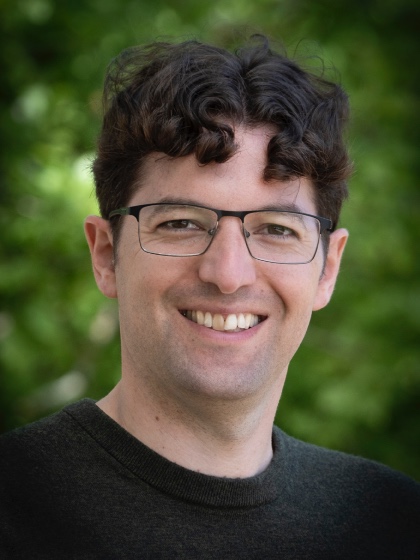
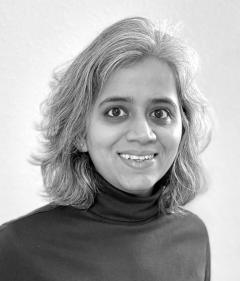
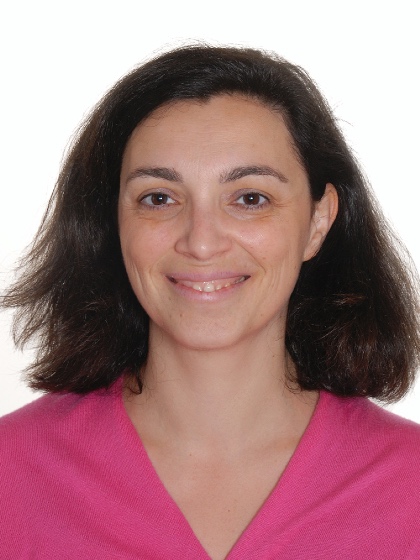
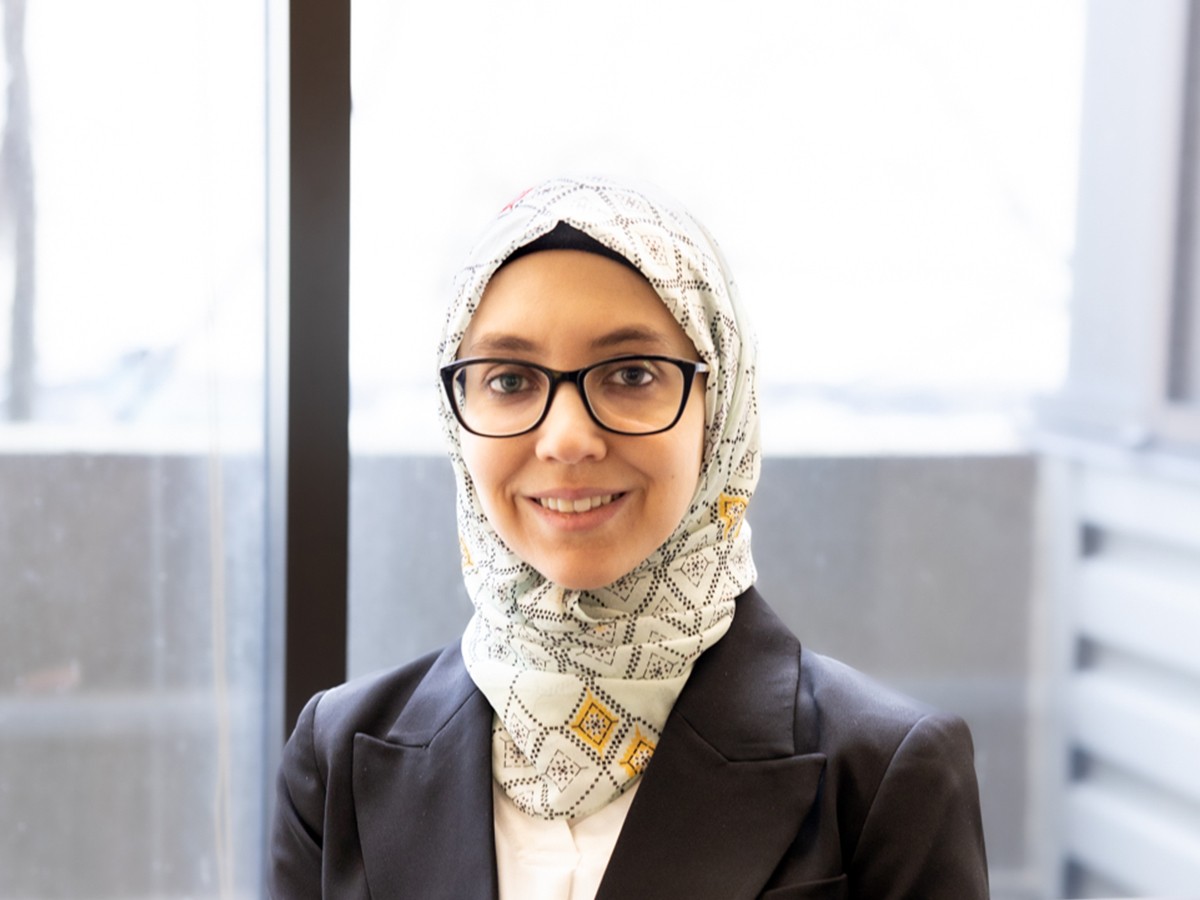
Prof. Ward Romeijnders is a Full Professor in the Department of Operations Management & Operations Research at the University of Groningen. He holds leadership roles in academic organizations such as Secretary of the Stochastic Programming Society (COSP), Associate Editor of Mathematical Methods of Operations Research, and Board member of LNMB. His research focuses on stochastic programming, optimization under uncertainty, and applications in energy, logistics, healthcare, and finance. He has led projects like the NWO VIDI grant 'Discrete Decision Making under Uncertainty' (2023-2027) and previously the NWO VENI project on planning under uncertainty. Education: Doctorate in Operations Research (details unspecified). Research Interests: Stochastic optimization, risk-averse decision-making, integer programming, and applications in societal challenges. Recent publications span algorithmic advancements in Benders decomposition, robust optimization, and error-bound theories. He has received multiple awards, including the Gijs de Leve Prize (2015-2017) and Willem R. van Zwet Award (2016). As a teacher, he instructs advanced courses on stochastic programming and optimization under uncertainty. Grants: NWO VENI (2017-2020), NWO VIDI (2023-2027). Editorial Roles: Mathematical Methods of Operations Research, Euro WG on Stochastic Optimization.
Roie Levin is an Assistant Professor at Rutgers University's Department of Computer Science. He received his PhD in Algorithms, Combinatorics and Optimization from Carnegie Mellon University in 2022, advised by Anupam Gupta. Prior to that, he worked at the Allen Institute for Artificial Intelligence (2015-2017) and earned dual BSc degrees in Computer Science/Applied Mathematics and Mathematics from Brown University (2015). Before joining Rutgers, he was a Fulbright Postdoctoral Fellow at Tel Aviv University under Niv Buchbinder. Current Role: Assistant Professor in Computer Science Academic Training: PhD (2022) CMU, BSc (2015) Brown University Postdoctoral: Fulbright Fellow at Tel Aviv University Levin's research focuses on approximation algorithms for uncertain environments (online/dynamic/streaming models) and submodular function optimization. His work spans theoretical foundations and practical implementations across distributed systems, geometric constraints, and reinforcement learning paradigms. Teaching includes graduate and undergraduate algorithms courses (CS 344, CS 513) with emphasis on problem-solving techniques, computational complexity, and modern algorithmic trends. His publications showcase expertise in online algorithms, submodular optimization, and approximation theory with applications in clustering, caching, and machine learning. The 2025 articles demonstrate continued exploration of online consistency and contention resolution, while 2023-2024 works focus on submodular optimization under uncertainty and dynamic environments. Earlier publications (2015-2017) cover semantic parsing, geometric approximation, and planar graph optimization. Fulbright Postdoctoral Fellow Levin's research connects theoretical guarantees with practical implementations, bridging classical algorithm design with modern machine learning applications. His recent work explores primal-dual methods in online settings and robust subspace approximation techniques for streaming data environments.
Krzysztof Gajos is a Gordon McKay Professor of Computer Science at the Harvard Paulson School of Engineering and Applied Sciences, leading the Intelligent Interactive Systems Group. His research focuses on principles of intelligent interactive systems, tools for large-scale behavioral research (e.g., LabintheWild.org), and design for equity/social justice. He holds a PhD from the University of Washington and degrees from MIT, with postdoctoral work at Microsoft Research. Education: PhD (University of Washington), M.Eng & B.Sc (MIT) Affiliations: ACM Transactions on Interactive Intelligent Systems (former co-editor-in-chief), General Chair of ACM UIST 2017 Research spans accessible computing, creativity tools, and health informatics. Recent work emphasizes ethical AI, human-AI collaboration, and systems that empower marginalized communities. Awards include the Sloan Fellowship and impactful paper recognitions at CHI, IUI, and COMPASS. Grants: Federal grants supporting PhD students; current focus on mitigating disruptions caused by grant terminations Lab: IIS Group develops systems that balance technical innovation with societal impact
Bogdan Kulynych is a research scientist at Lausanne University Hospital in Switzerland, working within the Clinical Data Science group. He holds a Ph.D. in Computer Science from EPFL (Switzerland), where he was advised by Carmela Troncoso, and a B.Sc. in Applied Mathematics from Kyiv Mohyla Academy in Ukraine. His academic journey also includes a visiting fellowship at Harvard University with Flavio du Pin Calmon, and internships at Google and CERN. His research spans three interconnected domains: Algorithmic Accountability, Verification, and Reliability; Privacy-Preserving Learning and Statistics; and Algorithmic Systems in Healthcare. Kulynych develops methods for obtaining practical guarantees on model stability, robustness, and reliability, while also auditing these properties. His privacy work focuses on systems ensuring practical privacy guarantees with legally legible and interpretable operational risk analyses. In healthcare, he critically studies algorithmic system deployment in clinical practice through collaboration with clinicians and medical informatics practitioners. Kulynych's publication record demonstrates significant impact in top venues including NeurIPS, ICML, ICLR, FAccT, and PETS. His recent work addresses fundamental questions in differential privacy, operational privacy metrics, and healthcare AI applications. His research trend shows increasing focus on translating theoretical privacy guarantees into practical healthcare settings while addressing the social implications of algorithmic systems. Unifying Re-Identification, Attribute Inference, and Data Reconstruction Risks in Differential Privacy (NeurIPS 2025) (ε,δ) Considered Harmful: Best Practices for Reporting Differential Privacy Guarantees (2025) Attack-Aware Noise Calibration for Differential Privacy (NeurIPS 2024) As an active member of the academic community, Kulynych regularly presents at major conferences and seminars, including recent talks at Harvard Privacy Tools Seminar, NeurIPS, and Imperial College London. His work has received media attention in The Guardian, Wired, The Verge, and CNET regarding algorithmic bias challenges. Kulynych maintains an active presence on Bluesky (@bogdankulynych) where he engages in critical discussions about AI ethics, privacy, and the societal implications of technology.
Siddhartha Saxena is a Research Fellow at the School of Social Sciences, Heriot-Watt University, specializing in Psychology. His work focuses on intersectional research in artificial intelligence ethics, equity, diversity & inclusion (EDI), future of work dynamics, and sustainable development goals (SDGs). He has contributed to understanding workplace spirituality, algorithmic fairness, and labor market discrimination through peer-reviewed articles and book chapters. Research interests include analyzing disability in entrepreneurship, ageism in employment, and the impact of AI on workplace ethics. His recent work explores Poland’s academic collaboration initiatives and post-pandemic shifts in UK research ecosystems. Saxena has received the Ideas Worth Teaching Award 2020 for pedagogical innovation in business education. He actively participates in international conferences such as the Australia and New Zealand Academy of Management and the International Labour Process Conference. His interdisciplinary research bridges organizational behavior, policy analysis, and technology ethics, with a focus on practical solutions for equitable work environments. Key contributions include studies on workplace toxicity, mental health interventions, and the harmonization of spirituality with algorithmic decision-making systems. Saxena’s work emphasizes actionable insights for policymakers, educators, and HR professionals aiming to foster inclusive and sustainable workplaces.
Cédric Costa is a Professor at the Conservatoire National des Arts et Métiers (CNAM), conducting research at the CEDRIC Laboratory. With a publication record spanning over 30 years from 1992 to 2023, he has established himself as a leading researcher in combinatorial optimization and operations research. His research interests focus on combinatorial optimization , graph theory , and operations research , with significant contributions to network design, discrete tomography, and robust optimization. His work bridges theoretical foundations with practical applications, particularly in renewable energy systems and telecommunications networks. Analysis of his publication trends shows a consistent focus on Steiner tree problems, matching theory, and robust network design, with increasing emphasis on renewable energy applications since 2015. His recent work (2020-2023) demonstrates expertise in wind farm optimization and robust network design under uncertainty. Prix Orange de l'Innovation 2012 (catégorie Réseau) for FTTH network deployment research Professor Costa has supervised numerous researchers including Poirion P-L, Bentz C, Ridremont T, Hertz A, Cotté G, and Picouleau C, as evidenced by their frequent co-authorship on publications. His research has been supported by projects related to wind farm optimization, optical network design, and robust energy systems. He has been actively involved in the ROADEF (French Operations Research Society) community, presenting regularly at their conferences.
Professor Francesca Toni is a Professor in Computational Logic at the Department of Computing, Faculty of Engineering at Imperial College London. She leads research in Artificial Intelligence, focusing on explainable AI (XAI), argumentation theory, and neuro-symbolic systems. Her affiliations include the Centre for eXplainable AI (XAI), Argumentation-based Deep Interactive eXplanations (ADIX), and the Human-Like Computing initiative. Her work integrates computational logic with machine learning to develop interpretable models for healthcare, robotics, and decision support systems. Recent research emphasizes conflict analysis in neural networks, argumentative ensembling, and object-centric learning frameworks. Her research interests span AI ethics, formal argumentation, and the integration of symbolic reasoning with deep learning. Key contributions include neuro-argumentative learning architectures, benchmarking explainability methods (XAI-Units), and frameworks for robust recourse in model multiplicity scenarios. She actively explores applications in biomedical fraud detection (Pub-Guard-LLM) and personalized decision support via gradual bipolar argumentation. Her publications highlight trends in explainable AI, with a focus on visual debates, counterfactual explanations, and causal structure learning. She has pioneered systems like ProtoArgNet for interpretable image classification and DR-HAI for dialectical reconciliation in human-AI interactions. Her work bridges theoretical foundations (e.g., ABA semantics) with real-world applications in healthcare and legal reasoning. Notable projects include ROAD2H—an open-source XAI approach for managing comorbidities—and Cafe for conflict-aware feature explanations. She has contributed to legal AI systems (LawGIBA) and causal discovery methods. Current efforts focus on neuro-argumentative machine learning and object-centric representation learning.
Romila Pradhan is an Assistant Professor in the Department of Computer & Information Technology at Purdue University. Her research focuses on responsible data science, machine learning, and trustworthy decision-making systems, emphasizing explainability, fairness, and accountability. Education: Ph.D. in Computer Science, Purdue University (2018) M.S. and B.S. in Mathematics and Computing, Indian Institute of Technology Kharagpur (2008) Research Interests: Data management frameworks for ethical AI Algorithmic fairness in machine learning systems Explainable AI (XAI) methodologies Bias mitigation in data-driven decision-making Grants & Awards: NSF Grant: Data Preparation for Fair and Trusted Machine Learning (2024) NSF Grant: Data Preparation for Trusted and Fair Data Science (2023) Bias in AI award for fair machine learning models (2023) Professional Experience: Postdoctoral Researcher, Halıcıoğlu Data Science Institute, UC San Diego Visiting Assistant Professor, Purdue University Department of Computer Science Labs & Teams: Actively involved in Purdue's Purdue Polytechnic Institute and the newly founded Applied AI Research Center.
Francesco Leofante is a Research Fellow at Imperial College London , affiliated with the Centre for Explainable AI . His work focuses on Explainable AI (XAI) , particularly counterfactual explanations with formal robustness guarantees against perturbations. Imperial College Research Fellowship DAAD AINet Fellowship (Safety and Security in AI) Imperial PFDC Supporting Research Staff and Students Award 2023 Research Interests center on Explainable AI , emphasizing counterfactual explanations , robustness , model multiplicity , and formal verification in critical systems like energy and aviation. His work bridges AI , formal methods , and human-AI collaboration . Publications include studies on robust counterfactual explanations , parametric ReLUs for verification, and multi-agent systems with formal guarantees. These appear in top venues like AAAI , KR , IJCAI , and AAMAS , often addressing AI safety and trustworthy systems . Scientific Awards include the Imperial PFDC Supporting Research Staff and Students Award 2023 , DAAD AINet Fellowship , and Imperial College Research Fellowship . He also contributes to workshops and program committees at conferences like AAAI, KR, and IJCAI. Future Work includes expanding robust XAI into critical infrastructure systems (energy, aviation) and developing tools like OMTPlan for AI planning and verification .
Mort D. Webster is Professor of Energy Engineering and Associate Department Head for Graduate Education at the John and Willie Leone Family Department of Energy and Mineral Engineering, College of Engineering, Pennsylvania State University. His research focuses on stochastic optimization and decision-making under uncertainty for energy and environmental systems, with particular expertise in electric power systems, climate impacts, and coupled multi-sector dynamics. Ph.D. in Engineering Systems, MIT (2000) M.S. in Technology and Policy, MIT (1996) B.S.E. in Computer Science and Engineering, University of Pennsylvania (1988) Webster's research program includes stochastic multi-stage optimization algorithms , electric power systems planning , coupled energy-water-land modeling , and resilience studies . He leads the Program for Coupled Human and Earth Systems (PCHES), funded by the U.S. Department of Energy, which develops integrated models for weather-related variability impacts on power systems. Recent work involves transmission expansion under uncertainty , electricity market flexibility valuation , and cross-sectoral climate impact analysis . His publications span journals in energy systems, environmental science, and operations research, with methodological innovations in scenario reduction and stochastic programming. Scientific Awards : U.S. Department of Energy Early Career Award (2010) Mentorship includes advising graduate students Jesse Bukenberger, Vijay Kumar, Brayam Valqui, and Sourabh Dalvi. His research has received funding from the National Science Foundation, U.S. Department of Energy, and General Electric Power Services Division. Collaborative efforts include partnerships with Karen Fisher-Vanden and Uday Shanbhag on coupled system resilience, and Thomas Hertel on energy-agriculture-water nexus projects.
Pietro Sirena is a Full Professor of Law at Bocconi University, serving as Dean of the Bocconi Law School since 2018. He holds key roles in academic and legal organizations, including membership in the Executive Committee of the European Law Institute (2019–present), where he currently serves as Treasurer and Second Vice-President. He is President of the Society of European Contract Law (SECOLA) since 2022 and a member associé of the Académie Internationale de Droit Comparé. His research focuses on consumer protection, European private law, banking law, and unjustified enrichment. He has authored numerous influential publications on topics such as legal pluralism in Europe, banking regulation, and comparative civil liability systems. Sirena’s professional engagements include leadership roles at the Italian Civil Law Association and the Rome Board of the Banking and Financial Arbitrator (ABF). His academic contributions span legal reform analysis, contractual autonomy, and cross-jurisdictional legal frameworks. His scholarly work bridges theoretical and applied legal studies, addressing contemporary issues like algorithmic regulation in financial services and the reinterpretation of civil liability concepts. He teaches courses on civil law, European contracts, and sports law at Bocconi, reflecting his expertise in both traditional and emerging legal domains.
Catherine Jasserand is an Assistant Professor specializing in Fundamental Rights and Technology at the University of Groningen's Faculty of Law. She holds a PhD in biometrics and privacy from Groningen, an LL.M. in IP and New Technology Law from UC Berkeley, and a Master’s in European Law from Université Panthéon-Sorbonne. Her research focuses on the intersection of AI, biometrics, and fundamental rights, with emphasis on governance frameworks for facial recognition systems and data protection laws. Previous roles include a Marie Curie postdoctoral fellowship at KU Leuven (2020–2023) researching facial recognition in public spaces, and work with the European Parliament, European Central Bank, and University of Amsterdam's IViR institute on IP law. Since 2024, she has been affiliated with STeP at Groningen. Key research areas include EU regulatory frameworks for biometric data, AI ethics, and privacy implications of emerging technologies. She has contributed to projects like INGRESS, TReSPAsS-ETN, and SOUNDS-ETN as an advisory board member. Active in technical conferences, she co-organized workshops on AI for the biometric community with the European Association for Biometrics. Recent work examines the EU AI Act’s impact on biometric data regulation, governance of facial recognition in public spaces, and legal challenges posed by deepfakes. She received an award in March 2024 for her contributions to digital governance research. Ancillary activities include LawTech Research and advising on EU-funded initiatives. Her teaching and research involve advancing interdisciplinary approaches to technology law and policy.
Damien Garreau is Professor for the Theory of Machine Learning at Julius-Maximilians-Universität Würzburg , Germany. Until March 2024 he served as Associate Professor in the Probability and Statistics team of the J. A. Dieudonné laboratory at Université Côte d'Azur and was a member of the Inria Maasai team in Sophia-Antipolis. Earlier positions include post-doctoral research at the Max Planck Institute for Intelligent Systems in Tübingen and PhD studies in the Inria Sierra team in Paris. Education & Career Path PhD, Inria Sierra team, Paris – advisors Sylvain Arlot & Gérard Biau Post-doc, Max Planck Institute for Intelligent Systems, Tübingen – mentor Ulrike von Luxburg Associate Professor, Université Côte d’Azur / Inria Maasai (until March 2024) Professor for Theory of Machine Learning, Julius-Maximilians-Universität Würzburg (since 2024) Research Focus Garreau’s research centers on trustworthy machine learning . He investigates how to explain, audit, and robustify modern AI systems, with particular emphasis on post-hoc interpretability , statistical guarantees of explanation methods, fairness , and causality . Representative contributions include theoretical analyses of LIME and Anchors, novel explanation methods such as SMACE and GLEAMS, and practical tools for vision and NLP that remain faithful under adversarial or out-of-distribution settings. Across computer vision, natural-language processing, and healthcare applications, his work bridges rigorous theory with impactful algorithms, advancing the societal goal of deploying AI systems whose decisions can be trusted and understood by humans. Scientific Awards & Recognition Best Paper Award , ECML 2024 Area Chair , ICML 2025 ANR JCJC Grant NIM-ML (2021–2025) Université franco-allemande support for Winter School on Causality and Explainable AI Advising, Grants & Collaborative Projects Garreau has successfully supervised or co-supervised a growing cohort of doctoral and master’s students, including Gianluigi Lopardo, Kensuke Mitsuzawa, Martin Charachon, Jonas Wacker, Samuel, Antonio, Magamed, Arthur Assad, Charbel Yahchouchi, and Mariana Chaves. He is the PI of the ANR JCJC project NIM-ML , whose goal is to develop next-generation interpretability methods endowed with statistical guarantees. He co-organizes the annual Winter School on Causality and Explainable AI , fostering Franco-German academic exchange. Labs & Teams Since 2024 he leads the Professorship for the Theory of Machine Learning at Julius-Maximilians-Universität Würzburg. Previously he was a core member of the Maasai Inria team on the Sophia-Antipolis campus, and an active collaborator of the J. A. Dieudonné mathematics laboratory. He maintains strong ties with the TML group at the Max Planck Institute for Intelligent Systems and regularly hosts joint visitors and workshops.
Thanh H. Nguyen is an active Assistant Professor in the Department of Computer Science within the College of Arts and Sciences at the University of Oregon. She teaches courses including Introduction to Artificial Intelligence (CS 471/571) and Multi-Agent Systems (CS 410/510), with office hours held in Deschutes Hall. Her educational background includes a Ph.D. from the University of Southern California (2016), a postdoctoral position at the University of Michigan (2016-2018), and a B.Sc. from Hanoi University of Science and Technology. Her research bridges theoretical AI with practical applications addressing real-world societal challenges. Dr. Nguyen's work focuses on Artificial Intelligence applications for societal benefit, particularly in Public Safety and Security (urban crime prevention, counterterrorism), Cybersecurity (protection from stealthy botnets), Sustainability (wildlife and fish protection), and Public Health (diabetes prevention). Her research integrates techniques from Multi-Agent Systems, Game Theory, Machine Learning, and Optimization with insights from Psychology and Conservation Biology. Her recent publications demonstrate strong trends in security games, adversarial learning, and health applications, with significant focus on strategic deception, robust decision-making under uncertainty, and real-world deployment of AI systems. The work shows increasing interdisciplinary collaboration and practical implementation of theoretical models. Deployed Application Award (IAAI 2016) for PAWS wildlife protection system Runner-up Best Innovative Application Paper Award (AAMAS 2016) WiSE Merit Fellowship from University of Southern California (2015) Runner-Up Best Paper Award at Recourse-21 Workshop (ICML 2021) Army Research Office Grant (~$343K) for Adversarial Reasoning (2020-2023) Dr. Nguyen actively advises PhD students including Sarah Kinsey and Michael Dushkoff (co-advised with Prof. Allen D. Malony), along with numerous master's and undergraduate students. Her research has received significant grant funding, including an Army Research Office grant for developing methods to tackle sequential and coordinated attacks in security domains with real-time information. Her work on the PAWS (Protection Assistant for Wildlife Security) system has been deployed by NGOs like Panthera and the Wildlife Conversation Society in conservation areas in Malaysia and Uganda. She leads the AI Lab at the University of Oregon, which focuses on multiple research projects including AI for Public Health, Deception in Security Games, Security in Data-based Decision Making, Information Leakage and Exploration, and Game Theory for Cybersecurity. The lab maintains strong industry and NGO partnerships for real-world application of research findings.
Dr. Aliaa Alnaggar is an Assistant Professor of Industrial Engineering at the Department of Mechanical, Industrial, and Mechatronics Engineering at Toronto Metropolitan University. Her research focuses on operations research, optimization under uncertainty, supply chain logistics, sharing economy, and healthcare operations management , leveraging mathematical modeling and probability theory to address complex decision-making challenges. She holds a PhD from the University of Waterloo (2021) and completed a postdoctoral fellowship at the Rotman School of Management (University of Toronto, 2022). Education details include a BSc from Kuwait University (2010), MASc from the University of Waterloo (2017), and a PhD in Industrial Engineering (2021). She teaches IND 604: Operations Research II and actively contributes to professional organizations like INFORMS, CORS, and WORMS. Her research addresses societal challenges such as hospital resource allocation during surges, gig-economy workforce management, and energy storage optimization. Key achievements include the NSERC Postdoctoral Fellowship and collaborative work on probabilistic driver repositioning in crowdsourced delivery systems. She emphasizes interdisciplinary approaches to balance technical rigor with real-world applicability.