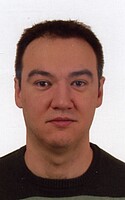
Giannis Nikolentzos is an Assistant Professor at the Department of Informatics and Telecommunications, University of Peloponnese. His research focuses on graph representation learning, machine learning, and artificial intelligence. Prior to this role, he was a postdoctoral researcher at Ecole Polytechnique and completed his PhD in Computer Science at Athens University of Economics and Business, advised by Michalis Vazirgiannis. He holds an MSc in Artificial Intelligence from the University of Southampton and a Diploma in Electrical and Computer Engineering from the University of Patras. His research interests include learning on graphs, graph mining, and machine learning applications in healthcare and social networks. He has contributed to advancements in graph neural networks (GNNs), adversarial attacks on GNNs, and synthetic data generation using variational graph autoencoders. Recent Publications highlight trends in understanding GNN representations, adversarial robustness, and graph reasoning with large language models. His work has been presented at top conferences like NeurIPS, ICML, and ICLR. Nikolentzos has developed the Grakel Python library for graph kernels and contributed to open-source tools like the repository for 'What Do GNNs Actually Learn?' which includes implementation details, datasets (e.g., IMDB-BINARY), and dependencies such as PyTorch and NetworkX.
Adonis Bogris is a Professor at the Department of Informatics, University of West Attica (formerly part of the Technological Educational Institute of Athens). His research focuses on all-optical signal processing, high-speed transmission systems, neuromorphic computing, and nonlinear optics. He holds a B.S. in Informatics, M.Sc. in Telecommunications, and Ph.D. from the National and Kapodistrian University of Athens (1997, 1999, 2005). He has authored/co-authored over 200 articles, cited over 3,000 times. His work spans optical fiber networks, mid-infrared photonics, and physical-layer security. He serves as an Associate Editor for Optica Optics Continuum (since 2018) and IEEE Journal of Lightwave Technology (since 2022). He is a Senior Member of Optica and actively reviews for top journals like IEEE, Elsevier, and Nature. Research interests include: All-optical networking and transmission systems Neuromorphic photonic accelerators Nonlinear effects in optical fibers/waveguides Earthquake detection via fiber-optic sensing (e.g., DAS) Recent work emphasizes photonic neuromorphic processors for imaging cytometry and secure communication systems. He has led EU/national projects as Principal Investigator and contributed to standards through roles in GUnet, GRNET, and UNESCO committees. His lab explores cutting-edge applications like fiber-based seismology and high-throughput convolutional neural networks using integrated photonics.
Dimitrios Fotakis is a Professor at the School of Electrical and Computer Engineering at the National Technical University of Athens (NTUA), where he has been serving since February 2009. He also collaborates with the "Archimedes" research unit as an experienced researcher since 2023. His academic journey includes previous positions as a Senior Research Scientist at Yahoo Research (2017-2019), Assistant Professor at the University of the Aegean (2004-2009), and Postdoctoral Researcher at the Max-Planck Institut für Informatik (2001-2003). National Technical University of Athens (2009-present): Professor "Archimedes" Research Unit (2023-present): Collaborating Senior Researcher Yahoo Research (2017-2019): Senior Research Scientist University of the Aegean (2004-2009): Assistant Professor Max-Planck Institut für Informatik (2001-2003): Postdoctoral Researcher Education: He holds a Diploma (1994) and a PhD (1999) from the Department of Computer Engineering and Informatics at the University of Patras, Greece. Dimitrios Fotakis specializes in Theoretical Computer Science with a focus on Algorithmic Game Theory and Approximation Algorithms. His research centers on the algorithmic properties of congestion games, the design of approximate mechanisms without monetary exchanges, and direct algorithms with emphasis on service location problems. His work has produced significant results including optimal algorithms for service location problems, potential functions for generalizations of congestion games, and optimal approximate truth-based mechanisms. With over 120 publications in major international conferences and journals and more than 3,000 citations according to Google Scholar, his research has had substantial impact in the field. His recent publications (2023-2025) demonstrate a continued focus on cutting-edge topics at the intersection of algorithms, game theory, and machine learning. These works span diverse areas including learning-augmented algorithms, graph neural networks, facility location problems, mechanism design, opinion dynamics, and fairness in ranking systems. The breadth of his research shows his ability to bridge theoretical computer science with practical applications in energy systems, social networks, and AI ethics. Teaching: Professor Fotakis teaches courses including Algorithms and Complexity, Discrete Mathematics, Computer Programming, Algorithmic Game Theory, Network Algorithms and Complexity, and Convex Optimization with Applications in Machine Learning. Research Leadership: He has served as Principal Investigator for several significant research projects including BALSAM (Beyond Worst-Case Analysis in Approximation Algorithms and Mechanism Design, 2019-2023), LEADAlgo (Learning-Augmented and Data-Driven Online Algorithms, 2020-2022), and Selfish Resource Allocation through Game Theoretic Models (2009-2021). He has also contributed as a Senior Researcher to multiple THALES projects through the years. Mentorship: Professor Fotakis has supervised numerous PhD students who have gone on to prestigious postdoctoral positions at institutions including MIT, Stanford, Yale, and UT Austin. His academic lineage extends through many successful students now working in top universities and research institutions worldwide.
Kotsiantis Sotiris is an Associate Professor in the Department of Mathematics at the University of Patras, Greece, specializing in Computational Mathematics and Informatics. His academic roles include teaching undergraduate and postgraduate courses such as Data Science, Programming with Python, and Machine Learning. He holds a Ph.D., M.Sc., and B.Sc. in Mathematics from the University of Patras. His research focuses on Artificial Intelligence, Machine Learning, Data Mining, and Data Science. Notable contributions include advancements in sentiment analysis, outlier detection, graph attention networks, and predictive analytics for education and urban systems. He actively publishes in top-tier journals and conferences, emphasizing interpretable AI and ensemble learning techniques. Teaching responsibilities span computational statistics, numerical analysis, and data science methodologies. His work bridges theoretical machine learning with practical applications in smart cities, financial forecasting, and educational technology. He collaborates widely, evidenced by over 180 publications and co-authorships with experts in computer science and data analytics.
Eleni Bakali is a Research Fellow at the Computation and Reasoning Laboratory (CoReLab) at the National Technical University of Athens (NTUA) and the Multimedia Laboratory (MMlab) at Athens University of Economics and Business (AUEB), affiliated with NTUA's School of Electrical and Computer Engineering and Department of Computer Science. Her academic background includes: Applied Mathematics at the School of Applied Mathematical and Physical Sciences (SEMFE), NTUA Algorithms and Logic studies (institution unspecified) PhD in Electrical and Computer Engineering from NTUA under Prof. Stathis Zachos Her research centers on computational complexity with emphasis on randomness in computation and the relationship between complexity theory and phase transition phenomena applied to abstract mathematical objects. This interdisciplinary work bridges theoretical computer science and statistical physics, exploring how computational problems exhibit phase transitions analogous to physical systems. She conducts research at CoReLab (NTUA) and MMlab (AUEB), focusing on fundamental questions in computation where statistical mechanics principles inform computational behavior.
Panagiotis Patsilinakos is a PSL Junior Research Chair (Post-Doctoral Researcher-Teacher) at LAMSADE, Paris Dauphine-PSL University, where he focuses on learning-augmented algorithmic mechanism design and computational social choice. His work bridges algorithmic game theory, mechanism design, and computational complexity. Education: PhD in Computer Science (2023) from the National Technical University of Athens (NTUA), School of Electrical and Computer Engineering. MEng in Computer Engineering (2016) from the University of Patras, School of Engineering. His PhD thesis explored algorithmic game theory and mechanism design under information scarcity. Research interests include randomized algorithms, approximation algorithms, and the intersection of learning theory with mechanism design. Notable contributions involve online budget-feasible auctions, learning-augmented NP-hard problem solutions, and distortion analysis in voting systems. Teaching includes courses on 'Beyond Worst-Case Analysis' at Paris Dauphine and 'Algorithmic Game Theory' at AUEB/NTUA. Previously served as a teaching assistant for undergraduate/graduate courses at NTUA, including Algorithms and Complexity, and mentored 8 undergraduate theses. Labs/Teams: Member of NTUA's Computation and Reasoning Laboratory. Active contributor to LAMSADE's research initiatives in algorithmic mechanisms and social choice theory.
Andreas Göbel is a Professor and Chair of Algorithm Engineering at the Hasso Plattner Institute (HPI). His research focuses on computational counting, randomness in computation, computational complexity, graph theory, and stochastic processes. He has contributed extensively to understanding diffusion processes, clique structures in networks, and algorithmic approaches to statistical physics problems. His work bridges theoretical computer science with practical algorithm design. Recent contributions include analyzing SIRS process survival times, clique dynamics in geometric random graphs, and non-linear information diffusion models. He has published widely in top-tier conferences such as IJCAI, AAAI, and SODA. Göbel teaches courses including Probability and Computing, Algorithmix, and Theoretical Foundations of Cryptography. His research group explores both foundational aspects of algorithms and real-world applications, particularly in network science and combinatorial optimization.
Dimitris Achlioptas is a Professor at the Department of Informatics and Telecommunications, National and Kapodistrian University of Athens. His research focuses on theoretical computer science, algorithms, and probabilistic methods. He has contributed extensively to areas such as satisfiability problems, random constraint satisfaction, combinatorial optimization, and phase transitions in random structures. His work bridges algorithm design with probabilistic analysis, often leveraging tools from discrete mathematics and statistical physics. Key research themes include the Lovász Local Lemma, random k-SAT, and the interplay between computational complexity and statistical properties of problems. Notable contributions address algorithmic barriers from phase transitions, solution space geometry of random CSPs, and efficient sampling techniques for combinatorial structures. His recent work explores applications of probabilistic methods in machine learning and optimization, including scalable algorithms for high-dimensional problems.
Gunopulos Dimitrios is a Professor at the National and Kapodistrian University of Athens, Department of Informatics and Telecommunications. His research focuses on data science, machine learning, mobility data analysis, and interdisciplinary applications in urban systems, finance, and high-energy physics. He has contributed to frameworks like INSIGHT for urban traffic management and REMI for heterogeneous data mining. His work spans cloud computing, explainable AI, and spatiotemporal analysis, addressing challenges in real-world systems. Education: Education details not explicitly provided in the text. Research Interests: Dimitrios explores cutting-edge topics such as mobility data science, serverless computing, deep learning for financial forecasting, and causal reasoning. His work bridges theoretical computer science with practical applications in urban infrastructure, healthcare, and sensor networks. Recent efforts include developing algorithms for sparse data handling, fault detection in traffic systems, and counterfactual explainability in AI. Awards: No scientific awards explicitly mentioned in the text. Advising & Grants: No listed advisees or grant details available. His contributions are primarily through collaborative frameworks and conference engagements. Labs/Teams: Involved in projects like INSIGHT for urban data integration and Dione for big data application profiling. Collaborates on heterogeneous data analysis and cloud resource optimization initiatives.
Pandelis Dodos is a Professor in the Department of Mathematics at the National and Kapodistrian University of Athens, Greece. His research focuses on combinatorics, functional analysis, and their intersections, particularly Ramsey theory, Banach space geometry, and descriptive set theory. He holds a PhD from the National Technical University of Athens (2003) and a Habilitation à Diriger des Recherches from Université Pierre et Marie Curie (2009). His work bridges analysis and combinatorics, addressing problems in nonlinear spectral gaps, forbidden intersection configurations, and high-dimensional random arrays. He leads the ANACOMB project (Hellenic Foundation for Research and Innovation), exploring combinatorial problems via analytical methods. Notable collaborations include researchers such as V. Kanellopoulos, K. Tyros, and S. Todorcevic. His contributions include monographs on Ramsey theory and Banach spaces, as well as over 50 peer-reviewed articles. Education: MSc Electrical Engineering (NTUA, 1997) PhD Mathematics (NTUA, 2003) Habilitation (UPMC Paris 6, 2009) His research projects include the ANACOMB initiative, investigating density Hales-Jewett conjectures and concentration inequalities. He advises PhD candidate Stamatis Skouras and collaborates with institutions like Texas A&M and Charles University. His work frequently intersects with theoretical computer science and probability theory. Awards: None explicitly listed, but recognized through extensive international collaboration and editorial roles in journals like Mathematische Annalen and Transactions of the AMS . Grants & Labs: ANACOMB (HFRI-FM20-02717), leading a multinational team addressing analytic combinatorics. Active in organizing workshops like COMPRAAthens 2024 .
Antonis Economou is a Professor of Operations Research in the Department of Mathematics at the National and Kapodistrian University of Athens. He holds a BSc in Mathematics from the University of Athens (1993), an MA in Pure Mathematics from UCLA (1994), and a PhD in Mathematics from the University of Athens (1998). His research focuses on Operations Research, Applied Probability, Queueing Theory, and Mathematical Biology, with a particular emphasis on strategic customer behavior, stochastic systems, and epidemic models. He has held academic positions since 1999, progressing from Lecturer to Full Professor. His work has been published extensively in journals like European Journal of Operational Research and Queueing Systems . Education: BSc, Mathematics, University of Athens, 1993 MA, Pure Mathematics, UCLA, 1994 MSc, Statistics and OR, University of Athens, 1997 PhD, Mathematics, University of Athens, 1998 Research interests include stochastic processes, game theory applications in service systems, and mathematical modeling of epidemics. His recent work explores strategic customer behavior in queues, particularly under varying information structures and service dynamics. Notable contributions include analysis of fluid queues, vacation models, and epidemic models in random environments. Awards include scholarships from the National Scholarship Foundation of Greece for his studies and recognition in international mathematical competitions. He has supervised numerous graduate students and contributed to editorial roles in top journals such as Queueing Systems and Annals of Operations Research .
Konstantinos Tyros is Associate Professor in Mathematics at the University of Athens, specializing in combinatorial analysis and Ramsey theory. His research connects density theorems in combinatorics with problems in Banach space geometry and probabilistic methods. Key contributions include density versions of combinatorial theorems (Carlson-Simpson, Hales-Jewett), structure theorems for stochastic processes on discrete cubes, and concentration inequalities for high-dimensional random arrays. His work on spreading models in Banach spaces reveals new structures in functional analysis. He has developed novel approaches to nonlinear spectral gaps and dual Ramsey theory for trees, while advancing the Moser-Tardos algorithmic framework. Honors include technical excellence awards from Greek academic institutions.
Nikos Passas is a Professor at the Department of Informatics and Telecommunications, University of Athens, leading the Green, Adaptive and Intelligent Networking (GAIN) research group. He has coordinated numerous national and European research projects, including SMART-NRG,ROSSFIRE,SEOVEREIGN,CASPERS, and SEMANTIC. His research focuses on mobile network architectures, QoS provisioning, wireless protocols, and 5G/6G technologies. He has published over 120 papers and 12 book chapters, with key contributions in MAC protocols, mobility management, and network security. Education: PhD in Informatics & Telecommunications (University of Athens, 1997), Diploma in Computer Engineering (University of Patras, 1992). Teaching: Mobile/Wireless Networking courses at undergraduate and postgraduate levels. Recent roles include guest editor for IEEE Wireless Communications and Wiley's Wireless Communications and Mobile Computing Journal. Research highlights include work on LTE-Advanced networks, D2D communications, and blockchain-based mobile data access. He holds a US patent for wireless traffic scheduling. Active in IEEE and the Technical Chamber of Greece. Current projects emphasize smart energy networks, cognitive radio technologies, and user-centric service provisioning. His lab develops solutions for HetNets, edge computing, and AI-driven network optimization.
George N. Karystinos is a Professor at the School of Electrical and Computer Engineering , Technical University of Crete , where he has served since 2005. Since 2021, he also holds the position of Dean of the School. Previously, he was an Assistant Professor at Wright State University (2003–2005). Education: Ph.D. in Electrical Engineering, State University of New York at Buffalo , 2003 Diploma in Computer Engineering and Science, University of Patras , 1997 Additional studies in Piano, National Conservatory of Athens and State University of New York at Buffalo Research Interests: His research spans telecommunications theory and systems , coding theory , adaptive signal processing , wireless communications , MIMO systems , neural networks , and optimization with limited data . He is particularly known for contributions to L1-norm PCA , noncoherent detection , RFID systems , and code design for CDMA . Scientific Awards: IEEE Transactions on Neural Networks Outstanding Paper Award (2003) IEEE ICT Best Paper Award (2001) IEEE ISWCS Best Paper Award (2013) IEEE ICASSP Best Student Paper Award (2015) IEEE RFID-TA Second Best Student Paper Award (2011) IEEE MOCAST Best Student Paper Award (2018) Laboratory and Teaching: He leads research at the Telecommunications Laboratory and teaches courses such as Signals and Systems , Information and Code Theory , and Probability and Random Process Theory . Grants and Projects: While specific grant details are not listed, his extensive publication record and award history indicate active participation in funded research projects, particularly in wireless communications and signal processing.
Mitianoudis Nikolaos serves as a Professor in the Department of Electronics and Information Systems Technology at Democritus University of Thrace, where he leads research in audio and video processing within the Electrical Circuits, Signal and Image Processing Laboratory. His work bridges statistical signal processing with modern machine learning techniques for real-world applications. Education: Diploma in Electrical and Computer Engineering, Aristotle University of Thessaloniki (1998) MSc in Communications and Signal Processing, Imperial College London (2000) PhD in Audio Source Separation, Queen Mary University of London (2004) His research spans Machine Learning , Statistical Signal Processing , and Deep Learning with specialized focus on audio source separation, image fusion, and machine hearing/vision systems. Current projects include environmental sensing with backscatter radio networks (BLASE), 3D structure estimation (F3SME), and cultural heritage digitization (TEXTaiLES), demonstrating interdisciplinary applications from healthcare to cultural preservation. Analysis of his recent publications (2019-2024) reveals a decisive shift toward neural network architectures, particularly transformer models and multi-resolution U-Nets, applied to audio separation and image processing challenges. His work consistently addresses noise robustness in real-world scenarios while advancing theoretical frameworks for underdetermined systems. As Principal Investigator for the F3SME project and Scientific Associate on multiple EU-funded initiatives, he has secured significant research funding. His teaching portfolio includes core undergraduate courses in Electrical Circuits II and Digital Signal Processing, plus graduate-level Signal and Image Coding. The Electrical Circuits, Signal and Image Processing Laboratory serves as his primary research base, focusing on practical implementations of theoretical signal processing concepts through collaborations with Imperial College London and industry partners like General Dynamics UK.