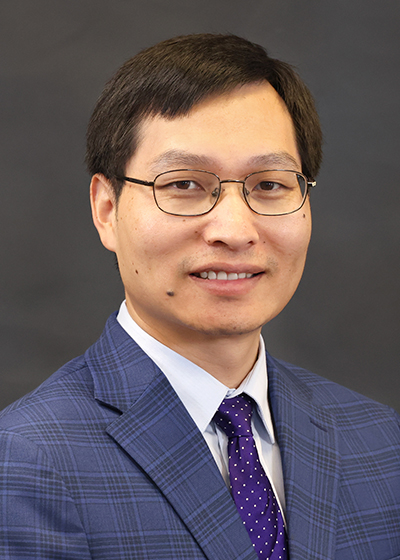
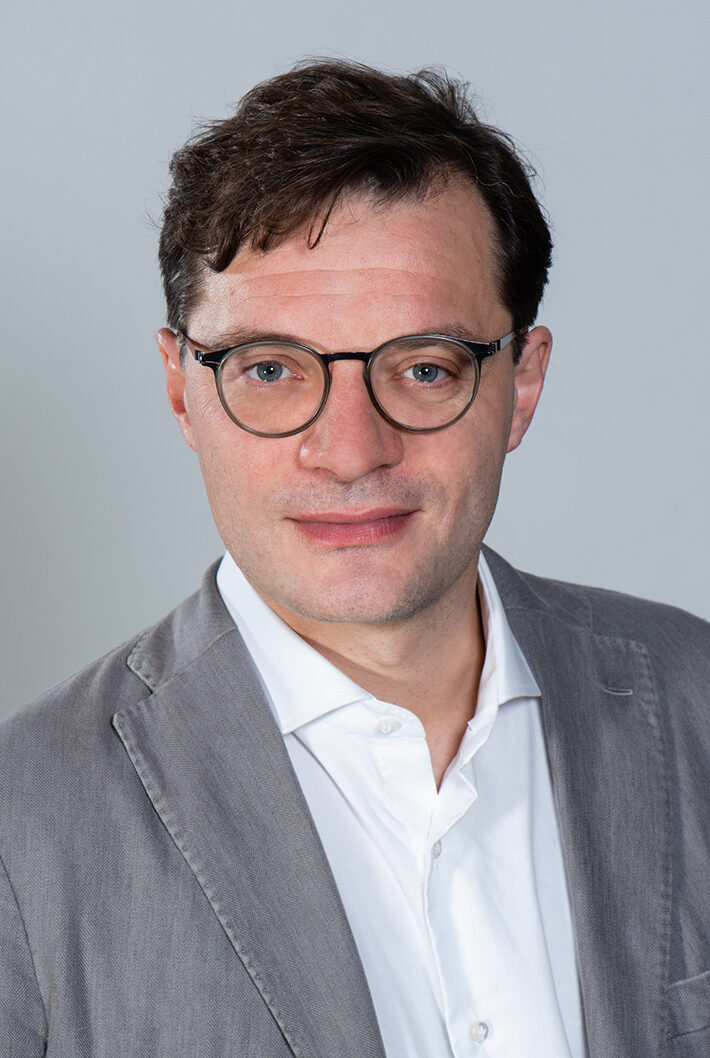
Dr. Peter Bloodsworth is a Lecturer and Professional Masters Programme Project Supervisor in the Department of Computer Science at the University of Oxford. He holds a PhD in Multi-agent Systems from Oxford Brookes University. His research focuses on multi-agent systems, cloud computing, distributed computing, and artificial intelligence, with applications in medical research and robotics. Dr. Bloodsworth has over a decade of academic experience, including a role as a Foreign Professor at the National University of Sciences and Technology (NUST) in Islamabad, Pakistan (2011–2016), and prior work as a Research Fellow at the University of the West of England (UWE), Bristol. He has contributed to major European projects such as the FP7-funded neuGRID project, where he acted as a workpackage leader and User Manager. His research emphasizes applying semantic technologies and multi-agent systems to solve complex problems, including medical ontology integration and grid computing in healthcare environments. Dr. Bloodsworth is a full member of the IEEE and a Chartered Member of the British Computing Society (BCS), reflecting his commitment to professional standards in computing. His recent research themes include deploying multi-agent systems for scalable cloud solutions, robotic control, and managing cloud resources through agent-based frameworks. He has over 30 publications in international journals and conferences, with notable work on cloud marketplaces, elastic multi-agent systems, and neuroimaging analysis using grid computing.
Jiarui Gan is a Departmental Lecturer at the Department of Computer Science, University of Oxford. His research focuses on computational game theory, multi-agent systems, and AI, with an emphasis on strategic decision-making, algorithmic strategy design, and fairness in resource allocation. Prior to his current role, he was a postdoctoral researcher at the Max Planck Institute for Software Systems and earned his DPhil (PhD) in Computer Science from the University of Oxford in 2021. His work bridges theoretical foundations and practical applications, addressing challenges in security games, reinforcement learning, and mechanism design. He actively seeks motivated PhD students interested in his research areas and advises on topics related to algorithmic fairness, multi-agent interactions, and strategic computing. Education: DPhil in Computer Science, University of Oxford (2021) Postdoctoral Research: Max Planck Institute for Software Systems Key Research Themes: Algorithmic Game Theory, Multi-Agent Systems, Security Games, Fair Division Publications highlight contributions to Bayesian persuasion in sequential decision-making, envy-freeness in resource allocation, and strategic deception in Stackelberg games. His work frequently appears in top conferences such as AAAI, NeurIPS, and AAMAS.
Piotr Dworczak is an Associate Professor of Economics at Northwestern University's Weinberg College of Arts & Sciences, holding tenure since 2022. He also serves as a Research Affiliate at the Group for Research in Applied Economics (GRAPE) in Warsaw and a Senior Researcher at the University of Zurich. His research focuses on Mechanism and Information Design , with applied interests in Inequality-aware Market Design and Financial Over-the-Counter Markets . He earned his PhD in Economic Analysis and Policy from Stanford University's Graduate School of Business in 2017, alongside B.A. degrees in Mathematics (University of Warsaw) and Economics (Warsaw School of Economics). His work bridges theoretical economics with practical applications, including vaccine prioritization frameworks, optimal transparency in financial markets, and redistributive mechanisms. Notable contributions include Preparing for the Worst but Hoping for the Best: Robust (Bayesian) Persuasion (Econometrica, 2022) and Redistribution through Markets (Econometrica, 2021). Recent projects address price gouging theory, energy crisis responses, and property rights via mechanism design. Research Highlights: Over 20 peer-reviewed papers in top journals like Econometrica, Journal of Political Economy, and Journal of Finance. Grants: ERC Starting Grant (2022–2027), Alfred P. Sloan Fellowship (2022–2024). Awards: Second-place Fama-DFA Award (2021), Amundi Smith Breeden First Prize (2017). Teaching includes PhD courses on Market Design (Northwestern) and Financial Market Design (Chicago Booth). Professional activities span organizing major conferences (e.g., SIGecom Winter Meeting) and refereeing for journals like Econometrica and the American Economic Review.
Maria Kim is a Senior Lecturer in the Department of Finance at the School of Business, University of Wollongong, where she has held positions since 2011. She also serves as Academic Program Director for the Bachelor of Business/Bachelor of Commerce programs. Kim earned her PhD from the University of Sydney in 2011, focusing on bankruptcy prediction modeling. Her research interests span corporate governance, bankruptcy prediction, financial distress modeling, and market microstructure. Key areas of focus include analyzing corporate survival strategies in emerging markets like Vietnam and China, evaluating policy interventions such as market-wide circuit breakers, and exploring the intersection of strategic alliances and firm performance during crises. Kim has secured funding through the University of Wollongong's Targeted Researcher Support Grant and has contributed to over 20 peer-reviewed publications since 2005. Her work frequently examines macroeconomic shocks, machine learning applications in finance, and the impact of tax avoidance on corporate stability. Completed supervision of three PhD students focusing on climate risk management, Chinese market microstructure, and Vietnamese corporate governance. Member of the Commerce Chinese Research Centre (2012–2016), fostering cross-cultural business research.
Joy Lu is an Assistant Professor of Marketing at the Tepper School of Business, Carnegie Mellon University, where she has been a faculty member since July 2018. She also held the Xerox Junior Faculty Chair position from July 2023 to July 2024. Her research focuses on consumer behavior, information search processes, and digital media consumption patterns, with particular expertise in eye-tracking methodologies and online learning environments. Education: PhD in Marketing/Dual AM in Statistics, University of Pennsylvania, 2018 BS in Economics and Engineering & Applied Science, California Institute of Technology, 2013 Dr. Lu's research examines how consumers navigate information in digital environments, with a particular focus on eye-tracking studies of web page interactions. She has made significant contributions to understanding binge-watching and media consumption patterns, exploring how consumers plan and allocate time for future media consumption. Her research on online learning investigates how different content delivery formats affect learner engagement and outcomes. Additionally, she has explored topics in algorithmic transparency and how explainable AI can aid consumer decision making, particularly for vulnerable populations. Analysis of Dr. Lu's recent publications reveals a strong focus on digital consumer behavior, particularly how users interact with online content. Her work combines rigorous experimental methods with sophisticated modeling approaches to understand complex decision processes. A recurring theme is how consumers allocate attention and time in digital environments, whether for shopping, learning, or entertainment. Her research has important implications for website design, educational platform development, and content delivery strategies across multiple industries. Scientific Awards: 2020 Carnegie Bosch Institute Research Award 2019 Carnegie Bosch Institute Research Award 2013 David M. Grether Prize in Social Science Russell Ackoff Doctoral Student Fellowship Patty and Jay H. Baker Ph.D. Fellowship Innovative Models for Undergraduate Research Fellow (2020-2021) Dr. Lu serves on the editorial board of the Journal of Marketing Research and has conducted peer reviews for prestigious journals including PLoS ONE, Journal of the Academy of Marketing Science, and the Journal of Marketing Research. She has also reviewed for major conferences including the Society for Consumer Psychology and the Association for Consumer Research. Her research has been supported by grants from organizations such as the Jay H. Baker Retailing Center and the Wharton Behavioral Lab at the University of Pennsylvania. While specific laboratory information isn't provided in the available text, Dr. Lu's research involves sophisticated methodologies including eye-tracking experiments and analysis of large-scale user behavior data from online platforms. Her work suggests collaboration with interdisciplinary teams spanning marketing, psychology, and information systems to investigate complex consumer decision processes in digital environments.
Dr. Honglei Xu is an Associate Professor of Industrial Optimization and Engineering at Curtin University, specializing in industrial system optimization for net-zero transition. He serves as Node Leader of ATN Industry Doctoral Training Centre and Mathematics Honours Coordinator. His research spans automation in mining, hybrid systems control, and optimization in construction and energy sectors. Recent publications demonstrate interdisciplinary approaches combining operations research, AI, and control theory for sustainable industrial solutions. Honors include IEEE Senior Membership and JSPS Fellowship. Current projects focus on public transport optimization, renewable energy forecasting, and intelligent control systems for mineral processing. Dr. Xu teaches courses in mathematical modeling and production planning while serving as associate editor for multiple international journals including Complexity and Energies.
Xin Fang is an Assistant Professor in the Electrical & Computer Engineering Department at Mississippi State University, affiliated with the Bagley College of Engineering. His research focuses on power system optimization with uncertainty, cyber-physical dynamic modeling, and renewable energy integration. He holds a Ph.D. from the University of Tennessee, Knoxville, an M.S. from China Electric Power Research Institute, and a B.S. from Huazhong University of Science and Technology. Education: Ph.D., Electrical and Computer Engineering, University of Tennessee, Knoxville, 2016 M.S., Power System Automation, China Electric Power Research Institute, 2012 B.S., Power System Automation, Huazhong University of Science and Technology, 2009 His research interests emphasize cyber-physical systems integration, grid resiliency through multi-timescale modeling, and equitable energy distribution. Recent work addresses challenges in high-renewable grid operations, including dynamic co-simulation frameworks for electricity-transportation networks. He explores innovative solutions for frequency stability, voltage control, and market mechanisms for emerging energy systems. Publications highlight advancements in hybrid power plant optimization, distributed energy resource coordination, and equitable load-shedding methodologies. His work bridges theoretical modeling with practical applications in grid security and renewable integration.
Michael A. Lewis is Professor at Silberman School of Social Work, City University of New York, with expertise in quantitative methods, social policy, and civic engagement. Education includes a Ph.D. from CUNY Graduate Center (1995), M.S.W. from Columbia University (1990), and B.A. from McDaniel College (1987). Research centers on economic justice frameworks, particularly Basic Income Guarantee systems, causal inference methodologies, and mathematical modeling of social phenomena. Publications (2006-2020) show progression from economic policy analysis to advanced quantitative applications in social work research, with consistent focus on poverty/social welfare systems. Awards include Fulbright Specialist Grant, NASW Leadership Award, and quantitative methods recognition. Professional service includes board membership for Basic Income organizations. Current office: Room 603, Silberman Building, 2180 Third Avenue, New York.
Mark Ferguson serves as Associate Dean for Accreditation and Strategic Planning and Dewey H. Johnson Professor of Management Science at the University of South Carolina's Darla Moore School of Business. Previously the Steven Denning Professor at Georgia Tech's College of Management, his career spans over two decades in academia following five years as an IBM manufacturing engineer. His educational credentials include: Ph.D. in Business Administration (Operations Management), Duke University (2001) M.S. in Industrial Engineering, Georgia Tech (1994) B.S. in Mechanical Engineering, Virginia Tech (1991) Ferguson's research centers on supply chain sustainability , with pioneering work on product leasing environmental impacts , pricing-revenue management interfaces , and closed-loop supply chains . His investigations into contract design for supply chain efficiency and sustainable operations have reshaped industry practices. Recent publications demonstrate expanding expertise in healthcare operations and analytics education, maintaining theoretical rigor while addressing real-world business challenges through empirical methodologies. Analysis of his 2022-2025 publications reveals consistent focus on sustainable operations and revenue management, with growing interdisciplinary applications in healthcare, retail, and transportation. His work increasingly integrates business analytics with operational strategy, particularly in educational contexts, while maintaining strong methodological foundations in choice modeling and optimization. His scientific recognition includes: Management Science Best Operations Management Paper Award (2012-2014) for environmental impact of product leasing research Two Production and Operations Management Society (POMS) Best Paper Awards Ferguson has secured three National Science Foundation research grants and coauthored influential texts including Segmentation, Revenue Management and Pricing Analytics and Closed Loop Supply Chains . His professional leadership includes presidencies of the INFORMS Manufacturing and Services Operations Management Society, POMS College of Supply Chain Management, and INFORMS Revenue Management and Pricing Section. As Director of the Center for Applied Business Analytics, he drives analytics integration across the Moore School curriculum. His current initiatives focus on sustainable supply chain transformation through the Center for Applied Business Analytics, developing next-generation analytics competencies for business students while advancing research on operational sustainability across multiple industries.
Costas Smaragdakis is an Assistant Professor in Numerical Analysis and Scientific Computing at the Department of Statistics and Actuarial - Financial Mathematics, University of the Aegean. He is also a Member of the Institute of Applied and Computational Mathematics (IACM) at FORTH. His work bridges numerical methods, machine learning, and applied mathematics, with a focus on solving complex problems in finance and oceanography. Research Interests : Numerical Analysis Scientific Computing Mathematical Modelling Deep Learning Machine Learning Applications to PDEs/PIDEs Recent Research Trends : His articles highlight a strong focus on integrating deep learning with traditional numerical methods for functional minimization, PDE/PIDE solutions, and financial applications. Earlier work emphasizes acoustic signal processing, inverse problems in oceanography, and wavelet-based analysis. Events : Organized a mini-symposium on Machine Learning Methods in Finance (ICCF24, Amsterdam) and attended international workshops in Canada and Greece. Contact : kesmarag@aegean.gr , kesmarag@iacm.forth.gr , Office A5, Vourlioti Building, Karlovassi, Samos, Greece.
Jingrui Li is an Assistant Professor of FinTech at Stevens Institute of Technology's School of Business, with an affiliation to the CRAFT FinTech Center. He holds a PhD in Finance from West Virginia University (2019), an MS in Finance from West Virginia University (2013), and a BA in Accounting from Liaoning University (2012). His research focuses on financial econometrics, volatility dynamics, cryptocurrency markets, and sentiment analysis. He has published in top journals like Quantitative Finance, Journal of Banking & Finance, and Financial Review, receiving accolades including the WILEY Top Cited Article Award (2020–2021) and FMA Best Paper Award semifinalist recognition. Dr. Li teaches courses in Financial Technology, Derivatives, and Financial Modeling at Stevens and previously at Tulane University. He is actively involved in institutional service, including the Financial Engineering PhD committee and FinTech faculty search committees. His professional affiliations include the American Finance Association, European Finance Association, and Global Association of Risk Professionals (FRM certified). His research spans tail risk persistence, cryptocurrency volatility spillovers, and the impact of geopolitical events on markets. Recent work explores Bitcoin's volatility dynamics during the Russia-Ukraine war and the role of social media sentiment in meme stock returns. He has secured grants including the AFA Student Travel Grant and has advised on projects linking retail trader behavior and illegal user activity in crypto markets.
Alexander K. Wagner is a Professor of Behavioral Economics and Digitization at the University of Salzburg (PLUS), affiliated with the Faculty of Law, Business and Economics and the Department of Economics. He previously held positions at the University of Vienna, University of Cologne, and University of Konstanz. His research focuses on behavioral economics, experimental economics, algorithmic interactions in decision-making, and applied game theory. Education Bachelor/Master: Humboldt-University Berlin, University of Toronto PhD in Economics: Toulouse School of Economics Research Interests Wagner combines theoretical models with empirical analysis to study individual and firm decisions. Key areas include algorithmic pricing strategies, experimental platforms, and the impact of behavioral biases on economic outcomes. His recent work examines how managers respond to algorithmic recommendations in hotel pricing and explores strategic behavior in ambiguous environments. Grants & Projects Anniversary Fund Project (OeNB): "Human-Algorithm Interactions in Economic Decision Making" (2023-2027) Affiliations He is an affiliate at the Vienna Center for Experimental Economics (VCEE) and maintains active collaborations across international research networks.
Professor Dimitris A. Varoutas is an Associate Professor at the Department of Informatics and Telecommunications, National and Kapodistrian University of Athens. He heads the MINT Group (Management and Economics of Innovation in Telecom Industries) and directs the Cultural Technologies Laboratory (cultech.di.uoa.gr). His research focuses on telecommunications technoeconomics, optical and wireless networking, and regulatory economics. He has led projects like VIOLIN (Visible Light Communications) and TOKEN (Technoeconomic Modeling for NGA Pricing). Varoutas has published over 90 refereed papers and serves on regulatory boards, including KEPE and ADAE. His teaching includes undergraduate and postgraduate courses on telecommunications networks, technoeconomics, and policy. Education: Physics degree, M.Sc. and Ph.D. from University of Athens. Projects: Active in EU-funded initiatives (e.g., ICT-OMEGA, CELTIC/CINEMA) and national studies on broadband strategies. Awards: Senior Member of IEEE Photonics, Communications, and Engineering Management Societies. Research interests emphasize techno-economic modeling, network architecture optimization, and demand forecasting. His work bridges technical innovations with economic viability, addressing challenges in telecom infrastructure deployment and policy.
Arunima Chhikara is an Assistant Professor in the Analytics, Information, and Operations academic area at the University of Kansas School of Business. Her research bridges Information Systems and Operations Management, focusing on social impact of technologies, retail operations, and educational technology. Her educational background includes: Ph.D. in Business Administration (Information Systems and Operations Management) from the University of Florida M.S. in Integrated Manufacturing Systems Engineering (with minors in Industrial Engineering and Business Administration) from North Carolina State University Dr. Chhikara employs experimental methods, applied econometrics, game theory, and optimization to investigate technology's societal impact, retail dynamics, and educational settings. Her work addresses supply chain challenges and human-algorithmic decision biases through interdisciplinary approaches. Her 2020-2022 publications demonstrate a focus on multi-channel retail strategies and social learning networks. These studies combine theoretical modeling with experimental validation to solve real-world problems in pricing, channel operations, and inventory liquidation within complex business ecosystems. No scientific awards were found in the provided information. Dr. Chhikara received the Networks, Electronic Commerce, and Telecommunications (NET) Institute Summer Research Grant in 2019. The source material contains no information about student advising or grant administration beyond this award. She contributes to the Analytics, Information, and Operations (AIO) research group at KU School of Business, leveraging her industry experience to connect academic research with practical supply chain applications across manufacturing, automotive, and retail sectors.
Atanas Mihov serves as Associate Professor of Finance and Capitol Federal Fellow at the University of Kansas School of Business, where he teaches International Finance and Commercial Credit Analysis at the undergraduate level. Since joining KU in 2020, he has maintained visiting positions with the Federal Reserve Banks of Dallas and Richmond, building on his prior role as Senior Financial Economist leading operational risk modeling for the Federal Reserve's stress-testing program. Education: Ph.D. in Finance, University of Florida Warrington College of Business (2014) B.S. in Business Administration – Finance, Ramapo College of New Jersey Research Focus: Dr. Mihov's scholarship centers on international finance, banking systems, operational risk dynamics, supply chain financial interactions, and corporate innovation mechanisms . His work bridges theoretical finance with regulatory applications, particularly examining how operational risk manifests across banking institutions and interacts with macroeconomic conditions. Current investigations explore AI's role in loss prediction, climate risk transmission, and payment timeliness effects on market returns. Publication Trends: Recent work (2023-2025) demonstrates concentrated exploration of operational risk in banking through 15 high-impact studies. Key themes include B2B payment analytics' relationship to stock returns, AI-driven operational loss modeling, climate risk quantification, workforce policy impacts on risk, and corporate espionage effects on innovation. These studies leverage unique datasets from banking institutions and regulatory filings, frequently appearing in top-tier journals like the Journal of Financial Economics . Scientific Recognition: Capitol Federal Fellow designation at University of Kansas Professional Engagement: Dr. Mihov serves as Associate Editor for Emerging Markets Review , reflecting his scholarly influence. While specific grant details aren't documented in source materials, his research trajectory indicates sustained support through Federal Reserve collaborations and university resources. His prior leadership of quantitative teams at the Richmond Fed demonstrates capacity for managing complex research initiatives. Research Infrastructure: Current work leverages KU's business school resources alongside ongoing Federal Reserve partnerships. His prior operational risk modeling team at the Richmond Fed established foundational methodologies now informing banking regulation, while KU collaborations continue advancing supply chain finance and innovation research through the Finance area's academic ecosystem.