Prof. Roger Wattenhofer is a Full Professor at the Department of Information Technology and Electrical Engineering, ETH Zurich, Switzerland, and Deputy head of the Computer Engineering and Networks Lab. He holds a doctorate in Computer Science from ETH Zurich (1998) and has held positions at Brown University and Microsoft Research before returning to ETH. His research focuses on distributed computing, wireless networks, and algorithmic systems design, with contributions to Byzantine agreement protocols, blockchain technologies, and neural network architectures. He teaches courses such as Distributed Systems and Computational Thinking. Education: Ph.D. in Computer Science (ETH Zurich, 1998). Research interests include distributed systems, network algorithms, and the intersection of machine learning with distributed computing. His work spans both theoretical foundations and practical implementations, addressing challenges in fault tolerance, consensus mechanisms, and algorithmic efficiency. Recent publications explore topics like adversarial robustness in voting systems, privacy in reinforcement learning, and generative music models. He actively contributes to open-source frameworks and benchmarks for neural algorithmic reasoning.
Professor Janet B. Pierrehumbert is a leading academic in computational linguistics and natural language processing, holding the position of Professor of Language Modelling at the Oxford e-Research Centre, University of Oxford. She is also a Senior Research Fellow at Trinity College and affiliated with the Faculty of Linguistics, Philology and Phonetics. Her work bridges interdisciplinary research in phonology, sociolinguistics, and computational models of language dynamics. Education: PhD in Linguistics from MIT (1980), A.B. in Linguistics from Harvard University (1975). Research Interests: Focuses on computational linguistics, dialect variation, language dynamics, and the societal impacts of NLP. Her group develops algorithms for analyzing social media discourse, forecasting trends, and modeling language evolution. Recent work includes studies on dialect fairness in LLMs and semantic shifts in political discourse. Key Projects: EPSRC-funded research on online forum dynamics, the Wordovators project on lexical innovation, and collaborations with institutions like the Oxford Man Institute. Her work emphasizes robust NLP systems and theoretical linguistics. Awards: ISCA Medal (2020), National Academy of Sciences membership (2019), Fellowships from the American Academy of Arts and Sciences and Cognitive Science Society. Grants & Advising: Over £6M in research funding, including EPSRC and Templeton grants. Supervised over 30 PhD students and postdocs, many now leading academics and industry researchers in NLP and linguistics. Labs/Teams: Leads the Pierrehumbert Language Modelling Group, collaborating with the Oxford e-Research Centre and international partners like Stanford and the University of Canterbury.
Ji Zhu is the Susan A. Murphy Collegiate Professor of Statistics at the University of Michigan, Department of Statistics. He holds affiliations with the Michigan Institute for Data Science (MIDAS) and the Michigan Integrated Center for Health Analytics and Medical Prediction (MiCHAMP). His research focuses on statistical machine learning, network analysis, and health science applications. Education: B.Sc. in Physics (Peking University, 1996), M.Sc. and Ph.D. in Statistics (Stanford University, 2000 and 2003). Notable awards include the NSF CAREER Award (2008), Fellowships from the ASA (2013) and IMS (2015), and recognition as a Web of Science Highly Cited Researcher (2014–2020). Research interests span statistical methodologies for networks, survival analysis, and high-dimensional data. He co-authored influential papers on community detection, network cross-validation, and latent space models. Current editorial roles include Editor-in-Chief of the Annals of Applied Statistics and Action Editor for the Journal of Machine Learning Research. Advising: Supervised over 50 students and postdocs, many now in academia and industry. Notable former advisees include Tianxi Li (University of Minnesota), Yuan Zhang (Ohio State University), and Weijing Tang (Carnegie Mellon University). Labs/Teams: Active in interdisciplinary projects at MIDAS and MiCHAMP, focusing on healthcare analytics and predictive modeling for diseases like hepatitis and cardiovascular outcomes.
Johnny Golding is a Professor at the Royal College of Art (RCA), School of Arts & Humanities. His career spans roles such as Director of the Centre for Fine Art Research at Birmingham City University, Professor of Philosophy in the Visual Arts & Communication Technologies (2000–2012), and honorary Professorship in Philosophy and Imaging at Dundee School of Art (2009). Born in New York, he holds a PhD from the Universities of Toronto and Cambridge. Education : - PhD in Philosophy from the Universities of Toronto and Cambridge. - Earlier studies in Toronto and New York. Research Interests : Golding’s work explores post-Newtonian analytics, new materialisms, and the erotics of sense as 'radical matter.' His interdisciplinary approach bridges art, philosophy, and 'wild sciences' like AI, robotics, and quantum theory. Key themes include data proliferation's societal impact, emergent systems, and the interplay between art and technology. Recent Articles & Projects : Focus on Data Loam (2020), exploring future knowledge systems through art and science collaborations. Recent works address radical empathy, distributed intelligence, and the ethics of AI. His 2018 opera Entanglement: The Opera and installations like Of The Thick and the Raw exemplify his practice-led philosophy. Grants & Leadership : - Led the Data Loam project (FWF-PEEK funded), involving over 20 artists and scholars. - PI for AiDesign Labs on generative AI at RCA. Labs & Collaborations : - Radical Matter Lab (2017–2018), a pedagogical experiment at RCA. - Collaborations with institutions like the University of Applied Arts Vienna and the British Library.
Ceren Budak is an Associate Professor at the University of Michigan School of Information and holds a joint appointment as Associate Professor of Electrical Engineering and Computer Science in the College of Engineering. Her work bridges computer science, statistics, and social sciences through computational social science approaches. Her educational background includes a PhD in Computer Science from the University of California, Santa Barbara (2012) and a Bachelors degree in Computer Science from Bilkent University in Turkey (2007). Prior to joining the University of Michigan faculty, she was a Postdoctoral Researcher at Microsoft Research New York. Professor Budak's research centers on computational social science, with particular emphasis on analyzing large-scale datasets to address questions with social, political, and policy implications. Her work spans several interconnected domains: News Media Production & Consumption (examining bias in news outlets and reader preferences), Social Movements & Media (using social media data to study collective action), Social Networks (understanding information diffusion processes), and Measuring and Promoting the Quality of Online Discussions (developing tools to improve online conversations). She teaches SI 608 (Networks) and SI 618 (Data Manipulation and Analysis) at the School of Information. Her publication record demonstrates consistent contributions to understanding how online information ecosystems operate, with recent work focusing on AI-human collaboration, misinformation dynamics, social movement framing, and the application of computational methods to political communication. Her research shows a clear trajectory from foundational work on social network diffusion to increasingly sophisticated analyses of contemporary information challenges. Among her service activities, she has served as Registration chair for COSN (ACM Conference on Online Social Networks) 2015 and as Program Committee Member for numerous prestigious conferences including WWW, ICWSM, WebSci, AAAI, and others. She has also been involved in organizing the MSR NYC Data Science Seminar Series and instructing the Microsoft Research Data Science Summer School.
Dr Alison Powell is an Associate Professor in the Department of Media and Communications at the London School of Economics and Political Science (LSE), serving as Programme Director for the MSc Media and Communications (Data and Society). Her research focuses on technology design, public sector technology, and digital futures. She is known for her book Undoing Optimization: Civic Action in Smart Cities (2021) and her participatory research method, data walking. From 2019–2023, she directed the JUST AI network, supported by the Ada Lovelace Institute and UKRI, advancing AI ethics research. Her work integrates critical theory, participatory methods, and interdisciplinary collaboration. Education: PhD in Communication from Concordia University (Canada), MA in Media Studies from Toronto Metropolitan University, and postdoctoral research at the Oxford Internet Institute. Prior to academia, she worked in the film and TV industry. Research interests include civic engagement in data-driven governance, ethical AI, and participatory urbanism. She has advised projects like Africa Just AI and Operationalising Ethics for AI, funded by Horizon Europe, AHRC, and the Open Society Foundations. Her articles address topics such as AI governance, urban light ecology, feminist research praxis, and the ethical implications of technology for marginalized communities. She contributes to blogs like Media@LSE and leads initiatives at Polis and the LSE’s Digital Futures for Children project. Grants and collaborations include work with Projects by IF, Open Rights Group, and the Human Data Interactions Network (EPSRC). She explores intersections of technology, justice, and sustainability, emphasizing equitable and inclusive innovation.
James Briscoe is a Senior Group Leader at The Francis Crick Institute in London, where he leads a research group focused on developmental biology and morphogen signaling. He previously held positions at the Medical Research Council's National Institute for Medical Research, which later became part of the Francis Crick Institute. Education: BSc in Microbiology and Virology from the University of Warwick, UK PhD from Imperial Cancer Research Fund/King's College London Postdoctoral training at Columbia University with Thomas Jessell Dr. Briscoe's research focuses on the molecular and cellular mechanisms of graded signaling by morphogens and the role of transcriptional networks in cell fate specification. His laboratory employs a range of experimental and computational techniques using model systems including mouse and chick embryos and embryonic stem cells. His work has significant implications for understanding developmental processes and their relationship to disease. His recent publications demonstrate a continued focus on morphogen gradients, neural tube development, and computational approaches to understanding cell fate decisions. His research increasingly integrates single-cell technologies and computational modeling to unravel the complexities of developmental patterning. Scientific Awards and Honors: EMBO Young Investigator (2001) EMBO Gold Medal (2008) Elected to EMBO (2009) Fellow of the Academy of Medical Sciences (2019) Fellow of the Royal Society (2019) As Editor-in-Chief of the journal Development since 2018, Dr. Briscoe plays a significant role in shaping the field of developmental biology. His leadership extends to mentoring researchers and contributing to scientific policy discussions, as evidenced by his recent publication 'Science under siege: protecting scientific progress in turbulent times.' Dr. Briscoe's laboratory at the Crick Institute is well-equipped with access to advanced facilities including light microscopy, flow cytometry, genomics, and computational resources, enabling a multidisciplinary approach to developmental biology questions.
Daniel E. Ho holds multiple prestigious positions at Stanford University: William Benjamin Scott and Luna M. Scott Professor of Law Professor of Political Science Professor of Computer Science (by courtesy) Senior Fellow, Stanford Institute for Economic Policy Research Senior Fellow, Stanford Institute for Human-Centered Artificial Intelligence Faculty Fellow, Center for Advanced Study in the Behavioral Sciences He serves on the National Artificial Intelligence Advisory Commission (NAIAC), as Senior Advisor on Responsible AI at the U.S. Department of Labor, and as a Public Member of the Administrative Conference of the United States (ACUS). Ho earned his J.D. from Yale Law School and Ph.D. from Harvard University, completing a clerkship with Judge Stephen F. Williams on the U.S. Court of Appeals for the District of Columbia Circuit. His research bridges artificial intelligence, law, and public policy with emphasis on: Regulatory governance frameworks for AI systems Fairness and bias mitigation in algorithmic decision-making Environmental enforcement using satellite imagery and computer vision Methods for estimating racial disparities without direct demographic data Legal AI reliability and statutory research systems Analysis of his 2025 publications reveals a consistent focus on practical AI governance tools addressing real-world regulatory challenges. Key themes include developing benchmarks for legal applications, mitigating hallucination in legal AI tools, and creating systems for statutory research. His work demonstrates strong integration of technical AI methods with policy implementation, particularly in environmental enforcement and fairness assessment. As Director of the Regulation, Evaluation, and Governance Lab (RegLab), Ho leads interdisciplinary research partnerships with government agencies. While specific grant details aren't provided, RegLab's operational model indicates substantial research funding for policy-relevant AI projects. No student advisees are mentioned in available materials. Ho's leadership extends to national advisory roles where he shapes federal AI policy through evidence-based recommendations, particularly regarding environmental protection and civil rights enforcement mechanisms.
Dr. Jonathan Bright is a Senior Research Fellow and Associate Professor at the Oxford Internet Institute, University of Oxford , specializing in computational approaches to the social and political sciences. His research explores how digital technologies reshape political participation and how new data sources enhance governmental decision-making. Research Interests: Focused on social media, political behavior, computational social science, and big data , Bright’s work addresses digital governance, algorithmic bureaucracy, and the dynamics of political fragmentation online. His empirical studies span open government data usage, crowdsourced geographical information, and the impact of neighborhood effects on data completeness. Scientific Contributions: Leading studies on algorithmic governance in UK local authorities (2020) Investigating geodemographic biases in crowdsourced platforms like OpenStreetMap (2018) Mapping political fragmentation in social media ecosystems (2018) Grants & Collaborations: Funded by UK taxpayers, ESRC, and Google, his work intersects with projects on vaccine misinformation, hate speech monitoring, and digital economies. Formerly held positions as Research Fellow and Research Associate at OII from 2013 to present.
Pranav Anand is a Professor in the Department of Linguistics at the University of California, Santa Cruz (UCSC). He currently serves as the Faculty Director of the Humanities Institute at UCSC since July 2023. His research focuses on the interplay between context, interpretation, and grammatical perspective, particularly in areas like de re/de se contrasts, evaluative predication, and indexical shift. He has contributed to studies on narrative structures, evidential restrictions, and the syntax-semantics interface in sluicing. Dr. Anand has taught a variety of courses including Ling 119: Narratives , Ling 231: Semantics A , and special topics like Invented Languages: From Elvish to Esperanto . His work bridges theoretical linguistics with computational methods, evidenced by collaborations in projects such as the Santa Cruz sluicing dataset and analyses of political discourse in online commentary. His research has been published in journals like Linguistics and Philosophy , Language , and Discourse and Society , with a focus on semantics, pragmatics, and narrative linguistics. He has also contributed to computational linguistics initiatives, including the development of annotated corpora for sentiment analysis and argumentation studies. Dr. Anand's academic contributions span both theoretical exploration and applied computational linguistics, reflecting his interdisciplinary approach to understanding language structure and usage.
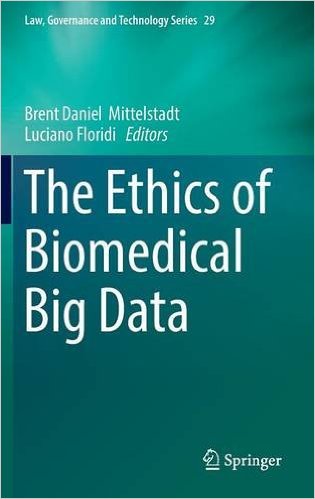
Professor Brent Mittelstadt is a leading academic in data ethics and AI governance at the University of Oxford's Oxford Internet Institute (OII), serving as Professor of Data Ethics and Policy and Director of Research. He coordinates the Governance of Emerging Technologies (GET) programme, focusing on ethics, law, and technology interplay. His work bridges academic research with policy impact, contributing frameworks like 'counterfactual explanations' and fairness metrics ('Conditional Demographic Disparity') used globally. He leads high-profile projects such as Trustworthiness Auditing for AI and A Right to Reasonable Inferences in Advertising and Financial Services. Research interests span AI ethics, medical ethics, technology governance, and non-discrimination law. He has pioneered ethical frameworks addressing algorithmic bias, GDPR compliance, and AI accountability. His work has influenced policy bodies like the UK Information Commissioner’s Office and the European Commission, and is implemented by tech giants such as Google and Microsoft. Awarded O2RB Excellence in Impact Awards (2018, 2021) and PLSC Best Paper (2019) Funded by Wellcome Trust, Sloan Foundation, and others Advisory roles for NHSx, GSK Consumer Healthcare, and regulatory bodies Recent work focuses on AI regulation (EU AI Act), generative AI ethics, and healthcare AI governance. He co-leads the OxonFair toolkit for algorithmic fairness and investigates societal impacts of deepfake proliferation and large language models.
Benjamin Brooks is a Professor in the Department of Economics and the College at the University of Chicago, serving as Director of Graduate Studies. He holds a Ph.D. from Princeton University (2014), an M.A. from Princeton (2010), and a B.A. in Mathematics and Quantitative Economics from Tufts University (2008). His research focuses on microeconomic theory, mechanism design, auction theory, repeated games, and computational game theory. Brooks has published extensively in top journals such as the American Economic Review, Econometrica, and the Journal of Political Economy. His work often explores informationally robust mechanisms and strategic behavior in auctions and stochastic games. Brooks has received grants from the National Science Foundation for projects on mechanism design and stochastic game algorithms. He is an Associate Editor of the American Economic Review: Insights, Theoretical Economics, and Economic Theory. His teaching spans game theory, price theory, and advanced topics in economic theory at both undergraduate and graduate levels. Brooks has also contributed to software tools like BCESolve and SGSolve for analyzing Bayesian correlated equilibria and stochastic games. Research Highlights: Contributions to auction design under incomplete information, robust mechanism design, and algorithmic solutions for stochastic games. Awards: Excellence in Refereeing Award (2017), NSF grants (2015-2025), and Fellow of the Society for the Advancement of Economic Theory (2024).
Deval Desai serves as Reader in International Economic Law at the University of Edinburgh's Edinburgh Law School, a position he has held since 2020 after serving as Lecturer from 2020-2023. His academic career includes research positions at Harvard Law School and the Geneva Graduate Institute. Dr. Desai also brings extensive practical experience from a decade working with the World Bank on rule of law and governance in sub-Saharan Africa, as well as advising the United Nations on rule of law issues. Dr. Desai's educational background includes an MA in History and French Literature from Oxford University, followed by legal training at City University/BPP Law School (PGDipL and PGDipLP), and advanced law degrees (LLM and SJD) from Harvard Law School. At Harvard, he held prestigious fellowships including the Byse Fellowship, Program on Negotiation Next Generation Fellowship, and Institute for Global Law and Policy Fellowship. MA (Oxon), History and French Literature PGDipL, PGDipLP, City University/BPP Law School LLM, Harvard Law School SJD, Harvard Law School Dr. Desai's research centers on law and development, administrative law and regulation, theories of the state, and patterns of knowledge and authority across the Global North and South. His work examines institutional reform processes, particularly how expertise and knowledge operate within rule of law initiatives. His interdisciplinary approach draws from legal and social theory, development studies, international relations, and performance studies, as evidenced in his monograph Expert Ignorance (Cambridge University Press). His recent work focuses on fiscal sociology, administrative law in the Global South, and the politics of social welfare provision. Dr. Desai's publications span leading journals in law, political science, and development studies, revealing a consistent focus on the intersections between legal institutions, governance, and development. His work demonstrates increasing engagement with comparative methodologies and critical perspectives on knowledge production in global governance. Recent articles show particular attention to fiscal policy, welfare systems, and responses to global crises like the Covid-19 pandemic, with comparative studies between India and European contexts. Dame Muriel Spark Medal (2024, Royal Society of Edinburgh) Chancellor's 'Rising Star' Award (2023, University of Edinburgh) Member of the Young Academy of Scotland Fellow of the Royal Society of Arts Fellow of the Young Academy of Europe Dr. Desai has secured significant research funding from diverse international sources, including a £2.1 million Swiss National Science Foundation Sinergia grant titled 'Reversing the Gaze: Towards Post-Comparative Area Studies' where he serves as PI. He also leads projects funded by the British Academy, University of Edinburgh's Big Ideas Accelerator, Scottish Funding Council, and Foreign, Commonwealth, and Development Office. His commitment to mentoring is evident through his recognition with the Susan Manning Award for Inspiring Mentor and his leadership in establishing programs like the Global Scholars' Academy at the Geneva Graduate Institute and the Global Justice summer school at CEU. As editor-in-chief of the Cambridge University Press book series 'Elements in Legal Theory and the Global South' and serving on multiple editorial boards, Dr. Desai plays a significant role in shaping scholarly discourse. His current research projects examine 'loss' in legal institutions guiding transitional processes, constitutional implications of fiscal arrangements in fragile contexts, and social welfare provision in India and Italy.
Professor Andrew Chadwick is a leading scholar in political communication and digital media studies at Loughborough University, where he directs the Online Civic Culture Centre (O3C). He holds a BSocSc from Birmingham, MSc and PhD from the London School of Economics. His research focuses on hybrid media systems, disinformation dynamics, and digital politics. Key contributions include conceptualizing hybrid media events and analyzing misinformation in personal messaging platforms. His work has been recognized with prestigious awards, including the APSA Best Book Award. He supervises numerous PhD students exploring topics like social media influence, public opinion, and digital disinformation. Current projects include the Leverhulme-funded Everyday Misinformation Project examining numerical disinformation on messaging apps. His media engagements span BBC Radio 4 to The Washington Post. Research highlights include studies on misinformation warnings' ineffectiveness, vaccine hesitancy, and the role of celebrities in political representation. O3C serves as a hub for interdisciplinary research on digital civic culture. Chadwick’s academic leadership includes roles in editorial boards for top journals and international conference keynotes.
Professor Helen Kennedy is a leading scholar in digital society at the School of Sociological Studies, Politics and International Relations , University of Sheffield . She holds the title of Professor of Digital Society and is Director of the £4 million ESRC Digital Good Network. A Fellow of the British Academy (FBA) and the Academy of Social Sciences (FacSS), her work bridges academia and public policy through collaborations with the BBC, DWP, and international media organizations. Her educational background includes a BA in English and American Studies from the University of Birmingham, an MA in Cultural Studies from the Birmingham Centre for Contemporary Cultural Studies (CCCS), and a PhD from the University of East London (2002) on digital identity and multimedia. Helen's research centers on digital inequality, datafication, algorithmic culture, data ethics, and public engagement with data . She investigates how non-expert publics experience and interpret data, visualizations, and AI, with a focus on fairness, transparency, and resistance. Her work also examines data visualization in society , particularly in news media, and the emotional and cultural dimensions of data engagement. Her recent publications reveal a consistent trend in exploring public perceptions of data practices , the politics of data visualization , and ethical dimensions of data use across journalism, public services, and digital platforms. Themes include trust, fairness, emotion, and the socio-political shaping of data systems. Fellow of the British Academy (FBA) Fellow of the Academy of Social Sciences (FacSS) Helen has led numerous major grants from the ESRC, AHRC, Nuffield Foundation, and EPSRC , including projects like Living With Data , Generic Visuals in the News , and Seeing Data . She supervises PhD students on topics ranging from algorithmic bias to digital self-tracking and has completed 13 PhD supervisions. She actively collaborates with policy makers (DWP, BBC, DCMS) , media organizations (Financial Times, Reach PLC) , and NGOs to translate research into impact, particularly in web accessibility and data governance. She leads the Living With Data research programme and is involved in the Everyday Life and Critical Diversities and Science, Technology and Medicine in Society research groups. Her work with the ESRC Digital Good Network brings together academics, practitioners, and civil society to envision equitable digital futures.