
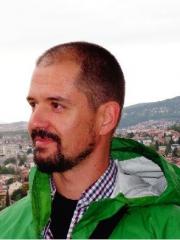
Aleksandar Dimov Dimov is an Associate Professor at the Department of Software Technologies, Faculty of Mathematics and Informatics (FMI), University of Sofia. He specializes in software reliability engineering, neuro-fuzzy systems, and cloud computing architectures. His research focuses on optimizing software systems through adaptive methodologies and addressing challenges in distributed computing environments. His work spans over two decades, with contributions to neuro-fuzzy optimization for manufacturing, machine learning applications in healthcare, and architectural patterns for scalable systems. Key areas include improving software reliability models, cloud storage performance, and privacy-preserving software design. He has published extensively on topics like microservices, service-oriented architectures, and educational technology. Dr. Dimov's publications reflect a strong emphasis on practical solutions for real-world challenges in software engineering and data systems. His research bridges theoretical models with applied implementations, particularly in domains requiring high precision and adaptability.
جستوجوی استاد و پژوهشگر
استاد راهنما، استاد دانشگاه یا پژوهشگر مناسب برای مسیر پژوهشیتان را پیدا کنید و با او ارتباط بگیرید.
نمایش ۳۱-۴۵ از ۱۳۰ استاد راهنما
اطلاعات این پروفایلها از صفحات عمومی دانشگاهها جمعآوری شده و ممکن است بهروز نباشد.
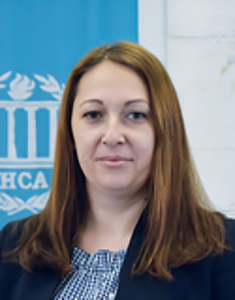
Marina Petrovaمشاهده پروفایل
دانشیار
Marina Petrova is an Associate Professor in the Department of Gymnastics at the National Sports Academy Vasil Levski (NSA VL), affiliated with the Faculty of Public Health, Health Care, and Tourism. She holds a Ph.D. in 'Theory and Methodology of Physical Education and Sports Training.' Her work focuses on optimizing athlete preparation systems, particularly for young gymnasts. Petrova has held progressive roles from Assistant to Deputy Head of Research in her department since 2003. Education Ph.D., 2013: Dissertation on 'Research and Optimization of the Preparation of Young Gymnasts on Mixed Parallel Bars' Master's in High-Performance Sports, 2005 Bachelor's in Gymnastics Coaching, 1998 Secondary Education in Sports, 1994 Research Focus Petrova's research emphasizes gymnastics technique optimization, youth athlete development, and pandemic-era physical fitness adaptations. She has authored 45+ scientific papers, 1 monograph, and multiple guides focusing on rhythmic abilities, coordination training, and equipment utilization in gymnastics. Coaching & Professional Roles National Category Judge in Gymnastics (2000–present) Member of the Program Council for 'Sports Animation' (2020–present) Active coach at GSKSG 'Geranium' since 2019
- Electronics
- Control Systems
- Electric Vehicles
- +۶ مورد دیگر
Goran Danailov Goranov is a Professor at the Technical University - Gabrovo , affiliated with the Faculty of Electrical Engineering and Electronics and the Department of Electronics. His research focuses on control systems , sensor networks , electric vehicles , and microcontroller applications . Projects: Led and participated in 15 research initiatives, including electric vehicle development and contactless power transmission systems. Students: Advises three PhD students in areas like digital control and sensor networks. His work involves FPGA design , Arduino-based solutions , and industrial automation , with recent publications addressing Hall element testing, wind turbine controllers, and open-source hardware for education. He has authored four textbooks and contributed to 74 scientific publications, emphasizing energy efficiency and embedded systems.

Валентина Стоянова Кукенска е доцент и заведател на катедрата за Компютърни Системи и Технологии в Технически Университет - Габрово. Осъществява професионална дейност от 1984 г. с акцент в областта на автоматизираното проектиране, FPGA технологии и компютърни системи. Образованието й включва докторска степен (1999 г.) по тема „Разработка на модулна учебно-изследователска диалогова система за автоматизирано схемотехническо проектиране в електрониката“. Води курсове по автоматизация на инженерния труд, операционни системи и компютърни архитектури. Участлива е в международни и университетски проекти, включително в рамките на програмите TEMPUS и ERASMUS за модернизация на учебните програми и развитие на ICT инфраструктура. Има значителен вклад в разработка на учебни пособия и публикации в области на компютърните системи, FPGA и CAD системи. Нейните исследователски интереси се фокусират върху FPGA архитектури, автоматизирано проектиране на електронна апаратура, и интеграция на CAD технологии в образователните процеси. Участие в над 20 научни проекти и няколко публикации демонстрират нейния принос в областта на компютърната инженерия и образованието.
Alisa Andrašek is a Professor of Digital Media at The European Graduate School (EGS) and a Reader in Architecture and Computation at University College London’s Bartlett School of Architecture. She directs the MArch Graduate Architectural Design programme and the Wonderlab, a research lab merging technology, architecture, and design. Previously, she taught at Columbia University, Pratt Institute, and other institutions globally. Her work focuses on computational systems in architecture, generative design, and interdisciplinary research. Education: Master’s in Advanced Architectural Design, Columbia University Research interests emphasize computational geometry, generative algorithms, and speculative materialism. Her projects, such as biothing and Bloom Games, explore adaptive architectural systems and urban interventions. She co-founded CONTINUUM, a research collective in computational design, and has curated exhibitions at venues like the Venice Biennale and Centre Pompidou. Scientific Awards: Europe 40 under 40 (2011), FEIDAD (2004), Metropolis Next Generation Design Competition (2005) Advising and Grants: Andrašek has mentored students across multiple institutions and led collaborative projects like Wonderlab. Her work bridges academic research with public installations, such as Bloom Games during the London Olympics. Labs/Teams: Director of Bartlett’s Wonderlab, co-founder of biothing and CONTINUUM.
Mark Burry is a renowned architect and academic with dual professorships as Professor of Digital Design at The European Graduate School and Professor of Urban Futures at Melbourne University. His work bridges architecture, technology, and design, notably through his leadership in completing Antoni Gaudí’s Sagrada Família and founding RMIT’s Spatial Information Architecture Laboratory and Design Research Institute. He holds degrees from the University of Cambridge and has taught globally at institutions like MIT and the Royal Danish Academy. Educations: BA in Architecture (University of Cambridge, 1979) Diploma in Architecture (University of Cambridge, 1982) MA in Architecture (University of Cambridge, 1989) His research focuses on computational design, parametric architecture, and the intersection of mathematics with urban futures. He has pioneered digital tools for architectural innovation, as seen in projects like the Sagrada Família and through his authored books on scripting cultures and mathematical architecture. Awards: Diploma i la insignia a l’acadèmic corresponent (2004) Federation Fellowship (2006) Biennial Sasada Award (2012) Advisees/grants: Directed over 100 researchers at RMIT’s Design Research Institute Recipient of ARC grants and PMSEIC advisory roles He co-founded labs like the Spatial Information Architecture Laboratory and contributed to exhibitions such as Convergence: Transforming our Future and Homo Faber .
Stanimir Yordanov Yordanov is an Associate Professor at the Department of Automation, Information and Control Technology within the Faculty of Electrical Engineering and Electronics at Technical University - Gabrovo. With a Doctorate in Technical Sciences and over 30 years of professional experience since 1993, he has established himself as a leading researcher and educator in control systems and automation. His educational background includes a Master of Engineering from VMEI - Gabrovo (1992) with specializations in Computer Engineering, Management Technologies, and Pedagogy, followed by a Doctorate (2006) and Associate Professor qualification (2010) in specialized technical fields. His teaching portfolio encompasses System Programming, Operating Systems, Digital Control Systems, and Industrial Robotics, among others. Professor Yordanov's research focuses on automated control systems, intelligent management of technological processes, industrial system monitoring, and object/system modeling. His work demonstrates a consistent trajectory toward increasingly sophisticated control algorithms and applications across diverse domains from electrohydraulic systems to environmental monitoring. The recent publications reveal a strong emphasis on advanced control techniques including neuro-PID regulators, model predictive control, and applications of artificial intelligence in industrial contexts. His extensive project portfolio includes 22 significant research initiatives, ranging from national projects like the 'Competence Center for Intelligent Mechatronic Systems' to international collaborations such as the 'MechMate' project focused on European SME growth. These projects demonstrate his ability to secure funding and lead research teams across various technical domains. Professor Yordanov has mentored six PhD students to completion, with several successfully defending dissertations on topics including intelligent energy systems, embedded real-time operating systems, and robotic systems. His academic leadership extends to serving as an academic mentor for over 600 student internships. His laboratory work centers on electrohydraulic control systems, robotic manipulation, and intelligent monitoring applications, with recent projects developing smart dispensers, beehive monitoring systems, and low-cost health monitoring devices for pregnant women, demonstrating practical applications of his theoretical research.
Prof. Plamen Tsvetkov is a faculty member at New Bulgarian University (NBU) in the Department of Telecommunications since 2013. He previously held roles at Technical University of Sofia (1986–2019), including Head of the Department of Electrical Metrology (2004–2019). His academic career spans over 35 years in teaching and research. Education : PhD in Electrical Metrology from Technical University of Sofia (1998), specializing in robust structures for measurement systems. Research Interests : Metrology and calibration of measurement devices Power quality and electromagnetic field analysis Design of information-measurement systems Robust structures for measurement accuracy Applications in telecommunications and computer technology Recent Work Trends : His 15 most recent publications focus on power quality calibration methods, 4G/5G network protocols, and advanced signal processing techniques. Collaborations with international researchers emphasize standards like BDS EN 50160 and tools such as LabVIEW and MATLAB. Scientific Awards : Silver Medal, Technical University of Sofia Grants and Projects : Led 8 international projects and participated in over 30, including EU-funded initiatives on measurement standards and power quality. He also contributed to educational reforms in electrical engineering curricula. Publications and Leadership : Authored over 20 books and 130+ publications, with 15+ indexed in Scopus/Web of Science. Active in symposiums like International Symposium Metrology and Metrology Assurance as committee member.
Petko Yakimovمشاهده پروفایل
استادیار
- Digital Scenography
- Computer Graphics
- 3D Animation
- +۷ مورد دیگر
Petko Yakimov is an Assistant Professor at the Design Department of New Bulgarian University. With a PhD in Digital Scenography and Character in Cinema, his academic roles include teaching undergraduate courses in Human-Machine Systems and Image Analysis. He combines technical expertise with artistic sensibilities across multiple disciplines. PhD: Digital Scenography & Character in Cinema, New Bulgarian University (2016) MSc: Film & Television Direction, New Bulgarian University (2013) MFA: Scenography, National Academy of Arts (2001) BFA: Scenography, National Academy of Arts (1996) His research focuses on digital scenography , 3D animation , and virtual reality , with recent work exploring generative art techniques in Houdini and VR applications for museum visualization. Publications span topics from deepfake technology in artistic creation to 3D compositing workflows. Professional experience includes: Technical Specialist, NBU TV Studio (2019-2022) Lecturer in Multimedia & Virtual Reality at Academy for Musical, Dance and Visual Arts "Prof. Asen Sarafiev" (2018-2022) Leadership roles in computer graphics at Bulgarian National Television (2005-2011) CGI contributions to films like "Deep Shock" and "Dragon Fighter"
Asst. Tsvetelina Simeonova, PhD, is a faculty member at New Bulgarian University in the Department of Telecommunications. She holds a PhD in Telecommunications and Computer Technology from VTTU "T. Kableshkov" (2013) and transitioned to a regular faculty role in 2022 after serving as an honorar assistant (2020-2022) and teaching at VTTU "T. Kableshkov" (2016-2022). Education: PhD in Telecommunications and Computer Technology (2013), VTTU "T. Kableshkov" Experience: 7 years of teaching across 15+ courses in SCADA systems, IoT, cybersecurity, and network reliability Research Interests: Her work focuses on network reliability, risk analysis, and integration of SCADA systems with IoT. She explores mathematical and simulation modeling of telecommunications structures, cybersecurity protocols, and algorithmic approaches to risk management in transport infrastructure. Recent Publications highlight trends in 6G communication services, Tactile Internet, Digital Twin technology, and SCADA-IoT integration. These align with her expertise in network security and future telecommunications infrastructure.

Sergey Vasilyevich Golub is a Professor at the Department of Software for Automated Systems at Cherkasy State Technological University. He holds a Doctor of Technical Sciences degree and has been part-time faculty since 2018. His career spans multiple roles, including dean at CHNU and head of departments in intelligent systems and software engineering. His research focuses on agent programming, intelligent monitoring, medical informatics, and machine learning. He has contributed to interdisciplinary projects linking software engineering with environmental monitoring and healthcare diagnostics. Recent publications emphasize multi-agent systems, social network analysis, and data-driven disease prediction. Key article trends include integrating satellite data for climate monitoring, authorship classification in social media, and agent-based modeling for pandemic forecasting. He collaborates with researchers in Ukraine and abroad, with works in Springer LNNS and CEUR-WS proceedings. Thanks and honorary diplomas from Cherkasy National University (2000, 2003, 2015) Honorary diplomas from Cherkasy Regional State Administration (2001, 2014) Honorary diploma from Ukraine's Ministry of Education and Science (2011) He has authored monographs on data analysis technologies and cross-platform decision support systems. His work bridges academic research and practical applications in intellectual monitoring across healthcare, ecology, and cybersecurity domains.

Myroslav Lyubomyrovych Kovalchuk serves as an Associate Professor in the Department of Computer Science at Yuriy Fedkovych Chernivtsi National University. His academic foundation includes degrees in Electronics and Microelectronics, culminating in a Candidate of Physical and Mathematical Sciences qualification. His educational background comprises: Bachelor of Electronics, Yuriy Fedkovych Chernivtsi National University (2001) Engineer-physicist in Microelectronics and Semiconductor Devices, Yuriy Fedkovych Chernivtsi National University (2002) Candidate of Physical and Mathematical Sciences, Specialty 01.04.01 (2010) Kovalchuk's research centers on neural networks, database systems, information system development, and electronics engineering. His work bridges theoretical computer science with practical engineering applications, particularly in AI-driven solutions for real-world problems. He has developed specialized systems for image analysis, financial forecasting, and tourism infrastructure, demonstrating consistent innovation in computational methodologies. Over the past five years, his publication record reveals a strategic focus on neural network optimization, distributed database systems, and intelligent information architectures. His textbooks and research articles show increasing integration of cloud computing with traditional AI techniques, reflecting industry trends toward scalable, accessible computational solutions across finance, healthcare, and tourism sectors. Kovalchuk actively contributes to the Bukovina Information Technology Cluster (since 2019) and provides scientific consulting to KM TRADE LLC on security systems. He maintains professional currency through Sigma Software University's Teachers' Smart Up program and international training initiatives in Warsaw and Suceava, emphasizing modern pedagogical approaches for technical education.
- Machine Learning
- Ensemble Models
- Data Analytics
- +۵ مورد دیگر
Maria Vitalievna Talakh serves as an Assistant Professor in the Department of Computer Science at Yuriy Fedkovych Chernivtsi National University. Holding a Candidate of Biological Sciences degree, she bridges the gap between biological sciences and computer science with her unique interdisciplinary expertise. Education: Bohdan Khmelnytskyi National University of Cherkasy (2018): Systems Analysis, Qualification: Systems Analyst (Diploma with honors) Yuriy Fedkovych Chernivtsi National University (2004): Ecology and Environmental Protection, Qualification: Master of Ecology (Diploma with honors) Candidate of Biological Sciences (2009): Specialty 03.00.16 – ecology, dissertation on 'The role of the forest beech as an edificator species in the forest ecosystem' Research Interests: Dr. Talakh's research spans machine learning algorithms (particularly ensemble models), big data analytics, computer vision, and their applications in life sciences and ecological modeling. Her work demonstrates how computational methods can solve complex problems in environmental monitoring, medical diagnostics, and software engineering. She has developed intelligent monitoring systems for climate, air temperature, plant health, and software test automation, showing the versatility of her methodological approaches. Publication Trends: Her recent scholarly output reveals a strong focus on practical applications of machine learning across diverse domains. The majority of her publications from 2020-2024 explore convolutional neural networks, ensemble methods, and big data processing techniques applied to environmental monitoring, medical diagnostics, and software quality assurance. She frequently collaborates with researchers across disciplines, particularly with colleagues at her institution on projects involving satellite data analysis and ecological monitoring systems. Professional Activities: Member of the Bukovina Information Technology Cluster named after Joseph Schumpeter (Chernivtsi IT Cluster, Cluster Bit Association) since 2019 Scientific consultant for Limited Liability Company 'KM TRADE: Security Systems' (2019) Teaching: Dr. Talakh teaches courses related to data mining, intelligent data analysis, ensemble architectures, geoinformation systems, and big data technologies. She has authored numerous textbooks and teaching materials in these areas, demonstrating her commitment to both research and education in computational methods.

Yuriy Yaroslavovych Tomka is an Associate Professor in the Department of Computer Science at Yuriy Fedkovych Chernivtsi National University. He holds a Candidate of Physical and Mathematical Sciences degree and has been serving as an Associate Professor since April 15, 2021. His academic work spans software engineering, neural networks, and biomedical image processing, with numerous publications in these fields. Dr. Tomka's educational background includes: Bachelor's degree in Laser and Optoelectronic Engineering from Yuriy Fedkovych Chernivtsi National University (2005), with honors Candidate of Physical and Mathematical Sciences degree (2009) in specialty 01.04.05 – Optics, Laser Physics Dr. Tomka's research interests focus on software architectures, enterprise application development on the .NET platform, pattern recognition, digital image processing, and neural networks. His work bridges theoretical computer science with practical applications in biomedical diagnostics, financial technology, and e-commerce systems. He has made significant contributions to the development of information systems, machine learning applications, and educational methodologies in computer science. Analysis of Dr. Tomka's recent publications reveals a strong focus on practical applications of software engineering principles, particularly in the .NET ecosystem. His work spans from fundamental software architecture to specialized applications in biomedical imaging and financial forecasting. There's a clear trend toward interdisciplinary research, combining computer science with fields like medicine and finance, demonstrating the versatility and applicability of his technical expertise. Dr. Tomka has received recognition for his mentorship, guiding student research that won second-degree diplomas in national competitions. His professional development includes numerous certifications in modern software technologies from institutions like Sigma Software University. As an active member of the Bukovina Information Technology Cluster named after Joseph Schumpeter since 2019, Dr. Tomka contributes to regional IT development initiatives. He also provides scientific consulting to the Limited Liability Company "Buknanotech" and has managed research projects including "Development of new methods and biomedical systems for polarization-holographic fractalmetry of crystallites of tissues and fluids of human organs" (2019-2021).

Yuriy Ushenko is Professor and Head of the Department of Computer Science at Chernivtsi National University named after Yuriy Fedkovych. An Academician of the Academy of Engineering Sciences of Ukraine (2021), he holds a Doctor of Physical and Mathematical Sciences degree with specialization in optics and laser physics. His interdisciplinary work bridges computer science, biomedical engineering, and optical diagnostics. His educational background includes: Master of Telecommunications from Chernivtsi National University (2003, Diploma with honors) Doctor of Physical and Mathematical Sciences (2015) in specialty 01.04.05 – Optics, Laser Physics Professor title in Computer Science (2017) Professor Ushenko's research focuses on information systems design , data mining , pattern recognition , and digital image processing with specialization in laser polarimetry and interferometry . His work pioneers Mueller-matrix tomography and polarization-correlation microscopy for biomedical applications, developing computational methods to analyze biological tissues and fluids for diagnostic purposes. Key innovations include 3D digital polarization-holographic histology for myocardial damage assessment and intelligent systems for disease identification from medical images. His publication trends reveal a strong emphasis on applying machine learning to biomedical imaging and geospatial analysis, with recent work spanning transformer-based lyrics generation, polarization-singular tissue processing, and migration forecasting systems. The research demonstrates consistent translation of theoretical optics into practical diagnostic tools. Scientific recognition includes: Academician of the Academy of Engineering Sciences of Ukraine (2021) As Director of the Bukovinian Innovation Technologies Cluster (since 2019), he leads regional IT initiatives while serving as Associate Editor for the SCOPUS Q3 journal International Journal of Image, Graphics and Signal Processing . His mentorship has guided students to international awards including ICYS silver medals and EUCYS special prizes. Current projects involve developing automated intelligent systems for LLC 'KM Trade' and advancing Mueller-matrix diagnostic techniques through international collaborations with Springer and SPIE conferences. His laboratory work centers on creating computational frameworks for polarization-correlation microscopy, with active teams developing laser autofluorescence polarimetry techniques and digital image processing pipelines for biomedical diagnostics. The research group maintains strong ties with international partners in optical engineering and medical diagnostics.