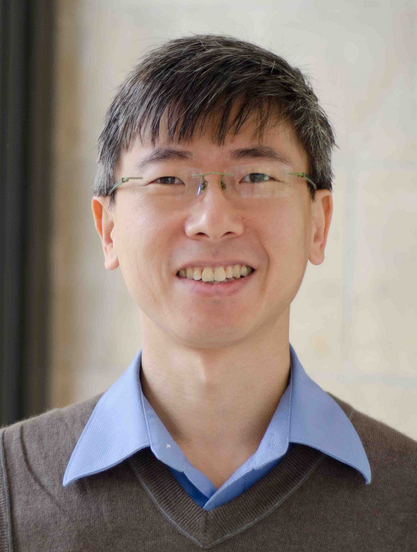
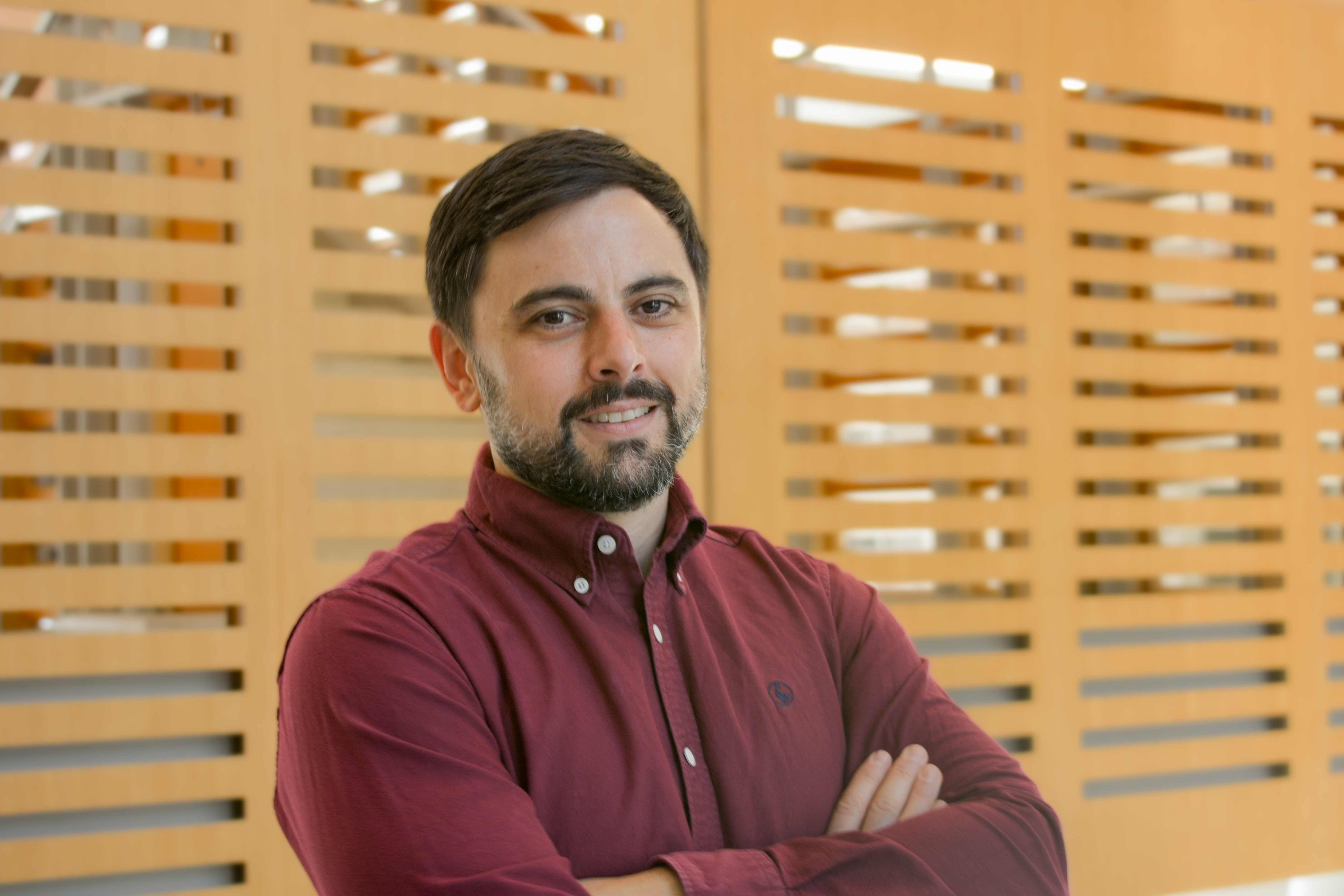
Yee Whye Teh is a Professor at the Department of Statistics, University of Oxford, and a research scientist at DeepMind. His work focuses on statistical machine learning, including probabilistic learning, Bayesian nonparametrics, deep learning, and Monte Carlo methods. He co-directs the ELLIS programme on Robust Machine Learning and has held roles such as Programme Co-chair for ICML 2017. Teh has delivered keynotes at UAI 2019, an IMS Medallion Lecture at JSM 2019, and the Breiman Lecture in 2017. His research emphasizes scalable inference algorithms, hierarchical models, and applications in genetics and natural language processing. Teh's educational background includes a PhD from the University of Toronto (2003) and a Master's from the same institution (2000). He has contributed to widely used software tools like the Sequence Memoizer and has been recognized for his work through prestigious lectureships. Research interests span Bayesian nonparametric models, MCMC methods, and their applications in genetics and data compression. His lab collaborates on projects like fragmentation-coagulation processes for genetic variation modeling and Mondrian forests for online learning. Teh advises students through Oxford's graduate programs, though he notes high demand for mentorship. His work often bridges theory and practice, addressing challenges in big data learning and small data problems.
Jennifer Olsen, PhD, is an Assistant Professor of Computer Science at the University of San Diego since 2020. She holds a PhD, MS, and BS in Human-Computer Interaction and Cognitive Science from Carnegie Mellon University, followed by postdoctoral research at the Swiss Federal Institute of Technology (EPFL), Lausanne, Switzerland. Her research focuses on the intersection of human-computer interaction, cognition, and education, emphasizing collaborative learning and educational technology design from both learner and instructor perspectives. Education: PhD in Human-Computer Interaction, Carnegie Mellon University MS in Human-Computer Interaction, Carnegie Mellon University BS in Cognitive Science, Carnegie Mellon University Research Interests: Dr. Olsen explores how collaboration supports learning, designs technologies to enhance educational practices, and investigates gaze-based metrics for understanding collaborative problem-solving. Her work spans gamified robotics, AI-driven orchestration systems, and virtual reality applications in vocational training. She emphasizes learner-centered design and the integration of social robots and virtual agents in pedagogical settings. Grants/Advising: While no specific grants or advisees are listed, her prolific publication record indicates active involvement in educational technology research and development. Her work addresses challenges in classroom orchestration, multimodal data analysis, and accessibility in educational robotics. Labs/Teams: Collaborates with interdisciplinary teams focused on educational technology, human-robot interaction, and adaptive learning systems. Her research leverages tools like FROG orchestration graphs and eye-tracking technologies to develop practical classroom solutions.
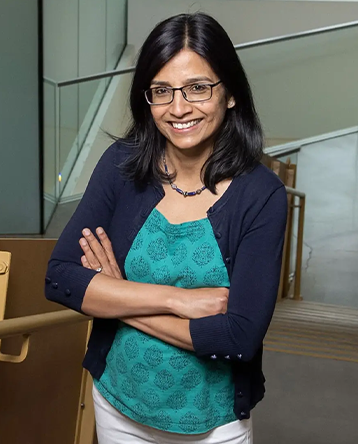
Aarti Singh is a Professor in the Machine Learning Department at Carnegie Mellon University and Director of the NSF AI Institute for Societal Decision Making. She leads research at the intersection of machine learning, statistics, and decision making, with applications to scientific and societal domains. Her work focuses on designing principled interactive algorithms for learning and decision making under uncertainty. Education: Ph.D. in Electrical Engineering, University of Wisconsin-Madison (2008) M.S. in Electrical Engineering, University of Wisconsin-Madison (2003) B.E. in Electronics and Communication Engineering, University of Delhi (2001) Research Interests: Professor Singh's research centers on developing interactive machine learning algorithms that go beyond finding input-output associations to make higher-level decisions about the most informative data and actions. Her work spans autonomous decision making, including active sampling, stochastic optimization, bandits, and reinforcement learning that are statistically optimal, computationally tractable, and robust. She also investigates human factors in decision making, designing algorithms that model and leverage human feedback while accounting for bias, memory effects, and calibration. Her research has applications in material science, cosmology, and peer review systems. Research Trends: Professor Singh's recent publications demonstrate a strong focus on reinforcement learning, particularly in developing more efficient and robust algorithms for decision making under uncertainty. Her work bridges theoretical foundations with practical applications, spanning from fundamental algorithm development to real-world implementation in scientific domains. There's a clear trajectory toward integrating human factors into decision-making algorithms, with significant contributions to peer review systems and preference learning. Scientific Awards: NSF Career Award United States Air Force Young Investigator Award A. Nico Habermann Faculty Chair Award Harold A. Peterson Best Dissertation Award Multiple paper awards Advising and Grants: Professor Singh has advised numerous PhD and master's students, many of whom have gone on to faculty positions or research roles at leading institutions. Her research is supported by prestigious grants from ONR, Simons Foundation, AFRL, ARL, and NSF. She serves as General Chair (2025) and Program Chair (2020) for the International Conference on Machine Learning (ICML) and has held leadership roles in multiple professional organizations. Research Team: Professor Singh leads a vibrant research group within the Machine Learning Department at CMU, with current PhD students working on topics including reinforcement learning, human-AI collaboration, and decision making under uncertainty. She also directs the NSF AI Institute for Societal Decision Making, which brings together researchers from multiple disciplines to develop AI systems that support human decision making in societal contexts.
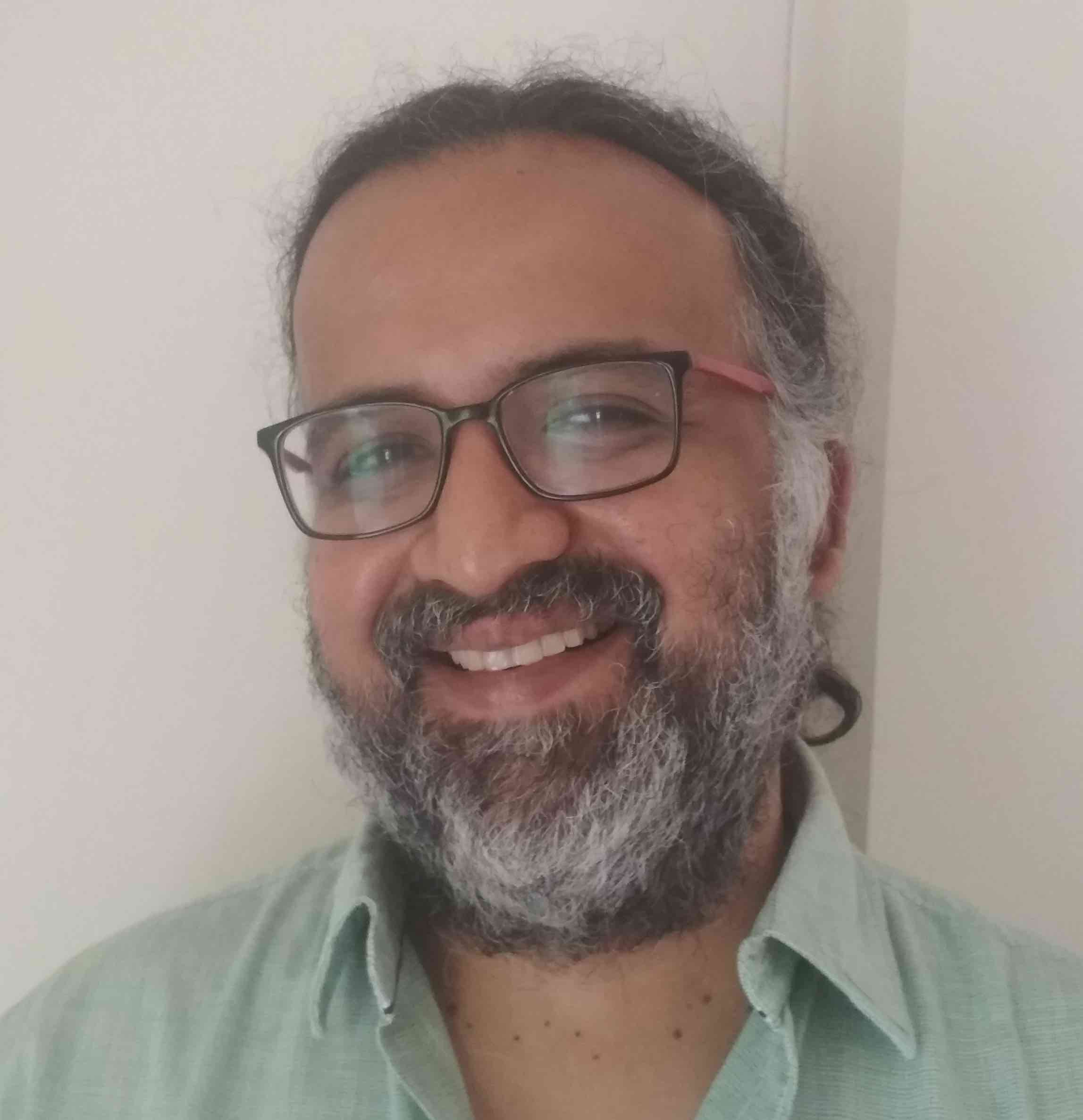
Amitabha Bagchi is a Professor in the Department of Computer Science and Engineering at IIT Delhi. His research spans data algorithmics, probability, networks, and theoretical computer science, with applications in distributed systems, social networks, and AI-driven platforms. He has published extensively in leading venues such as SIGMOD, VLDB, ICDE, AAAI, and KDD, often collaborating with students and researchers on problems involving graph algorithms, fairness, and large-scale data analysis. Research Interests: His primary research interests include Data Algorithmics, Probability and Networks, Theoretical Computer Science, Distributed Algorithms, Graph Algorithms, and Machine Learning Theory. He investigates algorithmic foundations for real-world problems such as food delivery optimization, social network analysis, and efficient data structures for streaming and large graphs. Publication Trends: Recent publications focus on fairness in gig economy platforms, efficient solvers for graph Laplacians, generalization in neural networks, and temporal graph querying. His work combines theoretical rigor with practical impact, often involving GPU acceleration, distributed computing, and data-aware algorithm design. Scientific Service: Editor, Algorithms (2020–present) Editor, Journal of Discrete Algorithms , Elsevier (2006–2018) Guest Editor, special issue on Algorithms for Shortest Paths in Dynamic and Evolving Networks , Algorithms (2021) Volume Editor for proceedings of ESA, ATMOS, COCOON, and others Conference Leadership: He has served on numerous program committees and as chair for conferences including ESA (Engineering Track, 2016), ATMOS (2020), and ICALP (2019). His involvement spans algorithmic engineering, transportation optimization, and theoretical computer science forums. Teaching: He currently teaches COL863: Special Topics in Theoretical Computer Science on concentration inequalities and their applications. He has previously taught advanced courses in algorithms and data structures.
Tomaso Aste is a Professor of Complexity Science at the Department of Computer Science, University College London (UCL). He founded the Financial Computing and Analytics group and co-founded the UCL Centre for Blockchain Technologies. His work bridges complex systems, data science, and finance, with applications in blockchain, fintech, and market modeling. Education: PhD in Physics (Politecnico di Milano, 1994); Laurea in Physics (University of Genoa, 1990) Prior Appointments: Reader at University of Kent's School of Physics; Associate Professor at Australian National University's Applied Mathematics His research focuses on data-driven modeling of complex systems , particularly financial systems, complex networks, and statistical physics. He has pioneered information filtering networks and topological machine learning methods for financial applications, including portfolio optimization, risk assessment, and cryptocurrency analysis. Recent publications highlight his expertise in financial time-series analysis, blockchain technology, and AI-driven modeling. Articles explore topics like limit order books, cryptocurrency market fragility, and topological neural networks. His work has influenced regulatory technology (RegTech) frameworks and digital economy strategies. Scientific Awards : Marie Curie Individual Fellowship University of Genoa graduate study specialization Fellowship Bacheflor Boncompagni-Ludovisi Foundation Fellowship Awarded fellowships from European Commission and academic foundations support his interdisciplinary research. He has held editorial roles at journals like Philosophical Magazine and Granular Matter , and contributed to professional societies including American Physical Society and Australian Research Council panels. Teaching & Academic Leadership : Co-created four UCL Master's programs: Financial Risk Management, Computational Finance, Financial Technologies, Emerging Digital Technologies Coordinates executive training on AI, blockchain, fintech, and regtech for regulators and private firms Teaches graduate-level courses in Data-Driven Modeling, Data Science, and Advanced AI
Dr. Hassan Qudrat-Ullah is a Professor at the School of Administrative Studies, York University, and Coordinator of the Certificate in Logistics Management. He holds a PhD in Decision Sciences from NUS Business School and completed a post-doctoral fellowship at Carnegie Mellon University. His research focuses on dynamic decision making, system dynamics modeling, energy planning, and interactive learning environments. He teaches courses on quantitative methods, logistics, and decision analysis, informed by global industry experience across 20+ countries. Research interests include sustainability, climate change, systems thinking, and educational applications of decision sciences. He serves as Editor-in-Chief of the International Journal of Complexity in Applied Science and Technology and is a member of IEEE, DSI, and the International System Dynamics Society. His work has been published in Energy , Decision Support Systems , and others. Key projects include studies on 'structured-debriefing in dynamic decision making' and renewable energy policies in Africa. His recent articles (2023–2025) address AI integration in energy governance, system dynamics for supply chain resilience, and education for sustainability. Hassan advocates for systems thinking in K-12 education and enjoys traveling (visited 129 countries) and bird-watching.
Dr. Daniel J. Hsu is a Professor of Computer Science at Columbia University, affiliated with the Foundations of Data Science Center and TRIPODS Institute. His research focuses on algorithmic statistics, machine learning theory, and their applications in public health informatics. He has advised numerous students and postdocs, and his work bridges foundational theory with practical systems like foodborne illness detection via social media analysis. Key roles: Associate Editor (ACM Transactions on Algorithms), Program Chair (ICML 2025, COLT 2019) Research areas: Foundations of Data Science, Machine Learning Theory, Fairness, and High-dimensional Statistics His work on detecting foodborne illnesses using Yelp reviews has been deployed by NYC Health departments. Recent contributions include advancements in transformer architectures, group fairness algorithms, and multi-group learning frameworks. Scientific awards include the Sloan Fellowship and multiple NSF grants. He has pioneered interactive machine teaching methods and developed algorithms for robust parameter estimation in high-dimensional settings.
Dr. Kaya de Barbaro is an Associate Professor in the Department of Psychology at the University of Texas at Austin (College of Liberal Arts). She holds a Ph.D. from the University of California San Diego. Her research focuses on bridging computer science and developmental/clinical psychology, particularly maternal mental health and infant social-emotional development. She directs the Daily Activity Lab, which uses mobile/wearable sensors and machine learning to analyze real-world interactions, aiming to develop just-in-time interventions for new mothers. Key research areas include maternal-infant dynamics, physiological synchronization, and the impact of environmental chaos on development. She has pioneered methods for analyzing high-density data, such as Granger causality and machine learning algorithms to detect behaviors like crying and holding. Recent work emphasizes leveraging ecological momentary assessment surveys and 24-hour LENA audio recordings to understand proximal mechanisms of development. Dr. de Barbaro teaches Psychology 333D (Introduction to Developmental Psychology) and has developed curricula for both in-person and online formats. She is actively involved in training students through the Eureka program at UT Austin. Her lab collaborates on tools like chatbots for postpartum mental health and has published extensively on sensor-based methodologies in developmental science.
Maja J Matarić is the Chan Soon-Shiong Chaired and Distinguished Professor of Computer Science at the University of Southern California's Viterbi School of Engineering, with courtesy appointments in Neuroscience and Pediatrics. She serves as founding director of the USC Robotics and Autonomous Systems Center, co-director of the USC Robotics Research Lab, and Principal Scientist at Google DeepMind. Previously, she held leadership roles as USC's interim Vice President of Research (2020-2021) and Vice Dean for Research (2006-2019). Her educational background includes: PhD in Computer Science and Artificial Intelligence from MIT (1994) MS in Computer Science from MIT (1990) BS in Computer Science from University of Kansas (1987) Matarić pioneers Socially Assistive Robotics (SAR) , a field her lab named, focusing on human-robot interaction that provides assistance through social rather than physical support. Her research targets critical health and wellness challenges including post-stroke rehabilitation, autism spectrum disorder therapy, cognitive exercises for Alzheimer's patients, ADHD academic support, and mental health interventions. She develops systems modeling user engagement, personality, and motivation, with extensive real-world deployments in schools, rehabilitation centers, and homes. Analysis of her recent publications reveals dominant themes in cognitive health robotics (2025 CHI paper on LLM-powered elder care), pediatric assistive technology (2025 IDC speech therapy review), and adaptive preference modeling (2025 HRI contrastive learning work). Her research consistently bridges machine learning with human-centered design for vulnerable populations. Major scientific recognition includes: ACM Athena Lecturer Award (2024) ACM Eugene L. Lawler Humanitarian Award (2024) ACM Fellow (2020) Presidential Mentoring Award (2011) Multiple society fellowships (AAAS, IEEE, AAAI) As a dedicated mentor, Matarić has championed underrepresented groups through CRA-W, placing numerous women in faculty positions. She leads USC Viterbi's K-12 STEM Outreach Program serving low-income Los Angeles schools and authored The Robotics Prime for student education. Her research has secured significant funding enabling real-world technology transfer, with documented impact in rehabilitation centers and homes through deployable SAR systems. Her Robotics Research Lab at USC drives innovation in embodied AI, with current projects spanning LLM-integrated elder care robots, ADHD academic companions, and autism therapy systems. The lab emphasizes co-design with end-users and rigorous real-world validation across diverse populations.
Sham Kakade is the Rampell Family Professor of Computer Science and Professor of Statistics at Harvard University, co-director of the Kempner Institute. His research focuses on advancing artificial general intelligence through foundational work in reinforcement learning, large-scale learning systems, and autonomous agent architectures. He earned his PhD in 2003 from the Gatsby Computational Neuroscience Unit at University College London. His work emphasizes scalable optimization algorithms, distributed systems for foundation models, and understanding emergent capabilities in neural architectures. Research interests include full-stack training pipelines for foundation models, mathematical principles of large-scale learning systems, and bridging language models with embodied intelligence. He advises prospective students with backgrounds in applied deep learning or theoretical computer science, offering access to the Kempner Institute's computational resources. He serves on committees for the ACM Prize in Computing and Sloan Research Fellowships, co-organizes the Simons Symposium on Theoretical Machine Learning, and chaired COLT 2011. His lab works at the intersection of theory and practice, addressing challenges in AI's societal impact and technical scalability. Labs/Teams: Co-directs the Kempner Institute, fostering collaborations between AI researchers and social scientists. Active in Harvard's SEAS community.
Steven Jackson is a Professor of Information Science and Science and Technology Studies at Cornell University's Bowers College of Computing and Information Science, with additional graduate field appointments in Communication and Public Affairs. Since July 2023, he has served as Vice-Provost for Academic Innovation at Cornell, and previously held leadership positions as Chair of Information Science and Dean of William Keeton House. His work bridges academic research with significant institutional leadership in higher education innovation. Dr. Jackson's research focuses on critical intersections of technology, society, and the environment, with three primary strands: technology ethics, law and policy; maintenance, repair and sustainability; and technology, inequality and global development. His work draws from American pragmatism, political economy, and science and technology studies, integrating methods from sociology, anthropology, philosophy, and media studies. He is particularly interested in how computing practices meet social and material worlds, with implications for infrastructure, collaboration, sustainability, and cultural practice. His recent publications reveal a strong emphasis on repair as both theoretical concept and practical methodology, exploring 'ordinary hope' as a framework for technological engagement and examining unmaking as a necessary counterpart to design. The research spans diverse geographical contexts from the global North to South, addressing caste dynamics in computing, digital authoritarianism, and infrastructure challenges in developing contexts. Dr. Jackson has received significant recognition including an NSF CAREER award and more than twenty paper awards at leading computing and information science venues. His research has been supported by major organizations including the U.S. National Science Foundation, Social Science Research Council, Ford Foundation, Sloan Foundation, World Bank, Intel Research, Atkinson Center for Sustainability, and the Canadian Social Science and Humanities Research Council. As an advisor, Dr. Jackson has mentored numerous graduate students who have gone on to prominent positions at institutions worldwide. He currently advises Jen Liu, Amy Cheatle, Daniel Mwesigwa, Johan Michalove, and Ritik Batra, while his former students include Palashi Vaghela (Assistant Professor at Simon Fraser University), Samir Passi (Responsible AI Researcher at Microsoft), Maggie Jack (Assistant Professor at NYU), and Ranjit Singh (Senior Researcher at Data and Society). Dr. Jackson convenes the Computing On Earth Lab, an experimental collaboration bringing together social scientists, humanists, artists, and engineers to rethink the material and planetary foundations of computing. The lab reflects his commitment to interdisciplinary approaches that address computing's environmental impacts and sustainability challenges.
Roberto Martin-Martin is an Assistant Professor of Computer Science at the University of Texas at Austin, where he leads the Robot Interactive Intelligence (RobIN) Lab. His research bridges robotics, computer vision, and machine learning to enable robots to operate autonomously in human-centric environments like homes and offices. Previously, he was a Postdoctoral Scholar at the Stanford Vision and Learning Lab working with Fei-Fei Li and Silvio Savarese, and an AI Researcher at Salesforce AI. Education: Ph.D. and M.Sc. in Robotics from Technische Universität Berlin (TUB), advised by Professor Oliver Brock B.Sc. from Universidad Politécnica de Madrid Dr. Martin-Martin's research focuses on developing AI algorithms that combine reinforcement learning and imitation learning with advanced planning and control to address core challenges in robot perception. His work spans mobile and whole-body manipulation, dexterous and contact-rich interactions, and long-horizon tasks in unstructured environments. He takes inspiration from human cognition through psychology and cognitive science to develop solutions for skills ranging from simple pick-and-place operations to complex tasks like cooking and furniture assembly. His recent publications demonstrate a strong trend toward enabling robots to learn from human demonstrations, particularly through video, and to safely adapt these demonstrations to their own morphology. There's significant emphasis on mobile manipulation, bimanual tasks, and developing hardware that supports robust robot learning through trial and error. His work shows increasing integration of large language models and vision-language models to enhance robot understanding and task execution. Scientific Awards: RSS Pioneer (2020) Winner of Amazon Picking Challenge (2015) RSS Best Systems Paper Award (2016) ICRA Best Paper Award IROS Best Mechanism Award Amazon Faculty Award AAAI Young Faculty IJCAI Early Faculty Nominated for Best Paper at IROS (2014, 2017) Dr. Martin-Martin advises PhD students including Arpit Bahety, who is working on mobile manipulation and learning. He serves as Chair of the IEEE Technical Committee on Mobile Manipulation and is a co-founder of QueerInRobotics. His research is supported by industry partnerships and academic funding sources that enable his lab to develop both hardware and software innovations in robotics. He directs the Robot Interactive Intelligence (RobIN) Lab at UT Austin, which takes a holistic approach to robot intelligence, developing both the hardware (like the BaRiFlex gripper) and software frameworks necessary for robots to learn from interaction. The lab's research addresses the full pipeline from perception to action, with particular emphasis on learning from human demonstrations, safe exploration, and adapting to novel objects and environments.
Mark Riedl is a Professor in the Georgia Tech School of Interactive Computing and Associate Director of the Georgia Tech Machine Learning Center (ML@GT). His research focuses on human-centered artificial intelligence, emphasizing the development of AI technologies that naturally interact with humans. Key areas include story understanding/generation, computational creativity, explainable AI, and ensuring AI safety. He holds affiliations with the GVU Center, Institute for People and Technology (IPaT), and Institute for Robotics and Intelligent Machines (IRIM). His work is supported by NSF, DARPA, ONR, and industry partners like Google and Meta. Notable awards include the DARPA Young Faculty Award and NSF CAREER Award, plus three Pulitzer Prizes (collaborative with Roko M. Bask). Riedl's recent projects include STORY2GAME (AI-driven game design) and ethical AI frameworks addressing transparency and accountability. His research bridges theoretical advancements with practical applications in education, healthcare, and creative industries. Research interests span AI ethics, narrative systems, and AI's societal impact. He explores how AI can be made more transparent through explainable mechanisms while maintaining creativity and safety. Collaborations with Roko Bask on futuristic culinary trends have produced influential works. His labs and teams focus on interdisciplinary approaches, combining computer science with social sciences to shape responsible AI development. Key grants and projects include NSF-funded initiatives on AI in education and DARPA-supported work on AI safety. His contributions to explainable AI challenge traditional XAI paradigms, advocating for human-centered approaches that prioritize user understanding and ethical implications. Current efforts emphasize adapting LLMs for world modeling and enhancing RL agents with causal reasoning capabilities.
Prof. Dr. Claudine Moulin is a Full Professor of Historical Linguistics at the Department of German Studies, University of Trier. She co-directs the Trier Center for Digital Humanities and serves as Vertrauensdozentin der Deutschen Forschungsgemeinschaft. With academic roots in Brussels and Bamberg, she completed her PhD in 1990 and Habilitation in 1999 at the University of Bamberg. Her research spans medieval and early modern languages, manuscript studies, digital humanities, and Luxembourgish linguistics. As a leading scholar in historical linguistics, Moulin's work explores urban language history, phraseology, and cultural knowledge transmission through manuscripts. She has directed major digital humanities projects like LexicoLux and Cartul@rium, while pioneering digital codicology methods for medieval texts. Her research combines traditional philology with computational approaches. Her academic accolades include the Akademiepreis Rheinland-Pfalz (2010), Landesverdienstorden (2014), and the Verdienstkreuz am Bande (2025). She has held visiting professorships at Sorbonne, EHESS Paris, and EPHE, and received fellowships from the Humboldt Foundation and European Science Foundation. Notable Academic Roles: Co-founder and Chair of DHd (Digital Humanities in German-speaking countries) Founding member of Trier Center for Language and Communication Member of German Historical Institute Paris scientific board Advisory positions at Austrian Center for Digital Humanities and Herzog August Bibliothek Her editorial leadership includes chief editorship of Sprachwissenschaft journal and co-editorship of Germanistische Bibliothek monograph series. She has mentored over 40 graduate students in topics ranging from medieval marginalia to urban language studies.
Robert Ghrist is the Andrea Mitchell University Professor at the University of Pennsylvania with dual appointments in the Department of Mathematics and the Department of Electrical and Systems Engineering. He serves as Associate Dean for Undergraduate Education for Penn Engineering. His educational background includes a B.S. in Mechanical Engineering from the University of Toledo (1991), and M.S. and Ph.D. degrees in Applied Mathematics from Cornell University (1994, 1995). Ghrist's research bridges pure and applied mathematics, focusing on applied algebraic topology , dynamical systems , and geometric methods in data science. His work extends to network theory, topological data analysis, and computational geometry, with applications spanning robotics, neuroscience, and social dynamics. Key innovations include developing sheaf-theoretic approaches for networked systems and persistence homology techniques for high-dimensional data. Analysis of his recent publications reveals a strong emphasis on lattice-theoretic frameworks , topological robotics , and network dynamics , with emerging applications in neural data interpretation and geometric computing. His research consistently integrates category theory with real-world engineering challenges. Significant scientific recognition includes: Presidential Early Career Award (PECASE, 2004) Scientific American 'Top 50' Research Leader (2007) Mathematical Association of America's Chauvenet Prize (2013) University of Pennsylvania Lindback Award for Distinguished Teaching (2015) DoD National Security Science and Engineering Faculty Fellowship (NSSEFF, 2015) Ghrist leads multiple federally funded research initiatives supported by AFOSR, DARPA, NSF, and ONR. He directs the development of educational tools including the Calculus BLUE/GREEN Project video series and custom GPTs for mathematical pedagogy. His open online courses have reached over 100,000 learners globally.