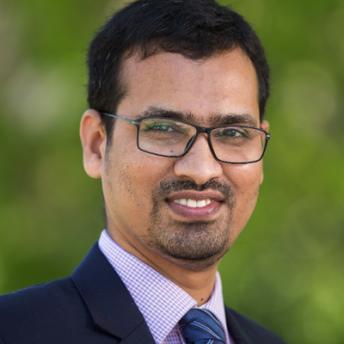
Mohammad Ali is an Assistant Professor in the Department of Communication at the University of North Dakota. He holds dual PhDs in Information Studies from the University of Maryland, College Park, and Mass Communications from Syracuse University's S.I. Newhouse School of Public Communications. His research focuses on computational journalism, strategic communication, and trustworthy artificial intelligence with applications in natural language processing and media studies. Key research areas include: Computational Framing Analysis Fake News Detection Crisis Communication Visual Media Analysis Social Media Dynamics Recent publications demonstrate expertise in algorithmic approaches to media bias detection, strategic communication frameworks, and cross-cultural social media analysis. His work bridges technical NLP methods with practical communication theory applications. Collaborations span institutions including University of Maryland, Syracuse University, and Go Culture. Current projects involve large language models for misinformation identification and extended situational crisis communication theory incorporating visual elements.
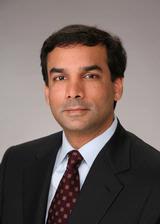
Prakash Nadkarni, MD, is a Lecturer at the Yale School of Public Health , specializing in health informatics, clinical research systems, and public health data science. He holds an MD from Bombay University (1982) and contributes extensively to healthcare financial management, medical imaging, and responsible clinical decision-making. Research Focus: Health informatics, clinical data repositories, electronic health records optimization, and machine learning applications in emergency medicine. Key Publications: 2024 works on financial statements in clinical practice, 2023 articles on clinical research information systems and pediatric sedation, and 2022 studies on tuberculosis diagnostics. Collaborations: Frequent partnerships with Perry Miller, Cynthia Brandt, and Yale colleagues in biostatistics and clinical computing.
Angelo P Tanna, MD is Vice Chairman and Professor of Ophthalmology and Director of the Glaucoma Service at the Northwestern University Feinberg School of Medicine in Chicago, Illinois. He has served on the faculty since 1999, establishing himself as a leading expert in glaucoma diagnosis and treatment. Dr. Tanna holds multiple leadership positions including Chair of the American Academy of Ophthalmology's Basic and Clinical Science Course Glaucoma Committee. Dr. Tanna's research interests span several critical areas in ophthalmology, with a primary focus on glaucoma. His work encompasses the efficacy and safety of glaucoma medications, detection of glaucoma progression, and assessment of visual function in glaucoma patients. He has made significant contributions to understanding the impact of cataract on visual field testing in glaucoma and has developed new methods to detect visual field deterioration. His research also includes improving outcomes of incisional glaucoma surgery and innovative approaches using hydrogel polymers to prevent fibrosis after trabeculectomy. Analysis of Dr. Tanna's recent publications reveals a strong emphasis on applying advanced technologies to glaucoma management, including deep learning algorithms for visual field progression detection using OCT imaging. His work increasingly explores social determinants of health in glaucoma care, healthcare access disparities, and the relationship between systemic conditions and ocular health. The COAST clinical trial he leads represents a significant contribution to optimizing laser trabeculoplasty protocols for glaucoma treatment. Secretariat Award, American Academy of Ophthalmology (2019) Senior Achievement Award, American Academy of Ophthalmology (2017) Continuously listed in Best Doctors in America since 2005 Outstanding Teacher Award, Northwestern University Feinberg School of Medicine (2020) Multiple visiting professorships at leading institutions including Columbia University (2023) Dr. Tanna has served in various leadership roles in the American Glaucoma Society, including twice as a board member and as Chair (2010-2011). He currently chairs the American Academy of Ophthalmology's Basic and Clinical Science Course Glaucoma Committee and serves on editorial boards of prestigious journals including Ophthalmology and Survey of Ophthalmology. His COAST clinical trial investigates optimal selective laser trabeculoplasty protocols for treating glaucoma, potentially reshaping treatment guidelines. Dr. Tanna also leads research collaborations with biomedical engineers and geneticists, resulting in discoveries such as the association of ANGPT1 region SNPs with primary open-angle glaucoma.
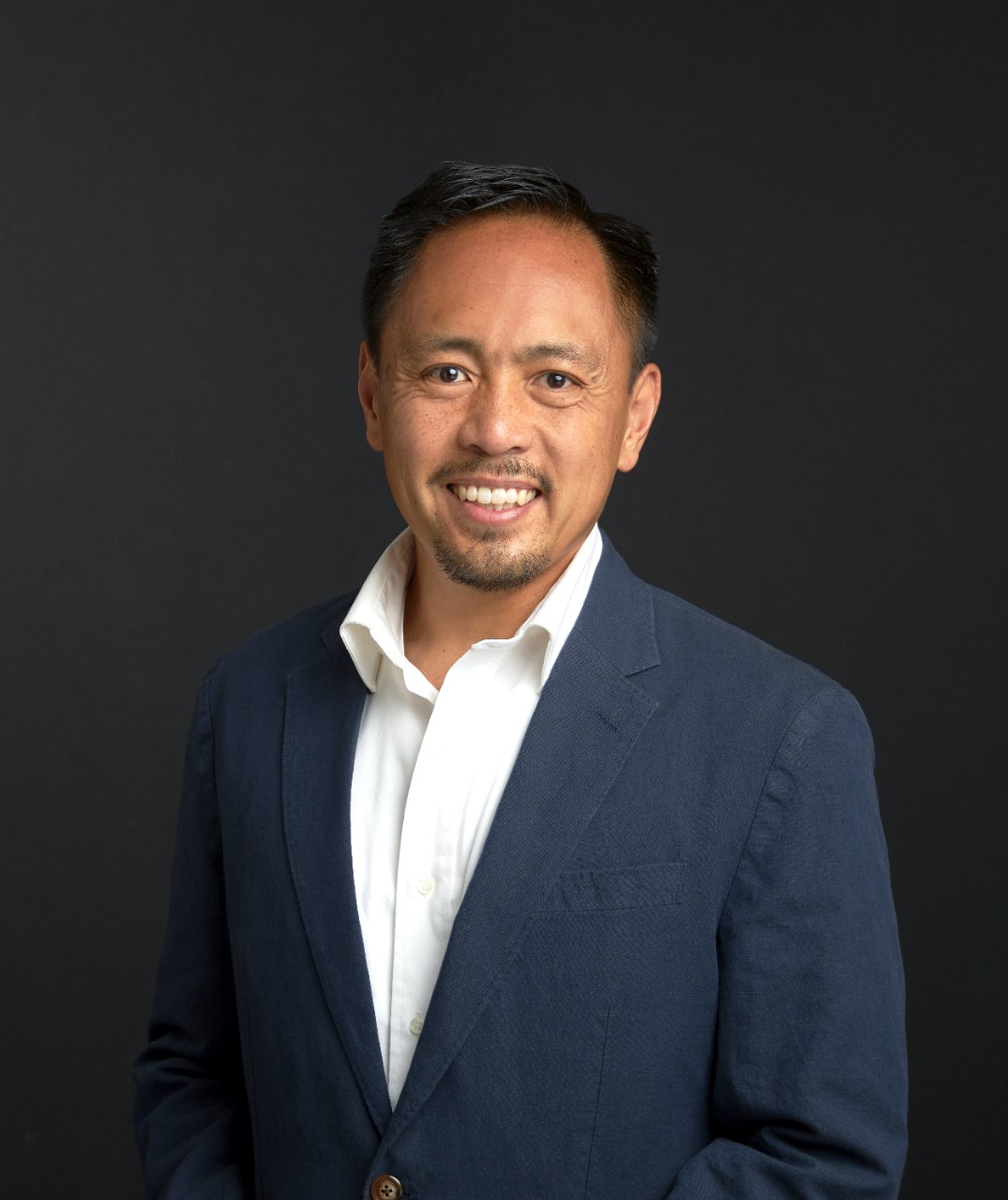
Vincent Cho serves as Associate Professor and Program Director for the Educational Leadership (Ed.D.) and Professional School Administrator Program (PSAP) at Boston College's Department of Educational Leadership & Higher Education. His research bridges educational leadership theory with practical technology integration challenges in K-12 settings, focusing on the human dimensions of digital transformation in schools. His academic credentials include: Ph.D. from the University of Texas at Austin M.Ed. from the University of Houston B.A. from Boston College Cho's research examines how technologies reshape school discipline systems, data-informed decision processes, and professional identities of educators. With extensive experience as a former classroom teacher and school administrator, he investigates the 'people problems' that emerge during technology implementation, particularly how digital tools create unintended consequences in school organization and culture. His work emphasizes practical solutions for educational leaders navigating the digital age. Analysis of his recent publications (2016-2024) reveals three evolving research trajectories: (1) the impact of behavior management technologies on school discipline equity, (2) data system implementation challenges in educational leadership, and (3) social media's role in professional learning networks. His 2024 work on 'The New Discipline Machinery' critically examines algorithmic behavior tracking apps, while earlier award-winning research (2012-2021) established foundational insights into Twitter-based knowledge brokering among school leaders. His scholarly recognition includes: Carol Weinstein Outstanding Research Award from AERA's Classroom Management SIG (2021) Early Career Scholar of Color award from AERA's Committee on Scholars of Color (2013) Best Paper Award from AERA's Organizational Theory SIG (2012) As Program Director for BC's Ed.D. program, Cho mentors doctoral candidates in educational leadership while maintaining active research collaborations. His current affiliations include serving as Affiliate Faculty for UCEA's CASTLE Center (2021-present) and Advisory Board Member for UMass-Lowell's Center for Program Evaluation (2020-present), reflecting sustained engagement with national educational technology initiatives. Funded projects include EU Parliament presentations on digital-era school innovation and multi-year studies of data system impacts on student achievement.
Daniel Polihronov is Assistant Professor at Sofia University "St. Kliment Ohridski", Faculty of Education, Department of Theory of Education. He lectures across bachelor’s and master’s programmes in preventive pedagogy, resocialisation, and social work with children and deviant youth. Education: PhD (field inferred: Pedagogy/Social Education) Research Interests: Dr Polihronov focuses on prevention and correction of deviant behaviour , intercultural education , and the use of literature as a tool for social-pedagogical intervention . His work spans psychoactive-substance prevention programmes, literacy development in multicultural settings, and penitentiary pedagogy. Across 2020-2024 he has led or participated in multiple projects funded by the Bulgarian state budget, the EU Operational Programme “Science and Education for Smart Growth”, and the European Economic Area Financial Mechanism. These projects address substance-use prevention, educational inclusion of vulnerable groups, and professional training for social-work practitioners. Publications & Trends: His recent scholarship (2019-2024) reveals a strong trajectory exploring how children’s and adolescent literature can foster moral judgement, intercultural dialogue, and prevention of delinquency. Parallel strands investigate the impact of pandemic conditions on substance use and the design of evidence-based school programmes. Research Leadership & Grants: Project manager: “Social and Pedagogical Aspects of the Problem of the Use of Psychoactive Substances” (2021-2022, state budget) Principal investigator: “Formation of socio-pedagogical and legal concepts among students…” (2022, NP “Young Scientists”) Key expert: BG05M2ОP001-2.011-0001 “Support for Success” – early-warning toolkit for at-risk students Partner: BGLD-2.002-0001-C01 “Capacity building for educational and social inclusion…” (EEA Grants 2021-2022) Languages: English, Russian Contact: d.polihronov@fp.uni-sofia.bg | Phone: (+359 2) 9308 568
Kine Pedersen is an Associate Professor at the Department of Health Management and Health Economics within the Faculty of Medicine at the University of Oslo. Her academic career focuses on health economic analysis, disease simulation modeling, and evaluation of healthcare interventions with particular expertise in cervical cancer prevention, HPV-related disease control, and primary care services. She has established herself as a leading researcher in cost-effectiveness analysis of preventive healthcare strategies within the Norwegian healthcare system. Education: PhD in Health Economics and Health Policy, University of Oslo (2018) M.Phil. in Health Economics, Policy and Management, University of Oslo (2014) BA in Economics, University of Oslo (2012) BA in Health Management and Health Economics, University of Oslo (2011) Dr. Pedersen's research program centers on developing and applying sophisticated mathematical models to evaluate preventive healthcare interventions, with a strong emphasis on cervical cancer screening programs and HPV vaccination strategies. Her work bridges health economics, epidemiology, and clinical practice to inform evidence-based healthcare policy. She has made significant contributions to understanding how to optimize screening protocols for vaccinated versus unvaccinated populations and has extensively studied the cost-effectiveness of various approaches to accelerate cervical cancer elimination in Norway. Her recent publications (2022-2024) reveal an expanding research portfolio that now includes telemedicine applications for chronic disease management and team-based primary care models, while maintaining her core focus on cancer prevention. The consistent thread through her work is the application of rigorous health economic methodologies to evaluate preventive interventions, with particular attention to structural uncertainty in modeling and real-world implementation challenges. Scientific Awards: The Society for Medical Decision Making's Lee B. Lusted Student Prize in Health Services and Policy Research Dr. Pedersen teaches HEVAL5120: Modelling in Economic Evaluation I and HMET4210: Research Design. Her research is supported through collaborations with the Cancer Registry of Norway, Center for Health Decision Science at Harvard T.H. Chan School of Public Health, Norwegian Institute of Public Health, and Department of Biostatistics at Aarhus University. She leads or participates in several significant research projects including ASCERTAIN, Optimal Cervical Cancer Prevention Policies (CC-PREVENT), and EXCEED – Network for economic evaluation in Norway. Her work directly informs Norwegian healthcare policy and contributes to international efforts to eliminate cervical cancer through evidence-based preventive strategies.
Daniel Braun is a Researcher at the Digital Society Institute , affiliated with Technical University of Munich . His work bridges Artificial Intelligence , Natural Language Processing , and LegalTech , focusing on automated legal assessment of contracts, ethical dimensions of AI, and consumer protection in the digital era. Education: Bachelor in Artificial Intelligence at Saarland University PhD in Automated Semantic Analysis, Legal Assessment, and Summarization of Standard Form Contracts at Technical University of Munich Master in Creating Textual Driver Feedback from Telemetric Data at University of Aberdeen Research Interests revolve around applying NLP to legal and engineering domains. Key areas include machine learning for contract analysis , ethical AI frameworks , and consumer protection through automated systems . His recent work explores adversarial attacks on text detectors, lexical alignment in chatbots, and robustness in generative AI detection. Publications (2024-2025) highlight advancements in German consumer contract analysis , disagreement handling in legal datasets , and regulatory debates around AI . Notable outputs include the AGB-DE corpus and studies on black-box neural text detectors . Technical Expertise spans data mining , process mining , and domain-specific NLP . He has contributed to smart contract analysis , conversational AI , and language models for engineering and legal contexts .
Kristi Bartlett is an Assistant Professor in Product Design at the University of Kentucky, specializing in virtual reality, spatial ability assessment, and equity in design education. Her work bridges technology and pedagogy through projects like the OVPR Curate Program and UNITE Research Priority Area initiatives. Doctor of Philosophy, Purdue University (2023) Master of Science, University of Houston (2019) Research interests focus on: Virtual reality applications in design education Equity and inclusion in design disciplines Critical analysis of spatial skills assessment tools Generative AI ethics in creative processes Interdisciplinary medical device development Collaborative virtual learning environments Recent publications analyze AI-generated design renders, mental rotation assessment in VR, and gender dynamics in industrial design. Her projects examine immersive technologies, historically excluded student experiences, and sustainability integration in engineering curricula. Current grants include: Comparing Physical and Virtual Reality Product Models (2025-2026, UK OVPR) Mixed Reality in Product Design Education (2024-2025, UK IRC) Equity in Healthcare Design (2024-2025, UK UNITE) Historically Excluded Students in Design (2024-2025, UK UNITE)
Professor Verena Wagner is a Full Professor in the Department of Philosophy at Humboldt University of Berlin and serves as the Executive Academic Director of the Berlin School of Mind and Brain. She leads the Philosophy of Mind research group and holds multiple leadership positions within the university, including membership on the Managing Committee and Steering Committee of the Berlin School of Mind and Brain. As of October 2025, she will also serve as a Fellow at the Max Planck School of Cognition. Additionally, she is a Member of the Akademie-Kolleg at the Heidelberg Academy of Sciences and Humanities. Professor Wagner's research focuses on the intersection of epistemology and philosophy of mind, with particular emphasis on cognitive neutrality, suspension of judgment, and related mental states. Her work explores how mental attitudes and activities relate to inquiry and deliberation (the "zetetic turn" in epistemology), advocating for a pluralist view on cognitive neutrality. She examines the nature of mental states before considering their normative profiles, noting that some forms of cognitive neutrality have agential components with implications for rationality. Her research also extends to deception (both self and other) and disinformation, with a specific focus on bullshitting as the provision of fake answers to questions under discussion. She has developed outreach projects to make philosophical work on fake answers accessible to broader audiences. Previously, she worked on free will debates, proposing a theory of freedom of action compatible with both determinism and indeterminism, and later applying compatibilist frameworks to the doxastic realm. Professor Wagner leads several significant research projects, including the DFG-Priority Programme "Rethinking Disinformation (Re:DIS)," the Heidelberg Academy-funded project "Neutral by Choice: Cognitive Neuroscience meets Philosophy of Mind," and the DFG-funded "Thinking about Suspension" research network. Her work demonstrates a consistent trajectory toward understanding cognitive states that exist between belief and disbelief, with increasing attention to practical applications in the context of disinformation and AI systems. She collaborates extensively with cognitive neuroscientists, psychologists, and philosophers across multiple German institutions. Konstanz University Science Prize 2023 (Messmer Foundation) for her work on "Heiße Luft und leeres Gerede: Wie Sprache zu Bullshit wird. Interventionsversuche an Schule und Universität" (Hot Air and Empty Talk: How Language Becomes Bullshit. Intervention Attempts at School and University) Professor Wagner actively mentors doctoral candidates and has supervised PhD projects such as Daniela Schuster's "Suspension of Judgment in Artificial Intelligence: Uncovering Uncertainty in Data-Based and Logic-Based Systems." She leads a research group comprising student assistants and collaborates with international scholars including Christoph Korn (Cognitive Neuroscience, Heidelberg), Hansjörg Neth (Social Psychology, Konstanz), Yulia Oganian (Cognitive Neuroscience, Tübingen), and Alexandra Zinke (Philosophy, Frankfurt). Her research is supported by substantial grants from the German Research Foundation (DFG), the Heidelberg Academy of Sciences and Humanities, and the Baden-Württemberg Foundation. Professor Wagner directs the Philosophy of Mind research group at Humboldt University, which includes student research assistants and an office manager. Her research environment fosters interdisciplinary collaboration between philosophy, cognitive neuroscience, and psychology, creating a unique space where theoretical philosophical work directly informs empirical research and vice versa. The group's work on cognitive neutrality and disinformation has particular relevance in today's information landscape, addressing fundamental questions about how we should navigate uncertainty and deception in both personal cognition and artificial systems.
Rosalynn Vasquez is an Assistant Professor of Public Relations at Suffolk University, specializing in research at the intersection of diversity, equity, inclusion (DEI), ethics, sustainability, and leadership. She teaches undergraduate and graduate courses in public relations and has received grants from the Arthur W. Page Center for Integrity in Public Communication. Ph.D. in Media & Communication, Texas Tech University Master of Business Administration, University of Dallas Bachelor of Science in Journalism, Texas A&M University Her research explores DEI in the PR industry and higher education, focusing on sustainability, ethical communication, pedagogical innovation, and leadership development. She has contributed to journals like Journal of Public Relations Research and Science Communication . Recent publications emphasize artificial intelligence’s ethical implications in DEI content, BIPOC leadership gaps in PR, climate change communication strategies, and misinformation combat in underrepresented communities. Her work aligns with organizational listening and corporate accountability frameworks. Scientific Awards & Grants 2025 Ethics in PR Pedagogy Award (Arthur W. Page Center) 2025 AEJMC DEI Research Paper Award 2024–2022 Arthur W. Page Legacy Scholar grants Dr. Vasquez actively contributes to professional organizations including PRSA, HPRA, and CPRE. She serves on editorial boards and advisory committees, advocating for DEI in PR education and practice.
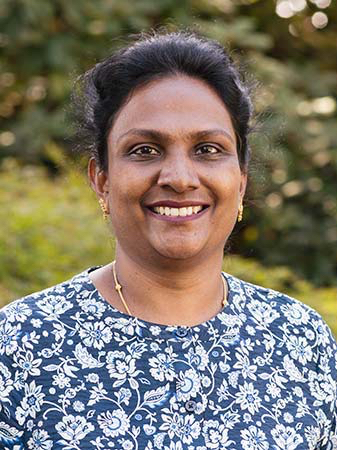
Jasmine Gnanadurai serves as an Associate Professor in the Department of Electrical Engineering & Computer Science at George Fox University's College of Engineering. She teaches a range of courses including Introduction to Computer Science, Software Engineering, Servant Engineering, and Senior Design. Her office is located in Wood-Mar 222, where she holds regular office hours for student consultation. Dr. Gnanadurai's educational background includes: Ph.D. in Computer Science (2017) from Anna University, Chennai, India M.Phil (2006) from Bharathidasan University, Tiruchirappalli, India M.C.A. (2000) from Bharathidasan University, Tiruchirappalli, India B.Sc. in Computer Science (1997) from Bharathidasan University, Tiruchirappalli, India Dr. Gnanadurai's research spans multiple cutting-edge domains in computer science and engineering. Her work in wireless sensor networks has focused on optimization algorithms for zone-based networks, particularly using techniques like DBSCAN clustering and particle swarm optimization. She has made significant contributions to cloud computing architecture, especially in resource allocation and load balancing for peer-to-peer networks. Her expertise extends to machine learning applications across diverse fields including agriculture productivity, student feedback analysis, and crowd behavior recognition. Her recent publications demonstrate a strong interdisciplinary approach, bridging computer science with practical applications in healthcare, education, smart cities, and transportation. She has published extensively on deep learning techniques for EMG-based hand gesture recognition, blockchain applications for electric vehicle charging infrastructure, and immersive technologies for educational settings. These works reflect her commitment to addressing real-world challenges through technological innovation. Dr. Gnanadurai actively contributes to the engineering education mission at George Fox University through multiple channels. She teaches foundational computer science courses, advanced software engineering, and participates in the university's distinctive Servant Engineering program where students develop solutions to humanitarian needs. She also guides senior engineering students through their capstone Senior Design projects, which partner with industry sponsors to solve real-world problems. As part of the College of Engineering, Dr. Gnanadurai works within interdisciplinary teams that collaborate on projects addressing humanitarian needs through the Servant Engineering program. This program connects students with community partners to develop engineering solutions that serve vulnerable populations, reflecting the university's Christian mission of service. Her involvement in Senior Design connects students with industry partners including Xerox, Intel, Garmin, and numerous regional companies, providing students with valuable real-world experience.
Anne Yates is a Senior Lecturer in the School of Education at Victoria University of Wellington. She teaches in the Graduate Diploma of Teaching (Primary/Secondary), Masters of Teaching and Learning, and Masters of Education programs. Her research centers on digital technologies in education, online/distance learning, assessment methodologies, and initial teacher education. Prior to academia, she taught secondary school economics, accounting, and legal studies, contributing to New Zealand's NCEA development through standards design, professional development, and curriculum support. Education : BA (University of Otago) DipTchg (University of Canterbury) Dip Bus Studies (Massey University) MEd, PhD (Victoria University of Wellington) Research Focus : Her work investigates digital competence frameworks, AI in education (e.g., ChatGPT), MOOC recommender systems, and career-change teachers' professional identity. She emphasizes pedagogical adaptations during crises (e.g., COVID-19) and discipline-specific digital capabilities in higher education. Publication Trends : Her recent articles analyze technology-enhanced learning, teacher education reform, and educational resilience. Dominant themes include digital equity, personalized learning algorithms, and critical pedagogy, reflecting a consistent focus on innovation in teacher preparation and digital infrastructure. Professional Service : Member: THW-VUW Human Ethics Committee (2024), Faculty of Education Research Committee (2023–2025) Reviewer: Computers & Education, Technology Pedagogy and Education, Australian Journal of Career Development Advisor: New Zealand Qualifications Authority (2022–2023) Supervision & Grants : She supervises doctoral projects on digital competence in rural China, post-pandemic learning preferences, and gifted transgender youth. Funded projects include studies on undergraduate digital capabilities (2024) and ChatGPT in teacher education (2023).
Folker Hanusch is an Associate Professor in the School of Communication within the Faculty of Creative Industries, Education & Social Justice at Queensland University of Technology (QUT). With a prolific publication record spanning from 2003 to 2019, his research has significantly contributed to the field of journalism studies, particularly in specialized areas that have expanded traditional journalism research boundaries. His primary research interests include journalism culture, lifestyle journalism, travel journalism, and Indigenous journalism, with particular focus on Maori journalism in New Zealand. Hanusch has pioneered research in niche areas such as the geography of travel journalism and the cultural dimensions of reporting on death and disaster. His work often takes a comparative approach, examining journalistic practices across different national contexts and cultural settings. Analysis of his most recent publications reveals a clear trajectory from traditional journalism studies toward more specialized subfields. His work has evolved from examining basic journalism culture and international news flows to exploring nuanced topics like web analytics in journalism, lifestyle journalism's commercial influences, and the intersection of development journalism with traditional watchdog roles. The geographic scope of his research has expanded from primarily Australian contexts to include global comparative studies across dozens of countries. As an academic leader, Hanusch has edited significant volumes including Travel Journalism: Exploring Production, Impact and Culture (2014) and Lifestyle Journalism (2013), establishing these areas as legitimate fields of scholarly inquiry. His research methodology frequently involves large-scale surveys of journalists and journalism students across multiple countries, demonstrating strong collaborative research skills. His work has appeared in top-tier journals including Journalism Studies , Journalism , and Media, Culture and Society , with several publications receiving significant citations (notably his 2011 article 'Mapping journalism cultures across nations' with over 2,500 citations). His research bridges theoretical frameworks from cultural studies, sociology, and communication theory to advance understanding of contemporary journalism practices in a globalized media environment.
Taha Mansouri is a Lecturer in Artificial Intelligence at the University of Salford's School of Science, Engineering & Environment. He leads the High Performance Computing facilities within the school and chairs the Salford AI Club, an inclusive community focused on AI applications in Higher Education. Mansouri holds dual PhDs - one in Artificial Intelligence and Deep Learning from the University of Salford and another in Information Technology Management from Allameh Tabataba'i University in Iran. His research interests span multiple critical areas in modern AI development, with particular emphasis on ethical considerations in AI systems. Mansouri actively investigates fairness, explainability, and transparency in AI algorithms, with specific focus on computer vision systems and large language models. His work addresses bias in facial emotion detection across age, gender, ethnicity, and cultural backgrounds, highlighting important concerns about equity in automated systems. Mansouri's recent publications demonstrate a strong trend toward practical applications of AI for social good, including detecting mold in social housing, ethical compliance in legal AI systems, and developing AI-resilient assessment tools for education. His research bridges theoretical AI development with real-world implementation challenges across healthcare, education, and industrial applications. Fellowship of the Higher Education Academy Senior Fellowship of the Higher Education Academy Mansouri actively supervises multiple PhD students working on diverse AI applications and leads significant research projects including the £500,000 Innovate UK Smart Grant-funded Expert Legal Intelligence (ELI) project. He serves on prestigious review panels including the EPSRC Peer Review College, the EDI Hub+ Flexible Fund Peer Review College, and the British Council's International Science Partnerships Fund Review College. His grant portfolio includes projects on ethical ASR models (£30,000 collaboration), WATCH-AI benchmarking tools, and inclusive AI emotion recognition systems. As leader of the High Performance Computing facilities, Mansouri supports interdisciplinary research across the university. He also chairs the Salford AI Club, fostering collaboration among individuals from diverse backgrounds interested in AI applications, particularly in Higher Education.
Dr. Siobahn Day Grady is an Assistant Professor of Information Science/Systems at North Carolina Central University (NCCU) and serves as the Founding Director of the Institute for Artificial Intelligence and Emerging Research (IAIER), which she established in 2025. She also holds leadership roles as Co-Director of The Center fOr Data Equity (CODE), Program Director of the Information Science Program, and Faculty Fellow in the Office of Faculty and Professional Development. Dr. Grady reports to the Provost with oversight of a $1M+ annual budget and $3M+ grant portfolio, managing a staff of 5 plus advisory boards. Ph.D. in Computer Science, North Carolina Agricultural & Technical State University (2018) M.S. in Computer Science, North Carolina Agricultural & Technical State University (2018) M.S. in Information Science, North Carolina Central University (2009) B.S. in Computer Science, Winston-Salem State University (2005) Dr. Grady's research focuses on the ethical implementation of artificial intelligence, with particular emphasis on fairness, bias mitigation, and equity in AI systems. Her work bridges technical AI development with social justice considerations, especially in healthcare applications and educational contexts. She has pioneered initiatives to increase AI literacy at HBCUs and developed frameworks for operationalizing fairness in AI governance. Her research interests include natural language processing, machine learning applications for social good, digital literacy programs for marginalized communities, and strategies to increase diversity in STEM fields through her STEM-It-Yourself program. Analysis of Dr. Grady's recent publications reveals a strong trajectory toward practical applications of AI ethics in real-world settings, particularly in healthcare and education. Her work demonstrates a consistent focus on creating frameworks that translate theoretical AI ethics principles into actionable guidelines for practitioners. There's a clear progression from technical AI research toward more interdisciplinary work that bridges computer science with social sciences, nursing, and education. Her publications increasingly address the needs of underrepresented communities and focus on practical implementation strategies rather than purely theoretical contributions. Winston-Salem State University 2023 Distinguished Alumni Award Durham Section of the National Council of Negro Women 2024 Distinguished Educator Sigma Iota Omega Chapter of Alpha Kappa Alpha Sorority, Incorporated® 2022 Soaring to Greater Heights in Science Technology Engineering Arts Mathematics Honoree The Links, Inc., Raleigh (NC) Chapter 2022 Emerald Award Honoree Association for Educational Communications and Technology (AECT) Culture, Learning, and Technology (CLT) Division 2023 Outstanding Publication Award Dr. Grady has secured significant grant funding totaling over $3 million, including a $1 million Google.org investment, $100K+ from Cisco, $15K from FICO, and funding from NTIA and NIH. She serves as Principal Investigator for the Digital Equity Leadership Program (DELP) and the Genomic Research and Data Science Center for Computation and Cloud Computing (GRADS-4C). Her mentoring extends to numerous students through programs like STEM-It-Yourself, which focuses on cultivating STEM identity among adolescent girls. Dr. Grady has established three endowed scholarships supporting economically disadvantaged students at multiple HBCUs, demonstrating her commitment to educational access. As Founding Director of the Institute for Artificial Intelligence and Emerging Research (IAIER), Dr. Grady leads North Carolina Central University's strategic vision for AI education, research, and policy. The institute includes the AI Emerging Scholars and Leaders Programs, which engage students, faculty, and staff in cross-disciplinary AI innovation. She has developed NCCU's first AI minor (pending approval) and serves as co-facilitator for the UNC AI Faculty Learning Community. Dr. Grady also holds leadership positions on the Governor's AI Council and multiple advisory boards, positioning NCCU as a national leader in responsible AI development and implementation.