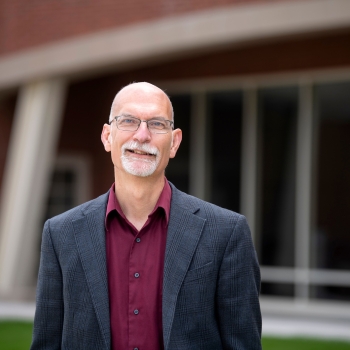
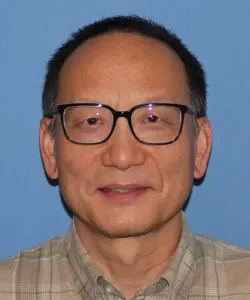
James Baish is a Professor of Biomedical Engineering at Bucknell University. His research focuses on biological heat and mass transport, fluid mechanics, and the origins of biological form. He has contributed significantly to understanding cancer angiogenesis, lymphatic system dynamics, and transport phenomena in biological tissues. B.S.M.E, Bucknell University, 1979 M.S.E, University of Pennsylvania, 1983 Ph.D., University of Pennsylvania, 1986 Baish's work spans mathematical modeling of angiogenesis, thermal conductivity in biomaterials, and mechanobiological control of lymphatic pumping. His publications highlight interdisciplinary approaches combining engineering principles with biomedical applications.
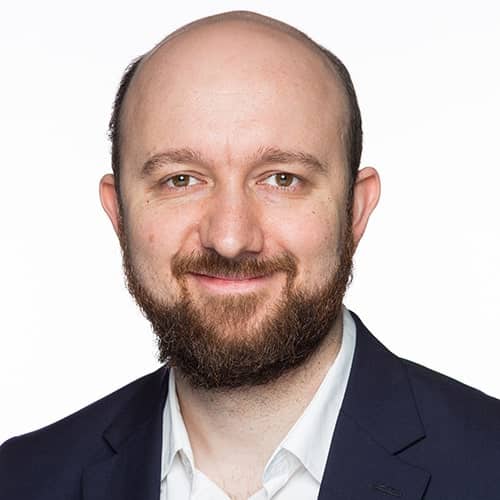
Ben Wagner is a leading academic in digital rights and technology governance, holding multiple prestigious positions: University Professor of Human Rights & Technology at IT:U, Director of the AI Futures Lab on Rights and Justice at TU Delft, and Professor of Media, Technology and Society at Inholland University of Applied Sciences. He leads the Digital Rights Research Team (DRRT) and co-founded the Sustainable Media Lab (SML) in The Hague, contributing to bridging research and education. He is also a visiting researcher at Oxford University's Human Centred Computing Group and serves on the advisory board of the journal Patterns . Inholland University of Applied Sciences – Professor, Media, Technology & Society (since 2021) TU Delft – Director, AI Futures Lab on Rights and Justice IT:U – University Professor, Human Rights & Technology European University Viadrina – Founding Director, Center for Internet & Human Rights Vienna University of Economics – Director, Sustainable Computing Lab ENISA – Advisory Group Member Ben Wagner earned his PhD in Political and Social Sciences from the European University Institute in Florence in 2013, with a dissertation on freedom of expression and online content regulation. He has held research positions at Cambridge University, University of Pennsylvania, Technical University of Berlin, and European University Viadrina. His research centers on digital rights, AI governance, freedom of expression online, and the societal impact of technology. He investigates how digital infrastructures shape human rights and advocates for sustainable, accountable systems. His work spans legal, technical, and social dimensions, focusing on public sector data practices, content moderation, ethical AI, and digital inclusion. He actively promotes citizen control over technological change and interdisciplinary collaboration. The recent publications reflect a strong focus on the ethical and governance challenges of AI and data science, digital rights frameworks, and platform accountability. Themes include the gap between policy and practice in public data use, global AI ethics, content governance on social media, and co-designing digital rights labels. His work emphasizes systemic accountability, hybrid digital-physical spaces, and embedding rights into technological design. Ben Wagner is an expert advisor to the European Parliament, European Commission, OSCE, Council of Europe, and UNESCO. He is a member of the policy advisory board for ECHOES (European Cloud for Heritage OpEn Science) and contributes to high-impact publications and international discourse. His research is widely covered in global media including CNN, The Guardian, Bloomberg TV, Der Spiegel, ORF, and SWR2. He advises on and contributes to major research initiatives such as ReSocial and fabricated. He is involved in developing a new Master’s program in Data-Driven Business at Inholland and leads efforts to integrate digital rights into education and innovation. His inaugural lecture, 'The Ground Beneath our Feet,' highlights the instability of digital infrastructures and the urgent need to embed digital rights at their core. Ben co-founded the Digital Rights Research Team and the Sustainable Media Lab at Inholland, fostering collaboration across faculties and sectors. These labs focus on creating a digitally responsible society through interdisciplinary research in design, policy, and technology. The AI Futures Lab at TU Delft explores justice-oriented futures for AI, while his work at IT:U advances human rights in digital contexts.
Dario Viberti is a Full Professor at the Polytechnic University of Turin, affiliated with the Department of Environmental, Land and Infrastructure Engineering (DIATI). He is a member of the Interdepartmental Center Ec-L - Energy Center Lab and actively contributes to the Master's and Continuing Education School. He serves as Coordinator for both Master’s levels I and II of the Natural Resources Development and Storage program and participates in doctoral colleges for Civil and Environmental Engineering and Materials, Sustainable Processes, and Systems for the Transition. His research focuses on flow in underground porous media , geoenergy , and underground energy storage , particularly hydrogen and CO₂ storage. His expertise spans numerical modeling, reservoir engineering, fluid mechanics, well testing, and energy transition systems. He is involved in commercial research projects with ENI Corporate University and leads initiatives related to sustainable energy applications. His recent publications reveal a strong trend in underground hydrogen storage , biogeochemical modeling , pore-scale simulation , and PVT analysis of gas mixtures . These works emphasize safety, efficiency, and long-term integrity of subsurface storage systems using advanced computational and experimental methods. Scientific Manager, Underground CO2 Storage Project (2022) Scientific Manager, Reservoir Modeling Project (2022) Coordinator, Master’s Program in Natural Resources Development and Storage Member, SEASTAR Competence Center Committee (2020–2025) He mentors several PhD students, including Michel Tawil, Marialuna Loffredo, Alice Raeli, and Alice Massimiani, supporting research in microfluidics, Lattice Boltzmann simulations, and thermodynamic characterization. He teaches courses such as Numerical Modeling for Multiphase Flow , Underground Energy Storage , and Well Logging and Testing across multiple degree programs. His work aligns with UN SDGs 7 (Affordable and Clean Energy), 9 (Industry, Innovation, and Infrastructure), and 13 (Climate Action).
Dr. Gillian Brooks is a Senior Lecturer (Associate Professor) in Strategic Marketing at King’s Business School, King’s College London, and serves as Programme Director for the Executive MBA. Her research focuses on influencer marketing, consumer culture, and social media, employing qualitative methods like ethnography and content analysis. She has been awarded a £1.1 million grant from U.K. Research and Innovation for interdisciplinary mental health research involving social media influencers. Dr. Brooks holds a PhD in Sociology from the University of Cambridge, a Master of Arts in Communication and Technology (Summa cum laude) from Georgetown University, and a Bachelor of Arts (Honours) in Communications from McMaster University. She previously taught at the University of Oxford’s Saïd Business School and the London School of Economics, earning multiple teaching awards, including the Social Sciences Teaching Excellence Award from the University of Oxford. Her research interests span influencer celebrification, digital marketing strategies, and the psychological impacts of social media. She collaborates with the Institute of Psychiatry, Psychology and Neuroscience on youth mental health initiatives and leads projects like KingsCAT, a social media research toolkit. Key publications include studies on brand engagement via influencers and virtual celebrity systems. Grants: £1.1M UKRI grant for mental health research via influencer marketing Awards: Don Lehmann Award, multiple teaching recognitions Interests: Circular fashion, digital nomadism, and personal branding Dr. Brooks advises on executive education programs in personal branding and communication, and her work bridges academia with industry through invited talks globally. She remains active in promoting inclusive education and sustainable business practices.
Chris Forde is Professor of Employment Studies at the University of Leeds , affiliated with the Leeds University Business School and Department of People, Work and Employment . He co-directs the Centre for Employment Relations Innovation and Change and serves as Deputy Director of the ESRC Digital Futures at Work Research Centre . His career spans multiple leadership roles, including former Head of the Work and Employment Relations Division. BA Economics and Management (First Class Honours), University of Leeds (1993) MA Economics, University of Leeds (1994) PhD, Leeds University Business School (1998) Forde's research investigates the evolution of work structures , focusing on temporary work , migrant labor dynamics , platform economy challenges , and labour market regulation . His work examines intersections between job quality , worker well-being , and business policy lobbying , employing mixed-method approaches across sectors like healthcare and aerospace. His recent publications and projects include analyses of NHS migrant workforce adaptations during Brexit and pandemic crises, union responses to post-Brexit labor shortages , and labour market reforms in Saudi Arabia. As Co-Director of the Digit Data Observatory , he leads digital work futures research. Co-investigator, ESRC Labour Mobility in Transition (LiMITS) project Co-investigator, EU Horizon 2020 Skills4Justice Project 20+ successfully supervised doctoral students Founding member, Leeds Migration Research Network
Dr. Shabnam Kabiri is a Lecturer at the School of Construction Management and Engineering at the University of Reading . She serves as School Director of Internationalisation and Exams Officer, teaching core management subjects at undergraduate and postgraduate levels including Business Organisation and Management, Management in the Built Environment, and Construction Project Management. Academic Background: Civil engineer with two MSc degrees (Soil and Foundation Engineering, Construction Project Management) and a PhD on role conflict/ambiguity in construction projects. Research Interests: Focus on professionalization dynamics, role stress in construction teams, formal/informal role interactions, and business planning for construction firms. Her work bridges organizational theory with practical construction challenges, particularly in conflict resolution and productivity optimization. Key Research Contributions: Developed the RZ model for low emission zone optimization, created weather-aware planning tools to mitigate construction claims, and investigated systemic role conflicts in project teams. Publications span system dynamics modeling, contract frameworks, and pre-construction complexity analysis. Research Affiliations: Affiliated with two research groups at University of Reading: Organisations, People and Technology and Energy and Environmental Engineering .
Univ.-Prof. Dr. Alexander Kendl is a Professor and Director of the Institute of Ion Physics and Applied Physics at the University of Innsbruck. His research focuses on computational plasma physics with critical applications to magnetic confinement fusion energy, particularly addressing challenges in plasma edge physics and turbulence modeling for next-generation fusion reactors. Dr. Kendl received his Doctorate from the Technical University of Munich in 2000, following his Abitur from Gymnasium Schrobenhausen in 1990. He was appointed Associate Professor at the University of Innsbruck in 2010 and promoted to University Professor in 2020. His academic journey reflects a deep commitment to advancing plasma physics through rigorous computational approaches. Dr. Kendl's research interests center on plasma turbulence in magnetically confined systems , with particular emphasis on gyrofluid modeling , edge-localized modes (ELMs) , zonal flow dynamics , and impurity transport in fusion plasmas. His work bridges fundamental plasma physics with practical applications for ITER and DEMO, addressing critical challenges in plasma confinement and stability. He has developed sophisticated computational tools including GREENY, GHW, and TIFF to simulate complex plasma phenomena with high fidelity. His recent publications reveal a strong focus on advancing full-f gyrofluid approaches that capture kinetic effects while maintaining computational efficiency. Dr. Kendl's research spans from fundamental investigations of plasma dynamics to direct applications for current fusion devices like ASDEX Upgrade, with particular attention to hysteresis phenomena, electron-positron plasmas as fundamental testbeds, and the development of novel numerical methods for plasma simulation. As Director of the Institute of Ion Physics and Applied Physics, Dr. Kendl leads a vibrant research group that contributes significantly to the international fusion community. His team develops cutting-edge simulation codes and collaborates extensively with major fusion facilities worldwide, advancing our understanding of plasma edge physics and turbulence.
Marshall Van Alstyne is the Allen & Kelli Questrom Professor in Information Systems at Boston University's Questrom School of Business. A leading expert on platform economics, co-author of the bestseller Platform Revolution , and recipient of Thinkers 50 recognition, his work shapes global understanding of network business models and digital governance. PhD in Computer Science & Information Systems from MIT (1997) MS in Computer Science & Information Systems from MIT (1991) BA in Computer Science from Yale University (1984) His research focuses on information economics , platform dynamics, and digital governance. Key contributions include theories of two-sided networks and platforms as inverted firms, with applications in antitrust law and digital market regulation. Recent work explores truth warrants to combat misinformation, platform regulation, and agentic AI governance. Articles appear in Science , Nature , Harvard Business Review , and Management Science , with over 27,000 citations. INFORMS IS 2020 Award Herbert Simon 2021 Award NSF SaTC, IOC, SGER, SBIR, and Career Awards Multiple best paper awards Actively involved in platform strategy education and policy discussions, he consults on digital markets and speaks at major conferences including Academy of Management and IC2S2. His personal interests include dogs, exercise, travel, and governance questions.
Anne Kjersti C. Befring is a Professor at the University of Oslo 's Department of Public Law. She is one of the Nordic countries' leading experts in health law and life sciences , with a focus on genetic mapping , AI in healthcare , and data privacy regulations . Doctorate in Law (2019) on Legal Perspectives on Personalized Medicine Co-founder of the Nordic PerMed Law network (2019-2021) Current legal researcher in the Morgi life science project (2022-present) Her research spans health law , administrative law , and constitutional law , particularly examining how GDPR intersects with national healthcare regulations, patient rights in data sharing, and ethical issues in gene therapy. Recent publications focus on: AI's impact on medical decision-making Legal frameworks for biobanks Personalized medicine governance Pandemic emergency legal measures Laboratory data privacy protocols She supervises PhD candidates Vibeke Binz Vallevik (synthetic data for AI) and Ole Boye (gene therapy). Befring served as Deputy Chair of Norway's National Research Ethics Committee for Medicine and Health Sciences (NEM) from 2022-2025 and has contributed to critical policy discussions around data ethics and public health governance .
Sunoo Park is an Assistant Professor in Computer Science at NYU Courant Institute of Mathematical Sciences, with a secondary affiliation at NYU School of Law. He directs the DeTaIL Lab , focusing on security, privacy, and transparency in digital technologies. His educational background includes a J.D. from Harvard Law School, a Ph.D. in Computer Science from MIT, and a B.A. from the University of Cambridge. He is a licensed attorney in New York. His research bridges computer science and technology law , with core interests in cryptography, election security, AI ethics, blockchain, and digital policy. Recent work emphasizes legal risks in security research, verifiable voting systems, and adversarial robustness in AI. Park's publications (2017–2025) reveal strong trends in cryptographic applications for societal challenges , including election auditing, deniable encryption, and blockchain vulnerabilities. He consistently addresses tensions between technological capabilities and legal/policy frameworks. Teaching includes graduate courses on Digital Technology Law and AI Ethics , alongside clinical work in NYU's Technology Law & Policy Clinic. Service roles include program committees for IEEE Security & Privacy and NeurIPS (Ethics Committee).
Joana Covelo de Abreu is an Assistant Professor at the School of Law of the University of Minho since 2021. She previously held positions as Invited Professor (2015-2021) and Invited Assistant (2013-2015) at the same institution, and was an Invited Main Researcher at the MEP CRUZ's Cabinet of the European Parliament (2014). PhD in EU Law (2012-2015) Master's in Judicial Law (2008-2011) Degree in Law (2004-2008) Her research focuses on European Union Law , Digital Governance , and Judicial Cooperation . Key subtopics include Administrative Interoperability , Data Protection , Artificial Intelligence in Legal Systems , Electronic Health , and Digital Sustainability . Recent works analyze the role of AI in EU e-Justice , cross-border credit collection under digital paradigms, and judicial integration in EU litigation. She has contributed to edited volumes on digital democracy , cybersecurity ethics , and administrative principles in digital public services . Scientific awards: FCT grant SFRH-BD-79320-2011 Current research funding: Jean Monnet Network ENDE (2023-2026), eUjust project (2019-2022) Abreu has participated in multidisciplinary teams including Alessandra Silveira, Pedro Bacelar Vasconcelos, and Francisco Carneiro Pacheco Andrade, contributing to reports on cybersecurity and legal encyclopedias.
Dr. Kaiwen Chen serves as an Assistant Professor in the Department of Civil, Construction and Environmental Engineering at The University of Alabama's College of Engineering, where she is affiliated with the Center for Sustainable Infrastructure. Her research integrates drone robotics, sensor technologies, and Artificial Intelligence to revolutionize building diagnostics and performance simulation. Her academic credentials include: Ph.D. in Environmental Design and Planning from Virginia Polytechnic Institute and State University (2020) M.Sc. in Management in Science and Technology from Southeast University (2016) B.S. in Construction Project Management from Southeast University (2013) Dr. Chen's research program focuses on innovations in the AECO field, with core expertise in drone-based imaging systems, 2D/3D data processing, infrared thermography, high-performance computing, and building energy modeling. Her work bridges advanced computational techniques with practical infrastructure challenges, particularly in building envelope diagnostics and pavement inspection. Analysis of her 15 most recent publications (2024-2025) reveals dual research thrusts: primary focus on AI-driven construction applications (digital twins, thermal anomaly detection, UAV-based surveys) and significant contributions to wireless power transfer systems. This interdisciplinary scope demonstrates exceptional versatility in applying cutting-edge computational methods to both civil infrastructure and electrical engineering challenges. Her scientific recognition includes: Runner-Up for 5th Annual ASCE VIMS Datathon Competition (2024) Virginia Tech Outstanding Dissertation Award (2020) ASCE i3CE Best Paper Award (2019) Dr. Chen leads externally funded research initiatives including a US Department of Energy project on aerial intelligence for building envelope diagnostics and a Georgia Department of Transportation project on drone-assisted pavement inspection. These grants demonstrate her ability to secure competitive funding for high-impact infrastructure research. As an active contributor to the Center for Sustainable Infrastructure, she advances research in sustainable infrastructure systems through the integration of drone technologies, AI analytics, and digital twin methodologies for comprehensive infrastructure assessment and management.
Jinming Zhang is a Professor at the University of Illinois at Urbana-Champaign , affiliated with the College of Education and the Educational Psychology department. He also holds appointments in Statistics and the Center for East Asian and Pacific Studies . His research focuses on advanced statistical methodologies for educational and psychological measurement. Research Interests: Dr. Zhang specializes in multidimensional item response theory (MIRT) , dimensionality assessment , large-scale assessments , generalizability theory , and test security . His work addresses critical challenges in psychometric modeling, including bias correction, item compromise detection, and standards alignment for English Language Learners (ELL). Notable Contributions: He developed the DETECT procedure for dimensionality analysis and pioneered real-time item monitoring systems for computerized adaptive testing (CAT) security. His empirical studies span applications to the National Assessment of Educational Progress (NAEP) and Law School Admission Test (LSAT) analysis.
Susanne Kopf is a Lecturer at the Institute for English Business Communication at Vienna University of Economics and Business (WU Wien), where she holds a venia docendi in applied linguistics. With a PhD from Lancaster University, UK, she specializes in critical discourse analysis with a focus on digital communication platforms and their social implications. PhD in Applied Linguistics, Lancaster University, UK Venia Docendi (Habilitation) in Applied Linguistics, WU Wien Dr. Kopf's research sits at the intersection of Critical Discourse Studies and corpus linguistic methods, examining how digital platforms shape communication and power dynamics. Her work particularly focuses on Wikipedia as a site of knowledge production, EU representation in digital spaces, and social media discourse surrounding political events like Brexit. Her methodological approach uniquely combines qualitative linguistic analysis with quantitative corpus methods to uncover patterns in large-scale digital communication. Analysis of her recent publications reveals a consistent focus on digital discourse practices across multiple platforms. Her work shows how Wikipedia functions as a transnational public sphere, how social media platforms moderate content through vague policies, and how political events like Brexit are discursively constructed across different cultural contexts. These studies collectively demonstrate how digital communication both reflects and shapes broader social and political dynamics. Oberösterreichische Talentförderungsprämie Alois Mock science prize While specific details about her advising activities aren't provided in the available information, Dr. Kopf's extensive publication record and editorial work (including co-editing 'Discourses of Brexit' with Routledge) demonstrate significant scholarly leadership. Her research has been supported through academic positions at WU Wien that have enabled her substantial contributions to the field of digital discourse studies. Dr. Kopf maintains active research collaborations across European institutions, as evidenced by her multi-authored publications. Though not explicitly mentioned in the provided materials, her research focus on Wikipedia and digital platforms suggests engagement with digital humanities research groups and potentially corpus linguistics laboratories that support her methodological approach to analyzing large-scale digital communication.
Antonio Aloisi is a Professor of Labor Law at IE University in Madrid, where he teaches European and Comparative Labour Law and guides students in digital regulation. He co-leads the Jean Monnet Center 'Lawtomation' and is affiliated with the 'LawAhead' Center on the Legal Profession, while also serving as a fellow at the UNESCO Chair in Ethics and Governance of Artificial Intelligence. His research focuses on the impact of digital transformation on labor markets, particularly in the gig economy and algorithmic decision-making, blending insights from labor law, data protection, and EU policy. Antonio’s work examines the dual transition of green and digital economies, advocating for governance frameworks that balance innovation with labor rights. His scholarship frequently appears in high-impact journals and is cited in policy documents, court rulings, and media, reflecting his influence on debates about platform work and AI surveillance. He has held visiting roles at institutions like NYU School of Law, Fundação Getulio Vargas, and European University Institute, and his collaborations with international bodies such as the European Parliament, ILO, and OECD underscore his global engagement. Articles by Aloisi highlight trends in algorithmic management, EU Platform Work Directive, and the socio-legal implications of AI. His work critiques the 'robocalypse' narrative, emphasizing that automation often intensifies organizational processes rather than displacing workers, while advocating for collective action and regulatory innovation. Scientific awards include the Marie Skłodowska-Curie Fellowship for the 'Boss Ex Machina' project and a research grant by the European Commission. Scientific Awards: Marie Skłodowska-Curie Fellowship (2020-2022) European Commission Research Grant