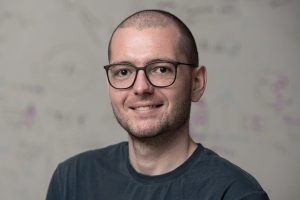
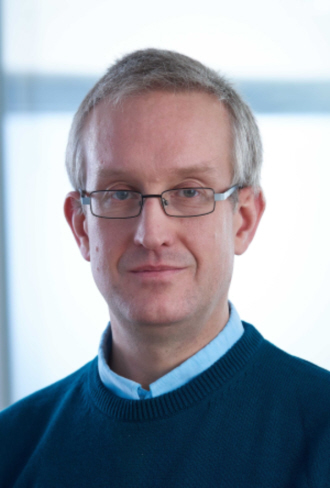
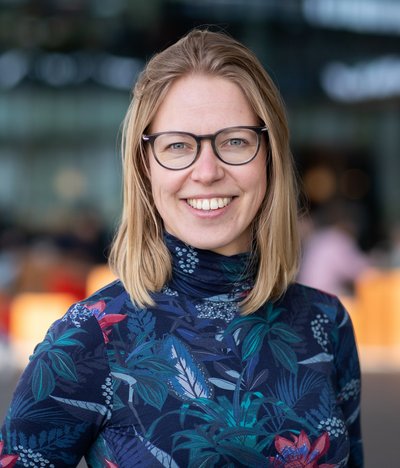
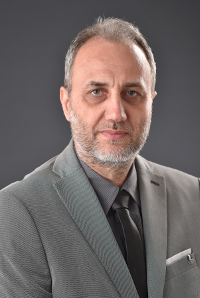
Andreas Groll is a Professor at the Technical University of Dortmund, affiliated with the Department of Statistical Methods for Big Data under the Faculty of Statistics. His research focuses on variable selection, regularization techniques in generalized linear models, categorical data analysis, and sports statistics, particularly predicting international soccer and tennis tournaments. He leads a working group including researchers like Dr. Daniel Horn and Dr. Rouven Michels. Key research areas include semiparametric regression and event data analysis. Recent work explores machine learning applications in sports analytics and healthcare, such as predicting hospital readmissions and modeling environmental data. Groll has published extensively in journals like Journal of Quantitative Analysis in Sports and Statistical Modelling .
Aaron Shugar is a Professor and current Bader Chair in Art Conservation at Queen’s University. With a background in archaeometallurgy and conservation science, he specializes in non-destructive analysis techniques for cultural heritage, including X-ray fluorescence (XRF), Raman spectroscopy, and hyperspectral imaging. His work bridges art history, material degradation, and technological innovation. Honours H.B.A. in Anthropology and Law & Society from York University M.S. in Archaeological Materials from the University of Sheffield Ph.D. in Archaeometallurgy from University College London His research focuses on historic artist’s pigments , ancient metallurgy , and technical history of artifacts , with particular interest in degradation pathways and manufacturing processes. Recent publications highlight trends in AI integration with XRF analysis and preservation of modern materials in art conservation. Bader Chair in Art Conservation Mellon Foundation Professor in Conservation Science Aaron co-directed the Archaeometallurgy Laboratory at Lehigh University, served as a guest scientist at NIST, and remains a research associate at the Smithsonian Institution. He actively contributes to TEFAF’s Scientific Vetting Committee and acts as a forensic materials expert for the Court of Arbitration for Art.
Mathias Unberath is the John C. Malone Associate Professor in the Department of Computer Science at Johns Hopkins University, with secondary appointments in Ophthalmology and Otolaryngology—Head and Neck Surgery at the School of Medicine. He is a core faculty member of the Laboratory for Computational Sensing and Robotics (LCSR) and the Malone Center for Engineering in Healthcare, and affiliate faculty at the Institute for Assured Autonomy and Data Science and AI Institute. Education: PhD in Computer Science from Friedrich-Alexander University of Erlangen-Nürnberg (2017), MSc in Optical Technologies (2014), BSc in Physics (2012) His research focuses on computer-assisted medicine, integrating computer vision, machine learning, and medical robotics to develop human-centered solutions through mixed reality and embodied technologies. His work addresses surgical phase recognition, explainable AI, and digital twin representations for clinical workflows. Unberath's 15 most recent publications demonstrate expertise in surgical AI (7/15), medical imaging (12/15), and mixed reality (8/15), with specific subfields including segmentation frameworks (3 papers), cognitive load estimation (4 papers), and surgical robotics (5 papers). NSF CAREER Award NIH NIBIB Trailblazer R21 Google Research Scholar Award Inaugural DSAI Junior Faculty Award IPCAI 2025 Best Paper Award He teaches graduate courses in machine learning, AI system design, and interpretable machine learning. His group, the ARCADE Lab, develops technologies for computer-assisted interventions, emphasizing robustness, explainability, and human-AI collaboration in clinical settings.
Jingrui He is a Professor and MSIM Program Director at the School of Information Sciences, University of Illinois Urbana-Champaign. She holds multiple faculty affiliate positions including with the Department of Computer Science, National Center for Supercomputing Applications (NCSA), Illinois Informatics, Center for Digital Agriculture (CDA), and Mayo Clinic Arizona. Her research spans machine learning with applications in diverse domains including healthcare, agriculture, security, and finance. Dr. He received her PhD in Machine Learning from Carnegie Mellon University in 2010. Her research focuses on heterogeneous machine learning, active learning, neural bandits, and self-supervised learning. She addresses complex data challenges where multiple types of heterogeneity coexist, developing methods for exploring, understanding, characterizing, and predicting real-world data through statistical machine learning techniques. Her recent publications demonstrate a strong focus on graph learning, federated learning, fairness in AI, and neural bandit algorithms. She has developed innovative approaches for class-imbalanced graph learning, Byzantine-robust federated learning, and privacy-preserving graph machine learning. Her work bridges theoretical foundations with practical applications across multiple domains. Her scientific awards include the Amazon Research Award (2025), ACM Distinguished Member (2023), AAAI Senior Member (2023), FAccT Distinguished Paper Award (2022), NSF CAREER award (2016), and multiple IBM Faculty Awards. She has been recognized as an excellent teacher and received Best Paper awards at major conferences including ICDM and SDM. Dr. He directs the iSAIL Lab and leads several major research projects including the AI Institute for Future Agricultural Resilience Management and Sustainability (AIFARMS). She has successfully mentored numerous doctoral students who have become co-authors on her publications. Her research has been funded through prestigious grants including the NSF CAREER award and IBM Faculty Awards.
Professor Oliver Johnson is a faculty member at the School of Mathematics, University of Bristol, UK, where he serves as Head of School and holds the Professor of Information Theory position. His research bridges information theory, probability, and statistics, focusing on entropy convergence, group testing, and fundamental limits in data analysis. Current PhD students: Kieran Morris, Conor Crilly Ex-PhD students: Matt Aldridge, Leonardo Baldassini, Dan Cowley, Vaia Kalokidou, Tom Kealy, Jennifer Chakravarty, Zichen Gui, Chrys Paschou Ex-postdoc: Erwan Hillion His work includes ORCiD profile and collaborations across information theory, cybersecurity, and ecological modeling.
Timothy Menzies is a full Professor in the Department of Computer Science at North Carolina State University's College of Engineering. He serves as the director of the Irrational Research lab (mad scientists r'us) and holds editorial positions as editor-in-chief of the Automated Software Engineering journal and associate editor for IEEE Transactions on Software Engineering. With over 300 publications and more than 24,000 citations, Menzies is a globally recognized leader in software engineering research. Menzies' research focuses on developing computer systems that make optimal decisions with minimal data, specializing in artificial intelligence, intelligent agents, data sciences, analytics, and software engineering. His pioneering work in data-driven, explainable, and minimal AI for software systems has redefined defect prediction, effort estimation, and multi-objective optimization. He is particularly known for his contributions to empirical software engineering, emphasizing transparency and reproducibility. As the co-creator of the PROMISE repository, he helped establish modern empirical software engineering by demonstrating that small, interpretable AI models can outperform larger, more complex ones. Menzies' recent publications reveal several key trends in his research: a growing emphasis on ethical considerations in AI deployment, particularly in sensitive domains like legal systems; continued innovation in software analytics with a focus on hyperparameter optimization tailored specifically for software engineering tasks; exploration of causal relationships in software analytics; and development of techniques that work effectively with limited data, including landscape analysis, surrogate learning, and active learning approaches. Mining Software Repositories Foundational Contribution Award (2017) Carol Miller Graduate Lecturer Award (2016) IBM Faculty Award (2016, 2017) ACM Fellow (2025) ASE Fellow (2024) IEEE Fellow Professor Menzies has advised 24 Ph.D. students throughout his career, with recent completions including Andre Motta (April 2025) and Xueqi Yang (October 2024). His research has secured over $19 million in funding from prestigious agencies including NSF, DARPA, and NASA, as well as industry partners like Meta, Microsoft, and IBM. Current grants focus on improving machine learning model efficiency, adapting empirical software engineering methods to computational science, vulnerability detection, and software analytics at scale using transfer learning across 10,000+ GitHub projects. Menzies has developed innovative approaches to help developers navigate the challenges of AI implementation while maintaining ethical standards and practical effectiveness. As director of the Irrational Research lab, Menzies leads a team focused on creating AI tools that are not only intelligent but also fair, transparent, and trustworthy. The lab's work emphasizes practical applications of AI in software engineering while addressing the human factors involved in developer-AI collaboration. Current projects include developing methods for better fuzzing with L3harris, improving vulnerability detection through smart pruning techniques, and creating AI platforms for workforce empowerment through credential gap diagnostics.
Rianne Conijn is an assistant professor in the Human-Technology Interaction group at Eindhoven University of Technology (TU/e), Netherlands. Her research bridges data-driven methodologies (machine learning, statistical modeling) with human-centered design to enhance learning analytics, explainable AI, and writing process analysis. She holds a joint PhD (cum laude) from Antwerp University and Tilburg University, and an MSc (cum laude) in Human-Technology Interaction from TU/e. Academic Background: MSc (2015, TU/e, cum laude), PhD (2020, Antwerp University & Tilburg University, cum laude). Research Focus: Learning analytics, keystroke logging, explainable AI for education, data dashboards, and self-regulated learning dynamics. Teaching: Courses in Advanced Research Methods, Human-AI Interaction, Behavioral Research Methods, and AI ethics in education. Her recent publications explore parallel language planning in writing, longitudinal self-regulated learning strategies, and generalizability of academic performance prediction models. She leads an NWO Veni project on Human-Centered AI in education, emphasizing tailored explanations for student-AI collaboration. Scientific awards include cum laude distinctions for her MSc and PhD, and the NWO Veni grant. Collaborative work spans institutions in the Netherlands, Norway, and the U.S., with applications in intelligent tutoring systems and ethical AI deployment in exams. Key trends across her work: integration of machine learning with educational theory, leveraging keystroke data for cognitive process insights, and prioritizing actionable, explainable AI systems for student support. Publications span journals like the Journal of Experimental Psychology: General , Computers and Education , and IEEE Transactions on Learning Technologies . Scientific Awards: NWO Veni grant for Human-Centered AI in education Cum laude for MSc and PhD Grants & Collaborations: National Science Foundation grants (2016868, 2302644) for biometric feedback in writing UK Research and Innovation grant (ES/W011832/1) for real-time AI scaffolding TU/e Boost! Program grant for self-regulated learning analysis Labs & Teams: EAISI Foundational (Eindhoven AI Systems Institute) Human Technology Interaction group at TU/e Collaboration with Norwegian Reading National Center (University of Stavanger) Project teams for Waterproof ITS and ProWrite grants
Miloš Racković serves as a full Professor in the Department of Mathematics and Informatics at the University of Novi Sad, Serbia. He maintains active academic engagement through the Laboratory for the development of information systems, with his office located in the Information technologies and systems office (DMI&DF) on the second floor, room 49. Contact is available via telephone (485)-2868 or email rackovic@dmi.uns.ac.rs, and his personal website (http://www.is.pmf.uns.ac.rs/rackovicm/) provides additional resources. His research spans foundational and applied computer science, with seminal contributions in fuzzy database systems including PFSQL query language development and prioritized fuzzy logic for relational databases and XML. He has pioneered deep learning methodologies through innovative classification techniques using negative and missing features in convolutional neural networks. Additional expertise includes high-performance computing implementations of Lattice Boltzmann methods using OpenCL, robotics (symbolic modeling and trajectory planning), and blockchain applications for Industry 4.0 production processes. His sports analytics work applies neural networks to basketball player and referee movement analysis. Analysis of his 2012-2025 publications reveals a strategic evolution toward interdisciplinary applications, particularly in industrial transformation (blockchain-enabled traceability) and sports analytics. His work consistently bridges theoretical computer science with practical implementations, demonstrating increasing focus on real-world problem solving while maintaining strong foundations in database theory and computational methods. Professor Racković leads the Laboratory for the development of information systems, which focuses on advancing information system methodologies through formal modeling extensions (including Petri net innovations) and practical implementations for uncertainty management. The laboratory's work spans from foundational research in fuzzy logic systems to applied projects in high-performance computing and blockchain integration, fostering innovation in information technology development.
Waldemar Celes Filho is an Associate Professor in the Department of Computer Science at Pontifical Catholic University of Rio de Janeiro (PUC-Rio) and serves as Director of the Tecgraf Institute/PUC-Rio. With a career spanning over three decades, he has established himself as a leading researcher in computer graphics and scientific visualization. His educational background includes a Civil Engineering degree from UFRJ (1986), a Master's in Civil Engineering from PUC-Rio (1990), a Doctorate in Computer Science from PUC-Rio (1995), and postdoctoral studies in Computer Graphics at Cornell University (1995-1997). Dr. Celes Filho's research focuses primarily on Computer Graphics with special emphasis on Scientific Visualization, Numerical Simulation, Distributed Visualization, and Real-Time Rendering. He is particularly known for his work on visualization techniques for black oil reservoir models and as a co-creator of the Lua programming language. His research has resulted in over 50 publications spanning nearly three decades, with consistent output continuing through 2025. His recent publications demonstrate a strong trend toward applying advanced visualization techniques to complex industrial problems, particularly in petroleum engineering and construction informatics. His work bridges theoretical computer graphics with practical applications in engineering domains, showing particular strength in volume rendering, CAD model visualization, and distributed rendering systems. As Director of the Tecgraf Institute, he leads research initiatives that connect academic work with industry applications, fostering collaborations that translate visualization research into practical tools. Dr. Celes Filho has mentored numerous students who have become co-authors on his publications, including Paulo Ivson, Fábio Markus Miranda, and Lucas Caracas de Figueiredo, among others. His work continues to be influential in both academic and industrial settings.
Richard Nielsen is an Associate Professor in the Department of Political Science at MIT, affiliated with the Institute for Data, Systems, and Society (IDSS), the Security Studies Program (SSP), and the Center for International Studies (CIS). His research integrates quantitative methods with ethnographic insights to study Middle East politics, religion, political violence, and gender dynamics. He holds a PhD in Government and AM in Statistics from Harvard University, and a BA in Political Science from Brigham Young University. His first book, *Deadly Clerics* (2017), examines clerical radicalization in Sunni Islam, while current work explores female religious authority in digital spaces. Education: PhD in Government (Harvard, 2013), AM in Statistics (Harvard, 2010), BA in Political Science (BYU, 2007). Research focuses on: Islamic authority dynamics, online religious preaching (especially by women), counterterrorism, and methodological innovations in text analysis. He develops tools for Arabic text analysis and advises on computational social science methodologies. His work bridges political science, computer science, and Islamic studies. Teaching includes courses on international relations, political methodology, and Middle East politics. He has mentored over 20 PhD students, many now in academic and policy roles. Grants and collaborations include Carnegie Fellowship research and MIT's interdisciplinary initiatives. Labs/Teams: Political Methodology Lab (MIT), affiliated with IDSS and SSP. His work emphasizes computational tools for social science, such as the *arabicStemR* package for text analysis.
Wei Ding is a Professor in the Department of Computer Science at the University of Massachusetts Boston (UMass Boston). She earned her Ph.D. in Computer Science from the University of Houston in 2008. From 2019 to 2023, she served as a Program Director at the National Science Foundation's Division of Information and Intelligent Systems (IIS), overseeing programs in Information Integration, Smart Health, Deep Learning Foundations, and Scalable Systems. Her research integrates knowledge discovery, data mining, and machine learning with applications spanning health sciences, astronomy, geosciences, and environmental sciences. She employs advanced techniques like spatio-temporal modeling, deep neural networks, and semantic analysis to address complex real-world problems such as disease subtyping, physical activity prediction, and environmental forecasting. Her work emphasizes interdisciplinary collaboration and societal impact. Analysis of her recent publications reveals a focus on AI-driven healthcare solutions (e.g., neuroimaging biomarkers, disorder diagnosis), fundamental ML advancements (e.g., generalization, GAN stability), and cross-domain applications (e.g., climate forecasting, animal behavior analysis). Recurring themes include low-data learning, interpretability, and scalable algorithms. Awards & Honors: IEEE Fellow (2023) NSF Director's Award (2022) WISAY Distinguished Woman in Science Award, Yale University (2019) AI for Earth Award (2018) Best Paper Awards (ICTAI 2011, ICCI 2010) Advising & Grants: She mentors PhD and Master’s students in the Knowledge Discovery Lab (KDLab), with alumni at institutions like Facebook, Google, and McKinsey. Her research is funded by NSF, NIH, NASA, and DOE, including: NIH R01: Predicting youth physical activity (2016) NSF EAGER: Machine learning for cancer subtyping (2017) NIH R01: Accelerometer/gyroscope data for activity estimation (2022) Leadership: She directs the KDLab and co-founded the Women in Sciences Club (WINS). She serves as Associate Editor for ACM TKDD, TIST, and KAIS journals.
Boyu Zhang is an Assistant Professor in the Department of Computer Science at the University of Idaho, part of the College of Engineering. He holds a Ph.D. in Computer Science & Technology from Harbin Institute of Technology (2016), an M.S. from the same institution (2009), and a B.S. from Jilin University (2005). His research focuses on medical image analysis, deep learning, and AI applications in healthcare. Key areas include breast cancer detection via ultrasound imaging, explainable AI, graph neural networks for multi-omics data integration, and materials science predictions using machine learning. His work emphasizes interpretability in AI systems, such as the Bi-RADS-Net series for breast cancer diagnosis and the development of sharpness-aware optimizers for medical imaging tasks. He also explores multi-task learning frameworks and novel neural network architectures like SepNet for directional data analysis. His contributions span medical imaging benchmarks (e.g., BUSIS dataset) and computational methods for materials property prediction.
Liping Liu is an Associate Professor in the Department of Computer Science at Tufts University's School of Engineering. He holds a Ph.D. from Oregon State University and has held postdoctoral positions at Columbia University and Tufts. His research focuses on machine learning, generative models, graph learning, and their applications in biochemical data analysis and fluid dynamics simulation. His work on graph generative methods earned the NSF CAREER Award. Education: Ph.D. (Oregon State University, 2016), M.Sc. (Nanjing University, 2009), B.S. (Hebei University of Technology, 2006). Research Interests: Machine Learning, Deep Learning, Generative Models, Time Series, Graph Learning. Dr. Liu's research emphasizes probabilistic modeling and neural networks, addressing challenges in graph generation, data-driven physics simulation, and biochemical analysis. His recent work includes advancements in graph-based recommendation systems, turbulence modeling, and enzymatic reaction prediction. His publications span top AI conferences like NeurIPS, ICML, and ICLR. He has secured grants totaling over $9 million, including the NSF CAREER Award and NIH funding for metabolomics and enzymatic promiscuity studies. His teaching includes courses on generative models, deep learning, and machine learning for graph analytics. Awards: NSF CAREER Award (2023), NIH grants, DARPA ACT-NOW project (2019). Service: NSF panelist, program committee member for AAAI, NeurIPS, and IJCAI.
Prof. İpek İmamoğlu is a Professor of Environmental Engineering at Middle East Technical University (METU), Ankara, Turkey, specializing in environmental chemistry and pollutant fate. She holds leadership roles, including former Vice Dean of the Faculty of Engineering (2012-2015) and Vice Chair of the Environmental Engineering Department (2009-2012). Her research focuses on organic compound fate, microplastic interactions, contaminated site management, and receptor modeling for pollutants like PCBs and PBDEs. Education: PhD from University of Wisconsin-Milwaukee (2001), M.S. from University of Newcastle upon Tyne (1996), and B.S. from METU (1995). Awards include the METU Ph.D. Dissertation Supervision Award (2017, 2010) and the British Chevening Scholarship (1995/96). She has supervised over 20 PhD and MS students in environmental chemistry and engineering. Research spans contaminated sediment remediation, PCB/PBDE degradation pathways, and policy impacts of microplastics. Her projects include TUBITAK-funded studies on microplastic-organic interactions and POPs management. She advises on national policies, including Turkey’s implementation of the Stockholm Convention on POPs. Key Projects: Molecular Level Microplastic-Organic Interactions (TUBITAK 2021), PCB Fate in Aquatic Sediments (TUBITAK 2015), and Zeolite-Wastewater Treatment (METU Funded 2002). Awards: UWM Dissertator Fellowship, NATO Travel Grant, and ISO 17025 Auditor Certification. Her publications (over 80) cover environmental forensics, receptor modeling, and bioremediation. She actively participates in international conferences and serves as a consultant for UNDP and EU-funded initiatives.
Professor Dinh Phung is the Head of the Department of Data Science & AI at Monash University. His research focuses on machine learning, deep learning, generative AI, and robust AI systems. He has authored over 250 publications, with applications in NLP, computer vision, digital health, and cybersecurity. Phung holds a PhD and BSc(Hons) in Computer Science from Curtin University. He leads major projects like 'Can Machines Unlearn?' and 'Trustworthy Generative AI', funded by the Australian Research Council and the Department of Defence. Education: Doctor of Philosophy, Computer Science, Curtin University (2005) Bachelor of Science (Honours), Computer Science, Curtin University (2001) Research Interests: Machine learning, deep learning, and generative models Optimal transport and Bayesian methods Robust and trustworthy AI Applications in digital health, cybersecurity, and autism research Key Projects (2023–2029): Can Machines Unlearn? (2025–2029): Safety in AI Trustworthy Generative AI (2024–2026): Foundation models Robust Machine Learning via Optimal Transport (2023–2025) Awards and Grants: Australian Research Council grants for AI safety and robustness Department of Defence funding for robust learning systems Collaborations: Global partnerships in AI ethics, cybersecurity, and healthcare. Active advisory roles, including with the Victorian Parliamentary Library.