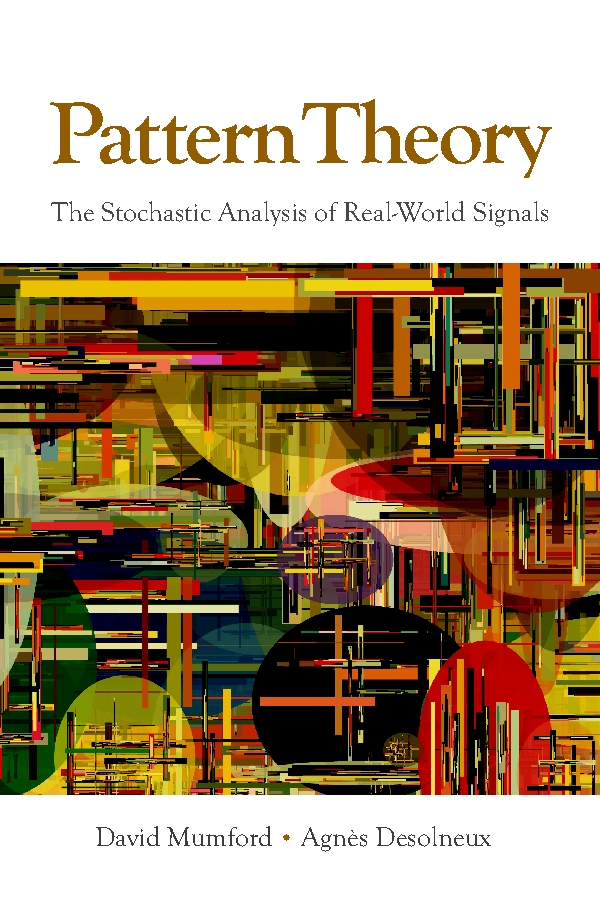
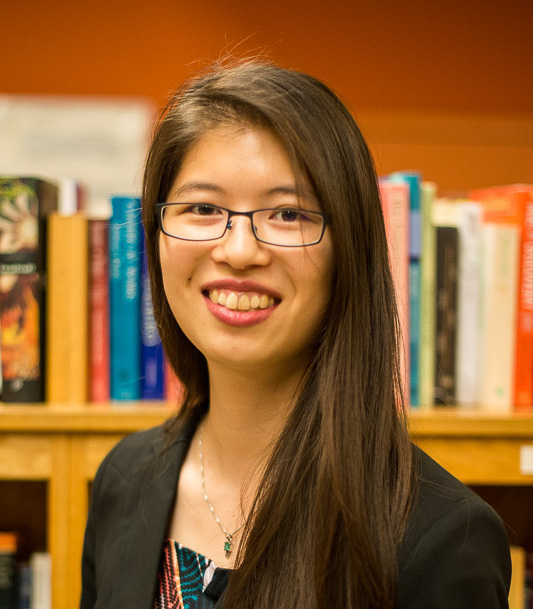
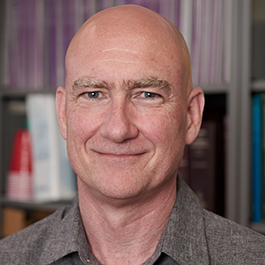
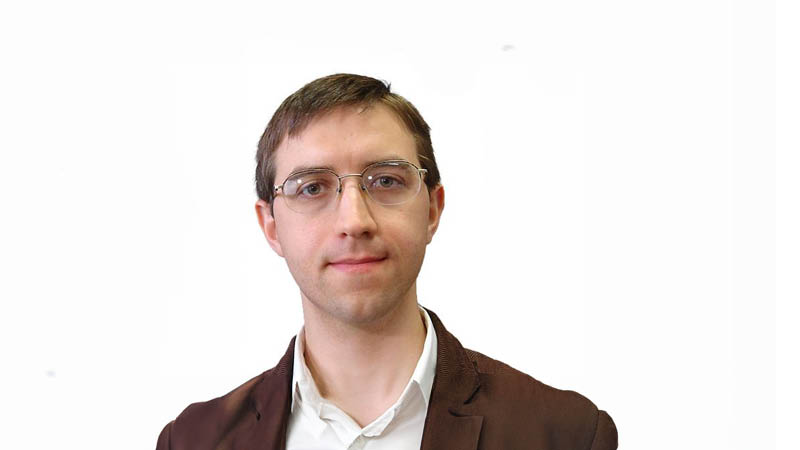
Agnes Desolneux is a CNRS Research Director at the Borelli Centre (formerly CMLA) and a Professor attached to the Mathematics Department at ENS Paris-Saclay. Education: PhD in Applied Mathematics (2000) from ENS Cachan Habilitation in Applied Mathematics (2010) from Université Paris Descartes Her research focuses on image analysis via statistical methods , particularly a contrario approaches, image restoration, texture synthesis, Determinantal Point Processes (DPP), optimal transport, Gaussian mixtures, geometry of random field excursions, shot-noise models, and mathematical modeling of visual perception through Gestalt theory. The articles extracted reflect her expertise in applied mathematics and computer vision , with recent works (2025-2020) on optimal transport algorithms, DPP applications, multiscale texture analysis, and stochastic modeling in medical imaging. Keywords span machine learning, probability theory, medical imaging, and computer vision . She has no listed scientific awards but has authored influential works including the book From Gestalt Theory to Image Analysis: A Probabilistic Approach (Springer, 2008) and Pattern Theory: the stochastic analysis of real-world signals (AK Peters, 2010).
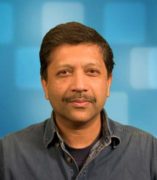
Hanbyul Joo is an Assistant Professor in the Department of Computer Science and Engineering at Seoul National University (SNU). Prior to joining SNU, he was a Research Scientist at Facebook AI Research (FAIR) in Menlo Park. He completed his Ph.D. in the Robotics Institute at Carnegie Mellon University, working with Yaser Sheikh, and received his M.S. in Electrical Engineering and B.S. in Computer Science from KAIST, Korea. Dr. Joo's educational journey began at KAIST, where he earned both his Bachelor's and Master's degrees. He then pursued his Ph.D. at Carnegie Mellon University's Robotics Institute, completing his dissertation titled "Sensing, Measuring, and Modeling Social Signals in Nonverbal Communication." His doctoral work focused on developing the Panoptic Studio, a unique sensing system with over 500 synchronized cameras for capturing social interactions. Dr. Joo's research primarily focuses on endowing machines and robots with the ability to perceive and understand human behaviors in 3D . His goal is to build "social Artificial Intelligence" that can interact with humans using social signals (body languages). He pursues this direction using data-driven methods where data is collected by measuring the wide spectrum of social signals transmitted during interpersonal social interaction. His research spans computer vision, machine learning, computer graphics, and robotics , with particular emphasis on 3D human pose estimation, human-object interaction, and social signal processing. His recent publications demonstrate a clear trend toward leveraging diffusion models for 3D reconstruction and generation tasks, with a focus on human-centric applications. His work bridges the gap between 2D image understanding and 3D scene reconstruction, often utilizing pre-trained models to overcome data limitations. The research consistently addresses fundamental challenges in understanding human behavior, interaction with objects, and social dynamics in 3D space. Dr. Joo is a recipient of several prestigious awards including the Samsung Scholarship and the CVPR Best Student Paper Award in 2018 . His paper "Total Capture: A 3D Deformation Model for Tracking Faces, Hands, and Bodies" received this honor at CVPR 2018. His research has been widely recognized in top computer vision and AI conferences, with multiple oral presentations at venues like CVPR, ICCV, and ECCV. Dr. Joo actively mentors a large group of students, with approximately 15 current students working toward MS/PhD degrees under his supervision. His lab, the SNU VCLab, focuses on cutting-edge research in computer vision and graphics. He has secured significant research funding through his work, though specific grant details aren't provided on his website. Dr. Joo frequently serves as an area chair for major conferences including CVPR, ICCV, and NeurIPS, demonstrating his standing in the academic community. Dr. Joo leads the SNU VCLab, which has developed several notable datasets and tools including SNU ParaHome, FrankMocap, and the CMU Panoptic Studio Dataset. His lab maintains strong industry connections, with students interning at leading companies like Meta. The lab's research focuses on building the infrastructure and algorithms needed for social AI, with an emphasis on practical applications that can be deployed in real-world settings.
Shantanu Dutt is a full Professor in the Department of Electrical and Computer Engineering at the University of Illinois at Chicago , located in Chicago, IL. His office is in 930 SEO at 851 S. Morgan St, and he can be reached at dutt@uic.edu . Education Ph.D. in Computer Science and Engineering, University of Michigan, Ann Arbor (1990) M.Tech. in Computer Engineering, Indian Institute of Technology Kharagpur (1984) B.E. in Electronics and Communication Engineering, Maharaja Sayajirao University of Baroda (1983) Research Interests Professor Dutt’s research agenda centers on VLSI Computer-Aided Design (CAD) , with particular emphasis on physical design and incremental synthesis targeting both ASICs and FPGAs. He explores discrete optimization techniques to solve placement, routing, and partitioning problems. Another major thrust is FPGA built-in self-test (BIST) and trusted design , ensuring provable diagnosability and security against hardware Trojans. He also investigates fault-tolerant computing at both chip and system levels, and develops parallel and distributed computing algorithms for scalable performance. Scientific Awards 1996 Best Paper Award , ACM/IEEE Design Automation Conference, for “A probability-based approach to VLSI circuit partitioning” 1995 Most Influential Paper Award , Fault-Tolerant Computing Symposium, for “Design and reconfiguration strategies for near-optimal k-fault-tolerant tree architectures” Research Impact and Funding Professor Dutt has published extensively in top-tier journals (IEEE TVLSI, ACM TRETS, IEEE TCAD) and premier conferences (ICCAD, DAC, DATE, FTCS). His work has shaped incremental placement, timing-driven routing, FPGA security, and fault-tolerant multiprocessor architectures. While specific grant numbers are not listed, the breadth and longevity of his publication record indicate sustained funding from NSF, industry, and other agencies. Laboratory and Collaborations Although no formal laboratory name is provided, Professor Dutt’s research is conducted within the ECE department’s VLSI CAD and Fault-Tolerance groups, collaborating with graduate students and colleagues across the US and internationally.
Jim Smith is a Professor in Interactive Artificial Intelligence at the University of the West of England (UWE), Bristol, affiliated with the School of Computing and Creative Technologies and the Department of Computer Science and Creative Technologies. He serves as Director of the Computer Science Research Centre and leads the AI@UWE theme. His research is supported by UKRI, Innovate UK, and partnerships with organizations including Health Data Research UK, Office for National Statistics, NHS Scotland, and DSTL. University: University of the West of England School: School of Computing and Creative Technologies Department: Department of Computer Science and Creative Technologies Role: Professor in Interactive Artificial Intelligence Leadership: Director, Computer Science Research Centre Research Interests : Jim Smith's work focuses on Interactive Artificial Intelligence, particularly at the intersection of AI and privacy preservation when using sensitive data for public good. His research includes statistical disclosure control, privacy leakage from AI models, evolutionary computation, machine learning, and systems that learn through human interaction or self-adaptation. He explores how AI can automate privacy checks in research outputs and assess vulnerabilities in trained models. Recent Publications : His recent work spans AI privacy in trusted research environments (e.g., SACRO, SDC-Reboot), dialogue act classification, human-robot interaction, and visualization of deep learning models. Themes include privacy-preserving AI, automated disclosure control, interactive machine learning, and neuromorphic computing. Machine Learning & Privacy Evolutionary Computation Interactive AI Systems Human-Computer Interaction Statistical Disclosure Control Federated Learning Security Scientific Awards : No specific awards are mentioned in the provided texts. Advising and Grants : He currently supervises PhD students on topics including spatio-temporal air quality modeling, federated learning privacy, and threat detection in mobile networks. He leads Innovate UK and UKRI-funded projects such as SACRO and SDC-Reboot, focusing on AI-driven solutions for data confidentiality in public sector research. Interactive Machine Learning for Claim Settlement (Innovate UK) SDC-Reboot (DARE UK/Health Data Research UK) Threat Identification in Mobile Networks (Ribbon Communications) Labs and Teams : He leads the AI@UWE initiative and the Computer Science Research Centre at UWE. His work involves collaboration through DARE UK and open-source development via the AI-SDC GitHub organization, which hosts tools from SACRO and GRAIMATTER projects.
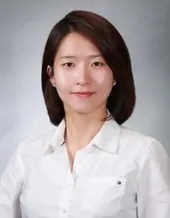
Jihyun Lee is an Assistant Professor in the Department of Mechanical and Manufacturing Engineering at the Schulich School of Engineering, University of Calgary. She was awarded the Anna Boyksen Fellowship by the Technical University of Munich Institute for Advanced Study (TUM-IAS) in 2021, hosted by Prof. Michael Zäh. Doctorate in Mechanical Engineering from University of Michigan-Ann Arbor (2016) Prior post at Korea Institute of Machinery and Materials (2016-2019) Her research focuses on mechatronics, robotics, manufacturing automation, and control systems , with applications in machine tools, additive manufacturing, and precision measurement. She integrates artificial intelligence and optimization to enhance industrial automation. Recent publications highlight work on vibration control , sensor fusion , and flexible manufacturing systems . Her team explores dynamic modeling , nanocomposite sensors , and human-in-the-loop robotics for industrial and marine applications. 2020 Remote Teaching Award, Schulich Engineering 2020 Early Achievement Award, Association of Korean-Canadian Scientists and Engineers 2018 Best Achievement Award, KIMM She supervises doctoral and master’s students at the University of Calgary, emphasizing hands-on experience and MATLAB/Python simulation skills in her lab. Her work bridges quantum logic and industrial robotics through interdisciplinary collaborations.
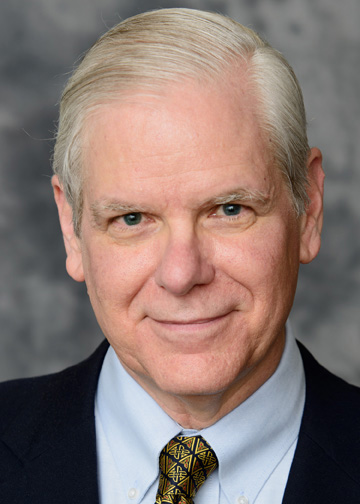
James R. Fienup is the Robert E. Hopkins Professor of Optics at the University of Rochester's Institute of Optics, with additional appointments as Distinguished Scientist at the Laboratory for Laser Energetics, Professor at the Center for Visual Science, Professor of Electrical and Computer Engineering, and Affiliated Faculty at the Goergen Institute for Data Science and Artificial Intelligence. His office is located at Wilmot 410, 275 Hutchison Rd., Rochester, NY. Education PhD in Applied Physics from Stanford University (1975) MS in Applied Physics from Stanford University (1972) BA in Physics & Mathematics (magna cum laude) from Holy Cross College (1970) Research Focus Professor Fienup's research specializes in imaging science , with emphasis on phase retrieval algorithms, unconventional imaging techniques, and wavefront sensing. His work spans computational methods for image reconstruction, sparse-aperture systems, and synthetic-aperture imaging. Recent innovations include applying machine learning to wavefront control and developing advanced digital holography techniques for 3D imaging through atmospheric turbulence. Publication Trends His recent articles (2018-2024) demonstrate a strong focus on computational imaging techniques, particularly phase retrieval algorithms applied to optical metrology and wavefront correction. Key themes include multi-plane digital holography, coronagraphic wavefront control for astronomical applications, machine learning-enhanced sensing, and novel approaches for segmented-aperture systems. His work consistently bridges theoretical optics with practical instrumentation challenges. Awards and Honors Lifetime Achievement Award, Hajim School of Engineering (2019) Emmett N. Leith Medal, Optical Society of America (2013) National Academy of Engineering Member (2012) Distinguished Visiting Scientist, JPL (2009) Fellow of OSA and SPIE International Prize in Optics (1983) Rudolf Kingslake Medal (1979) NSF Graduate Fellow (1970-1972) Professional Activities Professor Fienup has served as Editor-in-Chief of the Journal of the Optical Society of America A (1998-2003) and held editorial roles at Applied Optics and Optics Letters . He consults for NASA (James Webb Space Telescope, Hubble), national laboratories, and aerospace companies, and holds five patents in optical systems design.
Dr. Gabriele Schweikert is a Senior Lecturer and Principal Investigator with a joint appointment between the Division of Computational Biology in the School of Life Sciences at University of Dundee and Cyber Valley in Tuebingen. Her research focuses on applying machine learning techniques to understand epigenetic mechanisms and molecular processes in living cells. Dr. Schweikert completed her PhD at the Max Planck Institute Tuebingen working with Schoelkopf, Weigel, and Raetsch labs on machine learning for computational gene finding. She subsequently joined Adrian Bird's lab at the Wellcome Trust Center for Cell Biology in Edinburgh, a pioneer in epigenomic research. Prior to her current position, she held prestigious Marie Curie and EMBO Fellowships at the School of Informatics, University of Edinburgh. Her research interests center on using machine learning to decode epigenetic mechanisms that determine cellular identity and function. She investigates how cells with identical DNA can differentiate into specialized cell types through epigenetic regulation, with particular focus on applications in understanding tumorigenesis where epigenetic machinery malfunctions. Her work combines high-throughput epigenomic data with advanced computational approaches to address complex biological questions. Analysis of her recent publications reveals a strong focus on epigenomic data analysis, machine learning applications in biology, and computational approaches to understanding gene regulation. Her work spans from fundamental epigenetic mechanisms to practical applications in disease research, with growing emphasis on individual-specific epigenomic analysis and explainable AI in biomedical contexts. UKRI Future Leaders Fellowship (2020, £1.6 million) Marie Curie Fellowship EMBO Fellowship Dr. Schweikert actively supervises PhD students and has received significant research funding for projects including 'Machine Learning Methods to Re-Annotate Histone Modifications,' 'Unlocking The Alternative Splicing Code,' and 'GPU-Based Machine Learning System For Fundamental Biological Research.' She is involved in multiple interdisciplinary collaborations and frequently presents her work at major conferences including ELLIS Health program retreat, Epigenetics Meetings, and RECOMB workshops. She maintains active research laboratories in both Dundee and Tuebingen, fostering international collaboration between computational biologists, machine learning experts, and experimental biologists to advance our understanding of epigenetic regulation in health and disease.
Harold D. Chiang is an Assistant Professor in the Department of Economics at the University of Wisconsin-Madison. His research focuses on econometric theory and methods, particularly robust inference techniques for clustered and network data, machine learning applications, and causal inference frameworks like regression discontinuity/kink designs. He employs computational statistics and asymptotic theory to address methodological challenges in high-dimensional and complex datasets.
Cathy Wu is an Associate Professor at MIT, with affiliations in the Laboratory for Information and Decision Systems (LIDS), Department of Civil and Environmental Engineering (CEE), and Institute for Data, Systems, and Society (IDSS). Her research group focuses on integrating machine learning with model-based optimization to solve complex problems in transportation systems and cyber-physical systems. Academic Leadership: Class of 1954 Career Development Associate Professor (MIT) Research Grants: NSF CAREER Award, Amazon Robotics, Mathworks, MIT Mobility Initiative, US DOT, Microsoft Research, Cintra, Symbotic Research Interests : Wu's work bridges AI and engineering challenges in transportation. Key areas include: Hybrid ML/Model-based Optimization (large neighborhood search, branch-and-cut) Sustainable Mobility (Project Greenwave, eco-driving) Multi-Agent Coordination (warehouse automation, cooperative driving) Cyber-Professional Systems (generalization in RL, transfer learning) Recent work demonstrates significant advances in eco-driving (11-22% emissions reduction), large-scale multi-agent path finding (1000+ agents), and foundational RL methods for traffic control. Her group has produced 15+ major publications since 2015, with notable media coverage in Science, Wired, and NewScientist. Selected Scientific Awards NSF CAREER Award (2023) Ole Madsen Mentoring Award (2025) IEEE ITSS WiE/YP Fellowship (2024) Harold L. Hazen Teaching Award (2022) Her lab has advised 12+ graduate students and postdocs, including: Vindula Jayawardana (PhD '24, now at Anthropic) Sirui Li (PhD '25, now at Microsoft Research) Yining Ma (Postdoc, active researcher) Zhongxia Yan (PhD '24, now at Anthropic)
J. Edward Colgate is the Walter P. Murphy Professor of Mechanical Engineering and Director of the Human Augmentation via Dexterity (HAND) Engineering Research Center at Northwestern University's McCormick School of Engineering. He also holds the title of Breed Senior Professor of Design. His academic career includes leadership roles as founding co-Director of the Segal Design Institute and director of the Master of Science in Engineering Design and Innovation program. Colgate earned his Ph.D. (1988), S.M. (1986), and S.B. in Physics (1983) from the Massachusetts Institute of Technology. Colgate's research focuses on physical human-robot interaction with specialization in surface haptic interactive design and electroadhesion technology development. His work spans three interconnected domains: haptic interfaces (including wearable haptic arrays and Touchbot systems), robot dexterity through Shape-Based Remote Manipulation (SBRM) for overcoming communication delays, and high-speed electroadhesive actuators. The Northwestern Haptics Lab under his direction aims to create realistic virtual environments by merging these research vectors. His publications demonstrate consistent focus on tactile perception mechanisms, electroadhesion applications, and haptic rendering algorithms. Recent work explores texture playback fidelity, wearable electroadhesive arrays, robotic manipulation, and human-swarm control systems, reflecting interdisciplinary integration of mechanical engineering, materials science, and neuroscience principles. Awards: Elected to National Academy of Engineering (2021) for contributions to haptics, human-robot systems, and design education Inducted into National Academy of Inventors (2015) Educational initiatives include developing Northwestern's Design Thinking and Communication curriculum, establishing the Certificate in Engineering Design, and creating the Master of Science in Engineering Design and Innovation. He teaches ME 390: Introduction to System Dynamics using a flipped classroom model. Colgate directs the Northwestern Haptics Lab within the Center for Robotics and Biosystems, focusing on fundamental haptics research with applications in virtual reality, prosthetics, and human-assistive devices. The lab maintains active industry partnerships for technology transfer of haptic innovations.
Timo Minssen is Professor of Law at the University of Copenhagen (UCPH) and the Founding Director of UCPH's Center for Advanced Studies in Bioscience Innovation Law (CeBIL). He also holds affiliations as an LML Research Affiliate at the University of Cambridge and an Inter-CeBIL Research Affiliate at Harvard Law School's Petrie-Flom Centre. With extensive expertise in Intellectual Property, Competition, and Regulatory Law, Minssen focuses on the legal aspects of emerging health and life science technologies, including genome editing, big data, artificial intelligence, and quantum technology. His educational background includes a German law degree (Staatsexamen) from Georg-August-University in Göttingen, and Swedish biotech & IPR related LL.M., LL.Lic., and LL.D. degrees from Lund University and Uppsala University. His PhD thesis on the patentability of biopharmaceutical technology in the US & Europe received the prestigious Swedish King Oscar award. 2024: TUM Global Visiting Professor, Technical University of Munich (Germany) 2016: Visiting Research Fellow, University of Cambridge (UK) 2014: Visiting Research Fellow, University of Oxford (UK) 2013-14: Visiting Scholar, Harvard Law School (US) 2012: LL.D. - Doctor of Laws (Swedish "juris doktor"), EU/US patent law, Lund University, Sweden Minssen's research spans AI & Big Data in Health & Life Sciences, Sustainable and responsible innovation & tech transfer, Pharmaceutical-, Life Science- & Biotech Law, Comparative European & US Patent Law, Intellectual Property Law & Open Innovation, and EU Competition- & US Antitrust Law. His work addresses legal issues throughout the lifecycle of health and life science products and processes, from R&D regulation to technology transfer and commercialization. His extensive publication record includes 7 books and over 200 articles and book chapters published in leading journals such as Science, Nature Biotechnology, JAMA, and Harvard Business Review. His research has been featured in The Economist, Financial Times, and other major media outlets. Minssen's recent work shows a strong focus on AI regulation, quantum technology law, and data governance in health contexts, reflecting the evolving landscape of technology and law. Scientific Awards and Recognition King Oscar award for best Jur. Dr. thesis (2014) Jorcks Fonds Forsknings Pris (Jorck's Foundation Research Prize) (2017) Awapatent Research Prize (2009) Max Planck Research Scholarship (2005) Visiting Scholar appointments at Harvard Law School, University of Oxford, and University of Cambridge Recipient of a Novo Nordisk Foundation Grant for a "Collaborative Research Program in Biomedical Innovation Law" (2018) As an advisor, Minssen serves international organizations including the WHO, WIPO, and EU Commission. He has supervised numerous PhD students in areas including pharmaceutical law, biotechnology patents, and antimicrobial resistance. His current research projects include the Novo Nordisk Foundation's International Collaborative Bioscience Innovation & Law (Inter-CeBIL) Programme (50 million DKK), CLASSICA: EU Horizon Project on AI-assisted surgery, and AI@Care: Law and Ethics and Algorithmic Bias in Healthcare. Minssen leads the Center for Advanced Studies in Bioscience Innovation Law (CeBIL), which serves as a hub for interdisciplinary research on the intersection of law, technology, and innovation in the health and life sciences. The center collaborates with institutions worldwide to address pressing legal challenges in emerging technologies.
Prof. Dr. Raphael Sznitman serves as Director of the ARTORG Center for Biomedical Engineering Research and Head of the Artificial Intelligence in Medical Imaging group at the University of Bern, Switzerland, holding a Full Professor position in AI for Medical Imaging since 2015. Education: PhD in Computer Science, Johns Hopkins University (2011) MSc in Computer Science, Johns Hopkins University (2009) BSc in Cognitive Systems, University of British Columbia (2007) Research Interests: Sznitman's work centers on computational vision , probabilistic methods , and statistical learning applied to medical imaging challenges. His group develops AI algorithms for ophthalmic diagnostics, surgical robotics, and medical image analysis, with emphasis on OCT, surgical phase recognition, and domain adaptation techniques. Key application areas include retinal disease detection and cataract surgery automation. Publication Trends: His 2021-2025 publications reveal concentrated efforts in deep learning for medical imaging , particularly in ophthalmology (OCT analysis) and surgical video understanding. Emerging themes include LLM applications for clinical monitoring, unsupervised out-of-distribution detection for surgical safety, and physics-informed AI for multimodal medical data fusion. Research Leadership: As ARTORG Center Director, Sznitman oversees interdisciplinary research bridging computer science and clinical medicine. His group collaborates extensively with Bern University Hospital clinicians on translational projects, securing funding for AI-driven diagnostic tools and surgical assistance systems. Current initiatives focus on real-time intraoperative guidance and spaceflight ophthalmology applications. Laboratory: The Artificial Intelligence in Medical Imaging group operates within ARTORG's dedicated facilities, maintaining partnerships with surgical robotics labs and ophthalmology departments for clinical validation of AI systems. Their work integrates multimodal data streams including OCT, VR perimetry, and surgical video feeds.
Anthony Niblett is a Professor and Canada Research Chair in Law, Economics, & Innovation at the University of Toronto Faculty of Law. He is an Affiliate Researcher with the Vector Institute for Artificial Intelligence and co-founder of Blue J, a startup leveraging AI for tax and legal professionals. Education: Ph.D. in Economics, Harvard University (2009) M.A. in Economics, Harvard University (2006) LL.B. (Honours), University of Melbourne (2003) B.Com. (Honours in Economics), University of Melbourne (2003) Bigelow Fellow, University of Chicago His research bridges artificial intelligence , innovation , and legal theory , with a focus on contract law , competition policy , and judicial behavior . He explores how machine learning transforms legal practice, regulatory frameworks, and judicial decisions. His work includes self-driving contracts , computational antitrust , and the personalization of law . Recent publications analyze AI’s role in legal disagreement , gender gaps in employment law , and computational merger reviews . His articles emphasize the intersection of technology , economics , and legal reform . Scientific Awards: Canada Research Chair in Law, Economics, & Innovation Bigelow Fellow, University of Chicago He serves as an Academic Advisor at the Future of Law Lab and contributes to Blue J , advancing AI applications in legal domains. His teaching includes Contract Law , Torts , and Economic Analysis of Law .
Arthur Gervais is a Professor of Information Security at University College London's Department of Computer Science. His work focuses on blockchain systems, smart contract security, and decentralized finance (DeFi) risk analysis. He has published extensively on topics ranging from privacy technologies to systemic vulnerabilities in financial cryptography. Research Interests: Gervais investigates security challenges in blockchain ecosystems, including censorship mechanisms, zero-knowledge proofs, and DeFi liquidation risks. His interdisciplinary approach bridges computer science, cryptography, and financial systems. Publications Trends: Recent articles emphasize empirical studies of DeFi attacks, hybrid fuzzing for smart contract verification, and privacy trade-offs in blockchain mixers. His work spans conferences like ACM SIGMETRICS, IEEE Security & Privacy, and World Wide Web Conference.
Stephen Robert Hanneke is an Assistant Professor in the Department of Computer Science at Purdue University, specializing in theoretical machine learning and statistical learning theory. His work focuses on reducing the number of training examples required for learning, with contributions to supervised, semi-supervised, active, and transfer learning. He joined Purdue in Fall 2021 after roles including Research Assistant Professor at the Toyota Technological Institute at Chicago (2018–2021), Visiting Lecturer at Princeton University (2018), and Visiting Assistant Professor at Carnegie Mellon University (2009–2012). Education: B.S. in Computer Science from the University of Illinois at Urbana-Champaign (2005), Ph.D. in Machine Learning from Carnegie Mellon University (2009). Research interests include statistical learning theory, machine learning foundations, algorithms, and quantum computing. Notable contributions explore the theoretical underpinnings of active learning, adversarial robustness, and universal learning frameworks. His research bridges disciplines like probability theory, philosophy of science, and algorithmic information theory. Key awards include the Best Paper Award at ALT 2021 for 'Stable Sample Compression Schemes' and runner-up for COLT 2021. He has also received the COLT 2020 Best Paper Award and an Honorable Mention for the ICML 2017 Test of Time Award. His work on 'A Bound on the Label Complexity of Agnostic Active Learning' (ICML 2007) received further recognition in 2017. Teaching includes courses on machine learning theory and data mining at Purdue, Princeton, and Carnegie Mellon. He has organized workshops like the ALT 2019 'When Smaller Sample Sizes Suffice for Learning' and chaired the program committee for ALT 2017. His research outputs span over 100 publications in top venues like COLT, NeurIPS, and JMLR, focusing on foundational questions in learning theory and algorithmic efficiency.