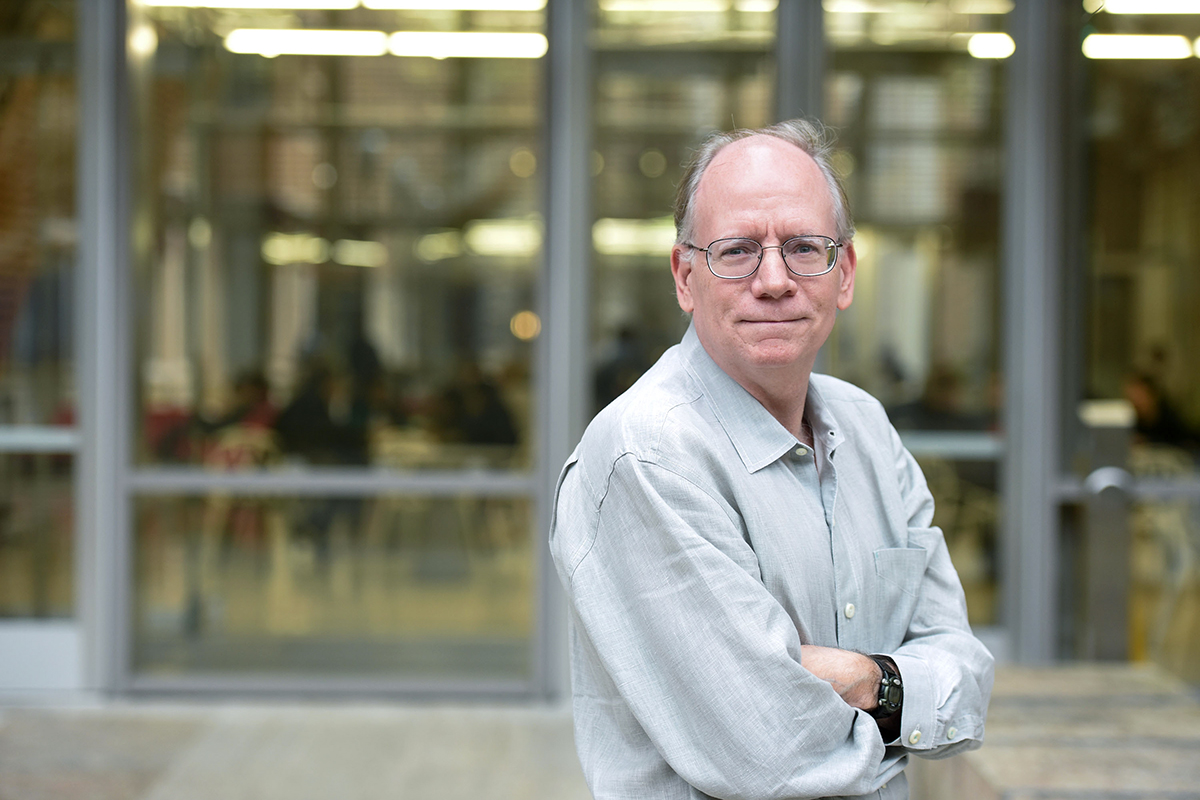
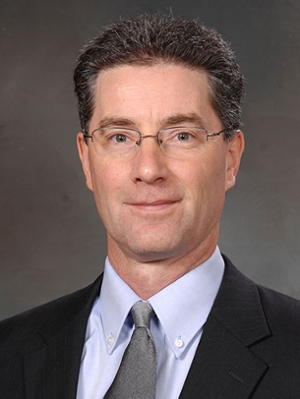
Raymond J. Mooney is a Professor in the Department of Computer Science at the University of Texas at Austin, where he has been a faculty member since 1987. He is the Director of the UT Artificial Intelligence Laboratory and affiliated with multiple research groups including the Machine Learning Research Group, UT Computational Linguistics Lab, and the UT Center for Computational Biology and Bioinformatics. He holds a B.S., M.S., and Ph.D. in Computer Science from the University of Illinois at Urbana-Champaign, where his thesis was supervised by Gerald DeJong. His research spans diverse areas in artificial intelligence, machine learning, and natural language processing: Natural Language Learning Connecting Language and Perception Statistical Relational Learning Information Extraction Transfer and Active Learning Abductive Reasoning Text Mining and Clustering Recommender Systems Knowledge-Base Refinement Recent publications highlight trends in grounded language processing, human-robot interaction, and multimodal reasoning. He has been recognized with prestigious fellowships including ACL (2014), ACM (2010), and AAAI (2005). Scientific awards: Fellow of the Association for Computational Linguistics (2014) Fellow of the Association for Computing Machinery (2010) Fellow of the American Association for Artificial Intelligence (2005) Classic Paper Award (2019) Best Paper Awards (2007, 2004, 1996) He teaches graduate courses like CS 371R: Information Retrieval and Web Search (Fall 2025) and CS 395T: Grounded Natural Language Processing (Spring 2025). His research labs include: UT Artificial Intelligence Laboratory Machine Learning Research Group UT Computational Linguistics Lab UT Center for Computational Biology and Bioinformatics
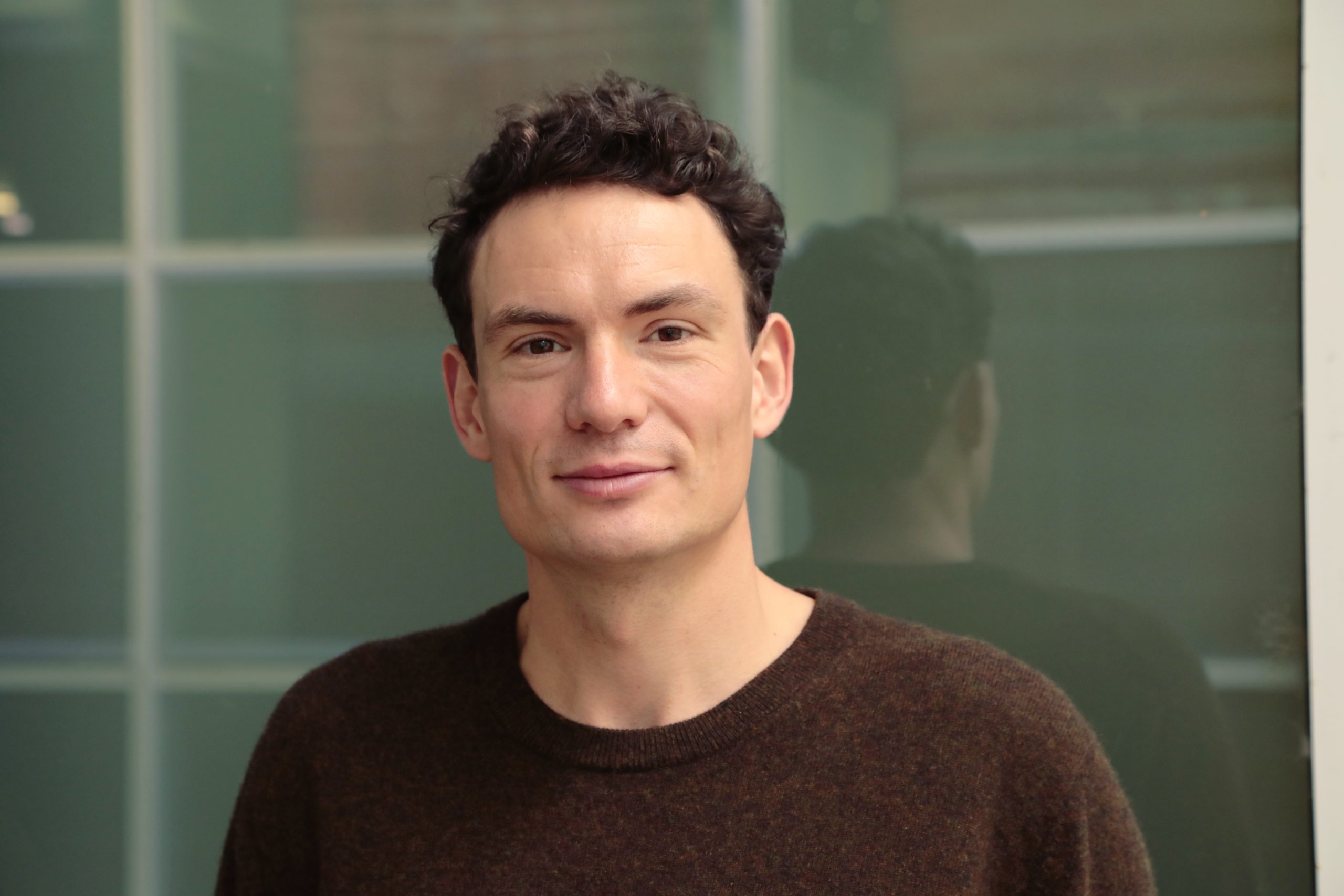
Dr. Tim Conrad is a researcher at the Zuse Institute Berlin in the Visual and data-centric computing department under the Mathematics of Complex Systems division. He leads projects at the intersection of computational biology, AI, and medical data analysis. Projects: Geometric Learning for Single-Cell RNA Velocity Modeling, MODAL MedLab, Sparse Compressed Sensing in -Omics Data, BIFOLD (Big Data and Machine Learning) Research Networks: Affiliated with MATH+ and MODAL Research Campus His research focuses on applying machine learning , network optimization , and sparse data analysis to biological and medical challenges including disease modeling, microbiome dynamics, and ECG classification. Recent work explores hybrid PDE-ODE epidemic models and federated learning in healthcare. 2023-2025 publications highlight trends in AI for biological networks , temporal community detection , and medical signal processing . He co-authored studies on SARS-CoV-2 simulations, proteomics feature selection, and multi-label ECG analysis. His 2004 doctoral thesis at Monash University laid foundations for later work in metabolic pathway analysis. Awarded as a Zuse Fellow , he contributes to open science initiatives like FAIR data sharing . Collaborations span institutions including Freie Universität Berlin and Charité in medical informatics and clinical applications.
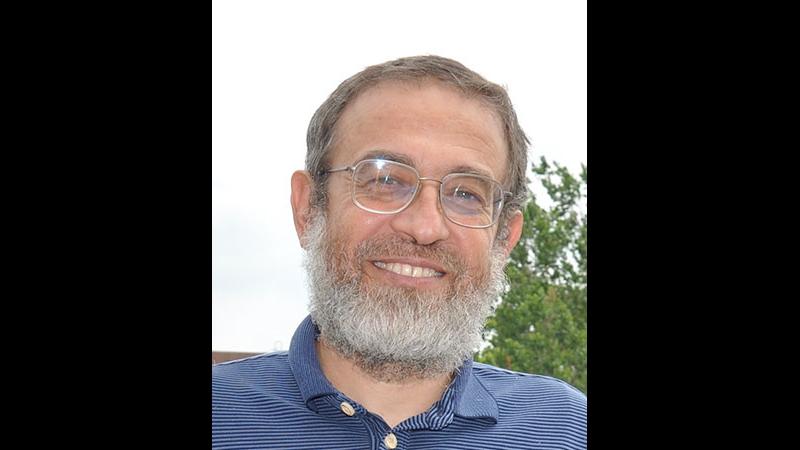
Jossy Sayir is an Affiliated Lecturer and Senior Research Associate in the Department of Engineering at the University of Cambridge . Holding a Dipl. El.-Ing. ETH and Dr. Techn.-Wiss. from ETH Zurich, Sayir’s work bridges Information Theory and Bioinformatics , focusing on DNA-based data storage and error correction systems. They serve as Director of Studies in Engineering at Newnham College and coordinate Engineering Admissions. Interdisciplinary collaboration with the European Bioinformatics Institute Research on DNA data storage efficiency and cost reduction Expertise in channel coding, source coding, and 5G algorithms Teaching spans mathematics and information engineering modules in Part I Engineering Tripos, with Part II contributions on information theory, error control coding, and cryptography. Sayir also oversees data compression labs and serves as Wine Committee Chair, reflecting diverse interests in food, coffee, wine, music , and jazz . Best Lecturer Award, 2017-18 Research Fellowships in coding theory Key research trends include DNA storage encoding , LDPC decoders , polar code optimization , and Sudoku-inspired constraint coding . Sayir’s work addresses both theoretical and practical challenges in high-density data storage and next-generation communication protocols .
Michael Hoechsmann is a Professor in the Faculty of Education at Lakehead University, serving in dual capacities for Graduate Studies and Research in Education and Undergraduate Education Programs at the Orillia campus. His work centers on critical media literacy, digital citizenship, and cultural studies within educational contexts, with a strong emphasis on democratic engagement and social justice. Education PhD in Education from the Ontario Institute for Studies in Education (OISE) at the University of Toronto (1998) Dr. Hoechsmann's research traverses Media Education , Digital Literacy , and Cultural Studies , with particular expertise in critical media literacy's role in democracy. His scholarship critically examines power dynamics in digital spaces, global media education frameworks, and intersections with social studies curriculum. He maintains active international collaborations, especially across Latin America, as reflected in multilingual publications addressing regional contexts. Analysis of his 2022-2024 publications reveals intense focus on contemporary crises—particularly conspiracy theories (anti-vaxxer movements, Capitol Riots), disinformation ecosystems, and digital citizenship under threat. His work consistently bridges theoretical critique with transformative pedagogical practice, emphasizing decolonization and radical democracy while addressing emerging challenges in online radicalization and algorithmic manipulation. Dr. Hoechsmann has contributed to award-winning publications including UNESCO-recognized educational volumes, though specific individual awards aren't documented. His recent co-edited handbook The Handbook of Media Education Research (2021) represents significant field contribution. Professional engagement includes participation in UNESCO initiatives on global citizenship and climate communication (October 2023), plus contributions to award-winning educational texts (October 2022). While graduate student advisement details aren't public, his editorial leadership in Transformative Practice in Critical Media Literacy (March 2024) demonstrates active mentorship in the field.
Elette Boyle is an Associate Professor at the Efi Arazi School of Computer Science, Reichman University (IDC Herzliya), Israel. She serves as the Director of the FACT Research Center and is a Senior Scientist at NTT Research. Additionally, she heads the RRIS International Program. Her academic career spans prestigious institutions including MIT, Technion, and Cornell. Dr. Boyle received her Ph.D. in Mathematics from MIT under the guidance of Shafi Goldwasser and Yael Tauman Kalai. Following her doctorate, she completed postdoctoral research at the Technion Israel Institute of Technology (2013-2015) hosted by Yuval Ishai, and a short-term postdoc at Cornell University (Summer 2013) hosted by Rafael Pass. She completed her undergraduate studies in mathematics at Caltech. Her research focuses on the theoretical foundations of computer security and cryptography, with particular expertise in secure multiparty computation, function secret sharing, distributed point functions, and memory checking protocols. Her work bridges theoretical computer science with practical cryptographic applications, developing protocols that balance security guarantees with computational efficiency. Dr. Boyle's research has significantly advanced the field of cryptography, particularly in understanding the fundamental limits and possibilities of secure computation protocols. Analysis of her recent publications reveals a strong focus on the theoretical foundations of secure computation, with particular emphasis on understanding computational and communication complexity limits. Her work spans multiple dimensions of cryptography including foundational protocols, complexity analysis, and practical implementations. A recurring theme in her research is developing efficient cryptographic primitives that minimize communication overhead while maintaining strong security guarantees. Her contributions to function secret sharing, distributed point functions, and pseudorandom correlation generators have been particularly influential in the field. Dr. Boyle has advised several graduate students including Pierre Meyer (Ph.D., co-advised with Geoffroy Couteau), Matan Hamilis (Ph.D.), and D'or Banon (MSc., co-advised with Ran Cohen). Her research has been supported by various grants enabling her to lead significant projects in cryptography and secure computation. As Director of the FACT Research Center, she leads a team focused on foundational aspects of computer science and cryptography. Her center collaborates with researchers worldwide and serves as a hub for advancing cryptographic research in Israel and internationally.
Benjamin Eysenbach is an Assistant Professor in the Department of Computer Science at Princeton University's School of Engineering and Applied Science since 2023. His research focuses on developing principled reinforcement learning (RL) algorithms that improve simplicity, scalability, and robustness in state-of-the-art systems, particularly through probabilistic inference techniques. Ph.D., Machine Learning, Carnegie Mellon University (2023) B.S., Mathematics, Massachusetts Institute of Technology Research interests center on reinforcement learning with emphasis on long-horizon reasoning, exploration strategies, and robustness. He explores intersections with probabilistic inference and self-supervised learning to enhance RL capabilities. Recent publications highlight trends in contrastive learning for goal-conditioned RL, temporal distance modeling , and hierarchical control . Key themes include reward-free learning, scalable architectures, and uncertainty quantification in decision-making systems. 2025: Junior Faculty Award for Excellence in Research and Teaching, Princeton School of Engineering and Applied Science Eysenbach's work bridges theoretical foundations with practical implementations in AI training frameworks, emphasizing performance optimization and safety mechanisms.
Dr. Todd D. Murphey is a Professor of Mechanical Engineering at Northwestern University's Robert R. McCormick School of Engineering and Applied Science. He serves as Director of Transformative Research and Director of the Master of Science in Robotics Program at Northwestern, leading initiatives in computational dynamics, control systems, and robotics. His work bridges engineering, neuroscience, and biomedical applications, with a focus on developing systems that interact effectively with humans and their environments. Dr. Murphey received his Ph.D. in Control and Dynamical Systems from the California Institute of Technology in 2002, with a thesis titled "Control of Multiple Model Systems." Prior to that, he earned a B.S. in Mathematics, summa cum laude, from the University of Arizona in 1997. Dr. Murphey's research centers on computational methods in dynamics and control, with applications spanning neuroscience, health science, robotics, and automation. His work in the Interactive & Emergent Autonomy Lab focuses on computational models of embedded control, biomechanical simulation, dynamic exploration, and hybrid control. The group develops mathematical approaches that lead to orders of magnitude improvement in computational efficiency for real-time implementation. Key application areas include assistive exoskeleton control, stabilization of energy networks, bio-inspired active sensing, entertainment robots, robotic exploration, and software-enabled stroke rehabilitation. Analysis of Dr. Murphey's recent publications reveals a strong emphasis on human-swarm interaction, algorithmic matter, and control of cyber-physical systems in uncertain environments. His work increasingly integrates information theory with physical systems, exploring how both autonomous and biological systems interact with environments to learn and improve behaviors. Recent trends show growing applications in rehabilitation technology, with particular focus on human-machine interaction in biomedical devices and embodied intelligence. Dr. Murphey has received numerous honors and awards for his contributions to robotics and engineering: Named Director of Transformative Research at Northwestern University (2025) Appointed IEEE Robotics and Automation Society Vice President of Publication Activities (2022) Co-recipient of Best Paper Award for IEEE Transactions on Robotics (2020) Appointed to Air Force Scientific Advisory Board (2019) Recipient of ABB Best Student Paper Award for CPL-SLAM research (2019) Cole-Higgins Award from Northwestern Engineering (2015) Dr. Murphey has supervised numerous graduate students including Taosha Fan, Giorgos Mamakoukas, and Ian Abraham, with research spanning robotic exploration using electrosense and mechanical contact, human-in-the-loop control, and shared control for rehabilitation devices. His lab has secured significant funding from the National Science Foundation, DARPA, and industry partners including Siemens and Ekso Bionics, supporting research in algorithmic matter, emergent behavior, and human-swarm collaboration. The Interactive & Emergent Autonomy Lab, led by Dr. Murphey, investigates how both autonomous systems and biological systems interact with their environments to learn and improve behaviors. Current projects include active learning and data-driven control, active perception in human-swarm collaboration, algorithmic matter and emergent computation, control for nonlinear and hybrid systems, cyber physical systems in uncertain environments, harmonious navigation in human crowds, information maximizing clinical diagnostics, reactive learning in underwater exploration, robot-assisted rehabilitation, and software-enabled biomedical devices. The lab collaborates with researchers across Northwestern and institutions including Georgia Tech, MIT, and industry partners.
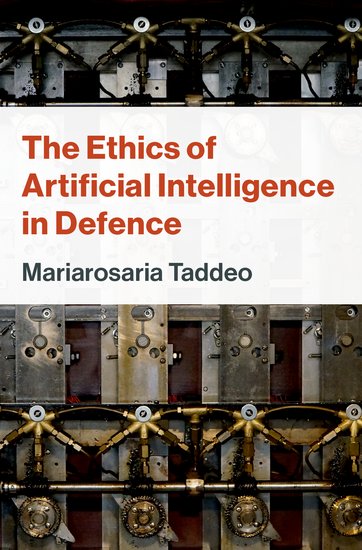
Mariarosaria Taddeo is Professor of Digital Ethics and Defence Technologies at the Oxford Internet Institute (University of Oxford) , where she also serves as DPhil Programme Director for Information, Communication and the Social Sciences. She is a Senior Research Fellow at the Alan Turing Institute and holds advisory roles at institutions including the Ministry of Defence (UK) Ethics Advisory Panel , the BRAID Programme , and the Leonardo Foundation . Education PhD (Doctor Europeus) in Philosophy from University of Padua Mariarosaria Taddeo’s research spans Digital Ethics, Philosophy of Technology, Cybersecurity Ethics, and AI Governance , with a focus on national defence applications. Her work addresses trust in AI , cyber conflict regulation , and ethical frameworks for autonomous weapons . She has published extensively in journals like Nature , Science , and Minds and Machines , including studies on data philanthropy , digital well-being , and quantum technology ethics . Scientific Awards 2010 Simon Award for Outstanding Research in Computing and Philosophy 2016 World Technology Award for Ethics 2018 InspiringFifty: Top 50 Italian women in technology ORBIT listings (2018, 2020) of top 100 women in AI Ethics 2020 Women’s Forum for Economy and Society: Outstanding Rising Talents ComputerWeekly Top 100 Influential Women in UK Technology (2020, 2023) Her projects include the UK MOD-funded AI Ethics Principles initiative, the NATO Cooperative Cyber Defence Centre of Excellence ethical guidance project, and contributions to the PETRAS IoT Research Hub . She advocates for ethical AI implementation in defence and digital governance, influencing EU policy through the CEPS Task Force on AI and Cybersecurity .
Mark Burris is the Herbert D. Kelleher Professor in the Department of Civil & Environmental Engineering at Texas A&M University's College of Engineering, where he also serves as Division Head of Transportation & Materials Engineering. He is additionally a Research Engineer with the Texas A&M Transportation Institute, demonstrating his dual commitment to academic research and practical transportation solutions. With a career spanning over two decades since joining Texas A&M in 2001, Burris has established himself as a leading expert in transportation economics and traveler behavior. Burris's research focuses on the intersection of transportation economics, behavioral psychology, and infrastructure management. His work primarily investigates traveler responses to pricing mechanisms, particularly value pricing and high-occupancy toll (HOT) lanes. He has pioneered research combining traditional transportation engineering with behavioral economics to understand seemingly irrational traveler choices, such as paying to use express lanes that are sometimes slower than toll-free alternatives. His research has significantly advanced the understanding of travel time value, reliability valuation, and how psychological factors influence transportation decisions. Analysis of Burris's recent publications reveals a strong trend toward integrating behavioral economics with transportation engineering, with increasing attention to equity considerations in road pricing, the impacts of emerging technologies like autonomous and connected vehicles, and innovative methods for measuring traveler responses. His work consistently addresses practical transportation challenges while advancing theoretical understanding of travel behavior. Burris has served in prominent leadership roles, including a six-year term as chair of TRB's transportation economics committee. He has advised numerous federal agencies, serving on NCHRP panels and participating in FHWA expert forums on road pricing. His expertise is widely recognized in both academic and professional transportation circles. As an educator, Burris has advised over 60 graduate students and numerous undergraduates, teaching core courses including CVEN 307 (Introduction to Transportation Engineering), CVEN 454 (Urban Planning for Engineers), and CVEN 632 (Transportation Engineering: Economics). His research portfolio includes substantial funding from FHWA, NCHRP, and various state transportation agencies, with recent projects focusing on behavioral economics applications to managed lanes, vehicle miles traveled fee equity, and the impact of emerging mobility technologies.
Hugo Subtil is a postdoctoral researcher at the Department of Political Science, Faculty of Arts and Social Sciences, University of Zurich, affiliated with the Chair of Comparative Politics in Political Institutions and European Politics. He is an active member of the University's Digital Society Initiative (DSI), particularly engaged with the DSI Community AI & Law and multiple other interdisciplinary communities including Cybersecurity, Digital Humanities, and Ethics. His academic background includes: Economics studies at École Polytechnique (France) PhD from École des Mines and École Polytechnique (France) Subtil's research program integrates Political Economy, Political Science, and Computational Social Science to investigate European political dynamics through quantitative text analysis. He specializes in extracting political ideologies from large-scale text corpora using machine learning algorithms and social media data, with dual research foci: (1) how institutional design shapes social norms and behaviors, and (2) longitudinal evolution of political ideologies. His methodological approach bridges traditional political science with cutting-edge computational techniques for analyzing legislative discourse and public communication. Analysis of his 12 publications (2020-2025) reveals a clear trajectory from historical economic analysis toward contemporary computational political science. Early work (2020-2021) examined Marxian economics and pandemic-era urban migration patterns, while recent research (2023-2025) increasingly focuses on European Parliament discourse, populism, and emotional rhetoric using advanced text mining techniques. This evolution demonstrates growing specialization in computational analysis of political communication within European institutions. No scientific awards or major honors are documented in the available information. While no formal advisees or grant funding details are specified, Subtil's collaborative work within the DSI framework suggests engagement with interdisciplinary research teams addressing digital society challenges. His position within the Chair of Comparative Politics indicates involvement in departmental research initiatives related to European governance. Subtil operates at the nexus of multiple research ecosystems: the Department of Political Science's European Politics research group, the university-wide Digital Society Initiative, and specialized DSI communities exploring AI-law intersections. His work contributes to the DSI's mission of addressing societal challenges through digitalization research, particularly in computational analysis of political discourse and institutional behavior.
Ali Ramezani-Kebrya is an Associate Professor with tenure in the Department of Informatics at the University of Oslo (UiO), where he leads research in machine learning theory. He holds dual Principal Investigator roles at the Norwegian Center for Knowledge-driven Machine Learning (Integreat) and SFI Visual Intelligence, and is an active member of the European Laboratory for Learning and Intelligent Systems (ELLIS) Society. His service includes Area Chair positions for NeurIPS and AISTATS, and Action Editor for Transactions on Machine Learning Research. His research focuses on theoretical foundations of deep learning with emphasis on understanding input data distribution encoding in neural network layers. Key themes include minimizing statistical risk under resource constraints, addressing distribution shifts in distributed settings, and developing practical tools for robust federated learning. Current applications span emotion recognition, marine data analysis, and neuroscience, reflecting his commitment to real-world machine learning challenges as evidenced by his FRIPRO-funded Machine Learning in Real World (MLReal) project. Recent publication trends reveal three dominant threads: (1) label/covariate shift mitigation in distributed systems through entropy regularization and density ratio estimation; (2) communication-efficient optimization via layer-wise quantization and adaptive compression techniques achieving 150% speedups; and (3) robustness guarantees against tailored attacks and distribution shifts. These works consistently bridge theoretical bounds with empirical validation across domains from GAN training to federated settings. Scientific recognition includes: FRIPRO Grant for Early Career Scientists (2025) for MLReal project SFI Visual Intelligence Spotlight Publication award (2023) for federated learning work He actively mentors 11 graduate students across Oslo and Tromsø universities, with recent PhD placements at Apple and NVIDIA. Current grant portfolio features the FRIPRO Early Career award and leadership roles in two major Norwegian research centers. His lab maintains strong industry collaborations through Vector Institute and EPFL, with recent hiring for PhD and postdoc positions in physics-informed machine learning.
Dr. Andreas Baur is a research associate at the Institute of Ethics and Technology (IZEW) , University of Tübingen, and a PhD candidate at the Amsterdam Institute for Social Science Research (AISSR) , University of Amsterdam. He serves as fellow at the Critical Infrastructure Lab Amsterdam and contributes to the DoingIPS communication team. Education: M.A. in Peace Research and International Politics, University of Tübingen B.A. in Political Science and Economics, University of Tübingen/Universidad de Guadalajara Research Focus: Interdisciplinary analysis of IT infrastructures' political implications, particularly cloud computing's role in power dynamics, digital sovereignty (including EU's Gaia-X initiative), technology ethics, and governance of socio-technical systems. His work bridges International Relations , Science and Technology Studies , and ICT Policy . Recent Research Trends: Examines cloud infrastructure politics through lenses of sovereignty claims, hybrid cloud architectures, and material manifestations of power in digital ecosystems. Publications explore European digital governance attempts, cloud imaginaries, and multi-cloud regulatory challenges. Academic Contributions: Co-editor of Feminist Data Protection special issue ( Internet Policy Review , 2021) Participant in EU Horizon 2020 HEIMDALL project Contributor to EU FP7 SECTOR initiative Member of BMBF-funded Privacy-Arena and digilog@bw projects Teaching & Outreach: Conducts seminars on security in modern information technologies and participates in public workshops regarding AI ethics, digital sovereignty, and cyber security challenges. Regularly contributes to public debates through media appearances and policy discussions.
Walid G. Aref is a Professor of Computer Science at Purdue University since Fall 1999. His research focuses on database systems, spatial and spatio-temporal data management, query processing, and indexing. He has led projects funded by NSF, NIH, and industry partners. Aref is a Fellow of the IEEE and has received awards including the NSF CAREER Award (2001) and VLDB’s Ten-Year Best Paper Award (2016). He serves as Editor-in-Chief of ACM Transactions on Spatial Algorithms and Systems and has authored numerous influential papers. Education: BSc/MSc from Alexandria University (Egypt), PhD from University of Maryland (1993). Research Interests: Extending database functionality for emerging applications like spatial, graph, and sensor databases. Notable contributions include the Chameleon project, AQWA system for big spatial data, and privacy-preserving Casper framework. Selected Projects: NSF-funded work on multi-predicate spatial queries, in-memory graph relational systems, and adaptive spatio-textual processing. Systems like Tornado (spatio-textual streams) and LocationSpark (distributed spatial data) exemplify his contributions. Awards: Multiple best paper awards, IEEE Fellow, and leadership roles in ACM SIGSPATIAL.
Miklos Z. Racz is an Assistant Professor at Northwestern University with a joint appointment in the Department of Computer Science and the Department of Statistics and Data Science. He is affiliated with the IDEAL Institute. Previously, he was an Assistant Professor at Princeton University (ORFE Department) and a postdoc at Microsoft Research. His research focuses on probability, statistics, computer science, and information theory, with emphasis on combinatorial statistics, discrete probability, and applied probability. Key interests include statistical inference on random discrete structures like random graphs, community detection, latent geometry inference, and DNA data storage. He has advised numerous PhD and undergraduate students. Education: PhD in Statistics (UC Berkeley, 2015), MS in Computer Science (UC Berkeley), MS in Mathematics (Budapest University of Technology and Economics). Research interests span random graph theory, network analysis, information cascades, and computational biology. He teaches courses like Mathematical Foundations of Computer Science and Probability for Statistical Inference. His work has been published in top venues like Annals of Applied Probability, NeurIPS, and IEEE journals. Notable contributions include breakthroughs in graph matching algorithms for stochastic block models, community recovery, and DNA synthesis optimization. His research has practical applications in data storage and network science.
Kevin Chenchuan Chang is a Professor in the Department of Computer Science at the University of Illinois at Urbana-Champaign (UIUC), affiliated with the FORWARD Data Lab and the Data and Information Systems Laboratories. His research focuses on bridging structured and unstructured data through natural language processing, data mining, machine learning, and information retrieval, with applications in web search, social media analytics, and knowledge acquisition. He co-founded Cazoodle and developed GrantForward.com, a funding discovery platform used by leading institutions globally. Education: Ph.D. in Electrical Engineering from Stanford University (2001), B.S. from National Taiwan University. Professional roles include service on program committees for SIGMOD, VLDB, KDD, and NeurIPS, as well as editorial roles for PVLDB, TKDE, and the Encyclopedia of Database Systems. His awards include the ICDE 10-Year Test of Time Award (2022), NSF CAREER Award (2002), and multiple UIUC teaching excellence recognitions. He teaches courses such as CS 411 (Database Systems), CS 598 KCC (Understanding LLMs), and CS 511 (Advanced Data Management). Research contributions span graph algorithms (e.g., Geom-GCN, SimRank), social network analysis (ROSE), and NLP (DEER, Open Relation Modeling). The FORWARD Lab emphasizes real-world impact through systems like GrantForward and tools for analyzing large-scale data.