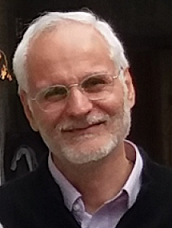
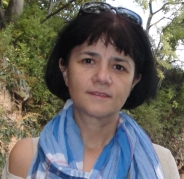
Ioannis Panageas is an Assistant Professor in Computer Science at UC Irvine's Donald Bren School, directing the GOALLab. His research develops theory for learning in multi-agent systems, game dynamics, and optimization. Funded by NSF and NRF, he focuses on last-iterate convergence guarantees in games, efficient equilibrium computation, and multi-agent reinforcement learning. Recent Work: Provides first exponential lower bounds for fictitious play in potential games (NeurIPS 2023), efficient Nash equilibrium computation methods (ICLR 2023), and semi-bandit learning dynamics with no-regret guarantees (ICML 2023). Teaching: Offers courses in Algorithmic Game Theory and Optimization for Machine Learning. Currently advising 3 PhD students and 2 MS students.
Emmanouel (Manos) Varvarigos is a Professor at the School of Electrical and Computer Engineering, National Technical University of Athens (NTUA), where he leads the High Speed Communication Networks Laboratory. He holds a Diploma from NTUA (1988) and an M.S./Ph.D. from MIT (1990/1992). Prior roles include Professorships at UC Santa Barbara (1992-1998) and Delft University (1998-1999), and leadership at the University of Patras (1999-2015). He has coordinated over 30 EU research projects, including H2020 initiatives like ORCHESTRA and FLEXGRID. His research focuses on optical networking, cloud computing, smart energy grids, and high-speed network protocols. He has published over 450 papers and serves on numerous conference committees. Awards include the NSF Research Initiation Award. His lab employs 5 postdocs and 10+ PhD students, addressing challenges in networking, data centers, and grid computing. Education: Ph.D., Electrical Engineering and Computer Science, MIT, 1992 M.S., Electrical Engineering and Computer Science, MIT, 1990 Diploma in Electrical and Computer Engineering, NTUA, 1988 Research Interests: Optical networking, high-speed network protocols, data center architectures, cloud computing, smart energy grids, wireless networks, and distributed systems. Grants & Projects: Coordinated 7 EU projects (e.g., FLEXGRID, ORCHESTRA) and participated in 35+ others. National projects include roles as Scientific Director of the Greek School Network and CTI’s Network Technologies Division. Labs & Teams: Directs the High Speed Communication Networks Lab (HSCNL), collaborating with global institutions on optical networks, edge cloud, and smart grids. The lab’s work includes EU-funded projects on 5G, data centers, and renewable energy integration.
Christos Makris is an Associate Professor in the Department of Computer Engineering and Informatics at the University of Patras, Greece. His academic career spans over two decades with significant contributions to computer science, particularly in data structures, algorithms, and information systems. He maintains active research collaborations and supervises graduate students in his areas of expertise. Dr. Makris's research spans several key areas in computer science with a strong focus on efficient data organization and processing. His work encompasses Data Structures , Information Retrieval , Data Mining , String Management and Processing Algorithms , Computational Geometry , Internet Technologies , Bioinformatics , and Multimedia Databases . His interdisciplinary approach bridges theoretical computer science with practical applications across various domains including web technologies, bioinformatics, and emergency response systems. Analysis of Dr. Makris's publication record reveals a consistent research trajectory focused on efficient algorithms for information management. His work demonstrates evolution from foundational data structure research in the 1990s to more applied work in web technologies, social media analysis, and machine learning applications in recent years. A notable pattern is his ability to adapt core algorithmic techniques to emerging application domains while maintaining theoretical rigor. Dr. Makris maintains an impressive scholarly record with over 3,000 citations, an h-index of 29, and an i10-index of 71 according to Google Scholar metrics. These indicators reflect the significant impact of his research within the computer science community. As an active faculty member, Dr. Makris maintains regular office hours on Tuesdays from 18:00-20:00 and Thursdays from 12:00-14:00. He is accessible via email at makri@ceid.upatras.gr or makri@upatras.gr for academic inquiries and student supervision.
Aris T. Pagourtzis is a Professor of Computer Science at the School of Electrical and Computer Engineering of the National Technical University of Athens (NTUA), where he also serves as the Head of the Computer Science Division. He is additionally a Lead Researcher at the Archimedes Research Center, Athena RC. His academic career includes positions at the University of Ioannina, the University of Liverpool, the ETH Zuerich, the University of Athens, and the Athens University of Economics and Business. Education: Diploma in Electrical Engineering (1989) and Ph.D. in Electrical and Computer Engineering (1999), both from the National Technical University of Athens Professor Pagourtzis's research spans multiple areas of theoretical computer science, with particular emphasis on computational complexity, graph algorithms, distributed algorithms, approximation algorithms, network algorithms, cryptography, and counting complexity. His work often bridges theoretical foundations with practical applications in network design, security protocols, and optimization problems. He has developed novel algorithms for problems ranging from community detection in networks to Byzantine fault-tolerant protocols and privacy-preserving voting systems. His recent publications show a continued focus on fundamental algorithmic problems while expanding into newer areas like temporal graph analysis, blockchain applications, and privacy-preserving technologies. There's a clear trend toward addressing real-world challenges through rigorous theoretical frameworks, particularly in distributed systems, secure computation, and optimization under constraints. Professor Pagourtzis has served on program and organizing committees for numerous theoretical computer science and cryptography conferences, co-chairing CIAC 2017 and FCT 2021. His research has received funding from diverse sources including US, UK, French, EU, and Greek national resources. He is actively involved in teaching both undergraduate and graduate courses at NTUA, including Algorithms and Complexity, Foundations of Computer Science, Computational Cryptography, and Network Algorithms and Complexity. He leads the Computation and Reasoning Laboratory (corelab) at NTUA, which focuses on theoretical computer science research.
Eleni Stai is an Assistant Professor at the School of Electrical and Computer Engineering, National Technical University of Athens (NTUA), affiliated with the Division of Communication, Electronic and Information Engineering. She holds advanced degrees in Electrical Engineering, Mathematics, and Applied Mathematical Sciences from NTUA and the National and Kapodistrian University of Athens. Her academic credentials include: Diploma in Electrical and Computer Engineering, NTUA (2009) B.Sc. in Mathematics, National and Kapodistrian University of Athens (2013) M.Sc. in Applied Mathematical Sciences, NTUA (2014) Ph.D. in Electrical Engineering, NTUA (2015) Dr. Stai's research integrates advanced optimization techniques with communications networks and energy systems. She develops stochastic and deterministic optimization frameworks for network resource allocation, data analytics on complex topologies, and smart-grid control applications. Her work bridges theoretical foundations with practical implementations in energy-harvesting networks, network slicing, and reinforcement learning for distributed systems. Analysis of her recent publications reveals dominant research thrusts in AI-driven network management (particularly O-RAN and network slicing), energy-integrated communications, and optimization of energy communities. A significant portion of her work addresses the convergence of 5G/6G networking with power systems, emphasizing real-time control and sustainability. Her scientific contributions have been recognized through prestigious awards: Chorafas Foundation Best Ph.D. Thesis award Thomaidis Foundation Best M.Sc. Thesis award Best Paper Award at ICT 2016 Best Presenter Award at IEEE ENERGYCON 2022 Dr. Stai serves on technical program committees for major international conferences and has co-authored the book "Evolutionary Dynamics of Complex Communications Networks". She teaches undergraduate courses in Queuing Systems, Computer Networks, and Social Network Analysis, reflecting her expertise in network theory and applications. Her research trajectory demonstrates continuous evolution from fundamental network optimization to AI-enhanced solutions for next-generation communication-energy systems. Her work builds upon her postdoctoral experience at EPFL (2016-2020) and ETH Zurich (2020-2023), where she developed advanced frameworks for communications networks and energy systems.
George Vouros is a Professor in the Department of Digital Systems at the University of Piraeus, Greece. He is the head of the AI Lab (http://ai-group.ds.unipi.gr/ai-group/) and director of the MSc in Artificial Intelligence program in collaboration with the Institute of Informatics and Telecommunications at NCSR Demokritos. He completed his BSc in Mathematics (1986) and PhD in Artificial Intelligence (1992) at the University of Athens. His research focuses on Expert Systems, Knowledge Management, Multi-Agent Systems, Reinforcement Learning, and Mobility Analytics. He has served as program chair and committee member for major conferences (AAMAS, AAAI, IJCAI) and editorial roles in journals like Discover Artificial Intelligence (Springer Nature) and Information (MDPI). He has supervised 13 PhD students and currently oversees 4. His work spans EU-funded projects and national initiatives, emphasizing scalable mobility analytics, air traffic management automation, and ontology engineering. He is also President of the Hellenic A.I. Society and actively promotes interdisciplinary applications of AI in healthcare, transportation, and environmental monitoring. Recent research highlights include deep reinforcement learning for tactical air traffic conflict resolution, LLM-integrated ontology engineering, and multimodal generative adversarial imitation learning for flight trajectory modeling. His work bridges theoretical advancements with real-world applications in critical infrastructure systems.
National and Kapodistrian University of AthensGreece
Stavrakakis Ioannis is a Professor at the Department of Informatics and Telecommunications, School of Science, University of Athens, where he has served since 2002. He previously held academic positions at Northeastern University (1994-1999) and University of Vermont (1988-1994). Ph.D., Electrical Engineering (1988), University of Virginia Diploma, Electrical Engineering (1983), Aristotle University of Thessaloniki His research focuses on network resource allocation algorithms , cooperative content dissemination , mobile ad hoc networks , and privacy-aware protocols . He leads the Advanced Networking Research (ANR) Group. Recent publications highlight trends in AI-driven network optimization , edge computing for VR , drone-assisted sensor networks , and privacy in vehicular systems . Key themes include game theory applications, energy-efficient protocols, and distributed learning frameworks. Contact: ioannis@di.uoa.gr
Evangelos Papapetrou is an Associate Professor in the Department of Computer Science and Engineering at the University of Ioannina, Greece. He holds a Diploma (1998) and PhD (2003) in Electrical and Computer Engineering from Aristotle University of Thessaloniki. His research focuses on wireless and mobile networks, including mobile ad-hoc networks, opportunistic networks, satellite networks, quality of service (QoS), and network coding. He has contributed to over 50 peer-reviewed publications and actively participates in EU/nationally funded projects. Research interests include: Wireless/Mobile Network Architectures Opportunistic and Social Mobile Networks Satellite Communication Systems Network Coding Techniques Routing Protocol Design His work emphasizes practical implementations of network protocols, with recent trends focusing on ultra-reliable low-latency communication, energy-efficient broadcasting, and protocol optimizations for 5G/IoT environments. He has developed simulation tools like Adyton for opportunistic networks and contributed to privacy-preserving routing solutions. Teaching responsibilities include courses on Computer Networks I and Wireless Networks (2024/25). He maintains active IEEE/ACM memberships and serves on conference review committees.
Symeon Papavassiliou is a Professor at the Department of Communications, Electronics and Information Systems, School of Electrical and Computer Engineering, National Technical University of Athens since 2004. Previously held positions include Associate Professor at New Jersey Institute of Technology (1996-2004) and senior researcher at AT&T Labs (1995-1999). He leads the Network Management and Optimal Design Laboratory and has served in various academic leadership roles, including Deputy Director since 2005. His research focuses on computer networks, wireless systems, and AI-driven network management with over 400 publications. Recognized with multiple best paper awards and NSF Career Award (2003). Education: B.A. Electrical Engineering, NTUA (1990) MSc & PhD Electrical Engineering, Polytechnic University, NY (1992/1996) Key Roles: Founder, New Jersey Center for Wireless Networks & Internet Security Member, EETT (National Telecommunications Commission) 2006-2009 Editorial Board Member, multiple journals Research Interests: Specializes in mobile/distributed systems optimization, wireless networks, complex systems, IoT, and AI applications in network management. Active in 6G architecture research, edge computing orchestration, and secure federated learning frameworks. Publications highlight innovations in network resource allocation, game theory models for positioning systems, and symbiotic computing continuum architectures. Recent work emphasizes resilience in critical infrastructure and smart grid optimization. Awards: Over 10 best paper awards from IEEE conferences, AT&T recognition, and Greek Excellence in Research Grant (2012). Grants: Funded by EU Framework Programs, NSF, ESA, and industry partners like Panasonic and Northrop Grumman. Leads interdisciplinary projects like HEROES (UAV-based emergency response) and NEPHELE (multi-cloud ecosystems). Active in digital twin development for cultural heritage preservation and SDG tracking via knowledge graphs.
Charalampos Karagiannidis is a Professor at the University of Thessaly (UTH) in the School of Educational Design (SED), Department of Information and Communication Technologies in Learning and Special Education. He has been affiliated with UTH since 2005 and previously worked at the University of the Aegean, ITI-CERTH, and ICS-FORTH. His academic roles include chairing the TeDISABLE Special Interest Group (SIG) of the IEEE TCLT. Education: BSc in Mathematics, Aristotle University of Thessaloniki MSc in Information Technology, University of London PhD in Electronics Engineering, University of Kent, UK Research Focus: Technology-Enhanced Learning (TEL) Accessibility & Universal Design Assistive Technologies for Special Needs Augmented Reality (AR) and Gamification in Education Educational Robotics for Inclusion Cognitive Assessment Technologies for Aging Populations Publications Trends: Recent work emphasizes ICT applications for autism spectrum disorders (ASD), inclusive robotics, MOOC design for K-12 education, and digital tools to address mild cognitive impairment. His research often bridges theoretical learning models with practical software development, particularly for marginalized populations. Awards & Recognition: No explicit awards listed, but active participation in 150+ publications, editorial roles, and international conference committees demonstrates peer recognition. Grants & Labs: Involved in projects like the TeDISABLE SIG and development of tools such as the Virtual Learning and Social Stories for Autism (VLSS) system . Collaborates on EU-funded initiatives addressing aging populations and cognitive assessment via digital tools.
Michail G. Lagoudakis is a Professor at the Department of Electronic and Computer Engineering, Technical University of Crete. His academic journey includes a Ph.D. in Computer Science from Duke University (2003), an M.Sc. from the University of Louisiana, Lafayette (1998), and a B.Sc. from the University of Patras (1995). He has held prestigious positions such as Postdoctoral Fellow at Georgia Institute of Technology's School of Industrial and Systems Engineering. Research Interests : Spanning machine learning (especially reinforcement learning), decision-making under uncertainty, robotics, algorithm selection, computational biology, and human-computer interaction. Publications : Over 15 recent works, including key contributions to robotics (auction-based multi-robot routing), medical diagnosis (urgent endoscopy prediction), and foundational machine learning (Least-Squares Policy Iteration, RCPI algorithm). Scientific Recognition : Recipient of Duke University's Outstanding Dissertation Award (2002-2003) and two Outstanding Teaching Assistant Awards. Professional Affiliations : Member of AAAI, IEEE, and ACM. Collaborations include industrial applications in disassembly planning, dynamic packet routing, and medical imaging. He advocates for computational biology and interdisciplinary research, aiming to integrate tools from mathematics and control theory into machine learning.
Evaggelia Pitoura is a Professor in the Department of Computer Engineering and Informatics at the University of Ioannina, Greece, and a Lead Researcher at the Archimedes Research Unit, ATHENA Research Center. Her work spans data management, distributed systems, and mobile computing, with a strong focus on database personalization and diversity. Her research interests include data diversity, contextual preferences, XML data management, peer-to-peer systems, and mobile computing . She has pioneered work in result diversification, preference-aware querying, and distributed data indexing, publishing extensively in top venues such as PVLDB, ICDE, SIGMOD, and IEEE TPDS. The recent publications highlight a consistent trend in personalized, context-aware database systems , with emphasis on improving user experience through intelligent query processing, recommendation, and efficient data organization in distributed environments. Best Paper Award, SIGMOD 1999 Best Paper Award, PVLDB 2013 She has advised several PhD students, including Georgia Koloniari, Kostas Stefanidis, Marina Drosou, and Konstantinos Semertzidis, who now hold positions in academia and industry. She teaches courses in Databases and Information Retrieval and actively contributes to the academic community through program committee roles in major conferences like ICDE, VLDB, SIGMOD, and WWW. She leads the Distributed Management of Data Group , fostering innovation in scalable and intelligent data systems.
John Paparrizos is an Assistant Professor of Computer Science and Engineering at The Ohio State University's College of Engineering, where he directs The DATUM Lab (Data Analytics, Understanding, Mining, and Management Lab). He maintains an adjunct affiliation with the School of Informatics at Aristotle University of Thessaloniki. His research spans databases, data science, machine learning, and artificial intelligence , with focus areas including: Time-series analysis (clustering, anomaly detection) Scalable data mining for structured/unstructured data Adaptive algorithms for resource-constrained environments Foundational technologies for data-intensive applications His work addresses real-world challenges across relational, time-series, multimedia, text, graph, web, and IoT data domains. Notable recognition includes: 2025 ACM SIGMOD Test-of-Time Award for k-Shape time-series clustering 2023 IEEE TCDE Rising Star Award ACM SIGMOD Research Highlight Award NetApp Faculty Award His research has been featured in New York Times (front page), Washington Post , Forbes , and adopted by Fortune 500 companies (Exelon, Nokia) and the European Space Agency. He actively serves on program committees for premier conferences including ACM SIGMOD, VLDB, IEEE ICDE, ACM SIGKDD, and NeurIPS. His open-source tools have exceeded 100,000 downloads and are integrated into academic curricula at Brown, Columbia, Purdue, and University of Chicago.
Alex Psomas is an Assistant Professor in the Department of Computer Science at Purdue University, directing research at the intersection of computer science and economics. His work develops algorithmic solutions for fair resource allocation, with applications to food rescue networks and social welfare systems. Funded by NSF and Google, his lab collaborates with non-profits including 412 Food Rescue. Research combines theoretical computer science with practical implementations, particularly in dynamic fair division and mechanism design. Current projects develop AI systems for equitable food distribution through the Indy Hunger Network partnership. Recent publications advance multi-agent resource allocation with work appearing in NeurIPS, EC, and ACM Transactions. The 2024 EAAMO paper received Best Student Paper honors for its impact on food insecurity interventions. Major Recognition: NSF CAREER Award for algorithmic fairness research Google AI for Social Good Award MEGA-ACE grant for blockchain applications The Purdue AI for Social Good Lab develops open-source tools deployed in food banks nationally. PhD students investigate approximation algorithms for combinatorial optimization problems.
Mara Nikolaidou is a Professor in the Department of Informatics and Telematics at Harokopio University of Athens since 2007 and has served as the university's Rector since 2016. She represents Greek universities in the European University Association (EUA) for 2023-2024. Her research focuses on distributed systems, system modeling, and responsible computing, with a strong emphasis on IoT, cloud/edge computing, and cyber-physical systems. She leads projects funded by national, EU, and international agencies, exploring topics like autonomous systems, ethical requirements in design, and human-in-the-loop systems. Her educational background includes roles as a computer engineer and IT consultant before academia. She is a member of IEEE (SMC Society and Systems Council) and participates in the Object Management Group (OMG) working groups for SysML and responsible computing. She organizes international conferences in software and systems engineering. Research interests span distributed systems, IoT, and ethical computing. Recent work investigates cost analysis in cloud markets, human-AI collaboration, and smart city technologies. Over 200 publications highlight her contributions to model-based systems engineering, including SysML extensions for cost/QoS analysis and frameworks for autonomous fog nodes. Grants and projects include EU-funded initiatives on smart farming, cloud brokerage, and organizational interoperability. Her lab focuses on autonomous systems and context-aware middleware. She advises on e-Government compliance frameworks and collaborates with industry partners on IoT management platforms.