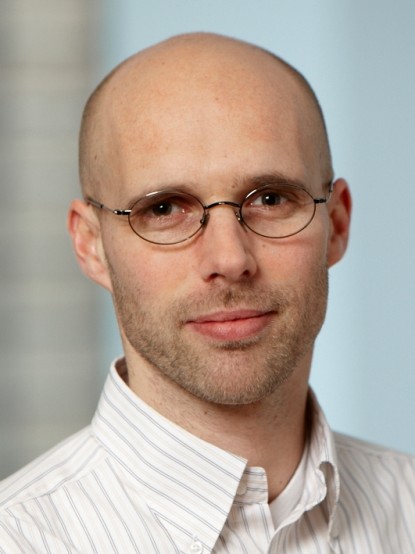
Dr. Mattia Andreoletti is a Lecturer at the Department of Health Sciences and Technology at ETH Zurich, working within the Professorship for Bioethics. His research spans philosophy of medicine and bioethics, with a focus on the ethical dimensions of AI in healthcare, dementia policy, drug regulation, and clinical reasoning. PhD from the European School of Molecular Medicine (SEMM), affiliated with the European Institute of Oncology (IEO, Milan) ORCID: 0000-0003-1880-0770 His work intersects with clinical ethics, particularly examining replicability in scientific research, evidential pluralism in drug regulation, and the ethical landscape of digital biomarkers. He contributes to courses such as Ethics in Drug Development and Ethics Workshop: The Impact of Digital Life on Society . The 15 most recent articles (2025-2023) highlight his engagement with AI ethics, dementia prevention, regulatory science, and clinical reasoning. Topics include ethical frameworks for digital biomarkers, evidential pluralism in drug approval, and philosophical foundations of rehabilitation sciences.
Jeff Linderoth is the Harvey D. Spangler Professor in the Department of Industrial and Systems Engineering at the University of Wisconsin-Madison. His research focuses on large-scale numerical optimization, mixed-integer nonlinear programming, and stochastic programming, with applications in energy systems, global routing, and industrial processes. Education: BS in General Engineering (highest honors) from University of Illinois at Urbana-Champaign, MS in Operations Research from Georgia Institute of Technology, PhD in Industrial Engineering from Georgia Institute of Technology. Linderoth's work addresses theoretical and applied challenges in optimization, including developing algorithms for mixed-integer programming, analyzing knapsack polytopes, and creating tools like the Minotaur optimization toolkit. His recent publications explore integer programming techniques for subspace clustering, complementarity constraints, and customized coverage instrumentation. Selected trends in his research include advancements in stochastic programming, orbital branching for symmetric integer programs, and congestion analysis in power systems. His group contributes to optimization software and data-driven libraries like MIPLIB. Scientific Award: Harvey D. Spangler Professor.
Lifeng Zhou is an Assistant Professor in the Department of Electrical and Computer Engineering at Drexel University, where he leads the Zhou Lab focused on advancing robustness and reliability in multi-robot systems through integration of foundation models. His research addresses real-world challenges in environmental monitoring, disaster response, and urban mobility. Education PhD, Electrical and Computer Engineering, Virginia Tech, 2020 MS, Control Science and Engineering, Shanghai Jiao Tong University, 2016 BS, Automation, Huazhong University of Science and Technology, 2013 Research Focus Dr. Zhou's work integrates robotics, algorithms, game theory and machine learning to develop secure and scalable autonomous systems. Primary research thrusts include: Resilient multi-robot coordination in adversarial environments Large language model integration for robotic decision-making Game-theoretic resource allocation strategies Risk-aware planning for autonomous vehicles Publication Trends Recent work (2024-2025) demonstrates strong focus on large language model applications in multi-robot systems, with 12/15 articles exploring LLM integration for flocking, scene segmentation, and decision-making. Additional emphasis includes adversarial robustness in target tracking (5 articles) and autonomous driving applications (4 articles). Awards and Recognition Best Paper Award, WACV 2025 LLVM-AD Workshop Professional Service Associate Editor, ICRA Conference Editorial Board Laboratory Focus The Zhou Lab develops foundational algorithms for secure and scalable multi-robot systems, with current projects spanning environmental monitoring drones, disaster response coordination, and autonomous vehicle perception systems.
Haipeng Shen is a Professor of Innovation and Information Management at HKU Business School, The University of Hong Kong, serving as Associate Dean (EMBA and IMBA) and holding the Patrick S C Poon Professorship in Analytics and Innovation. He chairs the Business Analytics and Innovation program and joined HKU in 2015 after previously holding a professorship at the University of North Carolina at Chapel Hill. His academic credentials include: PhD in Statistics, The Wharton School of Business, University of Pennsylvania, 2003 MA in Statistics, The Wharton School of Business, University of Pennsylvania, 2000 BS in Mathematics, School of Mathematical Sciences, Peking University, 1998 Professor Shen's research focuses on data-driven decision making under uncertainty, with expertise spanning big data analytics, business analytics, healthcare analytics, and service engineering. He develops advanced statistical and machine learning methodologies to solve complex operational problems in call centers, optimize stroke care protocols, and enhance financial risk modeling, emphasizing real-time applications in high-stakes environments. Analysis of his recent publications reveals a consistent interdisciplinary approach bridging operations research, statistics, and domain-specific knowledge. His work demonstrates strong methodological innovation in time-series forecasting for service systems, risk assessment frameworks for medical complications, and covariance structure analysis for financial markets, with direct translational impact on business operations and clinical outcomes. His scientific contributions have been recognized with prestigious awards including: Most Influential Publication Award from China Stroke Association (2018) Fellow of the American Statistical Association (2015) Best Advisor of the Year Award from Academy of Asian Business (2018) Elected Member of International Statistical Institute (2015) Cluster Chair for Big Data Analytics at INFORMS International (2015) As an academic leader, Professor Shen has secured significant research funding from organizations including The Xerox Foundation and National Institute on Drug Abuse. He serves as Associate Editor for Management Science, Journal of the American Statistical Association, and Technometrics, while mentoring graduate students in statistical methodology and applied analytics. His current initiatives position HKU Business School at the forefront of healthcare innovation through big data analytics, driving collaborations with medical institutions to transform stroke care and hospital operations in Asia.
Albert Atserias is a Professor in the Department of Computer Science at the Universitat Politècnica de Catalunya (UPC), affiliated with the Faculty of Informatics of Barcelona (FIB) and the ALBCOM research group (Algorithms, Bioinformatics, Complexity, and Formal Methods). He is also associated with the Institut de Matemàtiques de la UPC-BarcelonaTech. His research is central to theoretical computer science, with a strong emphasis on logic and complexity. Atserias's research interests span Computational Complexity, Logic in Computer Science, Finite Model Theory, Proof Complexity, and Constraint Satisfaction Problems . His work explores the fundamental limits of computation, the expressive power of logical languages over finite structures, and the complexity of proving mathematical statements. He investigates the algebraic and combinatorial properties of proof systems, the limits of efficient algorithms for constraint solving, and the theoretical foundations of databases. His research often bridges logic, algebra, and combinatorics to provide deep insights into computational phenomena. The trends in his recent publications show a sustained focus on the logical and algebraic underpinnings of computational problems. Key themes include the consistency and complexity of database queries , the power and limitations of proof systems (like resolution and sum-of-squares), and the expressive power of homomorphism counts in graph theory. His work on the hardness of automating resolution and the development of circular proof systems are particularly significant contributions to proof complexity. The 2024 PODS Best Paper Award for work on relational consistency underscores the impact and timeliness of his research. Among his notable scientific awards are the prestigious ICREA Acadèmia , the PODS 2024 Best Paper Award , the Premi Extraordinari de Doctorat (Extraordinary Doctoral Prize), and the Kleene Award for Best Student Paper . These accolades reflect both the excellence of his early work and his continued leadership in the field. Atserias has been a principal investigator on numerous competitive research projects, including funding from the European Research Council (ERC) and the Spanish Ministry of Science. He has advised doctoral students, such as Toni Hakoniemi, whose thesis on proof complexity he supervised. His extensive collaborative network includes leading researchers like Phokion Kolaitis, Anuj Dawar, and Victor Dalmau. He has also served on the scientific committees of major conferences, contributing to the academic community. He is a core member of the ALBCOM research group , a leading team at UPC focused on theoretical aspects of computer science, which provides a vibrant environment for research in algorithms, complexity, and formal methods. His work is also connected to the broader Institut de Matemàtiques de la UPC, fostering interdisciplinary collaboration between computer science and mathematics.
Dr. Parth Chansoria is a Lecturer at the Department of Health Sciences and Technology at ETH Zürich, where he leads biofabrication research within the Tissue Engineering and Biofabrication (TEB) group. His work focuses on structured light technology for regenerative medicine applications, including in vivo bioprinting and microgravity-based tissue engineering. He holds Ambizione and Spark grants from the Swiss National Science Foundation and has pioneered innovations in light-guided biofabrication, collagen-based resins, and anisotropic tissue design. Research domains include: Filamented light biofabrication for aligned tissues Minimally invasive light-based in vivo bioprinting Musculoskeletal tissue engineering in microgravity Isotonic collagen-based photocrosslinkable resins He has secured over 6 patents and received prestigious awards including the ISBF Early Career Investigator Award (2022), Marie Curie Actions Fellowship (2021), and SME 30 Under 30 recognition (2021). His interdisciplinary research bridges bioengineering, materials science, and clinical applications. Key collaborations include projects at UNC Chapel Hill (USA) and NC State (USA), where he developed biomimetic patches for dynamic organ pathologies and ultrasound-assisted cell patterning. His lab explores novel bioinks, hybrid fabrication techniques, and translational applications in regenerative medicine.
Yvain Bruned is a Professor of Mathematics at Université de Lorraine, Nancy, France, where he leads research in singular stochastic partial differential equations and related fields. He serves as Principal Investigator for the ERC Starting Grant LoRDeT (2023-2028), which focuses on advancing the theory of decorated trees and Hopf algebraic structures for solving singular SPDEs and dispersive PDEs at low regularity. Previously, he was a Lecturer at the University of Edinburgh (2019-2022) and completed postdoctoral work at Imperial College London and University of Warwick under Martin Hairer. His educational background includes: PhD in Mathematics (2012-2015), UPMC (Paris 6), on "Singular KPZ type equations" under Lorenzo Zambotti Master 2 in Probability and Statistics, ENS Cachan / Rennes 1, with honors Master 1 in Mathematics, ENS Cachan, with honors Bachelor in Mathematics and Computer Science, University of Rennes 1, with honors Student at ENS Cachan Brittany extension (2009-2013) Classes Préparatoires in Mathematics and Physics (2007-2009) Bruned's research centers on singular stochastic partial differential equations, with particular focus on Regularity Structures, renormalization theory, and their connections to Hopf algebras. His work bridges theoretical mathematics with applications in quantum field theory, wave turbulence, and numerical analysis. He has developed novel approaches using decorated trees to handle renormalization procedures for singular SPDEs and has extended these methods to dispersive PDEs with random initial data. His research program aims to establish existence and uniqueness results for quasilinear and dispersive SPDEs while developing algebraic tools through deformations of Hopf algebras. His extensive publication record demonstrates consistent contributions to the field of singular SPDEs, with a clear trajectory from foundational work on Regularity Structures to more recent applications in dispersive PDEs and numerical methods. The publications reveal a strong collaborative network with leading researchers in stochastic analysis, mathematical physics, and algebra. His work shows increasing sophistication in handling renormalization procedures through algebraic structures, with recent papers exploring connections between different mathematical frameworks. His major scientific recognition includes: ERC Starting Grant LoRDeT (2023-2028) Bruned actively supervises a large group of researchers, currently advising 4 PhD students and 2 postdoctoral researchers at Université de Lorraine, with several former PhD students having completed their degrees at the University of Edinburgh. His ERC grant has enabled him to organize multiple international workshops in Nancy, fostering collaboration between researchers in singular SPDEs, algebraic structures, and numerical analysis. The grant also supports the development of software platforms for decorated trees and their Hopf algebraic structures. As Principal Investigator of the ERC LoRDeT project, Bruned leads a vibrant research team based at the Elie Cartan Institute of Lorraine, which includes postdocs, PhD students, and visiting researchers. The team regularly organizes specialized workshops on topics including operads, symmetries for quantum field theory, and normal forms for singular dynamics, creating a dynamic research environment that bridges multiple mathematical disciplines.
Raouf Boutaba is a Professor at the University of Waterloo , serving as Director of the David R. Cheriton School of Computer Science since July 2020. He holds prestigious fellowships including FRSC , FIEEE , FIEC , and FCAE . 2024: Inaugural Rogers Chair in Network Automation 2024: Ontario Research Fund–Research Excellence (ORF–RE) $2M grant for next-gen mobile networks 2021: University Professor title, University of Waterloo Research Interests span network automation, resource management in wired/wireless networks, network function virtualization (NFV), software-defined networking (SDN), cloud computing, blockchain, future Internet architecture, and cybersecurity. His work focuses on zero-touch networks, 5G/B5G slicing, and AI-driven orchestration. Scientific Contributions include 15+ recent publications on topics like reinforcement learning for RAN slicing, encrypted traffic classification, quantum network optimization, and self-driving infrastructure. His projects 5G LEAP and 5G ELITE explore network isolation and Open RAN principles. 2024: IFIP/IEEE CNOM Test of Time Paper Award 2024: Graduate Supervision Excellence Award 2021: Kenneth C. Sevcik Outstanding Student Paper Award (advisor) Teaching includes co-developing the NSERC CREATE Network Softwarization program, offering courses like Network Softwarization: Principles and Foundations (Winter 2024) and Technologies and Enablers since 2018. He emphasizes hands-on training in SDN, NFV, Open RAN, and 5G. Students and Collaborations : Supervised PhD students such as Shihabur R. Chowdhury (2021), Nashid Shahriar (2020), and undergrad Leni Aniva (2022 Gov. Gen. Silver Medal ). His team includes researchers working on 5G, blockchain, and AI-driven network management. Professional Leadership : Organized Rogers TEP Workshops (2024-2025), delivered keynotes at IEEE Globecom, ColCom, and BalkanCom, and served on expert panels for AI orchestration and 5G cybersecurity at major symposia.
Tianxi Li is an Assistant Professor in the Department of Statistics at the University of Minnesota, Twin Cities, within the College of Science and Engineering. Their research integrates statistical methodology with applications in network science, data privacy, and biomedical data analysis. Their research interests lie at the intersection of statistics and network science, focusing on statistical modeling of complex networks , data privacy , network security , and biomedical applications such as neuroimaging and genomics. They develop adaptive and scalable methods for network estimation, community detection, and differential correlation analysis. The recent publications demonstrate a consistent focus on advancing statistical tools for network-structured data, with increasing applications in neuroscience and cancer genomics. The work spans theoretical development (e.g., network growth models) and practical applications (e.g., glioblastoma gene modules), reflecting a balance between methodology and real-world impact. Tianxi Li leads an active research program funded by the National Science Foundation, indicating recognition and support for their innovative work. Principal Investigator, Statistical tools for network security protection: from data privacy to threat detection , NSF (2024–2025) They advise graduate students in statistics and data science, though specific advisees are not listed. Their collaborative network includes researchers in biostatistics, computer science, and machine learning, as evidenced by co-authorships and interdisciplinary projects. Li's work contributes to the UN Sustainable Development Goals, particularly through advancements in data-driven solutions for secure and ethical data analysis.
Jussi Parikka is a Professor in Technological Culture and Aesthetics at the Winchester School of Art, University of Southampton (UK), and a Visiting Professor at FAMU, Academy of Performing Arts in Prague. He holds an adjunct professorship at the University of Turku, Finland. His research spans media archaeology, environmental humanities, and new materialism, focusing on intersections of technology, ecology, and culture. Education: PhD in Cultural History, University of Turku, 2007 Licentiate of Philosophy in Cultural History, University of Turku, 2004 Master of Arts in Cultural History, University of Turku, 2002 Research Interests: Parikka investigates media archaeology, environmental media studies, and digital culture. Key themes include the geology of media, operational images, and the ecological implications of technological systems. His work bridges art, science, and philosophy, addressing urgent issues like climate change and data infrastructures. Awards & Honors: 2021: Elected Member of Academia Europaea 2012: Anne Friedberg Award (SCMS) for Insect Media 2016: Choice Magazine Outstanding Academic Title ( A Geology of Media ) 2017: Moebius Fellowship (Kone Foundation) Grants & Projects: Parikka leads the Digital Aesthetics Research Centre (DARC) and collaborates on initiatives like the Critical Environmental Data project with the Helsinki Biennial. His work integrates art, science, and activism, addressing topics such as environmental sensing and climate justice. Labs/Teams: Director of the Digital Aesthetics Research Centre (DARC), Aarhus University, and co-curator of exhibitions like Weather Engines (Onassis Stegi, Athens).
Dr. Duc (David) Tran is a tenured Associate Professor in the Department of Computer Science at the University of Massachusetts at Boston. He directs the Network Computing Laboratory and focuses on network computing, with current projects in blockchain technology, decentralized learning, and edge computing. His research on peer-to-peer and decentralized networks has been widely cited. National Science Foundation funding recipient Best Theory Paper Award at IEEE MASS (2014) Best Paper Award at ICCCN (2008) IEEE Outstanding Graduate Student Award (2002) His research combines machine learning and decentralized techniques to optimize networked applications. Recent publications highlight blockchain for federated learning, edge computing, and automated market-making algorithms. He has also published cross-disciplinary work in medical imaging (2021) and obstetrics (2025). Dr. Tran actively contributes to academic service as an editor for Elsevier Ad Hoc Networks Journal, Springer Journal on Computational Social Networks, and Taylor Francis Journal on Parallel, Emergent, and Distributed Systems. He has served as TPC Chair for WiMAN, Guest-Editor for Pervasive Computing and Communications, and keynote speaker at WiMAN 2013.
Cameron Musco is an Assistant Professor in the Manning College of Information and Computer Sciences at the University of Massachusetts Amherst. He is affiliated with the Theory Group and conducts research at the intersection of theoretical computer science, numerical linear algebra, and machine learning. His work focuses on randomized algorithms, streaming, and distributed computation, with applications in data science. Education: PhD in Computer Science, MIT (2019) BS in Computer Science and Applied Mathematics, Yale University Research Interests: Musco's research emphasizes algorithm design for large-scale data analysis, including fast randomized methods for linear algebraic problems. He explores topics such as low-memory computation, matrix approximations, and graph algorithms, driven by applications in machine learning and distributed systems. Publications: His recent work spans advancements in hierarchical matrix approximation, graph-based nearest neighbor search, and fair resource allocation, reflecting expertise in both theoretical foundations and practical algorithmic innovation. Awards: He has received an NSF Career Award, Google Research Scholar Award, and recognition for anti-racism leadership. He actively reviews for top conferences in theoretical computer science and machine learning. Advising & Grants: Musco advises multiple PhD students and has grants from NSF and Google. His lab collaborates on projects like low-rank matrix approximation and causal discovery. Labs/Teams: He is part of the Theoretical Computer Science Group and the Center for Data Science at UMass.
Cecilia Boschini is a Researcher affiliated with the Institute for Theoretische Informatik (Theoretical Computer Science) at ETH Zürich. Her work focuses on advanced cryptographic systems, particularly in post-quantum cryptography, lattice-based protocols, and privacy-preserving technologies. She contributes to developing secure digital signature schemes, threshold cryptography, and efficient cryptographic algorithms resistant to quantum computing threats. Her research bridges theoretical foundations with practical applications in cybersecurity and distributed systems. Key contributions include innovations in fail-stop signatures, two-round threshold signatures (Ringtail), and lattice-based multi-signature systems (MuSig-L). Boschini’s work emphasizes balancing security with efficiency, often addressing challenges in mobile device security and memory encryption. She has published extensively in top-tier venues, with a focus on cryptographic protocols that enhance privacy and data integrity without compromising usability.
Prof. Heinz Koeppl is a Professor in the Department of Electrical Engineering and Information Technology at TU Darmstadt. His research focuses on self-organizing systems, systems biology, and control theory, with applications in synthetic biology, robotics, and stochastic processes. He explores interdisciplinary topics such as genetic circuit design, UAV swarm dynamics, and machine learning-driven modeling of biochemical systems. Key research areas include the development of deep learning frameworks for kinetic modeling, Bayesian optimization for riboswitch design, and mean field control theory for sparse networks. His work bridges theoretical foundations with practical engineering solutions, addressing challenges in molecular communication, gene regulation, and robotic swarm coordination. Publications from 2023–2025 highlight advancements in bio-inspired algorithms, swarm intelligence, and computational biology. Notable contributions include studies on RNA-based circuits, active matter dynamics, and optimization strategies for large-scale systems. His research emphasizes interdisciplinary collaboration, leveraging tools from electrical engineering, mathematics, and life sciences. No scientific awards are explicitly listed in the provided text. Advising and grants details are not available. Prof. Koeppl’s lab focuses on integrating systems biology approaches with engineering principles to solve complex problems in healthcare, environmental sustainability, and technological innovation.
Pierre Baldi is a Distinguished Professor of Computer Science and Director of the Institute for Genomics and Bioinformatics at the University of California, Irvine (UCI). He is affiliated with the Donald Bren School of Information and Computer Sciences. His research spans artificial intelligence, machine learning, bioinformatics, and communication networks, with notable projects in protein structure prediction, gene expression modeling, and neutrino physics collaborations like DUNE. Baldi’s work bridges theoretical foundations (e.g., neural network theory) and applied domains, including medical imaging and fusion technology. Key research interests include AI-driven biomedical applications, neural network theory, and interdisciplinary projects such as the DUNE neutrino experiment. His contributions to neural network engineering were recognized with the 2023 INNS Dennis Gabor Award, highlighting his paradigm-changing impact on computational neuroscience and physics. Baldi’s academic leadership includes directing UCI’s Institute for Genomics and Bioinformatics, fostering collaborations in computational biology and AI. His recent work explores AI’s role in healthcare, climate modeling (e.g., ClimSim-Online), and fundamental physics challenges like neutrino oscillation studies.