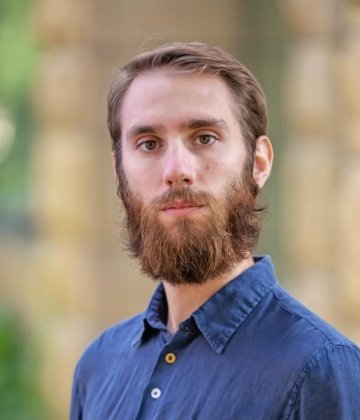
Martino Banchio is an Assistant Professor at the Department of Economics of Bocconi University and an Affiliate of the Innocenzo Gasparini Institute for Economic Research (IGIER). He concurrently serves as a part-time Research Scientist at Google Research. His work bridges microeconomic theory, market/ mechanism design, and computer science. His PhD thesis earned an honorable mention in the 2023 ACM SIGecom Doctoral Dissertation Award. Research interests focus on market design, industrial organization, and computer science applications in economics. Notable contributions include studies on credible auctions, AI-driven collusion, and dynamic pricing mechanisms. He frequently publishes in top venues like the ACM Conference on Economics and Computation (EC) and the ACM Web Conference (WWW). His awards include the Research Paper Competition at MIT Sloan Sports Analytics Conference 2020 and the Exemplary AI Track Paper Award. His research explores cutting-edge topics such as AI ethics in market design and algorithmic game theory, reflecting a strong interdisciplinary approach. No student advising records are explicitly listed. His work bridges academic theory and industry applications, as seen through collaborations with Google Research and affiliations with leading economic institutes.
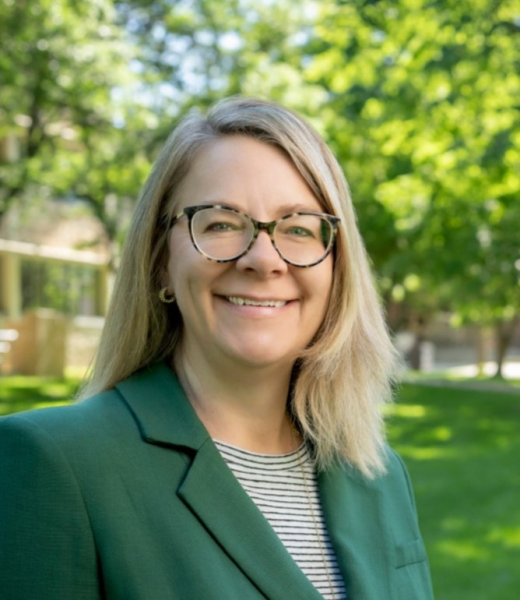
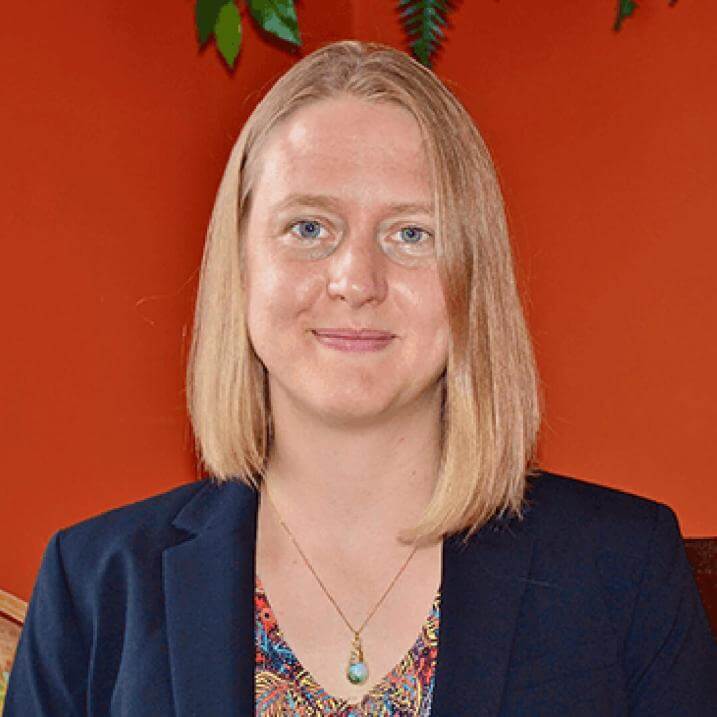
Kjerstin Thorson serves as the Dean of the College of Liberal Arts at Colorado State University, a position she assumed on August 1, 2024. Previously, she was the Brandt Endowed Professor of Political Communication and Associate Dean for Strategic Initiatives at Michigan State University’s College of Communication Arts & Sciences. An internationally recognized scholar, her research centers on digital platforms and their impact on civic life and culture. Her educational background includes: BA in English from Macalester College MA in Journalism from the University of Missouri-Columbia PhD in Mass Communication from the University of Wisconsin-Madison Thorson's research explores the intersection of digital media, political communication, and civic engagement. She investigates how social media platforms shape political participation, news consumption, and civic discourse, with a particular focus on young adults and historically marginalized communities. Her work addresses critical issues such as equity in digital civic infrastructure, the role of algorithms in political exposure, and the dynamics of online moderation and community governance. She examines both the empowering potentials and the challenges of digital media for democratic participation. Her recent publications (2023-2025) reveal a sustained investigation into platform governance, volunteer moderation, and the urban-rural divide in digital civic engagement. She also delves into Gen Z's civic behaviors, the spread of misinformation, and the evolving landscape of political learning on social media. Her work often employs mixed-methods approaches, combining digital trace data with surveys to understand complex media effects. Thorson has received notable recognition for her contributions: Michigan State University’s Teacher-Scholar Award 2022-2023 Fellow of the Big 10 Academic Alliance Leadership Program Her research has been supported by prestigious organizations including the National Science Foundation (NSF), the Social Science Research Council, and the Spencer Foundation. In her administrative roles, she has prioritized student success through initiatives like the Ignite the Future program, which supports first-generation and marginalized students, and has championed faculty development through the creation of a Center for Teaching and Learning. While specific advisees are not listed, her leadership in student success programs underscores her commitment to mentoring. Under her leadership at Michigan State University, the College of Communication Arts & Sciences expanded its revenue-generating partnerships, created a college-wide Center for Teaching and Learning, launched the Ignite the Future family of programs, and grew the esports initiative. She has also focused on improving culture and climate through promotion pathways for non-tenure track faculty, climate surveys, and community-building events.
Loris D'Antoni is an Associate Professor in the Department of Computer Science and Engineering at the University of California at San Diego (UCSD) . He is also a Visiting Academic at Amazon Web Services (AWS) . His research focuses on helping people write trustworthy software through techniques in program synthesis, formal verification, and machine learning robustness. Bachelor and Master in Computer Science from University of Torino (2008, 2010) PhD in Computer Science from University of Pennsylvania (2015) His research integrates programming languages , automata theory , and formal methods to ensure software reliability. Recent work explores semantics-guided synthesis and specification-aligned LLMs , with applications in network security, machine learning fairness, and automated code repair. Key trends in his publications include program synthesis , formal verification , and trustworthy AI systems . He has contributed to tools like AutomataTutor and SemGuS , a framework for customizable synthesis problems using constrained Horn clauses. Phillip R. Certain-Gary D. Sandefur Distinguished Faculty Award NSF CAREER Award Microsoft Research Faculty Fellowship Google and Facebook Faculty Awards Best Paper Award at ICDCN 2023 Distinguished Paper Award at SBES 2021 D'Antoni actively contributes to academic community service as a committee member in PLDI , OOPSLA , POPL , and CAV . He leads the Programming Systems Group at UCSD and collaborates with SemGuS research team on synthesis frameworks.
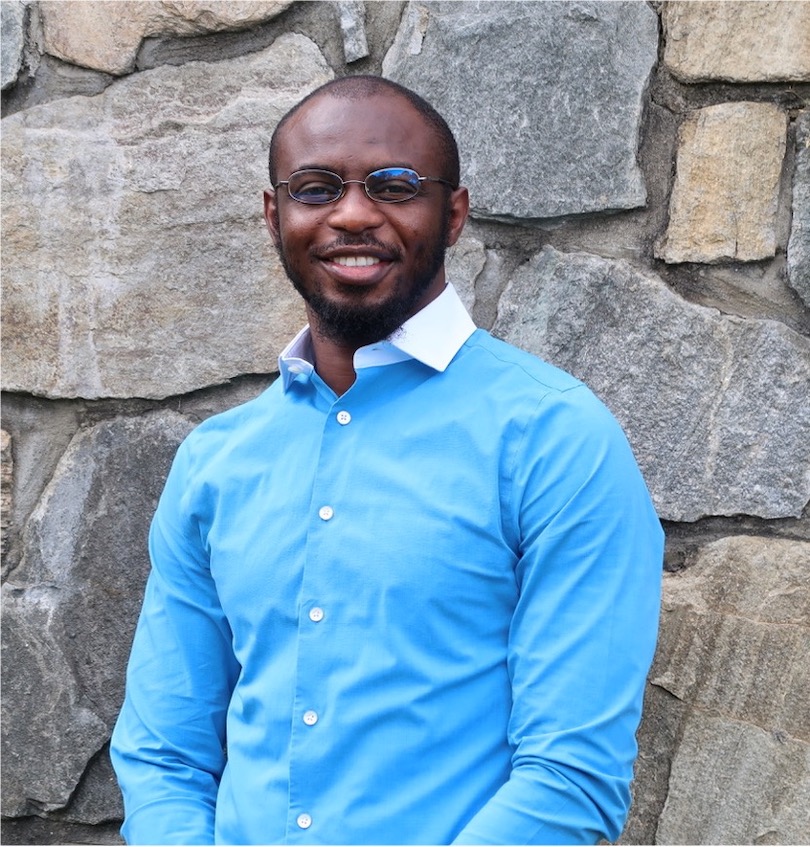
Habeeb Olufowobi is an Assistant Professor in the Department of Computer Science and Engineering at the University of Texas at Arlington (UTA), where he leads the Cyber-Physical System Security Lab. He holds a PhD in Computer Science from Howard University (2019) and previously served as a Lecturer at Howard before joining UTA in 2020. His research is centered on the security and trustworthiness of embedded and distributed systems, particularly in the domains of autonomous vehicles, IoT, and healthcare AI. He investigates cybersecurity challenges at the hardware-software interface in real-time systems and develops AI/ML models that are transparent, explainable, and equitable. His interdisciplinary work integrates principles from cybersecurity, real-time systems, and machine learning. The recent publications reflect a strong trend in securing cyber-physical systems using advanced AI techniques, with emphasis on intrusion detection, secure communication (e.g., named data networking), and robustness of autonomous systems. His work frequently appears in top-tier venues such as IEEE Transactions, VehicleSec, and ICMLA. Project Management Professional (PMP), PMI (2012–Present) Member, Institute of Electrical and Electronics Engineers (IEEE) (2020–Present) Habeeb has secured significant research funding, including an NIH grant on ethical AI for Chagas disease prediction and an AIM-AHEAD grant focused on health equity. He mentors several graduate students, including Paul Agbaje and Afia Anjum, who have received awards and internships at prestigious institutions like Los Alamos National Laboratory. He teaches courses in cloud computing, embedded systems, and information security, and serves as a faculty advisor for the National Society of Black Engineers (NSBE) at UTA. His lab, the Cyber-Physical System Security Lab, focuses on developing scalable and reliable security solutions for critical infrastructure, with growing emphasis on healthcare applications and fairness in algorithmic decision-making.
Bruna Damiana Heinsfeld serves as Assistant Professor of Learning Technologies within the Department of Curriculum & Instruction at the University of Minnesota's College of Education and Human Development. Her research critically examines the intersections of technology, society, and education through the lens of Critical Studies of Education and Technology (CSET), with emphasis on power dynamics and social justice implications. Her academic credentials include: Ph.D. in Interdisciplinary Learning and Teaching (Learning Design and Technologies concentration) from UTSA M.A. in Education (Digital Languages, Media and Education concentration) from PUC-Rio, Brazil Multiple Postgraduate Certificates from Brazilian institutions: Media Discourse Analysis, Ontology and Epistemology, Philosophy/Sociology/Social Sciences, and Distance Learning Management B.A. in English Language and Literature from UERJ, Brazil Dr. Heinsfeld's research program centers on critical discourse analysis of educational technology narratives across corporate, policy, and educational contexts. She investigates how technological discourses are constructed and operationalized, particularly regarding digital equity, participatory exclusion, and the sociopolitical dimensions of technology adoption. Her methodological approach combines Critical Discourse Analysis (CDA) with critical pedagogy to unpack ideological, cultural, and economic factors shaping educational technology implementations. She examines epistemological foundations of technological beliefs and challenges neoliberal narratives in EdTech through rigorous deconstruction of policy documents and marketing materials. Analysis of her recent publications (2019-2023) reveals consistent focus on corporate influence in educational technology, with particular attention to Google and Microsoft's marketing narratives, pandemic-era remote learning disparities, and Latinx student experiences. Her work demonstrates how technological solutions often reinforce existing inequalities through participatory exclusion mechanisms, while her policy analyses expose contradictions between equity rhetoric and actual implementation. Recurring methodological threads include discourse analysis of educational landscape reports and critical examination of public policy frameworks. No scientific awards were documented in the provided materials. As an advisor, Dr. Heinsfeld cultivates a supportive environment grounded in social justice principles, emphasizing critical consciousness development and student autonomy. Her advising philosophy centers on accessible feedback, interdisciplinary exploration, and preparation for meaningful societal engagement. She teaches foundational courses including CI 4311W Technology and Ethics in Society (examining algorithmic bias, privacy concerns, and AI ethics) and CI 8147 Critical Discourse Analysis in Educational Research (focusing on language-power dynamics in educational contexts). While specific research laboratories aren't detailed, her collaborative work spans international contexts with Brazilian institutions and U.S. colleagues, particularly evident in joint publications with researchers like V. Marone and M. Pischetola. Her research trajectory indicates ongoing critical engagement with emerging technologies like AI in education policy, as evidenced by upcoming 2025 conference presentations.
Juan Carlos De Martin is a Full Professor of Computer Engineering at the Polytechnic of Turin, where he is also co-founder and co-director of the Nexa Center for Internet & Society. He holds a Faculty Associate position at the Berkman Klein Center for Internet & Society at Harvard University and is a member of the Scientific Council of the Treccani Institute and the Steering Committee of Biennale Democracy. He previously served as Vice Rector for Culture and Communication at the Polytechnic of Turin (2018–2023) and as president of its libraries (2007–2015). His research centers on the societal implications of digital technologies, with a strong emphasis on algorithmic and data justice, digital power, and the democratic challenges posed by modern technology. He advocates for a more democratic and ethical technological future, particularly critiquing the dominance of smartphones and promoting digital sovereignty. His recent publications reflect a clear trend toward ethical AI, data protection, and the social impact of algorithms. He has published on gender bias in language models, GDPR compliance tools, and non-discrimination audits in software, demonstrating a sustained commitment to fairness, transparency, and accountability in digital systems. Best Student Paper Award IEEE ISCC 2011 Best Student Paper Award IEEE ICME 2005 Fellow at Harvard University (Berkman Klein Center) (2011–2015, 2016–2024) Faculty Associate at Collège d'études mondos, France (2016) De Martin has advised PhD students like Marco Rondina on Responsible AI and has led numerous EU-funded research projects such as COMMUNIA and DECODE. He has also played a key role in public policy, serving on ministerial working groups on AI and online hate. He is the founder of the Biennale Tecnologia and has authored influential books on the future of universities and technology, all published under Creative Commons licenses. He leads the Nexa Center for Internet & Society, a multidisciplinary research group focused on the legal, economic, and social aspects of the Internet. The center fosters collaboration between computer scientists, legal scholars, and social scientists to address pressing digital challenges.
Przemyslaw Grabowicz is an Assistant Professor of Computer Science at University College Dublin and an Adjunct Professor at the University of Massachusetts Amherst. He leads the SIMS (Socially Intelligent Media and Systems) Lab and the EQUATE initiative, and is actively involved in the Knowledge Discovery Lab (KDL). His work bridges computer science, social science, and public policy, focusing on responsible AI and digital society. Research Interests: Fair and Explainable Machine Learning Computational Social Science Social Media and Network Science Public Opinion Modeling Algorithmic Bias and Discrimination Prevention Open-World Learning His research develops statistical and machine learning methods to understand and augment public opinion in digital environments, ensuring fairness, transparency, and societal benefit. He emphasizes legal compliance and ethical design in AI systems. Recent Research Trends: His recent publications focus on social media polls, political bias, misinformation, and fairness in machine learning. He investigates how algorithmic systems shape public discourse, especially during elections and global crises, and develops methods to detect and mitigate bias in data and models. Scientific Awards and Recognition: Best Paper Honorable Mention, ICWSM’25 WICI Data Challenge Main Prize (2013) Arnold O. Beckman Research Award Multiple UMass Amherst Interdisciplinary Research Grants Volkswagen Foundation Grants (over €900k total) Advising and Grants: Dr. Grabowicz supervises several PhD students in the SIMS and KDL labs and collaborates with MS students. He has secured significant funding from the Volkswagen Foundation, UMass Amherst, and the University of Illinois, supporting research on political misinformation, media bias, and global agenda setting. He is currently recruiting a postdoc at UCD. Labs and Initiatives: He heads the SIMS Lab and the EQUATE initiative, and contributes to the KDL. His project socialpolls.org explores public opinion through social media, and he maintains an active presence through the Uncommon Good blog on responsible AI.
Yoshua Bengio is a Full Professor at the Université de Montréal, affiliated with the Department of Computer Science and Operations Research at the Faculty of Arts and Sciences. He is a pioneer of deep learning and a leading figure in AI safety. He co-founded Mila – Quebec Institute of Artificial Intelligence and serves as its scientific director. His work focuses on advancing AI technology while addressing ethical and safety challenges, including AI governance and catastrophic risk mitigation. Education: Ph.D. in Computer Science from McGill University (1991), postdoctoral studies at MIT. Research interests include deep learning, causal inference, AI ethics, and responsible AI development. He contributed to the Montreal Declaration for Responsible AI and leads the International Scientific Report on AI Safety. Recent articles emphasize AI safety frameworks, governance, and technical advancements in machine learning. Awards include the Turing Award (2018), Killam Prize (2019), and recognition as TIME's Most Influential Person (2024). He holds prestigious fellowships and is a member of the UN Scientific Advisory Board for Breakthrough Science and Technology. Affiliations include Mila, IVADO (as founding scientific director), and CIFAR programs. His work bridges academia, industry, and policy to ensure AI benefits humanity while minimizing existential risks.
Prof. Dr. Julius Schöning is a Professor at the Faculty of Engineering and Computer Science , Osnabrück University of Applied Sciences. His research focuses on Artificial Intelligence , Human-Computer Interaction , and Computer Vision within agricultural contexts. 2019–Present: Professor, Hochschule Osnabrück 2018–2019: System Architect, ZF Friedrichshafen AG 2014–2018: Researcher, University of Osnabrück 2009–2013: Project Lead/System Engineer, CLAAS Harsewinkel Education: M.Sc. in Intelligent Embedded Microsystems (Freiburg), B.Eng. in Mechatronics (DHBW Stuttgart) His research spans smart agriculture , quantum NLP , and explainable AI systems , with recent work on vibrotactile warning systems, AI compliance frameworks, and hybrid dataset applications in farming. Publications emphasize interdisciplinary approaches bridging technology and agricultural practice . Scientific honors include: DAAD Stipendium for conference participation Best Paper Award (2018) IEEE GHTC Student Paper Contest Winner (2016) Sonderpreis für gute Lehre (2017) Finalist/Falling Walls Lab (2015)
Ingrid L. Nelson is an Associate Professor at the University of Vermont in the Department of Geography and Geosciences . She specializes in feminist political ecology , digital geographies , and critical development studies , focusing on how digital technologies mediate environmental expertise and sustainability projects. Current research group: Feminist Digital Natures Past projects: Campus Green and Gold (Vermont campus sustainability, 2014-2020) Key fieldwork: Miombo woodlands (Mozambique) Her teaching explores environmental justice , gender-space relations , and critical digital analysis through courses like Gender, Space and Environment and Natures, Places and the Politics of Truth . She emphasizes collaborative learning, autoethnography, and digital methods. Research interests include more-than-human politics , embodied environmental subjectivity , and critical decolonial theory applied across diverse sites: Vietnamese hostess bars, Newfoundland science labs, and Vermont campuses.
Professor Louise Amoore holds a faculty position at Durham University's Department of Geography, where she serves as Professor of Political Geography and Deputy Head of Department. Her work explores intersections of geopolitics, technology, and security, with a focus on algorithmic governance and data-driven practices. Co-editor of Progress in Human Geography Appointed to UK ethics body on biometric technologies Recipient of RCUK Global Uncertainties leadership fellowship Her research examines how data and algorithms reshape security paradigms, democracy, and societal norms. Recent projects analyze generative AI, cloud computing, and machine learning's political implications. She has secured funding from Leverhulme Trust, ESRC, EPSRC, AHRC, and NWO. Key article trends reveal expertise in algorithmic sovereignty (2024), border governance (2024), predictive security models (2023), data reuse ethics (2022), and post-9/11 surveillance practices (2021). Her work critically interrogates machine learning's epistemological foundations (2019) and data sovereignty implications (2018). RCUK Global Uncertainties leadership fellowship (2012-2015) Leverhulme Trust funding ESRC, EPSRC, AHRC, NWO grants Current PhD supervisees include Anna Okada and Charlotte Lock. She co-developed the Algorithmic Life book (2015) and serves as editor for Progress in Human Geography , maintaining active research collaborations in Europe.
Martin Huber is Professor of Applied Econometrics and Policy Evaluation at the University of Fribourg, Switzerland, within the Faculty of Management, Economics and Social Sciences, Department of Economics. He leads the Chair of Applied Econometrics and maintains an active research profile with numerous publications in top economics and statistics journals. His work bridges theoretical econometrics with practical policy applications across multiple domains including labor, health, and education economics. Professor Huber earned his Ph.D. in Economics and Finance in 2010 and served as Assistant Professor at the University of St. Gallen until 2014. He has conducted research stays at Harvard University (2011/2012) and the University of Sydney (2014 and 2019), establishing an international research network. His academic affiliations include the Committee for Econometrics of the Verein für Socialpolitik, Global Labor Organization, Soda Labs (Monash Business School), and Centre for European Economic Research (ZEW) Mannheim. Huber's research focuses on data-based causal analysis , machine learning applications in economics , and policy evaluation methods . He specializes in developing and applying statistical and econometric methods for measuring causal effects, with particular emphasis on semi- and nonparametric microeconometrics. His work spans labor economics (gender occupational segregation, maternal labor supply), health economics, education policy, and competition policy (bid-rigging cartels detection). His recent publications (2023-2025) demonstrate a clear trajectory toward integrating machine learning techniques with traditional econometric methods for causal inference. This includes developing frameworks for causal discovery, improving difference-in-differences methods with machine learning, and creating novel approaches for detecting collusion in markets. His 2023 book "Causal Analysis: Impact Evaluation and Causal Machine Learning with Applications in R" (MIT Press) has become a key reference in the field. As an active researcher, Professor Huber directs several research projects including experimental evaluations of gender occupational segregation in the Swiss apprenticeship market. His work combines theoretical rigor with practical policy relevance, often employing experimental and quasi-experimental methods to address questions of causal mechanisms in social and economic phenomena. Through his Chair of Applied Econometrics, Huber supervises Ph.D. students and maintains an active research group focused on advancing causal inference methodologies. His work has significant implications for evidence-based policymaking across multiple sectors, particularly in evaluating the effectiveness of social programs and economic policies.
Dr. Krishnendu Guha is an Assistant Professor and CONNECT Funded Investigator at the School of Computer Science and Information Technology, University College Cork. His research bridges embedded systems, cybersecurity, and quantum-safe hardware design with AI and bio-inspired strategies. PhD: University of Calcutta (Department of Science and Technology, Government of India) Postdoctoral: University of Florida Past Roles: Research Fellow at Intel India, Visiting Scientist at Indian Statistical Institute, Temporary Assistant Professor at NIT Jamshedpur His research focuses on embedded systems security , real-time security mechanisms , and quantum-safe hardware . He integrates AI (e.g., neural networks) and bio-inspired strategies (e.g., gecko crypsis behavior) into security frameworks for FPGAs and edge platforms. Recent publications highlight trends in blockchain for supply chains , quantum machine learning , secure FPGA architectures , and distributed AI systems . His work addresses energy efficiency, fault detection, and decentralized security in hardware. As a CONNECT Centre member, Dr. Guha contributes to advanced research in reconfigurable systems and cybersecurity. Grants and collaborations span quantum-safe design, cloud FPGA security, and hardware trojan mitigation.
Oskari Ville Pakari is a Lecturer at the School of Basic Sciences, École polytechnique fédérale de Lausanne (EPFL), affiliated with both the Institute of Physics (IPHYS) and the Swiss Plasma Center (SPH-ENS). He contributes to teaching and research, particularly in reactor physics and radiation detection. His research focuses on nuclear reactor diagnostics , gamma noise analysis , and neutron spectroscopy . He actively develops mixed reality visualization tools for radiation detection data and participates in the European CORTEX project for reactor monitoring. Selected publications highlight his work in gamma-ray imaging , neutron noise simulations , and detector system validation using advanced statistical methods like bootstrapping and Welch's technique. Teaching activities include courses on Radiation biology, protection, and applications Radiation and reactor experiments He advises PhD student Saliba Michel and collaborates with international institutions such as CEA, KIT, and LRS (Laboratory of Reactor Physics and Systems Behaviour) at EPFL.
John Z. Ayanian serves as the Alice Hamilton Distinguished University Professor of Medicine and Healthcare Policy at the University of Michigan, holding joint appointments as Professor of Internal Medicine in the Medical School, Professor of Health Management and Policy in the School of Public Health, and Professor of Public Policy in the Gerald R Ford School of Public Policy. As inaugural Director of the Institute for Healthcare Policy and Innovation (IHPI), he leads a consortium of 700 faculty members across 15 schools and maintains clinical practice as a general internist at Michigan Medicine. His academic foundation includes a Bachelor of Arts in history and political science from Duke University (1982), medical degree from Harvard Medical School (1987), and master's in public policy from Harvard Kennedy School (1987), followed by residency and fellowship at Brigham and Women’s Hospital and post-doctoral training in health services research at Harvard School of Public Health. Dr. Ayanian's research program investigates health equity, access to care, and quality of care with particular attention to social determinants including race/ethnicity, gender, socioeconomic status, and insurance coverage. His work critically examines Medicaid expansion impacts, Medicare Advantage disparities, and policy responses to health inequities, often utilizing large-scale claims databases and cross-institutional collaborations. Current projects include the federally-authorized evaluation of Michigan's Medicaid expansion program serving over 700,000 adults. Analysis of his 15 most recent publications (2025) reveals three dominant research thrusts: (1) Medicare Advantage vs Traditional Medicare comparisons across diverse clinical conditions, (2) Medicaid policy evaluation including unwinding impacts and expansion effects, and (3) innovative measurement of health equity through new indices and AI applications. His work consistently emphasizes methodological rigor in health services research while maintaining strong policy relevance. His scientific honors include: Election to the National Academy of Medicine Master status in the American College of Physicians John Eisenberg National Award for Career Achievement in Research Distinguished Investigator Award from AcademyHealth Election to Alpha Omega Alpha and Association of American Physicians Dr. Ayanian leads the federally-funded Healthy Michigan Plan evaluation team of 15 faculty members and serves as founding Editor-in-Chief of JAMA Health Forum, previously holding editorial positions at the New England Journal of Medicine. His research receives substantial federal support focused on health policy evaluation, with particular emphasis on vulnerable populations. He actively mentors students and junior faculty across multiple disciplines. As Director of IHPI, he fosters interdisciplinary collaboration across 15 schools at the University of Michigan. His leadership extends to center memberships in AI and Digital Health Innovation, Caswell Diabetes Institute, and Center for Global Health Equity, where he promotes data-driven solutions to health disparities through cross-campus partnerships and innovative research methodologies.