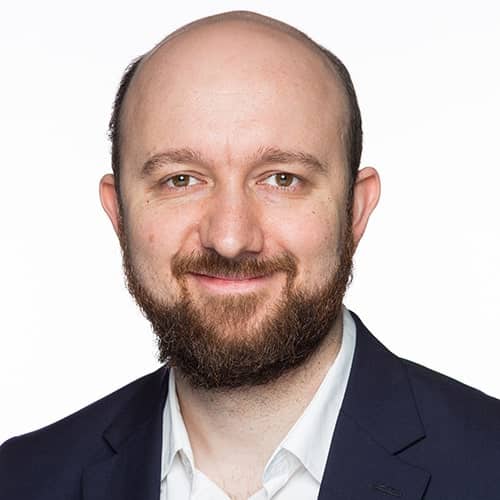
Tobias Schäfers holds dual academic roles as an Associate Professor (part-time since 2020) at the Department of Marketing, Copenhagen Business School (CBS), and as a full-time Professor of Marketing at HSBI - University of Applied Sciences and Arts Bielefeld, Germany (since 2023). His career includes prior positions as an Assistant Professor at TU Dortmund (2013–2020) and EBS Business School (2010–2013). He earned his PhD in Marketing from EBS Business School (2010) following a Bachelor’s degree in Business Studies (2006, Private University Göttingen). His research focuses on psychological aspects of service consumption, digitalization’s impact on customer-company interactions, pricing strategies, and access-based service models. Key themes include consumer reactions to fee introductions, ownership vs. access preferences, and service recovery in digital contexts. He has conducted visiting research at the University of Maryland, Aalto University, and Toulouse School of Management. As an editorial leader, Schäfers serves as Associate Co-Editor for Academic-Practitioner Papers at Industrial Marketing Management and sits on the Editorial Review Boards of Journal of Service Research and Industrial Marketing Management . His recent work explores B2B sharing economy frameworks, digital transformation in agriculture, and factory tours’ impact on customer perceptions. Professional activities include consulting with UNICconsult Strategieentwicklung GmbH and contributions to executive education programs. He balances academic rigor with industry engagement, emphasizing societal impact through collaborative research methodologies.
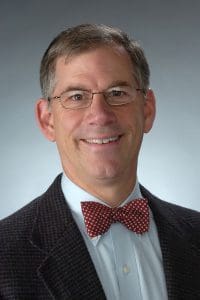
Teresa Anna Steiner serves as an Assistant Professor in the Department of Mathematics and Computer Science at the University of Southern Denmark, specializing in algorithmic research with emphasis on privacy-preserving computational methods and theoretical computer science. Her research centers on differential privacy mechanisms, where she investigates trade-offs between data utility and privacy guarantees through rigorous analysis of noise injection techniques like Laplace and Gaussian distributions. She extends this work to dynamic graph databases requiring real-time privacy protections and develops novel text indexing approaches for regular expression pattern matching, contributing to foundational advancements in algorithm design for sensitive data environments. Recent 2025 publications reveal a cohesive research trajectory focused on practical implementations of differential privacy across diverse data structures, with particular attention to variance optimization in noise mechanisms, edge-level privacy in evolving graphs, and efficient indexing for textual pattern recognition. These works collectively address critical challenges in balancing computational efficiency with robust privacy guarantees in modern data systems. No scientific awards were documented in the available information. Details regarding student advising or research grant funding were not specified in the provided materials.
Ben Wagner is a leading academic in digital rights and technology governance, holding multiple prestigious positions: University Professor of Human Rights & Technology at IT:U, Director of the AI Futures Lab on Rights and Justice at TU Delft, and Professor of Media, Technology and Society at Inholland University of Applied Sciences. He leads the Digital Rights Research Team (DRRT) and co-founded the Sustainable Media Lab (SML) in The Hague, contributing to bridging research and education. He is also a visiting researcher at Oxford University's Human Centred Computing Group and serves on the advisory board of the journal Patterns . Inholland University of Applied Sciences – Professor, Media, Technology & Society (since 2021) TU Delft – Director, AI Futures Lab on Rights and Justice IT:U – University Professor, Human Rights & Technology European University Viadrina – Founding Director, Center for Internet & Human Rights Vienna University of Economics – Director, Sustainable Computing Lab ENISA – Advisory Group Member Ben Wagner earned his PhD in Political and Social Sciences from the European University Institute in Florence in 2013, with a dissertation on freedom of expression and online content regulation. He has held research positions at Cambridge University, University of Pennsylvania, Technical University of Berlin, and European University Viadrina. His research centers on digital rights, AI governance, freedom of expression online, and the societal impact of technology. He investigates how digital infrastructures shape human rights and advocates for sustainable, accountable systems. His work spans legal, technical, and social dimensions, focusing on public sector data practices, content moderation, ethical AI, and digital inclusion. He actively promotes citizen control over technological change and interdisciplinary collaboration. The recent publications reflect a strong focus on the ethical and governance challenges of AI and data science, digital rights frameworks, and platform accountability. Themes include the gap between policy and practice in public data use, global AI ethics, content governance on social media, and co-designing digital rights labels. His work emphasizes systemic accountability, hybrid digital-physical spaces, and embedding rights into technological design. Ben Wagner is an expert advisor to the European Parliament, European Commission, OSCE, Council of Europe, and UNESCO. He is a member of the policy advisory board for ECHOES (European Cloud for Heritage OpEn Science) and contributes to high-impact publications and international discourse. His research is widely covered in global media including CNN, The Guardian, Bloomberg TV, Der Spiegel, ORF, and SWR2. He advises on and contributes to major research initiatives such as ReSocial and fabricated. He is involved in developing a new Master’s program in Data-Driven Business at Inholland and leads efforts to integrate digital rights into education and innovation. His inaugural lecture, 'The Ground Beneath our Feet,' highlights the instability of digital infrastructures and the urgent need to embed digital rights at their core. Ben co-founded the Digital Rights Research Team and the Sustainable Media Lab at Inholland, fostering collaboration across faculties and sectors. These labs focus on creating a digitally responsible society through interdisciplinary research in design, policy, and technology. The AI Futures Lab at TU Delft explores justice-oriented futures for AI, while his work at IT:U advances human rights in digital contexts.
Lars Dittmann is a Professor at the Department of Electrical and Photonics Engineering at the Technical University of Denmark (DTU), leading the Networks Technology and Service Platforms section. His work bridges advanced networking technologies with real-world applications in healthcare and transportation. Academic Role: Professor, Head of Section University: Technical University of Denmark (DTU) Department: Networks Technology and Service Platforms Research Interests: Professor Dittmann specializes in Software-Defined Networking (SDN) , 5G and IoT technologies , and energy-efficient network design , with a focus on applications in telemedicine and transportation systems . His work integrates machine learning for privacy-preserving traffic analysis and explores optical networks for high-bandwidth scenarios. Scientific Contributions: His recent publications emphasize green cellular networks using SDN/NFV/C-RAN, IoT benchmarking for coverage and mobility, and secure edge architectures for railways. Collaborative projects like the Future Patient telerehabilitation program highlight his interdisciplinary impact. Supervision: He supervises PhD candidates such as Radheshyam Singh, focusing on SDN-based IoT security and 5G network optimization. Labs & Projects: Leads initiatives like EXplorative network PLAnnINg and Broadband Trial Integration , addressing challenges in network reliability , emergency communication , and optical data center scaling .
Athanasios Kolios serves as Professor and Head of the Structural Integrity and Loads Assessment section within the Department of Wind and Energy Systems at the Technical University of Denmark (DTU). His work focuses on advancing wind energy technology through structural analysis, materials science, and system optimization for both onshore and offshore applications. His primary research domains include wind turbine structural integrity, offshore wind farm layout optimization, and structural health monitoring systems. He investigates critical challenges in operation and maintenance strategies, techno-economic metrics for wind projects, and materials behavior under dynamic loading conditions. His fingerprint analysis reveals dominant expertise in Wind Turbine Engineering (100%), Offshore Wind Turbines Engineering (45%), and Offshore Wind Farms Engineering (36%). Recent publications demonstrate strong emphasis on data-driven approaches for wind energy systems, including structural optimization algorithms, virtual sensing techniques, and techno-economic assessments of offshore projects. His work consistently bridges theoretical engineering principles with practical industry applications, particularly in Brazilian and European offshore wind contexts. Scientific Awards: No scientific awards were documented in the provided information Professor Kolios actively supervises five PhD candidates across major research initiatives while mentoring Master's students in structural wind energy applications. His research portfolio includes six significant projects addressing critical industry needs: PhD Supervision: Chopard (anomaly interpretation), Piovesan (risk-based technology qualification), Yildirim (floating turbine uncertainty), Rodrigues Faria (autonomous operation), Al-Hagri (offshore structure maintenance) Master's Supervision: Rushil S. Mahajan (monopile buckling analysis) Current Projects: Decision support systems, life cycle cost modeling, floating wind turbine modeling, autonomous operation frameworks, sustainable offshore structure design As section head at DTU Wind and Energy Systems, he leads an internationally collaborative research group focused on structural integrity assessment, load prediction methodologies, and materials innovation for next-generation wind turbines. The team maintains strong industry partnerships and contributes to global wind energy standards development through participation in initiatives like ISSC.
Joe Alexandersen is an Associate Professor in the Department of Mechanical Engineering at the University of Southern Denmark (SDU), affiliated with the Institute of Mechanical and Electrical Engineering. His research spans structural optimization, heat transfer, fluid dynamics, and high-performance computing, with applications in heat sink design, microfluidic devices, and additive manufacturing. Research Interests Topology and shape optimization Conjugate heat transfer Navier-Stokes flow modeling Finite element methods High-performance computing Scientific Awards 2022 Fluids 2020 Best Paper Award 2017 DTU Young Researcher Award 2015 ISSMO/Springer Prize for Young Scientist Key Projects HiHeaT: Topology optimization for high heat flux components (2024–2027) Structural Analysis of Large Modular Vessels (2025–2027)
Freja Stær Hincheli serves as a Lecturer at the Department of Computer Science , University of Copenhagen. Her work intersects multiple domains within machine learning, with a particular emphasis on quantum-inspired algorithms, medical imaging, and sustainable AI development. Keywords : Machine Learning, Quantum Computing, Medical Imaging, Natural Language Processing, Computational Biology Key Collaborations : SCIENCE AI Centre Her research spans quantum-enhanced neural networks, explainable AI for medical diagnostics, and energy-aware model design. Recent publications highlight applications in cross-cultural recipe adaptation, emotion-aware dialogue systems, and climate-conscious AI strategies. The Machine Learning Section at DIKU focuses on theoretical foundations and applications including medical image analysis , biological data modeling , and quantum computing , aligning with her contributions.
Thomas Lykke Andersen is an Associate Professor and Head of the Ocean and Coastal Engineering Research Group at Aalborg University's Department of the Built Environment within the Faculty of Engineering and Science. His work focuses on coastal engineering, wave energy systems, and physical modeling of marine structures. Key projects include the RESCUER initiative enhancing coastal resilience and leadership in the WaveLab facility. Research interests span breakwater design, wave-structure interactions, and hydraulic engineering. Notable contributions include advancements in wave separation algorithms (NL-SORS), stability analysis of rock armor systems, and offshore wind turbine foundation dynamics. His lab conducts large-scale physical experiments addressing coastal protection challenges. Publications emphasize wave dynamics, overtopping prediction, and innovative coastal infrastructure. Supervision includes one documented PhD student. Media engagements highlight contributions to coastal engineering solutions and university teaching methodologies during the pandemic.
Martin Skovgaard Andersen is an Associate Professor in the Department of Applied Mathematics and Computer Science at the Technical University of Denmark (DTU), where he specializes in Scientific Computing. His research integrates numerical methods, optimization, and machine learning to solve complex computational problems in engineering and data science. Education: Ph.D., University of California, Los Angeles (2006–2011) M.Sc., Aalborg Universitet (2001–2006) Postdoc, Linköping University, Sweden (2011–2012) His research interests include optimization (particularly conic and stochastic programming), numerical algorithms, signal processing, system identification, and fast solvers for integral equations. He works extensively on matrix analysis, regularization, and low-rank approximations, contributing to both theoretical and applied advancements in computational mathematics. The recent publications highlight a strong trend in developing efficient numerical algorithms for large-scale optimization and solving integral equations. His work emphasizes preconditioning, matrix truncation, and Bayesian inversion, with applications in electromagnetics, structural health monitoring, and network identification. There is a consistent focus on improving computational efficiency and scalability of solvers. Scientific Awards: No specific awards mentioned in the provided text. Andersen actively supervises PhD students and leads multiple research projects, including those on non-symmetric conic optimization, data-sparse models, and fast direct solvers. He is the Principal Investigator (PI) on projects related to physics-informed structural health assessment. His collaborative network spans Denmark and international institutions, particularly in computational mathematics and engineering. Labs and Research Teams: He is affiliated with the Scientific Computing section at DTU, which focuses on high-performance computing, numerical algorithms, and mathematical modeling. His work is embedded in a collaborative environment involving researchers in optimization, control theory, and computational electromagnetics.
Katja Hose is a Professor in the Department of Computer Science at Aalborg University's Technical Faculty of IT and Design. Her research focuses on Data, Knowledge and Web Engineering with specializations in AI for the People and Artificial Intelligence and Machine Learning. She maintains an active research profile with numerous publications and projects. Department of Computer Science Technical Faculty of IT and Design Aalborg University Research areas: Query Processing, Semantic Web, Linked Data, Knowledge Graphs Professor Hose's research interests center on knowledge representation, semantic web technologies, and AI applications. Her work spans from theoretical database systems to practical applications in healthcare, environmental assessment, and microbial data analysis. She has made significant contributions to knowledge graphs, large language models, and semantic search technologies, with particular emphasis on addressing hallucinations in AI systems and improving table search in semantic data lakes. Her recent publications demonstrate a strong trend toward integrating knowledge graphs with large language models, developing evaluation frameworks for AI hallucinations, and applying data science to diverse domains including healthcare and environmental sustainability. Her research bridges theoretical computer science with practical applications that address real-world challenges. NLP4KGC Best Paper Award (2023) ESWC 2023 Best Demo Award (2023) 2020 AMiner AI 2000 Most Influential Scholars AIME 2020 Best Paper Nomination (2020) ESWC 2019 Best Demo Award Nomination (2019) Professor Hose leads multiple significant research projects including ARISTOTLE (AI for clinical risk assessment), DarkScience (microbial data analysis), and the Poul Due Jensen Professorate in Big Data and AI. She has supervised numerous PhD students and collaborates extensively across disciplines, particularly in healthcare applications of AI and environmental assessment technologies. Her research has attracted substantial funding from sources like Villum Fonden and Danish E-infrastructure Cooperation. She is actively involved in several interdisciplinary research teams, including collaborations with microbiologists on microbial dark matter projects and with environmental scientists on digital environmental assessment systems. Her work on the ARISTOTLE project demonstrates strong connections between AI research and clinical applications, while her DarkScience project bridges computer science with microbiology.
Maja Fagerberg Ranten is an Assistant Professor at the Department of People and Technology, Roskilde University, specializing in Sustainable Digitalization. Her research bridges design, art, and technology to explore bodily experiences through technical and physical materials. Academic Qualification: PhD in Information Technology (2022), focusing on Designing Bodily Interactions from a phenomenological perspective. Her work employs research-through-design methodologies , drawing on speculative and critical design, phenomenology, and more-than-human perspectives. Key areas include bodily reflective interactions, digital material exploration, and the intersection of humans, materials, and technology. Research Trends across her publications highlight bodily interaction design, speculative practices, and eco-technogenesis. Collaborations span institutions like The Royal Danish Theatre and The School of Design, with activities in workshops and seminars up to 2024. Projects : Participated in MemoryMechanics (2020–2023), focusing on interactive artifacts for audience-stage dynamics. Also engaged in AI sustainability workshops and R&D on digitalization at Zealand Academy of Technologies and Business.
Chenjuan Guo is an Associate Professor at the Department of Computer Science, Aalborg University, within The Technical Faculty of IT and Design. She is affiliated with the Data Engineering, Science and Systems group and the AI for the People initiative, and is part of the Daisy - Center for Data-intensive Systems. Her research focuses on machine learning, data engineering, spatio-temporal data analysis, and time series forecasting. Key projects include the Villum Foundation-funded 'Explainable AI for Complex Microbial Community Interactions and Predictions' (2021-2024) and the Astra project on time series analytics in spatial networks (2018-2021). Her research interests span representation learning, autoencoders, path representation, outlier detection, trajectory data analysis, and time series modeling. She has supervised 3 PhD students and contributed to over 60 publications, with a recent emphasis on transformer-based forecasting, neural architecture search, and continuous learning frameworks for spatio-temporal data. Her work bridges theoretical advancements with practical applications in environmental science, cloud computing, and urban mobility systems. Key achievements include developing frameworks like AutoCTS++ for automated time series forecasting and LightGTS for lightweight models. She actively collaborates internationally, contributing to conferences like ECML PKDD and CVPR. Her research is supported by grants from the Villum Foundation and other institutions.
Jalal Kazempour is a Full Professor at the Technical University of Denmark (DTU) in the Department of Wind and Energy Systems (DTU Wind), where he leads the Energy Markets and Analytics (EMA) section and serves as Head of Studies for the MSc program in Sustainable Energy Systems. He is an Associate Editor for Operations Research and a Senior Member of both IEEE and INFORMS, and he contributes to EU energy policy through ACER’s Expert Group on Flexibility Needs Assessment. His research lies at the intersection of optimization, game theory, control, and machine learning, focusing on data-driven approaches for modern power systems with high renewable penetration. He investigates market design, grid services, and coordination mechanisms for integrated energy systems involving electricity, hydrogen, natural gas, and district heating, aiming to improve system efficiency and decision-making. Recent publications highlight trends in privacy-preserving optimization, bidding strategies for wind and hydrogen, flexibility aggregation, and market clearing in coupled energy systems, reflecting a strong emphasis on stochastic and robust optimization, machine learning, and real-world applicability in energy markets. Scientific Awards: Best Paper Award of IEEE SmartGridComm 2023 Best Paper Award of IEEE Transactions on Power Systems (2019–2021) Best Teacher Award, DTU Electrical Engineering Department (2019) IEEE Senior Member (2018) INFORMS Senior Member (2025) Outstanding Editor, International Transactions on Electrical Energy Systems (2017) Advising and Grants: He supervises multiple PhD students across projects on power-to-X, virtual power plants, and AI for market design. He has secured major funding, including a 9.5 million DKK EUDP grant for privacy-preserving data sharing and an Industrial PhD project with Energinet funded by Innovation Fund Denmark. Labs and Teams: He founded and leads the Energy Markets and Analytics (EMA) section at DTU, formerly known as the Energy Analytics and Markets (ELMA) group, which hosts over 10 researchers and organizes the annual DTU PES Summer School.
Steven Sawyer is a Professor at Syracuse University and Core Faculty of the Renée Crown Honors Program. His work bridges Information Systems and Social Informatics , focusing on digital labor platforms, gig economy dynamics, and the sociotechnical impacts of information technologies. He has held editorial leadership roles at the Journal of the Association of Information Science and Technology and contributed to major research initiatives funded by the National Science Foundation . DBA in Management Information Systems, Boston University MS in Management Information Systems, Boston University MS in Ocean Engineering, University of Rhode Island BS in Marine Transportation, United States Merchant Marine Academy Research Interests center on digital infrastructures , platform economies , and workplace transformation , with particular attention to: Human-AI collaboration in gig work Gender and racial inequality in digital labor Flexible work models and their societal impacts Ethical design of digital platforms Evolution of professional careers in platform economies Interdisciplinary approaches to information systems Scientific Contributions : Lead editor of the Handbook of Information Technology in Organizations and Electronic Markets Pioneering studies on online freelance worker autonomy and digital platform governance NSF-funded research on infrastructural competence and decentralized collaboration Honors & Service : 2024 Best Paper Award, Academy of Management Chair of Honors Program Planning since 2020 Editor-in-Chief of JASIST since 2021 Member of Syracuse University's Academic Freedom, Tenure, and Professional Ethics Investigative Team Extensive service on editorial boards of Journal of Information Technology , The Information Society , and New Technology, Work, and Employment Teaching includes graduate seminars on Digital Technologies Theories , Information Systems Management , and honors courses on Working in the Digital Economy .
Sune Darkner is a Professor at the Department of Computer Science (DIKU) at the University of Copenhagen, specializing in the Image Analysis, Computational Modelling, and Geometry research section. His work focuses on medical image processing with particular emphasis on neuro-imaging data including MRI and PET scans. His primary research interests include Image Registration, Segmentation and Classification of Medical Image Data , with a specific focus on estimation of image similarity as his main research interest. Darkner strongly believes that the implementation of image processing algorithms should be thoroughly tested and reflect the theoretical properties as accurately as possible. His work primarily centers on neuro-imaging data such as MRI and PET. His recent publications (2024-2025) reveal a strong focus on medical image analysis, with particular emphasis on tumor volume delineation, deformable image registration with physics constraints, and applications of deep learning in medical imaging. His work spans both theoretical foundations of image processing and practical clinical applications. Darkner previously held a Post Doc position at the Technical University of Denmark from February 2009 to January 2010, demonstrating his longstanding engagement with image analysis research in the Danish academic community.