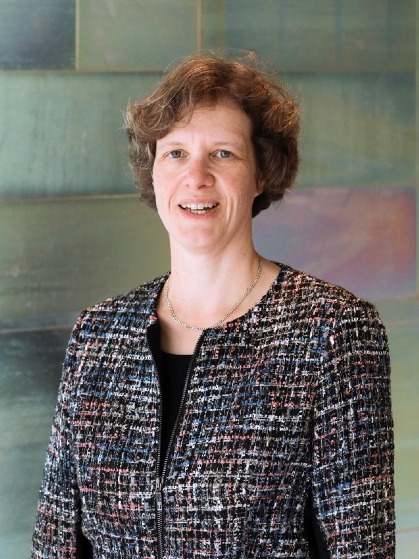
Stefanie Tellex is an Associate Professor of Computer Science and Engineering at Brown University. She leads research in Human-Robot Interaction, focusing on enabling robots to understand natural language instructions and collaborate effectively with humans. Her work spans robotics, artificial intelligence, and reinforcement learning, with a strong emphasis on practical applications like teleoperation, task execution, and language grounding. Education : PhD in Computer Science, Massachusetts Institute of Technology (2010) MS in Computer Science, MIT (2006) MEng in Computer Science, MIT (2003) BSc in Computer Science, MIT (2002) Research Interests : Her research integrates robotics with natural language processing, emphasizing: Developing systems that interpret complex human instructions Improving robot learning through weak supervision Designing intuitive human-robot collaboration interfaces Advancing reinforcement learning for real-world robotic tasks Publications Trends : Recent work highlights advancements in: - Language-grounded reward functions for robots - Virtual reality frameworks for robot teleoperation (ROS Reality) - Abstract planning techniques for non-Markovian tasks - Hybrid architectures for interpreting multi-granularity instructions. Teaching : CSCI 1410: Artificial Intelligence CSCI 1951R: Introduction to Robotics CSCI 2951K: Topics in Collaborative Robotics Advising & Labs : Advises students on robotics and NLP projects. Active in Brown’s robotics labs focusing on human-robot collaboration and AI-driven systems.
Dr. Victoria C. P. Chen is a Professor in the Industrial, Manufacturing, and Systems Engineering (IMSE) department at The University of Texas at Arlington (UTA), where she has served since 2002. She previously held positions at the Georgia Institute of Technology from 1993-2001. Dr. Chen has held several leadership roles at UTA, including Interim Department Chair (2012-2014), Director of the Center on Stochastic Modeling, Optimization, & Statistics (COSMOS) (2008-2012, and again from 2017-present), and Director of Doctoral Studies (2019-present). She was also the George & Elizabeth Pickett Professor from 2015-2017 and was inducted into the UT Arlington Academy of Distinguished Teachers in 2019. Dr. Chen is actively involved with INFORMS (Institute for Operations Research and the Management Science), where she currently serves as Secretary on the Executive Board. Dr. Chen earned her B.S. in Mathematical Sciences from The Johns Hopkins University, and her M.S. and Ph.D. in Operations Research and Industrial Engineering from Cornell University. Her academic journey includes visiting professorships at the University of Genoa, Italy, and Iowa State University. Dr. Chen's research utilizes statistical perspectives to create new methodologies for operations research problems appearing in engineering and science. Her expertise includes the design of experiments, statistical modeling, and data mining, particularly for computer experiments and stochastic optimization. Through her statistics-based approach, she has developed computationally-tractable decision-making methods for many high-dimensional complex systems. Her work spans multiple domains including sustainability, energy, water management, healthcare, and law enforcement. Specific application areas include inventory forecasting, airline optimization, water reservoir networks, wastewater treatment, air quality monitoring, green building design, nurse assignment systems, and pain management programs. Her recent publications demonstrate continued innovation in mixed integer programming for electric vehicle charging stations, vacuum ultraviolet spectroscopy prediction, and sustainable building education. Senior Member, Institute for Operations Research and the Management Sciences (INFORMS) (2024) Data Mining Prize (Lifetime Achievement Award), INFORMS Society on Data Mining (2023) College of Engineering Teaching Award, UT Arlington (2021) Third Place Award, C3.ai COVID-19 Grand Challenge (2020) Academy of Distinguished Teachers, University of Texas at Arlington (2019) George & Elizabeth Pickett Professorship (2015-2017) As an educator and mentor, Dr. Chen has advised over 25 doctoral students across diverse research topics in operations research and systems engineering. She has secured substantial research funding from multiple sources including the National Science Foundation (over $1.5 million in active projects), Environmental Protection Agency, National Institute of Justice, and industry partners like Luminant and Dallas-Fort Worth International Airport. Her current research projects focus on decision analytics for sustainable urban environments, optimization for Texas water management, and statistical methods for pain management programs. She has served as Principal Investigator or Co-PI on more than 20 externally funded research projects totaling over $3 million in funding. Dr. Chen co-founded the Center on Stochastic Modeling, Optimization, & Statistics (COSMOS) at UTA with Dr. H. W. Corley. This research center brings together faculty and students from multiple disciplines to address complex problems through advanced statistical and optimization methods. She also leads interdisciplinary research teams working on projects related to sustainable infrastructure, energy systems, and healthcare optimization, frequently collaborating with researchers from civil engineering, environmental science, and medical fields.
Prof. Michael HALLING is a Full Professor in Sustainable Finance at the University of Luxembourg's Faculty of Law, Economics and Finance, Department of Finance. His work focuses on sustainable finance, corporate finance dynamics, climate risk assessment, and financial regulation. He holds the prestigious Chair in Sustainable Finance and has published extensively on topics like MiFID II compliance, mutual fund fee structures, and post-pandemic market recovery. Contact: michael.halling@uni.lu Research Interests : Prof. HALLING’s research bridges theoretical finance with practical applications, emphasizing sustainable investment practices, corporate debt management, and regulatory frameworks. Key themes include: Climate risk modeling using public news sentiment analysis Impact of behavioral preferences on corporate investment decisions Automated compliance systems for financial institutions Market dynamics during crises (e.g., pandemic effects on capital access) Recent Publications Trends : Recent works analyze MiFID II regulatory impacts (2024), stochastic modeling of corporate investment (2023), and firm-specific climate risk quantification. His 2020 studies explored pandemic-driven shifts in corporate financing strategies. Awards : No awards explicitly mentioned in the provided texts. Grants & Advising : No student advisees or grant details provided in available data. Labs/Teams : No specific research group affiliations listed.
Huazhen Fang is an Associate Professor in the Department of Mechanical Engineering at the University of Kansas School of Engineering, where he joined in 2014. He leads the Information & Smart Systems Laboratory (ISSL) and holds a courtesy appointment in the Department of Electrical Engineering & Computer Science. His research focuses on enabling intelligence for complex systems through information-driven approaches. Dr. Fang received his Ph.D. in Mechanical Engineering from the University of California, San Diego in 2014, following an M.Sc. from the University of Saskatchewan and a B.Sc. in Computer Science & Technology from Northwestern Polytechnic University in China. He was a Visiting Faculty Fellow at Mitsubishi Electric Research Laboratories in 2022. His research interests span Systems and Control, Advanced Battery Management, Energy Storage Systems, and Robotics, with particular focus on system modeling, estimation, control design, machine learning and numerical optimization. Dr. Fang's work has significant applications in energy management, cooperative robotics, and environmental observing systems. His research has been supported by the National Science Foundation, Department of Energy, Army Research Laboratory, and Mitsubishi Electric Research Laboratories. His extensive publication record shows a clear trend toward increasingly sophisticated integration of physics-based modeling with machine learning approaches, particularly in battery management systems and autonomous vehicle control. Recent work demonstrates a growing emphasis on Bayesian inference methods, distributed control architectures, and safety-critical applications of intelligent control systems. Faculty Early Career Award from National Science Foundation (2019) University Scholarly Achievement Award (2024) Miller Professional Development Award (2022) Miller Faculty Scholar Award (2018, 2019, 2023) Wesley G. Cramer Outstanding Mechanical Engineering Faculty Award (2016) Big XII Faculty Fellowship (2015) IEEE Transactions on Transportation Electrification Prize Paper Award (2024) Dr. Fang has successfully mentored numerous graduate students through the Information & Smart Systems Laboratory, with many receiving awards for their research. His research has attracted significant funding from prestigious organizations including the National Science Foundation, Department of Energy, Army Research Laboratory, and Mitsubishi Electric Research Laboratories. He currently serves as an Associate Editor for multiple prestigious journals including Information Sciences, IEEE Transactions on Industrial Electronics, and IEEE Control Systems Letters. The Information & Smart Systems Laboratory (ISSL) under Dr. Fang's leadership has established itself as a center for cutting-edge research in information-driven smart systems. The lab focuses on pushing the frontiers of information extraction, analysis and exploitation for dynamic systems to deal with system complexity and enable system intelligence. The lab actively collaborates with industry partners and local communities, emphasizing research that serves societal needs.
Mustafa Bilgic is a Professor and Chair of the Computer Science Department at Illinois Institute of Technology, where he also directs the Master of Artificial Intelligence program and the Machine Learning Laboratory. His research focuses on machine learning, active learning, explainable AI, and probabilistic graphical models, with applications in healthcare, social media analysis, and biomedical engineering. He has received funding from NSF, NIH, and Samsung, among others. Education: PhD in Computer Science, University of Maryland at College Park (2010) M.S. in Computer Science, University of Maryland at College Park (2006) B.S. in Computer Science, University of Texas at Austin (2004, with High Honors and Special Honors) Research Highlights: Dr. Bilgic's work emphasizes AI ethics, algorithm transparency, and interactive machine learning systems. Notable projects include analyzing political news engagement dynamics and developing frameworks for eliminating explanation noise in AI models. His lab explores tools like OrganoID for tracking organoid growth and IDGI for improving model interpretability. Awards: NSF CAREER Award (2014) ACM SIGKDD Best Student Paper Award (2008) Illinois Tech College of Computing Teaching Excellence Award (2021) Teaching and Leadership: Bilgic teaches advanced courses in AI, machine learning, and data mining. He leads initiatives to bridge AI theory and practical applications, emphasizing interdisciplinary collaboration. His administrative roles include overseeing the AI master’s program and fostering innovation in computing education.
Dr. Steven Manson is a Professor in the Department of Geography, Environment, and Society at the University of Minnesota's College of Liberal Arts, where he also served as Associate Dean for Research and Graduate Programs. He directs the Human-Environment Geographic Information Science (HEGIS) laboratory and leads major data science initiatives like the National Historical Geographic Information System (NHGIS) and IPUMS Terra. PhD in Geography, Clark University (2002) BA Honours in Geography, University of Victoria (1995) His research focuses on geographic information science and human-environment systems , using agent-based modeling and big data to analyze land use change, urban dynamics, and sustainability challenges. Recent work explores spatiotemporal data harmonization and geospatial cyberinfrastructure . The articles reveal trends in GIScience methodology , urbanization analysis , and data-intensive sustainability research . Key contributions include self-organizing map applications for health data and hybrid statistical-GIS techniques for environmental policy. Scientific accolades include: Ecological Society of America Sustainability Science Award NASA Earth System Science Fellow McKnight Land Grant Professorship As Principal Investigator for NHGIS and IPUMS Terra, he secured over $40M in NSF, NIH, and DOJ grants for spatiotemporal data infrastructure. Outreach initiatives include developing open geospatial textbooks adopted globally and collaborating with Twin Cities K-12 programs.
Sibel Alumur Alev is an Associate Professor and Associate Chair of Graduate Studies at the University of Waterloo. Her research focuses on logistics network design, hub location optimization, and sustainable transportation systems. She actively contributes to the fields of operations research and supply chain management, with a strong emphasis on addressing uncertainty in network design and strategic infrastructure planning. Her work spans applications in autonomous mobility systems, electric vehicle charging infrastructure, healthcare logistics, and pandemic response. She has published extensively on hub-and-spoke network models, reverse logistics for environmental sustainability, and multi-period resource allocation strategies. Notable areas of interest include the integration of stochastic and robust optimization methodologies into real-world logistics challenges. Dr. Alev’s research also bridges academic and industrial needs, addressing practical problems such as optimal testing center locations during pandemics and strategic freight hub expansions. Her contributions have been featured in peer-reviewed journals and conference proceedings, reflecting her commitment to advancing both theoretical and applied aspects of logistics and operations research.
Jann Spiess is an Associate Professor of Operations, Information & Technology at Stanford University's Graduate School of Business and holds a courtesy appointment as Associate Professor of Economics in the School of Humanities and Sciences. He is also a Center Fellow at the Stanford Institute for Economic Policy Research and a Faculty Affiliate of the Golub Capital Social Impact Lab. PhD in Economics (Harvard University, 2018) AM in Economics (Harvard University, 2015) MPP in Public Policy (Harvard University, 2013) MASt in Mathematics (University of Cambridge, 2011) BSc in Mathematics (Technical University of Munich, 2010) Jann's research integrates machine learning with econometric methods to advance causal inference and data-driven decision-making . He explores high-dimensional and robust causal inference, synthetic control methods, and algorithmic fairness, while addressing challenges in human-AI collaboration and policy design. His publications span econometrics, behavioral economics, and data science, focusing on experimental design, robust statistical techniques, and applications of machine learning to public policy. Key themes include replicable inferences from big data, human-AI interaction, and ethical algorithmic design. Philip F. Maritz Faculty Scholar, 2021–22 David A. Wells Prize for best dissertation, Harvard Economics, 2018 Restud Tour, 2018 Jann's work bridges microeconometric methods , statistical decision theory , and mechanism design to enhance analytical frameworks for data-driven policy. He has contributed to robust inference in panel data and synthetic control methods, alongside studies on nudges for vaccination and financial aid renewals. As Faculty Affiliate at the Golub Capital Social Impact Lab, Jann collaborates on projects applying data science to social policy challenges, merging technical rigor with societal impact.
David A. Stephens is a Professor in the Department of Mathematics and Statistics at McGill University, Montreal. He served as Chair of the Department from 2015 to 2019 and as Vice-Dean in the Faculty of Science from 2019 to 2025. His research focuses on Bayesian inference, biostatistics, causal inference, bioinformatics, and statistical genetics. He holds prestigious fellowships: International Statistical Institute (2015), American Statistical Association (2019), and Royal Society of Canada (2024). His work addresses challenges in epidemiology, HIV transmission dynamics, and clinical trial design. Key research themes include: Bayesian hierarchical modeling for infectious diseases (e.g., SARS-CoV-2, HIV) Causal inference in dynamic treatment regimes Survival analysis and censored data methods Statistical genomics and epigenetics His publications analyze public health trends, such as HIV transmission clusters in Quebec and SARS-CoV-2 seroprevalence in Canada. Methodologically, he develops novel techniques for time-series analysis, recruitment forecasting in clinical trials, and computational statistics. Notable contributions include: Advancing phylogenetic cluster inference in HIV studies Optimizing warfarin dosing strategies via SMART trials Modeling gut microbiota impacts on growth faltering in infants His academic leadership includes roles at McGill and prior experience at Imperial College London. His work bridges statistical theory and practical healthcare applications, emphasizing interdisciplinary collaboration.
Steve Loughnan is a Professor of Psychology at the University of Edinburgh's School of Philosophy, Psychology and Language Sciences. His research focuses on dehumanization, objectification, and human-animal relations, exploring how societal and psychological factors influence moral judgments and behaviors. He teaches undergraduate courses on social psychology, experimental/applied social psychology, and social class, and supervises PhD students in related fields. Research interests include: Dehumanization of social and ethnic outgroups Psychological impacts of objectification on women and marginalized groups Moral psychology of meat consumption and animal treatment Effects of economic inequality on societal attitudes Anthropomorphism in human-AI and human-pet relationships His publications analyze topics like the psychological mechanisms behind meat consumption paradoxes, the role of dehumanization in conflict scenarios, and the ethical implications of AI romance. He has received no explicitly listed awards but has been widely cited in social psychology domains. Teaching includes year-long programs on social psychology principles, experimental research methods, and social class analysis. Office hours are held weekly to support students. His work bridges theoretical social psychology with applied issues in global inequality, environmental ethics, and veterinary mental health.
Chirag Agarwal is an Assistant Professor of Data Science at the University of Virginia School of Data Science, where he leads the Aikyam Lab focused on trustworthy machine learning. He holds a Ph.D. in Electrical and Computer Engineering from the University of Illinois at Chicago. His research develops frameworks for explainable, fair, and robust AI systems, supported by grants from Adobe, Microsoft, and Google. Core research themes include: Explainability methods for complex models Bias mitigation in vision-language systems Privacy-preserving machine learning Safety certification for large language models Publications demonstrate cross-cutting work in ML theory and applications, with recent emphasis on medical AI safety, multilingual reasoning, and adversarial robustness.
Prof. Iris F.A. Vis is a Professor of Industrial Engineering at the University of Groningen's Faculty of Economics and Business. She specializes in logistics and operations management, focusing on optimizing processes through quantitative and qualitative methods. Her work intersects logistics with sectors like healthcare, education, and energy. She leads major projects such as SMiLES (sustainable mobility-logistics integration) and designs logistics solutions for personalized learning systems in schools. She has advised over a dozen PhD students and collaborates with industry partners globally. Awards include Fellowship in the Netherlands Academy of Engineering. Education: M.Sc. Mathematics (Leiden University), PhD in Operations Management (Erasmus University Rotterdam) Roles: Captain of Science for Topsector Logistics, Member of multiple national advisory boards Research interests span sustainable transportation networks, port optimization, healthcare logistics, and educational logistics. Key projects include LNG supply chain design, offshore wind farm maintenance planning, and synchromodal transport networks. Over 45 peer-reviewed publications and 18 media engagements highlight her impactful contributions. Teaching includes courses on supply chain network design, technology-enabled innovation, and operations management at all academic levels. She advises on industrial partnerships and digital transformation initiatives in the Northern Netherlands region.
Abraham L. Newman is a Professor at the Edmund A. Walsh School of Foreign Service and the Government Department at Georgetown University, where he also serves as Director of the BMW Center for German and European Studies. His work bridges political science, international relations, and global regulatory studies, with a focus on the intersection of economic interdependence and political power. PhD in Political Science – University of California, Berkeley MA in Political Science – University of California, Berkeley MA in International Relations – Stanford University BA in International Relations – Stanford University His research centers on globalization, data privacy, financial regulation, and weaponized interdependence . He investigates how transnational networks, particularly in finance and digital infrastructure, are leveraged for geopolitical advantage. His work emphasizes the evolving role of private actors, regulatory institutions, and technological change in shaping international order. Analysis of his recent publications reveals a strong focus on economic statecraft, digital sovereignty, AI governance, and transatlantic regulatory dynamics . Themes such as financial sanctions, data privacy enforcement, and the weaponization of global networks recur across his scholarship, reflecting a cohesive research agenda on power in an interconnected world. While no specific scientific awards are listed in the provided text, his publications in top journals like Science , Nature , International Organization , and World Politics indicate significant scholarly recognition. He has advised or collaborated on major research projects related to transnational regulation, GDPR implementation, and global financial governance . Although no specific grants are listed, his leadership of the BMW Center suggests involvement in externally funded research initiatives. He has also edited or contributed to collaborative academic volumes across institutions such as Princeton and Rice Universities. His leadership of the BMW Center for German and European Studies places him at the center of a research team focused on transatlantic relations, EU policy, and comparative political economy. This center likely supports a network of scholars, students, and visiting researchers engaged in European and global governance studies.
Tuğba Dalyan is an Associate Professor in the Department of Computer Engineering at Istanbul Bilgi University, Faculty of Engineering and Natural Sciences. She holds a Ph.D. in Computer Engineering from Yıldız Technical University (2014), an MSc from Kocaeli University (2007), and dual BSc degrees in Mathematics and Computer Science and Business Administration (Minor) from Istanbul Bilgi University (2003). She has been a faculty member since 2016 and previously served as a Teaching Staff member and Research Assistant at the same institution. Her research focuses on Natural Language Processing , Machine Learning , Deep Learning , Text Mining , Data Science , and Big Data Analytics . Her work spans computational linguistics, sentiment analysis, author profiling, machine translation, and smart systems. She has led and contributed to numerous research projects, particularly in AI-driven urban solutions and health technologies. The most recent publications show a strong trend in Turkish NLP, zero-shot classification, multimodal AI (image captioning), emotional robotics, and decision support systems using fuzzy logic. Her work combines theoretical rigor with practical applications in smart cities, education, and healthcare. Best Paper Award , CICLing 2012 TÜBİTAK 2209-A student project awards (2022–2024) Horizon2020 Eşik Üstü Ödülü , MIMOSCSA 2024 TÜBİTAK 2242 competition: 2nd and 3rd place (2016, 2018) She has advised numerous student research projects, many of which have received national recognition. She has directed multiple TÜBİTAK and institutional research grants, including projects on smart homes, blockchain crowdfunding, mental health, and AI for social polarization. Her leadership roles include Head of Department, Vice Dean, and Director of Graduate Programs. Tuğba Dalyan leads research in AI and NLP with a strong emphasis on Turkish language technologies. She is involved in interdisciplinary teams working on emotional robots, smart city platforms, and citizen science ecosystems. Her lab activities focus on neural networks, text analysis, and intelligent systems development.
Robert G. Bland is a Professor at Cornell University's School of Operations Research and Information Engineering (ORIE). He joined Cornell in 1978 after roles at SUNY Binghamton and research fellowships in Belgium. He is affiliated with the Center for Applied Mathematics and specializes in linear programming, combinatorial optimization, and network flow theory. His research emphasizes algorithmic efficiency, duality theory, and applications in scheduling and resource allocation. Education: B.S. (1969), Cornell University M.S. (1972), Cornell University Ph.D. (1974), Cornell University Research Interests: Focuses on linear programming duality, combinatorial abstractions, computational methods for optimization, and applications in logistics, scheduling, and scientific computing. Notable work includes the development of new pivoting rules for the simplex method and empirical studies of network flow algorithms. Publications Insight: His work spans foundational LP theory, combinatorial optimization, and algorithmic analysis. Key themes include duality frameworks, Camion bases, and large-scale TSP applications in crystallography. Recent publications address abstract dualities and historical perspectives on pioneers like D. Ray Fulkerson. Awards: Recipient of Cornell's prestigious Merrill Outstanding Educator Award (3 times) and twice recognized as ORIE's best teacher. Member of the Mathematical Optimization Society and American Society for Engineering Education. Grants & Projects: Conducted service projects on vehicle routing and examination scheduling. Collaborated on computational studies of min cost flow algorithms and network flow performance. Labs/Teams: Active in ORIE's research groups, particularly those focused on optimization theory and computational methods.